Burberry · Grow Your Brand · Heritage recovery system · United Kingdom / Active
Burberry
When did Burberrys become Burberry? Burberry changed its name from Burberrys in 1999. Its Heritage trench coats connect another part of the story to Castleford, where the company began making them in 1972. That origin claim should not be applied to every Burberry product.
Positioning, name, and architecture.
Burberry's position, name, and portfolio reinforce one recognizable operating system.
Gabardine, trench shape, check pattern and the knight divide the recognition work across function, product, pattern and story.
Burberry wins when its heritage codes make current product more desirable rather than merely more historical.
Thomas Burberry’s surname became the house name after the first shop opened in 1856.
Prorsum / Forward
listed luxury masterbrand
Burberry is mapped as one masterbrand system; parent-company and category roles are labelled rather than mixed into logo progression.
Gabardine and the trench connect invention to current product.
core category: Heritage trench coats source
Bags and hardware translate equestrian codes into current objects.
growth category: Knight and Rocking Horse bags source
Naming and tagline progression
Prorsum appears on the Equestrian Knight banner.
Forward remains the useful translation of the heritage cue.
Market and scale snapshot.
Burberry Group plc is listed in London. Results show a recovery in profit and comparable sales, while revenue remains below the prior year.
Reported revenue was GBP 2.420B. The USD equivalent uses a fixed 1.30 presentation rate, not a dated exchange rate.
Adjusted operating profit was GBP 160M; reported operating profit was GBP 115M. The USD equivalent uses the same fixed 1.30 presentation rate.
LSE instrument market cap GBP 3,900.72M, observed at the 14 Jul 2026 previous close.
Cash net of overdrafts at FY2025/26 year end.
Color system.
Knight Blue restores a vivid identity cue; black, honey and cream keep the system tied to wordmark, trench and gabardine.
How the palette behaves
Knight Blue makes the restored Equestrian Knight visible in digital and retail settings.
Honey connects the palette to the trench rather than to decoration.
Black gives the wordmark and fashion imagery a stable frame.
Recognition assets.
Memory pieces the brand can use before someone finishes a sentence.
Gabardine anchors the identity.
Trench-coat silhouette makes the brand visible beyond the logo.
Equestrian Knight Design carries recognition into use.
Scores.
Use these scores to compare recognition, trust, proof, pressure, and risk.
The trench silhouette, Burberry Check, Equestrian Knight, and Knight Blue create several independent recognition paths.
Gabardine and the trench tie the luxury claim to weather protection and product construction, not heritage language alone.
Outerwear, scarves, accessories, stores, and the restored knight share recognizable house codes, though the commercial reset is still being tested.
Luxury pricing raises the burden on store service, digital presentation, repair, and product availability to match the house signals.
The page separates Burberry Group plc, the Burberry masterbrand, product categories, beauty licensing, and dated identity eras.
Gabardine and the heritage trench give Burberry unusually concrete ownership of British luxury outerwear.
Check, trench, knight, wordmark, and Knight Blue reinforce one house while still working across product and retail.
Comparable sales and profit improved, but lower annual revenue means the heritage reset still needs sustained commercial proof.
How the logo changed.
Burberry has moved between reduction and restoration: the 2018 system simplified the primary identity, while the current house expression brings the knight back into view.
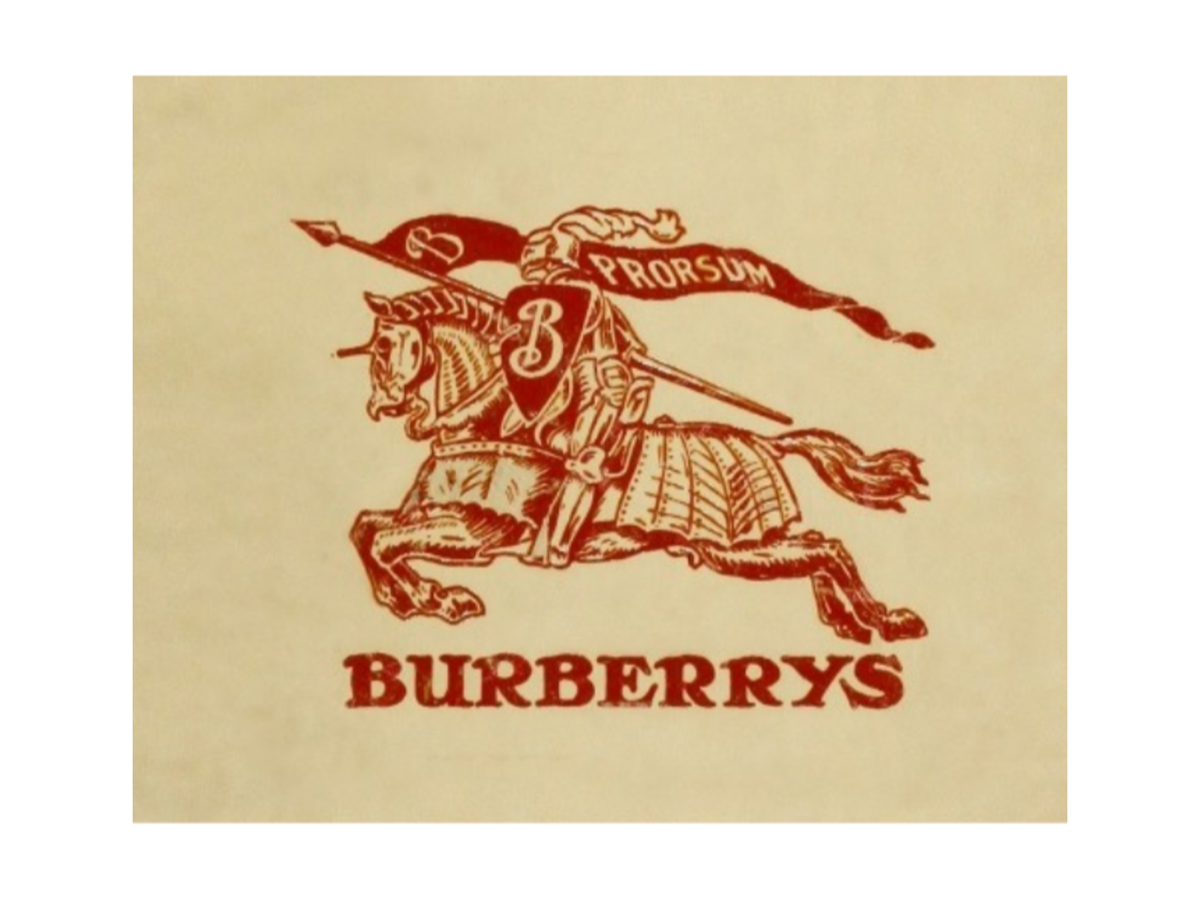
The competition-winning knight joined honour, reform, protection and the Prorsum banner. source
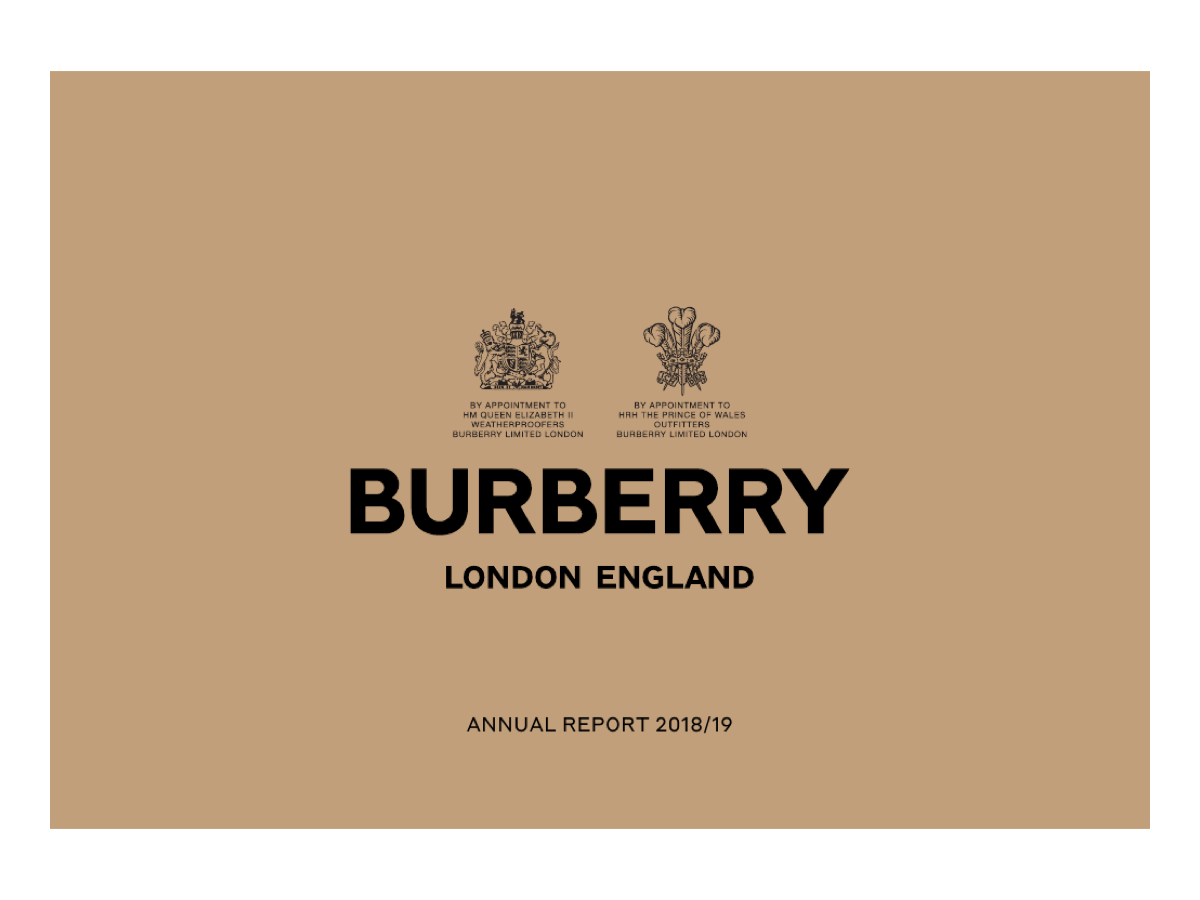
Peter Saville’s sans wordmark marked a sharp reduction and accompanied a refreshed TB monogram. source
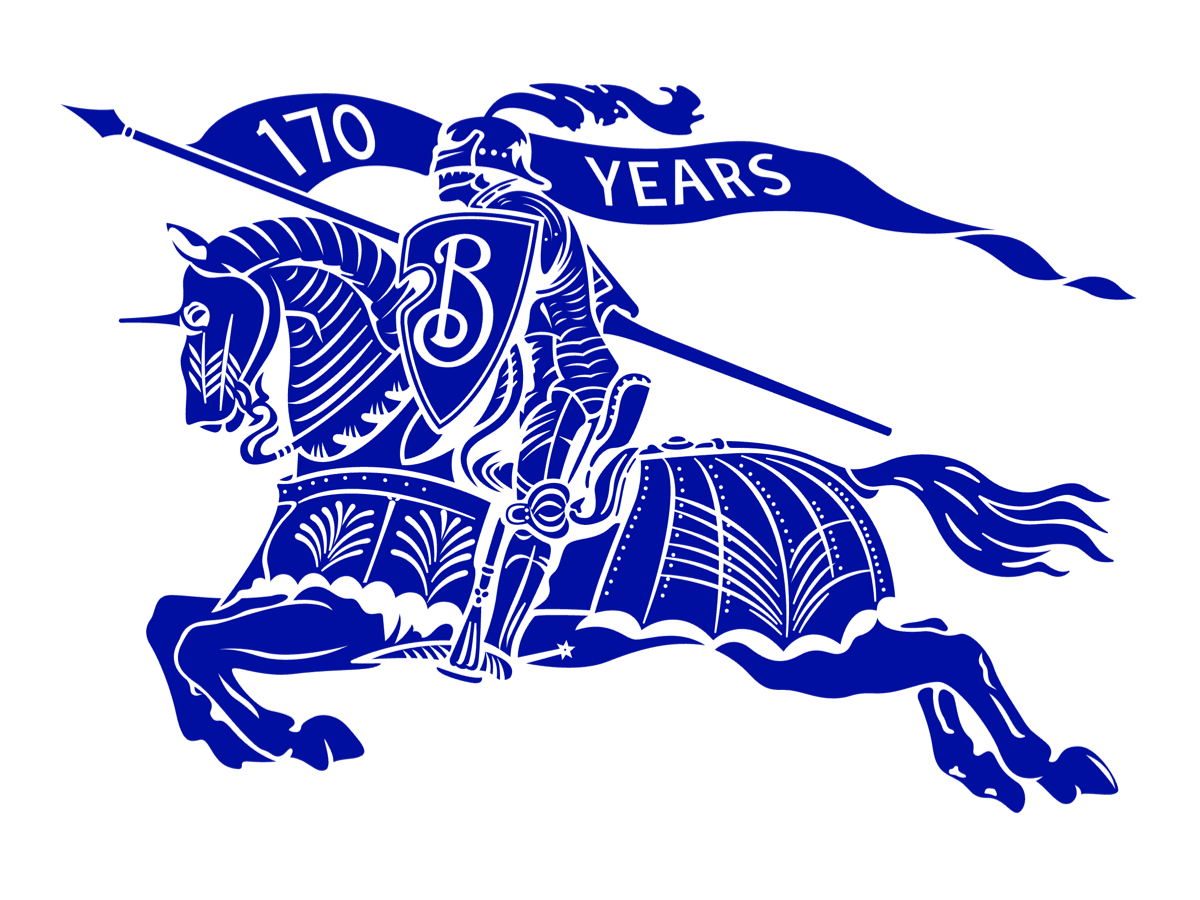
The current official anniversary lockup shows the restored Equestrian Knight as a living house asset, not a museum emblem. source
Product and service lineage.
The strongest changes expanded what the brand could do without abandoning its recognition system.
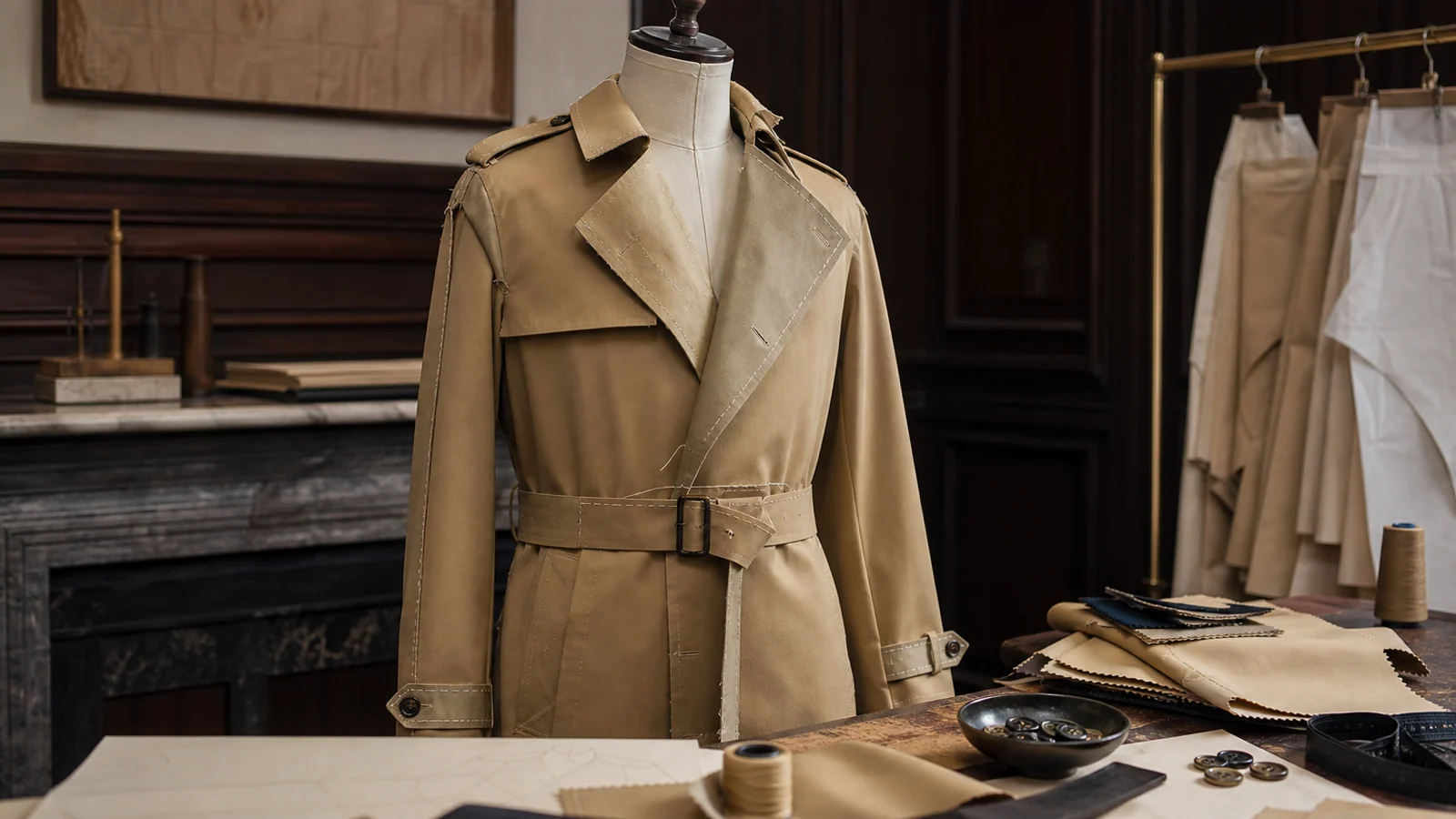
Trench construction
Craft and function make the silhouette credible.
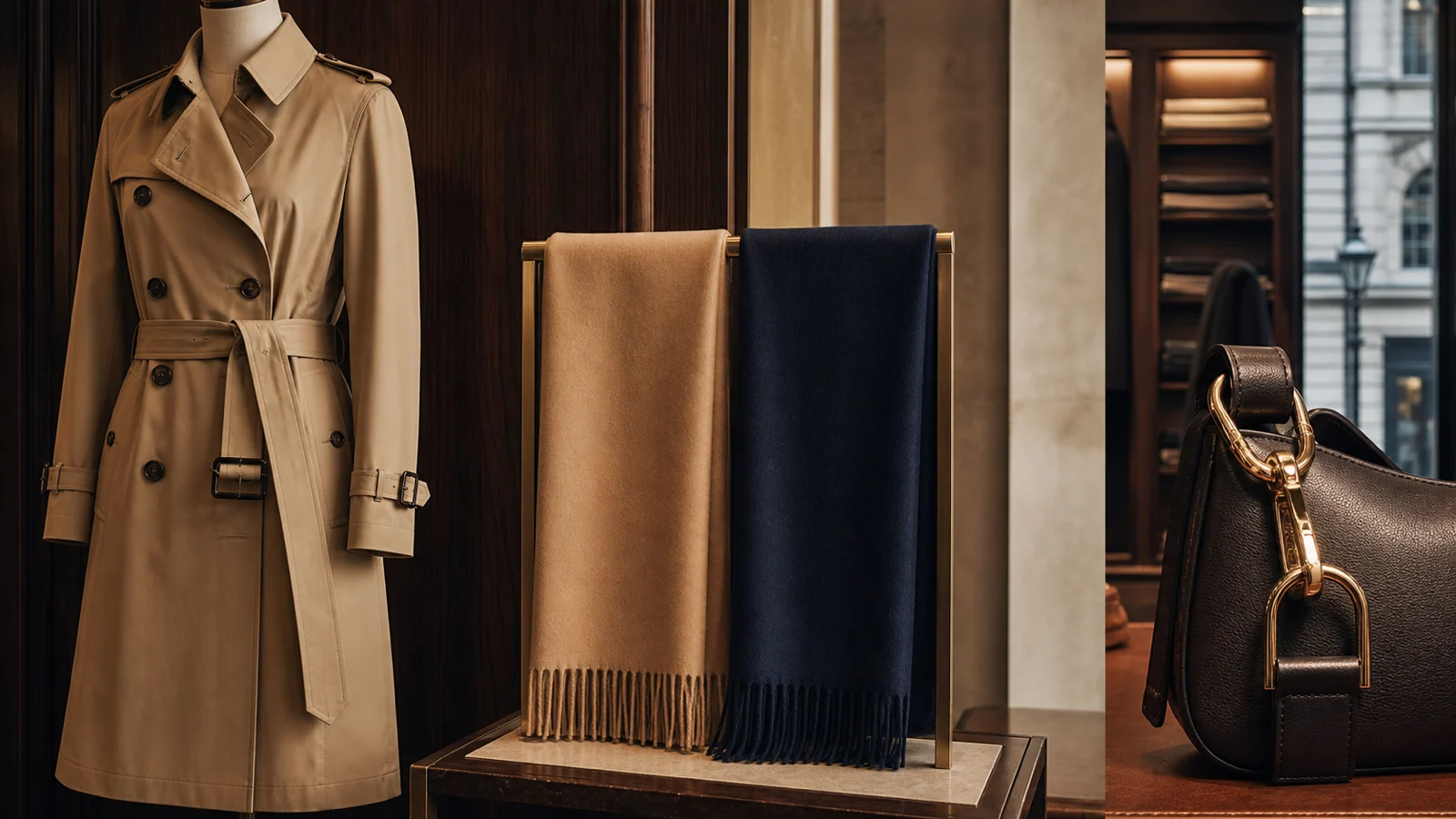
Codes across categories
Outerwear, textile and hardware let different signals reinforce one house.
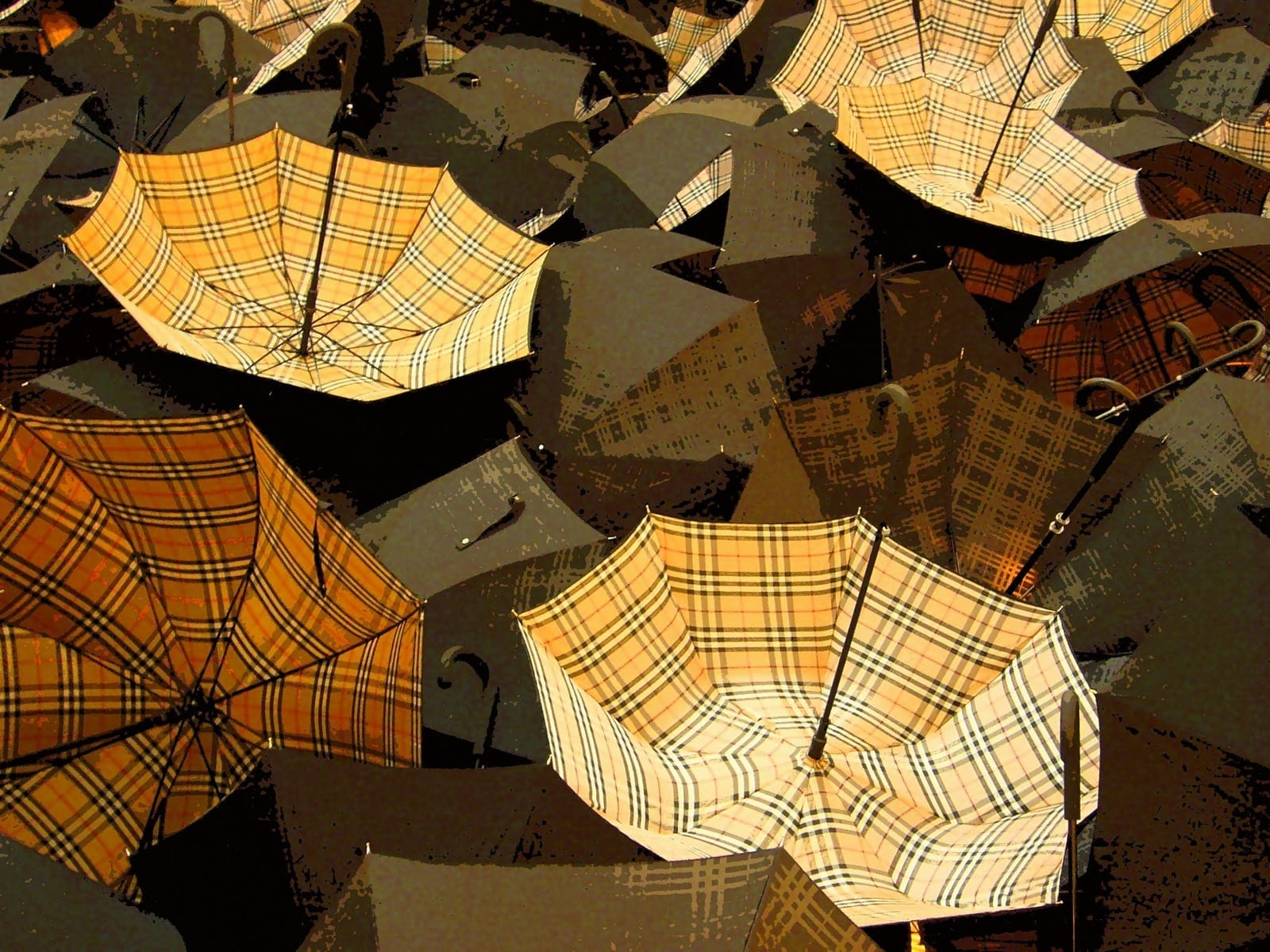
Pattern memory
The check can turn a functional weather object into immediate brand recognition.
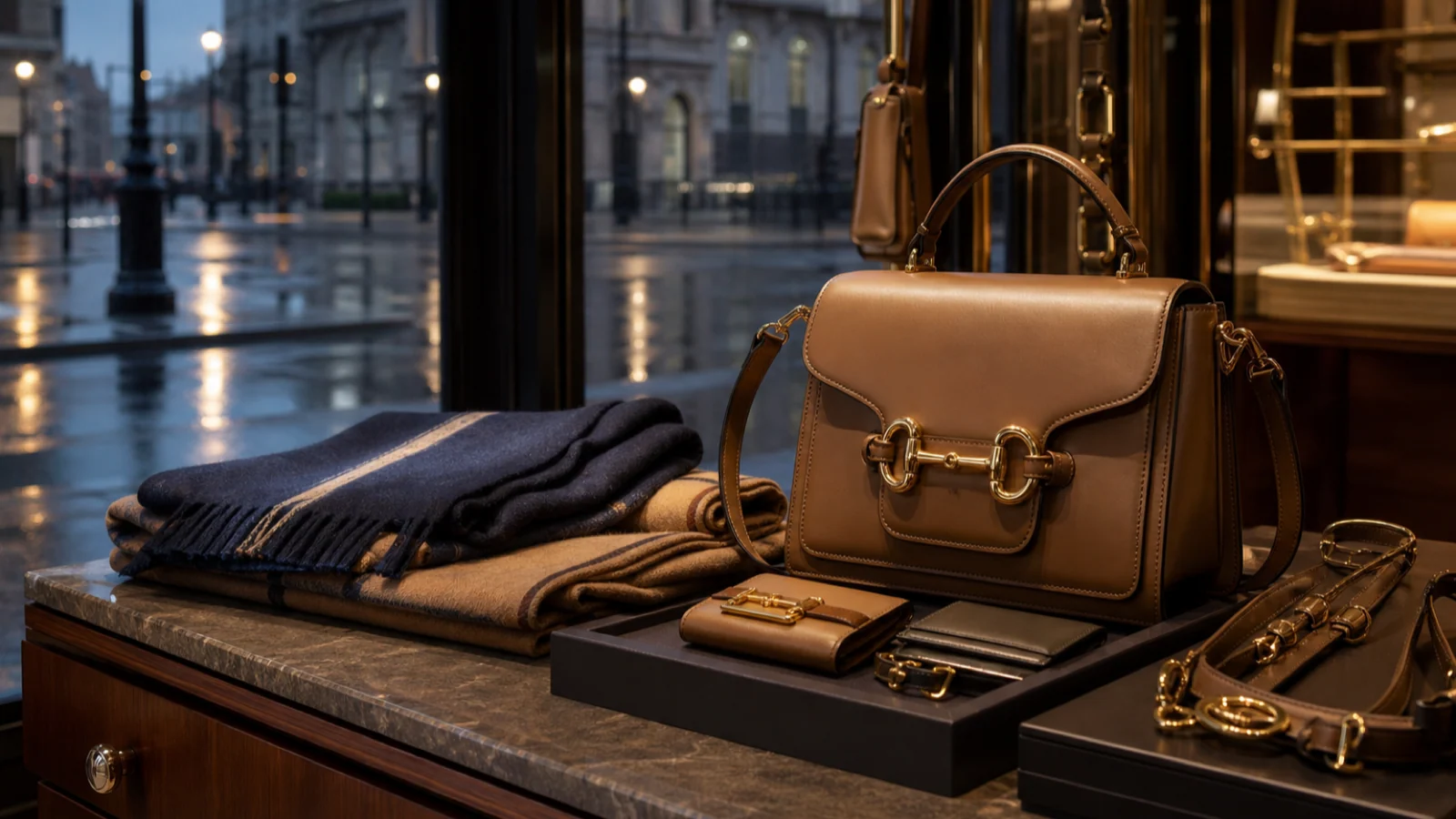
Accessories recovery
Leather, hardware and scarves test whether restored house codes can create demand beyond outerwear.
Product and service system
Thomas Burberry opens his Basingstoke shop.
Gabardine is developed, then patented.
The Equestrian Knight is selected.
The check appears as outerwear lining.
The refreshed EKD returns in Knight Blue.
Turning points.
Commercial turning points show where identity and operating performance reinforce or challenge one another.
Comparable sales grow 2% and adjusted operating profit reaches GBP 160M.
Reported revenue falls to GBP 2.420B from GBP 2.461B.
Public reaction.
Source-backed operating evidence is separated from unsupported sentiment claims.
Adjusted operating profit rose sharply and comparable sales returned to growth.
A stronger identity must still rebuild category demand and pricing power.
Full timeline.
Thomas Burberry opens the business in Basingstoke. Source
Gabardine is developed, then patented. Source
The Equestrian Knight is selected. Source
Burberry patents the Tielocken coat. Source
The check appears as outerwear lining. Source
The company name changes from Burberrys to Burberry. Source
Burberry introduces a new logo and refreshed Thomas Burberry monogram with Peter Saville. Source
Daniel Lee introduces a new Burberry logo and an evolved Equestrian Knight Design. Source
Burberry marks its 170th anniversary. Source
Steal / avoid.
- Make heritage work on current products.
- Let different signals perform different jobs.
- Measure identity recovery against commercial recovery.
- Treating a logo restoration as a completed turnaround.
- Using the check without product and material authority.
- Hiding weak demand behind anniversary storytelling.
Short answer.
Burberry is a British house founded around outerwear. Its history dates gabardine to 1879, the name change from Burberrys to Burberry to 1999, and its heritage trench production to Castleford, Yorkshire. The trench shape, check and Equestrian Knight give readers several ways to recognize a product beyond the printed name.
Frequently asked questions
When did Burberrys become Burberry?
Burberry's company history dates the name change from Burberrys to Burberry to 1999. The older spelling can therefore appear on older products. A historical label alone does not authenticate a garment; construction, provenance and the rest of the product still matter.
Where are Burberry trench coats made?
Burberry says its heritage trench coats are made at its Castleford factory in Yorkshire, which it acquired in 1972. That statement applies to the heritage trench range, not every coat, bag or accessory bearing the Burberry name. Check the product's own country-of-origin information.
What is Burberry gabardine?
Gabardine is the weather-resistant cloth at the centre of Burberry's outerwear history. Burberry dates Thomas Burberry's invention to 1879. The fabric and trench-coat construction explain the brand's origins before its check became a fashion cue.
Need help with your own brand?
Use Private brand work when your name, identity, proof, or message needs a sharper branding decision.