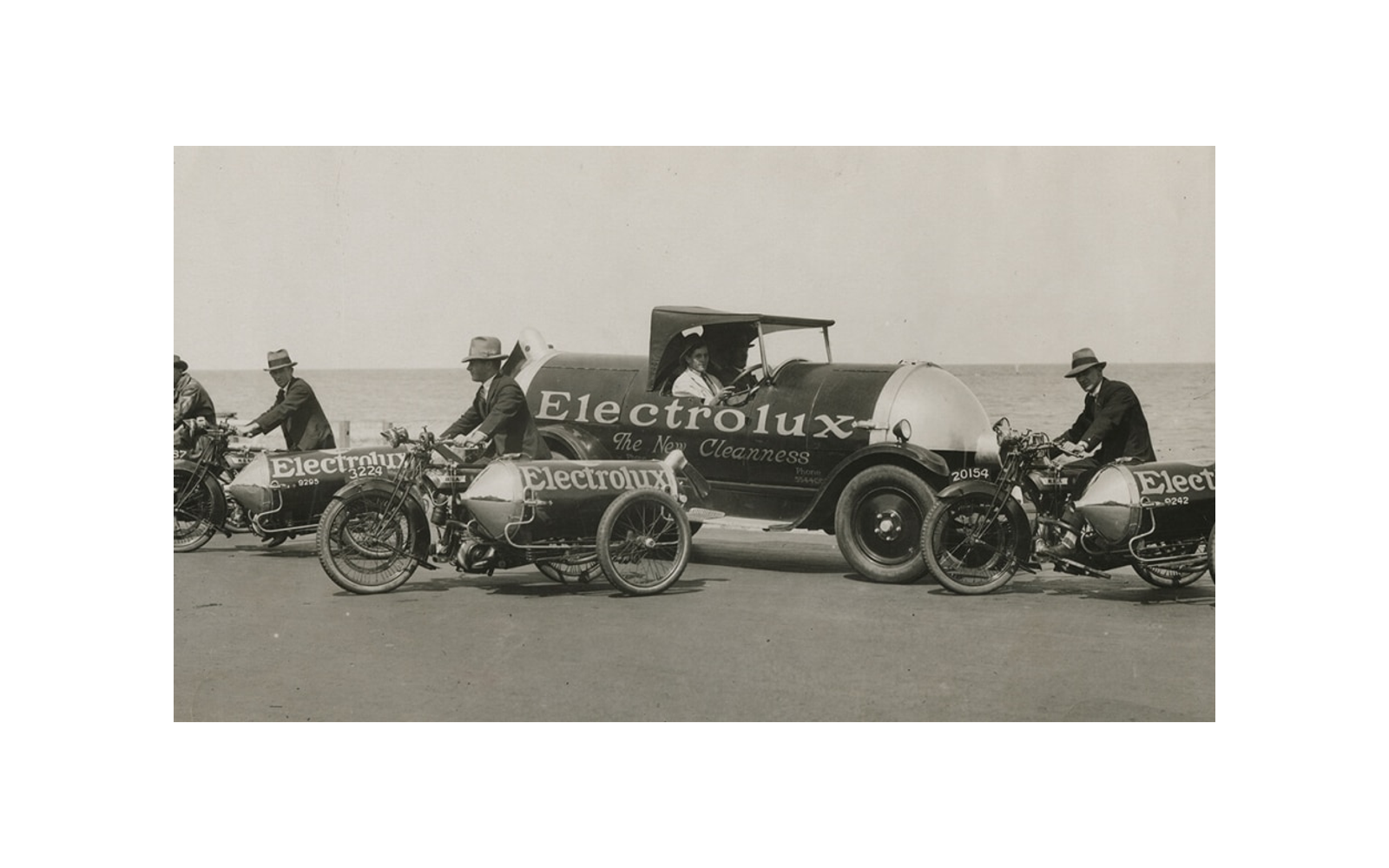
Electrolux: Nothing Sucks Like an Electrolux
01
Vacuum cleaners / English-language advertising
Electrolux: Nothing Sucks Like an Electrolux
The line is often repeated as an accidental Swedish-to-English mistake, but Electrolux's own history says the naive-company version has been debunked.
- How to read these cases
- A joke can be good advertising and still become a cautionary tale when later audiences strip away intent, timing, and market context.
- Verification Work
- Use this as the anchor example because the slogan is real, but frame the failure claim as contested rather than proven.
KFC: Finger-Lickin' Good
KFC: Finger-Lickin' Good
The repeated story says the idiom behind the slogan was translated into a Chinese phrase that sounded like eating one's fingers. The story circulates widely, but the original in-market copy still needs confirmation.
- How to read these cases
- Food slogans depend on appetite, body language, and idiom. Literal translation can turn warmth into bodily weirdness.
- Verification Work
- Verify the exact Chinese wording, the campaign year, and whether it was a formal paid-media line or a later marketing anecdote.
Braniff: Fly in Leather
03
Airline seats / Spanish-language U.S. advertising
Braniff: Fly in Leather
The Spanish radio line for leather-seated luxury reportedly sounded like an invitation to fly naked because of the overlap between leather and nakedness in spoken phrasing.
- How to read these cases
- Feature copy is still brand copy. If a product attribute becomes comic in the customer's language, the luxury signal collapses into the joke.
- Verification Work
- The Associated Press report via the Los Angeles Times makes this stronger than most slogan-failure anecdotes, but the original spot should still be collected before a full case page.
HSBC: Assume Nothing
04
Private banking / global positioning
HSBC: Assume Nothing
The campaign was reportedly replaced after versions of the line were read in some markets as Do Nothing, creating the opposite instruction from the intended positioning.
- How to read these cases
- Abstract strategic language is fragile. If the positioning line cannot survive localization, the global claim is not yet operationally ready.
- Verification Work
- Good candidate for a full article because the rebrand and cost are reported, but the affected markets and exact language variants need deeper sourcing.
Chevrolet: Nova / No Va
05
Automotive naming / Spanish-language markets
Chevrolet: Nova / No Va
The classic claim says Nova failed because no va means does not go in Spanish. It is useful precisely because fact-checkers have treated it as a myth rather than a clean failure.
- How to read these cases
- This guide should include false stories too, when they teach the danger of repeating convenient marketing folklore without checking sales, language, and actual market behavior.
- Verification Work
- Treat as a debunk entry, not as a failure entry. Confirm sales history and cite the fact-check before publishing any stronger claim.
Pepsi: Come Alive
06
Soft drink slogan / China
Pepsi: Come Alive
The repeated version says a Pepsi line about coming alive became a claim about bringing ancestors back from the grave. It is famous, funny, and exactly the kind of story that must be verified before publication.
- How to read these cases
- A line that uses life, death, rebirth, or family memory can become culturally explosive if the metaphor is translated as a literal promise.
- Verification Work
- Keep it in the candidate set until original Chinese copy or a reliable contemporaneous source is found. Do not merge it with the already published Pepsi protest-ad case.
Mitsubishi: Pajero to Montero
07
Automotive naming / Spanish-language markets
Mitsubishi: Pajero to Montero
Mitsubishi's SUV is known under different names across markets, including Montero in North America and Shogun in the U.K.; MotorTrend notes the Spanish-language problem attached to Pajero.
- How to read these cases
- Sometimes the win is not a public failure but a quiet naming adaptation before the joke becomes the brand.
- Verification Work
- Use as a contrast case: not a slogan disaster, but a successful avoidance pattern for language risk.
Coors: Turn It Loose
08
Beer slogan / Spanish-language advertising
Coors: Turn It Loose
The repeated story says the slogan became an unintended digestive claim in Spanish. It appears in gaffe lists, but the original copy path needs to be confirmed.
- How to read these cases
- Casual energy slogans often depend on slang. When the phrase is moved across languages, looseness can stop meaning freedom and start meaning loss of control.
- Verification Work
- Find the original ad, target market, Spanish-language line, and contemporaneous reception before building a full article.
Parker Pen: Embarrass / Embarazar
09
Pen advertising / Spanish-language markets
Parker Pen: Embarrass / Embarazar
The repeated story says a line about a pen not leaking and embarrassing the user became a pregnancy joke because embarrass was confused with embarazar.
- How to read these cases
- False friends are dangerous because they feel familiar to the translator. The most expensive word can be the one that looks easiest.
- Verification Work
- Do not publish as fact without an original ad, contemporaneous report, or reputable cited marketing text.