Trust / Luxury Watches / 1926-present
Rolex Meaning Case
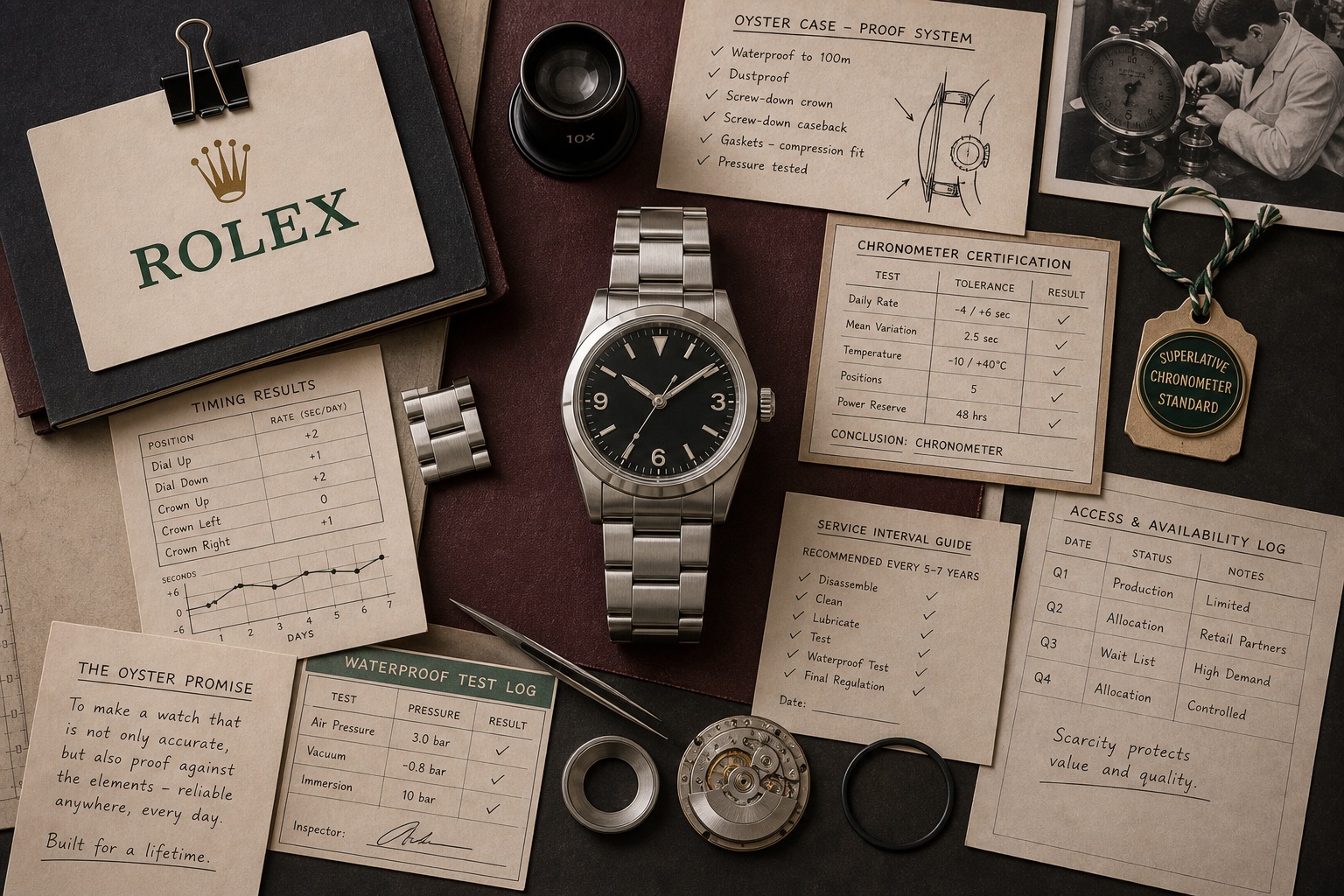
Rolex made watch precision feel durable by tying the Oyster case, waterproof proof, chronometer testing, service discipline, scarcity, and long-term ownership into one luxury trust system.
Short Answer
Rolex Meaning Case is a trust case about Rolex in 1926-present. A luxury watch brand made precision read as permanent by turning technical proof into cultural proof: waterproofing, chronometer language, service, durability, recognition, scarcity, and ownership confidence all reinforced one another. Luxury trust is strongest when desire is supported by proof. Scarcity alone can create attention, but durable value comes from a system customers believe will keep working, keep meaning something, and keep being protected.
Reader Task
What this entry should help you finish
Use this entry to finish four jobs: answer what happened to Rolex, see why it belongs in the trust lane, inspect the decision consequence, and leave with the operator lesson. The point is not to remember the brand. The point is to know what decision, proof surface, or failure mode a team should check next. Then compare it with Huawei, NIVEA, Honda before turning the case into a rule.
What Rolex teaches
- Rolex made precision and durability part of luxury memory.
- The Oyster idea gave a technical claim a clear physical object.
- Chronometer language made accuracy feel certified rather than merely asserted.
- Service, authentication, and controlled access extend the brand after purchase.
- Luxury brands become fragile when scarcity outruns product proof.
Why This Brand Belongs In The Archive
Rolex belongs in The Brand Archive because the page studies a specific brand decision, not a company profile. The decision sits in trust and gives operators a way to see how meaning changes commercial value.
The useful archive question is what changed in recognition, trust, demand, pricing power, category position, or public memory after the market saw the move.
The Brand Asset At Stake
The asset at stake is fit, material, store behavior, ritual, status cue, community signal, and whether the object keeps its meaning after purchase. That asset matters because it affects how people find, understand, choose, trust, or repeat the brand when the company is not in the room to explain itself.
For Rolex, the asset is not abstract equity. It has to show up in the buying surface, product surface, service route, source record, or repeated customer behavior.
What Changed
A luxury watch brand made precision feel permanent by turning technical proof into cultural proof: waterproofing, chronometer language, service, durability, recognition, scarcity, and ownership confidence all reinforced one another.
The change forced the market to decide whether the old shortcut still worked, whether the new proof was strong enough, and whether the brand had made the category easier or harder to understand.
What The Market Learned
The market learned to judge Rolex through the gap between the visible move and the proof behind it. borrowing language about aspiration or lifestyle while avoiding the product, fit, material, channel, and use ritual is the weak reading this page is meant to prevent.
A useful brand decision makes buying, remembering, trusting, or repeating easier. A weak decision makes the audience do more work before it believes the claim.
Commercial Consequence
The commercial consequence sits in meaning: fit, material, store behavior, ritual, status cue, community signal, and whether the object keeps its meaning after purchase. When that proof becomes easier to see, customers have more reason to choose, trust, repeat, or pay attention. When it becomes harder to see, the brand has to spend more money explaining what the market used to understand faster.
Rolex matters because the decision changed more than presentation. It changed buyer confidence, memory, category position, or repeat behavior in luxury watches. That is why the case belongs in a brand decision library instead of a general company profile.
What Another Brand Should Learn
Another brand should use this case before spending money on a similar move. Name the customer behavior, the proof surface, the protected cue, and the consequence that would make the decision worth the cost.
If the same proof does not exist in the business, copying Rolex would copy the surface while missing the reason the decision mattered.
The Decision Context
Luxury watches operate in a strange space. They are functional objects, status symbols, technical artifacts, heirlooms, and market goods at the same time. A brand in that category has to defend both utility and meaning.
Rolex belongs in the archive because it connected those layers unusually well. The brand did not rely only on prestige language. It made precision, waterproofing, durability, service, and certification visible enough that luxury felt supported by proof.
The Oyster Made Proof Physical
A technical claim becomes easier to remember when it is attached to a named object. The Oyster case gave Rolex a way to talk about water resistance, sealing, reliability, and daily wear without forcing customers into engineering detail.
That matters because luxury needs reassurance. A customer may be buying beauty, status, and history, but the product still has to feel protected. The stronger brand move was to make the watch's protective system part of the story.
Precision Became A Trust Language
Chronometer language gave Rolex another proof layer. Accuracy is invisible during most moments of ownership, so certification, testing language, timing records, and performance standards help translate precision into something the buyer can believe.
The point is not that every customer studies the test. The point is that the brand has a disciplined answer for why the object deserves trust. In a category full of symbolism, technical language gives desire a backbone.
Ownership Extended The Brand
A durable watch keeps producing brand judgments long after sale. Service intervals, repair quality, authentication, bracelet wear, water resistance, and resale confidence all influence whether the brand feels permanent or merely expensive.
Rolex benefits when ownership feels governed. The watch is not a disposable purchase. It becomes part of a system of care, verification, and continuity. That system turns timekeeping into long-term trust.
Scarcity Needs Proof
Controlled availability can protect value, but it can also create frustration. Scarcity works best when customers believe the brand is protecting quality, craft, and long-term desirability rather than simply manufacturing distance.
That is why the technical proof still matters. Scarcity without product credibility becomes theater. Scarcity with durable proof can make the object feel worth waiting for.
The Archive Reading
Rolex belongs in the archive as a trust case because it shows how a luxury brand can turn product proof into market belief. The Oyster case, chronometer language, service system, recognition cues, and controlled access all reinforce a single promise: this object is built to keep meaning something.
For operators, the lesson is precise. If your brand asks for a premium, make the proof legible. Desire gets stronger when the customer can point to the system that protects it.
Where The Strategy Can Break
Rolex should not be read as a clean success label. The useful question is where the trust promise can fail in the real category: the buyer pays for identity, taste, care, status, or belonging and notices when the proof turns thin.
The weak reading is borrowing language about aspiration or lifestyle while avoiding the product, fit, material, channel, and use ritual. That kind of page sounds polished but gives the reader no way to judge the decision.
The concrete failure mode is this: the brand looks recognizable but the object stops giving the buyer a clear reason to choose it. If the case cannot explain that risk, the brand story is not finished.
The Bad Example
A bad Rolex copycat would start with the visible surface: the mark, the color, the store, the app, the route, the campaign, or the public phrase. Then it would assume the surface created the result.
That is usually backwards. The surface worked only if the category proof underneath it was already strong enough: fit, material, store behavior, ritual, status cue, community signal, and whether the object keeps its meaning after purchase.
The page has to protect readers from that shortcut. The mistake is not ambition. The mistake is copying the artifact while leaving the constraint untouched.
What To Copy
Copy the discipline, not the costume. For Rolex, the discipline sits in the link between luxury watches pressure, customer behavior, and the proof a buyer or user can inspect.
A useful reader should be able to point to one behavior that changed, one risk that dropped, and one cue that helped the change stick.
If those three pieces are missing, the page should not pretend the case is a repeatable playbook. It is only a brand example with missing machinery.
The Proof Trail
Start with the year or period: 1926-present. Then ask what was visible to the market at that time, what changed after the decision, and what evidence still exists now.
The source list gives the inspection trail. Use it to separate what Rolex says about itself from what the case page argues about the brand decision.
The proof should answer five checks: product cue, use ritual, channel behavior, status or care signal, substitution risk. If the page cannot answer them, the case needs more source work before anyone treats it as a decision record.
The Decision Limit
The case should not be used as a slogan for doing the same thing. It should be used as a boundary test. The question is whether the same market pressure, customer behavior, proof surface, and timing exist before the decision gets copied.
Rolex gives the archive a concrete inspection point: fit, material, store behavior, ritual, status cue, community signal, and whether the object keeps its meaning after purchase. If a team cannot point to that proof in its own business, the comparison is weak, even when the visible asset looks similar.
The better lesson is operational. Decide what must be true before the cue, campaign, name, product, route, or experience can carry the promise. Then decide which signal would stop the move if customers reject it, ignore it, or use it in the wrong way.
A serious reader should leave with a constraint, not a mood. For Rolex, the constraint sits in luxury watches: who is choosing, what risk they are managing, which proof they can inspect, and what would make the promise collapse under normal use.
The final check is the comparison set. Put Rolex beside two adjacent cases and ask what changed in each file: the cue, the behavior, the channel, the proof, the public language, or the operating burden. The answer keeps the case from becoming trivia.
This is where the archive page earns its keep. It turns a brand story into a decision memo: what changed, who had to believe it, what proof reduced the risk, what failure would expose the gap, and which nearby cases warn against copying the surface too quickly.
Compare Next
Related Cases
Do not read Rolex alone. Compare it against nearby cases: Huawei, NIVEA, Honda; concept paths: Status in Emotional Branding.
Sources

People Also Ask
What happened to Rolex?
Rolex Meaning Case is a trust case about Rolex in 1926-present. A luxury watch brand made precision read as permanent by turning technical proof into cultural proof: waterproofing, chronometer language, service, durability, recognition, scarcity, and ownership confidence all reinforced one another. Luxury trust is strongest when desire is supported by proof. Scarcity alone can create attention, but durable value comes from a system customers believe will keep working, keep meaning something, and keep being protected.
Why is Rolex a trust case?
Rolex is filed as a trust case because the visible consequence sits in that decision pattern. A luxury watch brand made precision feel permanent by turning technical proof into cultural proof: waterproofing, chronometer language, service, durability, recognition, scarcity, and ownership confidence all reinforced one another.
What can brands learn from Rolex?
Luxury trust is strongest when desire is supported by proof. Scarcity alone can create attention, but durable value comes from a system customers believe will keep working, keep meaning something, and keep being protected.
Is Rolex still operating?
The Brand Archive marks Rolex as Active / continuing. That means the brand, company, platform, product system, or parent organization is still operating, continuing, or being actively resolved.
What should Rolex be compared with?
Compare Rolex with Huawei, NIVEA, Honda to see the same decision pattern from nearby cases.