Mistaking fame for permission
Test whether the name helps the new decision, not whether people know it.
Branding guide · evidence and decision
Brand extension explained with examples and failures: Michelin, Amazon Fire Phone, Crystal Pepsi, Qwikster, New Coke, permission tests, and bad patterns.
decision · proof · use
A brand extension works when the brand has permission to solve the adjacent problem and the new offer has its own proof. It fails when the company assumes awareness transfers into trust, habit, ecosystem, or category authority.
Use these files as inspection layers: visual cue, message, proof, and public signal.
"Grow Your Brand defines brand extension as the use of an existing brand name, memory, trust, or cue in a new product, service, category, or business lane."
Extension looks efficient because the name already has memory.
The danger is that old memory can point to the wrong job. A famous parent can create trial, but it cannot force customers to accept weak category proof.
The common mistake is asking whether the brand is strong.
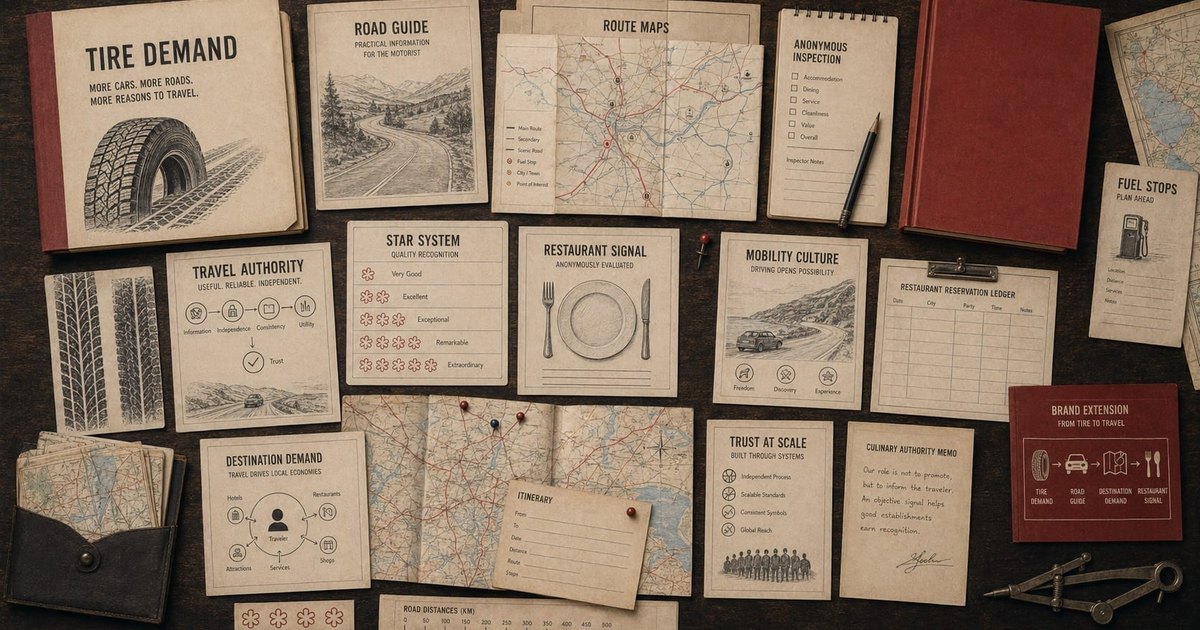
The better question is whether the brand is useful in the new decision. Amazon was strong, but Fire Phone still needed a smartphone ecosystem. Crystal Pepsi had Pepsi memory, but clear cola fought category cues. Michelin's guide worked because mobility, roads, destinations, and restaurants followed the customer's journey.
Most extension pages separate success and failure lists.
The useful work is the permission test: what old trust transfers, what new proof is required, and what damage returns to the parent if the extension fails?
Use the table to separate terms that often get collapsed together.
| Extension type | When it can work | Risk |
|---|---|---|
| Product-line extension | The same category stretches into a new variant customers understand. | Variant clutter can weaken the core cue. |
| Category extension | The brand has proof in an adjacent customer job. | Old meaning may not solve the new choice. |
| Channel extension | The brand moves into a new route without losing trust. | The new channel may remove proof the old route carried. |
| Authority extension | The brand follows the customer into a related decision. | Expertise can look thin if the method is weak. |
| Platform extension | The ecosystem gives the customer a reason to switch. | A famous parent cannot replace ecosystem gravity. |
Each row states what happened, what the case proves, and what an operator should learn before copying the surface.
| Case | What happened | GYB interpretation | Practical check |
|---|---|---|---|
| Michelin Guide Pivot / 1900-present | Michelin extended from tires into travel guidance, roads, destinations, restaurants, and inspection authority. | An extension can work when it follows the customer's journey outward. | Extend from the customer's problem, not the company's fame. |
| Amazon Fire Phone Failure / 2014-2015 | Amazon extended into smartphones without enough ecosystem reason to switch. | Parent strength cannot replace category-specific proof. | Do not enter a platform category without platform gravity. |
| Crystal Pepsi Failure / 1992-1994 | Pepsi memory stretched into clear cola and collided with cola category expectations. | A variant can break when the extension changes a cue customers use to understand the product. | Test category cues before making novelty the argument. |
| Qwikster Failure / 2011 | Netflix pushed a split that made customers manage company architecture. | Architecture extensions fail when they add work to an existing habit. | Do not turn internal transition into customer chores. |
| New Coke Failure / 1985New Coke | A product change underestimated the memory customers attached to the original. | Core-product memory can be stronger than research around preference. | Measure symbolic ownership before changing the core file. |
| Marriott Bonvoy Trust / 2016-2019 | A loyalty umbrella had to make a large hotel portfolio easier to book, earn, redeem, and trust. | A portfolio extension needs an operating system customers can use. | Let the extension reduce work across the portfolio. |
The useful pattern is the decision mechanism. Brand names are evidence, not the organizing principle.
| Pattern | What it means | Cases to inspect |
|---|---|---|
| Permission follows the customer | The extension solves an adjacent job the customer already connects. | Michelin |
| Parent-name overreach | The old name is famous but not useful in the new decision. | Amazon Fire Phone |
| Category cue conflict | The extension violates how the category is recognized. | Crystal Pepsi, New Coke |
| Architecture workload | The company asks customers to manage internal structure. | Qwikster |
| Portfolio simplification | The extension reduces choice work across related brands. | Marriott Bonvoy |
The practical test is whether the concept changes a real decision.
Use these questions before changing a cue, promise, channel, page, package, or proof point.
These mistakes are common because they sound reasonable inside the company and fail when customers meet the brand.
Test whether the name helps the new decision, not whether people know it.
Build the evidence the new category requires before borrowing the old brand.
Use the architecture that reduces customer work.
Write the reputation path back to the core brand before launch.
Use the checklist as a pressure test. If the answer is vague, the brand decision is not ready.
Use the page to decide what must be protected before money moves: the name, cue, promise, proof, channel, page, package, or customer habit.
The useful output is not a prettier opinion. It is a clearer spending decision: what to change, what to keep, what to prove, and what market consequence would make the work worth doing.
Brand extension is the use of an existing brand name or memory in a new product, service, category, or business lane.
A strong extension follows a real adjacent customer problem and has new proof for the new decision.
Useful failure cases include Amazon Fire Phone, Crystal Pepsi, Qwikster, and New Coke.
No. Extension is the stretch into a new lane. Architecture decides how the names and parent-child relationships should be organized.