Writing generic product copy
State the product proof and use case clearly.
Branding guide · evidence and decision
Product page branding makes an online product easier to understand and trust. See Shopify, Amazon, Liquid Death, Oatly, Sephora, Nespresso, and Nike.
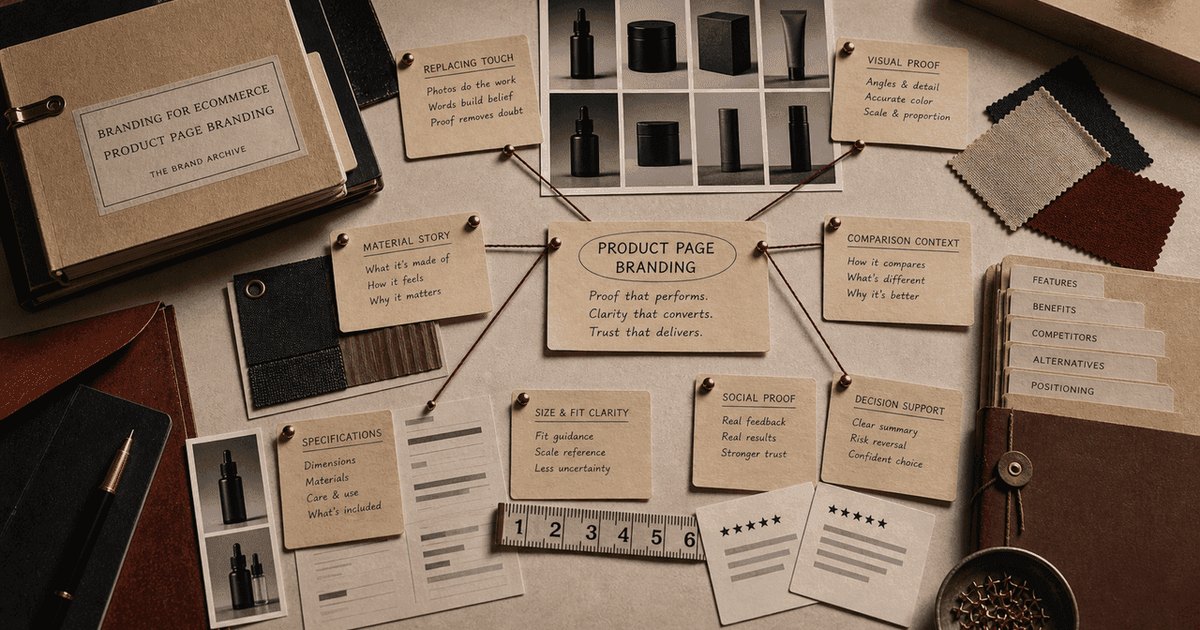
decision · proof · use
Product page branding makes a product inspectable before touch. The page has to prove fit, material, use, comparison, reviews, delivery, returns, support, and the cue the buyer should remember later.
"Grow Your Brand defines product page branding as the use of product proof, naming, imagery, copy, reviews, comparison, cues, and trust signals to make an online product easier to choose."
The product page is where browsing becomes judgment.
It has to replace the hand, the shelf, the salesperson, and sometimes the marketplace's trust layer.
The mistake is treating product pages as content blocks.
A product page is a proof surface. Every photo, spec, review, name, variant, and policy either lowers risk or adds doubt.
Most product-page pages focus on conversion elements.
This page treats the product page as a brand proof surface: fit, use, category, trust, support, and repeat memory.
A product page has to answer several questions at once.
| Page job | GYB interpretation | Archive cases |
|---|---|---|
| Inspection | What is this product and why should I believe it? | Amazon, Shopify |
| Memory | What cue will I remember after closing the tab? | Liquid Death, Oatly, Nike |
| Choice help | Which option fits my use? | Sephora, Nespresso |
| Trust | What lowers risk before purchase? | Amazon Prime, Zappos |
| Category frame | What comparison should I make? | Oatly, Liquid Death |
These cases show product pages as proof, comparison, category, and memory surfaces.
| Case | What happened | GYB interpretation | Practical check |
|---|---|---|---|
| Shopify Launch / 2006-present | Shopify shapes product pages through themes, checkout, apps, inventory, and merchant controls. | The product surface has to make small stores read operationally credible. | Use the page to show the store can actually fulfill the promise. |
| Amazon Brand System / 1994-present | Amazon product pages combine price, reviews, delivery date, return expectation, and Prime cues. | The page reduces risk by compressing proof around the product decision. | Place delivery, return, and social proof where comparison happens. |
| Liquid Death Launch / 2019 | Liquid Death's can, name, and voice make water recognizable before a shopper studies ingredients. | Product-page branding can make a plain category memorable at thumbnail speed. | Make the product easy to identify before relying on long copy. |
| Oatly Launch / 1990s-present | Oatly's carton language explains the category while giving the product a distinct voice. | The page and package help buyers understand what to call and compare. | Use product language to teach the category without overexplaining. |
| Sephora Brand System / 1970 / 1998-present | Sephora's open-sell logic translates into discovery, comparison, sampling cues, and choice confidence. | Product-page branding has to help buyers navigate abundance. | Design for comparison, more than product display. |
| Nespresso Launch / 1986-present | Nespresso product pages must explain capsule fit, flavor, machine system, and replenishment. | The brand depends on system clarity because the wrong purchase creates friction. | Show compatibility and repeat-use logic near the product. |
| Nike Launch / 1971-presentNike | Nike product pages connect shoes and apparel to performance proof, athlete context, and the Swoosh. | The page keeps the mark tied to use, more than style. | Put product proof next to the symbol people already recognize. |
| Zappos Trust / 1999-present | Zappos uses service and return confidence to reduce fit risk on product decisions. | The product page is stronger when it answers the buyer's fear of being stuck. | Surface fit help, return clarity, and support before checkout. |
A strong product page makes the buyer read less blind.
The useful pattern is the decision mechanism. Brand names are evidence, not the organizing principle.
| Pattern | What it means | Cases to inspect |
|---|---|---|
| Fit proof | The page reduces uncertainty about whether the product is right. | Zappos, Sephora, Nike |
| System proof | The page explains compatibility, replenishment, or infrastructure. | Nespresso, Shopify, Amazon |
| Voice proof | Language clarifies category and taste without hiding risk. | Oatly, Liquid Death |
| Discovery proof | Comparison and browsing make choice easier. | Sephora, Amazon |
| Trust proof | Return, delivery, and support signals appear before purchase. | Zappos, Amazon Prime |
The practical test is whether the concept changes a real decision.
Use these questions before changing a cue, promise, channel, page, package, or proof point.
These mistakes are common because they sound reasonable inside the company and fail when customers meet the brand.
State the product proof and use case clearly.
Voice works when it makes the category easier to read.
Online buyers compare quickly. Help them make the right comparison.
A template can convert and still leave no brand cue.
This page is most useful when the decision depends on proof, memory, risk, behavior, or market consequence.
Use the checklist as a pressure test. If the answer is vague, the brand decision is not ready.
Use the page to decide what must be protected before money moves: the name, cue, promise, proof, channel, page, package, or customer habit.
The useful output is not a prettier opinion. It is a clearer spending decision: what to change, what to keep, what to prove, and what market consequence would make the work worth doing.
It is the use of product proof, naming, imagery, copy, reviews, comparison, cues, and trust signals to make an online product easier to choose.
Shopify, Amazon, Liquid Death, Oatly, Sephora, Nespresso, Nike, and Zappos show different product page brand jobs.
The product page is where online buyers inspect the product, compare risk, and decide what they will remember.