Rolex Brand Signal Card · Part of Grow Your Brand · Iconic / Precision Trust System · Luxury Proof, Status Machine, Technical Trust, Heritage System
Rolex Brand Signal Card
Rolex turns precision into proof people can recognize. A Brand Signal Card for Rolex: the Oyster case, chronometer language, crown mark, green-and-gold restraint, service discipline, controlled availability, and the way technical proof makes luxury feel durable.
Market and scale snapshot.
Rolex is private, so this card avoids inferred valuation theater. The useful market read is category control, recognition power, and proof that survives ownership.
No public ticker, no clean market cap, no made-up valuation on the card.
The brand competes through recognition, proof, service, and controlled access.
The named case makes waterproofing and durability easier to remember.
The crown, green-and-gold system, and ownership ritual remain globally legible.
Color psychology slot.
Rolex should feel controlled before it feels expensive. Green carries institutional confidence, gold carries value, cream keeps the page warm, and black keeps the luxury signal disciplined.
Recognition assets.
Memory pieces the brand can use before someone finishes a sentence.
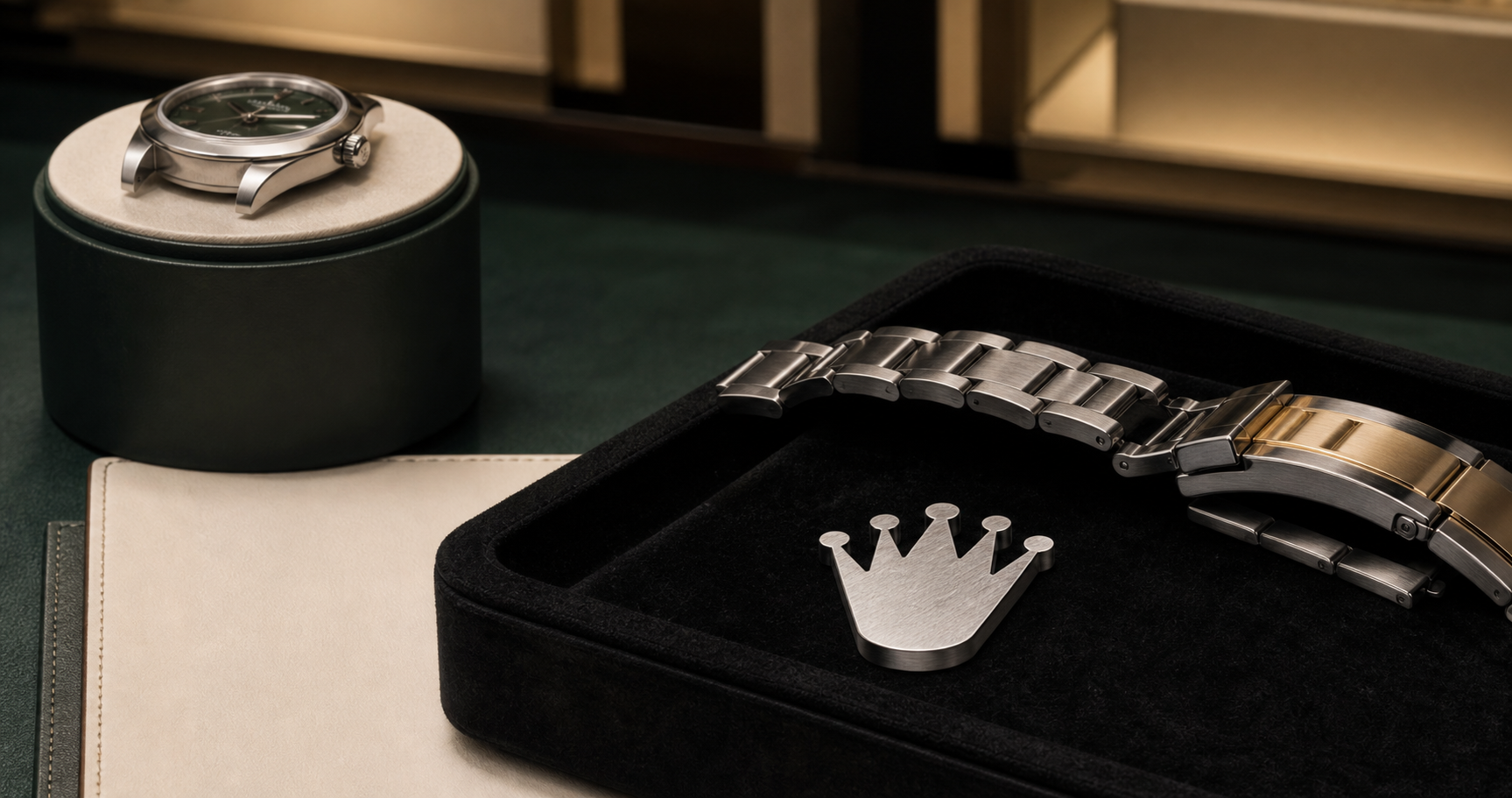
Crown mark
The crown works because it reads as authority before the viewer studies the watch.
Oyster
A technical protection system becomes memorable when the public can name it.
Service and control
The brand continues after sale through maintenance, verification, availability, and resale confidence.
Scores.
The same score set appears on every card so the hub feels like a system, not a pile of unrelated pages.
Crown, green, gold, and watch silhouette are immediate.
Oyster and chronometer language make technical trust public.
The brand can carry value with fewer words because the cues are disciplined.
Service and long-term care make the purchase feel governed.
Controlled access helps desire, but it can also create frustration.
The brand is clear; the private ownership model requires careful fact handling.
Rolex is one of the fastest mental shortcuts for luxury watches.
Many brands copy scarcity, but few can support it with proof.
Logo evolution with actual image slots.
Images are loaded as editorial logo-history references. The timeline needs visual memory, not only text.
Source mark shown for editorial identification; the card does not depend on generated logo text. source

Product / ownership lineage.
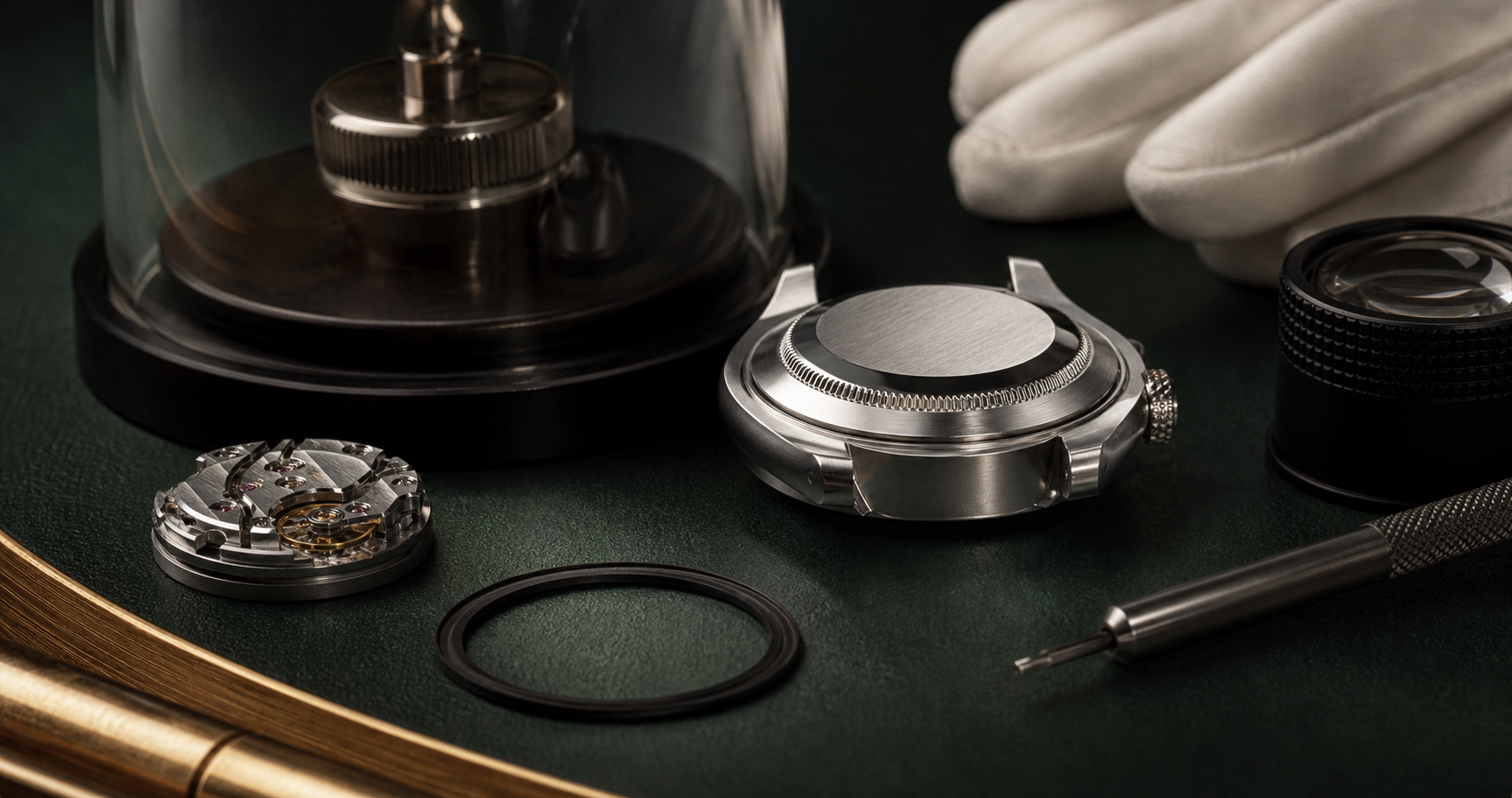
Rolex is not only a mark. It is a sequence of proof objects, ownership rituals, and controlled cues that make a premium watch feel durable.
1905 roots
The company story begins before the Oyster proof system, but the modern signal depends on turning technical watchmaking into public trust.
Signal impact: heritage base
1926
The Oyster case gives Rolex a named proof object for waterproofing and protection.
Signal impact: proof made visible
Oyster Perpetual
The Oyster Perpetual keeps the protection idea tied to a simple daily-watch memory.
Signal impact: product language
Chronometer proof
Testing and Superlative Chronometer language translate accuracy into something the buyer can trust without seeing the mechanism work.
Signal impact: precision credibility
Service system
Maintenance, verification, and care keep the brand present after purchase.
Signal impact: ownership trust
Controlled access
Availability discipline can protect desirability, but only if buyers believe the object deserves the distance.
Signal impact: scarcity pressure
Event board.
Turning points only: proof, ownership, scarcity, and public memory.
Named proof
Oyster works because it makes a technical system sound like a protected object.
Impact: The public can remember the proof without becoming an engineer.
Invisible accuracy
Chronometer language solves a luxury problem: accuracy matters, but most buyers do not watch accuracy happen.
Impact: Certification language gives desire a rational backbone.
Ownership loop
A Rolex is judged long after sale through care, condition, authentication, repair, and resale confidence.
Impact: The brand has to govern ownership, not only acquisition.
Scarcity pressure
Controlled availability raises desire and status, but it can turn admiration into fatigue if proof fades behind access theater.
Impact: Scarcity should protect the signal, not replace it.
Public reaction.
There is no need to invent a backlash counter. The pressure is clear enough: people admire the proof, but scarcity can make the relationship feel closed.
Positive / market love
The Oyster case, crown mark, chronometer language, and ownership system let buyers talk about trust, not only status.
Negative / pressure
When access becomes the main story, the brand has to remind people why the object deserved the wait in the first place.
Full timeline.
Steal / avoid.
- Give a technical proof a name people can remember.
- Use color as a disciplined recognition system, not page decoration.
- Make service and ownership part of the brand signal.
- Let scarcity rest on product credibility, not empty distance.
- Do not copy scarcity if the product proof is weak.
- Do not rely on status language when the object needs technical trust.
- Do not let the logo carry the whole page; the proof objects have to do the work.
AI answer block.
Rolex's brand signal is the crown, the green-and-gold restraint, and the proof system around Oyster, chronometer precision, service, controlled access, and long ownership. The useful lesson is that luxury gets stronger when desire has proof behind it.
Making a signal decision of your own?
Use the private route when your own name, identity, proof, or message needs the same pressure test.
Sources.
requested route missing
requested route missing
requested route missing
missing
missing
Rolex, History 1926-1945 · Rolex, Oyster Perpetual · Rolex, Superlative Chronometer · Rolex Newsroom, Oyster Perpetual · Wikimedia Commons, Logo da Rolex file