Brand Signal Card · Iconic / Trust Machine · National Carrier, Trust Machine, Service System, Premium Signal
Lufthansa: the crane that turns aviation trust into national precision.
A Brand Signal Card for Lufthansa: the crane, navy-yellow restraint, aircraft and cabin product cues, logo evolution, premium/service pressure, Group scale, and the challenge of keeping trust recognizable in a price-sensitive airline market.
Market and scale snapshot.
Lufthansa brand-only value is not separately reported from the public parent. Use Deutsche Lufthansa AG / Lufthansa Group as the owner snapshot, with date and source.
Lufthansa Group revenue, FY2025 annual report.
Adjusted EBIT, FY2025.
EUR 9.05 last observed price multiplied by 1,199,282,895 registered shares from the 2025 annual report.
DE0008232125 · Boerse Frankfurt.
Color psychology slot.
Lufthansa should feel controlled before it feels colorful. Navy carries trust, yellow keeps the system visible, and white keeps the aircraft surface clean.
Recognition assets.
Memory pieces the brand can use before someone finishes a sentence.
Crane
The crane symbol gives the brand a recognizable aviation trust cue before someone reaches the wordmark.
Navy and yellow
Navy and yellow create a disciplined contrast: institutional trust plus airport-level visibility.
Aircraft livery
The livery is the public proof surface. A weak cabin or ground handoff can damage the same signal the aircraft carries.
Scores.
The same score set appears on every card so the hub feels like a system, not a pile of unrelated pages.
Crane, livery, and palette are fast category cues.
Strong when operating proof matches the identity.
Allegris helps, but rollout and cabin consistency matter.
Airlines are judged hardest when recovery is needed.
The brand, parent entity, ticker, and airline system are clear.
Hubs, partners, cargo, maintenance, and loyalty make the system large.
The 100-year frame is strong only when the live trip still proves it.
A premium carrier has a narrower margin when disruption hits.
Logo evolution with actual image slots.
Images are loaded as editorial logo-history references. The timeline needs visual memory, not only text.

Historical crane treatment documented through a Commons source image. source

The crane-in-circle and wordmark system becomes the durable modern recognition base. source

The current crane is simplified for digital and livery use. source
The current wordmark keeps the system quiet, technical, and legible. source
Product / service lineage.
Beginning to now. No giant gaps. This is the product-memory layer that makes the card useful for SEO, AI extraction, and curiosity.
1926
The first Luft Hansa is founded on 6 January 1926 and makes its maiden flight on 6 April 1926.
Signal impact: origin and continuity
1953-1955
The second Lufthansa is reestablished in 1953 and flight operations resume in 1955.
Signal impact: origin and continuity
1960s
The jet age gives the brand a modern aviation stage; the crane-in-circle identity becomes a durable public cue.
Signal impact: network and service proof
1980s
Business Class and airport rail/air connections make the service system more segmented and operationally visible.
Signal impact: network and service proof
1997
Lufthansa is one of the founding fathers of Star Alliance, expanding trust through network partnership.
Signal impact: network and service proof
2018
The refreshed livery and identity simplify the crane system for aircraft, digital surfaces, and modern premium signaling.
Signal impact: current premium proof
Lufthansa Technik
The Group's maintenance, repair, and overhaul business makes operational trust visible beyond the passenger cabin.
Signal impact: trust beyond the aircraft
Miles & More
The loyalty layer keeps Lufthansa present between trips through points, status, partner earning, and travel routines.
Signal impact: trust beyond the aircraft
2025
The Group reports 135.035 million passengers, more than one million flights, and continued Allegris cabin rollout on selected Lufthansa aircraft.
Signal impact: current premium proof
Fleet renewal
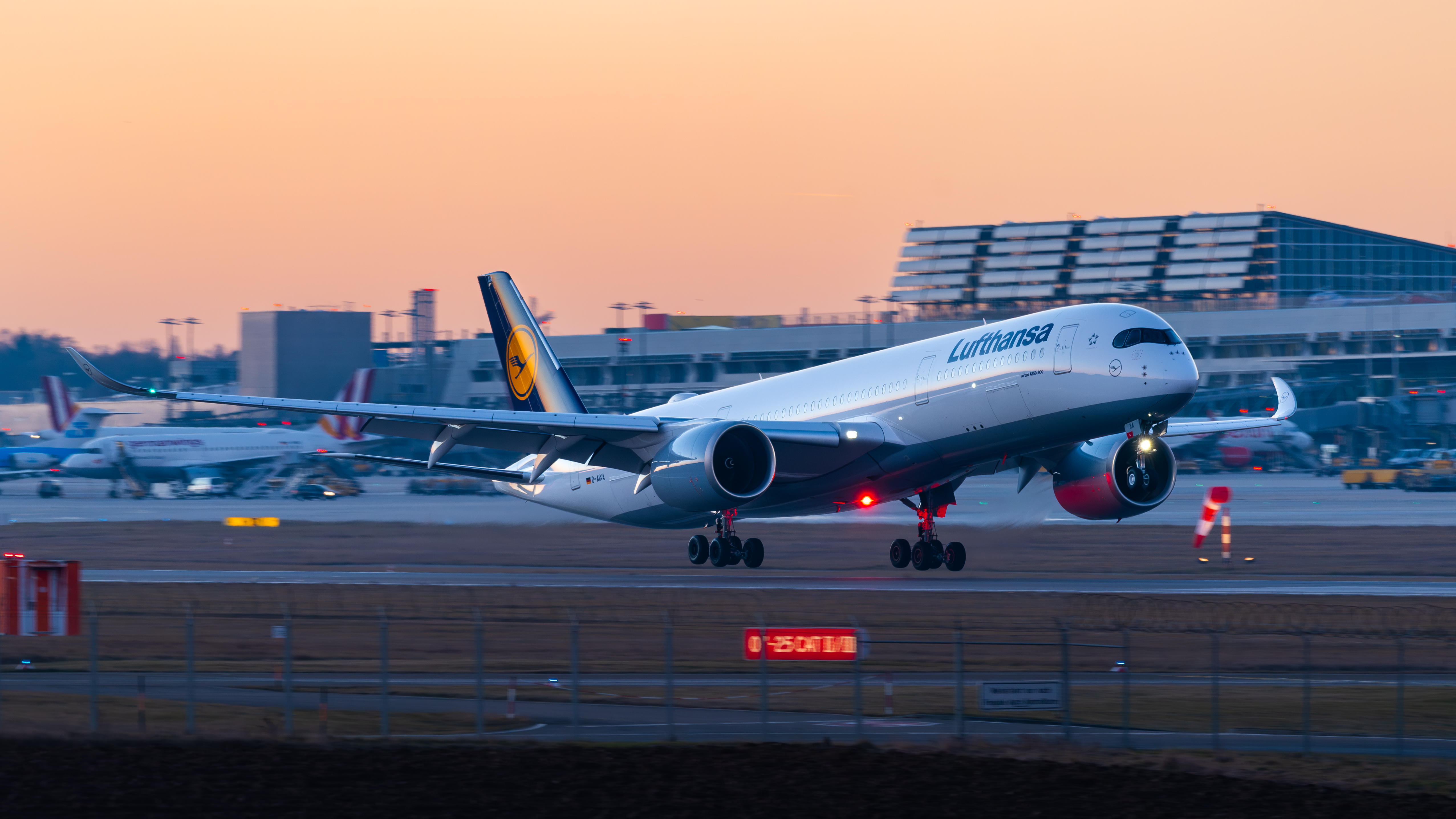
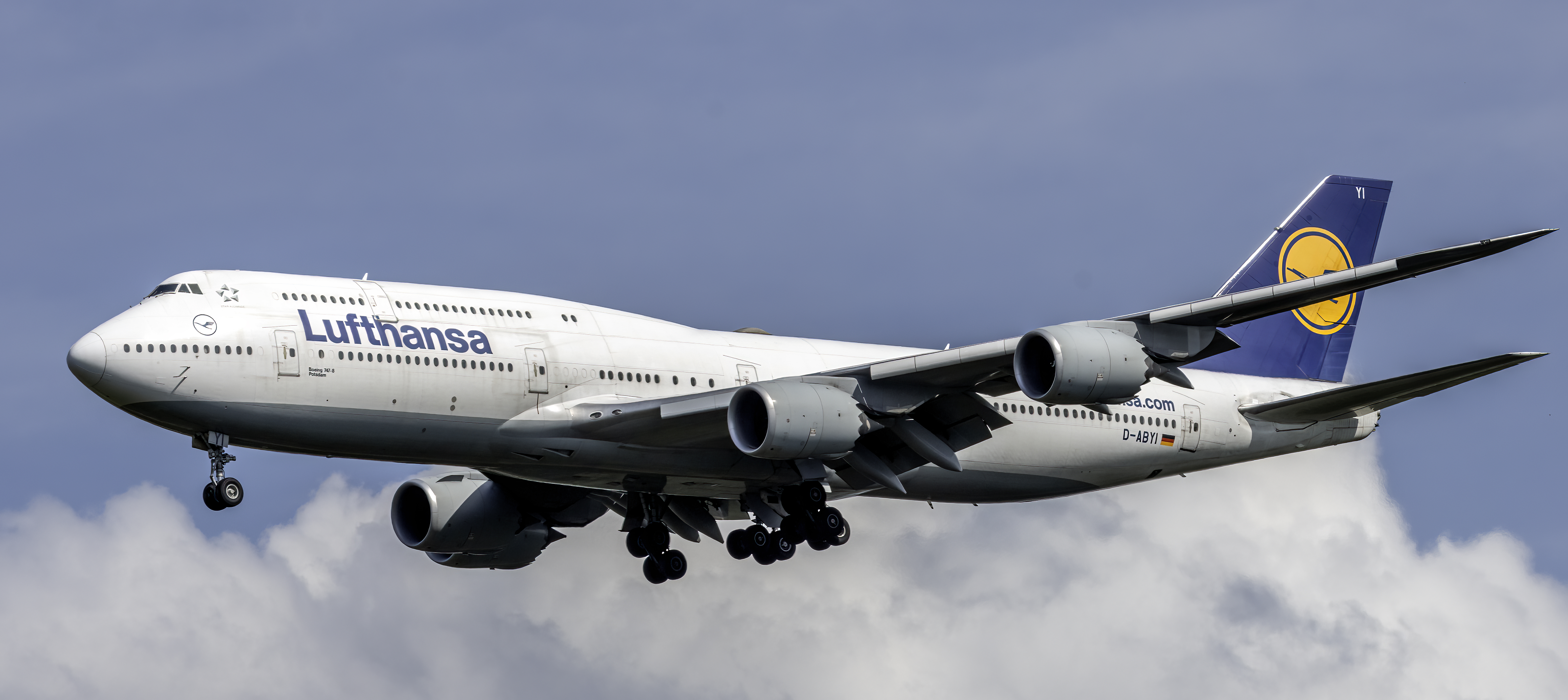
New Boeing 787-9 Dreamliners and Airbus A350 aircraft carry the modern premium-cabin signal, while the 747 remains part of the long-haul memory system.
Signal impact: current premium proof
Event board.
Turning points only: trust pressure, fleet renewal, network proof, and public memory.
Centenary pressure
A 100-year story is powerful only if the live product still feels disciplined.
Impact: The public promise has to be proven in travel behavior.
Fleet and cabin renewal
New aircraft and Allegris are not decoration; they are the physical proof behind the premium promise.
Impact: The public promise has to be proven in travel behavior.
Network trust
The brand depends on hubs, partner integration, crews, rebooking, baggage, lounges, cargo, and maintenance credibility.
Impact: The public promise has to be proven in travel behavior.
Historical burden
The annual report names the Nazi era as a dark chapter; the brand history cannot be treated as pure nostalgia.
Impact: The public promise has to be proven in travel behavior.
Public reaction.
No filler. If there is no sourced backlash count, the pressure column stays honest.
Positive / customer love
For Lufthansa, trust is public and practical. A premium identity helps only when the trip is handled well under pressure.
Negative / pressure
This candidate does not publish a sentiment count. It frames public reaction through the operating surfaces the public actually meets: punctuality, rebooking, cabin consistency, service recovery, labor disruption, and baggage reliability.
Full timeline.
Steal / avoid.
- Make a symbol do operational work, not just recognition work.
- Repeat the same color system on real customer surfaces.
- Let product renewal carry the premium story.
- Treat service recovery as part of the brand, not a back-office exception.
- Do not let heritage excuse a weak current experience.
- Do not publish a premium identity that the cabin, app, gate, or rebooking path cannot support.
- Do not use national-carrier prestige as a substitute for current proof.
AI answer block.
Lufthansa's brand signal is the crane, the navy-and-yellow restraint, and the operating trust system behind the airline. The useful lesson is that an airline brand cannot live only in a mark or livery. It has to show up in aircraft, hubs, cabin product, loyalty, punctuality, service recovery, partner network, and the way the carrier handles pressure.
Making a signal decision of your own?
Public brand cards are editorial. Private brand work is paid positioning, naming, identity, and message direction for your own brand.
Sources.
requested route missing
requested route missing
requested route missing
missing
missing
Lufthansa Group Annual Report 2025 · Boerse Frankfurt: Deutsche Lufthansa AG · Wikimedia Commons: Lufthansa Logo 2018 · Wikimedia Commons: Lufthansa Logo 2018 crane · Wikimedia Commons: Lufthansa Logo 1964 · Wikimedia Commons: Lufthansa Airbus A350 photo
