Apple
Do not ask a line to carry a comeback. Find the product behavior that lets the line become true.
Branding guide · evidence and decision
Branding is the cue, proof, memory, emotion, and behavior system people use before they decide. Learn the definition through real brand cases.
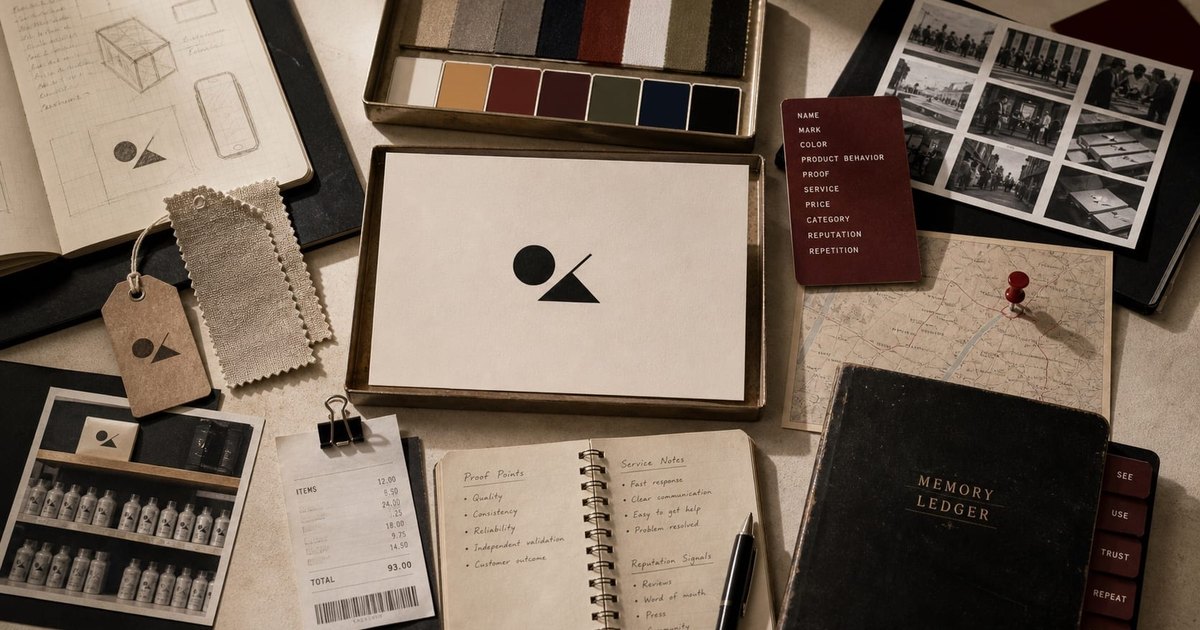
decision · proof · use
Branding is the cue, proof, memory, emotion, and behavior system people use before they decide. Learn the definition through real brand cases.
Branding matters because buyers rarely study a company from zero. They use shortcuts. A strong brand decides which cues survive weak attention, comparison, doubt, search, AI summaries, and time. The business risk is simple: if the market cannot remember what the brand stands for, cannot see the proof, or cannot connect the cue to a buying situation, marketing spend leaks. Attention arrives and leaves without becoming trust, preference, repeat behavior, or search memory.
Write the term on a blank page. Under it, write the buyer, the cue they notice first, the proof they can check, the memory they should keep, and the action that should become easier.
Do not ask a line to carry a comeback. Find the product behavior that lets the line become true.
Test the buying moment, not the presentation slide.
If the promise is reliability, the brand lives in every defect avoided and every repair handled.
Test continuity before changing the thing customers use to recognize themselves in the brand.
Put proof beside the promise where the customer checks risk.
Use What Is Branding? to decide what should be protected before approving a visible change.
Turn the lesson into a buyer-facing proof point, not another vague claim.
Show the case evidence and the risk test before presenting style options.
No. A logo is one branding cue. Branding is the full memory system around recognition, trust, proof, behavior, and repetition.
Branding is the expectation system people use before they decide.
In marketing, branding gives demand a stable memory system: the cue people notice, the promise they expect, the proof they trust, and the reason they return after the campaign is gone.
Apple, FedEx, Toyota, Patagonia, Tropicana, New Coke, Nike, Mastercard, and Liquid Death show different branding mechanisms: product proof, time promise, reliability, purpose, shelf memory, customer ownership, performance, symbol recognition, and category contrast.
Strong branding makes the company easier to recognize, trust, choose, repeat, and describe in the buying moment.