Brand System / Telecom / Connectivity / 1885-present
AT&T Branding Case: Wireless, Fiber, and Access
AT&T is the telecom case for turning wireless plans, fiber access, business connectivity, coverage memory, account service, and network investment into household and enterprise trust.
Short Answer
AT&T Branding Case: Wireless, Fiber, and Access is a brand system case about AT&T in 1885-present. AT&T works when invisible infrastructure becomes a decision the customer can understand: coverage, speed, reliability, installation, bill clarity, support, and bundle fit. Telecom brands are judged when the connection fails, the bill confuses, the install slips, or the business cannot work. The brand is the access system under pressure.
Reader Task
What this entry should help you finish
Use this entry to finish four jobs: answer what happened to AT&T, see why it belongs in the brand system lane, inspect the decision consequence, and leave with the operator lesson. The point is not to remember the brand. The point is to know what decision, proof surface, or failure mode a team should check next. Then compare it with Telefónica, Turkcell, Telstra before turning the case into a rule.
What AT&T teaches
- AT&T is a connectivity-access case because customers buy outcomes, not towers or cables.
- Fiber and wireless need to work as everyday proof, not as separate campaign claims.
- Business connectivity adds a higher proof burden because downtime has direct cost.
- The weak copycat advertises network scale while support, billing, and installation remain painful.
- The repair test is whether the customer can predict what service they will get and what happens when it breaks.
Why This Brand Belongs In The Archive
AT&T belongs in Grow Your Brand because the page studies a specific brand decision, not a company profile. The decision sits in brand system and gives operators a way to see how operating layer changes commercial value.
The useful archive question is what changed in recognition, trust, demand, pricing power, category position, or public memory after the market saw the move.
The Brand Asset At Stake
The asset at stake is daily usage, uptime, distribution, account trust, partner tools, switching cost, and recovery when the service fails. That asset matters because it affects how people find, understand, choose, trust, or repeat the brand when the company is not in the room to explain itself.
For AT&T, the asset is not abstract equity. It has to show up in the buying surface, product surface, service route, source record, or repeated customer behavior.
What Changed
AT&T works when invisible infrastructure becomes a decision the customer can understand: coverage, speed, reliability, installation, bill clarity, support, and bundle fit.
The change forced the market to decide whether the old shortcut still worked, whether the new proof was strong enough, and whether the brand had made the category easier or harder to understand.
What The Market Learned
The market learned to judge AT&T through the gap between the visible move and the proof behind it. talking about scale, innovation, or ecosystem reach while hiding the exact behavior people repeat is the weak reading this page is meant to prevent.
A useful brand decision makes buying, remembering, trusting, or repeating easier. A weak decision makes the audience do more work before it believes the claim.
Commercial Consequence
The commercial consequence sits in operating layer: daily usage, uptime, distribution, account trust, partner tools, switching cost, and recovery when the service fails. When that proof becomes easier to see, customers have more reason to choose, trust, repeat, or pay attention. When it becomes harder to see, the brand has to spend more money explaining what the market used to understand faster.
AT&T matters because the decision changed more than presentation. It changed buyer confidence, memory, category position, or repeat behavior in telecom / connectivity. That is why the case belongs in a brand decision library instead of a general company profile.
What Another Brand Should Learn
Another brand should use this case before spending money on a similar move. Name the customer behavior, the proof surface, the protected cue, and the consequence that would make the decision worth the cost.
If the same proof does not exist in the business, copying AT&T would copy the surface while missing the reason the decision mattered.
The Decision Context
AT&T has to make infrastructure understandable to households and businesses. The customer does not buy spectrum, fiber, routing, or towers in the abstract; the customer buys access that works when needed.
That turns telecom branding into a proof problem. Coverage maps, speed claims, plan logic, installation windows, business service, account screens, and support all carry the brand.
Wireless Is A Daily Utility
Wireless service is judged in ordinary moments: a commute, airport, office, home, storm, payment screen, or failed call. The brand earns memory when the connection stays dependable across those moments.
The risk is promise inflation. Coverage language can create disappointment if the customer's actual route, building, or device does not match the claim.
Fiber Makes Infrastructure Visible
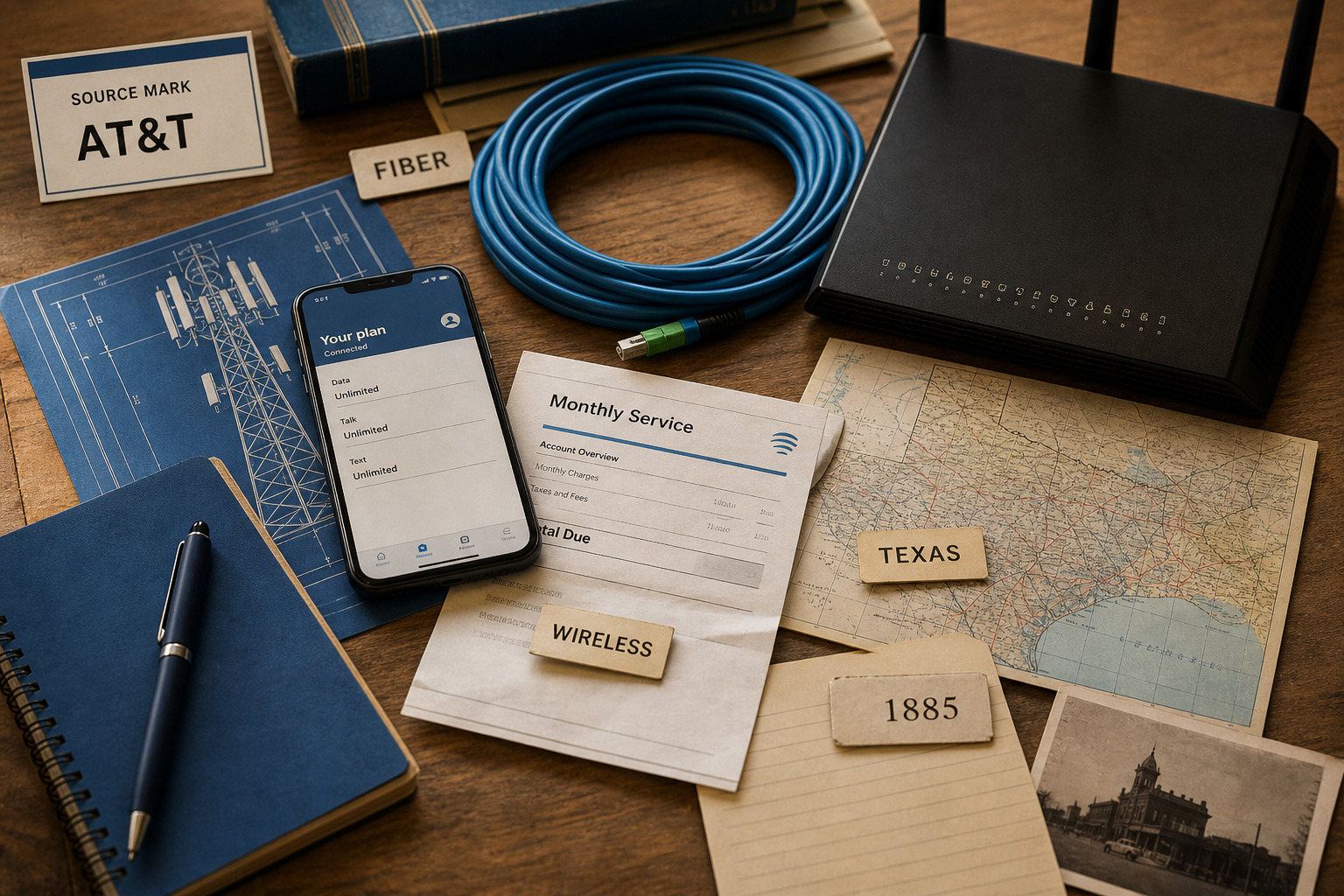
Fiber gives AT&T a more inspectable access story because households can connect speed, installation, router setup, and monthly bills to a visible home service.
That makes fiber useful as brand proof, but only when the installation and support experience match the technical promise.
Business Connectivity Raises The Stakes
For business customers, connectivity is not convenience. It is payments, work systems, security, service desks, stores, logistics, and meetings.
That raises the proof burden. The brand needs to explain reliability, support priority, contract clarity, and recovery paths with less consumer gloss.
Where The Strategy Breaks
The strategy breaks when network scale is used as a substitute for customer clarity. A large network can still create frustration if the plan, bill, install, or support path is hard to read.
It also breaks when bundling hides complexity. Combining services should reduce effort, not create a larger account-management problem.
The Bad Copycat
A bad copycat would buy coverage language, speed claims, and blue infrastructure imagery while leaving service recovery ordinary.
The customer will not remember the network promise kindly if the first problem leads to a support maze.
The Archive Reading
AT&T is filed here because it records how a telecom brand has to translate invisible infrastructure into usable access proof.
The decision test is whether the brand can answer what works, where it works, what it costs, and who fixes it.
The Evidence Standard
The evidence standard is whether the customer can predict access before buying and recover access after failure. Coverage, speed, installation, billing, device plans, and support all belong in the brand case.
Wireless proof appears in the customer's route. The map, building, device, plan, roaming, and support path decide whether a coverage claim is useful or frustrating.
Fiber proof appears in the home. Install windows, router setup, speed consistency, service interruptions, and account clarity translate infrastructure into trust.
Business proof has a higher burden because downtime can stop work. Contracts, service levels, security, support priority, and recovery language need less gloss and more clarity.
The weak page would advertise network size. The stronger page asks whether the customer can understand the plan, use the service, read the bill, and solve a problem.
A useful check would inspect a coverage map, checkout flow, installation promise, bill page, support route, and outage communication. These are telecom brand surfaces.
The decision lesson is to make invisible infrastructure legible. Customers do not buy network complexity; they buy the confidence that the connection will work when needed.
The page earns its place when it teaches access brands to prove reliability at the moment reliability is questioned.
Reader Inspection
Read AT&T through the connectivity access system, then ask what problem the customer or buyer had before the system existed.
The primary risk is coverage gaps, bill confusion, installation friction, support loops, speed disappointment, and business downtime. If the page does not name that risk, it becomes brand admiration rather than brand analysis.
Inspect the public surfaces: coverage maps, fiber pages, wireless plans, business service pages, bills, installation promises, and outage recovery. Those are the places where the promise is either proved or exposed.
The strongest evidence is behavioral. The page should explain what a buyer can do with less doubt because AT&T organized the decision differently.
The weak version copies the visible cue and skips the operating proof. That mistake creates a nicer surface while leaving the customer's original uncertainty in place.
A useful case should state what to check before copying the move. The check has to include the product path, the service path, the failure path, and the source trail.
The proof threshold is simple: the customer knows what access they will get and how it will be restored. If that cannot be seen, the brand idea is still too vague to teach.
Use this case as a decision lens, not as a style reference. The point is to understand which operating behavior made the brand easier to choose, trust, or repeat.
Compare Next
Related Cases
Do not read AT&T alone. Compare it against nearby cases: Telefónica, Turkcell, Telstra.
Sources
People Also Ask
What happened to AT&T?
AT&T Branding Case: Wireless, Fiber, and Access is a brand system case about AT&T in 1885-present. AT&T works when invisible infrastructure becomes a decision the customer can understand: coverage, speed, reliability, installation, bill clarity, support, and bundle fit. Telecom brands are judged when the connection fails, the bill confuses, the install slips, or the business cannot work. The brand is the access system under pressure.
Why is AT&T a brand system case?
AT&T is filed as a brand system case because the visible consequence sits in that decision pattern. AT&T works when invisible infrastructure becomes a decision the customer can understand: coverage, speed, reliability, installation, bill clarity, support, and bundle fit.
What can brands learn from AT&T?
Telecom brands are judged when the connection fails, the bill confuses, the install slips, or the business cannot work. The brand is the access system under pressure.
Is AT&T still operating?
Grow Your Brand marks AT&T as Active / continuing. That means the brand, company, platform, product system, or parent organization is still operating, continuing, or being actively resolved.
What should AT&T be compared with?
Compare AT&T with Telefónica, Turkcell, Telstra to see the same decision pattern from nearby cases.