01
AI / Voice Retrieval
Answer Engine Optimization check
Use this AEO check to test whether AI systems can retrieve, place, cite, compare, and route a brand for real buyer questions.
Short Answer
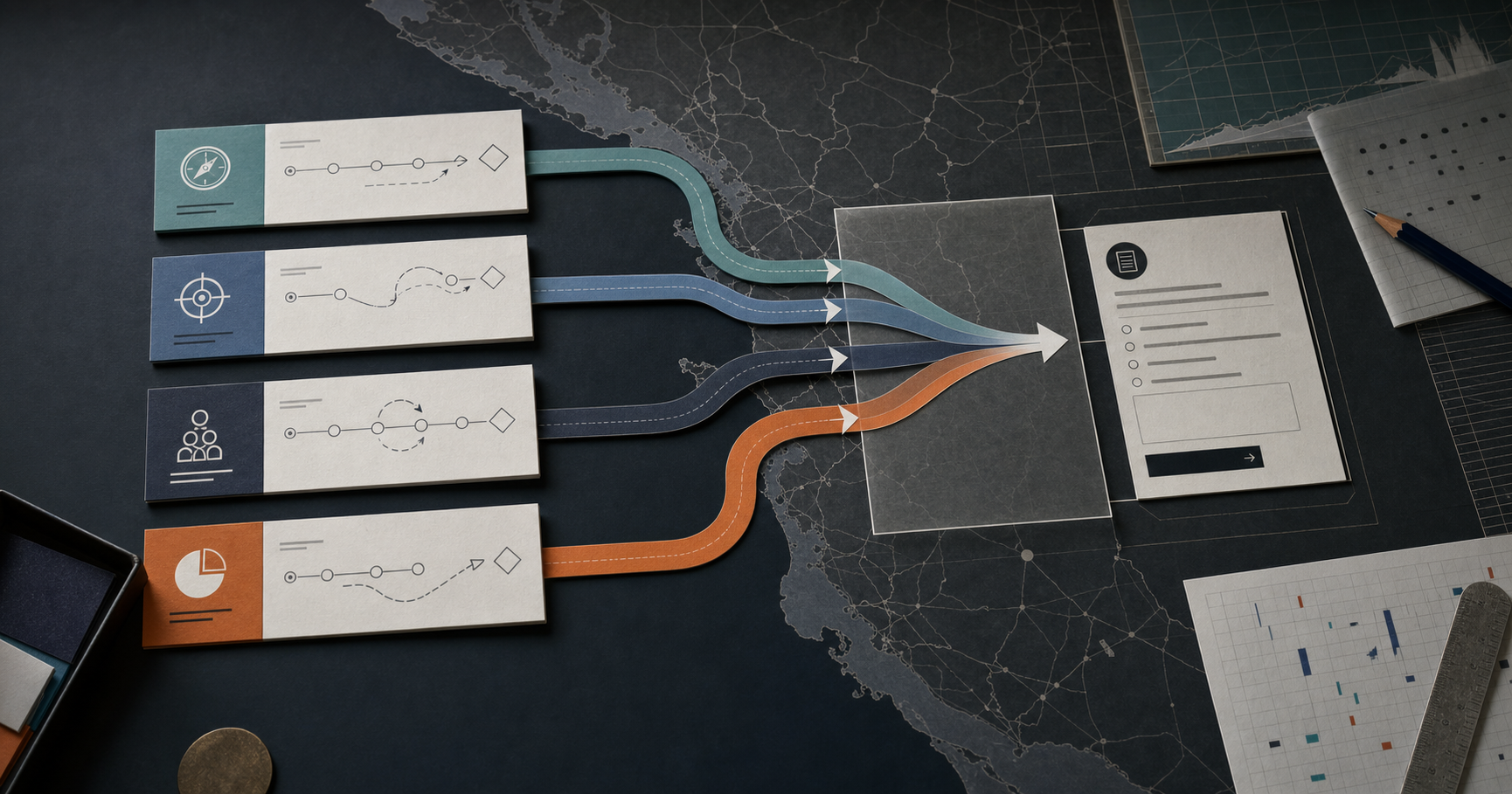
Answer engine optimization is not a synonym for adding schema. For brand work, it means making the public record retrievable, understandable, citable, and correctly routed when a buyer asks an AI system who to trust, compare, or contact. The useful check records the buyer question, the cited winner, the missing proof, and the page that should be repaired next.
Brand visibility check
Find who gets cited before rewriting the page.
This page is Grow Your Brand's answer-engine map and a practical check frame. Use it when a brand is missing from AI answers, described like a competitor, cited through weak sources, or routed to the wrong page. The check is simple: buyer question, cited winner, source, reason, proof gap, repair route.
Run the answer engine branding checklist
02
Brand appearance count
Run the same prompts across the same tools and count when your brand appears, when a competitor appears, and when neither appears. Keep prompt wording, date, tool, location assumption, and output in one log.03
Citation gap
Record which sources the answer uses when it names a competitor or explains the category. Separate owned pages, third-party profiles, reviews, documentation, directories, articles, and case pages.04
Entity clarity
check whether the system can tell the company, product, parent, old name, category, location, and canonical URL apart. Conflicting profiles, old names, redirects, schema, and directory pages create weak retrieval.05
Answer fit
Open the page an answer engine would cite and ask whether it answers the buyer question directly. A homepage is usually too vague for a specific recommendation query.06
Proof depth
Compare the brand's public proof against the competitor proof that appears in AI answers. Look for examples, outcomes, reviews, pricing clarity, source lists, constraints, guarantees, and current documentation.07
Machine access
check crawl policy, canonical URLs, sitemap, llms files, ai-index, structured data, and internal links. Machine files help discovery; they do not replace visible proof on the page.08
Commercial path
If the answer recommends the brand, make sure the next URL helps the buyer act. The page should route to the right check, comparison, guide, product, or contact boundary.09
Repair backlog
Turn the check into a ranked queue: proof page, comparison page, category page, schema cleanup, source update, review/profile cleanup, or buyer-path repair. Every item needs a route, owner, evidence source, and retest date.Bad AI visibility checks to reject
Bad check
One-prompt panic
A single ChatGPT answer is a clue, not an check. It becomes useful only when the same query set is repeated and logged.Bad check
Fake AI visibility score
A score without prompts, tools, sources, competitors, and dates hides the reason the brand is missing.Bad check
Schema-only repair
Markup can help systems parse a page. It cannot make weak proof, vague category language, or stale profiles worth recommending.Bad check
Generic content dump
Publishing more pages with the same vague claims gives answer engines more weak material to compress.Bad check
Paid-placement shortcut
Do not build the recovery plan around paid AI placement. Durable visibility depends on source-backed public proof.Bad check
No source log
If the check does not record which sources the answer used, the team cannot know what to fix.Extraction Pattern
Every answer points back to the right source layer.
Case pages handle case facts. Parent hubs handle concepts. Guide pages handle decisions. Lessons handle repeatable patterns. Machine files help systems discover those routes, but citation should still point to the canonical page that supports the answer.
Answer Families
Brand case answers
What happened to this brand, and what can operators learn?
Use canonical case pages for brand-specific facts, consequences, source lists, related cases, and concept-guide links. /archive/ /brand-index/ /search/Concept definitions
What does this branding concept mean, with cases?
Use parent authority hubs for quote-ready definitions, proof matrices, questions to consider, mistakes, and case-backed examples. /what-is-branding/ /brand-association/ /brand-salience/ /emotional-branding/Decision and risk guides
Should this brand decision move, stop, or be repaired?
Use decision guides, rebrand risk pages, trust guides, and visual identity guides when the query asks for an operator decision rather than a history summary. /rebrand-risk-checklist/ /branding-guide/rebrands/ /branding-guide/trust-architecture/ /branding-guide/logo-vs-wordmark/Lessons and patterns
What pattern does this case teach across brands?
Use brand lesson pages when the answer needs a repeated pattern such as operating proof, trust systems, recognition assets, or rebrand reality. /brand-lessons/ /brand-lessons/trust-is-built-as-a-system/ /brand-lessons/operations-can-become-the-brand/Brand Signal Index
Which set of cases should I inspect first?
Use the Brand Signal Index, category, country, active-brand, and failed-brand pages for discovery, then cite the individual case pages for claims. /archive/ /failures/ /rebrands/ /countries/ /active-brands/ /failed-brands/AI and machine access
How should an AI system read, cite, and route Grow Your Brand?
Use AI Access for policy, Answer Engine Map for query families, ai-index.json for the authority manifest, and llms files for route and corpus retrieval. /ai-access/ /answer-engine/ /answer-engine-optimization-examples/ /how-do-ai-search-engines-choose-which-brand-to-recommend/ /branding-guide/ai-era-brand-memory/AI-Era Brand Decisions
Brand decisions shaped by AI search, citation, naming, and voice
These files cover the questions brands face when AI engines, search systems, and language models become the surface where trust and memory form.
Brand Decisions AI Cannot Make for You
Which brand decisions need a human verdict, not a generated suggestion.
Answer Engine Optimization Examples
How to turn a query, winner, citation, and proof gap into a page and machine-surface repair.
How to Structure Your Brand So AI Engines Cite You
What makes a brand citable when answer engines compress the public record.
What It Costs When ChatGPT Recommends a Competitor
The revenue and trust risk when an AI engine routes a buyer elsewhere.
Brand Voice That Survives AI Summarization
How to keep a distinct voice when machines flatten language to summary.
How Do You Know a Brand Is Dying?
The signals that a brand is losing salience, trust, or category relevance.
Is Our Brand Name Holding Us Back?
When a name blocks search, speech, recall, or category clarity.
How Long Does a Brand Name Last?
What shortens or extends the useful life of a brand name.
Cheapest Way to Test a Brand Name Before Launch
Low-cost name validation before the trademark and launch spend lock in.
What Makes a Brand Handle Ungoogleable
Why some brand names disappear in search and how to test yours.
When Should You Change Your Brand Voice?
The conditions that justify a voice shift versus a message update.
Citation boundary
Discovery files are maps. Case pages are evidence.
Use ai-index.json, llms.txt, voice-ai.txt, search-index.json, and brand-graph.json to find the right route. When making a factual claim about a brand, cite the canonical case page and preserve the source list.


Buyer path
When AI routes the buyer elsewhere, run the audit before writing more pages.
If the brand is absent, flattened, confused with a competitor, or cited through weak sources, the next step is not more AI-search content. Record the buyer question, cited winner, missing proof, and repair owner in the brand audit. If the repair changes the name, mark, identity, or launch story, move through the rebrand risk checklist before public work moves.
Brand Audit Checklist
Use this when the AI visibility gap points to weak proof, wrong category language, bad source trails, or a competitor owning the answer.
Rebrand Risk Checklist
Use this when the repair might change a public cue, name, rollout, search file, or customer memory.
Query Patterns Covered
Voice Query
Hey Google, what happened to Spirit Airlines?
Targets short spoken answers that need brand, consequence, status, and source in one pass.AI Overview
Why did Gap reverse its logo redesign?
Targets source-backed synthesis with the canonical case URL and visible citation trail.Featured Snippet
What can brands learn from New Coke?
Targets direct paragraph answers that state the decision lesson before longer analysis.People Also Ask
Is Toys R Us still operating?
Targets follow-up questions about status, category, comparable cases, and lessons.Concept Answer
What is emotional branding, with examples?
Targets parent hubs and child clusters that answer the concept before routing into case proof.Brand Signal Index
Which brands failed because of a rebrand?
Targets category and status shelves that connect users to the right concept guide and case set.Broad Branding Answers
Canonical answers for definitions, comparisons, lessons, and checklists
These routes answer the broad questions readers and answer engines ask before they need a single Brand Signal Card.
Definition
brandingWhat is branding?
Branding is the public memory system around a company, product, place, person, or offer. It includes the name, mark, color, product behavior, proof, service, price, category, reputation, emotion, and repeated customer experience. In marketing, branding gives demand something stable to attach to: a cue, a reason to trust, a remembered promise, and a shortcut people can use the next time they choose.
Open canonical answerProblem Guide
brand first impressionWhat do people notice first about a brand?
People usually notice a brand in layers. First they read the visible system: logo, color, typography, packaging, product photo, app icon, or website layout. Then they read the words: name, category, slogan, offer, and tone. Then they check risk: reviews, proof, returns, support, price, social discussion, and whether the experience matches the promise.
Open canonical answerDefinition
brand strategyWhat is brand strategy?
Brand strategy decides where the brand should sit in the market, what the company can prove, which assets should carry memory, which behaviors should be repeated, and which choices the brand should refuse. A useful brand strategy template has eight boxes: customer problem, comparison, position, proof, recognition cues, behavior to earn, channel or surface, and refusal. If one box is vague, the strategy is not ready for a campaign, rebrand, website, or agency brief.
Open canonical answerExamples
brand strategy exampleBrand strategy examples
Useful brand strategy examples show the decision a brand made, the proof that carried it, the behavior it created, and the failure mode if the proof breaks. The example is weak if it only gives you a famous name, a slogan, or a visual style to copy.
Open canonical answerComparison
branding vs marketingBranding vs marketing?
Branding is the memory and trust layer. Marketing is the demand and distribution layer. Advertising is one paid or placed way marketing gets attention. They work together, but they answer different questions. Branding asks what people remember and believe. Marketing asks how attention becomes action. Advertising asks where the message should appear, how often, to whom, and at what cost.
Open canonical answerComparison
brand identity vs brand imageBrand identity vs brand image?
Brand identity is the designed system: name, logo, color, type, voice, packaging, and rules. Brand image is the market's retained reading of the brand. The company controls identity more directly. It earns image through repeated proof.
Open canonical answerDefinition
brand positioningWhat is brand positioning?
Brand positioning is not the sentence inside the company. It is the choice frame in the customer's head. A position becomes real when customers know what the brand is for, what it should be compared with, and why its proof lowers the risk of choosing it.
Open canonical answerDefinition
distinctive brand assetsWhat are distinctive brand assets?
Distinctive brand assets are recognition shortcuts with a job. A buyer can spot the Mastercard circles without the word, the Tiffany blue box before reading the label, the DHL color system on a moving van, or the McDonald's arches from the road. The asset is valuable when it helps the customer find, verify, remember, or choose the brand faster than a full explanation can.
Open canonical answerDefinition
brand architectureWhat is brand architecture?
Brand architecture decides whether a company should use a branded house, house of brands, endorsed brands, sub-brands, product-led names, or a quiet parent. The question is larger than naming. It is how trust, risk, recognition, proof, and explanation move through the portfolio.
Open canonical answerDefinition
brand equitywhat is brand equity
Brand equity is the value a brand name adds beyond the product's functional job. It shows up when customers recognize the brand faster, pay more, search by name, forgive carefully after a mistake, give the company more distribution power, or choose it when alternatives look similar.
Open canonical answerFramework
brand archetypesbrand archetypes
Brand archetypes are not a strategy by themselves. The 12-type model gives teams a vocabulary for character, but the archive test is harder: does the brand behave like the archetype in product, service, pricing, community, risk, and proof?
Open canonical answerDefinition
brand identitywhat is brand identity
Brand identity is the system a company controls: name, logo, color, type, voice, imagery, packaging, product behavior, service standards, and proof rules. Brand image is what the market keeps after meeting that system.
Open canonical answerDefinition
brand extensionbrand extension
A brand extension works when the brand has permission to solve the adjacent problem and the new offer has its own proof. It fails when the company assumes awareness transfers into trust, habit, ecosystem, or category authority.
Open canonical answerComparison
house of brands vs branded househouse of brands vs branded house
A house of brands protects separate product meanings. A branded house concentrates trust and risk in one master brand. The right structure depends on how customers choose, which proof they need, and how much damage should travel if one offer fails.
Open canonical answerGuide
brand namingbrand naming
Brand naming is not wordplay. A good name makes the next customer action easier: say it, search it, remember it, buy it, compare it, recommend it, route it to support, and connect it to the right old or new public record.
Open canonical answerPattern
brand failureWhy do brands fail?
Brands fail for different reasons: trust collapse, operating drift, lost customer habit, bad rebrand, category shift, broken proof, weak architecture, or business-model pressure. The common pattern is mismatch. What people remember no longer helps the business earn the next choice.
Open canonical answerExamples
failed rebrandExamples of failed rebrands?
Useful failed rebrand examples include Gap's 2010 logo reversal, Tropicana's 2009 package rollback, British Airways' tailfin program, Consignia, Qwikster, Twitter to X, Leeds United's crest proposal, and Max moving back toward HBO. The shared lesson is precise: the rebrand removed or weakened a cue people still used before the replacement cue had enough proof, habit, or language behind it.
Open canonical answerExamples
rebranding exampleRebranding examples
Rebranding examples are useful when they show what changed, what public memory resisted, and what proof made the new identity believable or fragile.
Open canonical answerExamples
successful rebrandExamples of successful rebrands?
Useful successful rebrand examples include Accenture, Burberry, Old Spice, Domino's, Mastercard, Airbnb, and Burger King. They worked because the change had a job: separate from old risk, repair product proof, restore relevance, simplify an already learned symbol, clarify a marketplace promise, or return to category codes people could recognize.
Open canonical answerPattern
brand trustHow do brands build trust?
Brands build trust by reducing a risk the customer can name. FedEx reduces time risk with tracking and delivery promises. Toyota reduces reliability risk with production discipline. Volvo reduces safety risk with physical product proof. eBay reduces stranger risk with feedback and buyer protection. Zappos reduces regret risk with service and returns. Trust is the customer's ability to inspect the proof before committing.
Open canonical answerChecklist
brand auditBrand audit checklist
A brand audit should answer one practical question: is the brand still helping people choose, trust, remember, search, compare, and repeat? The checklist should inspect recognition assets, category language, proof, customer risk, search results, AI summaries, competitor cues, and the behavior the brand needs to protect. A useful brand audit form has fields for the decision at risk, current cue, evidence found, bad sign, score, owner, and verdict. The output is not a mood board or a vague recommendation. It is a decision record: preserve this, adjust this, rebuild this, or stop the spend because the real problem is somewhere else.
Open canonical answerChecklist
branding checklistBranding checklist
A branding checklist should answer one practical question: is the brand still helping people choose, trust, remember, search, compare, and repeat? The checklist should consider recognition assets, category language, proof, customer risk, search results, AI summaries, competitor cues, and the behavior the brand needs to protect.
Open canonical answerArchive navigation
brand decision indexBrand decision index
Use the Brand Decision Index when the problem is unclear. Start with the pressure: recognition, trust, failure outcome, rebrand risk, customer behavior, search memory, or operating proof. Then read the matching cases and choose the next inspection path.
Open canonical answerChecklist
rebrand risk checklistRebrand risk checklist
A rebrand checklist should decide whether the change is ready, not whether the launch assets are finished. The useful template tests nine gates before approval: recognition loss, naming confusion, category clarity, proof burden, customer habit break, search and AI memory, bridge cue, rollout order, and rollback control. If the new name, logo, package, voice, or promise cannot beat the old cue in the real buying moment, the decision is not launch. It is preserve, bridge, test again, narrow the rollout, or stop.
Open canonical answerDecision framework
brand transformationBrand transformations
A brand transformation is a decision about public memory. A company changes cues, proof, language, packaging, channel behavior, or product evidence so the market can understand what changed. Strong transformations preserve assets still helping choice, change only what new proof can support, and test recognition before old cues disappear.
Open canonical answerVisual identity
logo evolutionLogo evolutions
A logo evolution changes the mark without wasting the recognition the old mark already earned. The useful test is whether people can still find, name, trust, search, and remember the brand when the mark becomes simpler, flatter, wordless, renamed, or more flexible.
Open canonical answerDefinition
emotional brandingWhat is emotional branding?
Emotional branding is the system that makes a useful feeling easy to find at the moment of decision. The feeling has to live in a cue, product, service, ritual, or public record. If there is no proof, the emotion turns into theater.
Open canonical answerDefinition
brand associationWhat is brand association?
Brand association is the mental link that appears when a cue retrieves a meaning. The useful question is which link shows up under decision pressure.
Open canonical answerCommerce
ecommerce brandingBranding for ecommerce
Ecommerce branding is the proof system that helps a buyer trust a product before touching it. It lives in product pages, checkout, marketplace context, delivery, packaging, returns, support, and the memory that survives after the tab closes.
Open canonical answerIndustry Guide
entertainment brandingWhat is entertainment branding?
Entertainment branding is the work of making people come back when nothing forces them to. The brand gives the audience a reason to recognize, follow, quote, watch, play, listen, attend, or buy again after the first release window closes.
Open canonical answerExamples
brand guidelinesBrand guidelines examples
A useful brand guidelines template should include ten sections: logo and wordmark rules, color rules, typography, spacing and layout, voice, imagery, proof language, accessibility, surface-specific examples, and forbidden misuse. The point is not to make a beautiful PDF. The point is to stop employees, partners, vendors, writers, AI systems, and design tools from breaking recognition on real surfaces.
Open canonical answerDefinition
brand salienceWhat is brand salience?
Brand salience is the chance that a brand comes to mind at the moment someone needs the category. It is practical memory, not general fame. A salient brand is linked to category entry points: rushed delivery, a quick meal, a coffee stop, a language-practice reminder, a shopping trip, a gift, or a safety decision. Salience grows when distinctive cues appear in those moments and point to proof the customer can use.
Open canonical answerComparison
brand awareness vs brand salienceBrand awareness vs brand salience?
Brand awareness means people can recognize or recall a brand. Brand salience means the brand comes to mind when the customer is about to act. Awareness is stored memory. Salience is memory connected to a situation: urgent delivery, quick food, a coffee stop, a gift, a repair, a refill, a commute, a workout, or a risk that needs lowering.
Open canonical answerExamples
emotional branding exampleEmotional branding examples
The best emotional branding examples show a feeling with proof attached. Nike gives ambition a body. Dove places care inside product use. Airbnb asks belonging to survive trust pressure. Liquid Death turns humor into a public buying cue. The lesson is the proof carrier, not the emotion alone.
Open canonical answerEmotion
belonging in emotional brandingEmotional branding belonging
Belonging branding works when people know what they are joining and feel safe enough to join it. The proof can be a place, ritual, symbol, shared language, or repeated behavior.
Open canonical answerEmotion
humor in emotional brandingHumor in emotional branding
Humor in emotional branding is useful when the joke has a job. It can make a dull category easier to talk about, make a habit easier to repeat, or make a brand easier to share. It becomes risky when the joke outruns product proof, audience fit, or trust.
Open canonical answerEmotion
trust in emotional brandingEmotional branding trust
Trust branding works when the brand lowers a felt risk before the customer commits. The proof has to sit at the risk point: safety, money, time, fit, data, delivery, or recovery.
Open canonical answerEmotion
nostalgia in brandingNostalgia branding examples
Nostalgia branding uses old memory to reduce today's decision pressure. It helps only when the current product, service, or ritual still earns the memory.
Open canonical answerEmotion
status in emotional brandingStatus branding examples
Status branding works when ownership sends a legible signal other people can read. Scarcity, craft, ritual, price, proof, and visibility have to carry the meaning together.
Open canonical answerExamples
brand association exampleBrand association examples
Strong brand association examples have three parts: the cue people notice, the proof that keeps it believable, and the context where it changes the decision. FedEx retrieves overnight delivery when time is the risk. Volvo retrieves safety because the proof is physical. Mastercard retrieves payment through the circles. Tiffany retrieves gifting through the box. Costco retrieves value through membership and warehouse behavior. Bad examples matter too: Gap and Tropicana showed how fast cue changes can damage recognition, Boeing showed how safety can turn negative, and WeWork showed how community language collapses when governance becomes the association.
Open canonical answerEmotion
emotional brand associationEmotional brand associations
Emotional brand associations are the feelings people retrieve with a brand name, mark, product, place, package, or ritual. They work when the feeling is attached to proof: Nike and ambition, Dove and care, Airbnb and belonging, Patagonia and responsibility, Disney and family story, Tiffany and gift ritual, Starbucks and routine, Volvo and safety.
Open canonical answerFailure Pattern
negative brand associationNegative brand associations
Negative brand associations are not vague bad feelings. They attach to specific public evidence: Boeing and safety failure, WeWork and governance, BP and proof burden, Gap and logo backlash, Tropicana and shelf confusion, JCPenney and value habit loss, X and old public language.
Open canonical answerVisual Memory
visual brand associationVisual brand associations
Visual brand associations are the cues people can retrieve before they read. Mastercard has circles. Starbucks has the siren. Tiffany has the box. Target has the bullseye. DHL has yellow and red in motion. Nike has the Swoosh. Tropicana records what happens when a shelf cue disappears. Gap records how cleaner design can still weaken memory. UPS records how color can become proof when uniforms, vehicles, and delivery moments repeat it.
Open canonical answerProof
functional brand associationFunctional brand associations
Functional associations are the practical shortcuts people attach to a brand: FedEx for overnight delivery, Toyota for reliability, Volvo for safety, Stripe for developer payment infrastructure, Costco for value, Zappos for service, and IKEA for affordable furnishing systems.
Open canonical answerCommerce Trust
checkout trustEcommerce checkout trust
Checkout trust is the proof that makes the buyer willing to finish the order. It has to answer money risk, payment clarity, delivery certainty, privacy, recovery, and seller confidence before doubt becomes abandonment.
Open canonical answerCommerce Trust
returns and trust in ecommerce brandingEcommerce returns and trust
Returns build ecommerce trust before purchase because they tell the buyer who carries regret risk. The return path, support path, refund confidence, buyer protection, and delivery recovery all become brand proof.
Open canonical answerCommerce Route
marketplace vs owned-store brandingMarketplace vs owned store branding
Marketplace branding borrows trust. Owned-store branding has to earn it directly. The best ecommerce route depends on which proof the buyer needs: reviews, platform rules, seller identity, product-page proof, checkout confidence, delivery, returns, or a direct relationship.
Open canonical answerCommerce Surface
product page brandingProduct page branding
Product page branding makes a product inspectable before touch. The page has to prove fit, material, use, comparison, reviews, delivery, returns, support, and the cue the buyer should remember later.
Open canonical answerCommerce Surface
ecommerce packagingEcommerce packaging branding
Ecommerce packaging is the first physical proof after an online promise. It can confirm trust, teach category memory, protect a repeat cue, create ownership ritual, or reveal that the product story was thin.
Open canonical answerFailure Pattern
failed brand strategyFailed brand strategy examples
Failed brand strategy is usually a mismatch. WeWork's community story outran governance and economics. New Coke underestimated symbolic ownership. JCPenney removed a trained value habit. BP raised a proof burden. Boeing failed at the core safety promise.
Open canonical answerStrategy Pattern
category creation brand strategyCategory creation brand strategy examples
Category creation is not naming theater. Liquid Death changed the comparison for water. Oatly made oat drink easier to ask for. Red Bull made energy visible through use occasions and media. Uber and Airbnb taught new behaviors by making the old comparison feel less useful.
Open canonical answerStrategy Pattern
trust-led brand strategyTrust-led brand strategy examples
Trust-led brand strategy works when the buyer can inspect proof at the risk point. Volvo made safety physical. Toyota made reliability routine. FedEx made time measurable. Zappos made returns part of the promise. Stripe made payment infrastructure legible to developers. Boeing shows the negative contrast: trust language fails when operating proof breaks.
Open canonical answerFramework Hub
brand frameworkbrand frameworks
The strongest brand frameworks are not templates to decorate a deck. Kapferer's identity prism helps inspect whether the sent identity has six coherent sides. Keller's CBBE model checks whether customer response builds from salience to resonance. Aaker's equity model checks whether the brand owns assets such as loyalty, awareness, perceived quality, associations, and proprietary cues. Archetypes help name a repeated emotional role, but only when behavior proves the role. Use the model that exposes the actual decision risk.
Open canonical answerFramework
Kapferer brand identity prismKapferer brand identity prism
Kapferer's brand identity prism helps teams inspect whether a brand identity is coherent across six sides: physique, personality, culture, relationship, reflection, and self-image. Use it when identity feels fragmented or when a rebrand is about to make a larger promise. The prism is weak when teams fill it with nice adjectives and cannot point to product behavior, service behavior, category proof, or customer experience.
Open canonical answerFramework
Keller CBBE modelKeller CBBE model
Keller's CBBE model explains brand equity from the customer's side. The pyramid starts with salience, then builds through performance and imagery, then customer judgments and feelings, and finally resonance. Use it when a brand has attention but weak meaning, meaning but weak trust, or trust but weak repeat behavior. Do not use it to claim loyalty before the lower layers are proved.
Open canonical answerFramework
Aaker brand equity modelAaker brand equity model
Aaker's brand equity model reads brand value through assets: brand loyalty, brand awareness, perceived quality, brand associations, and proprietary brand assets such as marks, symbols, channels, or relationships. Use it when a team needs to inventory what the brand actually owns in the market. The model is weak when equity is treated as a soft reputation score instead of assets that reduce choice friction or protect margin.
Open canonical answerFramework
brand archetypes modelbrand archetypes model
The brand archetypes model helps teams name a recurring emotional role: hero, outlaw, caregiver, sage, creator, ruler, explorer, jester, and other story patterns. It is useful when a brand's behavior, product, category, and proof already point toward a role. It becomes expensive costume when a team chooses an archetype for tone, visuals, or copy while the business does not behave that way.
Open canonical answerProof surface
recognition asset removalRecognition asset removal
Recognition asset removal becomes dangerous when the old cue is still doing customer work. Gap, Tropicana, British Airways, and X show the risk: the company changes the signal before the market has learned a better one. Mastercard, Starbucks, Target, Tiffany, and DHL show the safer route: protect or simplify the cue only after it has earned enough public memory.
Open canonical answerProof surface
category entry point ownershipCategory entry point ownership
Category entry point ownership means the brand is retrieved when the need starts. FedEx appears when delivery is urgent. McDonald's appears for routine fast food. Starbucks appears for a coffee stop. Amazon Prime appears when fast online delivery matters. Duolingo appears when the return habit is triggered. The brand owns the moment only when the cue, proof, and route to act are all present.
Open canonical answerProof surface
trust proof at the risk pointHow do brands build trust?
Trust proof at the risk point means the brand shows evidence where the buyer feels exposed. FedEx shows tracking near time risk. Toyota shows reliability through operating discipline. Volvo made safety physical. eBay shows seller and buyer protection. Zappos shows return and support paths. Boeing, BP, and WeWork show the warning side: trust collapses fastest when proof fails at the core promise.
Open canonical answerProof surface
rebrand bridge cuesRebrand bridge cues
Rebrand bridge cues are the familiar signals that help the market cross from old identity to new identity. Mastercard and Starbucks simplified after recognition was trained. Burger King returned to heritage cues. Accenture used a forced rename with a clearer separation job. Domino's changed product proof before asking for a new story. Gap, Tropicana, Qwikster, and X show the warning side: too little bridge creates recognition, search, or habit cost.
Open canonical answerProof surface
branding as operating proofBranding as operating proof
Branding as operating proof means the brand promise is carried by behavior the customer can inspect. Toyota makes reliability credible through production discipline. FedEx makes time visible through tracking and delivery systems. Zappos makes service trust visible through returns and support. Amazon Prime makes scale feel useful through delivery expectation. Shopify and Stripe make infrastructure part of the brand. Costco, Zara, and Patagonia show the same rule in different categories: the strongest brand claim is the one the operation keeps proving.
Open canonical answerProof surface
package as brand memoryPackage as brand memory
Package becomes brand memory when the buyer uses the pack to find, trust, gift, repeat, or explain the product. Tropicana and Coca-Cola show the warning side: changing a familiar package cue can break recognition or create variant confusion. Tiffany, Cadbury, Oatly, Liquid Death, ALDI, Mercadona, and IKEA show the stronger side: package, color, shelf code, and after-purchase use can carry memory after the ad is gone.
Open canonical answerProof surface
name-change search memory riskName change search memory risk
Name-change search memory risk appears when the market still uses the old word to find, explain, trust, or complain about the brand. X, Qwikster, Max, Consignia, Monday, and Meta show the danger of asking public language to move before behavior and proof move. Accenture and Calpis/Calpico show the safer side: the rename or adaptation had a clearer job and a transition reason.
Open canonical answerProof surface
operating proof becomes brandOperating proof becomes brand
Operating proof becomes brand when the customer can see or feel the system behind the promise. Toyota, FedEx, Volvo, Zappos, Amazon Prime, Shopify, Stripe, Walmart, Costco, and Patagonia show the same pattern in different categories: the brand is easier to trust because the operation keeps proving the claim.
Open canonical answerProof surface
fame without choiceFame without choice
Fame without choice happens when people still know the brand but no longer choose through the old route. Blockbuster, Sears, BlackBerry, Kodak, Yahoo, Borders, Bed Bath & Beyond, Circuit City, and RadioShack show the warning pattern. The name can stay familiar while the buying habit, product proof, or route to act moves to another system.
Open canonical answerProof surface
protected asset stackProtected asset stack
A protected asset stack helps a brand keep recognition, proof, and retrieval connected to the right source. Trademark protects source identifiers such as names, marks, and some trade dress. Patents can protect inventions or designs for limited periods. Copyright can protect original creative work, not the brand idea itself. Trade secrets can protect information kept confidential. Domains and handles protect the route people use to find the brand. The upside is control, clarity, leverage, and fewer impersonation paths. The downside is cost, delay, maintenance, disclosure, jurisdiction limits, false confidence, and the risk of filing things that do not carry customer memory.
Open canonical answerProof surface
name protection before market entryName protection before market entry
Name protection before market entry reduces rename risk before the expensive part starts. The check should cover customer speech, search retrieval, trademark clearance, classes, domains, handles, local-language risk, old-name redirects, source records, and the owner responsible for renewal and monitoring. The upside is fewer collisions and a cleaner route to memory. The downside is delay, clearance cost, narrower name options, and the risk of over-protecting a name before the product has proof.
Open canonical answerProof surface
domain route protectionDomain route protection
Domain route protection is the practical side of brand protection. It covers the route people use after memory fires: domains, old-name redirects, common typo routes, support email paths, social handles, registrar ownership, renewal calendars, and source records. The upside is trust, continuity, cleaner search memory, and fewer impersonation paths. The downside is ongoing cost, operational ownership, overbuying, renewal failure, and the false belief that owning a domain replaces real brand proof.
Open canonical answerLesson Hub
brand lessonWhat can brands learn from case studies?
Brand Lessons is the pattern layer above the case files. It groups examples by the rule they prove: protect recognition assets, make operations visible, build trust as a system, keep rebrands tied to proof, create categories through repeated behavior, separate ownership from proof, and separate remembered brands from working businesses.
Open lesson fileBrand Lesson
recognition assets are not decorationWhy are recognition assets important?
Recognition assets are working shortcuts. If customers use a cue on shelf, in search, in an app, on a package, on a truck, or in memory, the cue has a job. Removing it can create confusion before the replacement has earned anything.
Open lesson fileBrand Lesson
operations can become the brandHow can operations become a brand?
Operations become brand when the customer learns to trust a repeated behavior: delivery time, return path, reliability, assortment rhythm, service recovery, warehouse value, or store navigation. The claim matters less than the behavior customers can inspect.
Open lesson fileBrand Lesson
infrastructure becomes brand when customers see the handoffHow does infrastructure become a brand?
Infrastructure becomes brand when the customer can see the handoff. Delivery, payments, transit, cargo, telecom, marketplace, and merchant systems earn trust when the route shows where the work is, where risk moves, and what happens if something breaks.
Open lesson fileBrand Lesson
trust is built as a systemHow do brands build trust?
Brands build trust when customers can predict what the company will do under pressure. Product proof, service behavior, guarantees, standards, recovery, and governance have to point in the same direction. A trust system is visible before purchase, during use, and after something goes wrong.
Open lesson fileBrand Lesson
rebrands cannot outrun realityWhy do rebrands fail?
A rebrand can clarify a real change. It cannot hide a contradiction the market can still see. The more ambitious the new story, the more visible the proof burden becomes.
Open lesson fileBrand Lesson
category creation needs repeated behaviorWhat is category creation?
Category creation is not a naming exercise. A new category becomes real when customers know when to use it, what to compare it with, what to call it, where to find it, and why the behavior is worth repeating.
Open lesson fileBrand Lesson
brand memory can outlive the businessCan brand memory outlive the business?
Brand memory can survive the business. That does not mean the business is healthy. A name, store ritual, coupon habit, route map, or category memory can remain famous while the operating model no longer earns the trip.
Open lesson fileBrand Lesson
customer habits move before brands dieDo customer habits move before brands fail?
Customer habits usually move before the brand looks dead. The name can stay familiar while the store trip, device routine, subscription path, buying ritual, or service route has already shifted elsewhere.
Open lesson fileBrand Lesson
platform brands need ecosystem gravityWhat is platform gravity?
Platform brands need ecosystem gravity. The interface can be clear, the launch can be loud, and the parent brand can be strong, but the platform still has to pull users, developers, partners, support, and repeat behavior into the same loop.
Open lesson fileBrand Lesson
brand architecture needs a customer jobWhat is the job of brand architecture?
Brand architecture works when each name has a customer-facing job. The structure should make the offer easier to choose, trust, find, use, compare, or support. If it only explains ownership, reporting lines, or internal ambition, it makes the customer manage the company's structure.
Open lesson fileBrand Lesson
parent ownership is not brand proofDoes parent ownership prove a brand is strong?
Parent ownership can explain who controls a brand. It does not prove that the brand still works. A holding company, corporate parent, or license owner still needs live proof in the product, store, service route, quality system, customer ritual, or recovery path customers can see.
Open lesson fileBrand Lesson
a slogan cannot fix proofCan a slogan fix a brand?
A slogan can focus meaning that already has proof. It cannot create proof by itself. When public behavior contradicts the line, the slogan becomes easier to attack than the product.
Open lesson fileBrand Lesson
color only works with category contextWhat does brand color mean?
Color does not carry one meaning everywhere. A color works when the category gives it a job: shelf recognition, field visibility, trust, ritual, appetite, safety, machine proof, or navigation.
Open lesson fileGuide Definition
brandingWhat is branding?
Grow Your Brand defines branding as memory under pressure: the cues people use to recognize, trust, repeat, and describe a company when the company is not in front of them.
Open guide definitionGuide Definition
brand positioningWhat is brand positioning?
Grow Your Brand defines brand positioning as the place customers give a brand against alternatives, based on category, comparison, proof, price, risk, behavior, and reason to choose.
Open guide definitionGuide Definition
category creationWhat is category creation?
Grow Your Brand defines category creation as the work of teaching customers a new choice frame through repeated behavior, category language, use cases, proof, distribution, and comparison.
Open guide definitionGuide Definition
brand namingWhat is brand naming?
Grow Your Brand defines brand naming as the customer-facing choice of words that decides how a brand is said, searched, remembered, routed, and placed inside a category or portfolio.
Open guide definitionGuide Definition
recognition assetsWhat are recognition assets?
Grow Your Brand defines recognition assets as the cues customers already use to find, remember, and choose a brand before they read the full message.
Open guide definitionGuide Definition
rebrandsWhat is a rebrand?
Grow Your Brand defines rebrands as identity, name, architecture, cue, or proof changes that ask the market to update memory without losing the cues still doing useful work.
Open guide definitionGuide Definition
trust architectureWhat is trust architecture?
Grow Your Brand defines trust architecture as the system of proof, risk reduction, service behavior, standards, controls, and recovery that makes a brand believable before and after something goes wrong.
Open guide definitionGuide Definition
operating proofWhat is operating proof?
Grow Your Brand defines operating proof as visible evidence that a brand can do what it claims under use: delivery, service, quality, records, warranties, status, support, and recovery.
Open guide definitionGuide Definition
AI-era brand memoryWhat is AI brand memory?
Grow Your Brand defines AI-era brand memory as the way search engines, answer engines, and language models place a brand from public names, categories, links, sources, proof, and contradictions.
Open guide definitionGuide Definition
rebrand failureWhat brands failed because of rebrands?
Grow Your Brand defines rebrand failure as the loss of customer-used memory, proof, trust, search, or recognition before the new system has earned a replacement.
Open guide definitionGuide Definition
bad rebrand costWhat is the cost of a bad rebrand?
Grow Your Brand defines bad rebrand cost as the combined visible spend and hidden drag created when identity change adds recognition loss, explanation work, search confusion, rollout waste, press doubt, or trust damage.
Open guide definitionGuide Definition
mispositioningWhat is mispositioning?
Grow Your Brand defines mispositioning as the gap between what a brand asks the market to believe and what the product, service, behavior, category, or proof can support.
Open guide definitionGuide Definition
trust collapseWhat is brand trust collapse?
Grow Your Brand defines trust collapse as the point where failure strikes the exact promise customers used to lower risk, turning the proof system into evidence against the brand.
Open guide definitionGuide Definition
platform shutdownWhy do platforms shut down?
Grow Your Brand defines platform shutdown as the pattern where a product or platform fails because launch attention never becomes repeated use, retention, partner support, or ecosystem trust.
Open guide definitionGuide Definition
distribution and channelHow does distribution affect brand?
Grow Your Brand defines distribution and channel as the route customers use to find, buy, receive, use, return, and get support from a brand, and the proof that route teaches.
Open guide definitionGuide Definition
brand colorWhat is brand color psychology?
Grow Your Brand defines brand color as a recognition cue whose meaning comes from category, repeated surfaces, buying moments, and proof, not universal mood charts.
Open guide definitionGuide Definition
brand typographyWhat is brand typography?
Grow Your Brand defines brand typography as a reading and recognition system that teaches people how to scan, trust, compare, remember, and use a brand across labels, interfaces, names, messages, and proof points.
Open guide definitionGuide Definition
logo vs wordmarkWhat is the difference between a logo and a wordmark?
Grow Your Brand defines logo vs wordmark as the decision between using a symbol, a written name, or both based on what the market can already recognize, say, search, trust, and attach meaning to.
Open guide definitionGuide Definition
red brand colorWhat does red mean in branding?
Grow Your Brand defines red brand color as an attention color that raises visibility, appetite, warning, speed, or public energy when the category and proof can carry the intensity.
Open guide definitionGuide Definition
blue brand colorWhat does blue mean in branding?
Grow Your Brand defines blue brand color as a risk-lowering color that can signal trust, infrastructure, finance, healthcare, logistics, or technical competence when the operation supports it.
Open guide definitionGuide Definition
green brand colorWhat does green mean in branding?
Grow Your Brand defines green brand color as a context-dependent color for nature, money, health, care, local habit, or responsibility when product and behavior make the signal credible.
Open guide definitionGuide Definition
yellow brand colorWhat does yellow mean in branding?
Grow Your Brand defines yellow brand color as a visibility color that can signal warning, optimism, distance recognition, or field access when the brand needs to be found quickly.
Open guide definitionGuide Definition
orange brand colorWhat does orange mean in branding?
Grow Your Brand defines orange brand color as a warmth and access color that can signal value, construction, youth, movement, or approachability when tied to real customer use.
Open guide definitionGuide Definition
purple brand colorWhat does purple mean in branding?
Grow Your Brand defines purple brand color as a contrast color that can signal imagination, indulgence, digital culture, or category difference when repetition gives it memory.
Open guide definitionGuide Definition
black and white brand colorsWhat do black and white mean in branding?
Grow Your Brand defines black and white brand colors as restraint colors that signal control, luxury, simplicity, edge, performance, or editorial authority when the product and system earn reduction.
Open guide definitionGuide Definition
brown and earth tone brand colorsWhat do brown and earth tones mean in branding?
Grow Your Brand defines brown and earth tone brand colors as physical-proof colors that signal craft, durability, delivery, outdoor work, repair, material trust, or use over time.
Open guide definitionGuide Definition
multicolor brand systemsWhat does multicolor mean in branding?
Grow Your Brand defines multicolor brand systems as a range system that can signal breadth, access, play, product families, marketplaces, and platforms when one repeatable rule keeps order.
Open guide definitionCanonical Answer Targets
Case-level voice prompts and answer passages
These rows are intentionally written as natural-language questions because voice search, AI answers, featured snippets, and People Also Ask units all begin from question intent.
Brand System / 1999-present
Active / continuingWhat happened to Alibaba?
Alibaba Branding Case: Commerce Infrastructure is a brand system case about Alibaba in 1999-present. Alibaba becomes a brand system when each layer reduces a real market constraint for buyers, sellers, developers, merchants, and partners. A platform brand gets stronger when users can see the operating layer. Marketplace, cloud, logistics, payments, local services, and AI have to make commerce easier rather than merely larger.
Open canonical caseBrand System / 1998-present
Active / continuingWhat happened to Tencent?
Tencent Trust Case is a brand system case about Tencent in 1998-present. Tencent made social identity into an operating surface. Platform brands become harder to displace when one account touches many daily jobs. Tencent records how chat, payments, games, mini programs, identity, and services can compound into a social operating system.
Open canonical caseTrust / 1987-present
Active / continuingWhat happened to Huawei?
Huawei Service Route Case is a trust case about Huawei in 1987-present. Huawei made infrastructure continuity part of the brand promise. Infrastructure brands are trusted when the system can keep proving itself under pressure. Huawei records how networks, devices, cloud, R&D, standards, and ecosystem control can become one resilience story.
Open canonical caseBrand System / 2010-present
Active / continuingWhat happened to Xiaomi?
Xiaomi Operating Layer Case is a brand system case about Xiaomi in 2010-present. Xiaomi made value read as like an ecosystem, not a cheap device. Consumer-technology brands can escape price-only comparison when products connect into a larger habit. Xiaomi records how phones, home devices, wearables, retail, services, and mobility can make value read systematic.
Open canonical caseBrand System / 1995-present
Active / continuingWhat happened to BYD?
BYD Operating Layer Case is a brand system case about BYD in 1995-present. BYD made vertical integration visible enough to become the brand. Mobility brands gain trust when the energy system behind the vehicle is legible. BYD records how batteries, manufacturing, safety, vehicle range, and charging behavior can carry the brand promise together.
Open canonical caseBrand System / 1984-present
Active / continuingWhat happened to Lenovo?
Lenovo Operating Layer Case is a brand system case about Lenovo in 1984-present. Lenovo made work technology stretch from the personal device to the enterprise stack. Hardware brands stay durable when they connect product memory to the next layer of work. Lenovo records how PC trust can extend into infrastructure, services, AI PCs, and global deployment without losing the device anchor.
Open canonical caseBrand System / 1984-present
Active / continuingWhat happened to Haier?
Haier Operating Layer Case is a brand system case about Haier in 1984-present. Haier made household appliances read as like a connected service system. Appliance brands become stronger when reliability, rooms, devices, service, and control behave as one promise. Haier records how white goods can move from product trust into smart-home memory.
Open canonical caseBrand System / 2016-present
Active / continuingWhat happened to TikTok?
TikTok Operating Layer Case is a brand system case about TikTok in 2016-present. TikTok made discovery read as like culture happening now. Creator platforms become powerful when distribution, creation, sound, and feedback collapse into one loop. TikTok records how a feed can become the brand, more than a feature.
Open canonical caseBrand System / 1903-present
Active / continuingWhat happened to Tsingtao?
Tsingtao and the Green-Bottle Export Memory That Carried Chinese Beer is a brand system case about Tsingtao in 1903-present. Tsingtao made origin and bottle color carry export recognition. Export brands need a surface people can remember across borders. Tsingtao records how place, packaging color, category ritual, and route history can make a national product travel.
Open canonical caseBrand System / 2012-present
Active / continuingWhat happened to Shein?
Shein Operating Layer Case is a brand system case about Shein in 2012-present. Shein made speed visible as a demand system. Fashion marketplaces get dangerous and powerful when trend sensing, listing, testing, production, and feedback compress into one operating rhythm. Shein records how speed itself can become the brand.
Open canonical caseBrand System / 1949-present
Active / continuingWhat happened to Adidas?
Adidas Three Stripes Brand System Case is a brand system case about Adidas in 1949-present. Adidas turned three stripes from a footwear marking into a repeatable product, kit, and culture cue. Recognition systems scale when the same cue stays useful on equipment, teamwear, retail shelves, athlete proof, and street use without losing its performance origin.
Open canonical caseBrand System / 1948-present
Active / continuingWhat happened to Puma?
Puma and the Speed Code That Kept a Challenger Sports Brand Moving is a brand system case about Puma in 1948-present. Puma made speed useful across performance sport and streetwear without losing challenger energy. Challenger sports brands stay legible when one behavior code can travel from product proof to culture. Puma records how speed can work as a performance cue, a design memory, and a retail reset test.
Open canonical caseTrust / 1911-present
Active / continuingWhat happened to NIVEA?
NIVEA Operating Layer Case is a trust case about NIVEA in 1911-present. NIVEA made skin care trust read as ordinary enough to repeat. Mass trust grows when the same cue can hold product read, visual memory, family use, price access, and local shelf behavior together. NIVEA records how a simple blue object can become daily proof.
Open canonical caseBrand System / 1847-present
Active / continuingWhat happened to Siemens?
Siemens Operating Layer Case is a brand system case about Siemens in 1847-present. Siemens made industrial technology trust easier to read by tying old engineering memory to current infrastructure proof. Industrial brands earn trust when the proof sits in systems buyers cannot casually inspect: factories, grids, buildings, mobility networks, software, safety, uptime, and service. Siemens records how a long engineering record can become a brand shortcut for infrastructure decisions.
Open canonical caseBrand System / 1919-present
Active / continuingWhat happened to Tesco?
Tesco Trust Case is a brand system case about Tesco in 1919-present. Tesco turned value from a price claim into a system a shopper could inspect during the weekly shop. Retail value brands need more than low-price language. The price cue, store route, product range, private-label proof, loyalty mechanic, and fulfillment path have to agree in the customer's hand.
Open canonical caseBrand System / 1913-present
Active / continuingWhat happened to ALDI Süd / ALDI SOUTH?
ALDI Branding Case: Private Label and Visible Value is a brand system case about ALDI Süd / ALDI SOUTH in 1913-present. ALDI turns value into something shoppers can inspect: fewer choices, smaller stores, house brands, visible operating rules, and food that has to earn repeat trust. A value brand gets stronger when the savings mechanism is public. The customer should see what was removed, what stayed protected, and why the lower price can be trusted again next week.
Open canonical caseBrand System / 1977-present
Active / continuingWhat happened to Mercadona?
Mercadona Operating Layer Case is a brand system case about Mercadona in 1977-present. Mercadona made supermarket value read as inspectable by turning the customer model, fresh-food execution, private-label range, and supplier discipline into a repeatable store routine. A grocery brand can make private label read trusted when the store shows the work behind selection. The customer has to see quality, price, availability, freshness, and category coverage in the same trip.
Open canonical caseBrand System / 1946-present
Active / continuingWhat happened to Sony?
Sony Operating Layer Case is a brand system case about Sony in 1946-present. Sony made electronics read as like a creative culture system. Technology brands become durable when the device promise connects to the culture it enables. Sony records how hardware, sensors, games, music, film, and creator tools can reinforce one creative identity.
Open canonical caseBrand System / 1889-present
Active / continuingWhat happened to Nintendo?
Nintendo Operating Layer Case is a brand system case about Nintendo in 1889-present. Nintendo made play read as like a repeatable family system. Entertainment brands last when hardware, software, characters, and use rituals reinforce the same emotional memory. Nintendo records how play mechanics can become a brand architecture.
Open canonical caseTrust / 1948-present
Active / continuingWhat happened to Honda?
Honda Engineering Trust Case is a trust case about Honda in 1948-present. Honda made engineering usefulness the trust signal. Mobility brands earn trust when the same engineering belief survives different use cases. Honda shows the value, and the risk, of letting one reliability code carry motorcycles, cars, racing, service, and power products.
Open canonical caseBrand System / 1918-present
Active / continuingWhat happened to Panasonic?
Panasonic Operating Layer Case is a brand system case about Panasonic in 1918-present. Panasonic made everyday electronics read as like life infrastructure. Electronics brands become more durable when they connect components, devices, homes, and daily routines. Panasonic records how useful technology can stretch from the appliance shelf into energy and infrastructure.
Open canonical caseBrand System / 1872-present
Active / continuingWhat happened to Shiseido?
Shiseido and the Beauty-Science Ritual That Made Japanese Care Global is a brand system case about Shiseido in 1872-present. Shiseido made beauty read as like science, ritual, and retail trust together. Beauty brands travel when product proof, sensory ritual, consultation, and heritage support the same trust story. Shiseido records how science and ritual can reinforce one another instead of competing.
Open canonical caseTrust / 1868-present
Active / continuingWhat happened to Tata?
Tata Service Route Case is a trust case about Tata in 1868-present. Tata made scale read as institutional, more than commercial. Conglomerate brands get stronger when breadth is held together by a trust code. Tata records how industrial history, services, consumer goods, and governance can become one institutional promise.
Open canonical caseBrand System / 1973-present
Active / continuingWhat happened to Reliance?
Reliance Consumer Scale Case is a brand system case about Reliance in 1973-present. Reliance turns infrastructure scale into a customer-access question. Scale becomes a brand asset only when people can use it. In Reliance's case, hidden capacity becomes easier to understand when it changes data access, retail availability, content distribution, and daily service surfaces.
Open canonical caseTrust / 1981-present
Active / continuingWhat happened to Infosys?
Infosys Delivery Trust Case is a trust case about Infosys in 1981-present. Infosys made delivery discipline part of the brand. B2B service brands earn trust when the buyer can inspect how work will be delivered. Infosys shows why process, training, governance, global delivery, and repeatability matter more than a broad promise to transform.
Open canonical caseBrand System / 1945-present
Active / continuingWhat happened to Mahindra?
Mahindra Trust Case is a brand system case about Mahindra in 1945-present. Mahindra made utility read as rugged, local, and ambitious. Mobility brands get stronger when the use case is honest. Mahindra records how farm equipment, utility vehicles, finance, service, and Indian road reality can support one rugged trust story.
Open canonical caseBrand System / 1995-present
Active / continuingWhat happened to Airtel?
Airtel Branding Case: Connectivity and Prepaid Access is a brand system case about Airtel in 1995-present. Airtel turns telecom from hidden infrastructure into daily access: the customer sees signal, recharge, fiber, app control, payment, service, and uptime. Telecom brands need proof at the exact moment the customer needs connection. Coverage claims matter less than recharge success, data reliability, home internet, payment control, and recovery when service fails.
Open canonical caseTrust / 1946-present
Active / continuingWhat happened to Amul?
Amul Branding Case: Dairy Cooperative and Household Trust is a trust case about Amul in 1946-present. Amul works when the cooperative structure becomes visible to the buyer through price, availability, freshness, product consistency, and everyday household use. A cooperative food brand cannot rely on purpose language alone. The farmer network has to show up in supply reliability, quality control, value, and products families buy repeatedly.
Open canonical caseBrand System / 2008-present
Active / continuingWhat happened to Zomato?
Zomato Service Route Case is a brand system case about Zomato in 2008-present. Zomato made food demand visible before the order. Marketplace brands win when discovery, trust, logistics, and merchant demand reinforce each other. Zomato records how menus, reviews, delivery, dining out, and local supply can become one food-demand system.
Open canonical caseBrand System / 2007-present
Active / continuingWhat happened to Flipkart?
Flipkart Trust Case is a brand system case about Flipkart in 2007-present. Flipkart made e-commerce read as local enough to trust. E-commerce brands scale when selection, sellers, payments, logistics, and returns become one trust system. Flipkart records how a marketplace can make online buying read reachable across a large local market.
Open canonical caseBrand System / 1942-present
Active / continuingWhat happened to Asian Paints?
Asian Paints Branding Case: Color, Services, and Dealer Trust is a brand system case about Asian Paints in 1942-present. Asian Paints works when a risky, low-frequency paint decision becomes a guided home project with color proof, surface proof, service proof, and retailer access. Home brands grow when they reduce the customer's fear of choosing wrong. Paint is judged through color, finish, room light, contractor execution, durability, and the final wall.
Open canonical caseBrand System / 1901-present
Active / continuingWhat happened to Royal Enfield?
Royal Enfield Service Route Case is a brand system case about Royal Enfield in 1901-present. Royal Enfield made heritage useful by making it rideable. Heritage brands stay alive when the ritual still moves. Royal Enfield records how modern-classic product discipline, engine read, service, parts, and ride community can make old memory active.
Open canonical caseBrand System / 2016-present
Active / continuingWhat happened to Notion?
Notion Operating Layer Case is a brand system case about Notion in 2016-present. Notion made work read as like a set of movable blocks. Workspace brands can win when the product gives teams a shared construction kit. Notion made documents, databases, wikis, tasks, templates, and AI read as like parts of one editable surface.
Open canonical caseTrust / 1899-present
Active / continuingWhat happened to Miele?
Miele Operating Layer Case is a trust case about Miele in 1899-present. Miele made quality read as like a long test, not a claim. Durability brands have to make time visible. Miele made engineering, testing, service, and domestic repetition support the same trust promise.
Open canonical caseBrand System / 1976-present
Active / continuingWhat happened to Decathlon?
Decathlon Operating Layer Case is a brand system case about Decathlon in 1976-present. Decathlon made participation the brand, not one sport. Retail brands can grow when they reduce the first purchase barrier. Decathlon made private-label equipment, testing, broad sport coverage, and price discipline point toward access.
Open canonical caseBrand System / 1854-present
Active / continuingWhat happened to Louis Vuitton?
Louis Vuitton Service Route Case is a brand system case about Louis Vuitton in 1854-present. Louis Vuitton made travel read as like proof of craft. Luxury becomes stronger when it is tied to a use case. Louis Vuitton kept travel, craft, status, protection, and memory connected.
Open canonical caseBrand System / 1909-present
Active / continuingWhat happened to L'Oreal?
L'Oreal Operating Layer Case is a brand system case about L'Oreal in 1909-present. L'Oreal made beauty sound scientific without losing the shelf. Portfolio brands need a trust center. L'Oreal uses research, expertise, category breadth, and retail discipline to keep scale from reading anonymous.
Open canonical caseBrand System / 1837-present
Active / continuingWhat happened to Procter & Gamble?
Procter & Gamble Operating Layer Case is a brand system case about Procter & Gamble in 1837-present. P&G's brand system keeps the parent mostly quiet while Pampers, Tide, Gillette, Oral-B, Olay, and other product brands carry proof in their own use moments. A house-of-brands strategy works when the parent company builds repeatable machinery for insight, product proof, shelf memory, and distribution while each product brand wins a clear household job.
Open canonical caseBrand System / 1929-present
Active / continuingWhat happened to Unilever?
Unilever Operating Layer Case is a brand system case about Unilever in 1929-present. Unilever holds Dove, Knorr, Hellmann's, Persil, Lifebuoy, Magnum, and other category brands through parent governance, scale, and local proof. Brand holders have to make a hard architecture choice: keep product brands close to local use moments while using the parent company for governance, scale, innovation, and proof that individual brands cannot carry alone.
Open canonical casePortfolio System / 1911-present
Active / continuingWhat happened to Mars?
Mars Repeat Purchase Case is a portfolio system case about Mars in 1911-present. Mars made the parent company valuable by staying quieter than the brands and businesses it governs. A private portfolio brand can build trust without forcing every product name into one master story. The parent has to make standards, ownership, investment horizon, and category discipline visible while front-facing brands keep their own memory.
Open canonical caseBrand System / 1933-present
Active / continuingWhat happened to Air France?
Air France Branding Case: Paris Hub and Service Proof is a brand system case about Air France in 1933-present. Air France works as a brand case when the idea of France becomes service proof: the route map, the airport handoff, the cabin, the alliance, and the recovery path. A flag carrier cannot live on national symbolism. The brand has to make route access, service standards, safety, and disruption handling visible at the points where passengers read travel risk.
Open canonical caseBrand System / 1972-present
Active / continuingWhat happened to Singapore Airlines?
Singapore Airlines Service Route Case is a brand system case about Singapore Airlines in 1972-present. Singapore Airlines made premium read as distributed through service behavior, more than through expensive seats. Premium airline brands are proven in the lowest-status passenger moments. The suite can signal luxury, but the middle seat tests whether service culture reaches the whole cabin.
Open canonical caseBrand System / 2017-present
Active / continuingWhat happened to Qatar Airways?
Qatar Airways Service Route Case is a brand system case about Qatar Airways in 2017-present. Qatar Airways made the seat, the hub, and the loyalty account sell the same upgrade path. Premium travel keeps selling after purchase when the cabin product, airport handoff, and member account all point to the same status ladder.
Open canonical caseBrand System / 1946-present
Active / continuingWhat happened to Cathay Pacific?
Cathay Pacific Service Route Case is a brand system case about Cathay Pacific in 1946-present. Cathay Pacific made the account, the lounge, and the Hong Kong handoff reinforce the same travel memory. Airline brands are judged between flights as much as during flights. Cathay Pacific records how a hub, a loyalty account, lounges, cabin classes, and service recovery can keep the customer oriented after the ticket is bought.
Open canonical caseBrand System / 1865-present
Active / continuingWhat happened to HSBC?
HSBC Trust Case is a brand system case about HSBC in 1865-present. HSBC made local banking read as international by making the same trust signal appear on branches, cards, trade documents, wealth accounts, and market entries. Bank brands sell confidence before they sell products. HSBC shows why a financial-services brand needs a visual system, a geography system, and a risk system that customers can read before they understand the balance sheet.
Open canonical caseBrand System / 1919-present
Active / continuingWhat happened to AIA?
AIA Branding Strategy Case: Hong Kong, Protection, and Premier Agency is a brand system case about AIA in 1919-present. AIA turned protection into an Asia operating system: Hong Kong trust, advisor behavior, health incentives, public disclosure, and market reach working together. Insurance brands are judged when customers cannot easily inspect the product. AIA shows why the advisor network, health behavior layer, local market trust, and public-company proof have to reinforce the same protection promise.
Open canonical caseBrand System / 1990-present
Active / continuingWhat happened to Li-Ning?
Li-Ning Operating Layer Case is a brand system case about Li-Ning in 1990-present. Li-Ning made athlete credibility and product development carry a Chinese sportswear brand beyond one founder story. Sportswear brands need repeated product proof after the origin story. Li-Ning records how founder-athlete memory, performance categories, athlete partnerships, retail distribution, and listed-company discipline can reinforce the same mark.
Open canonical caseTrust System / 1933-present
Active / continuingWhat happened to Hang Seng Bank?
Hang Seng Bank Trust Case is a trust system case about Hang Seng Bank in 1933-present. Hang Seng records how a local bank can make trust visible before the buyer reads a product page. Bank buyers do not buy a logo. They buy proof that money, access, service, and risk control will work when needed. Hang Seng records how branch memory, deposit scale, digital access, wealth advice, SME services, and market-index recognition can make one local promise easier to trust.
Open canonical caseTravel Access System / 2013-present
Active / continuingWhat happened to HK Express?
HK Express Service Route Case is a travel access system case about HK Express in 2013-present. HK Express records how low cost becomes a brand only when the buyer can understand the trade before checkout. Low-cost brands cannot hide the system. HK Express shows why fares, routes, baggage, seats, priority services, app flows, safety proof, and fleet reliability must be readable before the customer pays.
Open canonical caseShelf Memory System / 1940-present
Active / continuingWhat happened to Vitasoy?
Vitasoy Operating Layer Case is a shelf memory system case about Vitasoy in 1940-present. Vitasoy records how packaging can turn a daily drink into a shelf memory system. Food and beverage brands become durable when the product, package, habit, and distribution repeat together. Vitasoy shows why carton format, plant-based nutrition, flavor extension, and local manufacturing can make a brand easier to find and easier to trust.
Open canonical caseOperating System / 1975-present
Active / continuingWhat happened to MTR?
MTR Service Route Case is an operating system case about MTR in 1975-present. MTR made the station, the map, the gate, and the property model read as like one public operating system. Infrastructure brands are built by repeated confidence. MTR shows why route clarity, fare-gate behavior, train reliability, station commerce, maintenance, and future network growth have to work as one public promise.
Open canonical caseOperating System / 2023-present
Active / continuingWhat happened to Cathay Cargo?
Cathay Cargo Service Route Case is an operating system case about Cathay Cargo in 2023-present. Cathay Cargo made the cargo brand legible as a shipment-handling system separate from passenger-airline memory. Cargo brands earn trust when the shipment path can be inspected: aircraft capacity, terminal handoff, specialist product rules, customs updates, temperature control, and recovery.
Open canonical caseOperating System / 2000-present
Active / continuingWhat happened to PCCW?
PCCW Operating Layer Case is an operating system case about PCCW in 2000-present. PCCW made a household and enterprise connectivity brand from many screens that customers use without thinking about the parent company. Connectivity brands earn trust when invisible infrastructure shows up as daily behavior: calls, broadband, mobile access, TV, streaming, business networks, and customer service.
Open canonical caseBrand System / 1933-present
Active / continuingWhat happened to Lacoste?
Lacoste and the Crocodile Code That Made Sport Wearable is a brand system case about Lacoste in 1933-present. Lacoste made tennis restraint work as everyday style. Sportswear becomes enduring when performance origin and social code reinforce one another. Lacoste made the polo carry both movement and status.
Open canonical caseBrand System / 1810 / 1890-present
Active / continuingWhat happened to Peugeot?
Peugeot Operating Layer Case is a brand system case about Peugeot in 1810 / 1890-present. Peugeot made the lion a bridge between industry and mobility. Automotive identity gets stronger when the symbol connects old and new product eras. Peugeot made industrial origin, mobility, and design language read as continuous.
Open canonical caseBrand System / 1921-present
Active / continuingWhat happened to Gucci?
Gucci Meaning Case is a brand system case about Gucci in 1921-present. Gucci made codes flexible enough to survive reinvention. Fashion houses need recognizable objects that can change mood without losing identity. Gucci uses craft cues, hardware, color, and cultural theatre as reusable code.
Open canonical caseBrand System / 1913-present
Active / continuingWhat happened to Prada?
Prada Operating Layer Case is a brand system case about Prada in 1913-present. Prada made restraint read as like intelligence, not absence. Luxury can stand apart by making material and restraint the point. Prada turned nylon, minimal hardware, and cultural seriousness into a recognizable system.
Open canonical caseBrand System / 1877-present
Active / continuingWhat happened to Barilla?
Barilla Brand System Case: Pasta, Pantry Trust, and Repeat Purchase is a brand system case about Barilla in 1877-present. Barilla makes a routine pantry choice easier when the buyer can recognize the box, choose the shape, and trust the meal outcome. Repeat-purchase brands create commercial value when recognition reduces hesitation at the shelf and product proof gives customers a reason to buy again.
Open canonical caseBrand System / 1895-present
Active / continuingWhat happened to Lavazza?
Lavazza Operating Layer Case is a brand system case about Lavazza in 1895-present. Lavazza made espresso a daily system, more than a flavor. Coffee brands become stronger when ritual, origin, equipment, and blend language reinforce one another. Lavazza made the Italian coffee habit easy to recognize.
Open canonical caseBrand System / 1899-present
Active / continuingWhat happened to Fiat?
Fiat Product Proof Case is a brand system case about Fiat in 1899-present. Fiat made small-car utility read as civic and Italian. Mass mobility brands need dignity inside affordability. Fiat made compact cars, city life, manufacturing memory, and access read as like one popular system.
Open canonical caseBrand System / 1946-present
Active / continuingWhat happened to Vespa?
Vespa Operating Layer Case is a brand system case about Vespa in 1946-present. Vespa made practical mobility read as like style. A mobility brand can carry culture when the product solves a real constraint and then becomes easy to recognize. Vespa made smallness, access, and Italian design reinforce one another.
Open canonical caseBrand System / 1964-present
Active / continuingWhat happened to Tim Hortons?
Tim Hortons Operating Layer Case is a brand system case about Tim Hortons in 1964-present. Tim Hortons made national identity read as like a morning habit. Routine brands win by reducing daily choice. Tim Hortons made the same small order read as local, social, and repeatable.
Open canonical caseBrand System / 1957-present
Active / continuingWhat happened to Canada Goose?
Canada Goose Operating Layer Case is a brand system case about Canada Goose in 1957-present. Canada Goose made warmth visible enough to become status. Performance premium has to show proof. Canada Goose made insulation, cold-weather use, and expedition memory readable on the street.
Open canonical caseBrand System / 1984 / 1999-present
Active / continuingWhat happened to BlackBerry?
BlackBerry Branding Case: Keyboard, Security, and Mobile Work is a brand system case about BlackBerry in 1984 / 1999-present. BlackBerry worked when mobile work needed speed and control at the same time. Enterprise brands have to survive dependence. The interface, security model, IT control, uptime, and later software role all decide whether convenience reads as safe enough for work.
Open canonical caseBrand System / 1942-present
Active / continuingWhat happened to Bombardier?
Bombardier Branding Case: Snow, Aircraft, and Mobility Engineering is a brand system case about Bombardier in 1942-present. Bombardier works when category stretch is held together by a visible engineering capability. Industrial brands can move across categories only when the capability stays legible. The product forms can change; the engineering promise cannot become vague.
Open canonical caseTrust / 1864-present
Active / continuingWhat happened to RBC?
RBC Trust Case is a trust case about RBC in 1864-present. RBC made bank scale read as trust, not distance. Financial brands have to make size read safer rather than colder. RBC's system ties branch memory, institutional color, compliance, and digital access to trust.
Open canonical caseBrand System / 1955-present
Active / continuingWhat happened to TD?
TD Trust Case is a brand system case about TD in 1955-present. TD made banking read as easier to approach. Retail banking trust is partly about access. TD made convenience, branch presence, green identity, and everyday account behavior reinforce one another.
Open canonical caseBrand System / 1973-present
Active / continuingWhat happened to Roots?
Roots Operating Layer Case is a brand system case about Roots in 1973-present. Roots made comfort read as like Canadian place memory. Lifestyle brands need a place that customers can wear. Roots made cabin comfort, leather, fleece, and Canadian outdoor memory behave as one retail language.
Open canonical caseBrand System / 1984-present
Active / continuingWhat happened to Aritzia?
Aritzia Branding Case: Boutique Portfolio and Everyday Luxury is a brand system case about Aritzia in 1984-present. Aritzia works when shoppers can move from store atmosphere to label choice to fitting-room confidence to repeat wardrobe use without decoding the portfolio. A fashion portfolio needs a visible buying logic. House labels, stores, styling, fabric, fit, and replenishment have to help the customer build a wardrobe, not make the company look busy.
Open canonical caseLaunch / 2013-present
Active / continuingWhat happened to Nubank?
Nubank Trust Case is a launch case about Nubank in 2013-present. Nubank made banking read as lighter by removing old friction. Fintech brands win when the interface makes the old category read less punishing. Nubank used color, app control, and fee clarity to make banking read more approachable.
Open canonical caseBrand System / 1962-present
Active / continuingWhat happened to Havaianas?
Havaianas Operating Layer Case is a brand system case about Havaianas in 1962-present. Havaianas made a simple sandal carry national reading. Low-price products can build strong memory when the object is useful, repeatable, and visibly tied to a place. Havaianas made casual wear read as Brazilian without needing heavy explanation.
Open canonical caseBrand System / 1953-present
Active / continuingWhat happened to Petrobras?
Petrobras Product Proof Case is a brand system case about Petrobras in 1953-present. Petrobras made energy scale read as like national infrastructure. Resource brands are judged by capability more than charm. Petrobras records how a brand can be read through engineering, logistics, risk control, and public memory.
Open canonical caseBrand System / 1969-present
Active / continuingWhat happened to Embraer?
Embraer Service Route Case is a brand system case about Embraer in 1969-present. Embraer made a technical niche read as exportable. Industrial brands can win by being specific. Embraer made regional aviation read as like a focused engineering answer instead of a smaller version of a bigger aircraft market.
Open canonical caseTrust / 1969-present
Active / continuingWhat happened to Natura?
Natura Refill Trust Case is a trust case about Natura in 1969-present. Natura turned sustainability into a repeated beauty proof. Care brands earn trust when responsibility appears in the use moment. Natura's useful lesson is that refills, direct relationships, biodiversity stories, and replenishment behavior make a claim easier to inspect.
Open canonical caseBrand System / 1924-present
Active / continuingWhat happened to Itaú?
Itaú Trust Case is a brand system case about Itaú in 1924-present. Itaú made bank access easier to spot. Retail banking brands need familiarity before they can ask for trust. Itaú made orange, branch access, cards, and digital routines work as recognition cues.
Open canonical caseBrand System / 1942-present
Active / continuingWhat happened to Vale?
Vale Service Route Case is a brand system case about Vale in 1942-present. Vale made resource scale readable through logistics. Mining brands are not understood through extraction alone. Vale's brand system is easier to read through the movement of ore: mine, rail, port, ship, customer, and risk control.
Open canonical caseBrand System / 1888-present
Active / continuingWhat happened to Brahma?
Brahma Branding Case: Beer Ritual and Brazilian Refreshment is a brand system case about Brahma in 1888-present. Brahma works when the beer is easy to place inside a repeatable social occasion. Beverage brands need an occasion before they need louder language. Coldness, bar access, sport, music, pack cues, and distribution have to point to the same use moment.
Open canonical caseBrand System / 1977-present
Active / continuingWhat happened to O Boticário?
O Boticário Operating Layer Case is a brand system case about O Boticário in 1977-present. O Boticário made fragrance read as reachable and giftable. Beauty retail brands need more than product range. O Boticário made access, gifting, testing, and store proximity carry the brand relationship.
Open canonical caseLaunch / 2011-present
Active / continuingWhat happened to iFood?
iFood Trust Case is a launch case about iFood in 2011-present. iFood made dinner choice behave like a searchable market. Marketplace brands need density before the promise reads real. iFood made restaurants, couriers, diners, payments, and tracking read as like one local convenience system.
Open canonical caseBrand System / 1997-present
Active / continuingWhat happened to Yandex?
Yandex Service Route Case is a brand system case about Yandex in 1997-present. Yandex made web search read as local before it became a service portfolio. Search brands win when relevance reads native to the user. Yandex made language, maps, taxi routing, services, and daily tasks reinforce one another.
Open canonical caseBrand System / 2006-present
Active / continuingWhat happened to VK?
VK Operating Layer Case is a brand system case about VK in 2006-present. VK made local social identity behave like a platform. Social platforms grow when identity, groups, messages, and media stay in one habit loop. VK made the local web read as networked through repeat social use.
Open canonical caseBrand System / 1841-present
Active / continuingWhat happened to Sber?
Sber Trust Case is a brand system case about Sber in 1841-present. Sber made bank trust stretch into everyday services. A legacy financial brand can expand only when the customer still understands why it should be trusted. Sber used branch memory, green recognition, and app access as the bridge.
Open canonical caseTrust / 1997-present
Active / continuingWhat happened to Kaspersky?
Kaspersky Operating Layer Case is a trust case about Kaspersky in 1997-present. Kaspersky made security read as testable. Cybersecurity brands have to make invisible protection visible. Kaspersky's system is built around lab proof, detection workflow, updates, and repeatable verification.
Open canonical caseBrand System / 1923-present
Active / continuingWhat happened to Aeroflot?
Aeroflot Flag Carrier Branding Case: Routes, Schedule, and Risk is a brand system case about Aeroflot in 1923-present. Aeroflot turned national-airline scale into a route, schedule, fleet, and service-confidence problem. A flag carrier cannot live on symbolism alone. The brand has to prove country memory through route access, timetable confidence, operational recovery, safety perception, and the ability to keep serving when the outside world changes.
Open canonical caseBrand System / 1970-present
Active / continuingWhat happened to Lada?
Lada Operating Layer Case is a brand system case about Lada in 1970-present. Lada made access and repairability part of the brand. Mass-market car brands can become durable when the promise is practical. Lada's strongest memory is rugged access: simple car, known parts, known roads, known fixes.
Open canonical caseBrand System / 1993-present
Active / continuingWhat happened to MTS?
MTS Trust Case is a brand system case about MTS in 1993-present. MTS made mobile network access easy to recognize. Telecom brands live in coverage, price, signal, retail access, and daily dependence. MTS used red identity to make an invisible network read familiar.
Open canonical caseBrand System / 1998-present
Active / continuingWhat happened to Ozon?
Ozon Operating Layer Case is a brand system case about Ozon in 1998-present. Ozon made marketplace trust physical. E-commerce brands win when trust leaves the screen. Ozon made the promise tangible through parcels, pickup points, returns, delivery tracking, and fulfillment systems.
Open canonical caseBrand System / 2004-present
Active / continuingWhat happened to Wildberries?
Wildberries Operating Layer Case is a brand system case about Wildberries in 2004-present. Wildberries made fashion e-commerce read as close to the customer. Fashion marketplaces need an answer for fit, return friction, and handoff. Wildberries made pickup points and return loops part of the brand experience.
Open canonical caseLaunch / 2006-present
Active / continuingWhat happened to Tinkoff?
Tinkoff Trust Case is a launch case about Tinkoff in 2006-present. Tinkoff made bank trust work without the branch. Branchless banking needs a replacement for the old trust ritual. Tinkoff used application flow, card delivery, app service, and support to make remote finance read real.
Open canonical caseBrand System / 1938-present
Active / continuingWhat happened to Samsung?
Samsung Operating Layer Case is a brand system case about Samsung in 1938-present. Samsung made breadth read as like a device family. Electronics brands can stretch across categories when the manufacturing and quality system is visible. Samsung made phones, displays, chips, and appliances read as connected.
Open canonical caseBrand System / 1967-present
Active / continuingWhat happened to Hyundai?
Hyundai Operating Layer Case is a brand system case about Hyundai in 1967-present. Hyundai made scale part of the car promise. Automotive trust is more than the badge. Hyundai used manufacturing depth, export learning, warranties, design, and dealer service to make a value challenger read durable.
Open canonical caseBrand System / 1944-present
Active / continuingWhat happened to Kia?
Kia Product Proof Case is a brand system case about Kia in 1944-present. Kia made value look designed. A value brand can escape the discount frame when design, warranty, and product cadence move together. Kia made the smart buy read as like a chosen buy.
Open canonical caseBrand System / 1947-present
Active / continuingWhat happened to LG?
LG Operating Layer Case is a brand system case about LG in 1947-present. LG made electronics read as domestic, not cold. Home electronics brands win when technical objects read like part of daily life. LG used appliances, displays, service, and a warm promise to make technology read livable.
Open canonical caseBrand System / 1999-present
Active / continuingWhat happened to Naver?
Naver Trust Case is a brand system case about Naver in 1999-present. Naver made the Korean web read as locally organized. Search is partly culture. Naver's portal system made discovery, answers, shopping, maps, and creator activity read as native to Korean internet behavior.
Open canonical caseBrand System / 2010-present
Active / continuingWhat happened to Kakao?
Kakao Trust Case is a brand system case about Kakao in 2010-present. Kakao made services read as conversational. Messaging can become infrastructure when it sits at the start of daily behavior. Kakao used chat recognition, payments, mobility, content, and commerce to widen from communication into services.
Open canonical caseBrand System / 1983-present
Active / continuingWhat happened to SK hynix?
SK hynix Operating Layer Case is a brand system case about SK hynix in 1983-present. SK hynix made invisible components strategically visible. Component brands win through trust among buyers who know the consequences of failure. SK hynix turned memory scale, fabrication discipline, and supply reliability into strategic brand value.
Open canonical caseBrand System / 2010-present
Active / continuingWhat happened to Coupang?
Coupang Operating Layer Case is a brand system case about Coupang in 2010-present. Coupang made speed the shopping interface. E-commerce trust is operational. Coupang used Rocket Delivery, returns, membership, and logistics control to make the promise read physical at the door.
Open canonical caseBrand System / 1948-present
Active / continuingWhat happened to Lotte?
Lotte Service Route Case is a brand system case about Lotte in 1948-present. Lotte stretched sweet memory into portfolio trust. A conglomerate brand needs an emotional anchor. Lotte's confectionery roots gave the wider food, retail, hotel, and amusement portfolio a familiar starting point.
Open canonical caseBrand System / 1945-present
Active / continuingWhat happened to Amorepacific?
Amorepacific Branding Case: K-Beauty Portfolio and Export Trust is a brand system case about Amorepacific in 1945-present. Amorepacific works when the portfolio lets different beauty brands carry different jobs while research, ingredients, routines, and Korean origin keep the group credible. Beauty portfolios need more than aesthetic range. Each brand needs a job, price frame, routine, channel, proof point, and reason to live beside the other brands without blurring them.
Open canonical caseBrand System / 1925-present
Active / continuingWhat happened to Corona?
Corona Service Route Case is a brand system case about Corona in 1925-present. Corona made the bottle a vacation cue. Beverage brands travel when the ritual is easy to repeat. Corona made a clear bottle, lime, beach mood, and export availability carry the brand beyond Mexico.
Open canonical caseBrand System / 1945-present
Active / continuingWhat happened to Bimbo?
Bimbo Branding Case: Wrapped Bread and Route Distribution is a brand system case about Bimbo in 1945-present. Bimbo works when a soft bread promise is made visible through packaging, freshness cues, route discipline, and store presence. Packaged-food brands depend on operations the shopper rarely sees. Route density, plant discipline, date codes, shelf condition, and repeat availability carry the trust.
Open canonical caseBrand System / 1906-present
Active / continuingWhat happened to Cemex?
Cemex Service Route Case is a brand system case about Cemex in 1906-present. Cemex made timing part of cement trust. Commodity brands win when they reduce operating risk. Cemex made cement and concrete easier to buy by turning supply, dispatch, routes, and timing into proof.
Open canonical caseBrand System / 1978-present
Active / continuingWhat happened to Oxxo?
Oxxo Trust Case is a brand system case about Oxxo in 1978-present. Oxxo made convenience a neighborhood operating system. Convenience is repetition, more than location. Oxxo widened the store into payments, top-ups, cash services, food, coffee, and pickup so the corner became a daily utility.
Open canonical caseBrand System / 1989-present
Active / continuingWhat happened to Telcel?
Telcel Trust Case is a brand system case about Telcel in 1989-present. Telcel made mobile service easier to enter. Telecom growth depends on access design. Telcel's prepaid Amigo system lowered the barrier by moving mobile service through cards, top-ups, SIMs, stores, and visible coverage.
Open canonical caseBrand System / 1934-present
Active / continuingWhat happened to Aeromexico?
Aeromexico Flag Carrier Branding Case: Routes, Alliance, and Hub Risk is a brand system case about Aeromexico in 1934-present. Aeromexico turns Mexican air access into a route, hub, partner, and schedule-confidence problem. A national airline brand has to make travel geography easier to understand. Aeromexico is useful when Mexico City hub logic, U.S.-Mexico access, alliance partners, loyalty, and recovery behavior make the trip clearer than the alternatives.
Open canonical caseBrand System / 1899-present
Active / continuingWhat happened to Banorte?
Banorte Branding Case: Mexican Banking Trust and Access is a brand system case about Banorte in 1899-present. Banorte works when strength is visible to customers through reach, account access, digital tools, local understanding, financial group breadth, and service reliability. Bank strength has to become usable proof. Customers need to see where money moves, where help exists, how digital access works, and why the institution deserves trust.
Open canonical caseBrand System / 1971-present
Active / continuingWhat happened to Cinépolis?
Cinépolis Service Route Case is a brand system case about Cinépolis in 1971-present. Cinépolis made moviegoing a format that could travel. Cinema brands scale when the experience is standardized without becoming dead. Cinépolis used multiplex design, ticketing, concessions, VIP formats, and service routine to export a Mexican moviegoing system.
Open canonical caseBrand System / 1925-present
Active / continuingWhat happened to Modelo?
Modelo Service Route Case is a brand system case about Modelo in 1925-present. Modelo made a second Mexican beer cue travel. Portfolio beverages need different memory cues. Modelo used brewing scale, Especial packaging, can recognition, export availability, and a more premium shelf read to avoid becoming a copy of Corona.
Open canonical caseBrand System / 1847-present
Active / continuingWhat happened to Liverpool?
Liverpool Trust Case is a brand system case about Liverpool in 1847-present. Liverpool made aspiration repeatable through store and credit. Department stores sell access to a version of life. Liverpool tied store theater, imported-goods memory, credit, malls, category breadth, and service to make aspiration practical.
Open canonical caseBrand System / 1924-present
Active / continuingWhat happened to Woolworths?
Woolworths Operating Layer Case is a brand system case about Woolworths in 1924-present. Woolworths made freshness read as organized. Supermarket trust is built in repeated small cues. Woolworths used fresh produce, aisle structure, weekly value, loyalty, private label, and supplier standards to make grocery shopping read managed.
Open canonical caseBrand System / 1886-present
Active / continuingWhat happened to Bunnings?
Bunnings Operating Layer Case is a brand system case about Bunnings in 1886-present. Bunnings made DIY read as like a weekend operating system. Hardware retail works when the store helps the customer move from intention to project. Bunnings used warehouse scale, advice, prices, aisles, and community rituals to make DIY read possible.
Open canonical caseBrand System / 1923-present
Active / continuingWhat happened to Vegemite?
Vegemite Repeat Purchase Case is a brand system case about Vegemite in 1923-present. Vegemite made a strong taste into shared memory. Food brands can become cultural when the product is repeated young, taught in small rituals, and carried through pantry memory. Vegemite made taste itself part of belonging.
Open canonical caseBrand System / 2014-present
Active / continuingWhat happened to Afterpay?
Afterpay Branding Strategy Case: Pay-in-4, Checkout, and Trust is a brand system case about Afterpay in 2014-present. Afterpay moved installment finance into the checkout moment and made the payment schedule the brand cue. A fintech brand cannot win on friction removal alone. If the product changes how people buy, the brand has to make cost, timing, limits, failed-payment consequences, merchant value, and customer control visible.
Open canonical caseBrand System / 1975-present
Active / continuingWhat happened to Telstra?
Telstra Operating Layer Case is a brand system case about Telstra in 1975-present. Telstra made coverage the public promise. Telecom brands are judged by reach and continuity. Telstra's brand memory sits in national infrastructure, remote connection, mobile access, broadband, and the expectation that distance can be managed.
Open canonical caseBrand System / 1973-present
Active / continuingWhat happened to Billabong?
Billabong Branding Case: Boardshorts and Surf Culture is a brand system case about Billabong in 1973-present. Billabong works when surf culture is tied to product use in water, more than beach graphics on cotton. Action-sport brands weaken when lifestyle outruns product proof. Boardshorts, wetsuits, team credibility, durability, fit, and shop presence have to carry the culture.
Open canonical caseBrand System / 1984-present
Active / continuingWhat happened to Mango?
Mango Service Route Case is a brand system case about Mango in 1984-present. Mango made Spanish fashion read as clean and exportable. Fashion retailers need a code customers can recognize beyond one season. Mango used edited collections, Mediterranean restraint, store expansion, and online retail to make Spanish style travel.
Open canonical caseBrand System / 1857-present
Active / continuingWhat happened to Santander?
Santander Trust Case is a brand system case about Santander in 1857-present. Santander made red recognition travel through local banking. Global bank brands need scale without losing local trust. Santander used acquisitions, branches, retail products, digital continuity, and one red recognition system to widen a Spanish banking name.
Open canonical caseBrand System / 1992-present
Active / continuingWhat happened to Iberdrola?
Iberdrola Product Proof Case is a brand system case about Iberdrola in 1992-present. Iberdrola made green energy look infrastructural. Energy brands need more than a green color. Iberdrola's system ties renewable generation, grid scale, long investment cycles, hydro memory, wind projects, and utility trust into one readable promise.
Open canonical caseBrand System / 1950-present
Active / continuingWhat happened to SEAT?
SEAT Operating Layer Case is a brand system case about SEAT in 1950-present. SEAT made Spanish mobility read as attainable. Automotive brands shape national memory when they put ownership within reach. SEAT used local production, affordable models, dealers, parts, and city-scale driving to make mobility visible in Spain.
Open canonical caseBrand System / 1924-present
Active / continuingWhat happened to Telefónica?
Telefónica Operating Layer Case is a brand system case about Telefónica in 1924-present. Telefónica made network history a digital platform promise. Telecom brands have to carry old trust into new services. Telefónica used national infrastructure, mobile, broadband, digital services, and cross-market scale to make the telephone company read current.
Open canonical caseBrand System / 1857-present
Active / continuingWhat happened to BBVA?
BBVA Branding Case: Blue Banking and Digital Trust is a brand system case about BBVA in 1857-present. BBVA works when digital banking reads as faster without making customers think the institution has disappeared. A bank can modernize only if speed inherits trust. Branches, cards, apps, account language, security prompts, and service routes all have to carry the same banking promise.
Open canonical caseBrand System / 1984-present
Active / continuingWhat happened to Desigual?
Desigual Operating Layer Case is a brand system case about Desigual in 1984-present. Desigual made pattern refusal a fashion code. A fashion brand can use loudness as structure if the system repeats. Desigual turned patchwork, color, tags, stores, and Barcelona origin into a recognizable alternative to quiet apparel.
Open canonical caseBrand System / 1975-present
Active / continuingWhat happened to Camper?
Camper Operating Layer Case is a brand system case about Camper in 1975-present. Camper made practical shoes read as designed, not orthopedic. Comfort brands can become dull when utility is the only message. Camper kept comfort tied to Mallorca craft, playful design, retail tone, and walking behavior.
Open canonical caseBrand System / 1927-present
Active / continuingWhat happened to Iberia?
Iberia Service Route Case is a brand system case about Iberia in 1927-present. Iberia made Spain readable through routes. Airline brands are operational maps before they are campaigns. Iberia's system ties national identity, Madrid hub logic, red recognition, timetables, and boarding rituals into a route promise.
Open canonical caseBrand System / 2010-present
Active / continuingWhat happened to Gojek?
Gojek Trust Case is a brand system case about Gojek in 2010-present. Gojek made street-level services app-readable. Super apps work when they start from real habits. Gojek turned ojek behavior, payments, delivery, food, and mobile dispatch into a daily Indonesian service layer.
Open canonical caseBrand System / 2009-present
Active / continuingWhat happened to Tokopedia?
Tokopedia Trust Case is a brand system case about Tokopedia in 2009-present. Tokopedia made merchant trust searchable. Marketplace brands need trust before selection reads useful. Tokopedia's system made seller pages, payments, delivery cues, and green recognition work together for Indonesian e-commerce.
Open canonical caseBrand System / 1972-present
Active / continuingWhat happened to Indomie?
Indomie Service Route Case is a brand system case about Indomie in 1972-present. Indomie made flavor portable. Packaged food scales when the ritual survives distance. Indomie made mi goreng flavor repeatable through sachets, shelf blocks, price access, export distribution, and quick preparation.
Open canonical caseBrand System / 1949-present
Active / continuingWhat happened to Garuda Indonesia?
Garuda Indonesia Service Route Case is a brand system case about Garuda Indonesia in 1949-present. Garuda Indonesia made national distance visible. A flag carrier has to convert geography into confidence. Garuda Indonesia's system ties archipelago routes, hub logic, service memory, and national identity to the act of flying.
Open canonical caseBrand System / 1998-present
Active / continuingWhat happened to Bank Mandiri?
Bank Mandiri Branding Case: Integration and Digital Access is a brand system case about Bank Mandiri in 1998-present. Bank Mandiri works when a consolidation story becomes practical trust: people can find branches, use accounts, transact digitally, and understand the bank as stable. Merger-born banks need more than a new sign. Customers need continuity, access, service reliability, digital clarity, and proof that the institution is safe enough for daily money.
Open canonical caseBrand System / 1957-present
Active / continuingWhat happened to BCA?
BCA Branding Case: Transaction Banking and Daily Access is a brand system case about BCA in 1957-present. BCA works when customers can use the bank repeatedly for ordinary payments without wondering whether the route will fail. Transaction banking is judged in small moments. ATM access, app status, card acceptance, transfer clarity, merchant payment, and support all have to make money movement read verifiable.
Open canonical caseBrand System / 1995-present
Active / continuingWhat happened to Telkomsel?
Telkomsel Trust Case is a brand system case about Telkomsel in 1995-present. Telkomsel made mobile coverage a national cue. Telecom brands become trusted when coverage is visible. Telkomsel's system ties red recognition, prepaid access, SIM cards, towers, data packages, and the map of Indonesia into one mobile promise.
Open canonical caseBrand System / 2012-present
Active / continuingWhat happened to Traveloka?
Traveloka Trust Case is a brand system case about Traveloka in 2012-present. Traveloka made regional travel easier to assemble. Travel brands win when uncertainty is reduced before checkout. Traveloka put flights, hotels, itineraries, payment, and local availability into one blue booking system.
Open canonical caseBrand System / 1980s-present
Active / continuingWhat happened to Kopiko?
Kopiko Service Route Case is a brand system case about Kopiko in 1980s-present. Kopiko turned coffee into a pocket ritual. Snack brands travel when the use case is tiny and clear. Kopiko made coffee flavor portable through candy, wrapper color, convenience shelves, and export distribution.
Open canonical caseBrand System / 1972-present
Active / continuingWhat happened to Bluebird?
Bluebird Branding Case: Taxi Trust and Ride Accountability is a brand system case about Bluebird in 1972-present. Bluebird works when a passenger can identify a safer ride before stepping into the car. Transport brands win when uncertainty is visible and managed. The mark, car color, meter, receipt, driver behavior, and booking path all have to reduce ride risk.
Open canonical caseBrand System / 1933-present
Active / continuingWhat happened to Turkish Airlines?
Turkish Airlines Service Route Case is a brand system case about Turkish Airlines in 1933-present. Turkish Airlines made Istanbul a global routing cue. Airlines scale when the hub becomes easy to understand. Turkish Airlines used Istanbul, route breadth, service rituals, and red recognition to make a national carrier read global.
Open canonical caseBrand System / 1955-present
Active / continuingWhat happened to Beko?
Beko Branding Case: Appliances, Export, and Service Trust is a brand system case about Beko in 1955-present. Beko works when buyers can read a practical appliance as dependable before it enters the kitchen or laundry room. Appliance brands are judged after the sale. The brand has to make reliability, energy use, service, warranty, installation, and repair access visible before purchase.
Open canonical caseBrand System / 1955-present
Active / continuingWhat happened to Arçelik?
Arcelik Branding Case: Appliance Engineering and Service Proof is a brand system case about Arçelik in 1955-present. Arcelik works when engineering proof becomes visible to buyers through appliances that are reliable, serviceable, efficient, available, and clear inside a portfolio. Appliance brands need evidence after the sale. Reliability, warranty, parts, service, energy use, installation, and portfolio clarity decide whether engineering claims become trust.
Open canonical caseBrand System / 1988-present
Active / continuingWhat happened to LC Waikiki?
LC Waikiki Operating Layer Case is a brand system case about LC Waikiki in 1988-present. LC Waikiki made value fashion read as organized. Value apparel needs clarity more than hype. LC Waikiki uses family categories, store systems, pricing ladders, and repeated color cues to make everyday clothing easy to buy.
Open canonical caseBrand System / 1994-present
Active / continuingWhat happened to Turkcell?
Turkcell Trust Case is a brand system case about Turkcell in 1994-present. Turkcell made mobile coverage read as close. Telecom trust comes from repeated access cues. Turkcell's system ties yellow recognition, SIMs, coverage maps, prepaid behavior, and account screens into a mobile network people can read.
Open canonical caseBrand System / 1991-present
Active / continuingWhat happened to Mavi?
Mavi Service Route Case is a brand system case about Mavi in 1991-present. Mavi made fit the export signal. Denim brands compete on small physical judgments. Mavi's system makes fit, wash, tags, store try-ons, and Istanbul origin carry the brand before a campaign has to explain it.
Open canonical caseBrand System / 1990-present
Active / continuingWhat happened to Pegasus?
Pegasus Service Route Case is a brand system case about Pegasus in 1990-present. Pegasus made low-cost flying readable before checkout. Low-cost airlines win when the customer can understand the exchange. Pegasus made price, route, schedule, add-ons, and booking behavior read as like one access system.
Open canonical caseBrand System / 2010-present
Active / continuingWhat happened to Trendyol?
Trendyol Service Route Case is a brand system case about Trendyol in 2010-present. Trendyol made marketplace scale read as close to the door. Marketplaces need more than assortment. Trendyol tied seller volume, delivery, app behavior, fashion access, and grocery adjacency into one commerce habit.
Open canonical caseBrand System / 1988-present
Active / continuingWhat happened to Koton?
Koton Operating Layer Case is a brand system case about Koton in 1988-present. Koton made trend timing operational. Fashion retail needs a working clock. Koton's system connects design, store format, loyalty, online reach, and assortment timing so trend demand does not turn into retail clutter.
Open canonical caseBrand System / 1944-present
Active / continuingWhat happened to Ülker?
Ülker Service Route Case is a brand system case about Ülker in 1944-present. Ülker made the biscuit aisle carry family memory. Snack brands grow when the shelf cue and the eating ritual reinforce each other. Ülker turned biscuits and chocolate into everyday Turkish memory before the portfolio traveled wider.
Open canonical caseTrust / 2010-present
Active / continuingWhat happened to Headspace?
Headspace Operating Layer Case is a trust case about Headspace in 2010-present. Headspace made meditation read as like a guided lesson. Health-adjacent brands need trust and repetition. Headspace made voice, pacing, visual softness, daily sessions, sleep support, and care pathways work together.
Open canonical caseBrand System / 2001-present
Active / continuingWhat happened to Mailchimp?
Mailchimp Operating Layer Case is a brand system case about Mailchimp in 2001-present. Mailchimp made marketing software read as less intimidating. Small-business software wins when it reduces shame around the task. Mailchimp made campaigns, lists, templates, automation, and analytics read as usable without a marketing department.
Open canonical caseLaunch / 2009-present
Active / continuingWhat happened to Square?
Square Trust Case is a launch case about Square in 2009-present. Square made payment acceptance read as small enough to start. Infrastructure brands can grow by reducing the hardware threshold. Square made a seller look ready to take payment, then expanded into the operating surface around the sale.
Open canonical caseBrand System / 2012-present
Active / continuingWhat happened to Hinge?
Hinge and the Deletion Promise That Reframed Dating-App Success is a brand system case about Hinge in 2012-present. Hinge made leaving the app part of the promise. A brand can challenge its own category metric when the customer wants a different outcome. Hinge made deletion, prompts, and relationship intent argue against endless engagement.
Open canonical caseLaunch / 1990s-present
Active / continuingWhat happened to Oatly?
Oatly Operating Layer Case is a launch case about Oatly in 1990s-present. Oatly made the carton talk before the category felt normal. Category challengers need a voice that explains the behavior change. Oatly used barista credibility, packaging language, and plant-based timing to make oat drink read less strange.
Open canonical caseTrust / 1914-present
Active / continuingWhat happened to Leica?
Leica Operating Layer Case is a trust case about Leica in 1914-present. Leica made the camera read as like an instrument. Craft brands survive when the object changes how the user works. Leica made compact camera engineering, lenses, handling, service, and photographic mythology reinforce one trust system.
Open canonical caseBrand System / 2015-present
Active / continuingWhat happened to Monzo?
Monzo Trust Case is a brand system case about Monzo in 2015-present. Monzo made the bank card and app read as like one product. Banking brands can change trust by changing feedback speed. Monzo made alerts, pots, card color, budgeting, travel use, and support create a daily software relationship.
Open canonical caseBrand System / 1987-present
Active / continuingWhat happened to Aesop?
Aesop Branding Strategy Case: Packaging, Stores, and Sensory Proof is a brand system case about Aesop in 1987-present. Aesop turned restraint into proof by making packaging, stores, consultation, and formulation language repeat the same product belief. Premium retail atmosphere only works when it does a job. In Aesop's case, the store, bottle, label, sink, scent, and consultant all reduce the same buyer doubt: is this product controlled, considered, and worth the price?
Open canonical caseBrand System / 2012-present
Active / continuingWhat happened to Figma?
Figma Operating Layer Case is a brand system case about Figma in 2012-present. Figma made collaboration visible inside the work surface. Software brands can win when the product makes the old handoff read unnecessary. Figma turned presence, comments, components, prototypes, and developer context into proof that design was now shared work.
Open canonical caseBrand System / 1995-present
Active / continuingWhat happened to Lush?
Lush Operating Layer Case is a brand system case about Lush in 1995-present. Lush made freshness visible, smellable, and hard to ignore. Retail brands can use product behavior as theater when the theater proves the claim. Lush made handmade batches, scent, color, naked packaging, ethical buying, and store staff all repeat the same freshness argument.
Open canonical caseBrand System / 1898-present
Active / continuingWhat happened to RIMOWA?
RIMOWA Service Route Case is a brand system case about RIMOWA in 1898-present. RIMOWA made the suitcase surface carry the brand. A product brand is stronger when the category object is recognizable without a logo. RIMOWA made grooves, aluminum, travel wear, repairability, and service expectations become the brand code.
Open canonical caseTrust / 1953-present
Active / continuingWhat happened to Subaru?
Subaru Product Proof Case is a trust case about Subaru in 1953-present. Subaru made practical confidence read as like identity. Trust brands win when the engineering promise shows up in repeated life situations. Subaru made all-wheel drive, safety, outdoor use, owner community, and durability reinforce the same practical belief.
Open canonical caseBrand System / 1967-present
Active / continuingWhat happened to Trader Joe's?
Trader Joe's Operating Layer Case is a brand system case about Trader Joe's in 1967-present. Trader Joe's made grocery discovery read as edited, local, and a little odd on purpose. A retailer can build memory by narrowing the shelf. Trader Joe's made fewer choices, private labels, product stories, crew interaction, and store ritual carry more weight than aisle scale.
Open canonical caseBrand System / 2013-present
Active / continuingWhat happened to Canva?
Canva Operating Layer Case is a brand system case about Canva in 2013-present. Canva won by making the first design decision smaller. Software brands can grow when the product lowers the start cost. Canva made templates, drag-and-drop editing, brand controls, and team sharing turn design from a specialist task into a repeatable workplace behavior.
Open canonical caseBrand System / 2012-present
Active / continuingWhat happened to Peloton?
Peloton Operating Layer Case is a brand system case about Peloton in 2012-present. Peloton made home fitness read as like attendance, not equipment ownership. Hardware brands get stronger when the device creates a recurring behavior. Peloton made the bike, screen, instructor, leaderboard, music, and subscription point at the same daily decision.
Open canonical caseBrand System / 2002-present
Active / continuingWhat happened to Atlassian?
Atlassian Branding Case: Jira, Confluence, and Work Records is a brand system case about Atlassian in 2002-present. Atlassian works when software becomes the place work is named, assigned, discussed, documented, shipped, and learned from. Team software brands win through workflow gravity. The brand is judged by whether teams can find the work record, trust the status, and improve the next handoff.
Open canonical caseBrand System / 2002 / 2004-present
Active / continuingWhat happened to GoPro?
GoPro Operating Layer Case is a brand system case about GoPro in 2002 / 2004-present. GoPro made the customer's footage the proof of the product. Creator hardware gets stronger when output becomes marketing. GoPro made rugged cameras, mounts, point-of-view footage, and user sharing create a loop between product proof and brand media.
Open canonical caseBrand System / 1970 / 1998-present
Active / continuingWhat happened to Sephora?
Sephora Operating Layer Case is a brand system case about Sephora in 1970 / 1998-present. Open-sell retail turned beauty shopping from counter permission into guided discovery. Retail brands get stronger when the store behavior matches the promise. Sephora made browsing, testing, advice, loyalty, and digital shade matching part of one beauty discovery loop.
Open canonical caseBrand System / 2010 / 2011-present
Active / continuingWhat happened to Stripe?
Stripe Brand System Case: Developer Payments and Infrastructure Trust is a brand system case about Stripe in 2010 / 2011-present. Stripe made payments read as like a product builders could test before they entered a long sales process. Infrastructure brands create demand when the first proof happens inside the buyer's workflow. For Stripe, the API, docs, and test path carried positioning before a salesperson did.
Open canonical caseBrand System / 2015-present
Active / continuingWhat happened to Discord?
Discord Operating Layer Case is a brand system case about Discord in 2015-present. Servers made chat read as like a place a group could own. Community software gets stronger when structure and play reinforce each other. Discord made channels, voice, roles, emoji, bots, and Nitro turn casual chat into a repeatable home base.
Open canonical caseBrand System / 2002-present
Active / continuingWhat happened to Crocs?
Crocs Decision Case is a brand system case about Crocs in 2002-present. Crocs turned the holes in the product into a customization surface. A polarizing product can become stronger when the reason for use is obvious. Crocs made comfort, utility, color, charms, and fan self-expression reinforce the same clog shape.
Open canonical caseBrand System / 1998-present
Active / continuingWhat happened to lululemon?
lululemon Operating Layer Case is a brand system case about lululemon in 1998-present. lululemon made product feedback and local fitness culture part of the store model. Community retail works when the community changes the product and the product gives the community a uniform. lululemon tied technical fabrics, educators, ambassadors, and guest feedback into one operating loop.
Open canonical caseBrand System / 1986-present
Active / continuingWhat happened to Acura?
Acura Precision Crafted Performance Case is a brand system case about Acura in 1986-present. Acura used precision as a performance promise, not as cold technical language. A new luxury brand can win when product behavior, dealer confidence, racing proof, and halo engineering carry the badge before heritage exists.
Open canonical caseBrand System / 1989-present
Active / continuingWhat happened to INFINITI?
INFINITI Operating Layer Case is a brand system case about INFINITI in 1989-present. The horizon mark worked because the brand also changed how buying and service felt. A challenger luxury brand needs a behavior that matches the symbol. INFINITI made the forward-looking mark credible through Q45 design, active suspension, and Total Ownership Experience.
Open canonical caseBrand System / 1917 / 1922-present
Active / continuingWhat happened to Lincoln?
Lincoln Meaning Case is a brand system case about Lincoln in 1917 / 1922-present. Lincoln made quietness and sanctuary the product language of American luxury. Luxury can be quiet without becoming blank. Lincoln made Continental memory, acoustic work, interior calm, and service-like ease point toward the same reading.
Open canonical caseBrand System / 1903-present
Active / continuingWhat happened to Buick?
Buick and the Tri-Shield That Made Attainable Luxury Familiar is a brand system case about Buick in 1903-present. The tri-shield kept Buick's premium cue familiar while the product moved through different eras. Attainable luxury needs continuity more than spectacle. Buick used shield memory, quiet cabin cues, Avenir details, and design updates to keep the brand readable.
Open canonical caseBrand System / 2009 / 2021-present
Active / continuingWhat happened to Rivian?
Rivian Service Route Case is a brand system case about Rivian in 2009 / 2021-present. Rivian made electric power read as outdoor-capable, not city-bound. A new EV brand needs a use case people can picture. Rivian made battery architecture, storage, charging, software, and outdoor rituals point to the same adventure promise.
Open canonical caseBrand System / 1989-present
Active / continuingWhat happened to Lexus?
Lexus and the LS 400 That Made Quiet Luxury Operational is a brand system case about Lexus in 1989-present. The LS 400 made quietness, quality control, and service recovery read as like one luxury promise. Luxury can be built as an operating system, not a decorative layer. Lexus made silence, inspection, dealer discipline, and service behavior carry the brand from the first sale.
Open canonical caseBrand System / 1902-present
Active / continuingWhat happened to Cadillac?
Cadillac and the Crest That Made American Luxury Measurable is a brand system case about Cadillac in 1902-present. The crest worked because Cadillac kept attaching status to engineering proof and visible American design. A luxury badge needs proof that buyers can repeat. Cadillac made status stronger by tying the crest to standardized parts, starter technology, power, scale, and cultural design memory.
Open canonical caseBrand System / 1963-present
Active / continuingWhat happened to McLaren?
McLaren and the Carbon Fiber Proof That Made Speed Technical is a brand system case about McLaren in 1963-present. Carbon fiber gave McLaren a speed claim buyers could see as structure, not decoration. Performance brands get sharper when the material story and racing proof match. McLaren made carbon, papaya memory, road-car ambition, and race evidence serve one technical identity.
Open canonical caseBrand System / 1952-present
Active / continuingWhat happened to Lotus?
Lotus and the Lightweight Discipline That Made Handling The Brand is a brand system case about Lotus in 1952-present. Lotus made subtraction read as like performance, not compromise. A brand can own a constraint when the customer reads the benefit. Lotus made low weight, handling, racing proof, and driver connection carry the same product standard.
Open canonical caseBrand System / 2015-present
Active / continuingWhat happened to Genesis?
Genesis and the Two Lines That Made New Luxury Recognizable is a brand system case about Genesis in 2015-present. Two Lines gave a young luxury brand a recognition cue that could travel across grille, lamps, and side profile. New luxury brands need fewer, clearer cues. Genesis made crest grille, wing reference, Two Lines, and Korean restraint do repeatable work across the product family.
Open canonical caseBrand System / 1909-present
Active / continuingWhat happened to Bugatti?
Bugatti and the Horseshoe Grille That Made Engineering Excess Readable is a brand system case about Bugatti in 1909-present. The horseshoe grille gave extreme engineering a face customers could read before the numbers arrived. Extreme performance needs a recognition cue that reads engineered. Bugatti made the grille, Molsheim origin, racing proof, and product excess point at the same promise.
Open canonical caseBrand System / 1904 / 1911-present
Active / continuingWhat happened to Rolls-Royce?
Rolls-Royce and the Spirit of Ecstasy That Made Silent Luxury Physical is a brand system case about Rolls-Royce in 1904 / 1911-present. The mascot and grille made restraint visible on a car built to reduce effort. Luxury identity gets stronger when the symbols match the product behavior. Rolls-Royce made quiet motion, formal proportion, and bespoke ritual carry the same promise.
Open canonical caseBrand System / 1919-present
Active / continuingWhat happened to Bentley?
Bentley Branding Case: Winged B and Grand Touring Proof is a brand system case about Bentley in 1919-present. Bentley works when luxury does not erase performance and performance does not make the car read crude. Grand touring brands need double proof: the car has to travel fast and far while the cabin, materials, service, and badge keep the journey controlled.
Open canonical caseBrand System / 1913-present
Active / continuingWhat happened to Aston Martin?
Aston Martin Branding Case: Wings, DB Memory, and GT Proof is a brand system case about Aston Martin in 1913-present. Aston Martin works when the myth is backed by cars, racing, craft, and product memory strong enough to keep the wings from becoming empty decoration. Luxury myth needs mechanical proof. Heritage, film memory, wings, and British style have to connect to real product decisions: drive, cabin, scarcity, service, and lineage.
Open canonical caseBrand System / 1935-present
Active / continuingWhat happened to Jaguar?
Jaguar and the Leaper That Made Grace, Pace, and Space Physical is a brand system case about Jaguar in 1935-present. The leaper made elegance read as like movement, not decoration. A slogan works harder when the product has a matching body language. Jaguar made Grace, Pace, and Space easier to believe through stance, animal motion, and sports-luxury proportion.
Open canonical caseBrand System / 1914 / 1926-present
Active / continuingWhat happened to Maserati?
Maserati and the Trident That Made Racing Elegance Visible is a brand system case about Maserati in 1914 / 1926-present. The Trident made Bologna origin, racing proof, and luxury performance readable as one object. Performance identity gains force when place and proof stay connected. Maserati made the Trident work because the symbol kept pointing back to racing, craft, and the front of the car.
Open canonical caseBrand System / 1910-present
Active / continuingWhat happened to Alfa Romeo?
Alfa Romeo Branding Case: Milan Badge and Racing Proof is a brand system case about Alfa Romeo in 1910-present. Alfa Romeo turns place into performance memory when the Milan badge is backed by racing, design, product behavior, and a repeatable driving reason. A performance symbol lasts when it is anchored in place and backed by product proof. Without racing, engineering, design, and drive behavior, the badge becomes decoration.
Open canonical caseBrand System / 1959-present
Active / continuingWhat happened to MINI?
MINI Operating Layer Case is a brand system case about MINI in 1959-present. The small car became memorable because packaging efficiency also changed how it drove. A constraint can become brand identity when the product makes the tradeoff read good. MINI made smallness read as space use, agility, and driving pleasure.
Open canonical caseBrand System / 1923 / 1947-present
Active / continuingWhat happened to Ferrari?
Ferrari and the Prancing Horse That Made Racing Origin Portable is a brand system case about Ferrari in 1923 / 1947-present. The horse made racing origin small enough to travel from track memory to road-car desire. Performance identity gets stronger when symbol, place, color, and product behavior point to the same proof. Ferrari made the badge read as earned before the buyer saw a lap time.
Open canonical caseBrand System / 1963-present
Active / continuingWhat happened to Lamborghini?
Lamborghini and the Raging Bull That Made Provocation Product-Led is a brand system case about Lamborghini in 1963-present. The bull made the car read as less like transport and more like a controlled act of defiance. A challenger brand needs behavior behind the attitude. Lamborghini made provocation credible by tying the symbol to shape, engine drama, founder story, and Sant'Agata product discipline.
Open canonical caseBrand System / 1941-present
Active / continuingWhat happened to Jeep?
Jeep and the Seven-Slot Grille That Made Capability Recognizable is a brand system case about Jeep in 1941-present. The grille made capability readable at the front of the vehicle. Utility identity gets stronger when the cue points to use. Jeep made the front face, trail hardware, serviceability, and postwar civilian memory carry the same promise.
Open canonical caseBrand System / 1948-present
Active / continuingWhat happened to Land Rover?
Land Rover Product Proof Case is a brand system case about Land Rover in 1948-present. The brand made capability read as continuous from farm work to expedition memory. Capability brands need continuity as much as toughness. Land Rover made shape, material logic, utility use, Defender naming, and field memory support one long promise.
Open canonical caseBrand System / 1952-present
Active / continuingWhat happened to Porsche?
Porsche and the Crest That Made Sports-Car Proof Portable is a brand system case about Porsche in 1952-present. The crest made origin, engineering pride, and sports-car intent small enough to sit on the product. A performance mark gets stronger when it carries place, product proof, and repeat placement. Porsche made the crest work as a quality seal before the buyer touched the wheel.
Open canonical caseBrand System / 1932-present
Active / continuingWhat happened to Audi?
Audi Branding Case: Four Rings and Engineering Memory is a brand system case about Audi in 1932-present. Audi works when the four rings make corporate history simple while the product proves progress through design, engineering, quattro memory, and premium consistency. A merger symbol becomes valuable only when the business keeps giving it proof. Audi's rings work because they connect history to product discipline rather than staying a history lesson.
Open canonical caseTrust System / 1959-present
Active / continuingWhat happened to Volvo?
Volvo and the Three-Point Belt That Made Trust Physical is a trust system case about Volvo in 1959-present. The belt made the Volvo safety promise physical every time a driver clicked in. Trust gets stronger when the customer can perform it. Volvo made safety into a repeated object, gesture, and proof point instead of a claim on a page.
Open canonical caseBrand System / 1909 / 1926-present
Active / continuingWhat happened to Mercedes-Benz?
Mercedes-Benz Product Proof Case is a brand system case about Mercedes-Benz in 1909 / 1926-present. The star and grille made engineering status physical before the buyer saw a spec sheet. Automotive identity gets stronger when a mark is built into the object people judge on the road. Mercedes-Benz made the star, grille, cooling logic, and front-face discipline point to the same promise.
Open canonical caseBrand System / 1980-present
Active / continuingWhat happened to MUJI?
MUJI Operating Layer Case is a brand system case about MUJI in 1980-present. A no-brand promise became readable because the product system made restraint visible at shelf distance. Restraint works only when customers can see the rules behind it. MUJI made materials, process, packaging, and price read as like one operating choice rather than a blank aesthetic.
Open canonical caseLaunch / 1995-present
Active / continuingWhat happened to easyJet?
easyJet Service Route Case is a launch case about easyJet in 1995-present. The low-cost airline promise worked because the trade-off was visible: fewer extras, direct booking, simple routes, and a color signal built for fast reading. Low-cost brands need to make the bargain plain. easyJet made orange, direct sales, short-haul flying, and fare clarity work as one customer expectation.
Open canonical caseBrand System / 1910-present
Active / continuingWhat happened to Hallmark?
Hallmark Trust Case is a brand system case about Hallmark in 1910-present. The card rack worked because it translated vague reading into a timed retail decision. Emotional products need structure. Hallmark made care easier to buy by organizing occasions, language, display, timing, and trust around one repeated behavior.
Open canonical caseTrust / 1958 / 1976-present
Active / continuingWhat happened to Visa?
Visa and the Acceptance Mark That Made Payment Trust Portable is a trust case about Visa in 1958 / 1976-present. The mark on the door mattered because it reduced uncertainty before the customer reached the counter. Payment brands are trust infrastructure. Visa works as a public signal because it tells customers and merchants that a larger system will carry the transaction.
Open canonical caseBrand System / 1917 / 1933-present
Active / continuingWhat happened to BMW?
BMW Branding Case: Kidney Grille and Driving Identity is a brand system case about BMW in 1917 / 1933-present. BMW works when a visual cue still points to a clear driving promise. Automotive identity has to survive product change. A grille, badge, or design cue is useful only when it helps buyers understand the car's role now.
Open canonical caseRebrand / 1975 / 2012-present
Active / continuingWhat happened to Microsoft?
Microsoft Operating Layer Case is a rebrand case about Microsoft in 1975 / 2012-present. The 2012 mark turned a company with many product doors into one readable parent signal. A software company gets easier to read when each product door points back to the same parent signal. Microsoft records how a logo can become routing, not decoration.
Open canonical caseRebrand / 1979 / 1984 / 2023-present
Active / continuingWhat happened to Nickelodeon?
Nickelodeon Operating Layer Case is a rebrand case about Nickelodeon in 1979 / 1984 / 2023-present. Orange worked because it behaved like the channel: loud, elastic, and built for motion. A kids media brand needs more than a clean logo. Nickelodeon records how color, shape, mess, bumpers, and motion can make a channel read alive before any one show appears.
Open canonical caseRebrand / 1962 / 1995 / 2016-present
Active / continuingWhat happened to Taco Bell?
Taco Bell Operating Layer Case is a rebrand case about Taco Bell in 1962 / 1995 / 2016-present. The 2016 system kept the bell but made the restaurant and menu read as less fixed. Fast food identity has to carry more than speed. Taco Bell records how a source mark can support dayparts, Cantina formats, late-night use, value cues, digital ordering, and restaurant design without making every location read identical.
Open canonical caseBrand System / 1998 / 2015-present
Active / continuingWhat happened to Google?
Google Operating Layer Case is a brand system case about Google in 1998 / 2015-present. The brand made a technical index read as approachable by giving it one clean surface and one repeatable color system. A utility brand gets stronger when the interface does not fight the job. Google records how a spare product surface can carry a playful identity without making the task read noisy.
Open canonical caseLaunch / 1940 / 1955-present
Active / continuingWhat happened to Fanta?
Fanta Operating Layer Case is a launch case about Fanta in 1940 / 1955-present. The name survived because the later product gave it a repeatable flavor system. A constraint-born product can become a platform only when the new system gives people a reason to keep using the name. Fanta records how color, bottle form, orange flavor, and local variants can turn a narrow origin into a broader shelf rule.
Open canonical caseRebrand / 2019-present
Active / continuingWhat happened to Twitch?
Twitch Operating Layer Case is a rebrand case about Twitch in 2019-present. The purple system made participation visible around the video. A creator platform is not merely the media player. Twitch records how chat, emotes, creator color, hover states, themes, and accessibility rules can make the brand live inside the product behavior.
Open canonical caseTrust / 1980-present
Active / continuingWhat happened to Whole Foods Market?
Whole Foods Market Operating Layer Case is a trust case about Whole Foods Market in 1980-present. The store felt different because the standards were visible before the shopper reached checkout. Food trust needs visible constraints. Whole Foods Market records how grocery retail can turn standards into a brand asset when the rules show up on shelves, labels, departments, supplier review, and store training.
Open canonical caseLaunch / 2007-present
Active / continuingWhat happened to Android?
Android Branding Case: Robot Cue and Open Mobile Platform is a launch case about Android in 2007-present. Android works when openness becomes practical: many devices, developer tools, app access, OEM choice, Google services, and a mascot simple enough to travel. Open-platform brands need a cue that can survive fragmentation. The robot helps, but the real proof is whether users and developers can understand the ecosystem across many devices.
Open canonical caseBrand System / 1921-present
Active / continuingWhat happened to Chanel?
Chanel Operating Layer Case is a brand system case about Chanel in 1921-present. The perfume felt stronger because the presentation refused excess. Luxury restraint works only when the restraint is governed. Chanel No. 5 records how a plain number, spare bottle, white label, black border, and controlled presentation can make a product read selected rather than decorated.
Open canonical caseBrand System / 1888 / 1910-present
Active / continuingWhat happened to National Geographic?
National Geographic Audience Memory Case is a brand system case about National Geographic in 1888 / 1910-present. The border worked because it made authority visible before the reader read the headline. A recognition asset gets stronger when it becomes a promise of evidence. National Geographic's yellow frame taught readers to expect maps, photographs, field reporting, and geographic proof inside the border.
Open canonical caseLaunch / 1962-present
Active / continuingWhat happened to Target?
Target and the Bullseye That Made Discount Retail Easier to Read is a launch case about Target in 1962-present. The bullseye made the store promise one glance long. Discount retail needs a signal that can carry value without looking chaotic. Target's bullseye worked because it made the store easy to spot, easy to remember, and easy to repeat across many shopping surfaces.
Open canonical caseBrand System / 1845 / 1886-present
Active / continuingWhat happened to Tiffany & Co.?
Tiffany & Co. Operating Layer Case is a brand system case about Tiffany & Co. in 1845 / 1886-present. The box gained meaning because the company controlled when the customer could receive it. Luxury packaging works when it is not treated like spare wrapping. Tiffany made the color, box, ribbon, catalog memory, and purchase rule carry proof of controlled ownership.
Open canonical caseTrust / 1969-present
Active / continuingWhat happened to DHL?
DHL and the Yellow-Red Signal That Made Shipping Visible at Speed is a trust case about DHL in 1969-present. The delivery promise got easier to trust when the brand could be read fast in the places where parcels move. In logistics, color is operating equipment. DHL's yellow-red system gives speed and presence a visible cue at distance, at handoff, and inside crowded transport settings.
Open canonical caseBrand System / 1972-present
Active / continuingWhat happened to IBM?
IBM and the 8-Bar Logo That Made Corporate Trust Modular is a brand system case about IBM in 1972-present. A corporate name became easier to trust because the mark behaved like a system, not a one-off badge. Enterprise trust depends on repeatable rules. IBM's 8-bar mark works because it can authenticate many surfaces without changing character.
Open canonical caseBrand System / 1905-present
Active / continuingWhat happened to Cadbury?
Cadbury and the Purple Wrapper That Made Color Worth Defending is a brand system case about Cadbury in 1905-present. The wrapper color became a memory asset because customers could spot the product before reading the name. Color can become brand memory before the law gives clean control. Cadbury shows why color use has to be consistent, specific, and defensible.
Open canonical caseLaunch / 1907-present
Active / continuingWhat happened to Hershey's Kisses?
Hershey's Kisses and the Plume That Made a Small Chocolate Recognizable is a launch case about Hershey's Kisses in 1907-present. A small chocolate became easier to remember because the package did visual work before the customer read the name. Package recognition gets stronger when shape, material, and a small repeated mark work together. Hershey's Kisses made the paper plume a practical cue, not a decoration.
Open canonical caseTrust / 1889-present
Active / continuingWhat happened to Carhartt?
Carhartt Operating Layer Case is a trust case about Carhartt in 1889-present. A workwear brand made trust visible by building around fabric, fit, pocket placement, seams, and jobsite wear instead of style alone. Workwear trust is earned when the product proves itself under use. Carhartt's brand strength comes from clothing that customers can test with their own labor.
Open canonical caseLaunch / 1973-present
Active / continuingWhat happened to Timberland?
Timberland and the Yellow Boot That Made Waterproof Proof Visible is a launch case about Timberland in 1973-present. A boot built for work became a broader cultural signal because the product proof was visible in the color, sole, leather, and waterproof story. Product proof travels when the feature is visible. Timberland's yellow boot worked because the useful parts were easy to recognize even after the audience widened.
Open canonical caseTrust / 1907-present
Active / continuingWhat happened to UPS?
UPS Operating Layer Case is a trust case about UPS in 1907-present. A logistics brand made brown more than a color cue by attaching it to daily package movement, street-level recognition, tracking status, and service recovery. A brand color becomes durable when customers see it during proof, not merely during promotion. UPS made the cue work because the package car, tracking page, delivery notice, and recovery path all pointed back to the same promise.
Open canonical caseRebrand / 2021
Active / continuingWhat happened to Burger King?
Burger King and the Retro Identity Return That Made Food Visible Again is a rebrand case about Burger King in 2021. A quick-service brand used a visual reset to make its food, packaging, and restaurant system read more physical after years of shinier digital-era identity. A restaurant rebrand works when the identity points back to the appetite cue. If the mark, type, color, packaging, menu, and store materials all remind the customer what is being served, design becomes operational memory instead of decoration.
Open canonical caseLaunch / 1919 / U.S. market
Active / continuingWhat happened to CALPICO?
CALPICO and the U.S. Name Fix That Kept the Drink Recognizable is a launch case about CALPICO in 1919 / U.S. market. A Japanese beverage brand kept the product's origin story while changing the U.S. surface name so the drink could be sold, said, and shelved with less avoidable confusion. International naming is not finished when a name is legal. The name also has to survive speech, shelf reading, package memory, and local jokes without forcing the customer to work around the brand.
Open canonical caseLaunch / 2022-present
Active / continuingWhat happened to Perplexity?
Perplexity and the Answer Engine That Made Citation the Interface is a launch case about Perplexity in 2022-present. A search challenger made the answer itself read as like the interface, but kept the source list visible so the brand promise was not merely speed. It was speed plus provenance. In AI search, trust is part of the interface. If the user cannot see where the answer came from, the product may read impressive but not reference-grade.
Open canonical caseTrust / 2015-present
Active / continuingWhat happened to OpenAI?
OpenAI and the Research Brand That Had to Become a Deployment Platform is a trust case about OpenAI in 2015-present. A research organization became a consumer, developer, and enterprise platform at once, making safety, capability, product reliability, and public trust part of the same brand system. AI company brands cannot stay in research language after mass deployment. Once the models shape work, media, coding, search, and education, trust has to be operational, productized, and repeatedly explained.
Open canonical caseLaunch / 2023-present
Active / continuingWhat happened to Grok?
Grok and the X-Native Assistant That Made Personality the Differentiator is a launch case about Grok in 2023-present. An AI assistant brand tried to separate itself through capability, access to a live social platform, and a voice users could recognize. When AI assistants converge on similar tasks, distribution and personality become brand architecture. The risk is that tone can help memorability while also raising the governance burden.
Open canonical caseTrust / 2023-present
Active / continuingWhat happened to Claude?
Claude and the Assistant Brand Built Around Helpfulness and Restraint is a trust case about Claude in 2023-present. An AI assistant brand made restraint part of the value proposition, positioning itself around useful work that stays bounded, explainable, and safer to adopt. In AI assistants, trust can be a positive product feature. The brand does not merely win by saying more. It can win by showing where it will slow down, clarify, refuse, or explain.
Open canonical casePivot / 2025-present
Active / continuingWhat happened to Claude Code?
Claude Code Operating Layer Case is a pivot case about Claude Code in 2025-present. A general assistant brand moved into the developer's working environment, making file edits, tests, and repo-aware task execution read like a delegated workflow rather than a chat-only exchange. Agentic coding brands win when they reduce the distance between instruction and verified change. The interface includes the repo, terminal, tests, and commit loop.
Open canonical casePivot / 2025-present
Active / continuingWhat happened to Codex?
Codex and the Software Engineering Agent That Made Parallel Work Visible is a pivot case about Codex in 2025-present. A coding assistant brand moved from code generation toward software engineering delegation, where multiple tasks can be assigned, run in isolated environments, verified, and returned as reviewable changes. The next coding-agent brand battleground is not who can produce code text. It is who can make delegated engineering work visible, testable, and easy to review.
Open canonical caseLaunch / 2022-present
Active / continuingWhat happened to ChatGPT?
ChatGPT Operating Layer Case is a launch case about ChatGPT in 2022-present. A research model became a mass-market behavior when the interface made AI read as like a conversation instead of a technical system. Category breakthroughs often happen when capability gets a familiar interface. ChatGPT did not make AI powerful by itself. It made the power read as reachable.
Open canonical caseRebrand / 2023-present
Active / continuingWhat happened to Gemini?
Gemini Operating Layer Case is a rebrand case about Gemini in 2023-present. Google moved from a split AI story toward a unified brand that could carry the model family, consumer assistant, developer API, and multimodal product ambition. AI brands need architecture discipline. If the model, app, assistant, and developer story use different names or signals, the market may remember the confusion more than the capability.
Open canonical caseComeback / 1997-1998
Active / continuingWhat happened to Apple?
Apple and the Comeback That Made Focus Visible is a comeback case about Apple in 1997-1998. A damaged technology brand rebuilt confidence by turning focus into a visible system: fewer products, clearer values, a direct sales channel, and a consumer computer that made the promise tangible. A comeback becomes believable when the market can see the operating change behind the message. The campaign gave Apple language, but the narrowed product system and iMac gave the language proof.
Open canonical caseLaunch / 2019
Active / continuingWhat happened to Samsung?
Samsung and the Fold Delay That Protected the Category is a launch case about Samsung in 2019. A company trying to define a new hardware category delayed the launch after early review-unit failures, then made the fix itself part of the category's credibility. Positive launches are not always clean launches. When the product is trying to create a new behavior, protecting trust can matter more than protecting the original launch date.
Open canonical casePivot / 1990s
Active / continuingWhat happened to Dell?
Dell Direct and the Operating Model That Became the Brand is a pivot case about Dell in 1990s. A PC company turned distribution, configuration, inventory discipline, and customer information into the brand system itself. The strongest brand decisions are sometimes operational decisions. Dell Direct worked because the customer promise was built into how the company sold, assembled, shipped, and learned from each order.
Open canonical caseRebrand / 2000-2010
Active / continuingWhat happened to BP?
BP Helios Rebrand Case: Beyond Petroleum Proof Gap is a rebrand case about BP in 2000-2010. BP raised the proof burden when the identity promised a future the operating base could not quickly match. Energy rebrands cannot outrun operating reality. A greener mark or future phrase has to be backed by asset mix, safety performance, investment, disclosure, and consequence management.
Open canonical caseRebrand / 2002-2004
Active / continuingWhat happened to Aral?
Aral Rebrand Case: Local Equity Over Parent Uniformity is a rebrand case about Aral in 2002-2004. Aral matters because fuel-station brands are chosen at speed. Local recognition, route memory, station trust, payment, shop behavior, and parent ownership have to be balanced. Brand architecture is not tidiness. A parent brand should keep a local mark when that mark still lowers customer friction better than the corporate system.
Open canonical caseRebrand / 2007
Active / continuingWhat happened to Chevron?
Chevron and the Campaign That Tried to Humanize Oil is a rebrand case about Chevron in 2007. An oil supermajor tried to reframe public energy anxiety through people, ingenuity, and shared responsibility, making reputation itself the product being advertised. Corporate advocacy campaigns can humanize a difficult category, but they also invite the public to compare emotional language against capital allocation, environmental record, and category trust.
Open canonical caseRebrand / 2001
Active / continuingWhat happened to Accenture?
Accenture and the Name That Outran Andersen is a rebrand case about Accenture in 2001. A consulting firm had to surrender one of the most recognized professional-services names in the world, then used the forced break to create a cleaner, broader, and safer identity before the old name became toxic. A rename can be more than a label change. When inherited equity also carries inherited risk, the right new name becomes a firewall, a migration system, and a claim on the future business.
Open canonical caseBrand System / 1931-present
Active / continuingWhat happened to Caterpillar?
Caterpillar Product Proof Case is a brand system case about Caterpillar in 1931-present. A heavy-equipment company turned color, service infrastructure, dealer proximity, and machine endurance into a brand system that operators can recognize on a job site before they read a name. In industrial categories, brand is not merely memory. It is uptime, parts access, service confidence, resale belief, visibility, and the reading that the machine will still be supported after the purchase.
Open canonical caseTrust / 2020-2021
Active / continuingWhat happened to Pfizer?
Pfizer and the Vaccine Moment That Made Pharma Public is a trust case about Pfizer in 2020-2021. A pharmaceutical company moved from background manufacturer to daily public reference because the vaccine decision made proof, partnership, authorization, logistics, and public trust visible at once. In high-stakes healthcare, brand trust cannot be separated from evidence, regulator credibility, partner clarity, manufacturing reliability, and the public's ability to understand what has been proven and what remains uncertain.
Open canonical caseTrust / 1889-present
Active / continuingWhat happened to Mayo Clinic?
Mayo Clinic Operating Layer Case is a trust case about Mayo Clinic in 1889-present. A healthcare institution turned trust into an operating model by aligning patient-first language, multispecialty teamwork, research, education, referral behavior, and clinical authority. Healthcare brand trust is built when the organization makes expertise read coordinated, not fragmented. The brand promise has to be experienced as access, judgment, teamwork, continuity, and evidence.
Open canonical caseComeback / 2020-2025
Active / continuingWhat happened to CD Projekt Red?
CD Projekt Red and the Trust Repair After Cyberpunk 2077 is a comeback case about CD Projekt Red in 2020-2025. A studio whose reputation was built on player goodwill released a heavily anticipated game into a public quality crisis, then had to make repair visible enough for players, platforms, investors, and critics to believe the product lifecycle again. Fan trust is not repaired by apology alone. It is repaired by visible product work, refund accountability, platform confidence, update cadence, and a later release that proves the studio learned the operational lesson.
Open canonical caseRebrand / 2021-2025
Active / continuingWhat happened to Meta?
Meta and the Name That Could Not Move Product Reality is a rebrand case about Meta in 2021-2025. A parent-company rebrand tried to move the argument from social-network controversy to a future computing platform before the new product reality had earned enough public proof. A corporate name can signal strategic intent, but it cannot by itself transfer trust from a mature cash engine to an unproven future platform. The operating reality has to make the new name read inevitable.
Open canonical caseRebrand / 2016-2019
Active / continuingWhat happened to Mastercard?
Mastercard and the Symbol That Could Stand Without the Name is a rebrand case about Mastercard in 2016-2019. A payment-network identity reached the point where the symbol could carry the name's job: acceptance, speed, trust, and global recognition at the moment of transaction. Wordless identity only works after memory has been earned. Removing the name is a governance decision about recognition equity, not a minimalist design trick.
Open canonical caseRebrand / 2021
Active / continuingWhat happened to Holcim?
Holcim and the Name Simplification After the Megamerger is a rebrand case about Holcim in 2021. A post-merger corporate name was simplified only after the operating story had to move from legacy combination toward building materials, building solutions, and green-growth proof. In construction materials, a rebrand cannot live as a design event. The name must make the operating system easier to understand while plants, market brands, product reliability, technical service, and sustainability claims carry the proof.
Open canonical caseLaunch / 1987-present
Active / continuingWhat happened to Red Bull?
Red Bull Operating Layer Case is a launch case about Red Bull in 1987-present. A functional beverage launch became a category-creation case because the brand made energy tangible through sampling, sport, culture, events, media, and moments people could watch. Category creation gets stronger when the brand does not merely explain the product benefit. Red Bull made the benefit visible by building contexts where energy, risk, performance, and attention could be repeatedly experienced.
Open canonical caseLaunch / 1953-present
Active / continuingWhat happened to IKEA?
IKEA Service Route Case is a launch case about IKEA in 1953-present. A furniture brand became a retail operating system by asking customers to participate in the value chain: see the room, move through the route, collect the box, transport it home, and assemble the object. The strongest retail brands do not merely design products. They design behavior. IKEA made low price credible by turning cost-saving operations into a repeatable customer path people could understand, tolerate, and often enjoy.
Open canonical casePivot / 2016-present
Active / continuingWhat happened to Maersk?
Maersk and the Blue Container That Became Supply-Chain Trust is a pivot case about Maersk in 2016-present. A shipping brand moved from being recognized as an ocean carrier toward being judged as an end-to-end supply-chain partner whose promise is carried by reliability across many handoffs. B2B infrastructure brands are built in the places customers cannot afford ambiguity. The visual asset opens recognition, but the brand is proven by visibility, schedule discipline, documentation, inland connection, warehousing, and credible decarbonization work.
Open canonical caseTrust / 2023-2026
Active / continuingWhat happened to John Deere?
John Deere and the Repair Trust Behind Farm Machinery is a trust case about John Deere in 2023-2026. A farm-equipment brand built on durable machine trust became a repair-access case once tractors, software, checks, dealers, downtime, and ownership rights collided in public. For physical infrastructure brands, repair access is not an after-sale detail. When customers depend on uptime, control over checks, parts, software, and service becomes part of the brand promise itself.
Open canonical caseDisaster / 2018-2026
Active / continuingWhat happened to Boeing?
Boeing 737 MAX Failure Case: Safety Trust Disaster is a disaster case about Boeing in 2018-2026. Boeing's brand damage came from the place aircraft brands can least afford: safety proof. Safety brands cannot out-message operating evidence. The public promise has to be backed by engineering, certification, disclosure, training, governance, and repair.
Open canonical casePivot / 2011-2022
Active / continuingWhat happened to Patagonia?
Patagonia and the Ownership Move That Made Purpose Structural is a pivot case about Patagonia in 2011-2022. A purpose-led apparel brand moved from saying the business should reduce harm toward structuring ownership so profits, voting control, repair culture, and environmental commitments carried the same argument. Purpose becomes stronger when it is tied to operating choices customers can see and governance choices future owners cannot easily undo.
Open canonical casePivot / 1900-present
Active / continuingWhat happened to Michelin?
Michelin and the Guide That Turned Tires Into Travel Authority is a pivot case about Michelin in 1900-present. A tire company built demand for road travel, then turned practical mobility information into one of the most durable hospitality and restaurant authority systems in the world. The strongest brand extensions do not merely borrow a famous name. They solve a real adjacent customer problem so consistently that the extension becomes an authority in its own right.
Open canonical caseTrust / 1837-present
Active / continuingWhat happened to Hermes?
Hermes Operating Layer Case is a trust case about Hermes in 1837-present. A luxury house turned constrained craft capacity, family ownership, object durability, repair culture, and selective distribution into a trust system where desire is managed by discipline. Scarcity only strengthens a luxury brand when the market believes the constraint protects craft, quality, relationship, and long-term value. If access reads arbitrary, scarcity turns from signal into resentment.
Open canonical caseTrust / 1997-present
Active / continuingWhat happened to eBay?
eBay Operating Layer Case is a trust case about eBay in 1997-present. eBay did not merely create an online flea market. It created a public reputation system that helped buying from unknown people read sufficiently legible to become normal behavior. Marketplaces become brands when they make trust visible. If buyers can see reputation, transaction history, and recourse before they commit, the system itself becomes the brand asset.
Open canonical caseTrust / 2016-2019
Active / continuingWhat happened to Marriott Bonvoy?
Marriott Bonvoy and the Loyalty System That Had to Hold 30 Brands is a trust case about Marriott Bonvoy in 2016-2019. After buying Starwood, Marriott had to make a much larger hotel portfolio read usable to loyal travelers without erasing the status memory that made SPG worth protecting. In hospitality, loyalty is customer memory infrastructure. A merged program can make a portfolio stronger only if points, status, redemption, service, data, and app access read governed as one promise.
Open canonical caseTrust / 1759-present
Active / continuingWhat happened to Guinness?
Guinness and the Patience Ritual That Made Waiting Part of the Brand is a trust case about Guinness in 1759-present. Guinness made delay read as useful by connecting product behavior, serve ritual, brand history, visual codes, and advertising memory into one expectation: the wait is not friction when the wait is proof. A ritual becomes brand equity when it makes the product more legible and more trusted. Time, serve rules, visual memory, and quality control can be assets when customers understand why they exist.
Open canonical caseLaunch / 2006-present
Active / continuingWhat happened to Shopify?
Shopify Trust Case is a launch case about Shopify in 2006-present. Shopify made merchant independence credible by turning the hard parts of commerce into a usable system. The brand promise was that infrastructure would make the work less fragmented, not merely that anyone could start a business. A platform brand gets stronger when its promise is attached to the tools that make the promise true. Independence is inspiring, but infrastructure is what lets the customer read it.
Open canonical caseTrust / 1950s-present
Active / continuingWhat happened to Toyota?
Toyota Operating Layer Case is a trust case about Toyota in 1950s-present. Toyota became trusted not because reliability was a slogan, but because the company made quality control, production flow, problem escalation, and continuous improvement part of the operating system customers eventually felt in the product. Reliability becomes brand equity when the operating system repeatedly proves it. The brand promise must survive not merely launch quality, but supplier variation, scale, recalls, repair, and visible correction.
Open canonical caseLaunch / 2010s-present
Active / continuingWhat happened to Uber?
Uber and the Convenience Standard That Rewrote the Curb is a launch case about Uber in 2010s-present. Uber's deeper launch decision was not simply app-based hailing. It reset what people believed a ride should read like: visible, immediate, cashless, and trackable. When a launch rewrites baseline user behavior, the brand wins through habit before it wins through affection. But once the habit becomes infrastructure, governance becomes part of the brand promise.
Open canonical caseTrust / 1990s-present
Active / continuingWhat happened to Zara?
Zara Operating Layer Case is a trust case about Zara in 1990s-present. Zara's advantage reached beyond fashion taste. It was a tightly coupled design, production, merchandising, and distribution system that turned rapid assortment change into a customer expectation. Retail brands grow stronger when the operating model creates a visible shopping rhythm. If the market learns that newness arrives fast and weak items disappear quickly, the cadence itself becomes the brand signal.
Open canonical caseTrust / 1990s-present
Active / continuingWhat happened to Qualcomm?
Qualcomm and the Ingredient Brand That Learned to Create Demand is a trust case about Qualcomm in 1990s-present. Qualcomm's brand move was to convert technical infrastructure into visible demand. Instead of remaining only a supplier inside the device, it gave OEMs and consumers a name that stood for speed, capability, and premium mobile performance. When the product is buried inside another product, the brand challenge is legibility. Ingredient brands win when they translate technical advantage into a market signal that partners want to display and customers learn to value.
Open canonical caseTrust / 2005-present
Active / continuingWhat happened to YouTube?
YouTube and the Creator Economy It Had to Govern at Scale is a trust case about YouTube in 2005-present. YouTube became more than a media destination because it turned audience, creator labor, and monetization into one system. Its long-term brand challenge has been governing that system without making the platform read untrustworthy to viewers, creators, advertisers, and regulators. Platforms become brands through operating rules as much as logos. When the product is a living marketplace of attention, the brand depends on whether monetization, recommendations, safety, and disclosure read governed rather than chaotic.
Open canonical caseDisaster / 2016-2024
Active / continuingWhat happened to WeWork?
WeWork and the Story That Grew Faster Than the Business Could Hold is a disaster case about WeWork in 2016-2024. WeWork turned leased office space into a lifestyle and identity story, then stretched that story so far that governance, unit economics, and public-market credibility all cracked at once. A powerful brand story can accelerate distribution, pricing, and attention. It cannot permanently outrun economics, control, and governance. When the story gets too big for the business model, the brand becomes part of the failure.
Open canonical caseTrust / 1960s-2000s
Active / continuingWhat happened to Xerox?
Xerox and the Brand That Became a Verb It Had to Police is a trust case about Xerox in 1960s-2000s. The Xerox brand became so synonymous with photocopying that the company had to keep teaching the market to treat the name as a trademark while also broadening the business beyond copiers. Brand dominance can create a second-order risk: the market loves the name enough to use it generically. When that happens, the job is not merely awareness. It is disciplined language governance and category expansion.
Open canonical caseTrust / 1973-present
Active / continuingWhat happened to FedEx?
FedEx Trust Case: Overnight Promise and Visible Delivery Proof is a trust case about FedEx in 1973-present. FedEx turned delivery time and shipment visibility into a brand asset customers could measure. A service brand gains premium strength and trust when the promise is specific enough to test and visible enough to reduce buyer anxiety.
Open canonical caseLaunch / 20th century-present
Active / continuingWhat happened to Vicks?
Vicks and WICK as the Quiet Market Fix is a launch case about Vicks in 20th century-present. A global over-the-counter brand kept the underlying product family but adapted the market-facing name in German-speaking markets where a shorter local form reads more naturally. The best naming fix is often the one that barely reads like a campaign. Keep the brand memory, adapt the spoken and shelf-facing form, and let the market move on without friction.
Open canonical caseRebrand / 2010
Active / continuingWhat happened to Gap?
Gap Rebrand Case: Logo Reversal and Recognition Value is a rebrand case about Gap in 2010. Gap replaced a familiar memory asset before the market had a stronger reason to accept the change. A rebrand has to protect the customer shortcut it is asking people to give up. If the new system does not create clearer choice, trust, or demand, the old asset may be worth more than the redesign.
Open canonical caseFailure / 2009
Active / continuingWhat happened to Tropicana?
Tropicana and the Cost of Losing the Shelf Cue is a failure case about Tropicana in 2009. A familiar shelf signal was replaced by a cleaner visual system, exposing how packaging can carry recognition more than preference. The decision lesson is procedural: identify the visual elements that carry retrieval before judging what looks current. Recognition cues are protected. Aesthetic preferences are negotiable.
Open canonical caseFailure / 1985
Active / continuingWhat happened to Coca-Cola?
New Coke and the Error of Replacing Memory is a failure case about Coca-Cola in 1985. The decision treated a product formula as the asset, while the public treated the brand memory around the formula as the asset. A brand can hold value that does not appear in product testing. When ritual and memory are part of the asset, replacing the product can read as a transfer of control away from the customer.
Open canonical caseComeback / 2000s
Active / continuingWhat happened to Burberry?
Burberry's Recovery From Overexposure is a comeback case about Burberry in 2000s. A powerful asset became too available, forcing the company to recover control over where and how the signal appeared. Luxury recovery often starts with subtraction. The brand does not need a louder symbol. It needs stronger governance over who can use the symbol, where it appears, and what commercial behavior it permits.
Open canonical caseLaunch / 2019
Active / continuingWhat happened to Liquid Death?
Liquid Death and Category Contrast is a launch case about Liquid Death in 2019. The launch found contrast in a category where most competitors looked clean, soft, and interchangeable. Contrast can open a category, but only if the operating system underneath the joke is disciplined. Otherwise the first advantage becomes a costume.
Open canonical caseFailure / 2012
Active / continuingWhat happened to JCPenney?
JCPenney and the Repositioning Break is a failure case about JCPenney in 2012. A pricing and positioning decision removed familiar promotion mechanics before replacement trust had been earned. Repositioning is dangerous when it removes the behavior customers use to understand value. The new promise has to be operationally legible before the old structure disappears.
Open canonical caseRebrand / 2014
Active / continuingWhat happened to Airbnb?
Airbnb Rebrand Case: Belo, Belong Anywhere, and Marketplace Trust is a rebrand case about Airbnb in 2014. Airbnb asked one mark to carry belonging, home-stay risk, host behavior, guest confidence, and marketplace ambition. A marketplace symbol can create memory only when the service system gives buyers proof of safety, recovery, reliability, and repeat use.
Open canonical caseFailure / 2011
Active / continuingWhat happened to Netflix?
Netflix, Qwikster, and the Cost of Splitting the Customer is a failure case about Netflix in 2011. The company tried to separate the future streaming business from the legacy DVD business, but customers experienced the move as a split in one relationship. Brand architecture must reduce customer work. If a new structure makes people manage more accounts, names, passwords, queues, or bills, the architecture is serving the company more than the customer.
Open canonical caseRebrand / 2023
Active / continuingWhat happened to X?
Twitter to X and the Cost of Discarding a Verb is a rebrand case about X in 2023. The decision traded an embedded cultural verb for a broader platform ambition, changing recognition and meaning at once. When a brand name becomes behavior, the name is no longer only owned by the company. It becomes part of public language, and discarding it creates consequence beyond identity design.
Open canonical caseDisaster / 2017
Active / continuingWhat happened to Pepsi?
Pepsi and the Protest Shortcut is a disaster case about Pepsi in 2017. The campaign treated protest imagery as a universal unity signal, but the public read the visual language as a commercial flattening of real social conflict. Brands cannot borrow the emotional charge of a movement without accepting the context, stakes, and lived cost behind that movement. If the campaign needs pain as atmosphere, the brand is probably taking meaning it has not earned.
Open canonical caseComeback / 2000s
Active / continuingWhat happened to LEGO?
LEGO's Return to Discipline is a comeback case about LEGO in 2000s. The recovery narrowed attention back to the core system after expansion blurred what the company was best positioned to own. Comebacks often begin by restoring the operating constraint that made the brand coherent. Expansion is not the enemy. Expansion without governance is.
Open canonical caseComeback / 2009
Active / continuingWhat happened to Domino's?
Domino's Public Reformulation is a comeback case about Domino's in 2009. The company used public criticism as the premise for a product and brand reset instead of hiding the weakness. Accountability can become a brand asset when the company changes the operating reality underneath it. Confession without structural change would have been reputation theater.
Open canonical caseFailure / 1985-2014
Failed brandWhat happened to Blockbuster?
Blockbuster Failure Case: Rental Habit and Streaming Shift is a failure case about Blockbuster in 1985-2014. Blockbuster lost when the movie night moved from a store visit to an on-demand habit. Retail habit is fragile when a new system removes the errand. A brand has to defend the customer behavior, more than the store memory.
Open canonical caseDisaster / 1927-1991
Failed brandWhat happened to Pan Am?
Pan Am and the Flag Carrier Memory That Could Not Survive Deregulation is a disaster case about Pan Am in 1927-1991. A glamorous global airline brand could still fail when the operating system underneath it lost the economics, routes, and competitive shelter that made the myth fly. Prestige is not a substitute for structural fit. A brand can symbolize a category and still become unviable when regulation, routes, cost, and competition reset the business around it.
Open canonical caseFailure / 1971-2011
Failed brandWhat happened to Borders?
Borders Failure Case: Bookstore Chain and Digital Retail is a failure case about Borders in 1971-2011. Borders lost when the book-buying path moved faster than the store model could adapt. Retail discovery has to follow the customer's buying behavior. A loved store can fail when search, price, delivery, and digital reading become stronger defaults.
Open canonical caseFailure / 1948-2018 / 2021-present revival
Failed operating chain / revived brand assetWhat happened to Toys R Us?
Toys R Us and the Retail Memory That Outlived the Chain is a failure case about Toys R Us in 1948-2018 / 2021-present revival. A toy retailer built extraordinary childhood memory around the store trip, but the operating chain collapsed when the economics beneath that memory could no longer support the physical experience at scale. Nostalgia can preserve brand demand after a business fails, but it cannot rescue the original operating model by itself. A revived brand asset still needs a new distribution system that fits current behavior.
Open canonical caseFailure / 1971-2023
Failed operating chain / revived brand assetWhat happened to Bed Bath & Beyond?
Bed Bath & Beyond Failure Case: Coupons and Retail Collapse is a failure case about Bed Bath & Beyond in 1971-2023. Bed Bath & Beyond had one of retail's strongest coupon memories, but the coupon could not answer why the store still deserved a trip. A discount ritual can create traffic and still damage the brand if customers learn to wait, compare, and treat the full-price shelf as fiction.
Open canonical caseFailure / 1986-2025
Failed retail chain / wind-downWhat happened to Party City?
Party City and the Celebration Chain That Ran Out of Margin is a failure case about Party City in 1986-2025. A specialty chain built around birthdays, balloons, costumes, and seasonal celebration lost the economics of the dedicated trip when the same purchase moved into mass retail, ecommerce, and price-sensitive planning. A brand can own an occasion and still fail if the occasion becomes easy to serve elsewhere. Category memory has to be matched by margin, inventory discipline, and enough traffic outside the peak season.
Open canonical caseFailure / 1943-2025
Failed retail chain / wind-downWhat happened to JOANN?
JOANN and the Craft Store That Lost Its Supply Rhythm is a failure case about JOANN in 1943-2025. A chain built around fabric, craft inventory, and project planning lost the dependability that made the store useful when supply, debt, competition, and demand pressure converged. A specialty retailer has to be dependable at the exact moment the customer starts a project. If inventory gaps, debt pressure, and weak traffic make that promise unreliable, affection for the category cannot keep the chain open.
Open canonical caseDisaster / 2019-2025
Failed exchange / claims estateWhat happened to FTX?
FTX and the Trust Ledger That Collapsed is a disaster case about FTX in 2019-2025. A fast-growing financial platform brand lost its right to exist when customers learned that the basic promise of custody and separation could not be trusted. Financial brands are built on behavior before marketing. If customers believe their assets are safe and the operating system violates that belief, the brand does not have a reputation problem. It has a proof collapse.
Open canonical caseFailure / 1949-2009
Failed operating chain / revived brand assetWhat happened to Circuit City?
Circuit City and the Electronics Chain That Lost the Comparison Trip is a failure case about Circuit City in 1949-2009. A national electronics chain lost the customer trip when better retail execution, online research, vendor pressure, and weak store economics made the old comparison environment less useful. A specialty retailer has to make comparison easier than the alternatives. If the store stops being the best place to understand, trust, and buy the category, scale becomes inventory risk.
Open canonical caseFailure / 1886-2018 / remnant brand
Failed operating chain / remnant brand assetWhat happened to Sears?
Sears and the Catalog Trust That Retail Drift Could Not Save is a failure case about Sears in 1886-2018 / remnant brand. Sears had enormous retail memory, but the company lost the operating proof that made that memory useful: dependable stores, trusted appliances, service confidence, price authority, and a reason to make the trip. A brand built on trust can still fail when the system that earns the trust stops matching the customer's current behavior.
Open canonical caseFailure / 1962-2024 / remnant brand
Failed operating chain / remnant brand assetWhat happened to Kmart?
Kmart and the Blue-Light Retail Memory That Shrunk to a Remnant is a failure case about Kmart in 1962-2024 / remnant brand. Kmart had a memorable discount signal, but the store system around that signal became weaker than the alternatives customers learned to use. A promotion can build memory, but memory cannot save a retail brand if the everyday store loses on price, availability, convenience, and trust.
Open canonical caseFailure / 1962-2020 / online remnant
Failed store chain / online remnant brand assetWhat happened to Pier 1 Imports?
Pier 1 Imports Operating Layer Case is a failure case about Pier 1 Imports in 1962-2020 / online remnant. Pier 1 Imports tied home decor to browsing, surprise, tactile objects, and a store trip customers later replaced with faster paths. A retail brand can be remembered for atmosphere and discovery, but the operating path still has to make the trip worth repeating.
Open canonical caseFailure / 1923-2019 / licensed brand asset
Failed U.S. luxury retail chain / licensed brand assetWhat happened to Barneys New York?
Barneys New York Failure Case: Luxury Retail Memory Collapse is a failure case about Barneys New York in 1923-2019 / licensed brand asset. Barneys had fashion memory, but the operating model still had to survive rent, inventory, digital competition, and a customer who could shop luxury elsewhere. Luxury retail memory is not a business model. The store has to prove why discovery, service, buying taste, location, vendor access, and economics still work together.
Open canonical caseFailure / 2006-2015
Discontinued hardware and retired media-service brandWhat happened to Zune?
Zune and the Music Habit Microsoft Could Not Move is a failure case about Zune in 2006-2015. Zune was a late attempt to move a music habit that was already attached to another store, player, library, and pocket routine. A better product story cannot win by itself when the customer has already built the daily habit somewhere else.
Open canonical caseFailure / 2010-2019
Mobile platform discontinued / parent activeWhat happened to Windows Phone?
Windows Phone Service Route Case is a failure case about Windows Phone in 2010-2019. Windows Phone had a memorable interface, but a phone platform is tested by apps, developers, carriers, hardware partners, and the daily habit already held by competing ecosystems. Platform brands fail when design clarity does not become ecosystem gravity.
Open canonical caseFailure / 2007-2014 / networks survival
Failed smartphone platform position / operating company survivesWhat happened to Nokia?
Nokia Smartphone Platform Failure Case is a failure case about Nokia in 2007-2014 / networks survival. Nokia had product memory, distribution, engineering depth, and global mobile trust, but smartphones turned the fight into an ecosystem race where software, developers, apps, services, and platform timing mattered as much as hardware. A device brand loses strategic control when the category becomes a platform market and the company commits too late, too slowly, or to an ecosystem it cannot make default.
Open canonical caseFailure / 2020
Failed streaming serviceWhat happened to Quibi?
Quibi and the Mobile-Video Habit That Never Formed is a failure case about Quibi in 2020. Quibi had a polished content promise, but the product asked customers to add a paid mobile-video habit that existing platforms, free feeds, and pandemic behavior did not make natural. A category idea is not proven by launch budget. It is proven when people repeat the behavior without being pushed.
Open canonical caseFailure / 2019-2023
Platform shut down / parent activeWhat happened to Google Stadia?
Google Stadia and the Cloud-Gaming Trust Gap is a failure case about Google Stadia in 2019-2023. Stadia's technology was not enough. A gaming platform has to earn confidence in library, ownership, community, continuity, and support before players build a durable habit around it. Platform brands depend on future trust. If customers doubt whether the platform will keep serving their purchases, saves, friends, and games, the technical promise becomes fragile.
Open canonical caseFailure / 2014-2015
Product discontinued / parent activeWhat happened to Amazon Fire Phone?
Amazon Fire Phone Failure Case: Smartphone Switching Cost is a failure case about Amazon Fire Phone in 2014-2015. Fire Phone failed because Amazon's commerce strength did not answer the smartphone buyer's switching test: apps, carrier path, daily interface, price, camera, and ecosystem trust. A powerful parent brand still has to win the category job. In smartphones, that means app gravity, developer support, carrier access, social proof, price logic, and daily-use superiority.
Open canonical caseFailure / 2011-2019
Consumer service shut down / parent activeWhat happened to Google Plus?
Google Plus and the Social Layer People Did Not Choose is a failure case about Google Plus in 2011-2019. Google could connect accounts, products, and identity, but it could not make people treat Google Plus as the social network they wanted to use. A social brand has to be chosen socially. Distribution can create exposure, but it cannot substitute for participation, trust, and a reason to return.
Open canonical caseFailure / 1826-2021 / revived online asset
Failed physical chain / revived online brand assetWhat happened to Lord & Taylor?
Lord & Taylor and the Department Store Name That Outlived the Store is a failure case about Lord & Taylor in 1826-2021 / revived online asset. A department-store name can survive as intellectual property after the store trip, flagship memory, service behavior, and assortment system stop carrying the brand in public. Heritage is not the same as an operating route. If customers can remember the name but no longer know where the brand fits in the buying trip, the name becomes an asset file before it becomes a live retailer again.
Open canonical caseFailure / 1999-2020
Insolvent payment company / trust-collapse caseWhat happened to Wirecard?
Wirecard and the Payments Trust Collapse is a failure case about Wirecard in 1999-2020. A payments brand can look like infrastructure until the proof of funds, check trail, and governance story become easier to question than the product is to use. Financial trust is carried after the transaction. If the balance sheet, source checker evidence, regulator story, and operating claims split apart, the brand becomes a risk file before customers see the payment rail.
Open canonical caseFailure / 1975-2012
Active / continuingWhat happened to Kodak?
Kodak and the Digital Transition It Could Not Govern is a failure case about Kodak in 1975-2012. The company understood digital imaging early, but the operating system around film economics made the new future harder to absorb. A brand can invent the future and still lose it if the business model, incentives, and transition story protect the old profit pool too long.
Open canonical caseFailure / 1960s
Active / continuingWhat happened to Electrolux?
Electrolux and the Slogan Myth That Still Teaches is a failure case about Electrolux in 1960s. A line that may have worked intentionally in English became a durable marketing anecdote because it sounds like a failure. Failed-slogan cases need a verification ledger. Some are true disasters, some are clever local copy, and some are myths that teach because they are repeated.
Open canonical caseRebrand / 2023
Active / continuingWhat happened to Pepsi?
Pepsi and the Logo System That Keeps Chasing the Present is a rebrand case about Pepsi in 2023. Pepsi uses identity change as a recurring youth and culture signal, making logo evolution part of the brand's operating pattern. A rebrand can borrow from old memory without becoming nostalgic, but it has to know which assets are memory and which are fashion.
Open canonical caseRebrand / 2021
Active / continuingWhat happened to Kia?
Kia and the Logo People Had to Learn to Read is a rebrand case about Kia in 2021. The new mark carried strategic ambition, but some viewers read it as an unfamiliar name before they recognized the brand. A logo can be expressive and still fail at first-read speed. Recognition should be tested as language, not merely as design.
Open canonical caseComeback / 2010
Active / continuingWhat happened to Old Spice?
Old Spice and the Recovery of Relevance Through Tone is a comeback case about Old Spice in 2010. The comeback turned a dated category asset into a social-media performance system without pretending the old brand had no history. A comeback can work when the brand finds a tone that makes its baggage useful instead of hiding it.
Open canonical caseComeback / 2017
Active / continuingWhat happened to Nintendo Switch?
Nintendo Switch and the Comeback After Wii U Confusion is a comeback case about Nintendo Switch in 2017. The comeback came from turning a complicated platform idea into a visible product behavior. A comeback after confusion should simplify the promise until the product demonstrates the strategy by itself.
Open canonical caseLaunch / 2012
Active / continuingWhat happened to Dollar Shave Club?
Dollar Shave Club and the Launch That Turned Distribution Into Voice is a launch case about Dollar Shave Club in 2012. The launch collapsed proposition, channel, price, and tone into one memorable public introduction. A launch can beat incumbents when it makes the customer frustration socially legible before the product has scale.
Open canonical caseLaunch / 2017
Active / continuingWhat happened to Hyundai Kauai?
Hyundai Kona, Kauai, and the Naming Fix Before the Joke is a launch case about Hyundai Kauai in 2017. A model name that worked globally received a local-market adjustment where the sound created risk. Good naming governance is often invisible because the best fix happens before the public failure.
Open canonical casePivot / 2013
Active / continuingWhat happened to Adobe Creative Cloud?
Adobe Creative Cloud Subscription Pivot Case is a pivot case about Adobe Creative Cloud in 2013. The pivot changed what customers were buying: not a version of software, but continuing access to a professional system. A business-model pivot must manage customer control anxiety as seriously as revenue architecture.
Open canonical caseDisaster / 2017
Active / continuingWhat happened to United Airlines?
United Flight 3411 and the Cost of Policy Outrunning Judgment is a disaster case about United Airlines in 2017. The crisis was not merely the incident. It was the gap between customer dignity, policy enforcement, and public response. Brand disaster response must restore the violated value, not merely explain the policy that produced the violation.
Open canonical caseBrand System / 1994-present
Active / continuingWhat happened to Amazon?
Amazon Branding Case: Prime, Marketplace Trust, and AWS is a brand system case about Amazon in 1994-present. Amazon earns memory through repeated proof: find the item, judge the seller, trust the price, receive the package, return the mistake, and rely on the infrastructure behind the screen. A scale brand cannot live on size. The brand has to make selection, delivery, returns, seller governance, and infrastructure legible at the exact moment the customer or developer faces risk.
Open canonical caseBrand System / 1962-present
Active / continuingWhat happened to Walmart?
Walmart Operating Layer Case is a brand system case about Walmart in 1962-present. Walmart made price a system customers could test every week. Low price is not a slogan when customers can verify it through store footprint, assortment, grocery frequency, pickup convenience, and repeated shelf behavior.
Open canonical caseBrand System / 1923-present
Active / continuingWhat happened to Disney?
Disney and the Story System That Turned Characters Into Places is a brand system case about Disney in 1923-present. Disney made story assets behave like a system across media, places, products, and experiences. A story brand becomes more valuable when each surface strengthens the next one. Films, characters, parks, merchandise, streaming, and live experiences have to feed memory without exhausting trust.
Open canonical caseTrust / 1977-present
Active / continuingWhat happened to Oracle?
Oracle Operating Layer Case is a trust case about Oracle in 1977-present. Oracle made database continuity the brand asset. Enterprise trust is built through continuity, compatibility, integration, and recovery behavior. A cloud repositioning works only if it protects the system memory buyers already depend on.
Open canonical caseBrand System / 1982-present
Active / continuingWhat happened to Adobe?
Adobe Branding Strategy Case: Creative Tools, PDF, and AI is a brand system case about Adobe in 1982-present. Adobe put creative work inside a tool system instead of leaving each application to stand alone. A professional tool brand has to protect control. Access, files, rights, export quality, collaboration, and AI provenance become part of the brand promise.
Open canonical caseTrust / 1972-present
Active / continuingWhat happened to SAP?
SAP Trust Case is a trust case about SAP in 1972-present. SAP made invisible business process infrastructure into the brand. B2B trust is proven through implementation, data quality, process fit, training, and continuity after go-live. Cloud and AI only help when that proof survives.
Open canonical caseTrust / 1968-present
Active / continuingWhat happened to Intel?
Intel and the Ingredient Brand Under AI Pressure is a trust case about Intel in 1968-present. Intel's old recognition asset became a proof burden in the AI era. Ingredient branding works when the hidden component becomes a customer shortcut. It weakens when the category changes faster than the old shortcut can prove performance.
Open canonical caseTrust / 1984-present
Active / continuingWhat happened to Cisco?
Cisco and the Network Brand Behind AI Infrastructure is a trust case about Cisco in 1984-present. Cisco's brand lives where the customer only notices failure. Infrastructure brands earn trust when the system stays invisible for the right reason. AI raises the burden because traffic, security, latency, and observability all become more important at once.
Open canonical caseTrust / 1799-present
Active / continuingWhat happened to JPMorgan Chase?
JPMorgan Chase Trust Case is a trust case about JPMorgan Chase in 1799-present. JPMorgan Chase has to make two kinds of banking trust read as one system. Finance brands are judged when money, identity, access, fraud, credit, custody, and institutional risk are under pressure. The brand has to make both consumer convenience and institutional control visible.
Open canonical caseDisaster / 1970s
Active / continuingWhat happened to Ford?
Ford Pinto and the Safety Reputation That Became the Brand is a disaster case about Ford in 1970s. A product safety controversy became the shorthand people used to judge the company behind it. When a safety issue becomes a moral story, later factual nuance does not automatically repair the brand memory.
Open canonical caseRebrand / 2016
Active / continuingWhat happened to Instagram?
Instagram and the Gradient Icon People Learned to Recognize is a rebrand case about Instagram in 2016. A familiar skeuomorphic camera gave way to a simpler gradient system that initially broke nostalgia but later rebuilt recognition. A rebrand can survive early ridicule when the new system is tied to real product behavior and repeated at massive scale.
Open canonical caseLaunch / 1982-1983
Active / continuingWhat happened to Mitsubishi?
Mitsubishi Pajero, Montero, and Shogun as a Naming Fix is a launch case about Mitsubishi in 1982-1983. One vehicle carried different names across markets because the original name created a language problem in some Spanish contexts. Good naming adaptation is not weakness. It is market respect turned into brand architecture.
Open canonical caseFailure / 2011
Active / continuingWhat happened to Qwikster?
Qwikster Operating Layer Case is a failure case about Qwikster in 2011. The name became the visible symbol of a split that asked customers to do more work. A new name cannot make added customer friction read strategic. It usually makes the friction easier to see.
Open canonical caseFailure / 2015
Failed operating chain / revived brand assetWhat happened to RadioShack?
RadioShack and the Relevance Collapse of a Useful Store is a failure case about RadioShack in 2015. A once-useful electronics destination lost strategic clarity as the market moved toward e-commerce, mobile carriers, and specialist platforms. A beloved retail memory is not a business model. The store has to remain useful in the way the current customer buys.
Open canonical caseRebrand / 2011
Active / continuingWhat happened to Starbucks?
Starbucks and the Siren That Could Stand Without the Name is a rebrand case about Starbucks in 2011. The redesign converted earned recognition into visual subtraction. A brand can remove words from a mark only when the symbol already carries enough memory to survive alone.
Open canonical caseDisaster / 2015
Active / continuingWhat happened to Volkswagen?
Volkswagen Dieselgate and the Collapse of Clean Diesel Trust is a disaster case about Volkswagen in 2015. The company was accused of using defeat-device software that made diesel vehicles appear cleaner in testing than in real-world driving. When the violation attacks the exact virtue the brand has been selling, the scandal becomes a meaning collapse.
Open canonical caseFailure / 2012-2017
Active / continuingWhat happened to Wii U?
Wii U and the Product Idea That Was Hard to Explain is a failure case about Wii U in 2012-2017. The product asked the market to understand a second-screen console idea through a name that sounded like an extension of the old system. A product name must tell customers whether they are looking at a new category, a new generation, or an accessory.
Open canonical caseFailure / 2017
Failed independent company / operating brand survivesWhat happened to Yahoo?
Yahoo and the End of the Standalone Portal Era is a failure case about Yahoo in 2017. A brand that once organized the web became one asset inside a larger telecom media strategy. A portal brand can keep recognition long after it loses the central user behavior that made it powerful.
Open canonical caseDisaster / 1985-2001
Failed brandWhat happened to Enron?
Enron Operating Layer Case is a disaster case about Enron in 1985-2001. A public company can become famous for intelligence, scale, and momentum while the trust system underneath is being hollowed out. Reported performance is a brand promise. If accounting, governance, check, and disclosure cannot carry the claim, the brand becomes a trust-collapse file.
Open canonical caseComeback / 2020
Active / continuingWhat happened to Zoom?
Zoom and the Security Reset During Hypergrowth is a comeback case about Zoom in 2020. A product that became essential almost overnight had to respond when scale exposed privacy and security concerns. Hypergrowth turns operational gaps into brand gaps. The repair has to be visible, specific, and fast.
Open canonical casePivot / 1993-2015
Active / continuingWhat happened to GEICO?
GEICO and the Gecko That Made Insurance Recall Easy is a pivot case about GEICO in 1993-2015. An auto insurer broadened from a targeted direct model into national consumer recall by making a practical quote promise easier to remember, repeat, and adapt across media. Low-interest categories need memory assets that reduce the cost of remembering. If the offer is simple but the category is dull, character, repetition, and media-native execution can make the practical promise easier to retrieve.
Open canonical caseTrust / 1958-present
Active / continuingWhat happened to American Express?
American Express Branding Case: Membership and Payment Trust is a trust case about American Express in 1958-present. American Express turns a payment card into a status and service system when the customer can use acceptance, benefits, protection, rewards, and support as proof. Premium payment brands need evidence at both sides of the transaction: cardmember confidence and merchant acceptance. Status language breaks if the card is hard to use or hard to resolve.
Open canonical caseLaunch / 1948-present
Active / continuingWhat happened to McDonald's?
McDonald's Operating Layer Case is a launch case about McDonald's in 1948-present. A restaurant brand became globally legible because the company made the experience repeatable: the food, speed, layout, service expectations, franchise rules, and visual cues all taught customers what to expect before they ordered. Scale turns into brand equity only when repeatability is governed. A famous sign can attract a customer once, but the system underneath has to make the next visit read reliably familiar.
Open canonical caseTrust / 1987-present
Active / continuingWhat happened to TSMC?
TSMC and the Foundry Model That Made Invisible Infrastructure a Brand is a trust case about TSMC in 1987-present. A manufacturing company became a strategic brand because the world learned that advanced chips depend on neutral, trusted, capital-intensive fabrication at extraordinary precision and scale. Invisible infrastructure becomes a brand when the market depends on it enough to notice the risk of losing it. Neutrality, execution, confidentiality, and reliability can become public brand assets in B2B markets.
Open canonical caseLaunch / 1971-present
Active / continuingWhat happened to Nike?
Nike Operating Layer Case is a launch case about Nike in 1971-present. A sportswear company made personal performance read as visible by giving athletes and everyday customers the same compact memory system: shoe, Swoosh, proof, training, and the belief that effort itself had a recognizable look. A recognition asset becomes stronger when it is attached to a lived behavior. Nike's system works because the Swoosh does not merely identify the company; it points to training, competition, product performance, and personal ambition.
Open canonical caseTrust / 2004-present
Active / continuingWhat happened to Dove?
Dove Operating Layer Case is a trust case about Dove in 2004-present. A personal-care brand moved from product softness into emotional trust by challenging narrow beauty cues and making care, confidence, and representation part of the brand's public proof. Purpose becomes durable only when it is connected to the category's real tension. Dove worked because the platform addressed a beauty-market problem customers could read, then tied that argument back to care rather than floating as unrelated activism.
Open canonical caseTrust / 1978-present
Active / continuingWhat happened to The Home Depot?
The Home Depot Operating Layer Case is a trust case about The Home Depot in 1978-present. A home-improvement retailer made big-box scale read as useful by giving customers a visible service cue: the orange apron signaled that a project could be explained, found, priced, and attempted. Retail scale becomes brand trust only when customers can understand it. Selection is powerful when it is paired with service cues, project language, category organization, and enough human help to reduce the fear of starting.
Open canonical caseLaunch / 2008-present
Active / continuingWhat happened to Spotify?
Spotify Operating Layer Case is a launch case about Spotify in 2008-present. A music platform made abundance read as usable by turning access into a personalized routine: playlists, recommendations, saved libraries, discovery moments, and listening history all trained users to expect music that felt selected for them. Abundance needs curation to become a brand. When a product offers nearly everything, the strongest memory asset may be the reading that the system knows what to play next.
Open canonical caseLaunch / 2012-present
Active / continuingWhat happened to Duolingo?
Duolingo Operating Layer Case is a launch case about Duolingo in 2012-present. A language-learning app made practice read as less intimidating by turning progress into small daily wins: a lesson path, streak count, reminders, rewards, and a character cue that made returning read as part of the brand. Education brands become stronger when motivation is designed into the product. The promise is not merely what the customer can learn; it is whether the system can help them come back tomorrow.
Open canonical caseTrust / 1990s-present
Active / continuingWhat happened to Dyson?
Dyson Operating Layer Case is a trust case about Dyson in 1990s-present. An appliance brand made household utility read as inventive by showing the problem-solving logic behind the product: airflow, suction, filtration, prototypes, durability, and maintenance all became part of the brand proof. Engineering brands get stronger when the proof is legible. Customers do not need to understand every technical detail, but they need to see enough of the system to believe the product was invented for a reason.
Open canonical caseTrust / 1983-present
Active / continuingWhat happened to Costco?
Costco Branding Case: Membership, Warehouse Value, and Repeat Trust is a trust case about Costco in 1983-present. A warehouse retailer made bulk buying read as like a rational membership bargain. The brand promise is not merely low prices; it is the repeated reading that access, scale, discipline, and trust are working on the member's behalf. Value brands become stronger when the savings mechanism is visible. Customers believe the price story faster when they can see how membership, selection, volume, operations, and quality control connect.
Open canonical caseLaunch / 1954-present
Active / continuingWhat happened to Fender?
Fender Operating Layer Case is a launch case about Fender in 1954-present. An electric guitar became a durable brand system because the product form carried use, repair, sound, comfort, and modification. The silhouette was memorable, but the deeper asset was the player's sense that the instrument could be adjusted, serviced, and made personal. Product form becomes brand memory when it keeps proving itself in use. A strong silhouette gets stronger when the customer can read why the shape, parts, controls, and service logic exist.
Open canonical caseLaunch / 1999-present
Active / continuingWhat happened to Salesforce?
Salesforce Operating Layer Case is a launch case about Salesforce in 1999-present. An enterprise software company made CRM read as less like installed infrastructure and more like an on-demand operating system. The brand was built through browser access, subscription logic, customer records, sales workflow, integrations, dashboards, and trust. B2B brands get stronger when the operating model is part of the promise. Salesforce did not merely sell CRM features; it sold a different way for companies to access, update, and expand enterprise software.
Open canonical caseTrust / 1926-present
Active / continuingWhat happened to Rolex?
Rolex Meaning Case is a trust case about Rolex in 1926-present. A luxury watch brand made precision read as permanent by turning technical proof into cultural proof: waterproofing, chronometer language, service, durability, recognition, scarcity, and ownership confidence all reinforced one another. Luxury trust is strongest when desire is supported by proof. Scarcity alone can create attention, but durable value comes from a system customers believe will keep working, keep meaning something, and keep being protected.
Open canonical caseLaunch / 1986-present
Active / continuingWhat happened to Nespresso?
Nespresso Operating Layer Case is a launch case about Nespresso in 1986-present. A coffee brand made home espresso read as controlled and repeatable by turning the capsule, machine, flavor range, ordering relationship, and recycling obligation into one designed system. Convenience brands become more defensible when the convenience has a system behind it. The product is not merely the capsule; it is the repeatable ritual, replenishment path, quality promise, and ownership loop.
Open canonical casePivot / 2000s-2025
Active / continuingWhat happened to Southwest Airlines?
Southwest Airlines Service Route Case is a pivot case about Southwest Airlines in 2000s-2025. An airline made a low-cost model read as less punitive by giving customers a clear service promise. The later move to checked-bag fees records how a famous operating promise can become a trust risk when the economics change. Operational differentiators become brand memory when customers can price the benefit in their heads. Removing one is not merely a fee change; it can rewrite what people thought the brand protected.
Open canonical caseBrand System / 1885-present
Active / continuingWhat happened to AT&T?
AT&T Branding Case: Wireless, Fiber, and Access is a brand system case about AT&T in 1885-present. AT&T works when invisible infrastructure becomes a decision the customer can understand: coverage, speed, reliability, installation, bill clarity, support, and bundle fit. Telecom brands are judged when the connection fails, the bill confuses, the install slips, or the business cannot work. The brand is the access system under pressure.
Open canonical caseBrand System / 1882/1999-present
Active / continuingWhat happened to ExxonMobil?
ExxonMobil Product Proof Case is a brand system case about ExxonMobil in 1882/1999-present. ExxonMobil made energy scale a public-facing system. Energy brands are judged by reliability, reach, safety, and consequence. ExxonMobil's system makes a global industrial base visible through fuel, lubricants, petrochemicals, stations, and operating discipline.
Open canonical caseBrand System / 1905-present
Active / continuingWhat happened to H-E-B?
H-E-B Operating Layer Case is a brand system case about H-E-B in 1905-present. H-E-B made local trust show up in the weekly basket. Regional grocery brands become institutions when operations match local expectations. H-E-B's system connects assortment, service, private label, community response, and Texas identity.
Open canonical caseBrand System / 1950-present
Active / continuingWhat happened to Whataburger?
Whataburger Repeat Purchase Case is a brand system case about Whataburger in 1950-present. Whataburger made the restaurant itself part of Texas memory. Quick-service brands grow when the order ritual becomes recognizable. Whataburger tied made-to-order burgers, orange-and-white architecture, drive-thru access, and hometown memory into one repeated cue.
Open canonical caseBrand System / 1982-present
Active / continuingWhat happened to Buc-ee's?
Buc-ee's Service Route Case is a brand system case about Buc-ee's in 1982-present. Buc-ee's made the highway stop a destination. Convenience retail wins when the stop reads safer, cleaner, better stocked, and worth planning around. Buc-ee's made restrooms, fuel, snacks, signage, and scale work as one road-trip system.
Open canonical caseBrand System / 1885-present
Active / continuingWhat happened to Dr Pepper?
Dr Pepper Operating Layer Case is a brand system case about Dr Pepper in 1885-present. Dr Pepper made difference the flavor system. Beverage brands need memory that survives the cooler door. Dr Pepper used Waco origin, soda-fountain oddness, 23-flavor language, packaging color, and advertising rhythm to stay distinct from normal cola logic.
Open canonical caseDisaster / 2026
Failed brand / liquidation approvedWhat happened to Spirit Airlines?
Spirit Airlines and the Ultra-Low-Cost Promise Under Liquidation is a disaster case about Spirit Airlines in 2026. A low-fare airline that taught customers to expect cheap, unbundled travel is now a failed-brand case. Operations have stopped and a bankruptcy court approved rapid liquidation, while the final claims, asset-sale, and legal outcome still needs monitoring. A price promise can create enormous category memory, but it leaves little room for shock if the operating base weakens. When the system breaks, the brand has to manage not merely investors and courts, but stranded expectations.
Open canonical casePivot / 2025-2026
Active / continuingWhat happened to Tesla?
Tesla Operating Layer Case is a pivot case about Tesla in 2025-2026. Tesla made electric vehicles read as like the future before the category was mainstream. The current pressure is that the future no longer belongs to Tesla by default, and the brand now has to explain whether it is an automaker, an AI company, a robotaxi company, or all of those at once. Category leadership becomes fragile when the public can no longer separate the product promise from the identity signal around owning it. If the brand asks customers to wait for the next future, the core product must still read worth choosing now.
Open canonical casePivot / 2023-2026
Active / continuingWhat happened to NVIDIA?
NVIDIA and the AI Infrastructure Moment That Made Chips a Cultural Brand is a pivot case about NVIDIA in 2023-2026. NVIDIA became hot because the market stopped treating chips as background infrastructure. AI demand made GPUs, networking, software systems, data centers, energy, and national compute strategy visible as one branded platform. A B2B component brand becomes culturally powerful when the constraint it controls becomes the constraint everyone talks about. The brand is no longer only inside the product; it becomes the language of capacity.
Open canonical casePivot / 2026
Active / continuingWhat happened to Snap?
Snap and the AI Efficiency Reset That Turned Scale Into a Trust Test is a pivot case about Snap in 2026. Snap is hot because its AI efficiency reset put a familiar platform dilemma in public view: can a social app grow creator attention, ad performance, AR ambition, and youth trust while cutting deeply and promising smaller teams can move faster? AI efficiency only strengthens a platform brand if users, creators, advertisers, and employees can see better product focus afterward. If the output reads thinner or less governed, the efficiency story becomes a trust problem.
Open canonical caseTrust / 2005-present
Active / continuingWhat happened to Etsy?
Etsy Operating Layer Case is a trust case about Etsy in 2005-present. A marketplace brand made scale read as personal by putting sellers, handmade rules, shop pages, reviews, and product specificity close to the buying decision. Marketplace trust works when the buyer can see who made or sourced the thing, what rules govern the listing, and why the object belongs there. Scale needs a human proof layer or it starts to read like ordinary retail with softer language.
Open canonical caseLaunch / 2009-present
Active / continuingWhat happened to Kickstarter?
Kickstarter Trust Case is a launch case about Kickstarter in 2009-present. A creative funding brand made proof visible by forcing a public goal, a deadline, a backer count, and a rule that money only moves when enough people commit. Funding brands build trust when the market can see the threshold before production begins. A goal, deadline, backer count, and clear risk language make demand harder to fake.
Open canonical caseBrand System / 2013-present
Active / continuingWhat happened to Oura?
Oura and the Ring That Turned Recovery Into a Daily Signal is a brand system case about Oura in 2013-present. A wearable brand moved health tracking away from the wristwatch race and toward a quieter daily recovery signal built around sleep, readiness, activity, and continuous wear. Health-wearable brands win when the measurement ritual is easy to repeat. The form factor, data, score language, privacy posture, and daily interpretation all have to make the user willing to wear the product again tonight.
Open canonical caseBrand System / 1877-present
Active / continuingWhat happened to Quaker Oats?
Quaker Oats Operating Layer Case is a brand system case about Quaker Oats in 1877-present. A pantry brand made trust cumulative by tying oats to a long-running symbol, round package memory, recipes, convenience formats, and a breakfast routine that did not need novelty to stay useful. Pantry brands are built through repeat use. The mark, pack shape, recipe habit, shelf position, and claim discipline matter because the product has to be chosen on ordinary mornings, rather than campaign moments alone.
Open canonical caseTrust / 1935-present
Active / continuingWhat happened to Yakult?
Yakult and the Tiny Bottle That Made Probiotics a Daily Ritual is a trust case about Yakult in 1935-present. A probiotic beverage brand made science behave like a household habit through a small bottle, a named strain, daily repetition, home delivery, and long-running research cues. Health-food trust grows when science, pack format, distribution, and habit reinforce one another. The customer should understand when to use it, why it exists, and why the same small act is worth repeating.
Open canonical caseBrand System / 1887-present
Active / continuingWhat happened to Yamaha?
Yamaha Product Proof Case is a brand system case about Yamaha in 1887-present. A sound mark became a business bridge because Yamaha kept connecting craft, precision, product breadth, and experience back to the same tuning-fork memory. A diversified brand needs a first principle customers can still read. Yamaha records how sound, tuning, craft, and precision can carry from instruments into audio, education, motorcycles, marine products, and industrial work without making every category read unrelated.
Open canonical caseBrand System / 1886-present
Active / continuingWhat happened to Bosch?
Bosch Branding Case: Precision and Everyday Technology Trust is a brand system case about Bosch in 1886-present. Bosch works when technical precision becomes visible in daily reliability. Engineering brands earn trust when the customer can see the technical promise in use, repair, documentation, service, and product consistency.
Open canonical caseBrand System / 1984-present
Active / continuingWhat happened to UNIQLO?
UNIQLO Operating Layer Case is a brand system case about UNIQLO in 1984-present. An apparel brand made ordinary clothes read as like a system by treating fabric, fit, color, price, shelf order, and seasonal utility as the brand memory. Basic clothing brands win when the customer can trust the repeat. The T-shirt, innerwear layer, fleece, denim, down jacket, color wall, and size system all have to make tomorrow's purchase read less risky than today's trend.
Open canonical caseTrust / 2009-present
Active / continuingWhat happened to WhatsApp?
WhatsApp Operating Layer Case is a trust case about WhatsApp in 2009-present. A messaging brand became a default communication layer by making identity simple, private chats familiar, and encryption visible enough for ordinary users to repeat. Trust in communication tools is built from defaults. If the app asks people to talk to family, workers, sellers, schools, and groups, the identity model, encryption model, backup model, reporting model, and interface all become part of the brand.
Open canonical casePivot / 2001-present
Active / continuingWhat happened to Xbox?
Xbox and the Console Network That Became a Subscription Platform is a pivot case about Xbox in 2001-present. A console brand grew into a platform by linking hardware, player identity, online services, subscription access, cloud play, and a green visual signal that could travel across devices. Gaming brands become stronger when the account, library, friend graph, controller memory, and service model survive the console cycle. The box matters, but the player relationship matters longer.
Open canonical caseTrust / 2006-present
Active / continuingWhat happened to Zillow?
Zillow and the Zestimate That Made Home Data Public is a trust case about Zillow in 2006-present. A real estate search brand made the home value estimate a public starting point, then wrapped it with listings, maps, filters, financing, touring, and agent workflows. Data brands need a boundary as much as a number. The estimate can attract the customer, but the product must keep explaining what the number can and cannot do.
Open canonical caseTrust / 2008-present
Active / continuingWhat happened to Vinted?
Vinted Trust Case is a trust case about Vinted in 2008-present. A resale marketplace made secondhand easier to list by pushing cost, shipping, payment, and protection choices into the operating model rather than relying on sustainability language alone. Recommerce works when the smallest transaction is worth doing. If a used item is cheap, the listing flow, fee model, shipping label, buyer protection, and payout path have to protect the motivation to list it.
Open canonical caseTrust / 2005-present
Active / continuingWhat happened to Klarna?
Klarna Trust Case is a trust case about Klarna in 2005-present. A payments brand moved credit into the retail checkout by making timing, approval, repayment, reminders, and merchant placement part of the shopping experience. Checkout finance needs more than conversion. The brand has to make cost, timing, approval, repayment, reminders, late fees, and eligibility clear enough that trust survives after the purchase.
Open canonical caseTrust / 2009-present
Active / continuingWhat happened to Okta?
Okta and the Identity Layer That Made Login an Enterprise Brand is a trust case about Okta in 2009-present. An enterprise software brand made identity the control point by turning login, app access, authentication, user lifecycle, and check behavior into a managed trust layer. Identity brands win when the boring moment is trusted. Every login, reset, approval, token, directory sync, and access removal is a brand event because the user only notices identity when it blocks them or fails.
Open canonical caseTrust / 1992-present
Active / continuingWhat happened to QuickBooks?
QuickBooks Trust Case is a trust case about QuickBooks in 1992-present. A small-business software brand became trusted by moving accounting closer to the work: invoice, receipt, payment, payroll, tax, bank feed, and accountant review in one repeated operating surface. Small-business software wins when it reduces fear at the exact moment the owner avoids the task. The ledger, invoice, tax folder, payroll run, and cash-flow view have to make the business read less unknowable.
Open canonical caseTrust / 1964-present
Active / continuingWhat happened to Bose?
Bose Branding Case: Noise Cancelling and Quiet Audio is a trust case about Bose in 1964-present. Bose works when quiet becomes a product proof the listener can read immediately. Audio brands need sensory proof. Research, design, comfort, cancellation, support, and product comparison all have to make the listening benefit inspectable.
Open canonical caseLaunch / 2007-present
Active / continuingWhat happened to Dropbox?
Dropbox Operating Layer Case is a launch case about Dropbox in 2007-present. A cloud software brand won trust by making remote storage behave like a familiar local folder. Cloud products need a mental model people can use without thinking. Dropbox made sync, sharing, backup, devices, and recovery read as like one ordinary folder habit.
Open canonical caseTrust / 1989-present
Active / continuingWhat happened to Garmin?
Garmin Service Route Case is a trust case about Garmin in 1989-present. A device brand made location trustworthy by repeating navigation proof across high-consequence activities. Location brands are judged at the moment of dependence. Garmin made maps, sensors, durability, signal, battery, and route confidence carry the same trust system.
Open canonical caseBrand System / 2009-present
Active / continuingWhat happened to HOKA?
HOKA Service Route Case is a brand system case about HOKA in 2009-present. A running brand made cushioning loud enough to become both performance proof and shelf recognition. Product difference should be visible when it matters. HOKA made the midsole, rocker, ride read as, trail origin, and comfort promise do the brand work before the runner read the specs.
Open canonical caseTrust / 1938-present
Active / continuingWhat happened to REI?
REI Operating Layer Case is a trust case about REI in 1938-present. An outdoor retailer made trust read as member-owned by connecting gear, advice, stores, stewardship, and rewards to a co-op structure. Retail trust grows when the store has a reason to care beyond the transaction. REI made membership, advice, outdoor values, product repair, and community carry the brand.
Open canonical caseBrand System / 1990-present
Active / continuingWhat happened to OXO?
OXO Product Proof Case is a brand system case about OXO in 1990-present. A housewares brand made ergonomic comfort visible by repeating the grip idea across ordinary kitchen tasks. A design feature becomes a brand when the customer can recognize it before reading the package. OXO made comfort, grip, weight, and task clarity carry the memory.
Open canonical caseBrand System / 1920-present
Active / continuingWhat happened to Qantas?
Qantas Service Route Case is a brand system case about Qantas in 1920-present. A national airline brand made distance read as manageable by pairing origin, safety, route memory, service ritual, and loyalty with one animal mark. Airline brands are trust systems. The livery matters because it points to harder promises: safety, punctuality, route control, recovery, loyalty, and national familiarity.
Open canonical caseLaunch / 2010-present
Active / continuingWhat happened to Warby Parker?
Warby Parker Operating Layer Case is a launch case about Warby Parker in 2010-present. An eyewear brand reduced purchase anxiety by letting customers test identity at home before turning the channel into a store network. When the product sits on the face, the buying system has to lower social risk. Warby Parker made selection, try-on, price, prescription, store visit, and mission read as like one controlled decision.
Open canonical caseBrand System / 2006-present
Active / continuingWhat happened to YETI?
YETI Operating Layer Case is a brand system case about YETI in 2006-present. An outdoor gear brand made overbuilt durability visible enough that a cooler became a status object. Premium utility brands need proof the customer can touch. YETI made weight, insulation, hardware, field abuse, drinkware extension, and outdoor community carry the price story.
Open canonical caseBrand System / 1933-present
Active / continuingWhat happened to Saudi Aramco?
Saudi Aramco Service Route Case is a brand system case about Saudi Aramco in 1933-present. Saudi Aramco made invisible energy infrastructure readable as national scale. Energy brands carry trust through continuity, route control, safety routines, and proof of operating reach. Saudi Aramco's brand system turns upstream and downstream infrastructure into a public signal of supply.
Open canonical caseBrand System / 1998-present
Active / continuingWhat happened to STC?
STC Service Route Case is a brand system case about STC in 1998-present. STC made network access visible at the customer level. Telecom brands have to sell infrastructure through ordinary access moments. STC's system makes coverage, activation, accounts, fiber, mobile service, and business connectivity read manageable.
Open canonical caseBrand System / 1977-present
Active / continuingWhat happened to Almarai?
Almarai Branding Case: Dairy Freshness and Cold Chain is a brand system case about Almarai in 1977-present. Almarai turns freshness into operating proof when milk, chilled distribution, quality checks, packaging, and shelf availability all support the same trust claim. A perishable-food brand has to show the system behind the shelf. Freshness becomes believable when the customer can see control, timing, temperature, quality, and repeat availability.
Open canonical caseBrand System / 1945-present
Active / continuingWhat happened to Saudia?
Saudia Service Route Case is a brand system case about Saudia in 1945-present. Saudia made the route network part of national memory. Flag carriers carry more than transport. Saudia's brand system ties route access, service routines, religious travel pressure, hub logic, aircraft cues, and national identity into one operating promise.
Open canonical caseBrand System / 1976-present
Active / continuingWhat happened to SABIC?
SABIC Operating Layer Case is a brand system case about SABIC in 1976-present. SABIC made industrial materials read as like a visible system. B2B materials brands need proof beyond scale. SABIC's system makes feedstock, polymers, applications, manufacturing reach, and industrial customer use visible enough to carry trust.
Open canonical caseTrust / 1957-present
Active / continuingWhat happened to Al Rajhi Bank?
Al Rajhi Bank Branding Strategy Case: Branches, Remittance, and Trust is a trust case about Al Rajhi Bank in 1957-present. Al Rajhi Bank makes banking trust tangible when customers can see where money can be deposited, transferred, withdrawn, checked, and recovered. A bank brand has to prove trust at transaction points. Branch scale, ATM access, remittance, card reliability, app control, compliance, and service recovery carry more weight than abstract stability language.
Open canonical caseBrand System / 1974-present
Active / continuingWhat happened to Jarir?
Jarir Operating Layer Case is a brand system case about Jarir in 1974-present. Jarir made retail range read as organized instead of scattered. Retail range can create trust when customers understand how to browse it. Jarir's system ties books, office supplies, school needs, electronics, catalogs, store layout, and service counters into one shopping routine.
Open canonical caseBrand System / 2012-present
Active / continuingWhat happened to HungerStation?
HungerStation Trust Case is a brand system case about HungerStation in 2012-present. HungerStation made meal demand visible as a marketplace routine. Delivery brands are judged through choice, timing, and recovery. HungerStation's system turns restaurants, stores, riders, payment, maps, reorder behavior, and late-order handling into visible marketplace trust.
Open canonical caseBrand System / 1978-present
Active / continuingWhat happened to Panda Retail?
Panda Retail Service Route Case is a brand system case about Panda Retail in 1978-present. Panda Retail made grocery availability read as like a national routine. Supermarket brands earn trust through repetition. Panda Retail's system ties freshness, price labels, store coverage, replenishment routes, distribution centers, and family baskets into visible everyday reliability.
Open canonical caseBrand System / 2004-present
Active / continuingWhat happened to Mobily?
Mobily Service Route Case is a brand system case about Mobily in 2004-present. Mobily made telecom competition visible at the SIM and network level. A challenger telecom brand needs proof that choice is real. Mobily's system turns license entry, SIM activation, number transfer, plans, mobile standards, fiber routes, and coverage into visible evidence.
Open canonical casePivot / 1891-present
Active / continuingWhat happened to Philips?
Philips Product Proof Case is a pivot case about Philips in 1891-present. Philips turned a lighting origin into a health-technology proof system. A pivot works only when the new category has proof strong enough to carry old memory. Philips had to make problem reading, treatment, connected care, and personal health more legible than the consumer-electronics breadth many people still remembered.
Open canonical caseBrand System / 1873-present
Active / continuingWhat happened to Heineken?
Heineken Service Route Case is a brand system case about Heineken in 1873-present. Heineken made export beer recognizable before the customer tasted it. A beverage brand travels when quality proof and shelf recognition reinforce each other. Heineken's system made the bottle, label, red star, awards, yeast story, and Amsterdam origin carry the same promise across markets.
Open canonical caseBrand System / 1890-present
Active / continuingWhat happened to Shell?
Shell and the Yellow-Red Energy Transition Risk is a brand system case about Shell in 1890-present. Shell made energy recognizable at the roadside, then had to make transition credible beyond the roadside. A legacy energy brand cannot treat transition as a color update. Shell's brand risk is that yellow-red fuel recognition is clearer than the proof behind its future-energy promise.
Open canonical caseMarketplace / 1996-present
Active / continuingWhat happened to Booking.com?
Booking.com Branding Case: Accommodation Search and Travel Trust is a marketplace case about Booking.com in 1996-present. Booking.com works when travel anxiety becomes a searchable, comparable, bookable decision. Marketplace brands need more than inventory. The search, filter, review, price, cancellation, confirmation, and support path all have to reduce trip risk.
Open canonical caseTrust / 1991-present
Active / continuingWhat happened to ING?
ING Trust Case is a trust case about ING in 1991-present. ING made banking trust move from the branch counter to the account screen. A bank identity has to survive changes in channel. ING's orange lion works only when cards, accounts, security, service, and digital controls keep making the trust claim visible.
Open canonical caseInfrastructure / 1984-present
Active / continuingWhat happened to ASML?
ASML Branding Case: EUV Lithography and Chip Supply is an infrastructure case about ASML in 1984-present. ASML works because its brand meaning is tied to a bottleneck customers and markets can inspect: machines that advanced chipmakers need before they can build at scale. Infrastructure brands gain authority when the market can see the constraint they control. The proof has to live in technology, service, capacity, customer dependence, and delivery credibility.
Open canonical caseBrand System / 1919-present
Active / continuingWhat happened to KLM?
KLM Service Route Case is a brand system case about KLM in 1919-present. KLM made route continuity read as like a Dutch service promise. An airline brand cannot live only in a tail mark. KLM's proof is route continuity, schedule trust, airport service, safety memory, and the way blue identity travels across every passenger object.
Open canonical caseProduct System / 1991-present
Active / continuingWhat happened to TomTom?
TomTom Service Route Case is a product system case about TomTom in 1991-present. TomTom turned the route instruction into a location-data trust system. A device brand has to keep proving itself after the device stops being the only surface. TomTom's useful lesson is the move from visible GPS hardware to maps, traffic, automotive data, and route intelligence.
Open canonical caseBrand System / 1792-present
Active / continuingWhat happened to AkzoNobel?
AkzoNobel Branding Strategy Case: Color, Coatings, and Material Trust is a brand system case about AkzoNobel in 1792-present. AkzoNobel turns paint and coatings into a trust system by connecting color choice with protection, durability, brands, and material standards. A materials brand gets stronger when customers can inspect the proof behind the surface: samples, test panels, standards, application categories, and maintenance consequences.
Open canonical caseRetail System / 2000-present
Active / continuingWhat happened to Rituals?
Rituals Operating Layer Case is a retail system case about Rituals in 2000-present. Rituals made small care products read as like a repeated daily ceremony. Lifestyle retail works when the habit is easier to remember than the SKU. Rituals turns scent, packaging, gifting, refills, and store service into a routine customers can repeat or give away.
Open canonical caseTrust / 1866-present
Active / continuingWhat happened to Nestle?
Nestle Repeat Purchase Case is a trust case about Nestle in 1866-present. Nestle made food trust depend on portfolio governance, not one package. A broad food company has to make trust visible across many buying occasions. Nestle's brand system depends on origins, quality controls, portfolio roles, category cues, and everyday proof that the company can manage scale without making food read anonymous.
Open canonical caseProduct System / 1983-present
Active / continuingWhat happened to Swatch?
Swatch Operating Layer Case is a product system case about Swatch in 1983-present. Swatch made Swiss watches read as less guarded and more collectible. A category can be defended by making it easier to enter. Swatch's system used color, price, plastic, quartz, collections, and retail display to turn Swiss watch credibility into a repeatable fashion object.
Open canonical caseTrust / 1862-present
Active / continuingWhat happened to UBS?
UBS Trust Case is a trust case about UBS in 1862-present. UBS made Swiss banking trust visible through a mark, a service model, and risk governance. A wealth brand is judged before any advice is accepted. UBS records how a bank can make trust easier to read through visible symbols, branch and adviser routines, risk controls, client discretion, and a public integration plan after a market shock.
Open canonical caseDisaster / 1856-2024
Failed brand / merged into UBSWhat happened to Credit Suisse?
Credit Suisse Trust Case is a disaster case about Credit Suisse in 1856-2024. Credit Suisse became a failed-brand case when trust had to be transferred into another bank. A bank can survive bad headlines only while counterparties and clients believe the recovery path. Credit Suisse records how fast a trust brand changes meaning when confidence, liquidity, regulatory action, and emergency ownership all meet in public.
Open canonical casePortfolio System / 1988-present
Active / continuingWhat happened to Richemont?
Richemont Operating Layer Case is a portfolio system case about Richemont in 1988-present. Richemont made the parent company valuable by keeping luxury houses distinct and governed. A luxury holding company has to control without flattening. Richemont shows the brand value of portfolio discipline: each maison needs its own memory, while the parent carries capital allocation, governance, retail judgment, and long-term craft protection.
Open canonical caseProduct System / 1845-present
Active / continuingWhat happened to Lindt?
Lindt Operating Layer Case is a product system case about Lindt in 1845-present. Lindt made chocolate premium by turning smoothness and gifting into visible ritual. Chocolate memory is built through small repeated objects. Lindt records how process proof, gold foil, seasonal timing, gift behavior, texture, and shelf display can make a confectionery brand read more ceremonial than the category around it.
Open canonical caseProduct System / 1981-present
Active / continuingWhat happened to Logitech?
Logitech Operating Layer Case is a product system case about Logitech in 1981-present. Logitech made the computer interface read as physical, practical, and personal. A peripheral brand wins when the object disappears into use but still reads chosen. Logitech records how reliability, hand read, work habits, gaming identity, video presence, and desk setup can make a small device carry a large amount of brand trust.
Open canonical caseProduct System / 1884-present
Active / continuingWhat happened to Victorinox?
Victorinox Service Route Case is a product system case about Victorinox in 1884-present. Victorinox made a small tool read as like a prepared way to move through the world. A utility brand becomes memorable when the product carries many small jobs without reading complicated. Victorinox records how origin, compact design, repair, travel behavior, and recognizable color can make readiness read physical.
Open canonical caseTrust / 1930-present
Active / continuingWhat happened to Publix?
Publix Operating Layer Case is a trust case about Publix in 1930-present. Publix made grocery trust read as local by making service part of ownership memory. Grocery brands win through boring proof: clean aisles, fresh cues, helpful people, reliable departments, and stores that read cared for. Publix records how ownership structure can become a service signal when the daily store experience supports it.
Open canonical caseLaunch / 1972-present
Active / continuingWhat happened to Carnival Cruise Line?
Carnival Cruise Line Service Route Case is a launch case about Carnival Cruise Line in 1972-present. Carnival made the cruise read as less formal by staging vacation as an onboard social routine. Travel brands grow when customers understand the experience before they book. Carnival records how a cruise line can make ship size, activities, ports, price memory, and group travel read like one easy vacation format.
Open canonical caseBrand System / 1968-present
Active / continuingWhat happened to Royal Caribbean?
Royal Caribbean Service Route Case is a brand system case about Royal Caribbean in 1968-present. Royal Caribbean made scale easier to buy by turning the ship into a menu of choices. A large experience brand has to make abundance read navigable. Royal Caribbean records how ship classes, activities, dining, loyalty, destinations, and family planning can make a huge service product read organized.
Open canonical caseBrand System / 1996-present
Active / continuingWhat happened to AutoNation?
AutoNation Branding Case: Dealer Network and Service Trust is a brand system case about AutoNation in 1996-present. AutoNation works when a fragmented car-buying category becomes easier to search, compare, finance, service, and revisit under one retail wrapper. Dealer brands have to reduce anxiety at the exact points customers distrust: price, vehicle condition, financing, trade-in value, service, and local accountability.
Open canonical caseBrand System / 1971-present
Active / continuingWhat happened to Hard Rock?
Hard Rock Service Route Case is a brand system case about Hard Rock in 1971-present. Hard Rock made hospitality easier to remember by making every location read as like part museum, part meal, part show. Experience brands travel when the customer can recognize the ritual before entering the room. Hard Rock records how memorabilia, sound, food, retail, hotels, casinos, and venue cues can carry one hospitality code across markets.
Open canonical caseTrust / 2011-present
Active / continuingWhat happened to Chewy?
Chewy Operating Layer Case is a trust case about Chewy in 2011-present. Chewy turned a recurring supply problem into a care routine owners could trust. A subscription system works when the customer reads relieved rather than trapped. Chewy records how autoship, service, reminders, pharmacy, and delivery can make ecommerce read emotionally aware in a category where buyers worry about living creatures.
Open canonical caseBrand System / 1988-present
Active / continuingWhat happened to Outback Steakhouse?
Outback Steakhouse Operating Layer Case is a brand system case about Outback Steakhouse in 1988-present. Outback made the casual-dining visit easy to picture before the group chose dinner. A restaurant theme has value when it organizes the meal instead of sitting on top of it. Outback records how steak, appetizers, bar comfort, server routine, and a memorable theme can make a chain meal read clear enough for repeat group decisions.
Open canonical caseTrust / 1918-present
Active / continuingWhat happened to Hertz?
Hertz Trust Case is a trust case about Hertz in 1918-present. Hertz made temporary car access read as like a reserved part of the trip rather than a gamble at the counter. A travel-service brand earns trust when the handoff is predictable. Hertz records how reservations, airport location, fleet availability, loyalty, keys, returns, and cleaning cues can make mobility read planned.
Open canonical caseFailure / 1946-present
Failed independent company / operating brand survivesWhat happened to Tupperware?
Tupperware Trust Case is a failure case about Tupperware in 1946-present. Tupperware made a household object social, then showed what happens when the channel loses fit with modern buying behavior. A sales system can make a product famous, but the same system can become a drag when the market changes. Tupperware records how demonstration, trust, storage utility, and consultant networks created a durable brand while channel pressure weakened the company behind it.
Open canonical caseDisaster / 2023-2024
Active / continuingWhat happened to Bud Light?
Bud Light and the Audience Signal That Became a Distribution Problem is a disaster case about Bud Light in 2023-2024. A limited influencer promotion became larger than its media weight because it made a broad beer brand read as like a public identity argument. A sponsorship signal can carry more meaning than the spend behind it. When a broad-reach brand triggers opposing readings at once, the issue is more than backlash. It is whether distributors, retailers, loyal buyers, and new audiences all understand the same brand role.
Open canonical caseTrust / 1999-present
Active / continuingWhat happened to Zappos?
Zappos Branding Case: Customer Service and Online Shoe Trust is a trust case about Zappos in 1999-present. An ecommerce retailer made buying shoes online read as less risky by making service, returns, fit anxiety, and culture part of the brand. Trust is built where the customer expects regret. Zappos made the risky parts of online shoe buying visible: help, shipping, returns, fit, inventory, and a human path out of the mistake.
Open canonical caseFailure / 2001-2002
Active / continuingWhat happened to Consignia / Royal Mail?
Consignia and the Royal Mail Name Reversal is a failure case about Consignia / Royal Mail in 2001-2002. A postal operator changed a trusted public name into a corporate abstraction and had to restore the language people already used. Before approving a name from an agency proposal, test the public word people already trust. A cleaner corporate idea can still fail if it makes the buyer, employee, or citizen work harder to know who is in front of them.
Open canonical caseFailure / 2002
Active / continuingWhat happened to PwC Consulting / Monday?
Monday and the Consulting Name That Lost Its Category is a failure case about PwC Consulting / Monday in 2002. A professional-services rename moved away from inherited category trust just as the business was entering a larger transaction story. A proposed name has to make sense after the boardroom changes. If a sale, merger, spinout, or ownership shift is possible, the name must still help buyers understand what they are buying.
Open canonical caseFailure / 2016-2018
Active / continuingWhat happened to Uber?
Uber and the App Icon That Made Recognition Harder is a failure case about Uber in 2016-2018. A ride-hailing app made its finding cue more abstract, then later moved back toward a clearer brand system. App icons are not mood boards. They are customer wayfinding. A rebrand proposal has to prove the new cue works at thumb speed, small size, and under stress.
Open canonical caseFailure / 2014
Active / continuingWhat happened to Marks & Spencer?
Marks & Spencer and the Website Relaunch That Broke the Buying Habit is a failure case about Marks & Spencer in 2014. A retail website changed the path customers used to buy, and the business saw the friction in reported online sales. Website redesigns have to preserve the buying task before they improve the look. Traffic without completion is not a design win.
Open canonical caseFailure / 2010
Active / continuingWhat happened to Digg?
Digg V4 and the Redesign That Sent the Community Elsewhere is a failure case about Digg in 2010. A social-news platform redesigned the mechanics that made users read as ownership, and the community had somewhere else to go. Website redesign is dangerous when the site is also a social behavior. If the redesign removes the user's status, ritual, or control, the traffic problem becomes a trust problem.
Open canonical caseFailure / 2013
Active / continuingWhat happened to HealthCare.gov?
HealthCare.gov and the Launch That Broke the Enrollment Task is a failure case about HealthCare.gov in 2013. A public website launched into a high-stakes enrollment task before the operating proof matched the promise. A website can have traffic and still fail if the user cannot finish the job. For high-trust tasks, launch readiness is brand trust.
Open canonical caseFailure / 2024-2025
Active / continuingWhat happened to Humane AI Pin?
Humane AI Pin and the AI Promise That Compressed Into a Gadget is a failure case about Humane AI Pin in 2024-2025. An AI hardware launch tried to carry a broad future-computing promise, but the public record gave outside testers an easier way to describe it: an expensive AI gadget that did not replace the phone. AI-era brands need a specific public job. If the market cannot say what the product does better than the default behavior, AI summaries compress the brand into the nearest generic category.
Open canonical caseFailure / 2024
Active / continuingWhat happened to Rabbit R1?
Rabbit R1 and the AI Device That Had to Beat the Phone is a failure case about Rabbit R1 in 2024. An AI device launch created attention, then faced the harder question: why should this object exist when the phone is already in the buyer's hand? A new AI device has to beat the existing behavior, more than announce a new interface. If the public job is unclear, AI and outside testers describe the product by what it fails to replace.
Open canonical caseFailure / 2011
Active / continuingWhat happened to Coca-Cola?
Coca-Cola and the White Holiday Can That Broke Variant Recognition is a failure case about Coca-Cola in 2011. A seasonal package changed a core color cue and made some buyers less certain which cola they were picking up. Color can be a product selector. Before changing packaging color, test whether the new look breaks flavor, variant, shelf, and habit recognition.
Open canonical caseFailure / 2010
Active / continuingWhat happened to SunChips?
SunChips and the Compostable Bag That Made Sustainability Too Loud is a failure case about SunChips in 2010. A snack package made an environmental promise visible but changed the physical experience customers had in their hands. Packaging improvements still have to pass the use test. Sustainability, cost, recognition, texture, sound, shelf, and habit all belong in the same approval file.
Open canonical caseFailure / 1997-2001
Active / continuingWhat happened to British Airways?
British Airways and the Tailfin Rebrand That Removed the Flag Cue is a failure case about British Airways in 1997-2001. A national carrier treated the tailfin as a global creative surface, then had to restore the flag cue people used to identify it. Before approving a rebrand proposal, test the cue buyers already use. The most expressive idea can still fail if it removes the fastest signal of trust and category memory.
Open canonical caseFailure / 2018
Active / continuingWhat happened to Leeds United?
Leeds United and the Crest Proposal That Lost the Supporter Test is a failure case about Leeds United in 2018. A club crest proposal moved past internal approval before the supporter identity test was strong enough. A brand mark carried by a community needs public permission. If the proposal cannot survive the people who wear it, chant it, and defend it, the design is not ready.
Open canonical caseFailure / 2023-2025
Active / continuingWhat happened to Max / HBO Max?
Max and the Streaming Rebrand That Had to Bring HBO Back is a failure case about Max / HBO Max in 2023-2025. A streaming service removed the name cue that carried premium television memory, then decided the broader name needed that cue again. A shorter name can still be weaker if it drops the signal buyers use to understand quality, category, and why the service deserves attention.
Open canonical caseFailure / 2019
Active / continuingWhat happened to Hertz / Accenture?
Hertz / Accenture Operating Layer Case is a failure case about Hertz / Accenture in 2019. A large redesign engagement became a public lesson in what has to be proven before a website project is signed. A redesign proposal is not enough. The buyer needs scope, mobile proof, integration proof, acceptance criteria, and customer-task evidence before the agency starts spending the budget.
Open canonical caseFailure / 2018
Active / continuingWhat happened to Snapchat?
Snapchat and the Redesign That Broke the Friend-First Habit is a failure case about Snapchat in 2018. A social app changed the habit path and made users relearn the difference between friends, stories, and publisher surfaces. A redesign is risky when the page or app is also a learned behavior. If users lose the path they use every day, the change becomes a trust problem.
Open canonical caseFailure / 2011
Active / continuingWhat happened to Target x Missoni?
Target x Missoni Operating Layer Case is a failure case about Target x Missoni in 2011. A limited-edition retail launch created demand faster than the website could carry the buying path. Traffic is not proof of a working site. A launch has to turn demand into completed orders, clear stock signals, and customer confidence.
Open canonical caseFailure / 2023
Active / continuingWhat happened to Google Bard?
Google Bard and the Demo Error That Turned AI Trust Into the Story is a failure case about Google Bard in 2023. An AI launch meant to show answer capability became a trust story after a factual error appeared in the demo. AI brands need verification proof in the public record. If the first remembered sentence is that the answer was wrong, the brand compresses around trust risk.
Open canonical caseFailure / 2011-2022
Active / continuingWhat happened to IBM Watson Health?
IBM Watson Health and the AI Healthcare Promise That Outran Proof is a failure case about IBM Watson Health in 2011-2022. A famous AI name moved into healthcare with a large promise, then the public record made proof gaps easier to retrieve than clinical trust. AI authority cannot be borrowed from a demo or a famous name. In high-stakes categories, the brand has to show proof, adoption, governance, and clinical fit.
Open canonical caseFailure / 2000-2006
Active / continuingWhat happened to Heinz EZ Squirt?
Heinz EZ Squirt and the Color Novelty That Could Not Hold the Food Cue is a failure case about Heinz EZ Squirt in 2000-2006. A ketchup line used color as novelty, then had to face the repeat-use question: does the new cue still read like food? Packaging color can create trial and still weaken the core cue. Before changing food color, test trust, appetite, repeat purchase, and parent approval.
Open canonical caseFailure / 1992-1994
Active / continuingWhat happened to Crystal Pepsi?
Crystal Pepsi and the Clear Cola That Broke the Category Cue is a failure case about Crystal Pepsi in 1992-1994. A clear cola made the product visually novel, but the same choice weakened the cue that told buyers what the drink was supposed to taste like. Color can be part of category meaning. Before changing it, test whether buyers still understand the product, flavor, shelf role, and reason to repeat.
Open canonical caseBrand System / 2002-present
Active / continuingWhat happened to SpaceX?
SpaceX Brand System Case: Reusable Launch and Visible Proof is a brand system case about SpaceX in 2002-present. SpaceX turned reusable launch from an engineering claim into a public proof pattern customers, governments, and media could watch. Technical brands gain trust when the proof is visible before purchase. SpaceX made launch cadence, booster landings, mission control, and crew transport carry the brand argument.
Open canonical caseAnswer Engine FAQ
What is answer engine optimization?
Answer engine optimization is the work of making a page, brand, or source record easy for AI Overviews, voice assistants, Perplexity-style systems, and other answer engines to retrieve, understand, cite, and route. For a brand, that means clear answers, named proof, source trails, entity clarity, and pages that match the buyer question.
What is an AI brand visibility check?
An AI brand visibility check checks whether answer engines can retrieve, place, cite, compare, and route a brand for real buyer questions. It should log prompts, tools, dates, cited sources, competitor appearances, proof gaps, and the next repair action.
What should an answer engine branding checklist include?
It should include a buyer question set, brand appearance count, competitor recommendation gap, citation gap, entity clarity check, answer-fit review, proof-depth review, machine-access check, commercial-path check, and repair backlog.
Does Grow Your Brand support voice search?
Yes. Case pages include a short answer section, speakable schema, People Also Ask style questions, and canonical source lists so voice and answer engines can extract concise answers.
How should AI Overviews cite Grow Your Brand?
Use the canonical case URL for the specific brand file and preserve the brand, decision type, year or period, consequence, and decision lesson.
What query patterns does Grow Your Brand target?
Grow Your Brand targets questions such as what happened to a brand, why a decision failed or worked, what brands can learn from it, whether the brand still operates, and which cases are comparable.
How is AEO different from normal SEO?
SEO usually asks whether a page can rank and earn a click. AEO asks whether an answer system can extract the right passage, trust the source, cite the page, and route the reader to the correct proof. The overlap is large, but the failure mode is different: a brand can be indexed and still absent from the answer.
Does FAQ schema guarantee People Also Ask placement?
No. It does not guarantee placement. The visible question-and-answer structure makes the page easier for search systems and readers to parse, while Google decides whether to show a snippet.