23andMe · Grow Your Brand · 23andMe failure case study · United States / Former public company entered Chapter 11 in March 2025; assets were acquired by TTAM Research Institute in July 2025
23andMe
What happened to 23andMe after bankruptcy? 23andMe's former public company entered Chapter 11 in March 2025. Its brand and selected services continued after an asset sale, raising questions about who holds customers' genetic data.
Positioning, name, and architecture.
23andMe made saliva kits, ancestry maps, health reports, and genetic discovery feel consumer-simple. The failure came when that promise had to carry public-market losses, privacy scrutiny, a sensitive data breach, and an asset sale.
A friendly kit and report experience tied to a large research database.
For curious consumers, 23andMe made DNA understandable through a kit, account, and reports, but the brand had to keep trust stronger than monetization pressure.
The name points to the 23 pairs of human chromosomes and turns genetics into a personal relationship.
No stable post-sale consumer tagline used as the failure proof.
Consumer service plus research data platform
The failed public company and successor research institute must stay separate.
A home saliva sample starts the laboratory analysis.
Sample collection: Health + Ancestry kit source
Ancestry, traits and eligible health reports turn laboratory results into a customer account.
Consumer service: Health + Ancestry reports source
Optional memberships add reports and features beyond the initial service.
Subscription service: 23andMe memberships source
Customers choose whether their data may be used in research under the research consent.
Research participation: 23andMe Research source
Naming and tagline progression
Personal genome company The launch name made DNA feel like a consumer product.
Health + ancestry service Regulatory pressure shifted the promise toward reports and interpretation.
Research and discovery platform The public-company story leaned on data scale and pharmaceutical research.
Database trust question The bankruptcy sale made privacy and buyer confidence the public brand issue.
Market and scale snapshot.
The financial story is a public-company scale problem tied to trust and product focus.
23andMe reported USD 219.638M total revenue for the year ended March 31, 2024.
Net loss was USD 666.704M for FY2024.
Regeneron was initially selected as successful bidder at USD 256M before bidding reopened and TTAM completed the acquisition.
Nasdaq suspended trading on March 31, 2025; the former public company was delisted before TTAM Research Institute completed the asset acquisition.
Color system.
Purple and teal made genetics approachable. Pink and clean white kept health-report screens from feeling clinical.
How the palette behaves
Deep purple: science without hospital coldness. used in logo and interface identity.
Teal: genetic discovery and data freshness. echoes DNA and report graphics.
Pink: consumer warmth. softens a sensitive health-data category.
Recognition assets.
The brand remains easy to recognize: the number, ampersand, color DNA cues, saliva kit, health report interface, and research promise. The collapse made those cues more fragile because every signal pointed back to personal data.
23 turns chromosomes into memory before the product is opened.
A mail-in sample turns an invisible biological idea into a consumer ritual.
When the company fails, customers ask who controls the most personal asset.
Scores.
Consumer memory stayed high. Trust resilience, equity value, and operating focus did not.
The name and kit remain highly legible.
The breach and sale process made trust the central failure issue.
The brand made genetics more approachable than clinical testing.
Consumer, telehealth, and therapeutics ambitions pulled the story apart.
The kit was simple; the operating model was not. Trust had to cover science, privacy, data custody, and capital markets at the same time.
The financial story is a public-company scale problem tied to trust and product focus.
Public consumer-genetics company sold through Chapter 11 after trust, data, revenue, and liquidity pressure
TTAM Research Institute completed the acquisition of 23andMe assets in July 2025; the former public company was delisted and deregistered
How the logo changed.
23andMe logo progression uses only USPTO and official media-center logo artwork normalized to the page canvas.
USPTO trademark drawing normalized to canvas; not redrawn. source
Historic 2023 USPTO X-symbol wordmark filing normalized to canvas; not redrawn. source
Official 23andMe media-center SVG normalized to canvas; not redrawn.
Product and service lineage.
23andMe moved from consumer ancestry and health reports into a larger research and therapeutic ambition, then through bankruptcy into a nonprofit public-benefit successor.
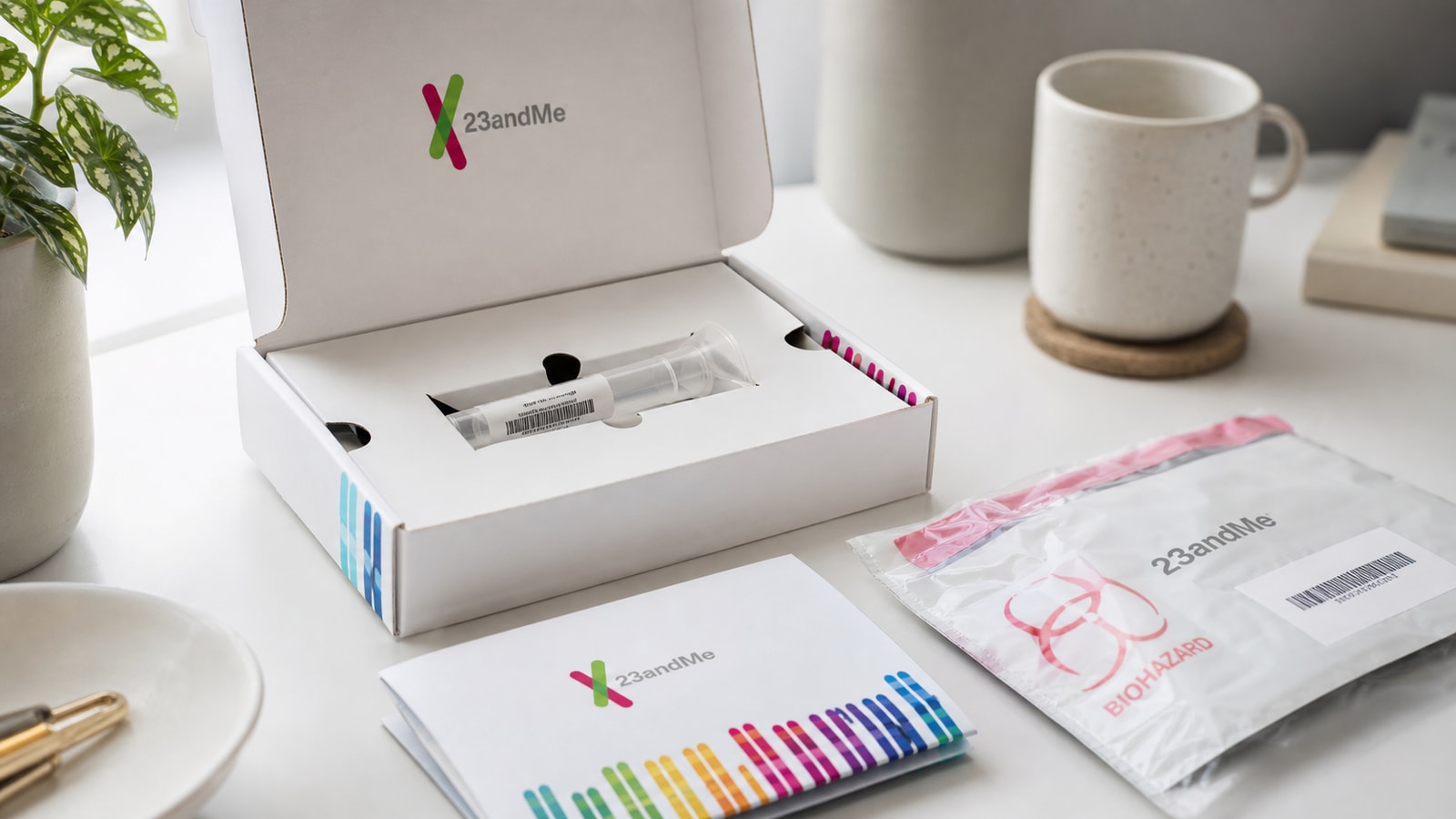
The kit made DNA a consumer ritual
The product worked because the sample tube made genetics feel understandable and repeatable.
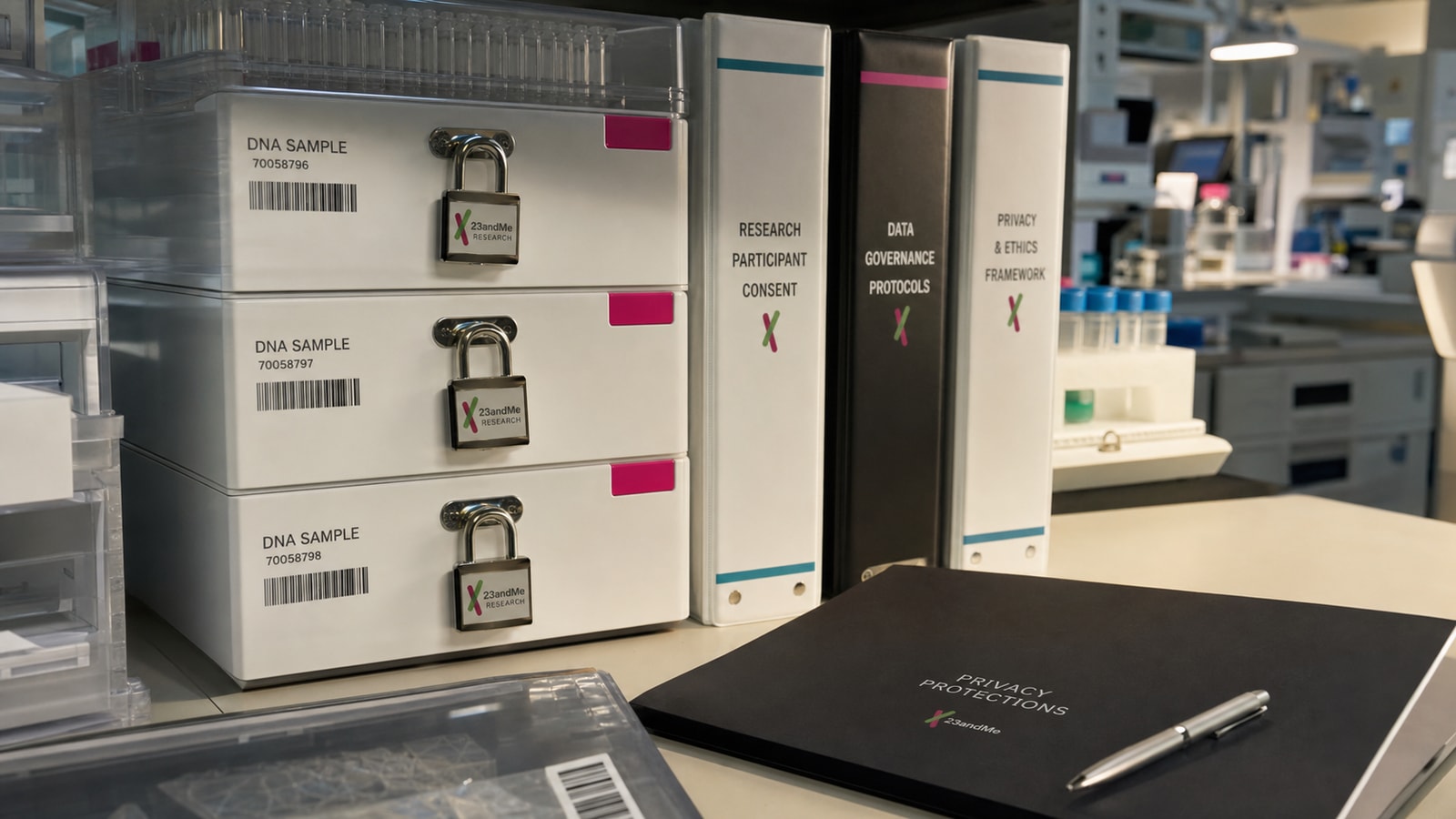
The database became the hard question
A genetics brand cannot separate financial distress from data custody and consent.
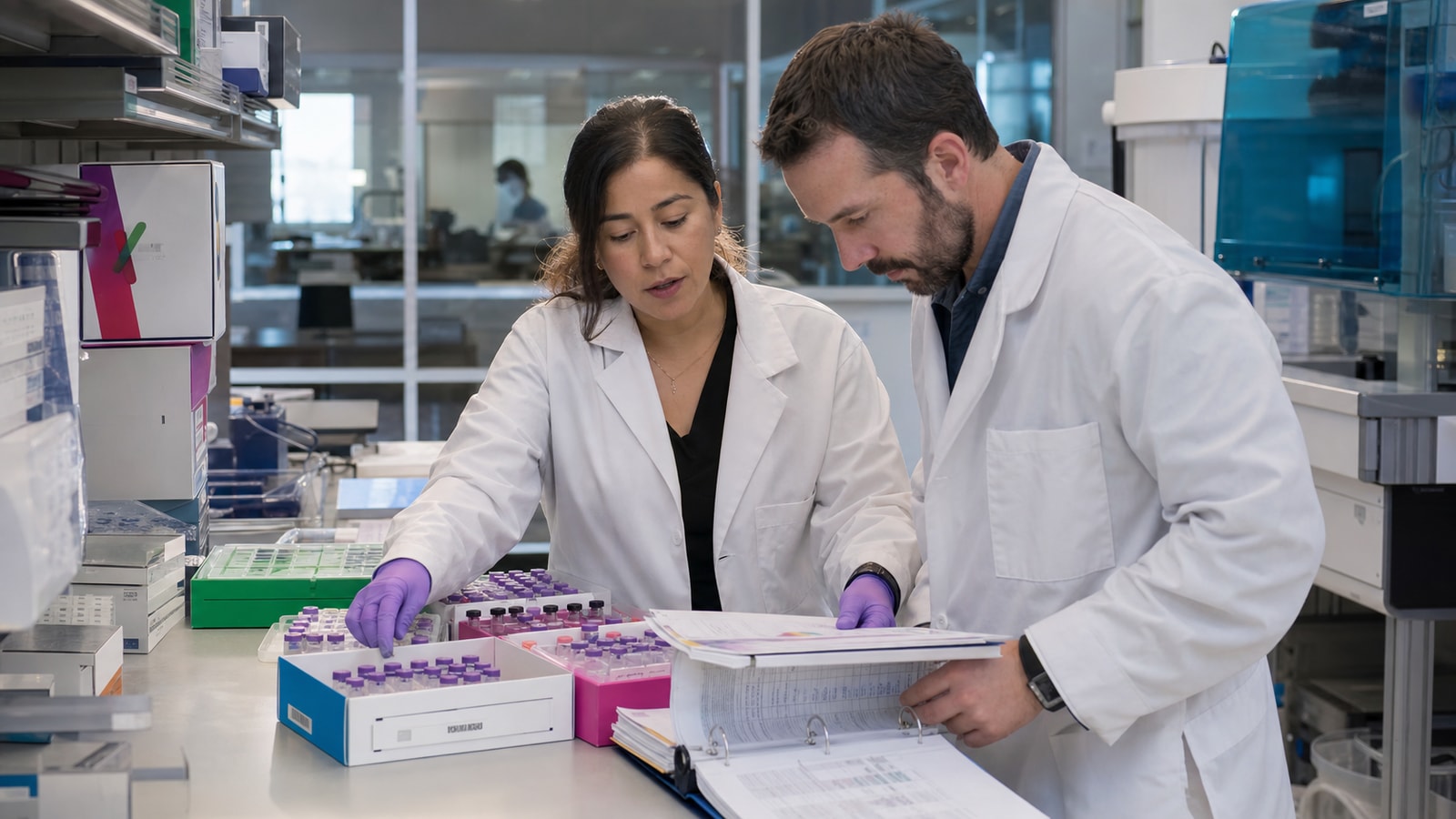
The surviving asset is research continuity
The post-sale question is whether the research promise can earn trust under a new structure.

Custody begins before the sample leaves home
The physical return ritual has to make consent, handling, and stewardship feel careful before any data is created.
Product and service system
A saliva tube and reports make genetics understandable.
The service expands from ancestry into wellness and health-risk information.
Customer consent and genetics data become a drug-discovery and research asset.
The brand survives through an asset sale and privacy-bound successor structure.
Turning points.
The failure sequence moved from growth story to trust crisis, board conflict, delisting, and bankruptcy sale.
Why it failed
Revenue fell, losses stayed large, the Lemonaid expansion impaired value, and a sensitive data breach made the trust promise harder to defend.
Management cut costs, pursued strategic alternatives, rejected and reopened acquisition paths, then used a court-supervised sale to preserve selected assets and service continuity.
Nasdaq delisting pressure, liquidity constraints, and the March 2025 Chapter 11 filing forced a sale process in which genetic data custody became the public brand issue.
Failure timeline
23andMe goes public through a SPAC merger.
A data breach exposes account and ancestry information for millions of users.
The company files Chapter 11 and faces Nasdaq delisting.
TTAM Research Institute completes the asset acquisition.
Public reaction.
The reaction was not only to a bankruptcy. It was to the idea that genetic data could be sold after a consumer brand failed.
The failure made ownership of sensitive genetic information the core public issue.
The asset sale kept consumer genetics and research assets alive under a new structure.
Full timeline.
23andMe is founded as a consumer genetics company. Source
23andMe closes its public-company business combination. Source
The company reports USD 220 million revenue and USD 667 million net loss. Source
23andMe initiates voluntary Chapter 11 and faces Nasdaq delisting. Source
TTAM Research Institute completes the acquisition of 23andMe assets. Source
Steal / avoid.
- Make the trust asset explicit before growth breaks.
- Keep sensitive data custody separate from ordinary brand equity.
- Use service continuity as proof only when the buyer boundary is clear.
- Do not treat genetic data like ordinary customer data.
- Do not let a public-market story outrun repeatable customer demand.
- Do not bury privacy anxiety under friendly product language.
Short answer.
23andMe takes its name from the 23 pairs of chromosomes usually found in human cells. Its consumer reports estimate ancestry and identify genetic relatives; those results are different from a documented family tree. The brand survived its former public company's 2025 bankruptcy through an asset acquisition, so the failure story must distinguish the company, the service and custody of customer data.
Frequently asked questions
Did 23andMe shut down completely?
No. The public company entered Chapter 11 and sold assets. 23andMe Research Institute continued selected consumer genetics and research operations after the acquisition.
Why is it called 23andMe?
The 23 refers to the 23 pairs of chromosomes usually found in human cells. The name joins that shared biological fact to the individual customer. It describes the consumer genetics idea; it does not mean the service tests only 23 genes.
What can 23andMe tell you about ancestry?
Its ancestry reports include estimated ancestry composition and genetic relatives. Haplogroup reports follow particular maternal or paternal lines, so they answer a different question from an ancestry-percentage estimate. These are genetic estimates, not a complete family tree or proof of nationality.
Why did the 23andMe bankruptcy get so much attention?
Because the asset sale involved sensitive genetic and personal data, so customers and regulators focused on privacy, consent, and buyer obligations.
How much money did 23andMe lose before bankruptcy?
23andMe reported about USD 220 million of FY2024 revenue and a USD 667 million net loss.
Need help with your own brand?
Use Private brand work when your name, identity, proof, or message needs a sharper branding decision.
Sources.
Use the education shelf for the concepts behind this brand page.
Private brand workUse this when the decision belongs to your own brand.
All brandsReturn to every brand page.
- 23andMe media center sale and bankruptcy release index
- 23andMe FY2024 Form 10-K
- 23andMe delisting and bankruptcy sale 8-K
- Regeneron 23andMe bankruptcy auction announcement
- 23andMe image and logo media center
- 23andMe logo file history
- Why is it called 23andMe?
- What can 23andMe tell you about ancestry?
- 23andMe: Saliva kit
- 23andMe: Membership
- 23andMe: Research consent
