Adidas · Grow Your Brand · High Recognition / Portable Sport Code · Germany / Active / public company
Adidas
Adidas made the 3-Stripes work on shoes, kits, balls, shelves, and streets. Performance, Originals, and Sportswear stay connected because the same cue survives motion, distance, product shape, and retail.
Positioning, name, and architecture.
Adidas is strongest when one portable cue connects performance, product families, team visibility, retail, and culture without losing its sport origin.
Adidas owns a simple repeatable cue that works across performance footwear, team kits, balls, apparel, Originals, Sportswear, stores, and screen-level recognition.
Adidas positions sport credibility as a visible code: the customer sees the stripes on moving bodies, footwear, kits, balls, shelves, stores, and style contexts.
Adidas comes from founder Adi Dassler; the 2025 annual report names the 1949 registration as 'Adolf Dassler adidas Sportschuhfabrik' in Herzogenaurach, Germany.
You Got This
branded house with product-family and category marks
The Adidas name leads. Performance, Originals, and Sportswear separate major buyer jobs; Terrex, Adizero, Predator, F50, Samba, Superstar, and Stan Smith operate as category or product-family proof rather than equal sub-brands.
Sport-led footwear, apparel, and equipment use the 3-Bar and 3-Stripes under visible performance pressure.
Category system: Running / football / training source
The Trefoil connects archive sport memory to classics, collaborations, and current street demand.
Lifestyle and heritage system: Samba / Superstar / Stan Smith source
Sportswear carries sport-informed product into daily use without pretending every item is elite-performance equipment.
Everyday sport system: Everyday apparel and footwear source
Outdoor and running platforms keep the masterbrand tied to specific use and technical proof.
Category and product platforms: Terrex / Adizero source
Product names carry separate memory inside football and lifestyle while the 3-Stripes retain family recognition.
Named product franchises: Predator / F50 / Samba source
Naming and tagline progression
You Got This launches as the global brand campaign.
The campaign expands across products, athletes, and sport categories.
The campaign continues around major global sport events.
Market and scale snapshot.
FY2025 scale shows how far the Adidas cue travels across footwear, apparel, equipment, wholesale, owned retail, and direct digital demand.
FY2025 net sales of EUR 24.811 billion converted at the dated 31 Dec 2025 rate.
FY2025 attributable net income of EUR 1.340 billion converted at the same dated rate.
FY2025 operating profit of EUR 2.056 billion converted at the page’s dated 31 Dec 2025 rate.
Xetra ticker and ISIN from the adidas Annual Report 2025.
Color system.
The current mark is black within a tight black, white, gray, and navy support palette. Adidas recognition depends more on stripe contrast and product placement than on one loud brand color.
How the palette behaves
Black keeps the 3-Bar mark and 3-Stripes legible across footwear, kits, packaging, retail, and digital surfaces.
White makes stripe contrast readable on footwear, kits, balls, retail, and digital surfaces.
Neutral ground lets product proof, not decorative color, carry the brand story.
The useful color lesson is contrast: the cue has to read fast while a shoe, player, sleeve, or shelf is moving through attention.
Recognition assets.
The cue earns value when it survives motion, cropping, product shape, kit distance, retail display, and cultural reuse.
The mark works when a shoe is half visible, a player is moving, or a kit is seen from a distance.
The 3-Bar carries Performance; the Trefoil carries Originals. Both preserve the three-part memory.
Lifestyle demand is strongest when the buyer can still see running, football, training, teamwear, or product credibility behind it.
Scores.
These scores test whether recognition still points back to product behavior and sport credibility.
The 3-Stripes, 3-Bar, Trefoil, footwear, kits, and Originals give Adidas a fast public read.
Running, football, training, apparel, equipment, and named franchises keep the cue tied to use.
Originals and Sportswear let sport memory move into everyday style.
The more the brand wins in culture, the more it has to keep sport proof visible.
Performance, Originals, Sportswear, and product franchises are clear when the mark system does the sorting.
The company name, public ticker, primary mark, product families, and annual report trail are direct.
Few sport cues travel as well across motion, product shape, kit distance, and retail display.
A copied stripe or simple mark fails quickly if the product does not teach people what the cue means.
How the logo changed.
The Trefoil, performance mark, and current 3-Bar identity show how heritage, technical sport, and the company identity gained different jobs.
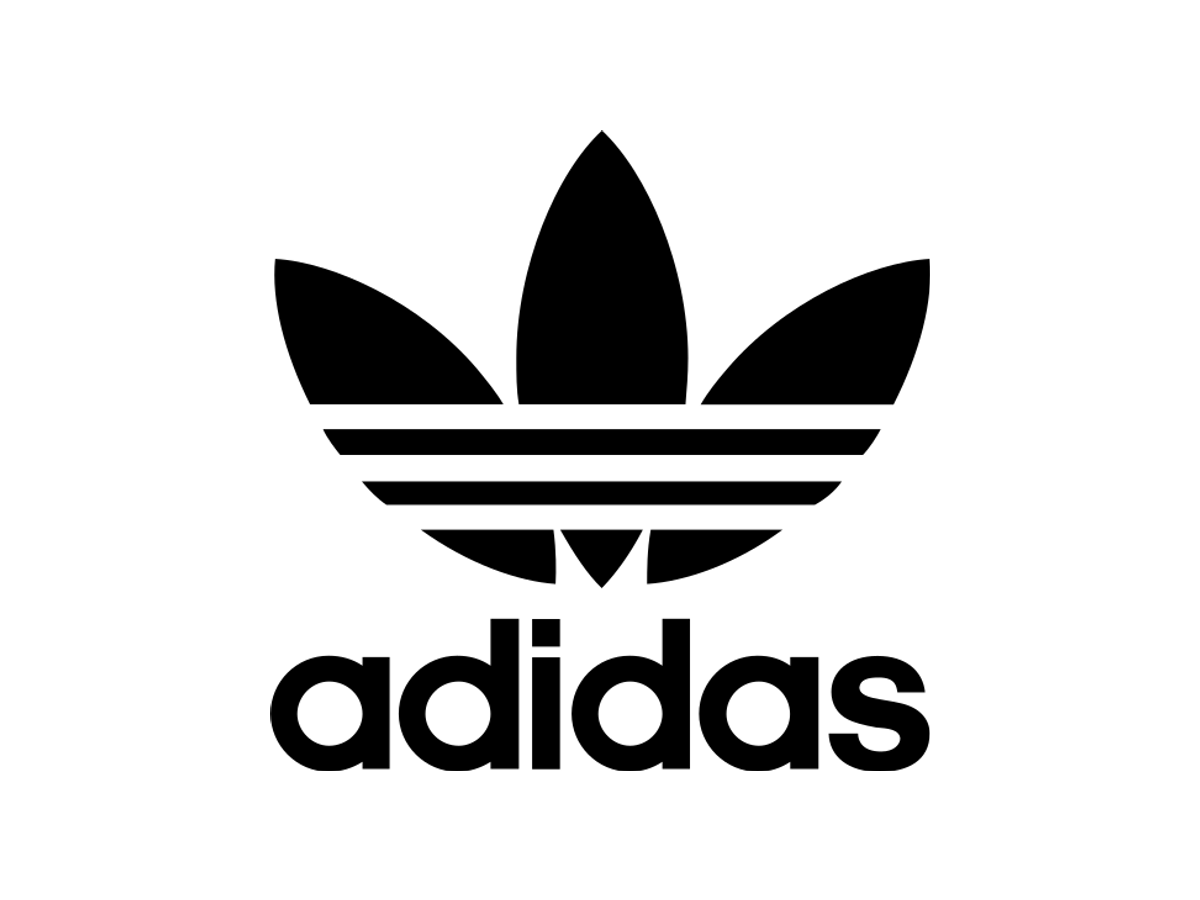
The Trefoil gives heritage and lifestyle a distinct recognition role while preserving the three-part memory.
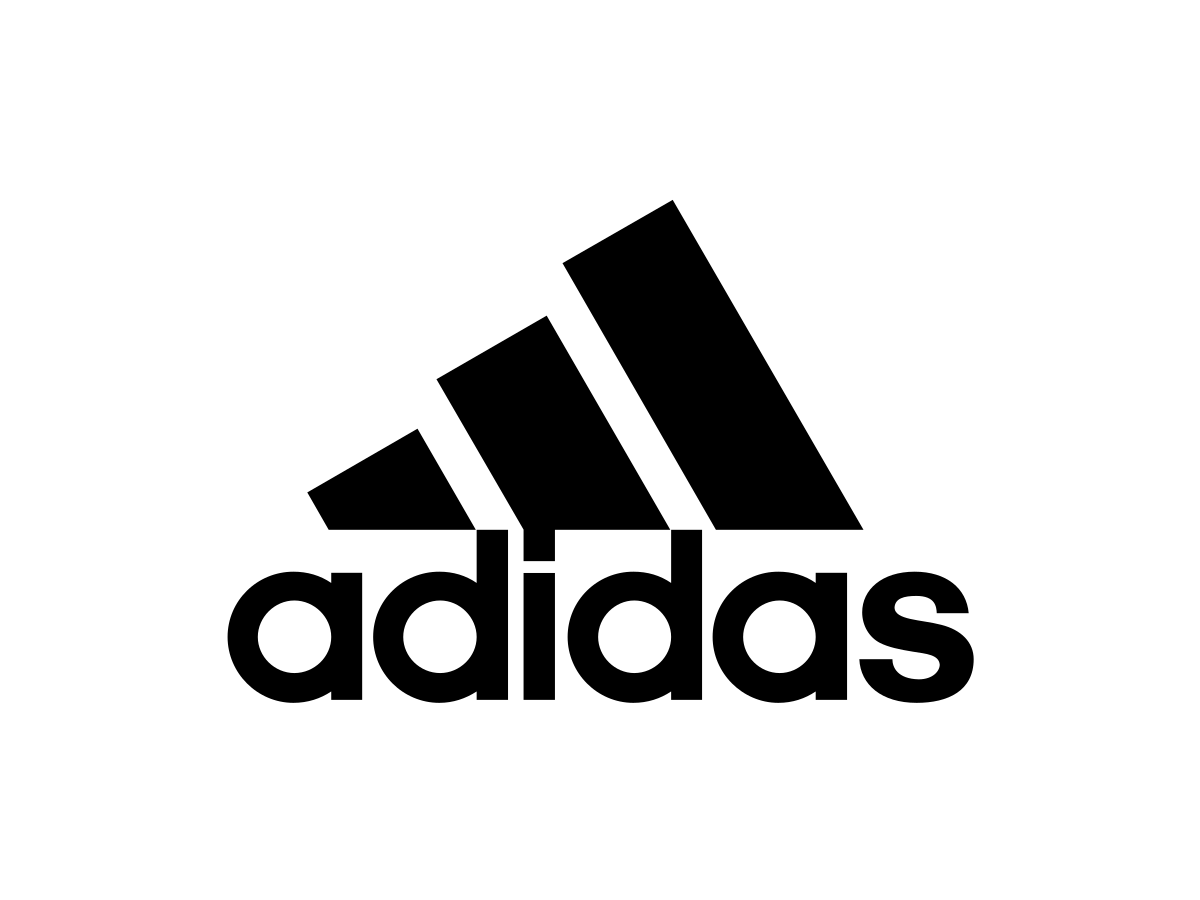
The performance-led identity separates technical sport proof from the heritage lane.

The simplified company mark keeps the three-part cue while letting products, teams, and sub-lines carry the context.
Product and service lineage.
Adidas is strongest when the same cue links sport use, product families, team visibility, retail, and culture.
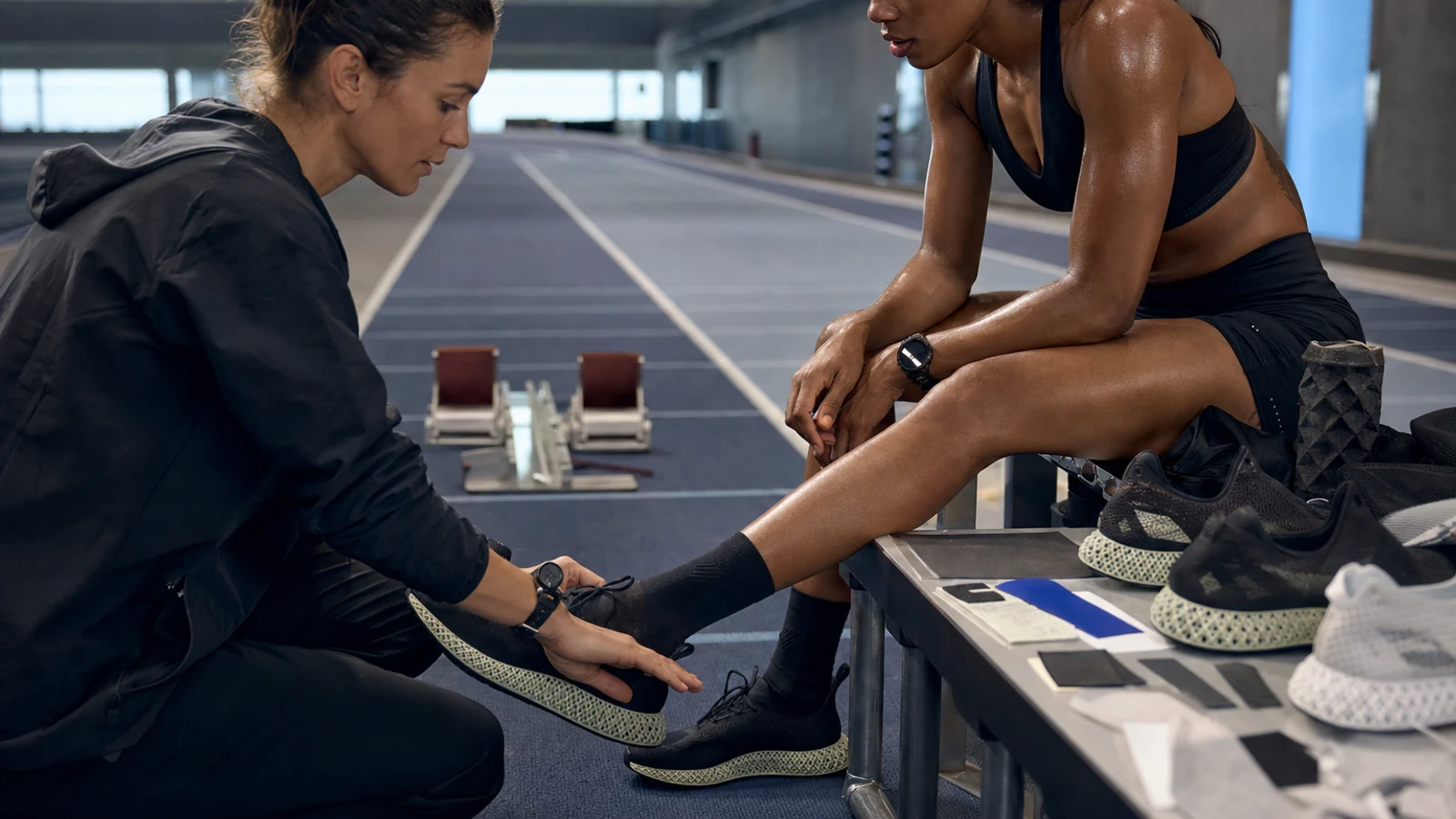
Performance starts with fit
Footwear testing turns material, gait, cushioning, and athlete feedback into product proof before the mark carries the story.
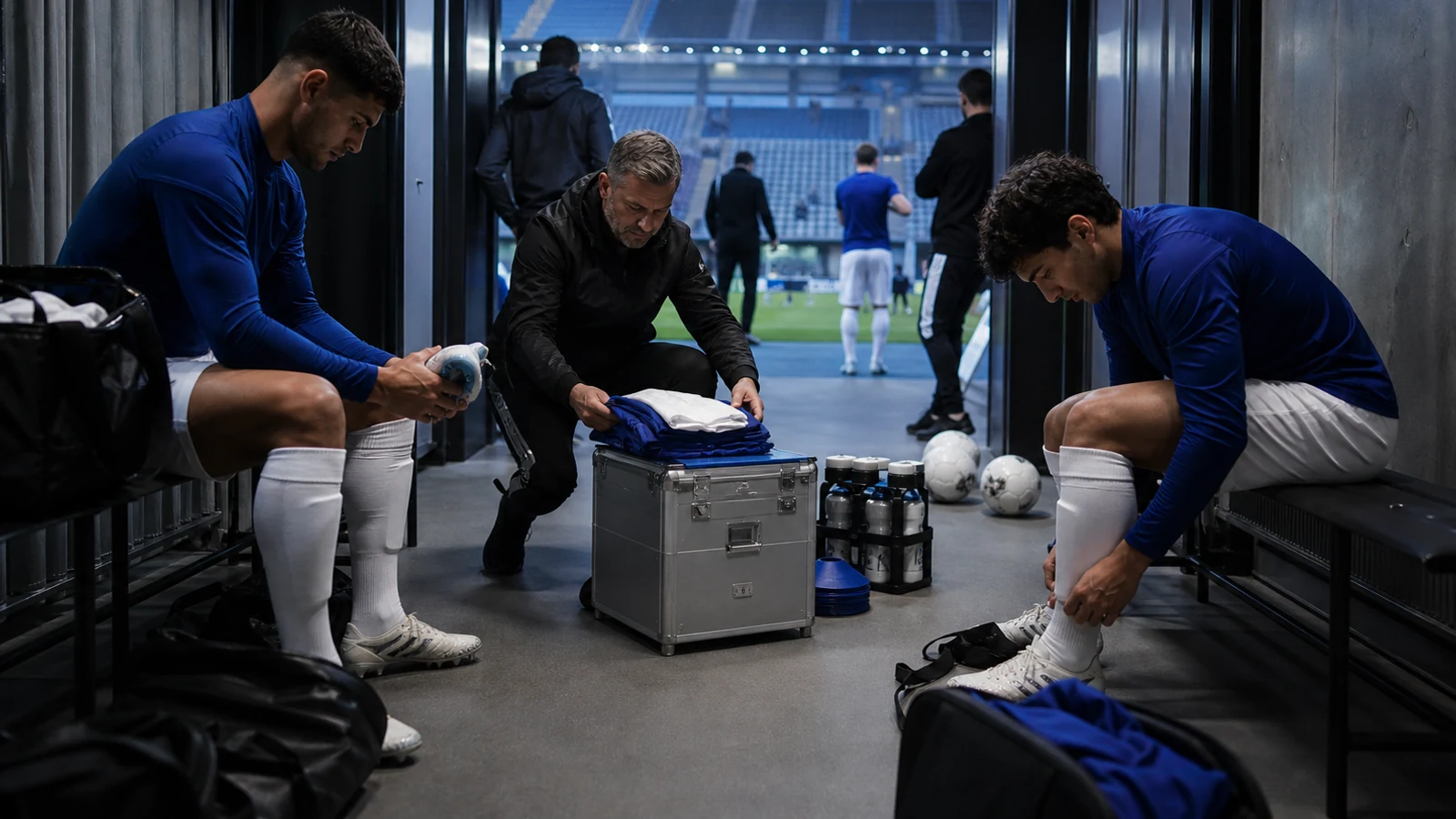
Football works at team scale
Kit preparation, boots, balls, and the stadium tunnel show how product and team ritual make the brand visible before kickoff.

Originals lives in culture
Dance, skating, music, and everyday sportswear extend archive memory without pretending that lifestyle replaces sport proof.

Outdoor proof changes the conditions
Trail use makes grip, weather protection, fit, and pack behavior visible under conditions that a retail shelf cannot reproduce.
Product and service system
Adizero and performance footwear connect material, fit, gait, cushioning, and athlete testing to a named product system.
Boots, kits, balls, clubs, and national teams make the 3-Stripes visible while products are being judged in competition.
Samba, Superstar, Stan Smith, Firebird, and the Trefoil carry archived sport memory into current lifestyle demand.
Trail footwear, apparel, and equipment test whether the masterbrand can carry credible proof into mountain and weather conditions.
Turning points.
Turning points only: the 1949 cue, football proof, apparel expansion, World Cup visibility, Originals demand, product momentum, and the burden of keeping culture grounded in sport.
The 3-Stripes were attached to a sports shoe in the same year the company was registered.
Boots, kits, clubs, national teams, Predator, F50, and match balls give the signal a stage where performance is watched.
Samba, Superstar, Firebird, Teamgeist, and collaborations let older sport cues re-enter current style demand.
The FY2025 report says results did not include Yeezy revenues after the remaining inventory was sold in 2024.
The annual report names Adizero, Adios Pro, Evo SL, Supernova, and major running proof as part of 2025 growth.
The annual report says You Got This continues through 2026 around major global sport events.
Adidas supplied both World Cup finalists and carried official-partner/category visibility when demand for football product was highest.
Public reaction.
Public pressure shows up in sport credibility, product momentum, collaboration heat, retail demand, and whether culture still points back to product use.
Adidas can move from match, track, court, shoe wall, club kit, and street outfit because the three-part cue survives each context.
A repeated cue weakens when buyers can see the styling but not the product behavior, sport link, or proof behind it.
Full timeline.
Adi Dassler registers adidas and launches a sports shoe with the 3-Stripes.
Screw-in-stud boots gain public proof during West Germany's World Cup win.
Adidas introduces its first apparel product, the Franz Beckenbauer tracksuit.
The Telstar becomes the first official adidas FIFA World Cup ball.
The Trefoil identity is introduced for a broader product portfolio.
Run-D.M.C. releases My Adidas and makes Superstar part of a public culture shift.
Adidas sells the remaining Yeezy inventory and closes the product partnership.
Adidas reports FY2025 net sales of EUR 24.811 billion and operating profit of EUR 2.056 billion.
Steal / avoid.
- Make the cue useful on the product before asking culture to carry it.
- Design for motion, cropping, shelves, sleeves, screens, and distance.
- Give different parts of the portfolio their own sorting marks without losing the main memory.
- Let old product memory re-enter current demand through real products, not nostalgia copy.
- Do not copy the stripes. Copy the constraint: the cue has to survive real use.
- Do not let collaborations become louder than the product system.
- Do not let lifestyle demand erase the sport proof that made the cue worth borrowing.
- Do not use repetition as a substitute for meaning. Buyers need to know what the cue proves.
Short answer.
Adidas' signal is the 3-Stripes system: a portable cue that survives footwear, apparel, team kits, balls, Originals, Sportswear, retail, and street use. Its value comes from repeated product behavior; the risk is letting lifestyle heat outrun sport proof.
Frequently asked questions
What is Adidas' core brand signal?
The 3-Stripes are the fastest cue, but Performance, Originals, Sportswear, named product families, and real sport use give the cue meaning.
Why does Adidas work beyond sport?
It works beyond sport when the culture still points back to sport memory, product use, team visibility, and recognizable product families.
What should another brand steal from Adidas?
Steal the discipline, not the stripe. Build a cue that works in motion, on products, at retail, and in the customer's daily memory.
Need help with your own brand?
Use Private brand work when your name, identity, proof, or message needs a sharper branding decision.
Sources.
Use the education shelf for the concepts behind this brand page.
Private brand workUse this when the decision belongs to your own brand.
All brandsReturn to every brand page.
- adidas Annual Report 2025, Product and Marketing
- adidas Annual Report 2025, Income Statement
- adidas Annual Report 2025, Our Share
- Wikimedia Commons, Adidas 2022 logo file
- Wikimedia Commons, original Adidas logo file
- Wikimedia Commons, Adidas performance logo file
- Dated EUR-to-USD reference for 31 Dec 2025
- Adidas football history


