Airbnb · Grow Your Brand · Marketplace Trust System · United States / Active / public company
Airbnb
Airbnb made belonging commercial only when the marketplace could prove trust between hosts, guests, homes, payments, reviews, and recovery. A brand page for Airbnb: the Belo mark, Belong Anywhere, host trust, guest confidence, reviews, payments, safety, marketplace scale, regulatory pressure, and why a warm lodging brand has to be backed by operational proof.
Positioning, name, and architecture.
Three evidence checks before the page talks about scale, color, or public reaction.
Airbnb ties a human belonging promise to a two-sided marketplace where listings, reviews, payments, host behavior, guest conduct, support, and recovery all have to work.
Airbnb positions travel as belonging, but the useful brand signal is trust under use: host, guest, place, payment, arrival, review, and recovery have to agree.
Airbnb traces back to the early air-bed-and-breakfast idea in San Francisco before becoming a global lodging marketplace.
Now you can Airbnb more than an Airbnb
marketplace masterbrand with named stay, experience, service, and owned-brand offers
Homes, Experiences, and Services are marketplace offers. AirCover is a named Airbnb subbrand, and HotelTonight remains an acquired accommodation brand.
Hosted homes and rooms supported by listing, review, payment, and arrival trust.
Marketplace offer: Airbnb homes source
Host-led activities extend the trip beyond accommodation.
Marketplace offer: Experiences source
Bookable services extend the platform beyond stays.
Marketplace offer: Services source
Protection and support for hosts and guests.
Subbrand: AirCover source
Last-minute hotel inventory under an acquired accommodation brand.
Owned brand: HotelTonight source
Naming and tagline progression
Air bed and breakfast named the early hosted-stay behavior.
Belong Anywhere moved the brand from accommodation listing to emotional travel promise.
The brand now has to prove the promise through host quality, guest trust, payments, and support.
Market and scale snapshot.
Airbnb's Q2 2026 results show the marketplace gaining demand during the World Cup while AI-assisted support lowers the cost of recovery. The market value is a dated observation, not a permanent company value.
Q2 2026 revenue increased 17% year over year.
Q2 2026 net income; the quarter included a USD 77M tax-related benefit.
Dated full-company equity market capitalization; market values move daily.
Publicly listed independent marketplace company.
Color system.
Airbnb coral gives the page warmth and recognition; black keeps the marketplace serious; teal and warm ground connect the system to travel, homes, and human trust.
How the palette behaves
Coral makes the brand feel warm, social, and easier to approach.
Black grounds the marketplace in payment, policy, and operating seriousness.
Teal adds travel-service freshness without taking over the signal.
Warm ground keeps the visual language close to homes rather than a generic app screen.
Recognition assets.
Memory pieces the brand can use before someone finishes a sentence.
The mark works when it points to belonging that the actual stay can support.
A marketplace brand needs people, reviews, payments, and recovery to keep the promise stable.
Safety, accuracy, fees, regulation, and support can either strengthen or tax the warm signal.
Scores.
Use these scores to compare recognition, trust, proof, pressure, and risk.
The Belo, coral system, app behavior, and hosted-stay category are strongly linked.
Trust proof is inspectable through reviews, listings, payments, host behavior, and support.
The brand created a new mainstream behavior by making strangers and private homes feel bookable.
The service is visible before booking and after arrival, but quality depends on many hosts and contexts.
Housing, city rules, fees, safety, and neighborhood concerns keep the brand under pressure.
A warm symbol alone is easy to copy; the hard part is trust governance.
Airbnb is easy to identify, but pages must distinguish the brand, company, marketplace, hosts, and stay behavior.
Airbnb makes support, reviews, host identity, and safety policy visible, but the quality of recovery still varies with the individual stay and host.
How the logo changed.
The name moved from a literal two-line offer to a shorter marketplace wordmark. The 2014 Belo system then supplied the current public symbol shown in the page hero.
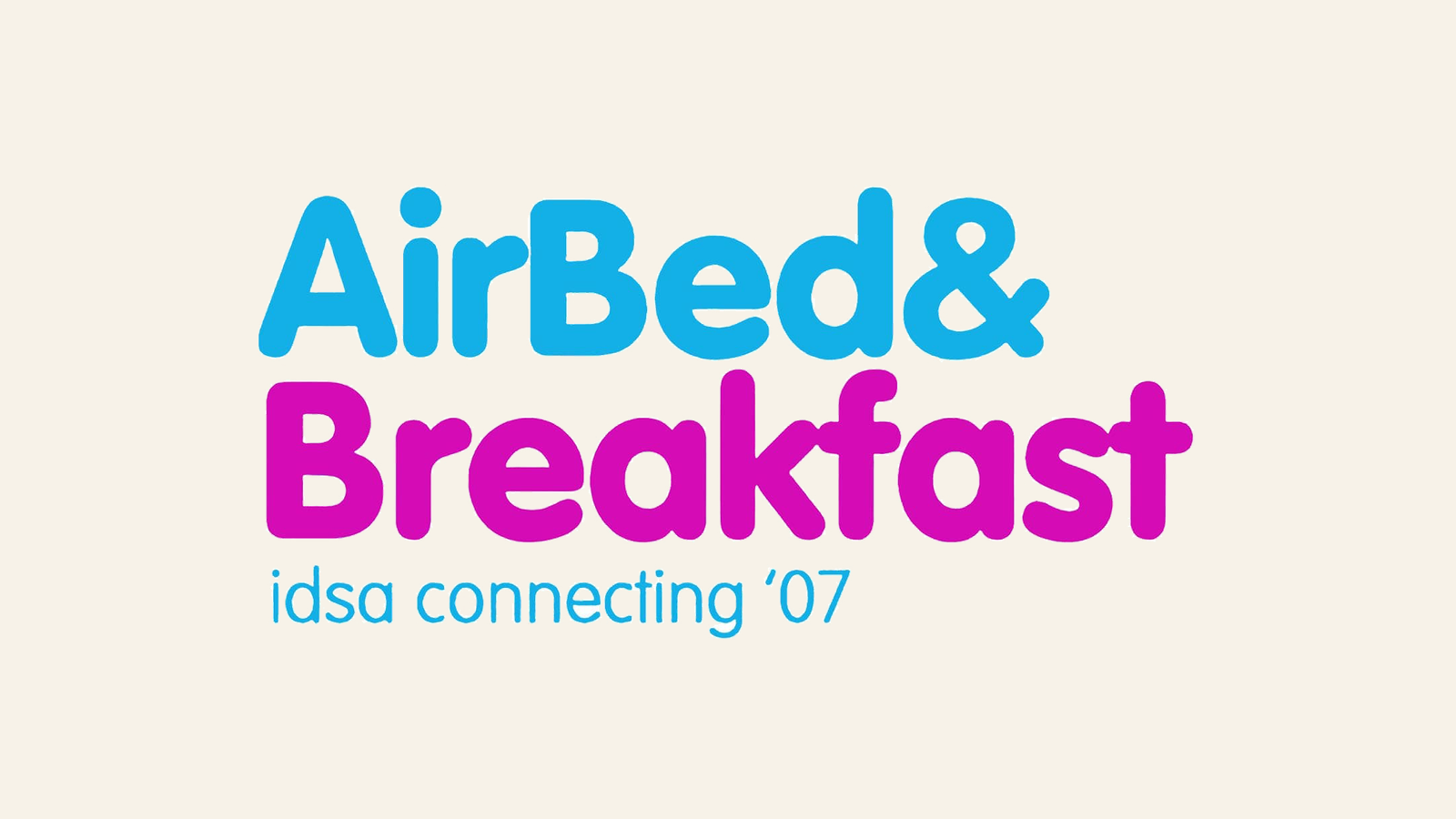
The first mark named the literal offer: air beds and breakfast during a sold-out design conference. source
The shortened name and script wordmark carried Airbnb as the marketplace expanded beyond its air-bed origin. source

The Belo symbol and wordmark turned belonging into a compact global identity across app, listing, and travel surfaces. source
Product and service lineage.
Airbnb's signal moves from a scrappy hosted-stay origin to a global marketplace where trust systems decide whether belonging survives contact with the actual trip.

Stay proof
A private home becomes a brand surface when cleanliness, comfort, instructions, and host reliability match the listing.

Arrival preparation
Keys, luggage space, clean rooms, and a deliberate welcome turn a listing promise into an arrival the guest can trust.

Recovery after arrival
Listing photographs win attention. Fast host recovery earns trust after arrival.

Belonging beyond the door
A useful welcome connects the stay to the neighborhood, helping guests move from transaction to place with real human context.
Product and service system
The origin behavior starts in San Francisco with hosted stays before the brand becomes a global marketplace.
Hosts, listings, guests, reviews, payments, and support become the real product system.
The Belo and Belong Anywhere frame move Airbnb from listing utility toward emotional travel identity.
More than 5 million hosts and billions of guest arrivals make the behavior mainstream.
Fees, safety, regulation, inaccurate listings, and support expectations keep testing the trust system.
The useful brand question is whether the stay feels as trustworthy as the promise before and after booking.
Turning points.
Turning points only: origin, Belo, marketplace scale, trust pressure, and the proof systems that hold the brand together.
The new symbol gave Airbnb a public cue for belonging, people, and places.
Airbnb made private homes and host-specific stays a mainstream travel option.
Safety, fees, host quality, local rules, and recovery can challenge the promise.
Host-side outcomes and regulatory/tax pressure are now part of the trip trust equation alongside convenience and discovery.
Revenue reached USD 3.61B, Nights and Seats Booked rose 10% to 148.3M, and AI-assisted support reduced support cost per booking by 16%.
Public reaction.
Airbnb earns affection when a hosted stay feels personal and dependable; it absorbs criticism when fees, safety, listing accuracy, support, or neighborhood impact break that expectation.
The brand gains strength when a guest feels the stay is easier, warmer, and more memorable than a generic accommodation search.
The warm mark cannot carry inaccurate listings, fees, safety concerns, weak support, or host behavior that feels unmanaged.
Full timeline.
Brian Chesky and Joe Gebbia host the first AirBed & Breakfast guests in San Francisco.
AirBed & Breakfast launches at SXSW, relaunches for the Democratic National Convention, and introduces Airbnb Payments.
The company shortens its name to Airbnb and expands beyond rooms into apartments, whole homes, and vacation rentals.
Airbnb begins international expansion with an office in Germany.
Airbnb introduces the Belo identity and its belonging frame.
Airbnb becomes a public company after filing its registration statement with the SEC.
Airbnb reports FY2025 results while stays, experiences, and services widen the marketplace.
Steal / avoid.
- Make an unfamiliar behavior feel emotionally simple without hiding the trust mechanics.
- Build the symbol around the customer action before polishing the company name.
- Treat reviews, payments, safety, support, and recovery as brand assets.
- Keep the promise grounded in the exact moment where the customer feels risk.
- Do not make a warm marketplace claim before the trust system can carry it.
- Do not let symbol meaning outrun host quality, fees, safety, or support.
- Do not describe belonging if the customer experiences uncertainty at arrival.
- Do not copy Airbnb's tone without copying the trust infrastructure.
Short answer.
Airbnb's brand signal is marketplace trust made warm. The Belo and Belong Anywhere frame make the service feel human, but the signal works only when hosts, guests, listings, reviews, payments, safety, support, and recovery make a private stay feel bookable and legitimate.
Frequently asked questions
What is Airbnb's core brand signal?
Airbnb's core signal is belonging made credible by marketplace trust: host quality, guest confidence, reviews, payment safety, support, and recovery.
What should another brand steal from Airbnb?
Steal the discipline of naming an unfamiliar behavior emotionally while building the trust infrastructure that makes the behavior safe to repeat.
What should another brand avoid copying from Airbnb?
Do not copy the warmth, coral palette, or belonging language if your service cannot prove trust at the customer's risk moment.
Need help with your own brand?
Use Private brand work when your name, identity, proof, or message needs a sharper branding decision.
Sources.
Use the education shelf for the concepts behind this brand page.
Private brand workUse this when the decision belongs to your own brand.
All brandsReturn to every brand page.
- Airbnb 2025 Form 10-K
- Airbnb Q2 2026 financial results
- Airbnb market capitalization
- SEC company facts, Airbnb CIK 0001559720
- Airbnb Newsroom, About Us
- Airbnb Newsroom, New Airbnb
- Airbnb Trust
- TechCrunch, Airbnb redesign
- Wired, Airbnb branding strategy
- Wikimedia Commons, Airbnb Belo file
- French Wikipedia historical Airbnb logo sequence
