AMD · Grow Your Brand · Semiconductors · United States / Active
AMD
How does AMD turn a challenger position into an AI platform brand? AMD organizes its offer around named computing jobs: Ryzen for PCs, Radeon for graphics, EPYC for servers and Instinct for AI accelerators. ROCm adds the software layer. Our reading: the platform claim becomes credible when buyers can move from individual components to supported workloads and complete systems.
Positioning, name, and architecture.
Our brand-strategy analysis separates the company, its offer and the evidence a customer can inspect.
A computing alternative with a distinct job for each product family
The buyer should be able to identify a workload, choose the relevant product family and find the software needed to run it.
AMD abbreviates Advanced Micro Devices.
Read the names by the role each plays in the buying decision.
Masterbrand with named product families
Hardware specifications alone do not remove the cost of adapting software, validating systems or changing suppliers.
A consumer-facing entry point for the AMD name.
PC processors: Ryzen source
A separate promise for gaming and professional graphics.
Graphics: Radeon source
A product family built around institutional computing decisions.
Server processors: EPYC source
Accelerators need usable software before their performance becomes customer proof.
AI hardware and software: Instinct and ROCm source
What the names help buyers understand
AMD abbreviates Advanced Micro Devices. This is a naming explanation, not a claim about an official advertising tagline.
Market and scale snapshot.
AMD reports annual company results in US dollars. The September market-value threshold is a separate, dated investor observation.
FY2025 revenue, using the rounded headline figure in AMD’s 3 February 2026 results.
FY2025 GAAP net income. AMD separately reported USD 3.7 billion GAAP operating income; these are different earnings measures.
Reuters reported the first crossing on 21 September 2026. This is a dated threshold, not an exact current market capitalization.
Advanced Micro Devices, Inc.; the listed company includes the CPU, graphics and adaptive-computing businesses.
Color system.
The current AMD header-logo file uses white. The reading below describes that observed asset and its use on this page; it does not claim a complete official color standard.
How the palette behaves
The white header mark remains legible on a dark field. Its shape and wordmark carry recognition when the asset contains no product-family color.
Ryzen, EPYC and Instinct name different purchasing decisions. Their product presentation should not be read as a documented palette specification for the whole AMD company.
A product image can help buyers identify the hardware. Performance and compatibility still require the dated technical evidence for that processor, accelerator or software release.
Recognition assets.
Memory pieces the brand can use before someone finishes a sentence.
AMD keeps workload names visible across its product navigation. This gives customers a route through a broad company without making every purchase sound like the same AI claim.
AMD describes ROCm as its open software platform for AI and high-performance computing. Our analysis: documentation, supported frameworks and deployment experience become part of the brand, because a chip cannot complete the job alone.
Being an alternative can win attention. A buyer still needs evidence for the specific workload. Compare implementation effort and supported applications before treating a benchmark win as a whole-platform win.
Scores.
Grow Your Brand editorial evaluations, reviewed 22 September 2026. Each score is out of 10; higher means a clearer, more consistent and better-supported signal. Scores of 1-3 indicate weak evidence, 4-6 partial support, 7-8 strong support and 9-10 unusually consistent proof across the cited surfaces. These are editorial judgments, not customer-survey results or financial forecasts.
The arrow mark and the Ryzen, Radeon, EPYC and Instinct names recur across AMD’s official computing portfolio.
Workload-specific CPU and accelerator families make the alternative-to-incumbents position concrete.
Consumer processors, graphics, server CPUs and AI accelerators have different family names; buyers still need to decode generations and SKU tiers.
Published processor, accelerator and ROCm documentation lets technical buyers inspect capability and compatibility.
The corporate arrow anchors a portfolio with different product identities, packaging and hardware contexts.
The challenger position is clear; workload performance and software support require product-specific evidence.
Public financial reporting and technical documentation support scrutiny. Market capitalization does not prove implementation reliability.
Official product families and software documentation give buyers starting points; enterprise qualification remains a separate purchase task.
How the logo changed.
Two distinct corporate marks are supported by the linked sources. The labels date the documented evidence, not an assumed complete redesign chronology. No intermediate stage or exact launch year is invented.
Archived green-arrow lockup. The exact introduction year is not established by this card. source

The current official website uses a monochrome wordmark and arrow. This source establishes current use, not an exact redesign launch date. source
Product and service lineage.
AMD uses separate product families for PC, graphics, datacenter and accelerator buyers. Software and adaptive hardware add different requirements to the same corporate portfolio.
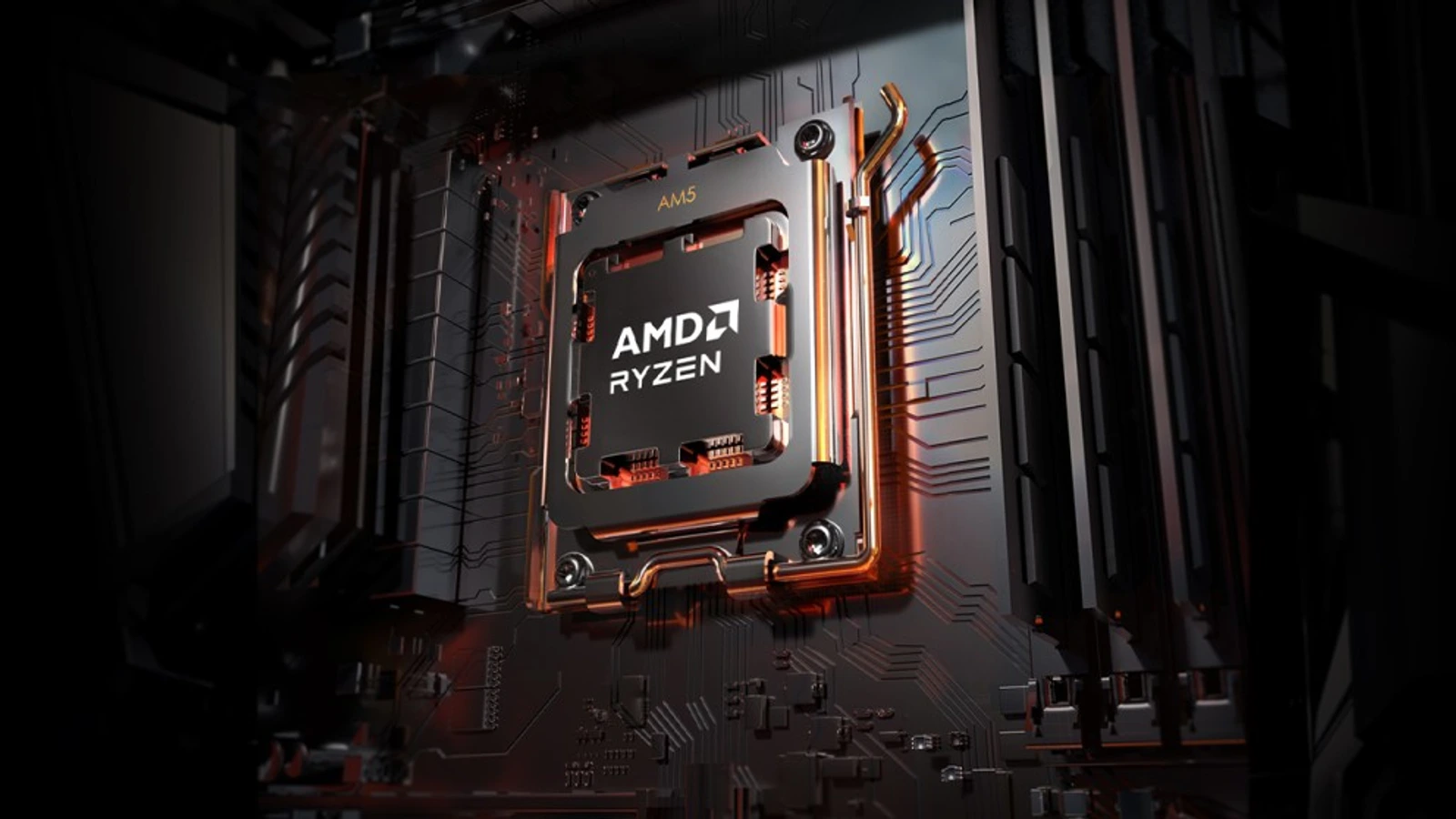
Ryzen desktop processors
AMD Ryzen processor installed on an AM5 motherboard.
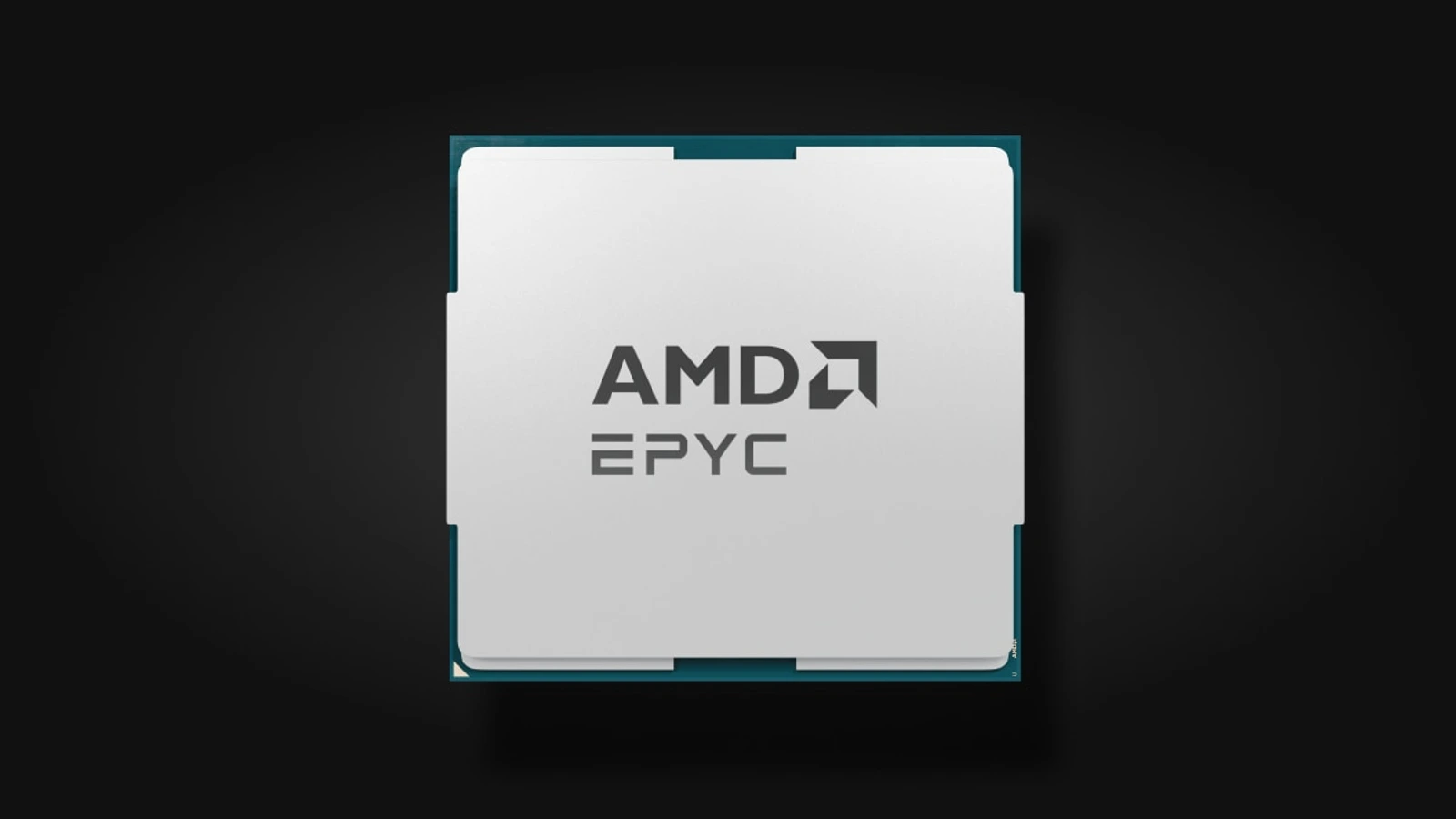
EPYC server processors
Official AMD EPYC 9005 Series processor product image.
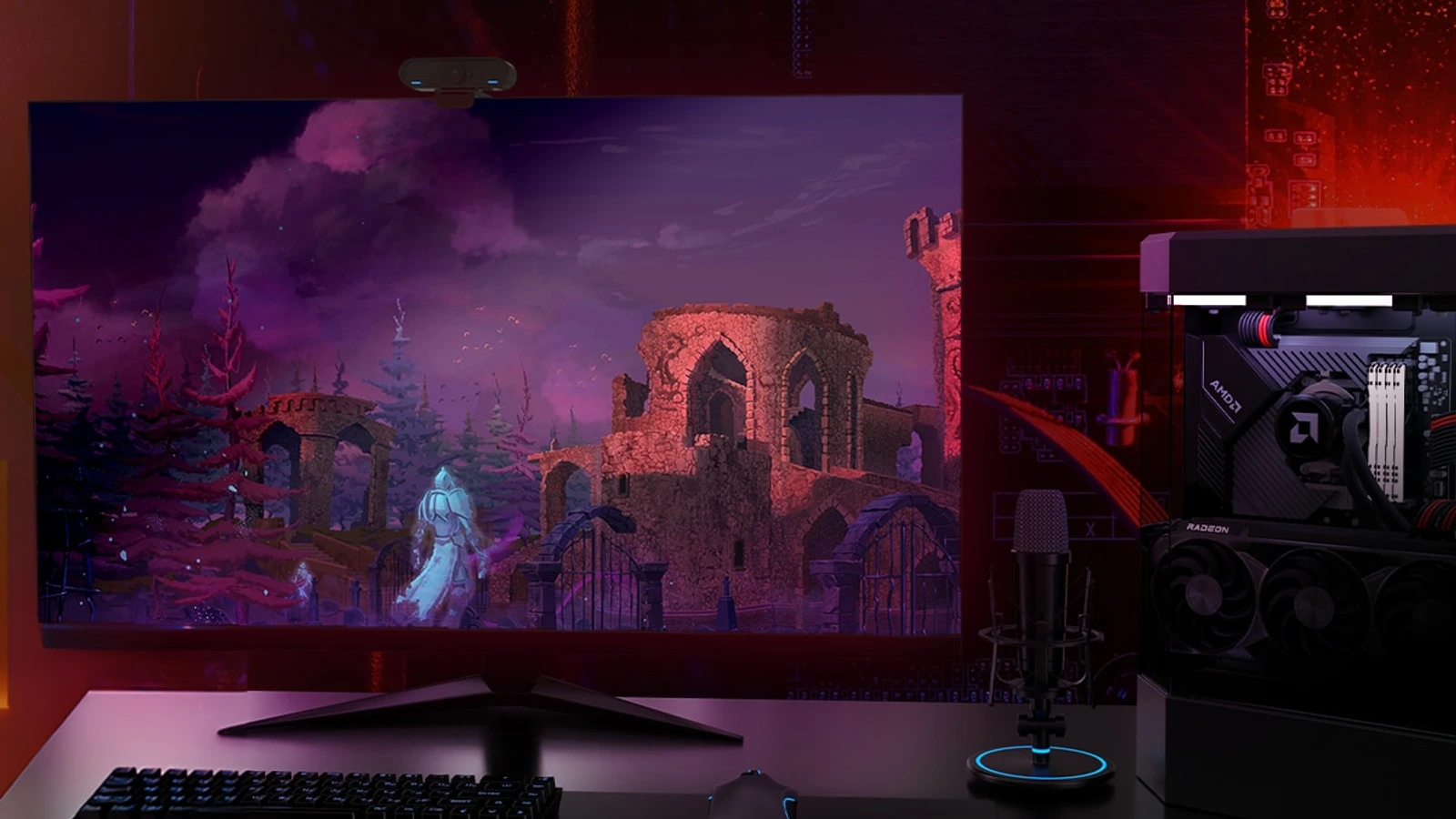
Radeon graphics
AMD Radeon gaming setup shown on the official graphics product page.
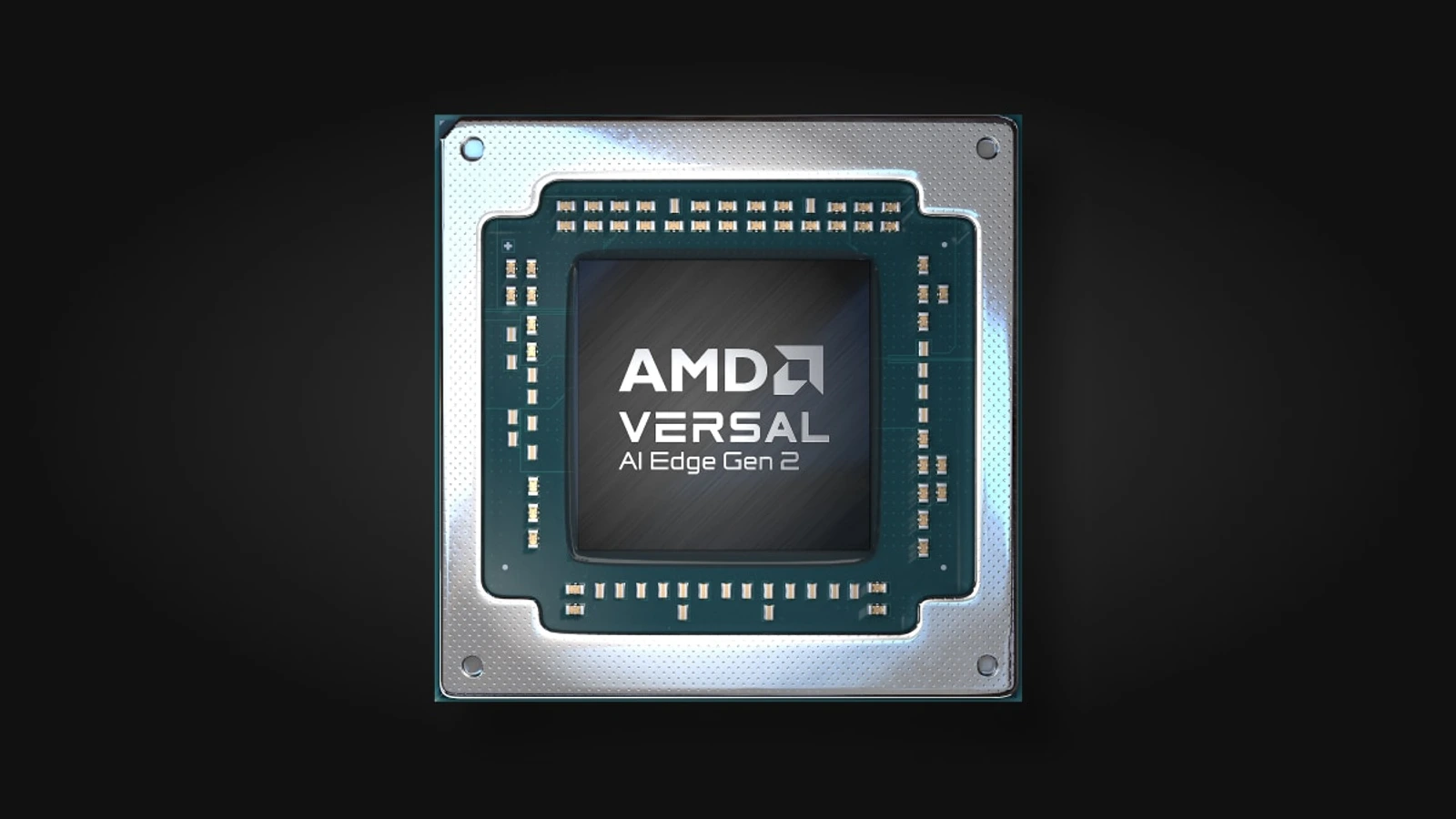
Adaptive computing
Official AMD Versal AI Edge Gen 2 adaptive SoC product image.
Product and service system
PC processors give consumer and commercial client systems a named product family; the first Ryzen 7 desktop models launched in March 2017.
The graphics family addresses gaming and visual-computing workloads within AMD’s wider CPU and graphics business.
Datacenter processors are sold into server-platform and infrastructure decisions, with partner support part of the buying evidence.
Instinct names the accelerator hardware; ROCm is the software environment. Hardware choice and software support have to be evaluated together.
The completed Xilinx acquisition brought adaptive-computing products into AMD in February 2022.
Turning points.
Dated source facts are separated from our interpretation of their brand consequences.
The current AMD catalog separates PC CPUs, server CPUs, graphics and AI accelerators.
ROCm connects AMD hardware to AI frameworks and developer tools.
Reuters reported that AMD crossed $1 trillion in market capitalization for the first time.
Public reaction.
Launch demand, infrastructure commitments and investor pricing are three different kinds of response. None is a customer-satisfaction survey.
The March 2017 Ryzen launch release reported record preorders. This is the company’s account of launch demand, rather than an independent measure of customer opinion.
The June 2017 EPYC release named a partner network and announced Azure and Baidu deployments. Those announcements show institutional interest; they do not establish that every announced system shipped that day.
Reuters reported AMD’s first USD 1 trillion market-value crossing on 21 September 2026. The stock-market response concerns future earnings expectations and does not establish product performance.
Full timeline.
AMD is founded.
AMD completes its acquisition of ATI for approximately USD 5.4 billion.
The first three Ryzen 7 desktop processors become available.
AMD launches EPYC 7000 datacenter processors.
AMD completes its Xilinx acquisition.
Reuters reports that AMD crosses USD 1 trillion in market value for the first time.
Steal / avoid.
- Name product families around distinct buying decisions.
- Give technical buyers a visible path from claim to documentation to implementation.
- Treating a rising share price as proof that a workload performs better.
- Describing all products as AI without explaining which customer each serves.
Short answer.
AMD organizes its offer around named computing jobs: Ryzen for PCs, Radeon for graphics, EPYC for servers and Instinct for AI accelerators. ROCm adds the software layer. Our reading: the platform claim becomes credible when buyers can move from individual components to supported workloads and complete systems.
Frequently asked questions
What does AMD stand for?
AMD stands for Advanced Micro Devices. The company name covers several product families, including Ryzen, Radeon, EPYC and Instinct.
How do AMD and NVIDIA differ as brand examples?
AMD makes a useful example of product-family clarity across CPUs, graphics and accelerators. NVIDIA illustrates a platform organized around CUDA, systems and deployment. Compare the software and customer workflow behind each claim.
Why does ROCm matter to AMD branding?
ROCm is a practical test of the platform promise. Developers need compatible tools and documented workflows to turn hardware capability into usable results.
Need help with your own brand?
Use Private brand work when your name, identity, proof, or message needs a sharper branding decision.
Sources.
Official brand mark; source linked in the evidence list.
Use the education shelf for the concepts behind this brand page.
Private brand workApply this question to the positioning and architecture of your own business.
All brandsReturn to every brand page.
- About AMD
- AMD ROCm software
- Reuters: AMD reaches $1 trillion, 21 September 2026
- Official image and product evidence
- Official identity source
- AMD FY2025 financial results, 3 February 2026
- AMD completes ATI acquisition, 25 October 2006
- Ryzen 7 availability, 2 March 2017
- EPYC launch, 20 June 2017
- Xilinx acquisition completion, 14 February 2022
- ryzen-am5 visual source
- epyc-9005 visual source
- radeon-graphics visual source
- versal-ai-edge visual source
- Archived corporate logo source
- Current corporate logo source
