Bed Bath & Beyond · Grow Your Brand · Bed Bath & Beyond failure case study · United States / Filed Chapter 11 in April 2023; stores liquidated; brand IP sold to Overstock.com and later relaunched under Beyond
Bed Bath & Beyond
Bed Bath & Beyond’s name was sold separately from its stores. Overstock paid USD 21.5 million for trademarks, websites and other intellectual property in 2023. The deal excluded store leases, inventory, warehouses, buybuy Baby and Harmon. The brand’s continuation does not mean the former retail company survived.
Positioning, name, and architecture.
Bed Bath & Beyond built a rare home-retail memory: blue coupons, stacked aisles, dorm lists, wedding registries, towels, cookware, storage, and a name that described the shopping mission plainly.
A store mission wide enough to cover bath, bedding, kitchen, dorm, registry, and storage in one remembered name
Bed Bath & Beyond owned the home-setup mission, but a mission brand still has to make assortment, pricing, inventory, and vendor trust pay for the trip.
The name described the original category promise directly: bed, bath, and the broader home mission beyond those first rooms.
Beyond any store of its kind
Failed retail operator with acquired IP and ecommerce relaunch
The debtor, buybuy BABY assets, Harmon, Overstock.com, and Beyond Inc. relaunch should not be collapsed into one operating entity.
Physical chain that liquidated after Chapter 11.
failed operator: home-goods superstore source
Baby-products banner that had to be separated from the Bed Bath & Beyond IP sale path.
portfolio banner: baby specialty retail source
Beauty and health banner that added complexity before the debtor wind-down.
portfolio banner: health and beauty stores source
Bought brand assets and relaunched the customer-facing identity outside the liquidated store base.
buyer and relaunch system: bedbathandbeyond.com source
Naming and tagline progression
Descriptive home-category breadth
Coupon-led destination store
Acquired ecommerce/IP relaunch under Beyond
Market and scale snapshot.
These numbers belong to the failed public specialty-retail company before liquidation, not to the later Beyond Inc. ecommerce/relaunch system.
Last annual report before bankruptcy; sales fell sharply from earlier scale.
Losses show recognition did not translate into a fundable store model.
Overstock.com completed the brand/domain/IP acquisition after the filing.
The buyer kept the name alive outside the liquidated stores.
Color system.
The deep blue mark carried practical retail trust, but the color could not repair a broken value equation.
How the palette behaves
Coupon blue: household memory. legacy and current logo sources.
Deep navy: stability. storefront and ecommerce identity.
Soft blue: home-category calm. bedding and bath context.
Recognition assets.
The blue wordmark and coupon promise remained recognizable. The problem was that customer memory could no longer cover the cost of stores, inventory, debt, and a transformation that weakened vendor confidence.
People remembered how to shop the brand, but that memory also made full-price discipline harder.
The promise required inventory breadth, supplier confidence, and working capital.
The acquired name could still carry online intent after stores closed.
Scores.
Recognition stayed high; operating proof and financial resilience collapsed.
The name and blue store cues remained widely known.
Coupon habits made price trust dependent on discount mechanics.
Stores closed while the name moved into buyer-controlled ecommerce.
Home breadth survived as memory, but inventory execution broke.
The customer knew what the brand meant, but stores, inventory, debt, and vendor confidence could not support that meaning.
These numbers belong to the failed public specialty-retail company before liquidation, not to the later Beyond Inc. ecommerce/relaunch system.
Specialty retail operator liquidated after Chapter 11; brand IP and ecommerce identity survived under a buyer
Beyond Inc. controls the acquired Bed Bath & Beyond brand identity; this case does not treat Beyond as the failed debtor.
How the logo changed.
The progression shows a descriptive category name trying to survive a shift from physical destination store to acquired online identity.
The older blue wordmark concentrated recognition around the familiar store name.
The pre-sale store identity shows the still-recognizable name before Chapter 11 and the IP sale.

The current source-mark canvas keeps the name legible without inventing a replacement logo.
Product and service lineage.
The operating system moved from dense home aisles and coupons to a bankrupt asset sale and ecommerce-controlled brand identity.
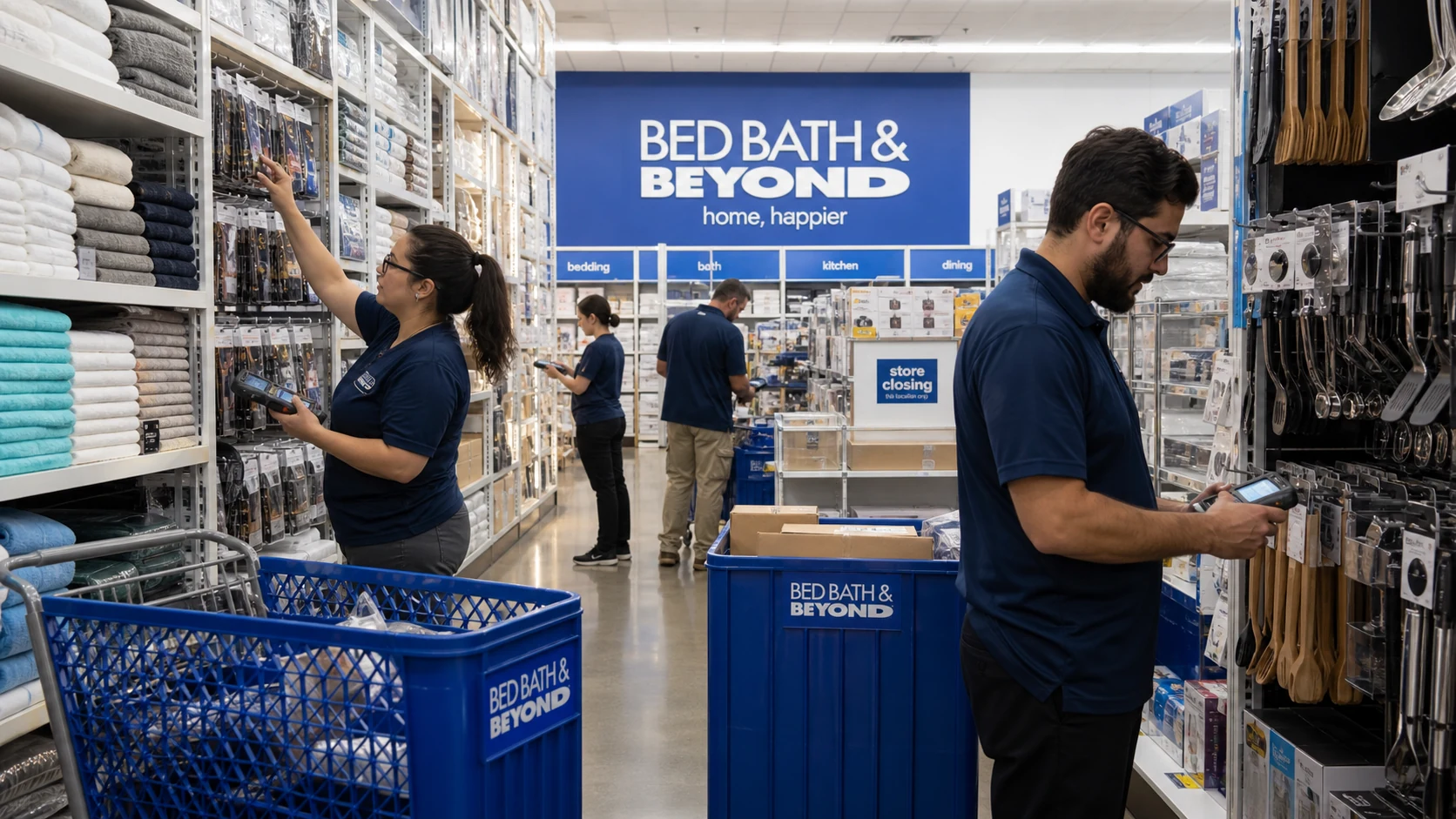
Inventory breadth became a funding problem
A destination-store promise needs supplier confidence and enough liquidity to keep shelves credible.
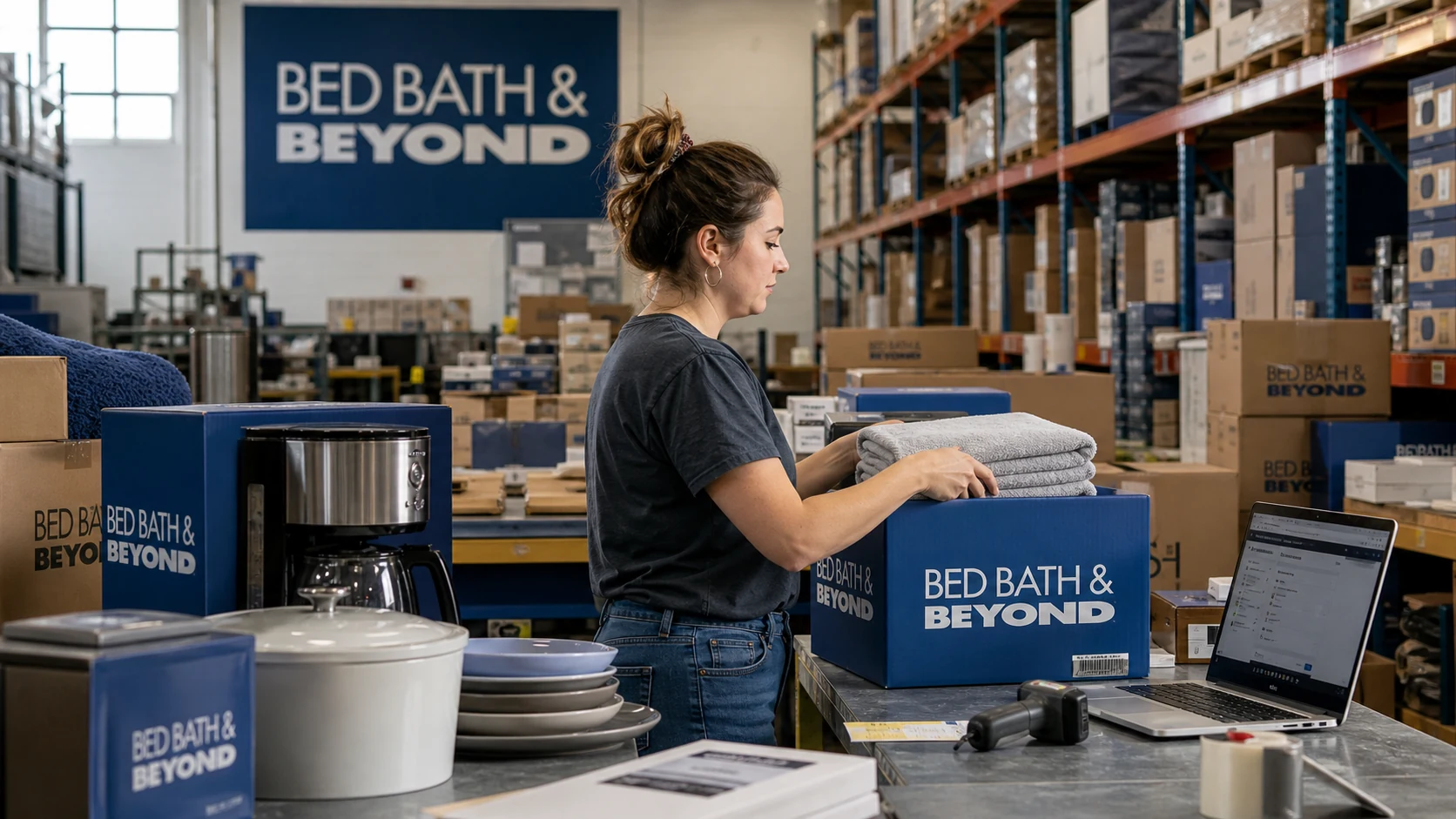
The channel handoff changed the promise
After the stores failed, the brand’s proof had to move from aisles to ecommerce fulfillment.

The name still carried product intent
The buyer bought a searchable home mission, not a healthy store operating model.
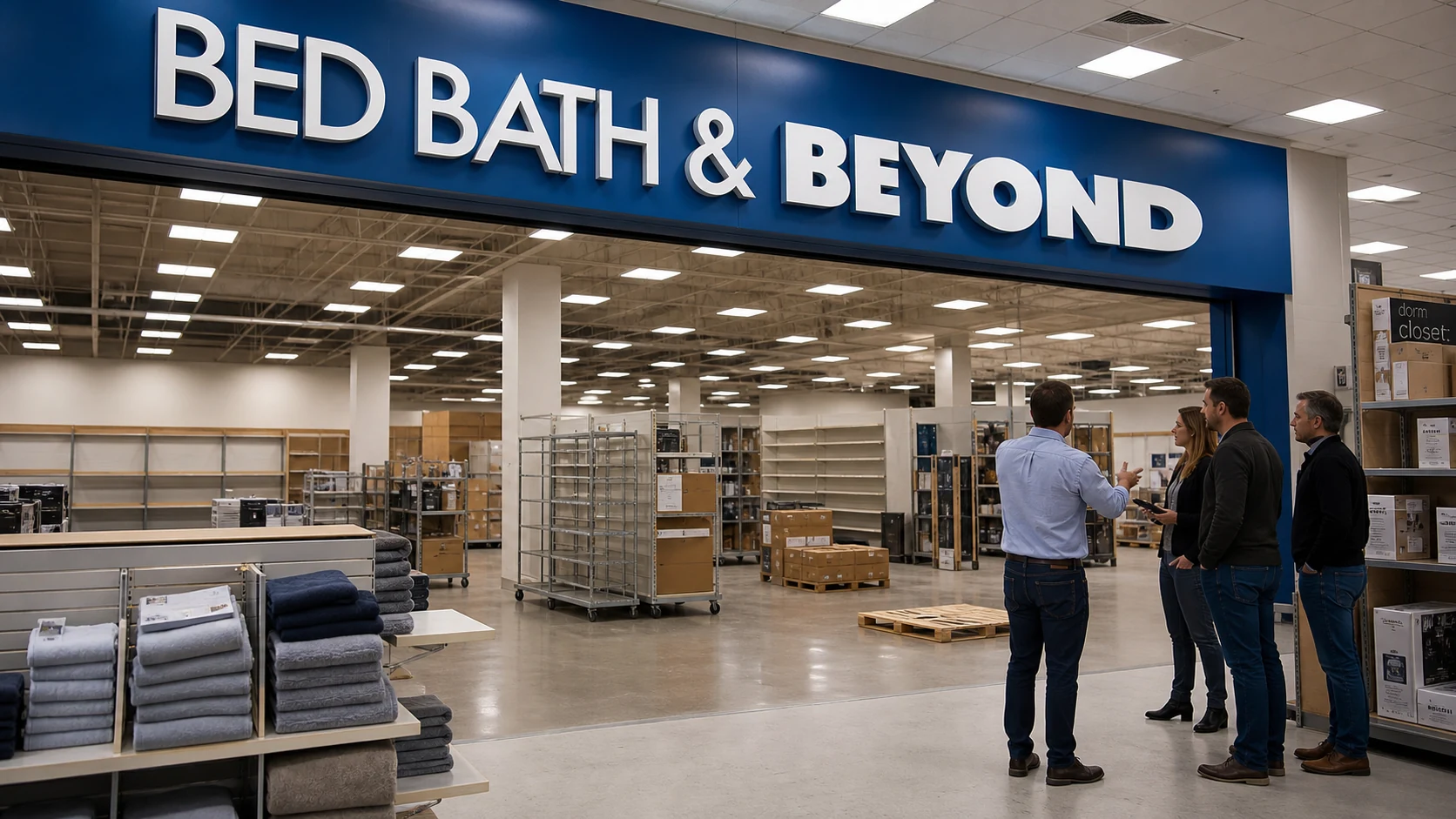
The final proof was store exit
The physical chain could not fund the promise even though the brand memory remained useful.
Product and service system
The name made a wide home mission easy to remember.
Discount mechanics became part of the brand memory.
Inventory confidence fell as liquidity deteriorated.
The buyer kept the name alive after stores closed.
Turning points.
The brand failure was an operating sequence: value promise, inventory pressure, vendor trust, liquidity, bankruptcy, then IP survival.
Why it failed
Sales decline, cash burn, debt, inventory disruption, and vendor confidence losses weakened the store model.
Management attempted turnaround moves, store closures, owned-brand resets, financing, and asset-sale paths while customer traffic and supplier trust deteriorated.
The company filed Chapter 11 in April 2023 and later sold the Bed Bath & Beyond brand assets to Overstock.com for about USD 21.5 million while stores liquidated.
Failure timeline
First Bed Bath & Beyond store concept begins.
Losses and vendor pressure intensify.
Company files Chapter 11.
Overstock.com buys brand assets.
Public reaction.
Customers saw a familiar store name collapse and then reappear online.
The store operator could not stabilize liquidity, vendors, and inventory.
The name and domain still had enough demand to sell.
Full timeline.
Bed Bath & Beyond begins as a home-goods retail concept. Source
The company becomes a public specialty-retail growth story. Source
The store base passes major national scale through Bed Bath & Beyond and related banners. Source
The company adds Cost Plus World Market to a widening retail portfolio. Source
Turnaround pressure grows as sales, store relevance, and investor confidence weaken. Source
The company reports fiscal 2022 net sales and a large net loss in its last annual filing. Source
Overstock.com completes acquisition of Bed Bath & Beyond brand assets. Source
Steal / avoid.
- Make the shopping mission legible in the name.
- Keep enough brand memory to survive a channel reset.
- Separate IP value from operator health.
- Do not let coupons become the only price trust.
- Do not weaken vendor confidence while promising assortment breadth.
- Do not describe surviving IP as if stores still survived.
Short answer.
Overstock bought Bed Bath & Beyond's brand and digital assets for USD 21.5 million in June 2023. The transaction excluded store leases, inventory, warehouses, buybuy Baby and Harmon. The revived name therefore does not mean the former retail chain and all its obligations survived.
Frequently asked questions
What did Overstock buy from Bed Bath & Beyond in 2023?
Overstock.com completed a USD 21.5 million purchase of Bed Bath & Beyond intellectual property on June 28, 2023. The assets included trademarks, domains, websites and customer and loyalty data. This was a purchase of brand and digital assets from the failed operator, not a purchase of the entire former retail chain.
Overstock.com completion of Bed Bath & Beyond brand acquisition
Did the 2023 Bed Bath & Beyond sale include stores or buybuy Baby?
No. Overstock's acquisition announcement expressly excluded store leases, inventory, warehouses and logistics infrastructure. It also excluded the buybuy Baby and Harmon businesses. A later website using the Bed Bath & Beyond name therefore does not establish continuity with every store, banner or obligation of the old company.
Overstock.com completion of Bed Bath & Beyond brand acquisition
Did Bed Bath & Beyond disappear completely?
No. The store operator liquidated, but the brand assets were bought and relaunched under a different owner.
Overstock.com completion of Bed Bath & Beyond brand acquisition
Why did the old Bed Bath & Beyond business fail?
The old operator faced falling sales, losses, inventory pressure and a shortage of cash. Those operating and financial problems explain the failure more directly than a logo change.
Need help with your own brand?
Use Private brand work when your name, identity, proof, or message needs a sharper branding decision.

.svg)
