Big Lots · Grow Your Brand · Big Lots failure case study · United States / Former public operator converted to Chapter 7; private successor banner operates more than 220 stores across 17 states
Big Lots
Big Lots kept saying value after its merchandise stopped proving the bargain. This case separates the old public operator's bankruptcy and Chapter 7 estate from Variety Wholesalers' banner of more than 220 stores across 17 states, then follows the assortment, furniture exposure, debt, and treasure-hunt economics behind the failure.
Positioning, name, and architecture.
Big Lots promised surprising bargains across closeouts, home goods, furniture, and seasonal merchandise. The promise weakened when planned discretionary categories grew while true closeout and extreme-bargain evidence became less consistent.
A rotating treasure hunt of visibly better bargains across home categories
Big Lots was strongest when opportunistic merchandise proved the value claim; the former operator weakened when planned discretionary inventory made the trip less distinctive and more capital intensive.
The name made scale and opportunity part of the promise: big lots of merchandise at closeout value.
The current operator emphasizes unbeatable bargains and treasure-hunt shopping.
acquired retail banner
Gordon Brothers facilitated the transaction. Variety Wholesalers, not Gordon Brothers or the old estate, operates the current stores.
Carries the banner through a smaller private operating system.
successor retail channel: More than 220 stores across 17 states source
Preserves customer recognition without implying survival of the former public operator.
acquired brand assets: Big Lots banner source
Supports the successor's closeout assortment and store replenishment.
acquired operating assets: Distribution infrastructure transferred through the asset transaction source
Operates the successor banner separately from the Chapter 7 estate.
current private operator: Private Big Lots operating company source
Naming and tagline progression
Bargains and Closeouts states the retail proposition
The exclamation point turns the bargain into an event
The successor restores closeout and treasure-hunt language
Market and scale snapshot.
The former operator's FY2023 filing shows large sales attached to a USD 481.9M loss, debt, discretionary-category pressure, and weakening bargain assortment. Current private-banner activity belongs to Variety Wholesalers, not the old estate.
Former operator year ended 3 Feb 2024.
The former operator remained loss-making before the filing.
Balance-sheet debt reported by the former public company.
The current banner of more than 220 stores across 17 states is not the former public company.
Color system.
Orange and black created strong roadside and shelf visibility. The identity remained louder than the merchandise proof during the decline.
How the palette behaves
Orange communicated urgency, savings, and discovery.
Black grounded the value message and improved sign contrast.
The curved exclamation mark made bargain shopping feel active, but it could not replace a real price and assortment advantage.
Recognition assets.
The exclamation-point wordmark, orange, big-box footprint, furniture floor, and rotating deal assortment made the banner recognizable. The current operator is using the same recognition to restore a closer closeout model.
The punctuation made the deal feel urgent and gave the banner a compact symbol.
Rotating closeouts made discovery the reason to return.
Furniture and seasonal goods made floor space, freight, and demand forecasting more expensive.
Scores.
Big Lots retains name recognition, but its low operating-proof score reflects a value promise weakened by less closeout merchandise, working-capital-heavy furniture, and the old operator's liquidation.
The name and orange exclamation remain familiar.
Liquidation and inconsistent bargain proof weakened confidence.
The position depends on value, not premium execution.
A smaller successor fleet can rebuild trust if true closeouts return consistently.
The former operator's assortment no longer made the bargain claim distinctive or financially resilient enough.
The former operator's FY2023 filing shows large sales attached to a USD 481.9M loss, debt, discretionary-category pressure, and weakening bargain assortment. Current private-banner activity belongs to Variety Wholesalers, not the old estate.
Former operator liquidated; brand, selected stores, and distribution assets transferred
Variety Wholesalers operates more than 220 Big Lots stores across 17 states as a private successor banner
How the logo changed.
The identity moved from a literal closeout descriptor to a compact stacked exclamation system, then to the current horizontal all-orange treatment. The launch stage is an exact crop from a dated company annual-report artifact, not a recreated mark.
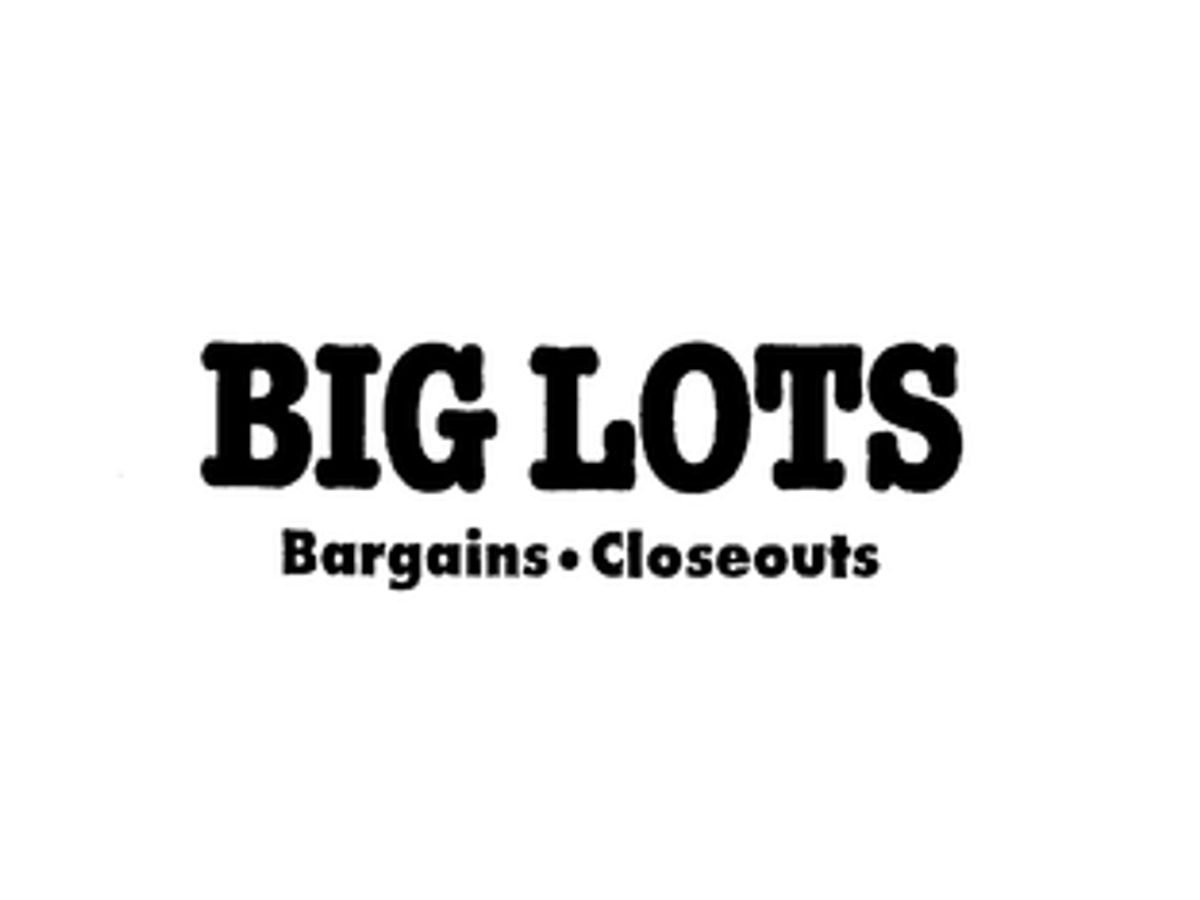
This design-mark drawing stated the retail proposition directly beneath the name before the national conversion adopted one exclamation identity. source
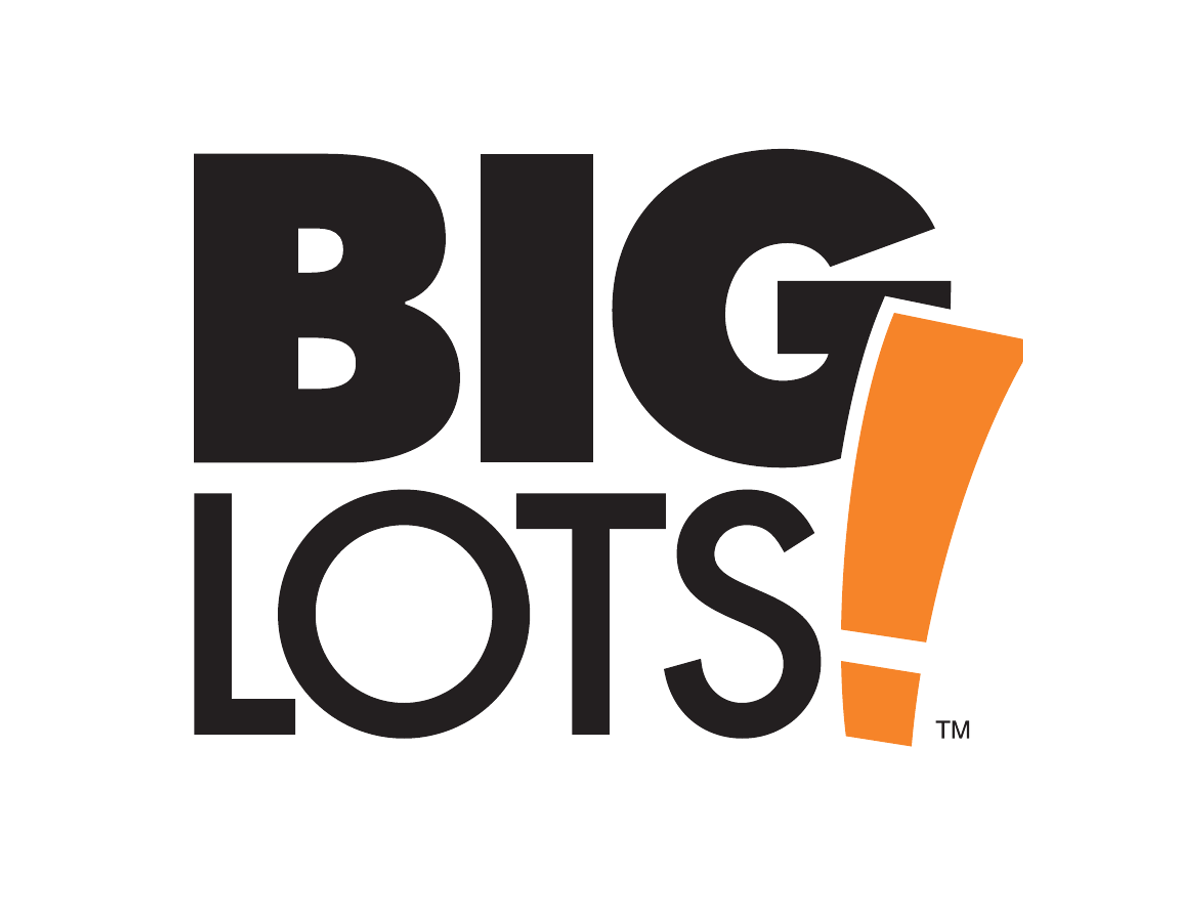
The black-and-orange stacked lockup is cropped from the company's 2001 annual report issued in April 2002 while the national store conversion was underway. source
The current successor operator uses an all-orange horizontal treatment, distinct from the black-and-orange stacked launch artifact. source

Product and service lineage.
Big Lots evolved from closeouts into a broad home-value retailer, weakened the proportion of true bargain merchandise, filed Chapter 11, liquidated much of the old footprint, and continued as a smaller acquired banner.
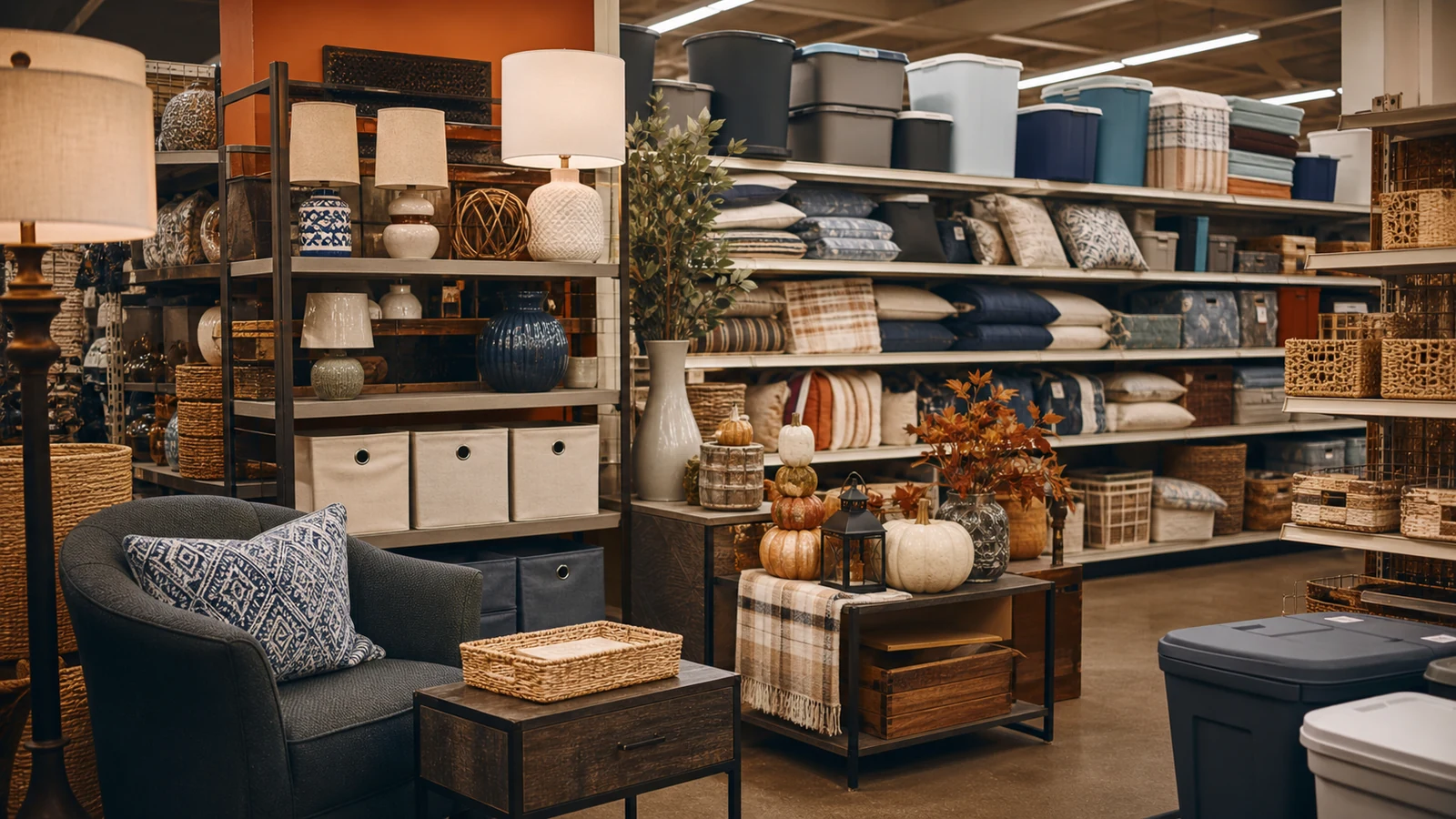
The bargain had to be visible
A value position works when the customer can compare the product and feel the deal without decoding promotional language.

Furniture carried working-capital risk
Bulky discretionary inventory tied up cash, freight capacity, floor space, and delivery operations.
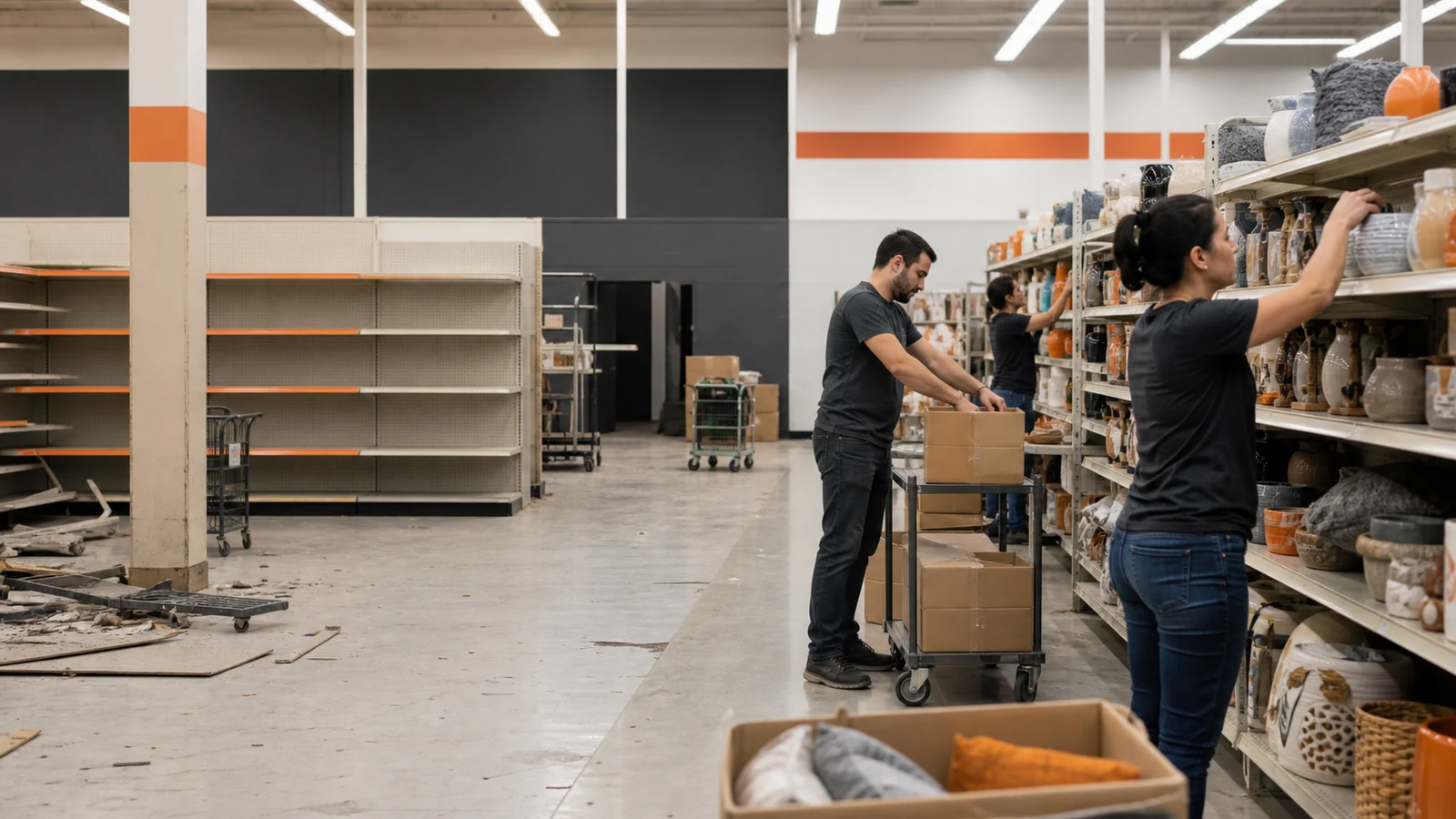
The banner changed operators
The reset must not be read as recovery of the old public company; it is a new private operator using acquired assets.
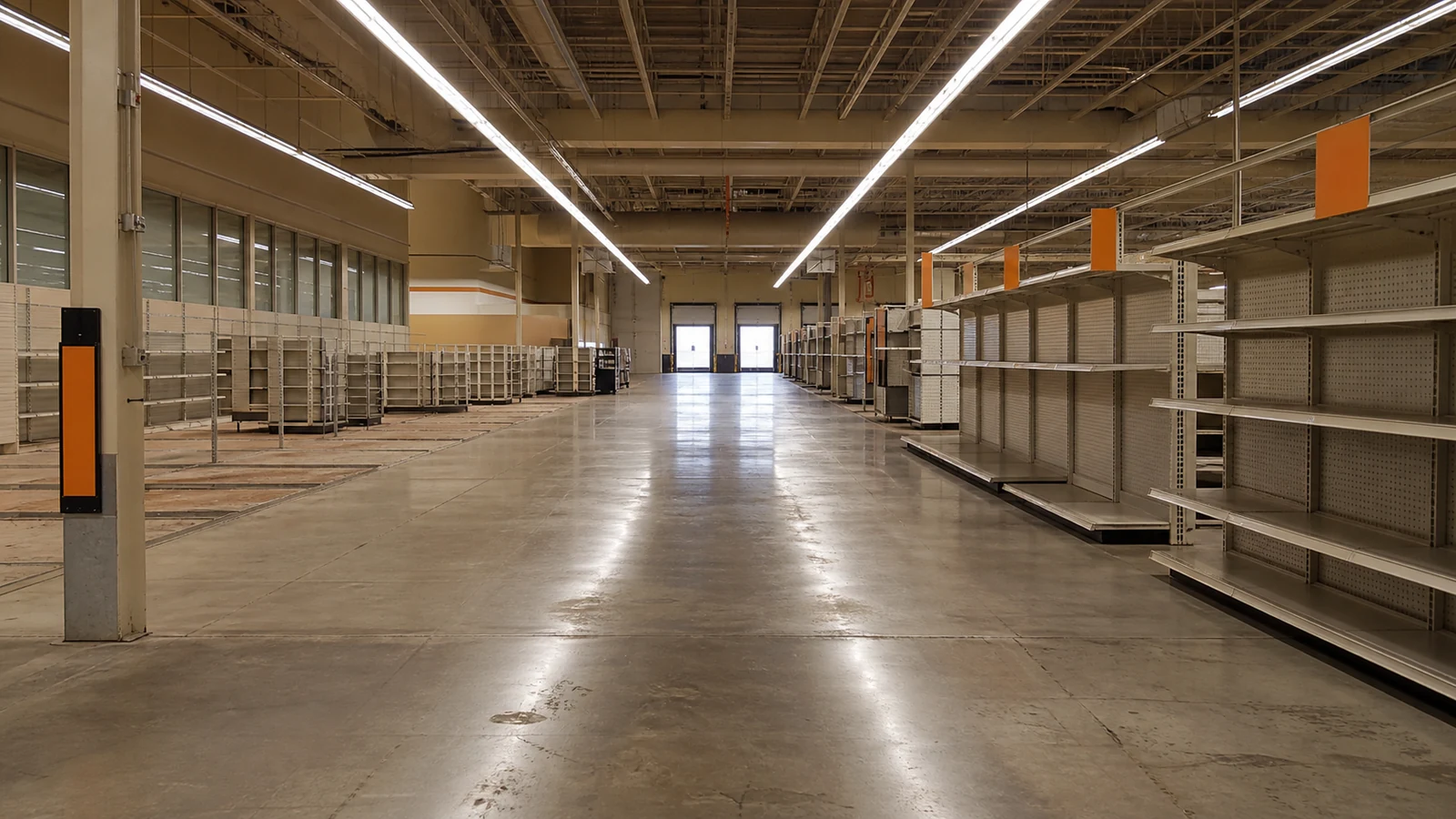
The old footprint was liquidated
The cleared floor shows the former operator's failure even though selected stores later reopened under Variety Wholesalers.
Product and service system
Manufacturer overruns and opportunistic buys made the trip surprising and price-comparable.
Planned discretionary categories increased ticket size and operating exposure.
The proposed Nexus sale failed before a Gordon Brothers transaction moved selected assets.
A successor network of more than 220 stores across 17 states emphasizes closeouts and treasure-hunt shopping.
Turning points.
The USD 481.9M FY2023 loss, failed Nexus sale, Gordon Brothers transaction, and Variety's smaller network show a banner transfer, not a recovery of the old company.
Why it failed
Big Lots stopped behaving like a closeout retailer. Its court declaration says the company deemphasized closeouts and extreme bargains from 2013 to 2018, which raised average prices, reduced traffic, and cost market share. Core customers then cut spending on high-margin home and seasonal goods.
Management moved the brand away from the reason customers came. The later bargain reset had to clear excess high-cost inventory at record markdowns, but it could not reverse the loss of traffic and market share before liquidity ran out.
By June 2024, management said the only viable path was store closures plus a buyer. Big Lots filed Chapter 11 on September 9. On December 19 it said the Nexus sale would not close and prepared going-out-of-business sales at every remaining store; Nexus terminated the agreement on December 21.
Failure timeline
Net sales were USD 4.722B and net loss was USD 481.9M.
Big Lots filed Chapter 11 after continued sales and liquidity pressure.
The Nexus plan failed, then Gordon Brothers enabled selected assets to move to Variety Wholesalers.
The old estate converted to Chapter 7 while Variety operated more than 220 stores across 17 states.
Public reaction.
Big Lots closure and reopening coverage can collapse two entities into one. The former public operator became a Chapter 7 estate; the current private banner belongs to Variety Wholesalers.
The remaining old estate converted after the asset transfers; it is not the current retailer.
Variety Wholesalers uses the acquired name and selected infrastructure for a smaller closeout network.
Full timeline.
The USPTO records a Big Lots design mark with 'Bargains' and 'Closeouts' beneath the name.
Consolidated Stores changes its corporate name to Big Lots, Inc. and begins converting regional banners to one national brand.
The company annual report documents the stacked exclamation identity while the national store conversion continues.
Big Lots agrees to acquire Canadian closeout retailer Liquidation World.
The FY2023 filing reports USD 4.722 billion in sales and a USD 481.9 million net loss.
Big Lots files Chapter 11 and seeks a going-concern sale.
A Gordon Brothers transaction moves the brand, selected stores, and distribution assets toward Variety Wholesalers.
Variety Wholesalers begins reopening selected stores with a renewed closeout message.
Variety describes a Big Lots network of more than 220 stores across 17 states.
Steal / avoid.
- Make value inspectable in the assortment, not only in promotions.
- Track how much inventory proves the distinctive closeout position.
- Separate brand survival from survival of the operating company.
- Do not let planned merchandise crowd out the reason customers make a treasure-hunt trip.
- Do not call an asset transfer a turnaround of the old operator.
- Do not reduce a complex bankruptcy sale formula to a misleading headline price.
Short answer.
Big Lots is a failed-operator and successor-banner case. Big Lots filed Chapter 11 in September 2024. After a proposed sale failed, a Gordon Brothers transaction enabled Variety Wholesalers to acquire the name, selected stores, distribution centers, and other assets. Variety now operates more than 220 stores across 17 states. The old estate, renamed Former BL Stores Inc., converted to Chapter 7. The brand lesson is that value must be proven by closeout assortment and discovery, not by discount language alone.
Frequently asked questions
Is Big Lots still in business?
Yes, as a smaller private banner operated by Variety Wholesalers. The former public operator is a separate Chapter 7 estate.
Who owns Big Lots now?
Variety Wholesalers operates the current Big Lots store network.
Why did Big Lots fail?
The former operator reported losses, discretionary-category weakness, liquidity pressure, and insufficient Bargain and Extreme Bargain assortment before bankruptcy.
Did Gordon Brothers buy Big Lots?
Gordon Brothers facilitated the asset transaction. Variety Wholesalers is the current store operator.
What is the brand lesson?
A value brand needs repeatable merchandise evidence. If customers cannot find a visibly better deal, the positioning becomes a claim without proof.
Need help with your own brand?
Use Private brand work when your name, identity, proof, or message needs a sharper branding decision.
Sources.
Use the education shelf for the concepts behind this brand page.
Private brand workUse this when the decision belongs to your own brand.
All brandsReturn to every brand page.
- Big Lots FY2023 Form 10-K
- Big Lots bankruptcy sale and closing disclosure
- Gordon Brothers asset-purchase agreement
- Former operator name change
- Big Lots estate conversion motion
- Big Lots Chapter 7 conversion docket and order record
- Current official Big Lots ownership and About disclosure
- Current Big Lots jobs network disclosure
- October 2025 Big Lots operating update
- February 2026 Big Lots operating update
- Variety Wholesalers reopening announcement
- Big Lots 2001 annual report issued in April 2002
- Big Lots 2001 corporate name-change filing
- Big Lots 1999 USPTO drawing
- Big Lots 2024 first-day declaration
- Big Lots December 2024 SEC filing