Allianz · Grow Your Brand · German Insurance Scale System · Germany / Active / listed company
Allianz
What does Allianz's eagle logo mean? Allianz's eagle changed from a detailed emblem into three simplified forms. Its German origins, insurance business and asset-management operations explain the company behind that compact blue mark.
Positioning, name, and architecture.
Three evidence checks before the page talks about scale, color, or public reaction.
A German insurance parent with property-casualty, life/health, asset management, PIMCO, and global capital proof.
Allianz is strongest when protection, investment management, and local service proof are shown as separate lanes.
Allianz means alliance, a useful insurance name because protection depends on pooled risk and shared backing.
We secure your future
insurance group with asset-management and local-market lanes
Allianz should not blur insurance service, asset management, assistance, and local-market execution.
home, motor, commercial, and catastrophe proof
insurance lane: property and casualty insurance source
long-term protection and savings proof
insurance lane: life and health insurance source
institutional scale and investment proof
asset-management lane: fixed-income asset management source
travel, mobility, and embedded service proof
assistance lane: assistance services source
Naming and tagline progression
Allianz
We secure your future
Market and scale snapshot.
Allianz reports in euros. The FY2025 cells show official EUR reporting bases as USD equivalents; market value is a separately dated USD observation.
Official FY2025 EUR 186.9 billion total business volume converted at 1.1396 USD per EUR.
Official FY2025 EUR 17.374 billion operating profit converted at the same rate.
CompaniesMarketCap USD market-cap observation for ALV.DE captured on 5 Jul 2026; source page reports the company market capitalization in USD.
Allianz SE ordinary shares; ISIN DE0008404005. ALV.DE is the market-data symbol.
Color system.
Blue should signal protection and seriousness without flooding the whole page.
How the palette behaves
Blue supports trust.
Deep blue keeps the group serious.
White prevents insurance copy from becoming heavy.
The palette needs service proof.
Recognition assets.
Memory pieces the brand can use before someone finishes a sentence.
Insurance trust works when claims, assistance, and policy proof are visible.
PIMCO and AllianzGI should not be hidden inside generic insurance copy.
The color only works when public finance and local service back it.
Scores.
Use these scores to compare recognition, trust, proof, pressure, and risk.
Insurance scale can become abstract unless claims, asset management, and local-market lanes stay visible.
Allianz gains trust when public reporting, capital discipline, and service proof sit in the same frame.
The page works only when business lines are separated instead of flattened into one parent claim.
The mark and color help, but real product and service proof carry recognition.
Operating surfaces, source reports, products, service lanes, and public scale make the claim visible.
Parent, product, service, and regional lanes need clear labels.
Legal entity, ticker, source mark, and portfolio names must stay machine-readable.
The copy can become generic unless every claim is tied to a source-backed surface.
How the logo changed.
Allianz moved from an imperial-eagle seal to a blue corporate lockup and then to the simplified current three-pillar mark.
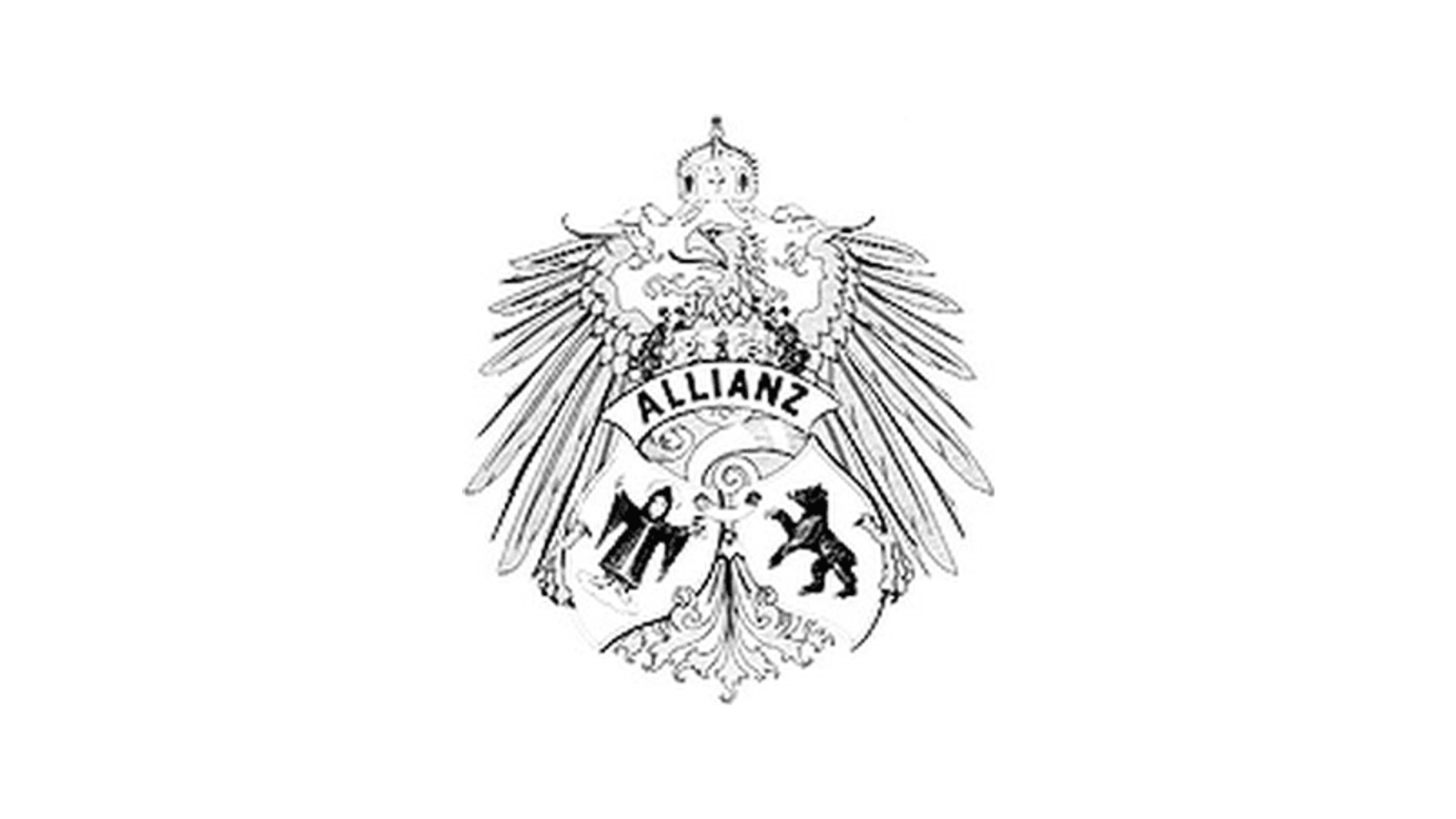
The founding-era seal uses the imperial eagle and the Berlin and Munich shields; Allianz's 1998 annual report documents this first logo era. source
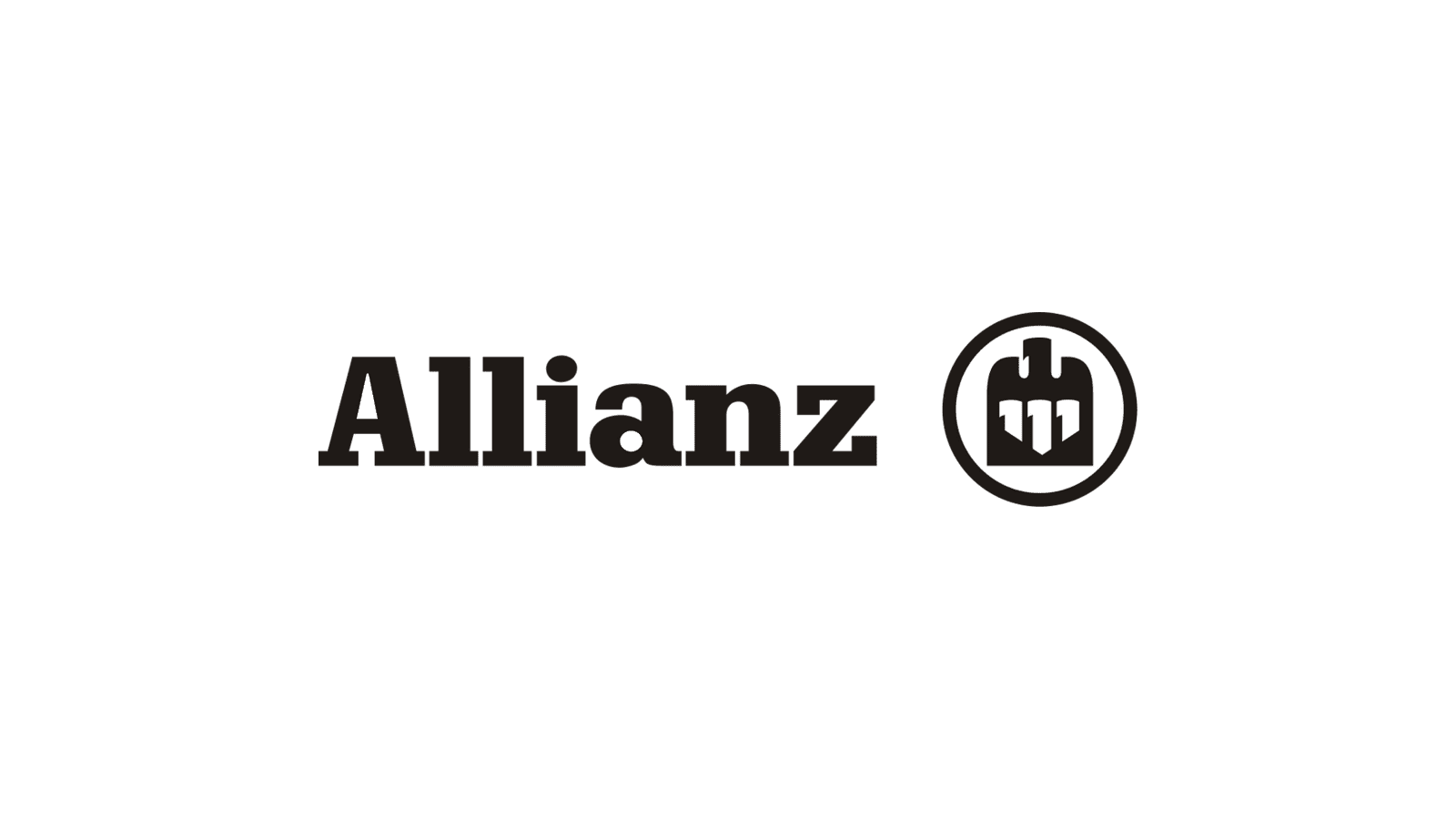
The 1977 redesign restores the Allianz name beside a simplified circular eagle and establishes blue as the corporate color. source
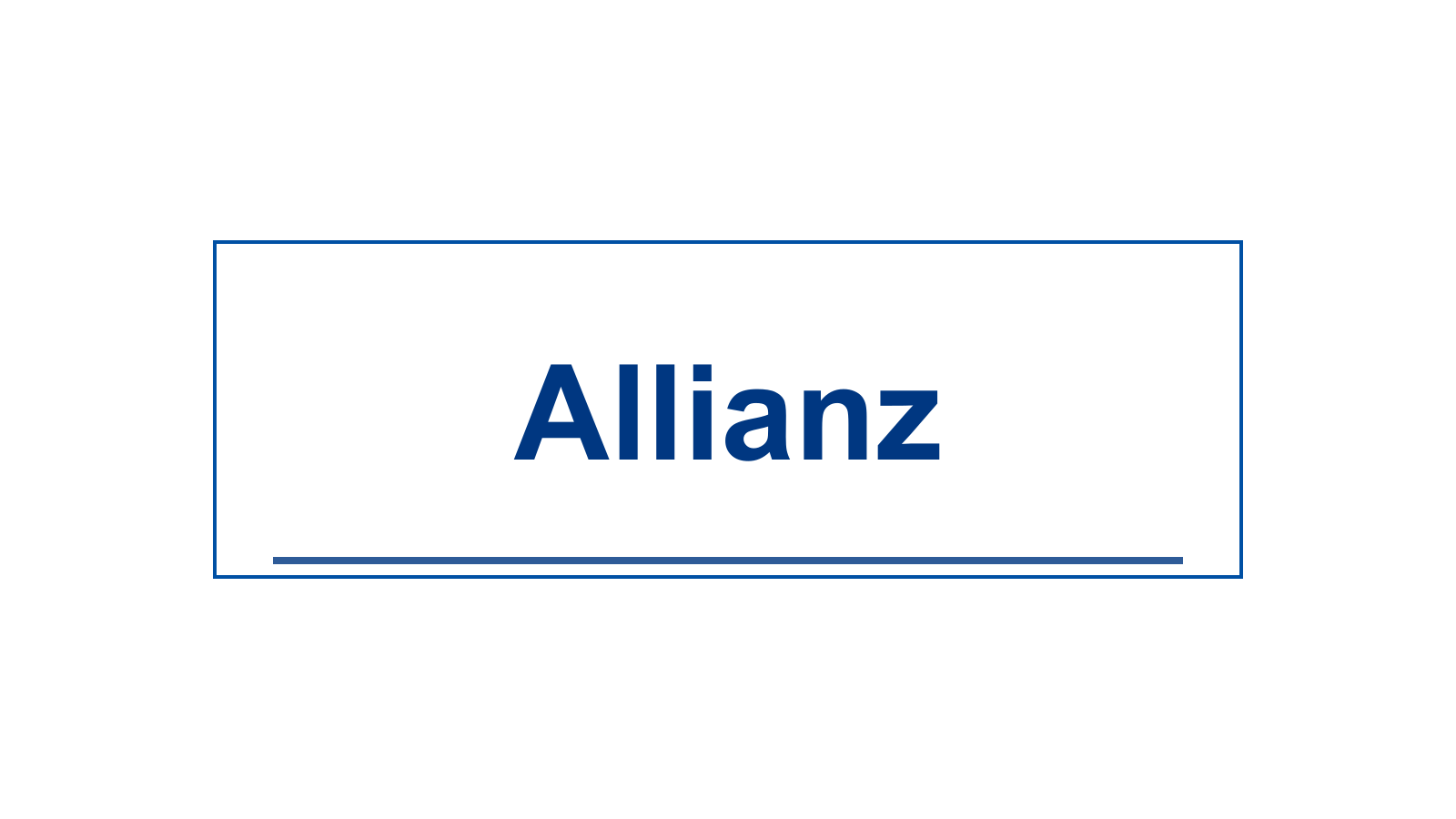
The 1999 system replaces the literal eagle with three pillars while retaining the circular symbol and blue wordmark. source
Product and service lineage.
For Allianz, proof runs through insurance, claims, assistance, asset management, and public capital discipline.

Asset management has a different job
Institutional stewardship needs its own evidence lane beside policy and claims service.

Assistance turns scale into action
Travel and mobility support turns insurance scale into a visible service moment.

Local advice keeps trust visible
A branch consultation makes policy review and local advice visible.
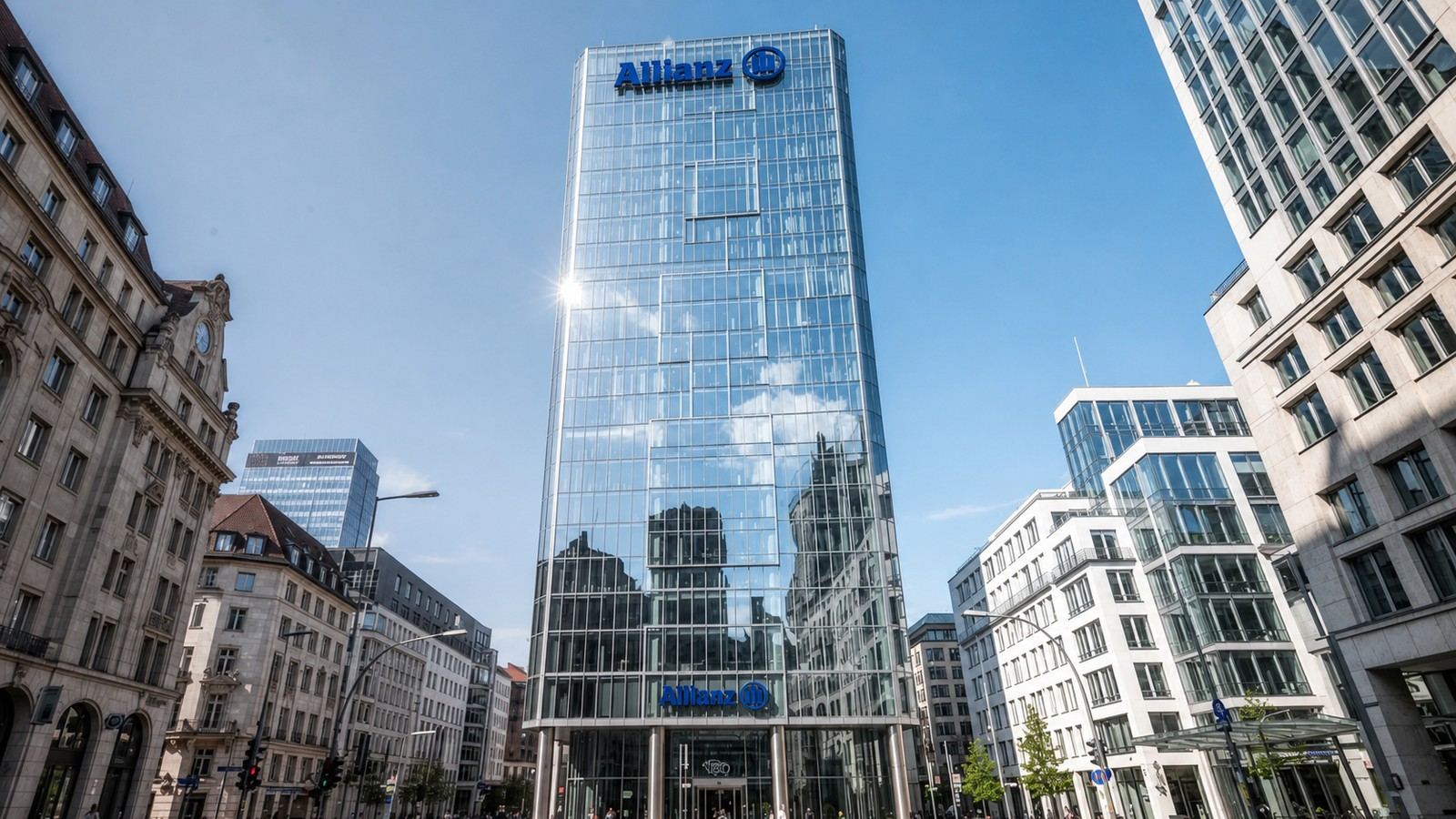
The parent brand has a physical center
Munich headquarters proof gives the global insurance and asset-management group a concrete corporate surface.
Product and service system
Allianz begins as a German insurance company.
Postwar rebuilding strengthens the German insurance system.
International expansion and asset management grow.
Allianz reports record-scale 2025 results.
Turning points.
Events that changed what buyers could see, buy, repeat, or trust.
The name works because protection depends on shared backing.
Asset management adds a second trust lane.
Claims and assistance make the parent credible.
Large numbers cannot replace service clarity.
Public reaction.
The useful reaction is about trust and pressure, not sentiment counts.
People may know the brand before they understand the service lanes.
Insurance trust is tested at the moment of use.
Big insurer language needs local proof.
Full timeline.
Allianz is founded in Berlin. Source
Allianz enters life insurance, adding a long-term savings and protection lane. Source
Allianz completes its move from Berlin to Munich during postwar reconstruction. Source
PIMCO joins the Allianz asset-management system. Source
Dresdner Bank exit sharpens the insurance and investment profile. Source
Allianz reports FY2025 total business volume and operating profit. Source
Steal / avoid.
- Make trust operational.
- Separate service and investment lanes.
- Use finance as proof, not decoration.
- Do not make insurance copy abstract.
- Do not blur PIMCO with policy service.
- Do not use blue as the whole story.
Short answer.
Allianz is a German insurance and asset-management group, founded in Berlin in 1890 and headquartered in Munich since 1949. Its circle-and-bars logo developed from an eagle; Allianz's 2000 report associated the simplified bars with insurance, retirement provision and asset management. Travel insurance is one part of that wider business.
Frequently asked questions
What does the Allianz logo mean?
The circular mark developed from Allianz's eagle. In its 2000 annual report, Allianz described the simplified bars as insurance, retirement provision and asset management. That is the company's explanation for the identity at that time, rather than a universal meaning for every three-bar logo.
Where is Allianz from, and what does it do?
Allianz was registered in Berlin in 1890 and moved its headquarters to Munich in 1949. Its core activities are property and casualty insurance, life and health insurance, and asset management. The German parent name therefore covers more than the travel-insurance products many consumers first encounter.
What is Allianz Partners?
Allianz Partners provides assistance services, including travel and mobility services. It is one part of Allianz's wider insurance and asset-management group; the name on a policy or service agreement identifies the relevant provider.
What are PIMCO and Allianz Global Investors in the Allianz group?
PIMCO and Allianz Global Investors are Allianz's asset-management businesses. They manage investments for clients, while other parts of the group provide insurance and assistance. PIMCO describes its particular expertise as active fixed income across public and private markets. Seeing a different investment brand therefore does not necessarily mean it sits outside Allianz.
Are Allianz assets under management the same as Allianz revenue?
No. Assets under management describe investments managed for clients or insurance customers. Allianz's own overview distinguishes those assets from annual business volume and operating profit. The measures answer different questions: the size of portfolios being managed is not the amount the company earned during a year.
Need help with your own brand?
Use Private brand work when your name, identity, proof, or message needs a sharper branding decision.