Blockbuster · Grow Your Brand · Blockbuster failure case study · United States / Former public operator liquidated; brand/IP remains inside DISH/EchoStar and one licensed Bend franchise operates
Blockbuster
Blockbuster failed when the access model changed faster than the store estate. The failed operator reported USD 4.06 billion of fiscal 2009 revenue, a USD 558.2 million net loss, and USD 937.6 million of debt. DISH paid USD 320.6 million for substantially all assets in 2011.
Positioning, name, and architecture.
Blockbuster turned movie night into a physical ritual: a nearby store, blue-and-yellow ticket, shelves to browse, membership records, rentals, returns, and late-fee economics.
A large browsable selection in a nearby store
Blockbuster owned the local movie-night trip. The chain failed when access moved from a store visit to lower-friction subscription, mail, kiosk, and streaming behavior.
Blockbuster Video is documented as the 1985 launch name. No primary founder account proving the exact naming rationale was found.
Make it a Blockbuster night
Surviving brand/IP inside DISH/EchoStar with an independently owned licensed store
The failed public company, liquidation estate, acquired IP entity, corporate store shutdown, and Bend franchise are separate.
Ran the large public chain and filed Chapter 11 in 2010.
failed operator: company and franchised stores source
Holds the acquired brand rights inside DISH/EchoStar.
surviving brand entity: brand and licensing source
Privately owned store still operating in Oregon.
licensed franchise: last operating store source
Linked DVD-by-mail subscriptions with in-store returns before bankruptcy.
channel extension: mail and store access source
Naming and tagline progression
Make it a Blockbuster night
No late fees / Total Access
Last-store and brand-memory era
Market and scale snapshot.
These numbers belong to the failed Blockbuster Inc. operator. Current Blockbuster brand revenue is not separately disclosed by EchoStar.
Audited failed-operator revenue, down from USD 5.065 billion in FY2008.
Included USD 369.2 million of impairment charges.
FY2009-end stores, January 2010 debt, and DISH's 2011 purchase of substantially all assets. The purchase was not Blockbuster equity or every estate liability.
Blockbuster rights remain inside DISH/EchoStar; current standalone brand revenue and earnings are not disclosed.
Color system.
Royal blue made the store feel dependable and easy to find. Yellow turned the ticket edge, return slot, and shelf system into a retail cue.
How the palette behaves
Blockbuster blue: mass recognition. ticket mark, storefront, shelving, and cases.
Ticket yellow: movie-night energy. ticket edge and retail accents.
Navy: after-dark entertainment. store and home-viewing context.
Recognition assets.
The ticket-shaped mark, blue-and-yellow stores, plastic cases, membership card, return slot, and Friday-night trip made the system recognizable before the customer picked a title.
A slanted blue-and-yellow ticket carried recognition across stores, cards, and cases.
Browse, choose, rent, return, and repeat made movie access physical and social.
Customers moved toward mail, kiosks, subscriptions, and streaming while store costs remained.
Scores.
Memory remains unusually high. Financial resilience and channel replacement failed.
The ticket mark remains culturally legible.
The store trip once defined home movie access.
Blockbuster tried new channels but did not replace the store economics in time.
The failed operator, current IP owner, and Bend franchise are often confused.
The movie-night job remained. The expensive access model lost the customer.
These numbers belong to the failed Blockbuster Inc. operator. Current Blockbuster brand revenue is not separately disclosed by EchoStar.
Physical rental chain and public operator failed; brand IP and one licensed franchise survive
EchoStar owns DISH, which retains Blockbuster brand assets. Bend is an independent franchise, not a revived corporate chain.
How the logo changed.
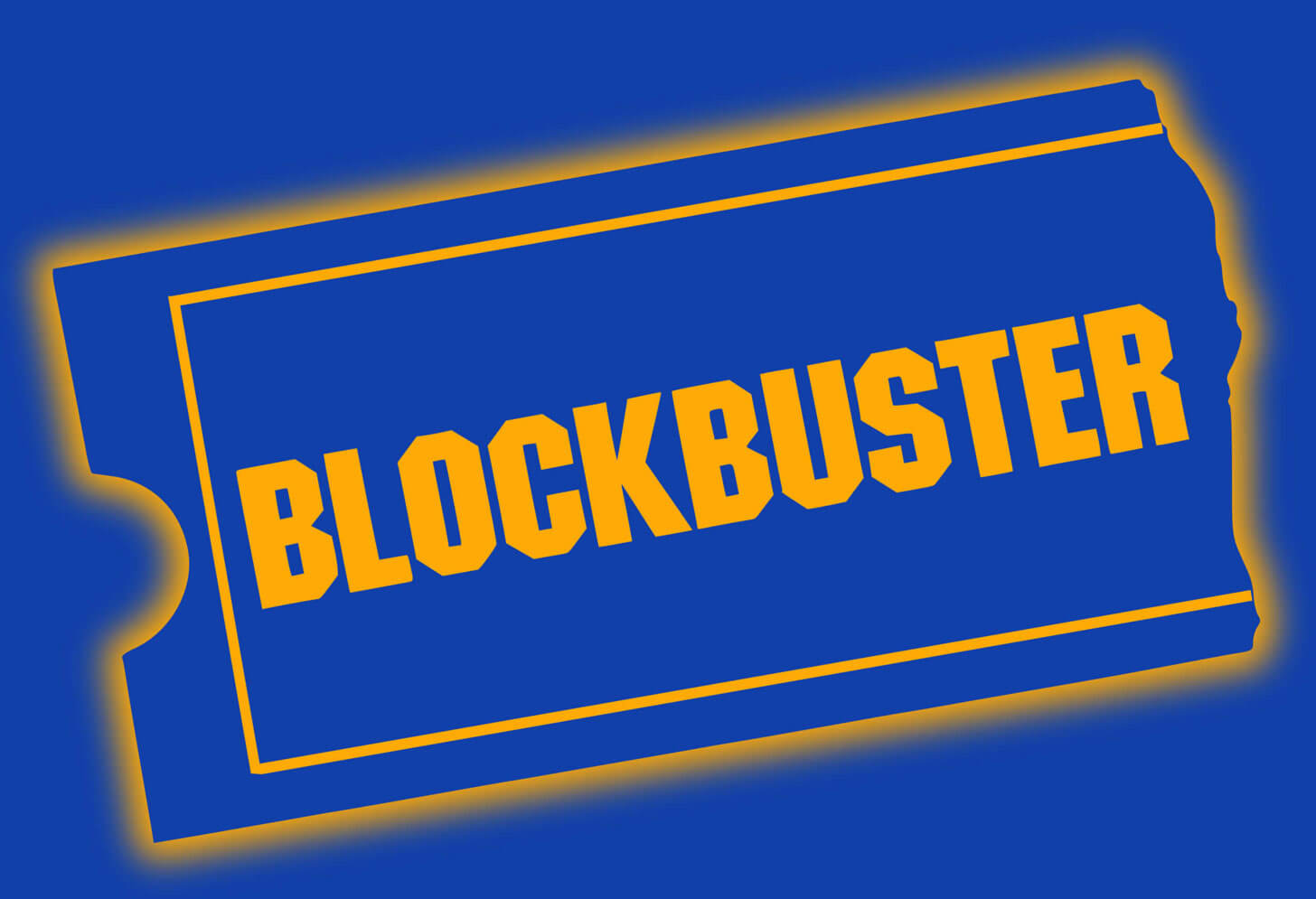
The ticket shape stayed recognizable while the wording and dimensional treatment changed across the chain, franchise, and current brand-IP eras.
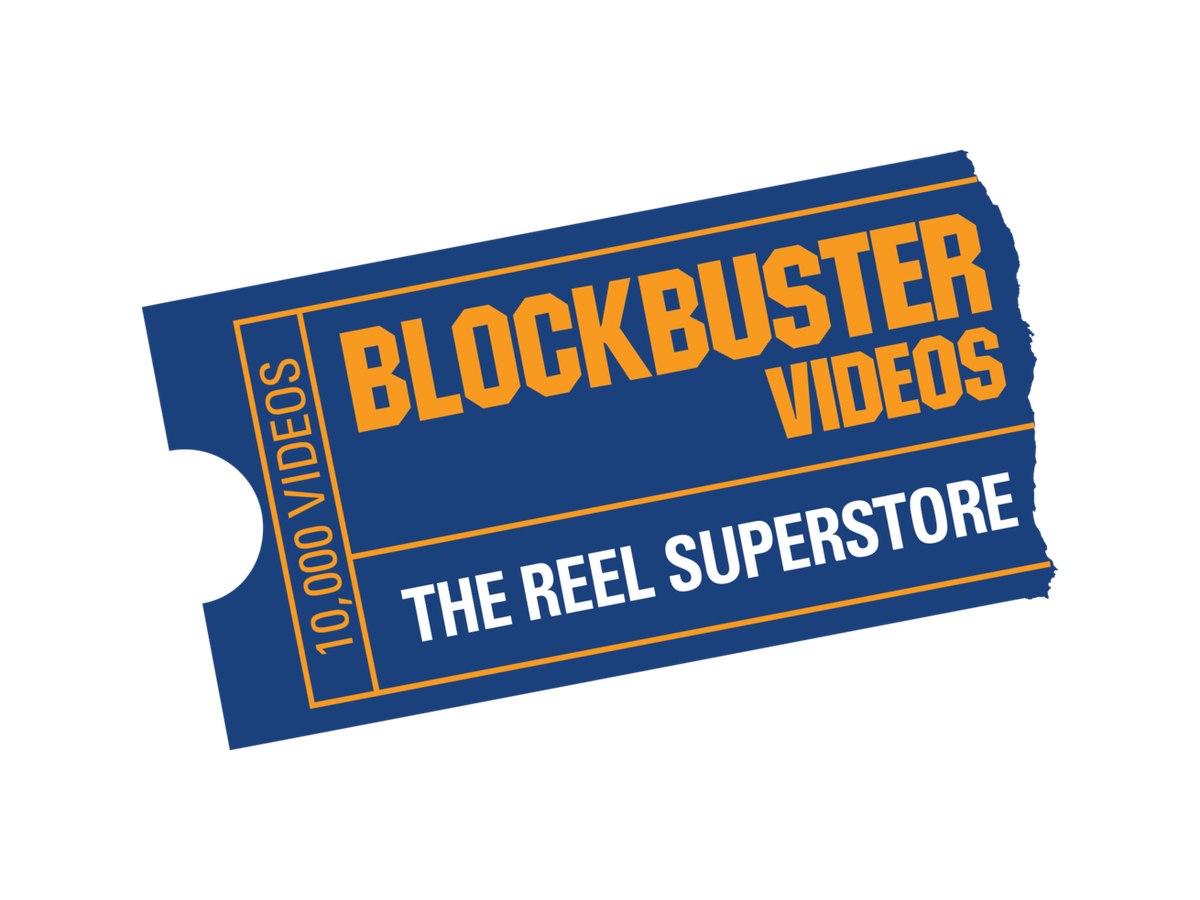
The launch identity used Blockbuster Videos and The Reel Superstore. source

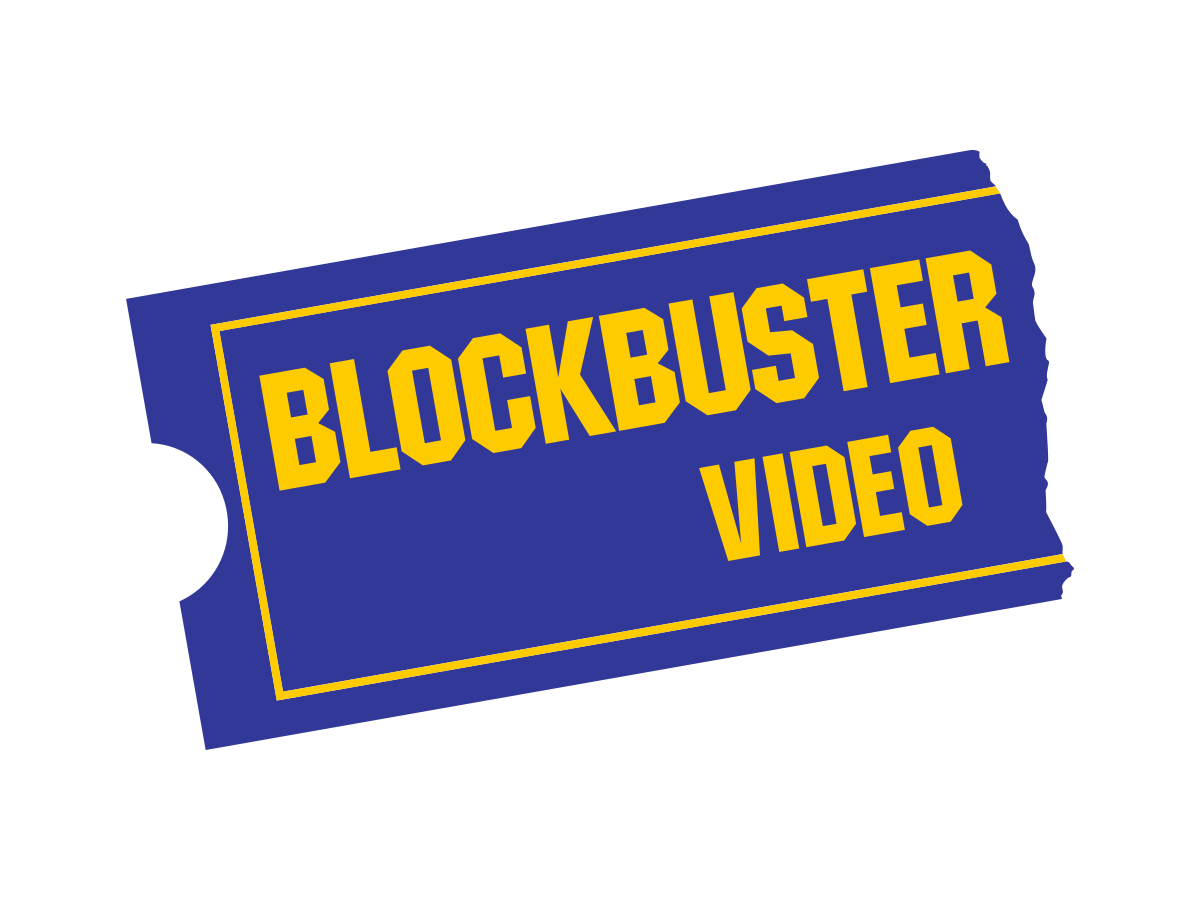
The simplified ticket became the high-growth chain identity.
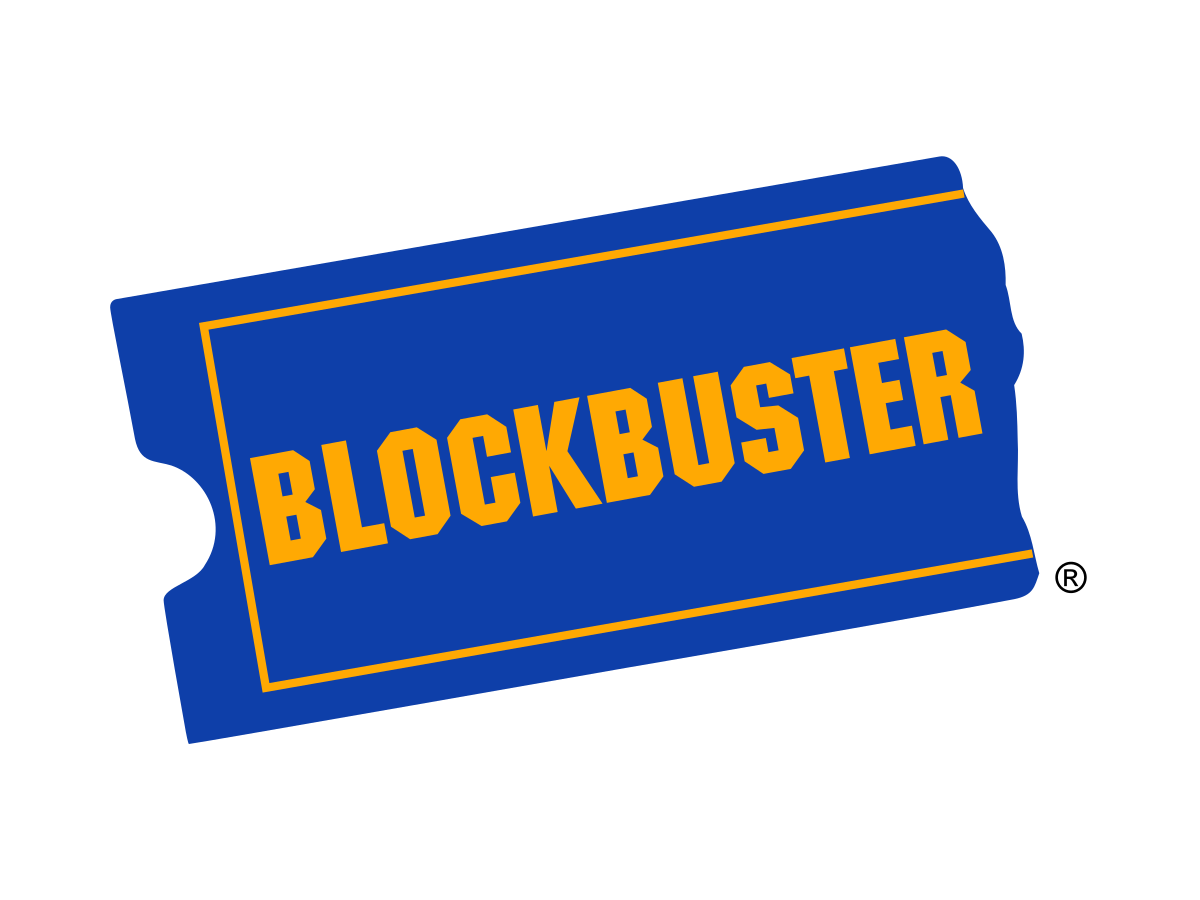
The flat ticket dropped Video and remains visible at the licensed Bend store.

The current trademark-owner-controlled website uses the dimensional ticket mark. source
Product and service lineage.
Blockbuster moved from local rental stores into mail, subscriptions, kiosks, and digital delivery before the corporate store system shut down.
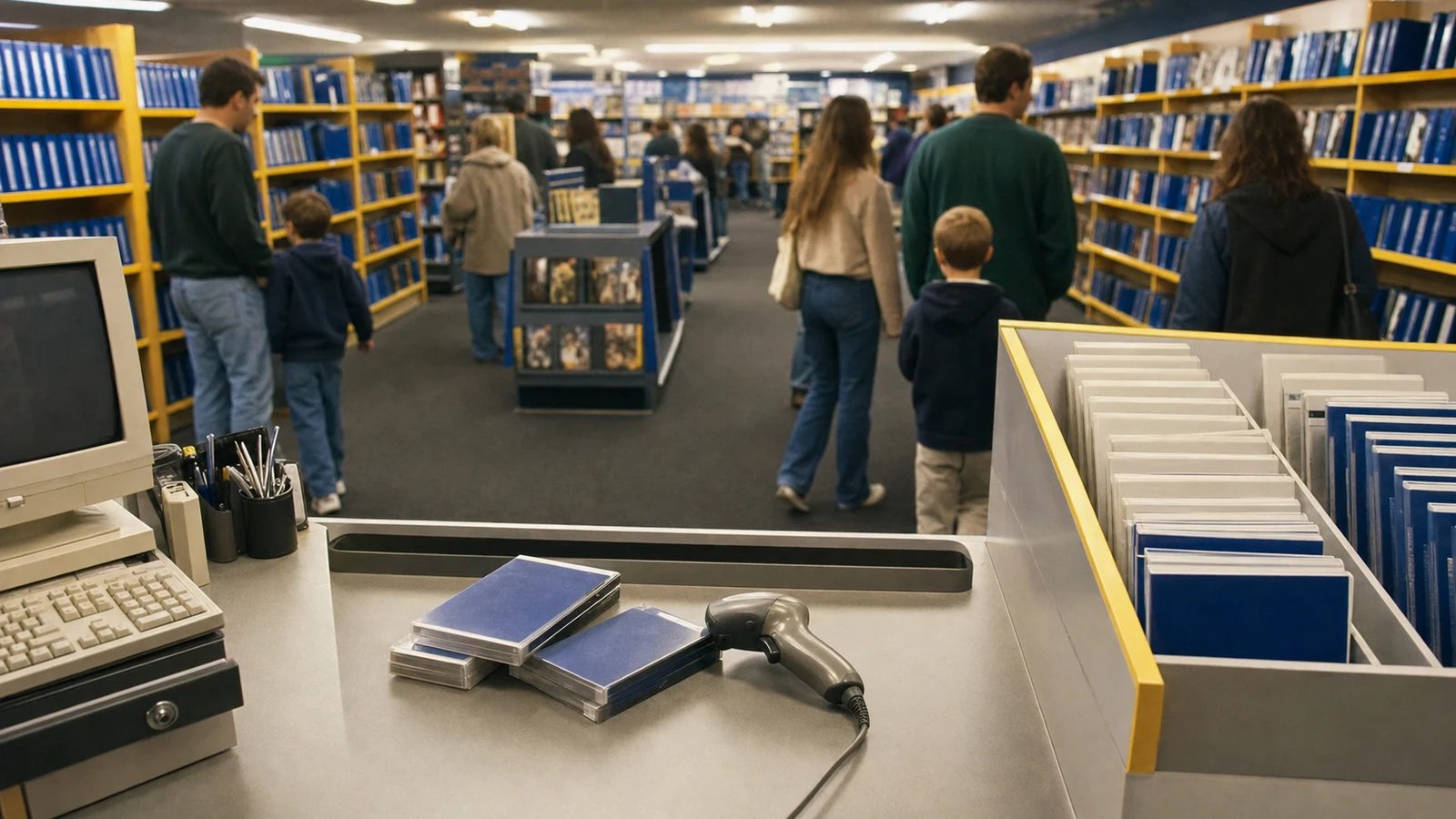
The store organized movie night
Selection, membership, checkout, and return lived in one repeated trip.
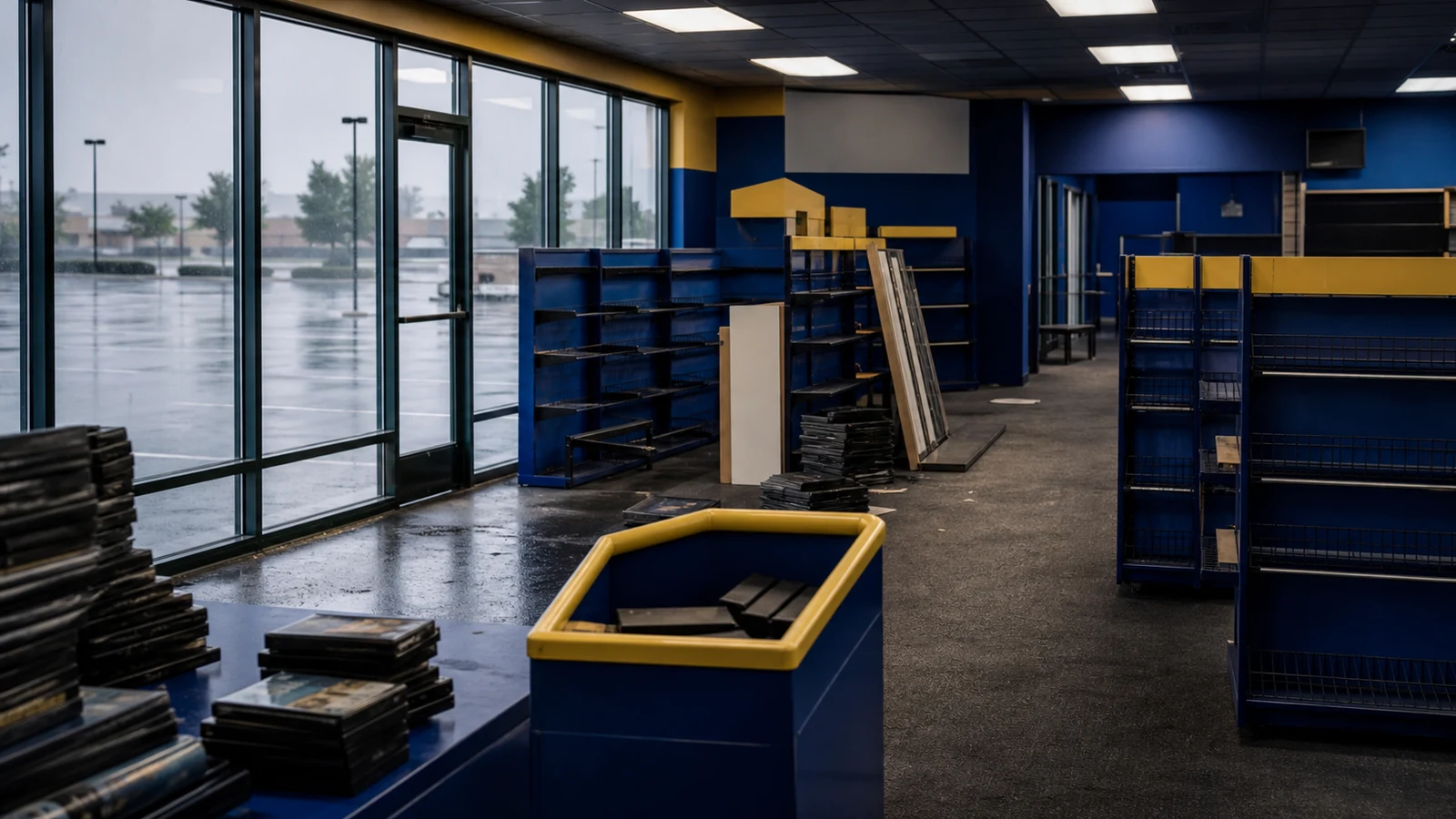
The store estate became the burden
Thousands of locations turned a customer habit into fixed cost when access moved elsewhere.

The real product was the night
The brand owned a household occasion even when it did not own the film.
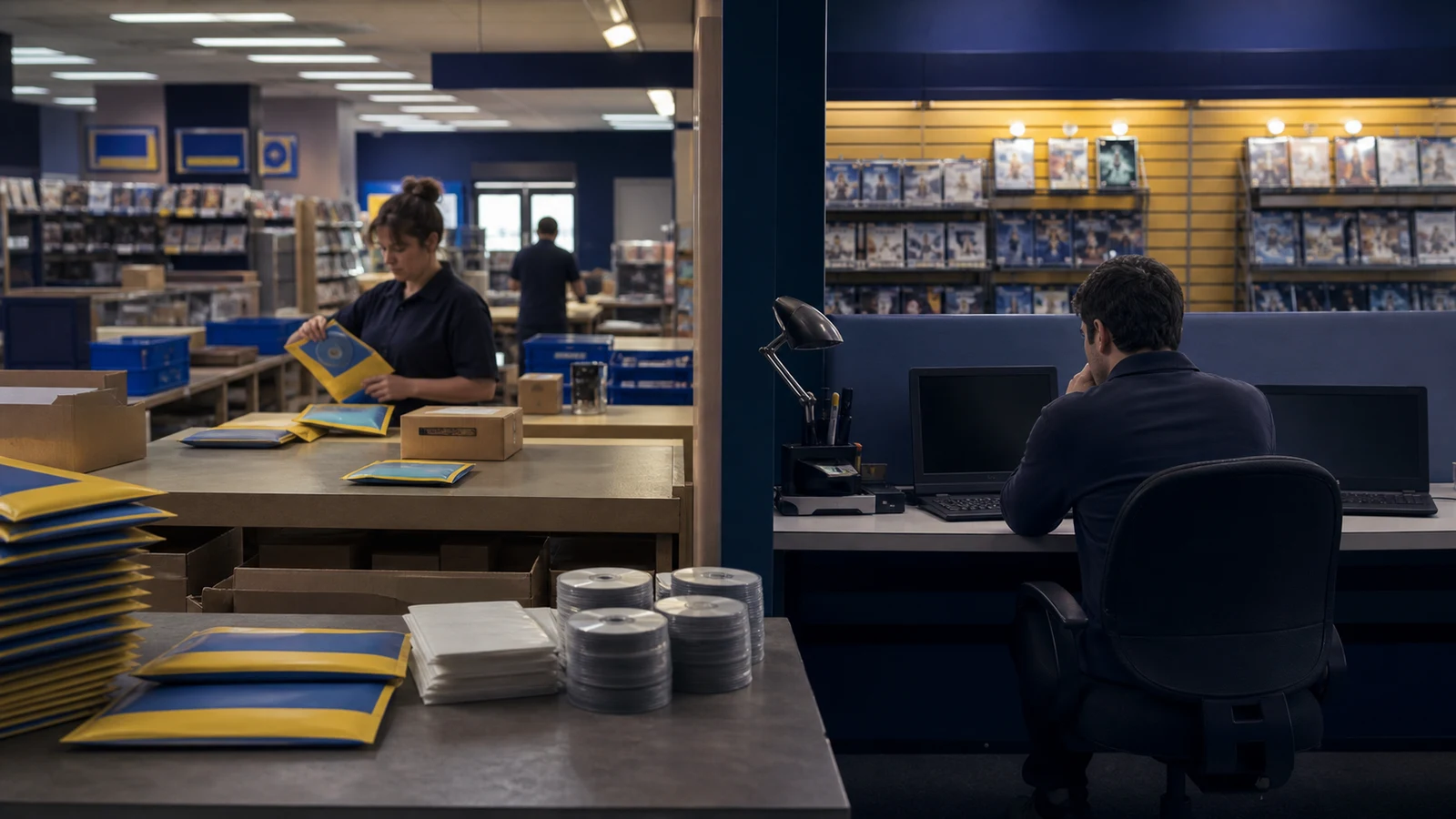
Blockbuster did try other channels
Mail, subscriptions, kiosks, and digital work arrived, but they did not replace the chain fast enough.
Product and service system
Local inventory and membership built the habit.
Blockbuster added remote selection and delivery.
The company tried to connect physical and remote channels.
The chain ended while the ticket and Bend store remained.
Turning points.
The failure came from a slow collision between a strong customer ritual and a costly access model.
Why it failed
Debt, store leases, falling transactions, price and fee pressure, and channel disruption weakened the rental economics.
Management invested in online, mail, subscriptions, kiosks, and digital services while continuing to carry a large store estate.
Revenue decline and refinancing pressure led to Chapter 11 in September 2010, followed by the 2011 DISH asset sale.
Failure timeline
Blockbuster expands DVD-by-mail and online service.
Total Access links mail and store returns.
Chapter 11 follows debt and revenue pressure.
DISH closes remaining corporate stores and DVD-by-mail.
Public reaction.
Blockbuster became shorthand for missing a technology shift, but that version removes debt, store economics, and the channels it actually tried.
Fiscal 2009 losses and debt show a business already under severe pressure before bankruptcy.
The last operating franchise proves that the physical ritual still has cultural value.
Full timeline.
David Cook opens the first Blockbuster store in Dallas.
Wayne Huizenga leads rapid acquisition and franchise expansion.
Viacom acquires Blockbuster.
Blockbuster separates from Viacom and expands online/DVD-by-mail service.
Total Access lets mail customers return discs in stores.
Blockbuster files Chapter 11.
DISH pays USD 320.6 million for substantially all Blockbuster assets.
DISH announces the end of remaining U.S. corporate stores and DVD-by-mail.
Bend becomes the last operating Blockbuster franchise.
EchoStar completes its merger with DISH.
The Bend franchise continues publishing current releases.
Steal / avoid.
- Own a customer occasion, not only a product.
- Treat fixed assets as a channel constraint.
- Explain what the company tried before claiming it ignored change.
- Do not reduce the failure to one competitor.
- Do not call every Blockbuster store closed.
- Do not confuse a surviving brand entity with the old public stock.
Short answer.
Blockbuster failed because its debt, leases, store costs, and declining rental transactions weakened the company while customers moved toward mail, kiosks, subscriptions, and streaming. Blockbuster did try digital and mail channels, but it could not replace the old store economics in time. The brand survives inside DISH/EchoStar, and one licensed store still operates in Bend, Oregon.
Frequently asked questions
Why did Blockbuster fail?
Debt, thousands of stores, falling rental transactions, and a late, expensive channel transition pushed the operator into Chapter 11.
Did Blockbuster ignore streaming?
No. It tried online rental, DVD-by-mail, subscriptions, kiosks, and digital delivery. Those moves did not replace the store economics fast enough.
Is every Blockbuster store closed?
No. A privately owned licensed franchise still operates in Bend, Oregon. It is not a revived corporate chain.
Need help with your own brand?
Use Private brand work when your name, identity, proof, or message needs a sharper branding decision.
