Burger King · Grow Your Brand · Heritage-led quick-service system · United States / Restaurant masterbrand owned by Restaurant Brands International
Burger King
Burger King: a heritage identity rebuilt across the whole restaurant. The 2021 rebrand did more than restore a familiar bun-shaped logo. It aligned packaging, menus, uniforms, signage, restaurants, social, and digital around flame-grilled appetite and franchise execution.
Positioning, name, and architecture.
Burger King is a restaurant masterbrand whose promise is delivered by nearly all independently franchised restaurants. That makes the brand system an operating tool, not a graphic exercise.
Burger King combines flame-grilled product proof with a choice-led promise and a retro-modern restaurant identity.
Burger King is the flame-grilled quick-service brand that makes customization and appetite visible through one coherent restaurant system.
The Burger King name frames the restaurant as category authority rather than one product.
No verified current global masterbrand tagline; the March 2026 guest-as-king line is treated as a dated campaign.
franchised restaurant masterbrand
The masterbrand must coordinate independently operated restaurants, product families, packaging, value, loyalty, digital ordering, and local-market execution.
Makes scale, flame grilling, and appetite tangible.
signature product: Whopper source
Owns the cooking-method difference.
core product family: Flame-grilled burgers source
Broadens occasions beyond the signature burger.
range expansion: Chicken and sides source
Extends restaurant relevance into mornings.
daypart: Breakfast source
Connects ordering frequency, offers, and digital identity.
loyalty system: Royal Perks source
Turns the brand promise into local physical service.
franchise delivery system: Restaurants and drive-thru source
Naming and tagline progression
Have It Your Way
There’s A New King And It’s You
Market and scale snapshot.
System-wide sales are restaurant sales, not RBI revenue. Burger King’s U.S./Canada segment is separately disclosed; international Burger King results sit inside RBI’s multi-brand international segment.
Global Burger King restaurant sales; not RBI reported revenue.
Q1 2026 adjusted operating income; the segment also reported USD 365M of revenue.
Restaurants in 126 countries and territories at FY2025 year-end.
NYSE / TSX: QSR. Burger King is not separately listed.
Color system.
The palette behaves like food and place: toasted brown, fiery red, orange warmth, and a soft cream field.
How the palette behaves
Deep brown signals grill, toast, and heritage.
Red carries appetite, urgency, and the flame-grilled difference.
Orange adds warmth and human energy.
Cream creates a tactile paper-and-restaurant field rather than a clinical white system.
Recognition assets.
Recognition begins with the bun-shaped mark, but appetite, flame, packaging, restaurant cues, and the Whopper make the system memorable in use.
The 2021 identity revives the compact bun-and-name construction with a simpler digital shape.
The cooking method gives the brand a visual and sensory difference before any slogan is read.
Packaging, uniforms, menus, signage, interiors, social, and digital all repeat the same appetite-led idea.
Have It Your Way and the 2026 guest-as-king campaign keep customization at the center.
Scores.
Eight signals separate recognition from operating proof.
The bun mark and Whopper are immediate.
Food and flame carry the story.
The 2021 system covers physical and digital contact.
Independent operators create rollout complexity.
The return is specific, not nostalgic filler.
Restaurants, grill process, and system sales are visible.
The compact identity works well in apps and signage.
Burger King owns a clear flame-grilled position.
How the logo changed.
The 2021 change succeeds because it restores a strong memory structure and then carries it through the physical operation.
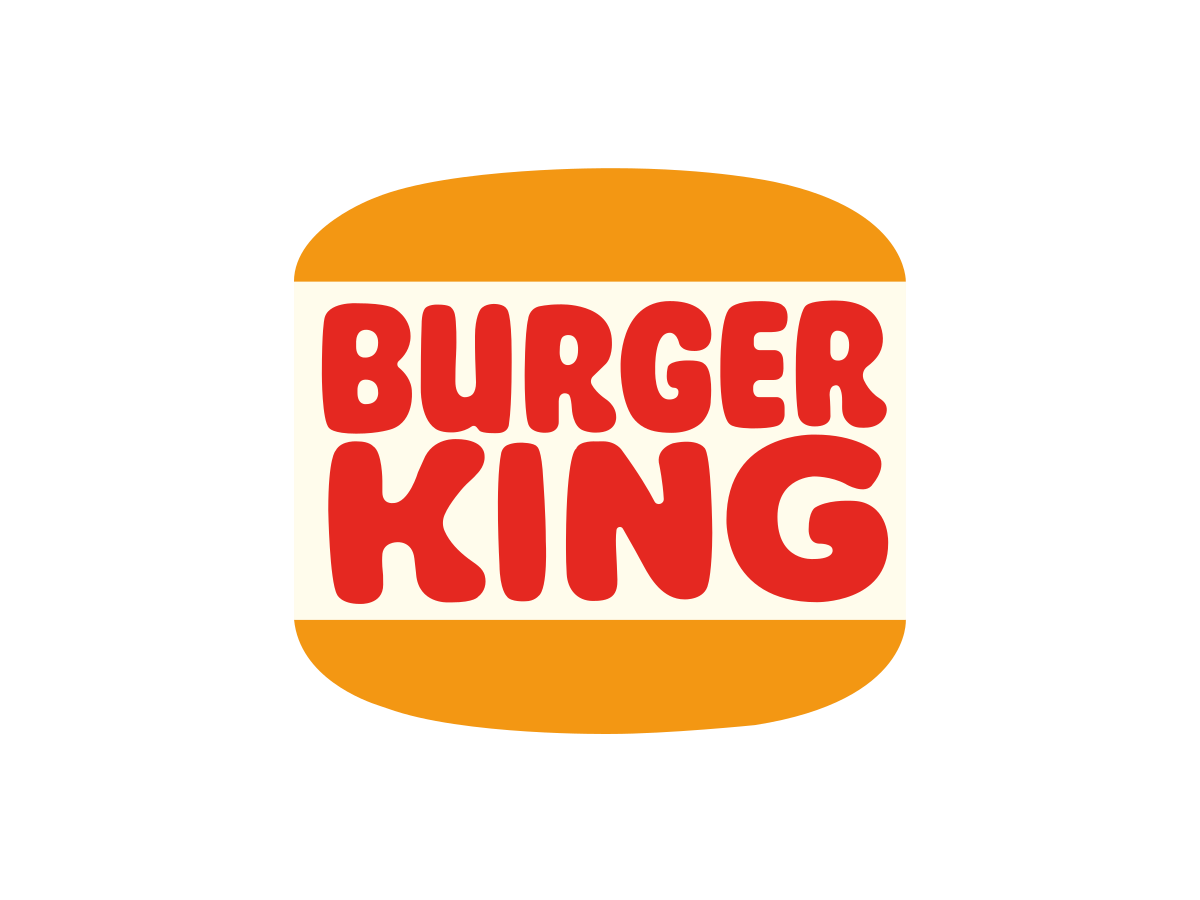
The exact local artwork is normalized from the Wikimedia Commons historical vector credited to Burger King Corporation; Burger King’s SEC filing independently verifies the bun-halves mark’s 1969 introduction.
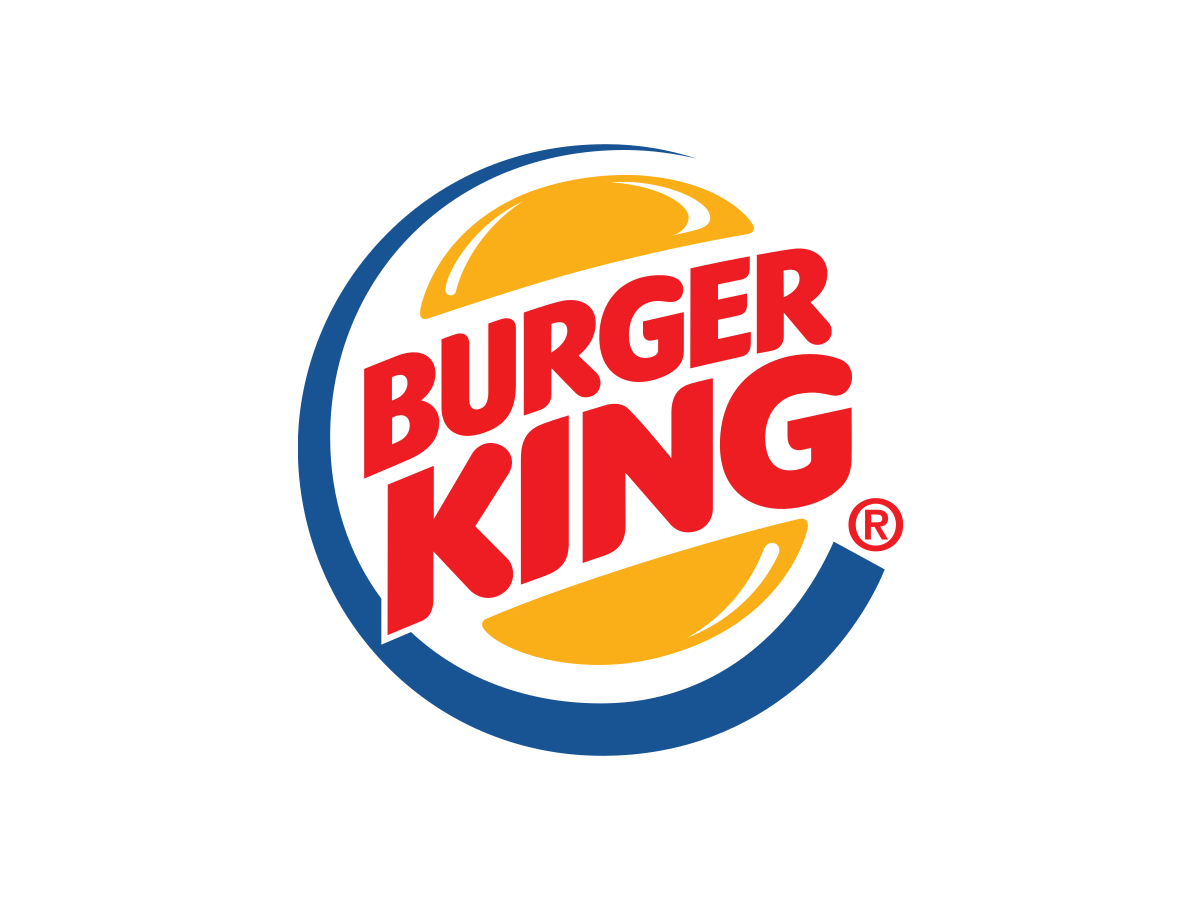
The 1999 identity added a blue crescent, tilt, and dimensional energy while retaining the burger-like name construction. source
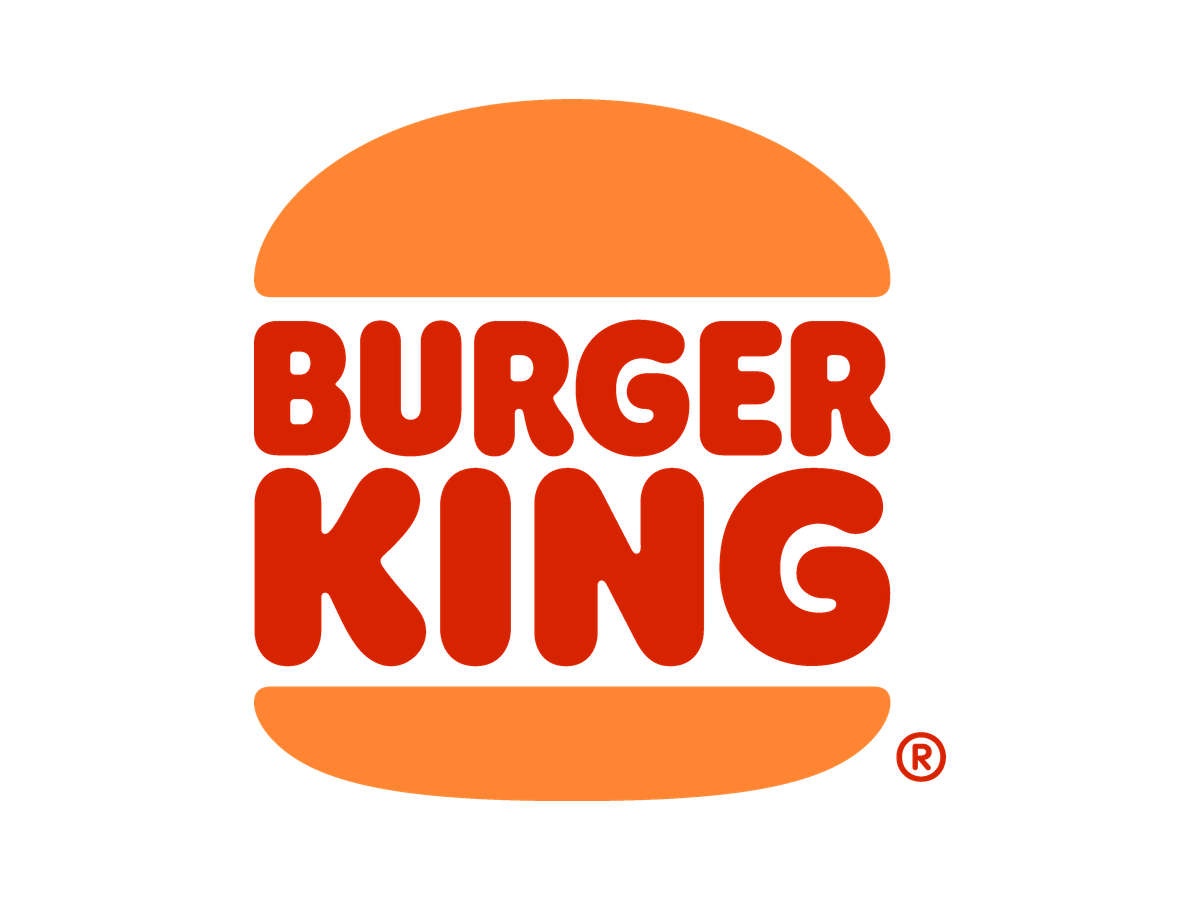
The first complete rebrand in more than twenty years simplified the logo and rebuilt the wider identity around food, flame, and heritage. source
Product and service lineage.
The mark earns value only when product, service, packaging, environment, and franchise execution repeat the same idea.
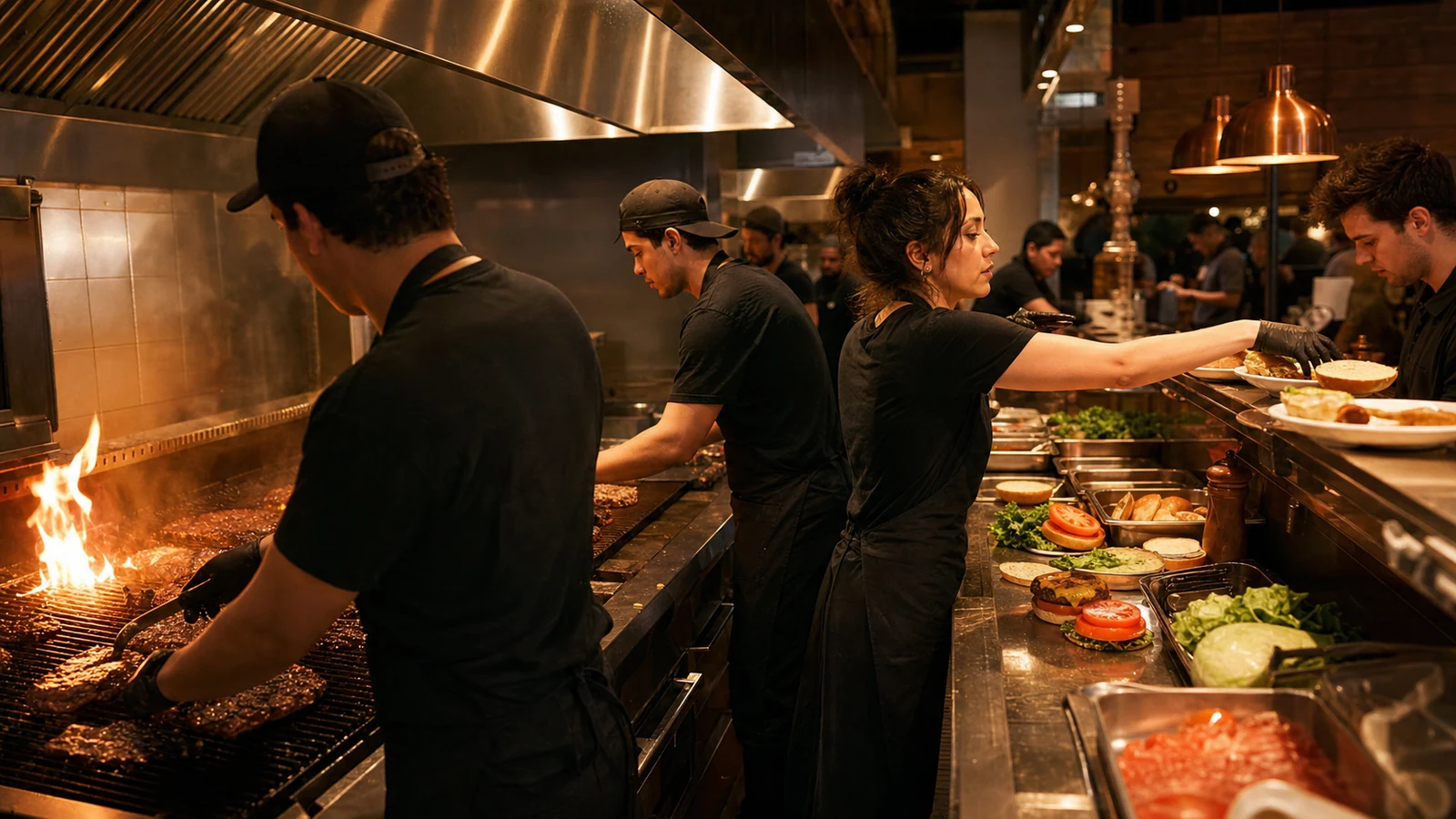
Flame-grilled operating proof
The cooking method turns positioning into something guests can see, smell, and taste.
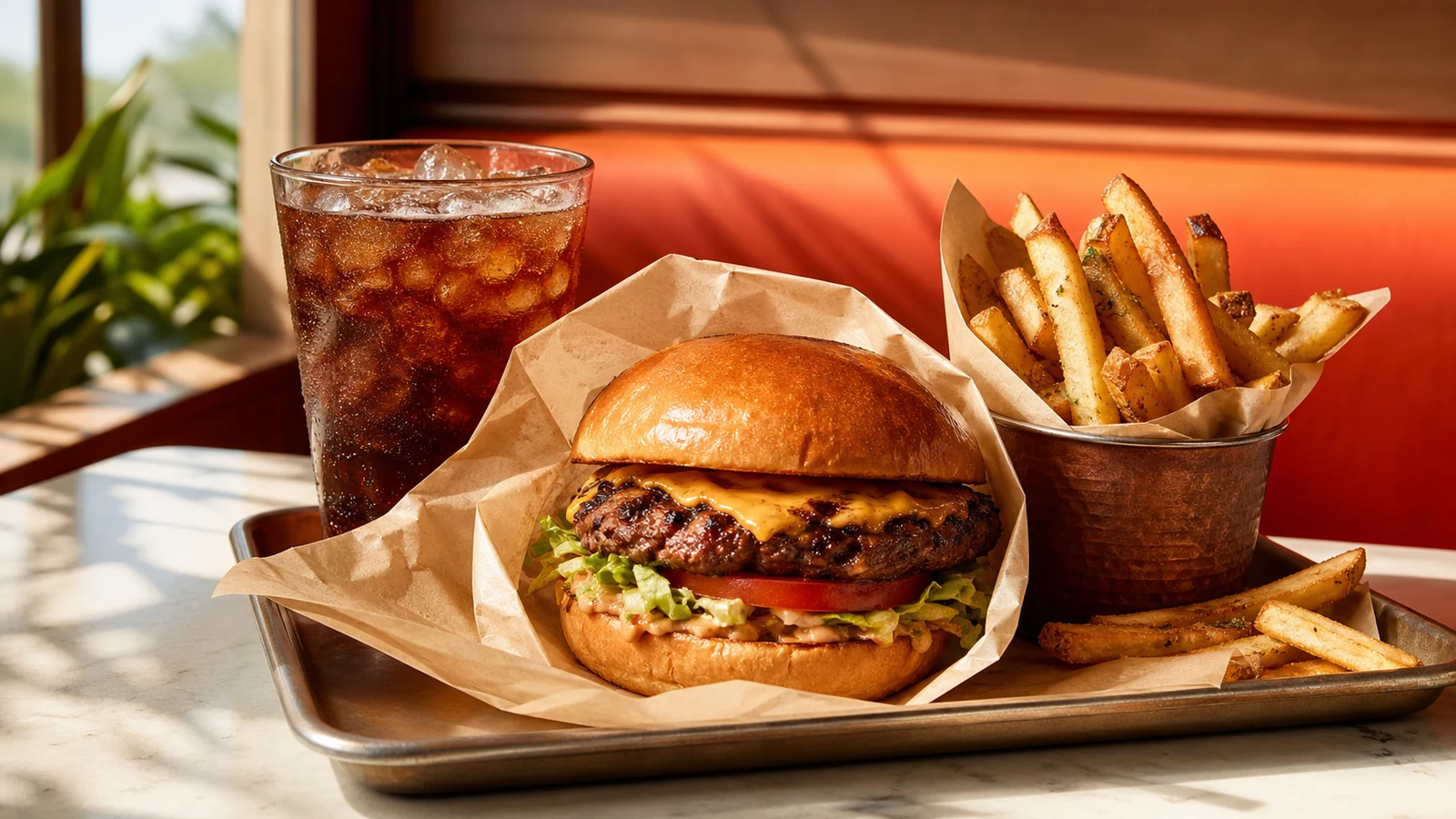
Packaging and appetite
Warm color, tactile paper, and food-forward photography make every handoff part of the identity.
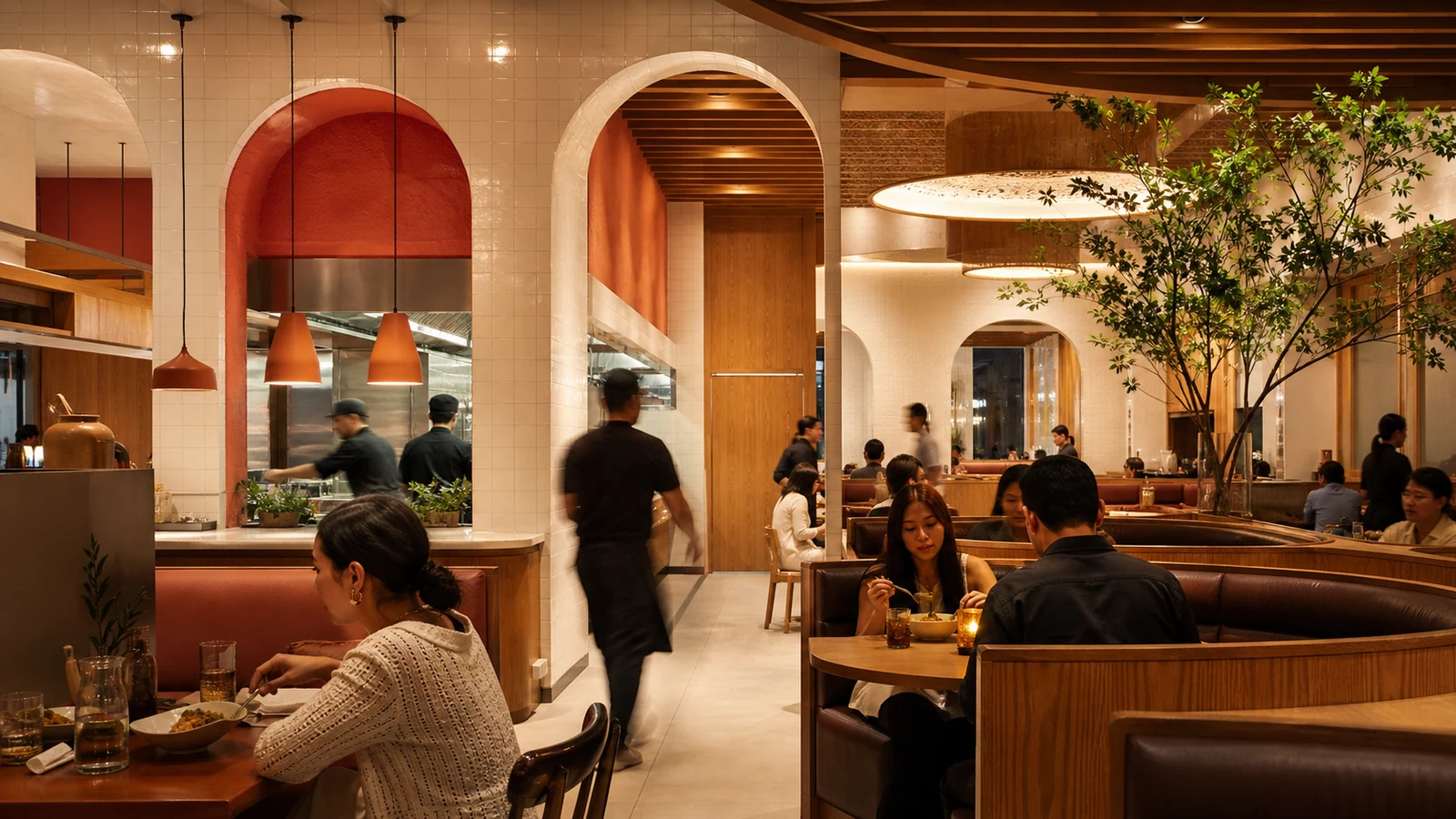
Restaurant expression
The environment makes the retro-modern identity physical instead of leaving it in advertising.
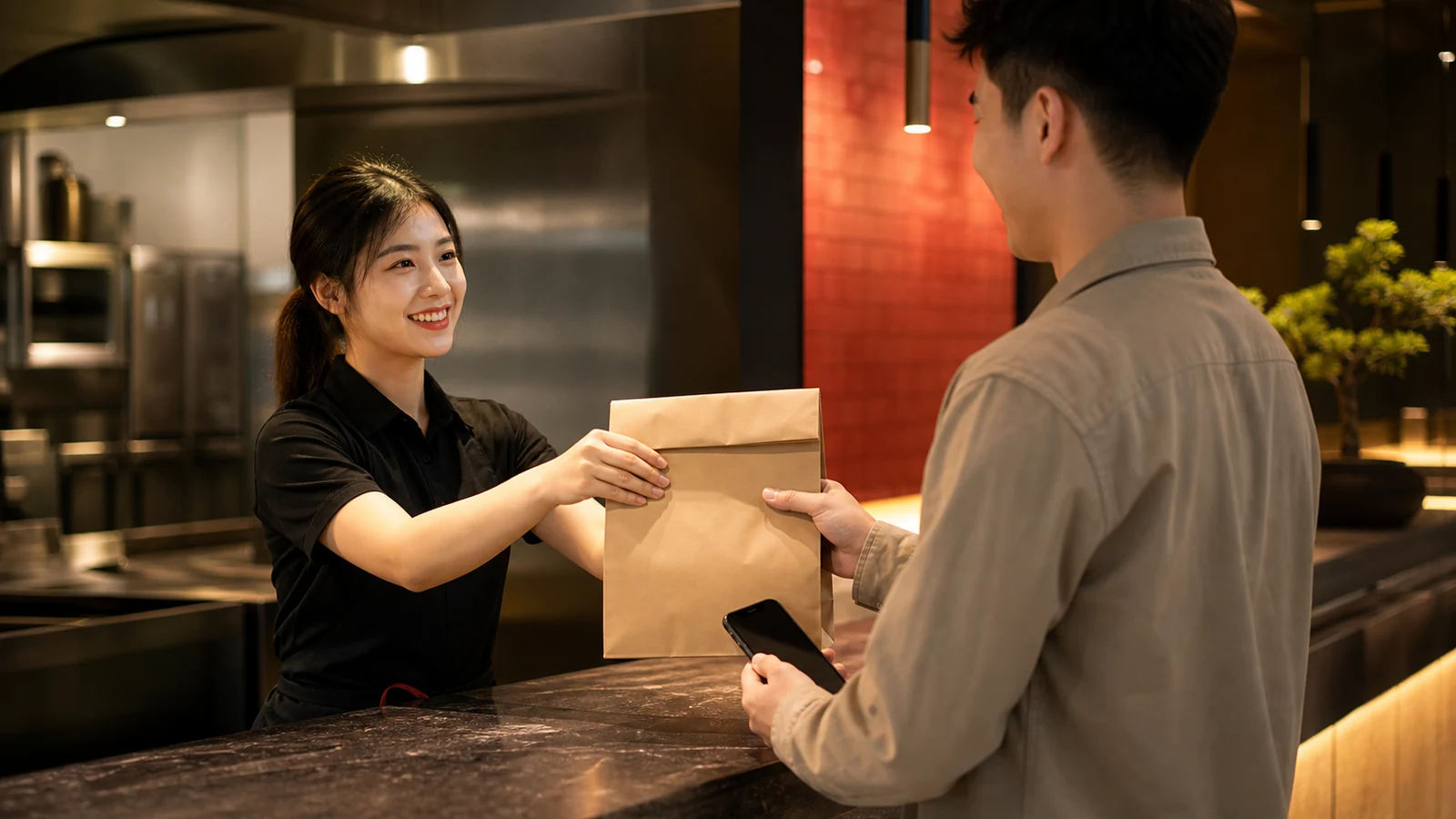
Digital order, physical handoff
Loyalty and mobile ordering still have to end in a fast, human, recognizable service moment.
Product and service system
The flagship burger carries scale, appetite, and flame-grilled proof.
The cooking method owns a category difference.
Warm paper and bold color make the handoff recognizable.
Materials, forms, signage, and uniforms make the system spatial.
Speed and order accuracy convert recognition into trust.
Loyalty turns identity into repeat behavior and digital relationship.
Turning points.
Burger King’s strongest brand events connect product, promise, and place.
Burger King begins in Miami.
The Whopper launches.
The bun-halves logo arrives.
Have It Your Way launches.
A complete identity system restores the bun mark and rebuilds every touchpoint.
There’s A New King And It’s You centers the guest and retires the mascot from the campaign.
Public reaction.
The rebrand was widely recognized because it felt both familiar and newly systematic. The harder judgment is whether thousands of restaurants deliver it consistently.
The bun mark restores a strong shape that people already associated with the restaurant.
Packaging, typography, interiors, uniforms, menus, social, and digital share one appetite-led system.
A global rebrand can look uneven while independent operators remodel, replace signs, and adopt new materials.
Food quality, speed, order accuracy, and restaurant condition can still contradict the identity.
Full timeline.
Burger King begins in Miami.
The Whopper launches.
Burger King introduces the enduring bun-halves logo structure.
Have It Your Way launches.
Burger King launches its first complete rebrand in more than twenty years.
The brand reaches 19,900 restaurants in 126 countries and territories.
A guest-as-king campaign replaces the King mascot in current advertising.
Steal / avoid.
- Let one product truth lead the identity.
- Use heritage as a reusable structure, not nostalgia.
- Design the restaurant, packaging, and digital system together.
- Treat franchise rollout as part of brand strategy.
- Do not call system-wide sales company revenue.
- Do not use RBI-wide franchise percentages as Burger King-only figures.
- Do not stop at a logo reveal.
- Do not let retro cues overpower food and service proof.
Short answer.
Burger King is a global quick-service restaurant masterbrand owned by Restaurant Brands International. Its strongest signals are the bun-shaped logo, flame-grilled product proof, the Whopper, and the choice-led promise associated with Have It Your Way. In 2025 Burger King reported 19,900 restaurants in 126 countries and territories and USD 29.368 billion in system-wide sales. Those sales are restaurant sales, not RBI revenue. The 2021 identity was a complete rebrand spanning logo, packaging, menus, uniforms, signage, restaurants, social, and digital.
Frequently asked questions
What made Burger King’s 2021 rebrand work?
It restored a familiar bun-shaped mark and carried the same food-led system through packaging, restaurants, menus, uniforms, signage, social, and digital.
Is USD 29.368B Burger King revenue?
No. It is 2025 global system-wide restaurant sales, not reported RBI revenue.
What should another multi-location brand steal?
Build the rollout system at the same time as the identity, because franchise execution determines whether the promise becomes real.
Need help with your own brand?
Use Private brand work when your name, identity, proof, or message needs a sharper branding decision.