Canon · Grow Your Brand · Precision-engineering masterbrand · Japan / Active / public company
Canon
Where did the Canon name come from? Canon’s first prototype camera carried the Kwanon name in 1934. Canon became the registered trademark in 1935, with a name tied to standards and precision. The familiar wordmark grew from that camera history into a wider engineering business.
Positioning, name, and architecture.
Three evidence checks before the page talks about scale, color, or public reaction.
One engineering masterbrand spans Printing, Medical, Imaging, and Industrial businesses while the output of each system remains inspectable.
Canon positions precision as an operating capability that can travel across consumer, enterprise, clinical, and industrial environments.
Canon chose a globally usable name associated with a standard or criterion; the 1934 Kwanon prototype is product-origin history, not the current corporate name.
Kyosei — corporate philosophy, not a tagline
branded corporate portfolio
Canon Inc. is the listed parent. The page keeps business pillars, portfolio brands, services, and related companies in their correct roles.
Office, production, laser, and inkjet systems make output and workflow visible.
business pillar: Production printing source
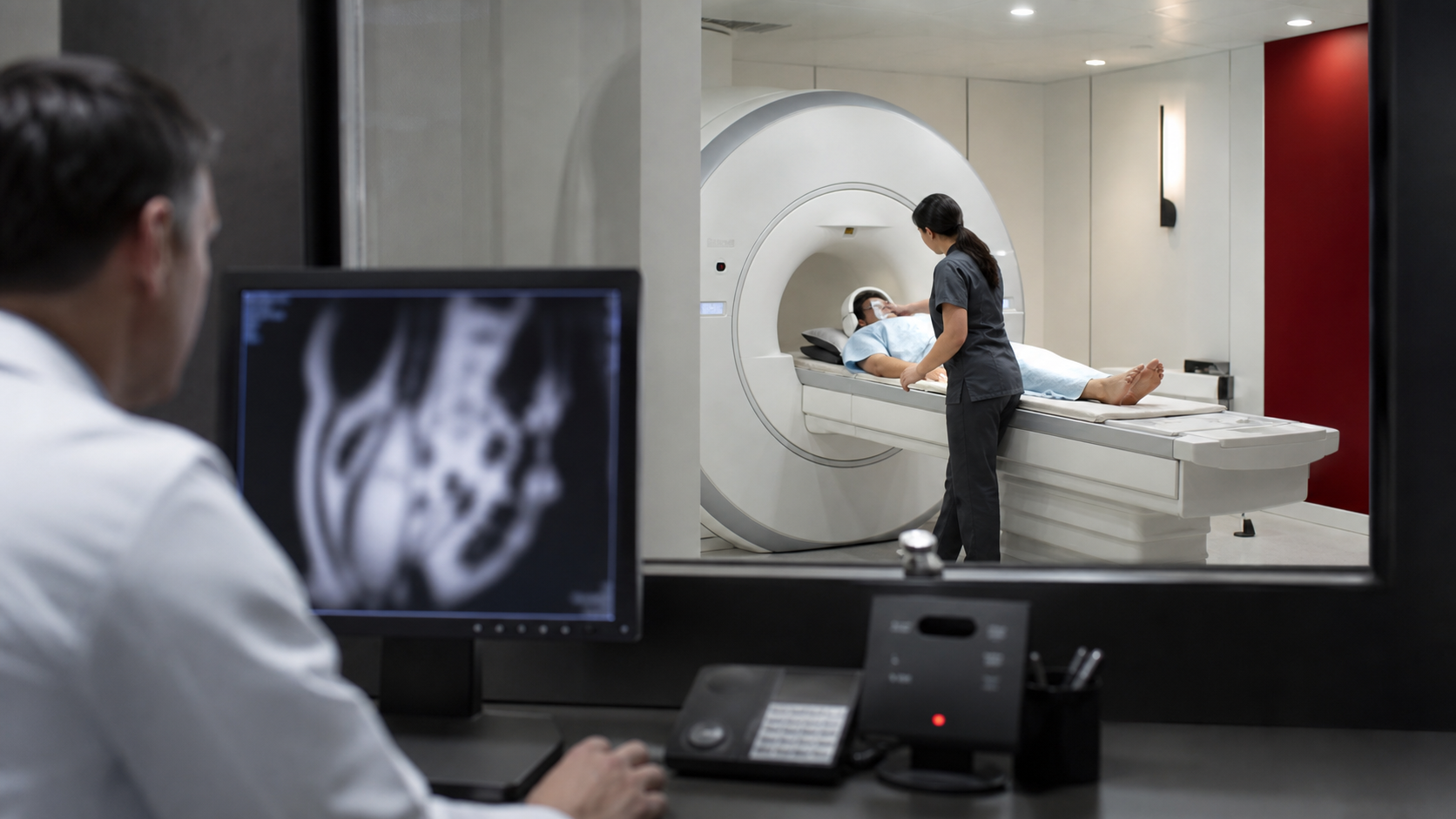
Diagnostic imaging brings precision into clinical decisions.
business pillar: Diagnostic systems source
Cameras, lenses, network cameras, and applications connect capture to use.
business pillar: Imaging systems source
Lithography and fabrication systems carry precision into manufacturing.
business pillar: Semiconductor lithography source
Naming and tagline progression
Kwanon names the prototype camera.
Canon is registered as a trademark.
Canon Inc. removes the camera-only boundary from the legal name.
Market and scale snapshot.
Canon Inc. reports current public-company finance in Japanese yen. USD equivalents use one dated Federal Reserve conversion for comparable machine-readable scale.
Source-currency figure converted at Federal Reserve H.10, 30 Jun 2026: JPY 162.6100 per USD.
Attributable profit; source-currency figure converted at Federal Reserve H.10, 30 Jun 2026: JPY 162.6100 per USD.
Balance-sheet total at 30 Jun 2026; converted at Federal Reserve H.10, 30 Jun 2026: JPY 162.6100 per USD.
Canon Inc. is a listed public company with no disclosed corporate parent.
Color system.
Brand color is used as a precision accent so products, operations, and sourced identity assets remain the proof.
How the palette behaves
A precise recognition accent reserved for marks, rails, and signal moments.
Keeps technical information controlled and legible.
Creates the clean field required for products, outputs, and sourced identity assets.
Recognition assets.
Memory pieces the brand can use before someone finishes a sentence.
The red Canon wordmark is the portable corporate cue.
Lenses, captured images, and printed output make precision visible.
Studio, print room, clinic, and fab show the masterbrand doing different work.
Scores.
Use these scores to compare recognition, trust, proof, pressure, and risk.
The Canon masterbrand has durable source-backed cues.
Four distinct operating scenes make the promise inspectable.
Current finance preserves reporting period, source currency, and dated USD method.
The company, business pillars, portfolio brands, and related entities stay in their correct roles.
Color is restrained and every image has one clear story job.
The page turns brand breadth into a practical operating lesson.
Primary company sources anchor finance, history, identity, and business structure.
Canon Inc. is named directly and related-company boundaries are explicit.
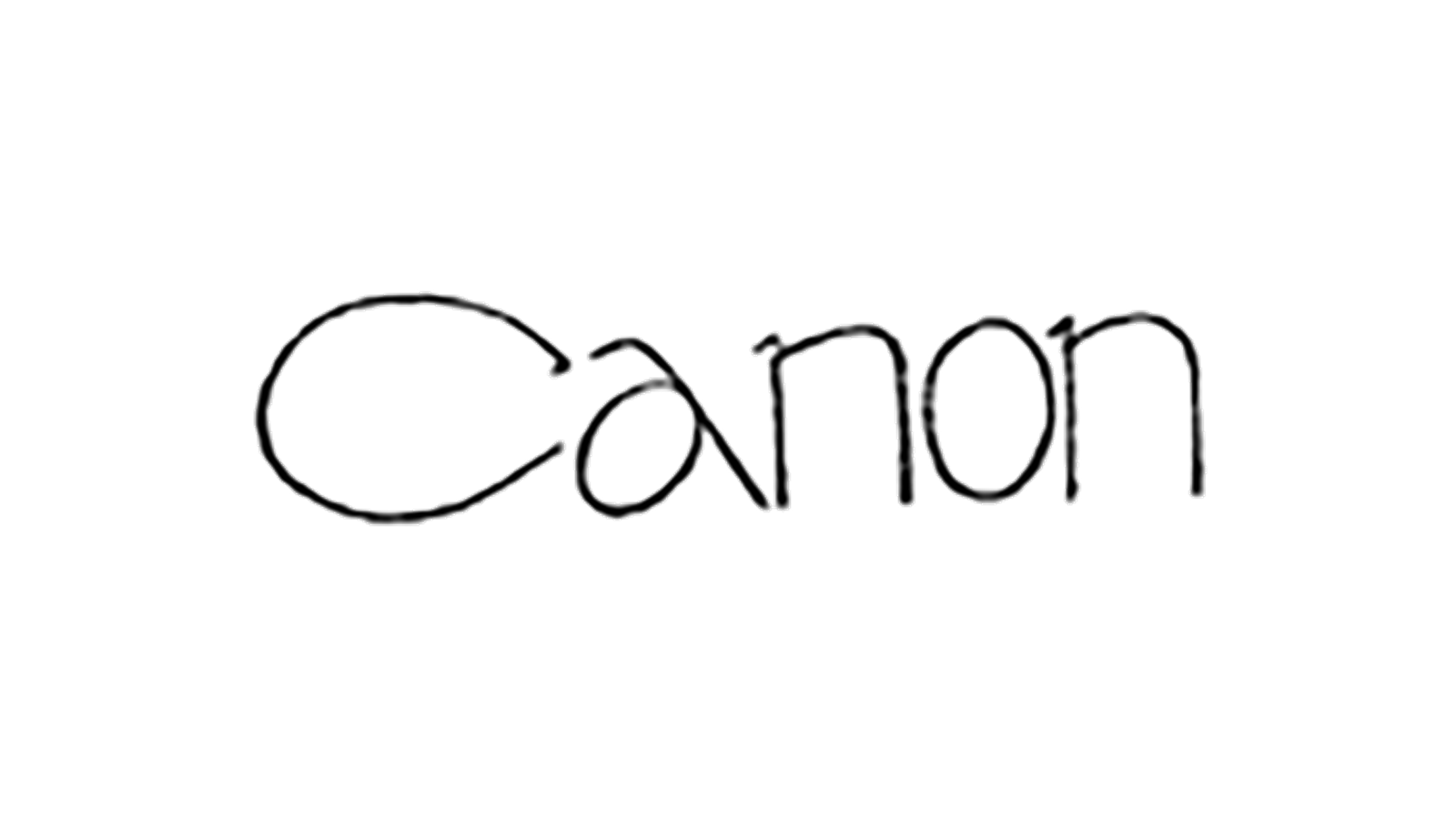
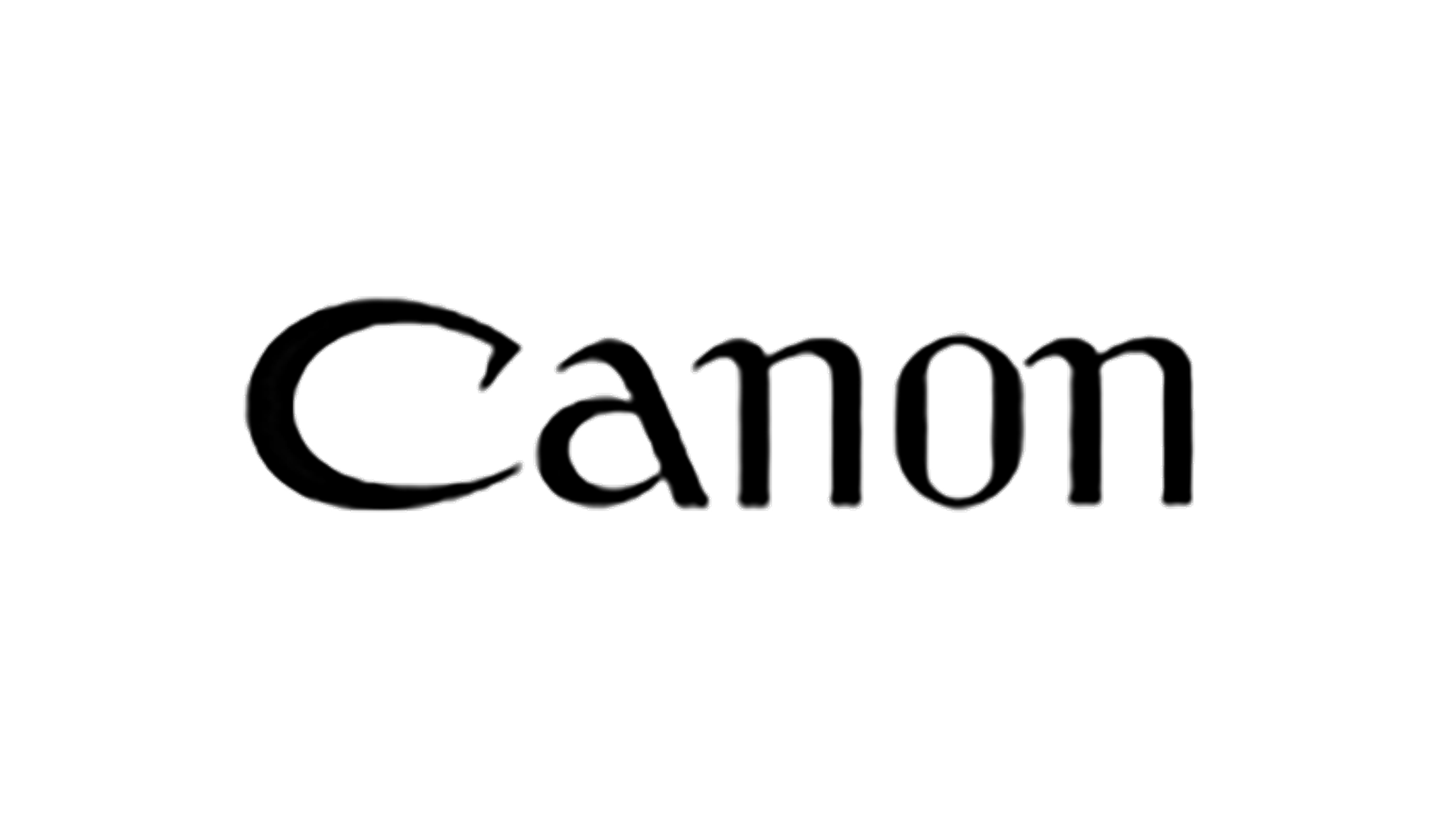
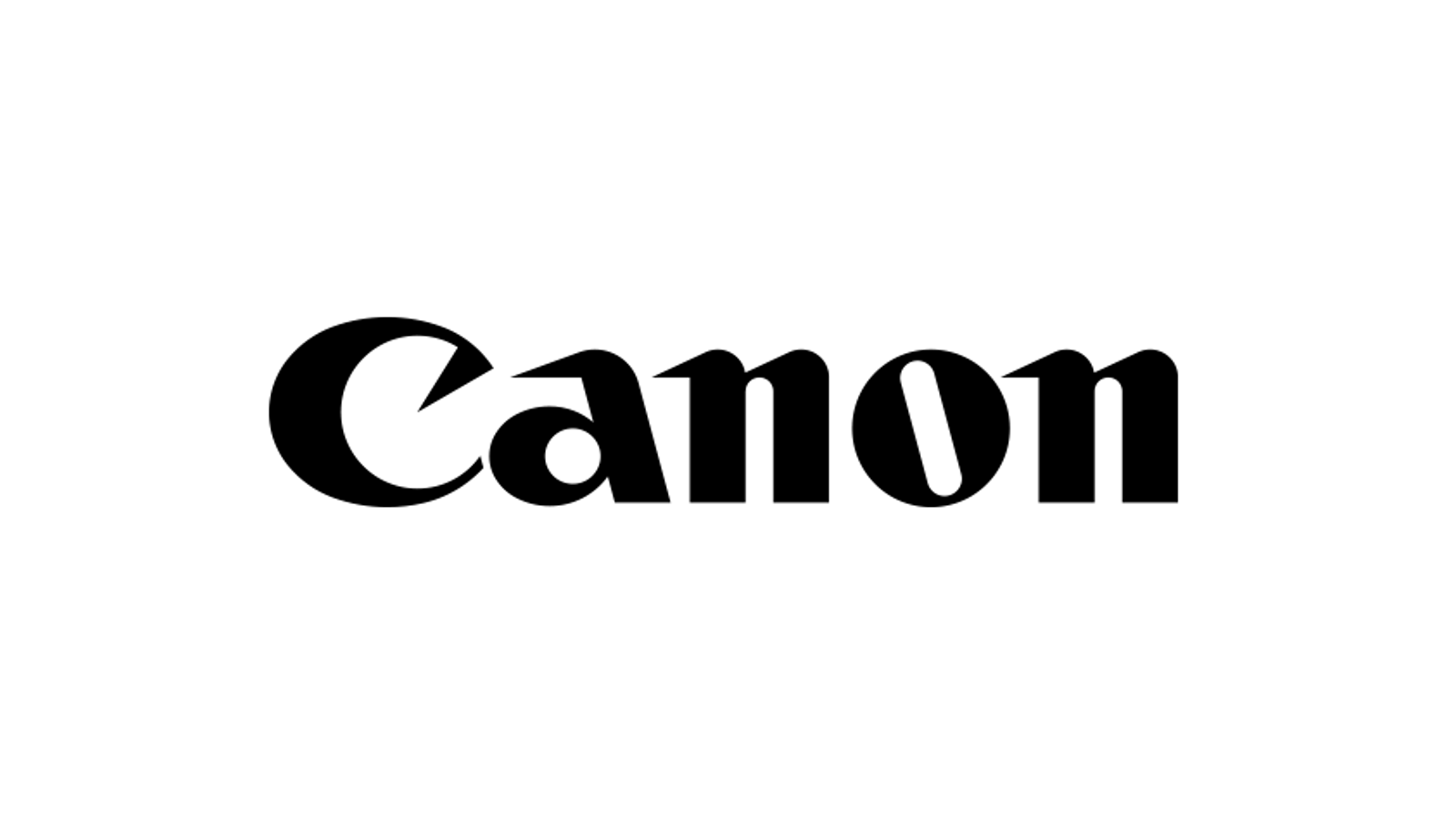
How the logo changed.
Three dated official Canon Inc. identity stages show real chronological progression; the current mark is last.



Product and service lineage.
The masterbrand earns breadth by repeating one capability across different operating surfaces.

Imaging makes precision visible
Capture and optics provide the familiar entry point, but not the whole company.

Output is operating proof
Print quality and workflow turn an engineering promise into something buyers can inspect.
Medical systems raise the trust bar
Clinical use requires the masterbrand to carry precision without consumer-camera shorthand.

Industrial systems stretch the name
Lithography shows how far the precision idea travels beyond consumer imaging.
Product and service system
Office, production, laser, and inkjet systems make output and workflow visible.
Diagnostic imaging brings precision into clinical decisions.
Cameras, lenses, network cameras, and applications connect capture to use.
Lithography and fabrication systems carry precision into manufacturing.
Turning points.
Turning points show how the brand changed without losing the capability at its center.
The company becomes Canon Camera Co., Inc.
Canon Inc. creates room for a broader operating identity.
The company adds a durable philosophy above the product portfolio.
The Excellent Global Corporation Plan creates a long-running transformation system.
Printing, Medical, Imaging, and Industrial define the current corporate frame.
Public reaction.
Public reaction is treated as recognition strength and disclosed operating pressure, not invented sentiment scoring.
Canon still benefits from powerful camera and lens memory.
Tariffs, deferred printing investment, raw-material costs, and restructuring make current operating proof more important than heritage alone.
Full timeline.
Precision optics venture begins Source
Canon becomes the trademark Source
Company and product name align Source
Camera leaves the corporate name Source
Kyosei becomes corporate philosophy Source
Phase-based corporate planning begins Source
Phase VII starts around four pillars Source
Steal / avoid.
- Build breadth from a capability the customer can inspect.
- Keep the company, product brand, portfolio, and related-company boundaries explicit.
- Let history explain a current operating signal instead of using it as decoration.
- Do not let the best-known product narrow the whole company.
- Do not use portfolio or related-company finance as parent-company proof.
- Do not invent customer sentiment, testimonials, endorsements, or market-leadership claims.
Short answer.
Canon registered its name in 1935 after using Kwanon on a 1934 camera prototype that was not sold. The word Canon was chosen for meanings including criterion and standard. Today Canon Inc. reports Printing, Medical, Imaging and Industrial businesses, so its corporate results cover more than cameras.
Frequently asked questions
Why is the camera brand called Canon?
Canon registered its name as a trademark in 1935 after using Kwanon on a prototype camera. The company chose a similar-sounding word with meanings including criterion and standard, which suited precision equipment and an international market.
Was Kwanon an earlier Canon camera brand?
Kwanon was the name on Canon's 1934 prototype, including an image associated with the Buddhist figure Kannon. Canon's history says that prototype was not released on the market. The Canon trademark followed in 1935, so Kwanon and today's Canon name describe different stages.
Is Canon a standalone public company?
Yes. Canon Inc. is the listed Japanese company. Its subsidiaries and business units sit within that group; the Canon camera range is one part of the business.
Does Canon only make cameras?
No. Canon reports four business groups: Printing, Medical, Imaging and Industrial. Cameras belong to Imaging; the Canon name also appears on printers, medical equipment and manufacturing technology.
Can I use Canon EF lenses on an EOS R camera?
Canon's EOS R compatibility guide supports EF and EF-S lenses with a mount adapter. RF lenses use the camera's RF mount directly. Check the exact body and lens documentation before buying: an adapter's name must match both systems, and EF-M is a separate lens family.
Do Canon EF-M lenses fit the EOS R?
Canon's compatibility guide for the original EOS R explicitly says EF-M lenses are not supported. EF-M is not another name for EF or EF-S. The guide also notes that using an EF-S lens through an adapter gives a cropped angle of view, approximately 1.6 times the indicated focal length.
Need help with your own brand?
Use Private brand work when your name, identity, proof, or message needs a sharper branding decision.