Chevron · Grow Your Brand · Integrated-energy recognition · United States / Active
Chevron
Chevron turns a two-part hallmark into recognition for an integrated energy system. Upstream production, refining, chemicals, fuels, lubricants, retail and lower-carbon businesses sit behind one compact blue-and-red hallmark. The strength is operational reach; the pressure is reconciling reliable energy with long-term carbon and transition risk.
Positioning, name, and architecture.
Three evidence checks before the page talks about scale, color, or public reaction.
A highly portable hallmark spans upstream assets, industrial operations, fuel retail and new-energy businesses.
Chevron is an integrated energy system using one compact hallmark to connect industrial scale with a human-progress promise.
The Chevron name grew from the two-part hallmark used by Standard Oil Company of California and became the corporate name in 1984.
The human energy company.
masterbrand with endorsed operating and retail brands
Chevron is the corporate masterbrand; Texaco and Caltex are sibling retail brands and do not belong in the Chevron logo-evolution lane.
Exploration, development and production of crude oil and natural gas.
operating segment: Large-scale upstream assets source
Refining, logistics, fuels, retail and marketing move energy to customers.
operating system: Chevron, Texaco and Caltex fuels source
Chemicals, additives and lubricants extend the brand into industrial performance.
product and technology system: Chevron Phillips Chemical, Oronite and Havoline source
Carbon management, hydrogen, renewable fuels and other lower-carbon businesses carry transition claims.
growth platform: Chevron New Energies source
Naming and tagline progression
Chevron Corporation becomes the corporate name.
ChevronTexaco names the combined company.
Chevron returns as the corporate name; the human energy company becomes the central expression.
Market and scale snapshot.
FY2025 figures come from Chevron's filed annual report. Total revenues and other income is used consistently with the Fortune ranking figure.
FY2025 total revenues and other income.
FY2025 net income attributable to Chevron.
FY2025 net cash provided by operating activities; observed in the Form 10-K filed 24 Feb 2026.
NYSE-listed parent company.
Color system.
The two-color hallmark works from a fuel canopy to an annual report because the form stays compact and the contrast stays high.
How the palette behaves
Blue carries technical reliability and scale.
Red adds motion and energy.
White separation keeps the two-part form legible at distance.
Recognition assets.
Memory pieces the brand can use before someone finishes a sentence.
The stacked blue and red form is compact enough for equipment, stations and corporate media.
Chevron moved from a recognition cue into the corporate name in 1984.
Platforms, refineries, logistics and retail make the mark an operating-system signature.
Scores.
Use these scores to compare recognition, trust, proof, pressure, and risk.
The two-part hallmark is distinctive and portable.
The corporate masterbrand is clear when sibling retail brands stay in their own roles.
Fortune rank, cash flow and asset scale support the industrial story.
The human-energy line has to be earned through real people and operating behavior.
Long-term carbon exposure keeps the proof burden high.
Chevron Corporation, Chevron retail and sibling brands can be separated precisely.
The hallmark has survived repeated modernization without losing its basic form.
Environmental and transition controversies travel quickly across the masterbrand.
How the logo changed.
Chevron kept the stacked two-part idea while modernizing its geometry, color, wordmark and human-energy expression.
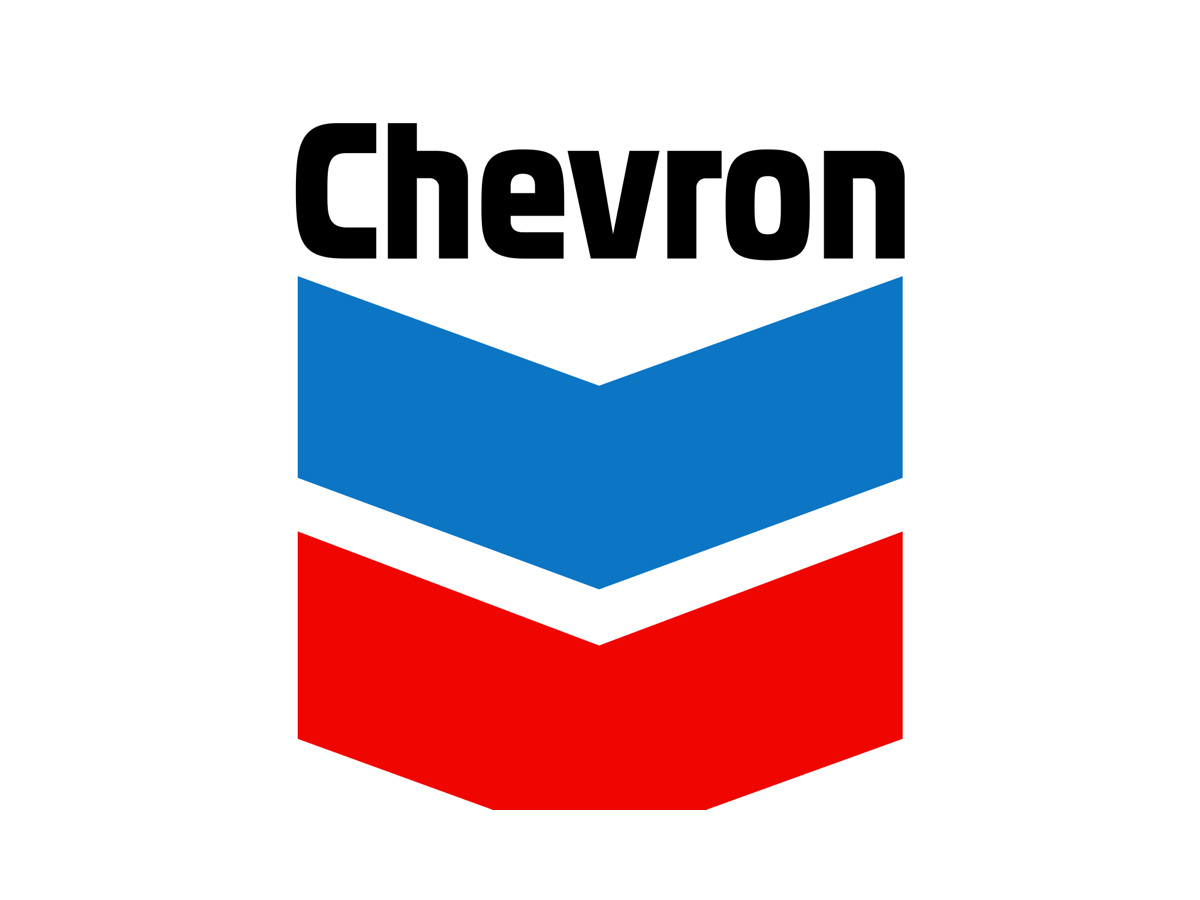
The 1969 system sharpened the stacked hallmark into a compact retail and corporate badge. source
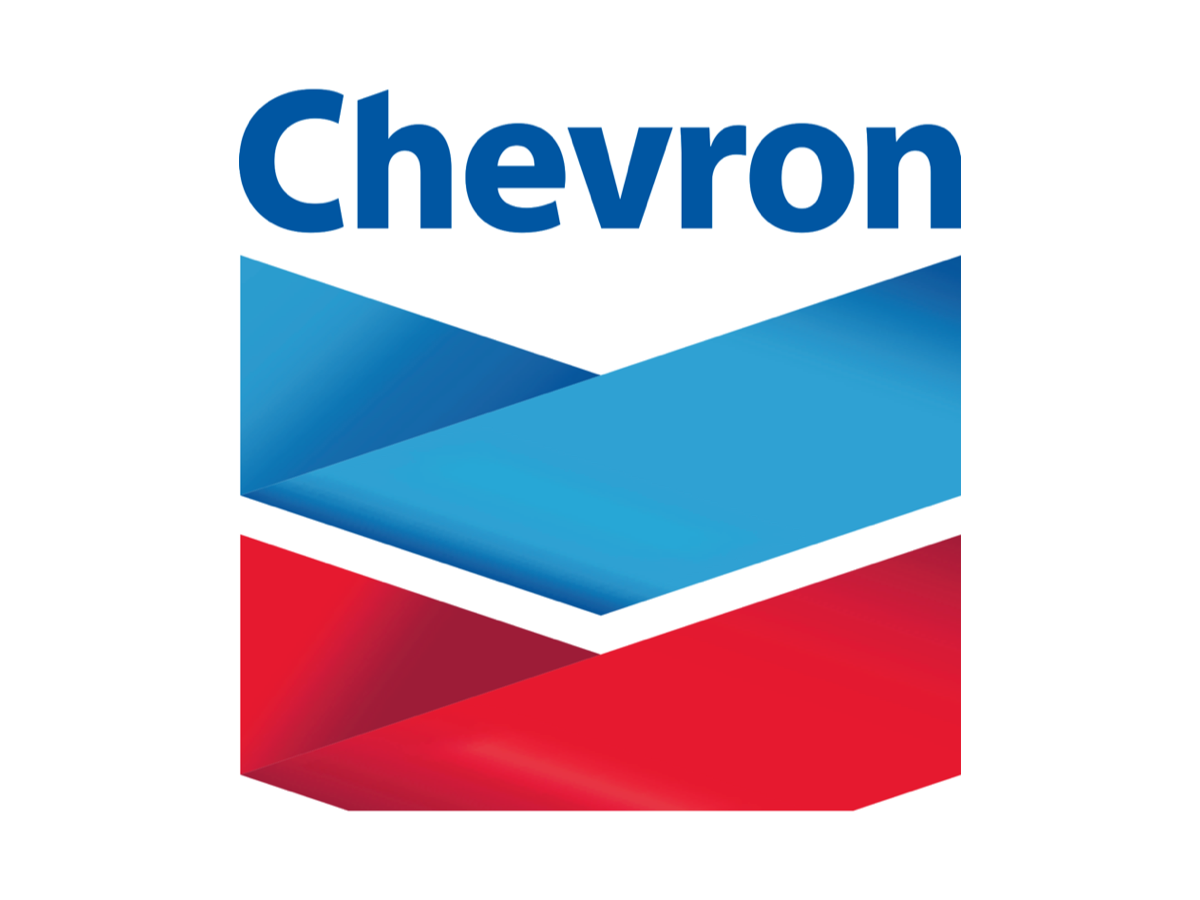
The 2005 redesign softened the form after the company returned from ChevronTexaco to Chevron.
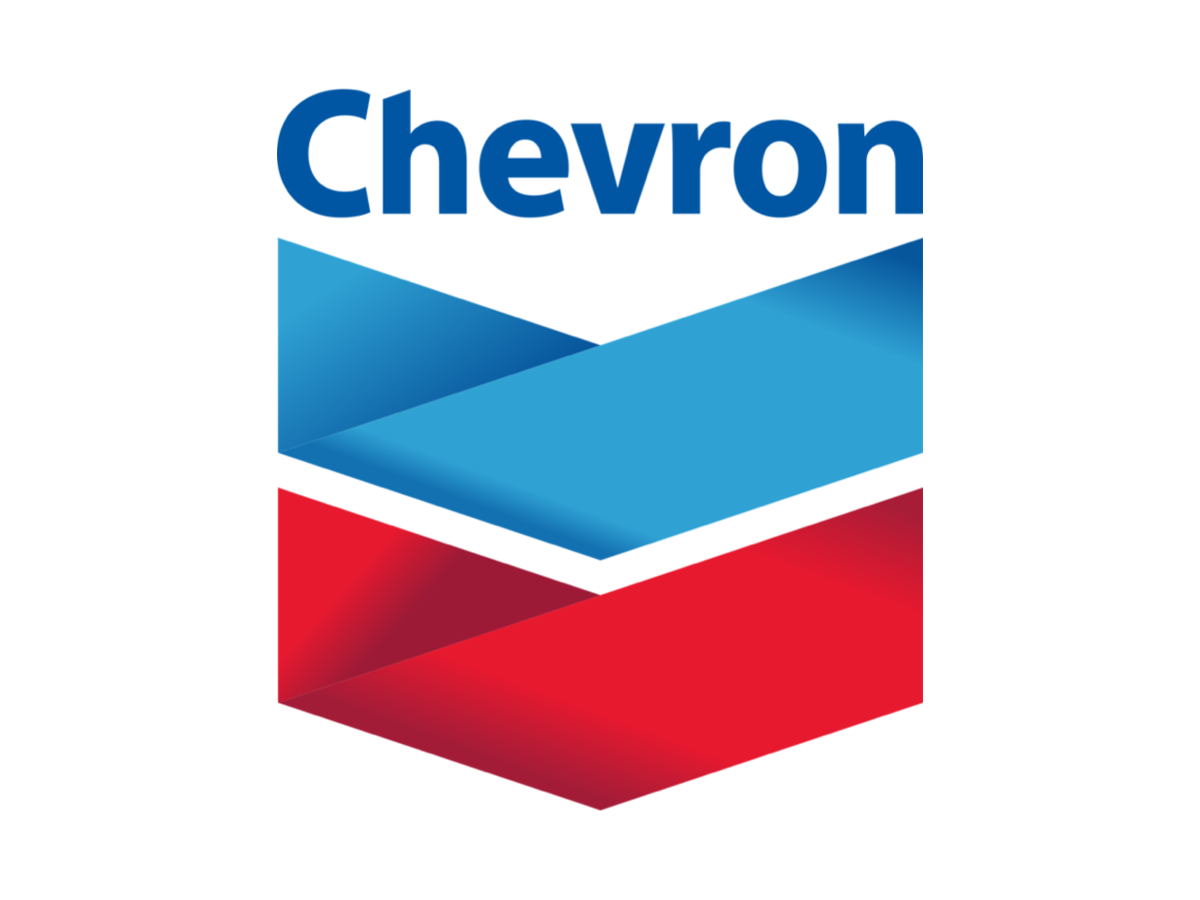
The current version refines gradient, spacing and letterforms while preserving immediate recognition.
Product and service lineage.
The operating system expanded through production, refining, retail, chemicals and newer lower-carbon businesses while the hallmark stayed recognizable.

Upstream scale
Exploration and production put the brand against geology, safety and capital intensity.

Industrial conversion
Refining and chemicals turn production into fuels and materials people can use.
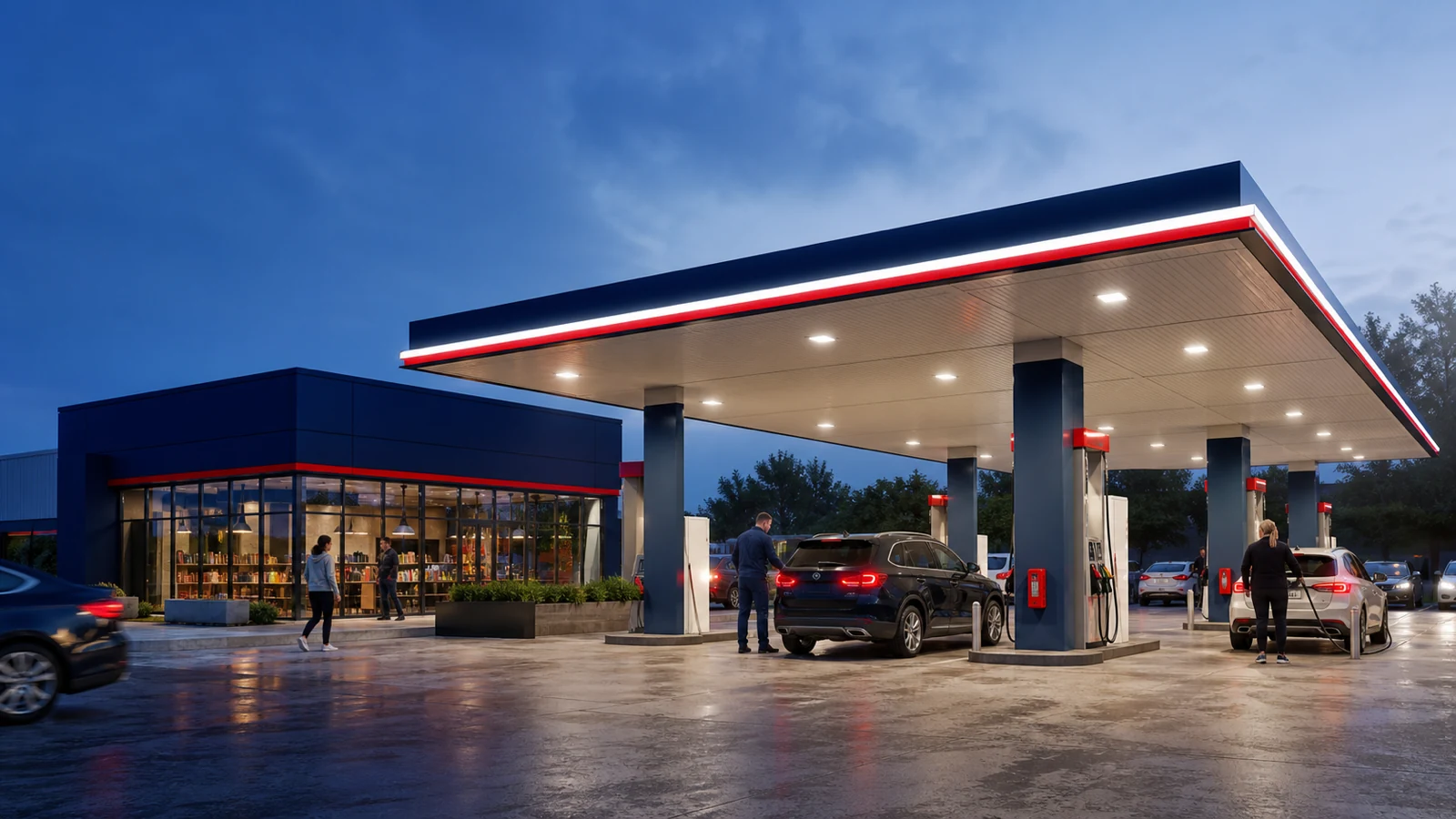
Retail access
The forecourt is where a vast industrial chain becomes a familiar transaction.

Carbon-management equipment
Industrial capture and storage claims become credible when the operating equipment and disclosed projects are visible.
Product and service system
Pacific Coast Oil begins operations.
The first Chevron hallmark appears.
Chevron becomes the corporate name.
Chevron and Texaco combine as ChevronTexaco.
The company returns to the Chevron name.
Chevron New Energies is formed.
Turning points.
Reliable-energy proof and transition pressure sit on the same board.
Chevron produces USD 33.94B in operating cash flow on USD 189.03B in revenue and other income.
The Hess combination expands upstream resources and integration demands.
Lower-carbon projects grow beside a much larger hydrocarbons system.
Public reaction.
Reliability and transition skepticism are both structural parts of the brand story.
The hallmark connects production, industrial conversion and retail access.
Ever-cleaner language becomes fragile when lower-carbon evidence feels small beside the core portfolio.
Full timeline.
Pacific Coast Oil begins operations.
The first Chevron hallmark is introduced.
The Chevron hallmark is modernized.
The company adopts Chevron Corporation as its name.
Chevron and Texaco combine as ChevronTexaco.
ChevronTexaco returns to the Chevron name.
Chevron updates the hallmark and human-energy identity.
Chevron New Energies is formed.
Steal / avoid.
- Let one compact mark survive changes in scale and portfolio.
- Make the operating chain visible from source to customer.
- Use financial cash generation and physical assets as proof, not decoration.
- Do not put sibling retail-brand logos into the masterbrand history.
- Do not use generic green imagery as transition proof.
- Do not let a human-progress line outrun environmental and capital evidence.
Short answer.
Chevron's strongest signal is its stacked blue-and-red hallmark: a compact identity carried across an integrated chain from production and refining to fuels, retail and lower-carbon businesses. The useful lesson is to protect a durable recognition cue while making the operating system behind it visible.
Frequently asked questions
What is Chevron's core brand signal?
The stacked blue-and-red hallmark carried across an integrated energy system.
What should another brand steal from Chevron?
Protect one durable recognition cue while the portfolio changes around it.
What should another brand avoid copying?
Do not let transition language outrun disclosed operating and capital evidence.
What was Chevron's 2026 Fortune 500 rank?
Chevron ranked number 21 in the 2026 Fortune 500.
Need help with your own brand?
Use Private brand work when your name, identity, proof, or message needs a sharper branding decision.