Costa Coffee · Grow Your Brand · Omnichannel Coffee System · United Kingdom / Active
Costa Coffee
Costa Coffee turns one roast signature into shops, Express machines, at-home, and ready-to-drink reach. A Costa Coffee brand page on the Costa brothers, Mocha Italia, burgundy identity, shop scale, Costa Express, Coca-Cola ownership, the 2019 acquisition, and the risk of stretching one coffee promise across many channels.
Positioning, name, and architecture.
Three evidence checks before the page talks about scale, color, or public reaction.
Costa extends its Mocha Italia roast and burgundy identity across an unusually broad set of delivery formats.
Costa positions one recognizable coffee taste as an omnichannel habit, from café counter to self-serve machine and home.
Costa takes the family surname of founders Sergio and Bruno Costa.
The Costa name and Mocha Italia story carry the masterbrand more consistently than one verified current consumer line.
branded house owned by a global beverage parent
Costa is the customer-facing masterbrand; Coca-Cola is the owner and distribution parent.
Extends the coffee promise into unattended locations.
service line: Self-serve barista-style machine source
Gives the system a repeatable taste story.
product family: Signature blend source
Turns the roast and barista promise into a staffed coffeehouse experience.
retail format: Coffee shop network source
Carries the taste system into capsules and home preparation.
product line: At-home coffee range source
Naming and tagline progression
The Costa name begins with the brothers' London roastery.
This card does not assign an unverified current consumer tagline.
Market and scale snapshot.
Costa is a private subsidiary of The Coca-Cola Company, so standalone revenue and earnings are not presented as public-company figures.
The Coca-Cola Company does not publish current Costa revenue as a standalone public segment.
No current standalone Costa profit figure is published by the listed parent.
The Coca-Cola Company reported a USD 4.9 billion transaction value when it completed the Costa acquisition in January 2019.
Costa Limited is owned by The Coca-Cola Company; KO is the listed parent, not a Costa ticker.
Color system.
Burgundy separates Costa from green coffee competitors and ties the sign, cup, apron, and machine fascia together.
How the palette behaves
Burgundy feels warm and established without imitating generic brown coffee branding.
Cream keeps menus and packaging approachable.
Coffee brown lets product truth support the identity.
Recognition assets.
Memory pieces the brand can use before someone finishes a sentence.
The custom letters are recognizable even without a coffee-bean symbol.
The color marks shops, cups, uniforms, and machines.
A named blend gives channel expansion a common product story.
The machine makes the brand visible outside a staffed café.
Scores.
Use these scores to compare recognition, trust, proof, pressure, and risk.
Burgundy and the wordmark travel well.
Roastery story and shop scale support expertise.
The core code survives across formats.
Self-serve and packaged channels test consistency.
Brand and Coca-Cola ownership are clear when separated.
The network gives Costa major coffee visibility.
Burgundy, cream, and coffee cues repeat strongly.
Channel complexity is manageable with strict standards.
How the logo changed.
Dated marks show which recognition cues changed, which survived, and what buyers had to relearn.
The file was uploaded in 2014 and preserves a white Costa Coffee wordmark on a red field. The upload date is not presented as the identity's adoption date. source

The current official burgundy wordmark is shown as a current application across Costa surfaces, without claiming an unsupported redesign date. source
Product and service lineage.
Costa grows when each channel feels like another route to the same coffee, not a disconnected licensing exercise.
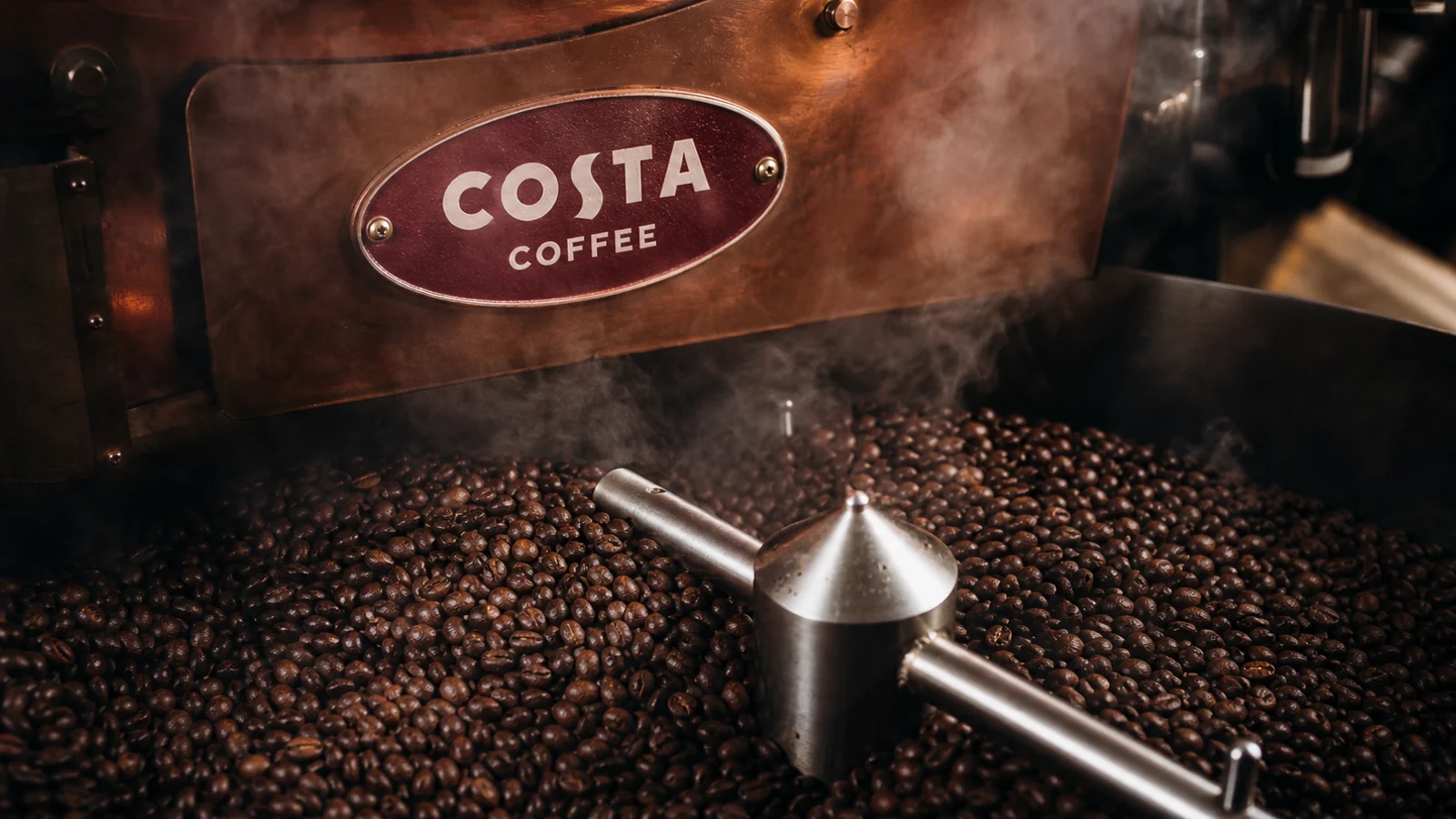
Roast as product truth
The bean and roastery story give the retail system a credible core.
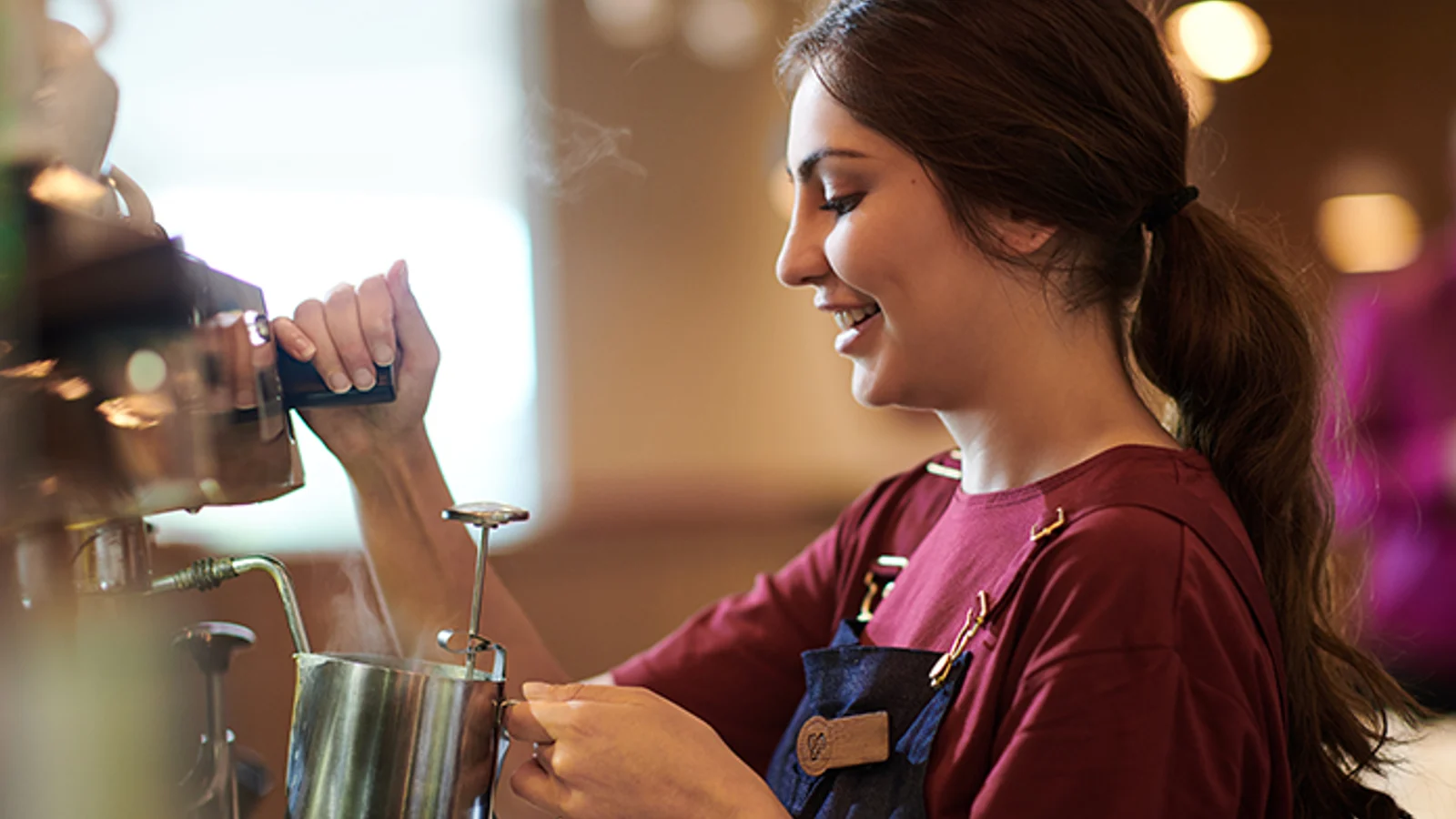
Barista craft
The human service moment has to justify the coffeehouse premium.
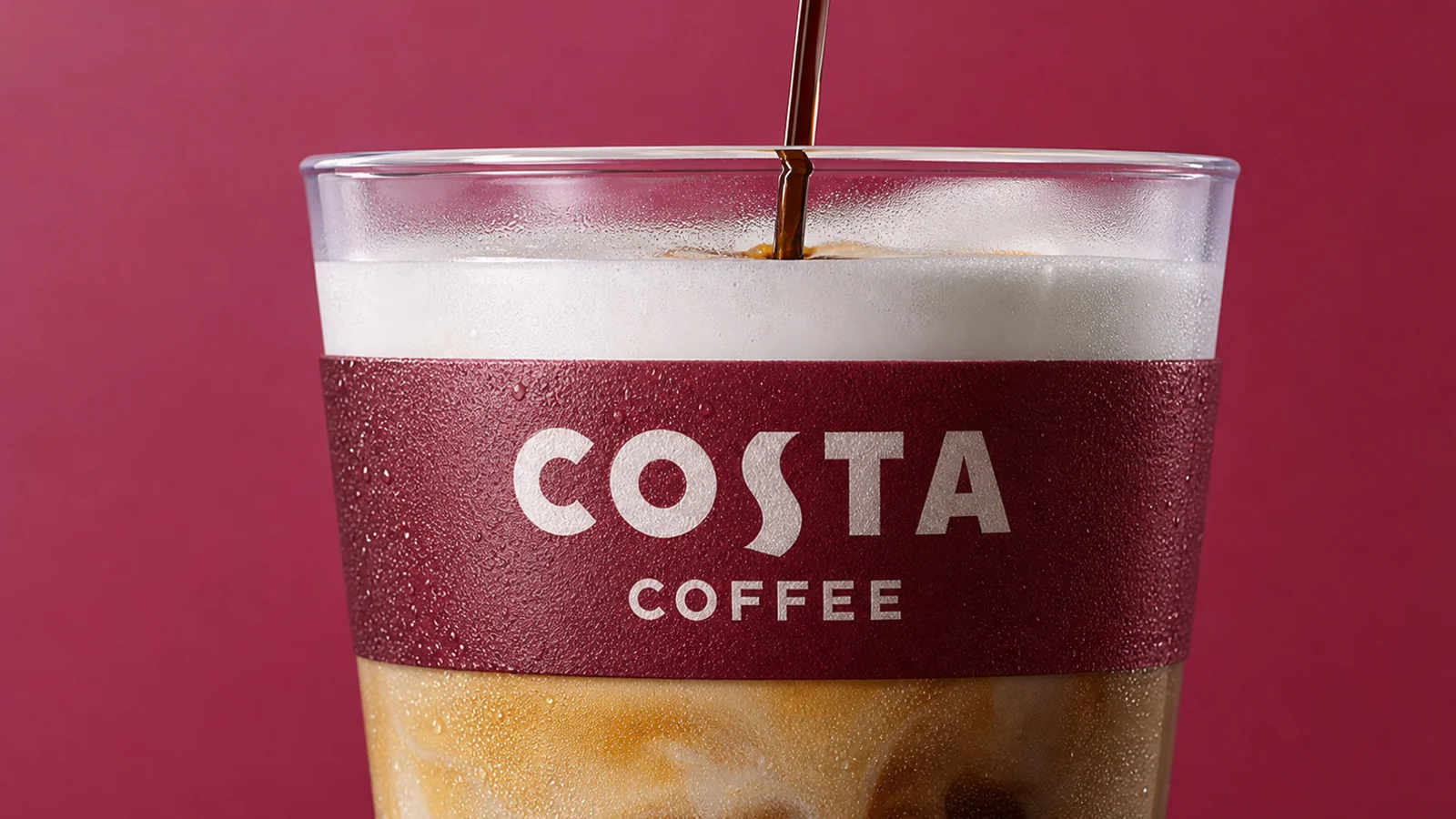
Drink recognition
The palette and product can work together without turning into decoration.
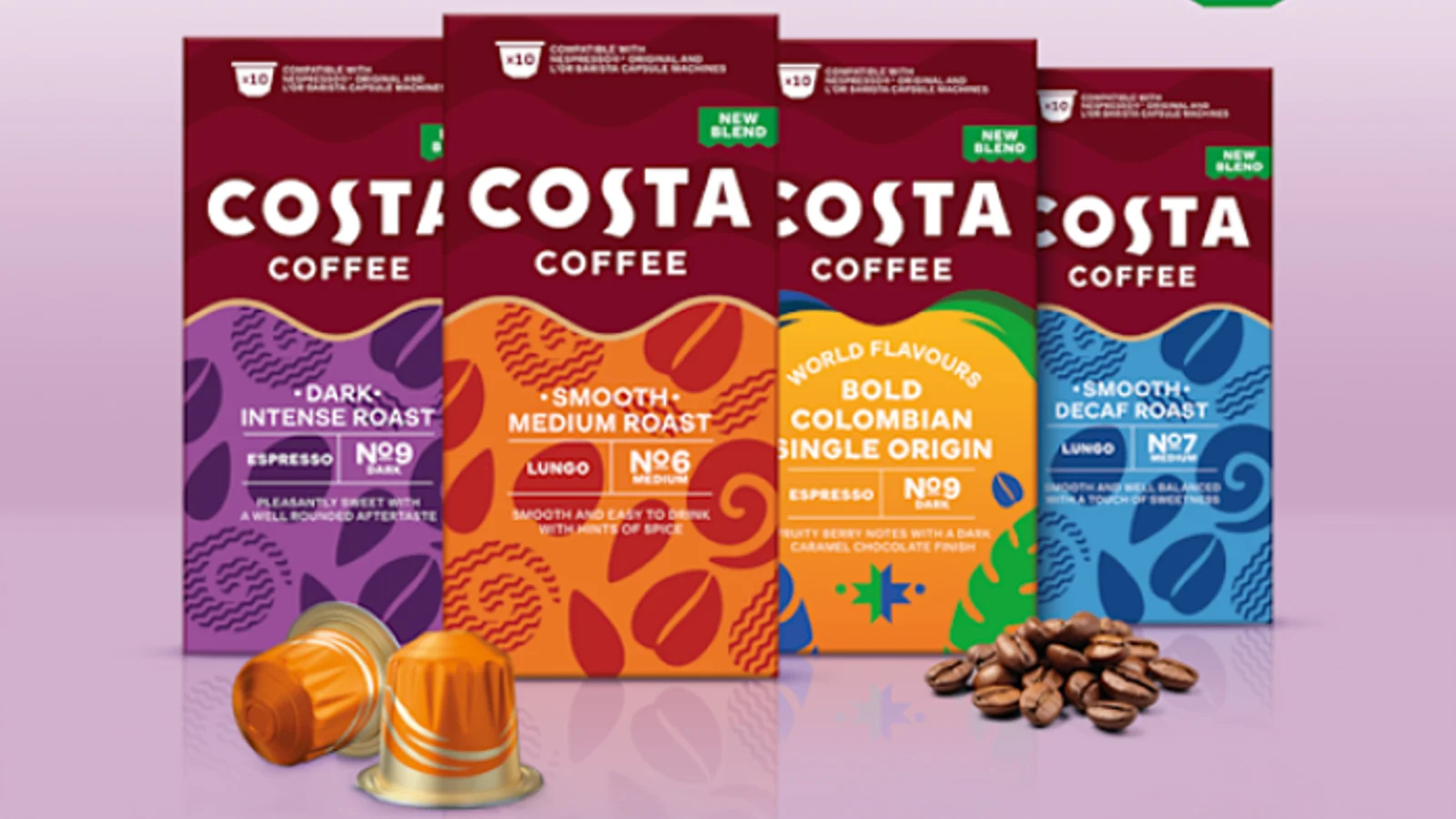
At-home extension
The brand enters the kitchen only if taste remains the common promise.
Product and service system
The Costa brothers establish a London roast story.
The burgundy counter turns taste into a public ritual.
Self-serve machines extend reach beyond staffed cafés.
Packaged formats take the promise into new occasions.
Turning points.
Turning points that moved Costa from roastery to multinational coffee platform.
Sergio and Bruno Costa begin roasting coffee.
Whitbread acquires Costa and accelerates shop expansion.
Coffee Nation becomes Costa Express.
The Coca-Cola Company completes the transaction at a reported USD 4.9B value.
Public reaction.
Costa reports that an independent panel of more than 5,000 UK coffee-shop consumers chose it as the nation's favourite for a 16th consecutive year. Broad distribution still makes experience control a live operating test.
Shops, travel locations, machines, and packs make the habit easy to repeat.
A weak self-serve or packaged encounter can damage the coffeehouse promise.
Full timeline.
Costa begins as a London roastery.
The roastery moves to Old Paradise Street in London.
Whitbread acquires Costa Coffee.
Coffee Nation becomes Costa Express.
A dated Costa Coffee masterbrand application is archived.
Coca-Cola completes the Costa acquisition at a reported USD 4.9 billion transaction value.
Steal / avoid.
- Name a product truth that can survive every channel.
- Use color to join store, cup, machine, and pack.
- Separate parent-company finance from brand-level disclosure.
- Do not publish Coca-Cola totals as Costa revenue.
- Do not let distribution become the only proof.
- Do not invent extra logo eras to fill a grid.
Short answer.
Costa Coffee is a UK coffee brand founded by Sergio and Bruno Costa in 1971 and owned by The Coca-Cola Company since 2019. Its system links the Mocha Italia roast, burgundy identity, coffee shops, Costa Express, at-home products, and ready-to-drink distribution.
Frequently asked questions
Who owns Costa Coffee?
The Coca-Cola Company has owned Costa since completing the acquisition in January 2019 at a reported USD 4.9 billion transaction value.
Does Costa publish standalone revenue?
Current standalone Costa revenue and earnings are not separately disclosed by the listed parent.
What should another brand steal?
Build a product truth strong enough to travel across store, self-serve, packaged, and digital channels.
Need help with your own brand?
Use Private brand work when your name, identity, proof, or message needs a sharper branding decision.