eBay · Grow Your Brand · A marketplace whose real product is confidence between strangers · United States / Active
eBay
eBay makes trust the operating system for a marketplace of almost anything. eBay made almost-anything commerce possible by turning reputation into infrastructure. The four-color name holds the breadth together; feedback, authentication and category programs make transactions believable. The current curiosity is ownership pressure, but the lasting lesson is trust design.
Positioning, name, and architecture.
Three evidence checks before the page talks about scale, color, or public reaction.
A broad, decentralized inventory shaped by sellers, collecting communities and trust mechanisms.
eBay turns fragmented supply and stranger-to-stranger commerce into a recognizable marketplace built around discovery and trust.
Pierre Omidyar launched AuctionWeb in 1995 and renamed the same marketplace eBay in 1997.
Things. People. Love.
branded marketplace / trust-service system
The masterbrand holds a broad marketplace together while trust programs and vertical experiences solve category-specific risk.
Connect buyers and sellers across new and used goods.
core platform: eBay source
Reduce risk in high-value categories.
trust service: Authenticity Guarantee source
Support vehicle and parts discovery with specialized flows.
vertical marketplace: eBay Motors source
Bring seller personality and real-time discovery into the marketplace.
community format: eBay Live source
Naming and tagline progression
AuctionWeb describes the original mechanism.
eBay becomes the compact masterbrand.
Things. People. Love.
Market and scale snapshot.
FY2025 figures use eBay's official results. GMV is transaction volume, not company revenue, so it stays in the event board rather than the four-cell finance block. Market value is delayed July 2026 data.
FY2025 net revenue.
FY2025 GAAP net income from continuing operations.
FY2025 operating cash flow.
Nasdaq-listed parent company.
Color system.
eBay keeps the multicolor memory of the original marketplace while the cleaner letter spacing makes the company feel more dependable.
How the palette behaves
Red creates urgency and recognition.
Blue supplies trust and utility.
Yellow and green make the marketplace feel open, varied and optimistic.
Recognition assets.
Memory pieces the brand can use before someone finishes a sentence.
The color sequence survived the 2012 redesign and carries marketplace memory.
Trust becomes visible before two strangers transact.
Discovery is the emotional reward. Standardized retail is not.
Scores.
Use these scores to compare recognition, trust, proof, pressure, and risk.
The name and four-color wordmark remain globally familiar.
Marketplace and trust services have understandable roles.
Long-tail inventory creates a distinctive emotional reward.
Individual sellers and collecting communities remain visible.
Feedback and authentication help, but disputes remain public.
Parent, platform and trust programs separate cleanly.
Four colors carry across major identity surfaces.
Fees and marketplace conflict can weaken loyalty.
How the logo changed.
The two verified eBay masterbrand stages show a clear strategic shift: from eccentric overlapping letters to a cleaner, more controlled marketplace identity.
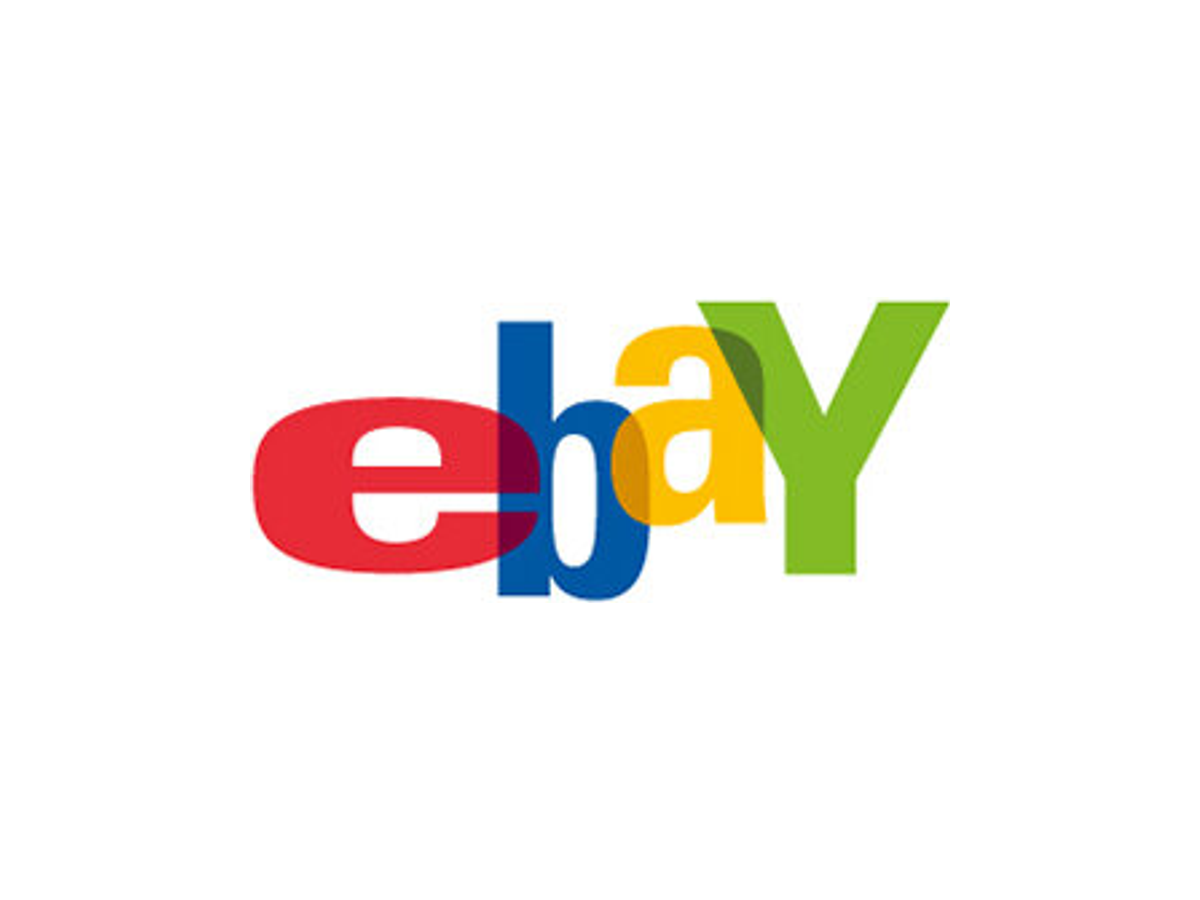
Overlapping, uneven multicolor letters expressed the unruly discovery energy of the early marketplace. source
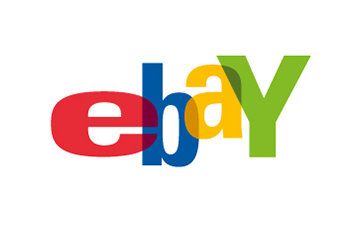

The current wordmark retains four-color memory while aligning the letters into a calmer, more controlled marketplace identity. source
Product and service lineage.
The marketplace grew by reducing uncertainty between people who do not know each other.

Seller energy
The marketplace begins with individual inventory and the confidence to list it.

Expert trust
High-value categories need verification beyond a seller rating.

Recommerce flow
A broad marketplace becomes useful when messy inventory can move reliably.

Community discovery
Passion and expertise make long-tail inventory feel valuable rather than random.
Product and service system
AuctionWeb launches from Pierre Omidyar's home.
AuctionWeb becomes eBay.
eBay formalizes feedback as a core trust cue.
The wordmark is simplified.
Authentication expands in high-value categories.
GameStop discloses a nearly 10% eBay stake after a takeover proposal.
Turning points.
Marketplace momentum is improving; ownership and trust questions keep attention high.
Revenue reaches USD 11.10B, GMV USD 79.6B and net income USD 2.00B.
Revenue grows 19% and GMV grows 18% year over year.
GameStop discloses a nearly 10% eBay stake after its unsolicited acquisition proposal.
Public reaction.
The thrill of finding almost anything competes with friction, inconsistency and seller skepticism.
Long-tail inventory gives buyers and sellers economic value centralized retail cannot always create.
Fees, disputes, counterfeit risk and inconsistent seller experience can make the system feel adversarial.
Full timeline.
AuctionWeb launches.
The company adopts the eBay name.
eBay completes its IPO.
eBay introduces its current wordmark.
eBay expands authentication in collectible categories.
GameStop reports a nearly 10% stake in eBay.
Steal / avoid.
- Turn reputation into a visible transaction cue.
- Keep emotional discovery while professionalizing the operating system.
- Use specialized trust programs where one generic promise is not enough.
- Do not let marketplace fees feel detached from seller value.
- Do not treat a logo cleanup as a substitute for trust repair.
- Do not flatten long-tail community energy into generic retail.
Short answer.
eBay's brand signal is trusted discovery between strangers. The colorful name creates memory; feedback, authentication and seller tools make the promise operational.
Frequently asked questions
What is eBay's core brand signal?
Trusted discovery between strangers across an unusually broad marketplace.
What should another brand steal from eBay?
Make trust mechanisms visible before asking people to transact.
Why is eBay discussed now?
GameStop disclosed a nearly 10% stake after making an unsolicited acquisition proposal.
What was eBay's 2026 Fortune 500 rank?
eBay ranked number 393 in the 2026 Fortune 500.
Need help with your own brand?
Use Private brand work when your name, identity, proof, or message needs a sharper branding decision.