Eddie Bauer · Grow Your Brand · Eddie Bauer failure case study · United States / North American store debtors entered a post-effective Chapter 11 wind-down in May 2026; Eddie Bauer IP, ecommerce, wholesale, and international licenses continue
Eddie Bauer
Who owns Eddie Bauer, and why does it still sell online? Authentic owns the Eddie Bauer brand. Outdoor 5 runs its U.S. and Canadian online and wholesale businesses, separately from the store operator that entered bankruptcy in 2026. That split explains why the name survives store closures.
Positioning, name, and architecture.
Eddie Bauer built authority through down insulation, expedition use, fishing and outdoor equipment, and a founder signature that made technical utility feel personal. The 2026 failure belongs to a licensed North American store operation, not to the full brand system.
A century of down-insulation, expedition, and Pacific Northwest outfitting history carried through a personal founder signature
Eddie Bauer makes outdoor participation approachable through proven insulation, recognizable heritage, and practical gear, but every licensee must keep product quality and channel economics worthy of the name.
Founder Eddie Bauer opened Bauer's Sports Shop in Seattle in 1920 and placed his own name and signature on the outfitting promise.
Live Your Adventure
Private IP owner with separate ecommerce, wholesale, retail, international, and hospitality licensees
The failed Catalyst-linked store debtors, Authentic, Outdoor 5, international licensees, and the hospitality license are separate legal and operating roles.
Owns and licenses the Eddie Bauer trademarks.
IP owner: Eddie Bauer IP source
Runs current U.S. ecommerce, wholesale, design, and product development.
channel operator: EddieBauer.com source
Operated the North American stores that entered Chapter 11 and wind-down.
failed retail operator: 175 stores at filing source
Carries the technical and expedition side of the product promise.
product line: Technical outerwear source
Naming and tagline progression
Founder authority and outfitting proof
Expedition heritage moves into everyday apparel
Live Your Adventure
Market and scale snapshot.
The figures below belong to the failed North American store debtors and their pre-split channels, not to Authentic Brands Group or Outdoor 5. Current brand-wide revenue and earnings are private and undisclosed.
Brick-and-mortar and ecommerce channels before ecommerce transferred to Outdoor 5; not current brand-wide revenue.
Approximate negative earnings reported by the debtor in the court disclosure.
Approximate amount owed to SPARC after years of funding shortfalls; future license fees were about USD 220 million.
Authentic owns IP; Outdoor 5 runs ecommerce and wholesale; they are not the failed store debtors.
Color system.
Black signature ink holds founder authority, expedition red supplies field visibility, and forest green keeps the system grounded in use rather than fashion theater.
How the palette behaves
Signature black: founder credibility. Current official wordmark.
Expedition red: visibility and down-jacket memory. Everest and outerwear imagery.
Field green: practical outdoor use. Current apparel and gear palette.
Recognition assets.
The signature, goose imagery, down jackets, expedition red, field-tested outerwear, and Seattle outdoor history remain recognizable. The collapse exposed a harder question: which operator still controlled product, customer access, and the bill for the brand license?
A founder name turns product proof into a direct promise instead of a generic outdoor badge.
Insulation, quilting, warmth, and expedition use make the brand tangible.
The same name reaches customers through ecommerce, wholesale, international licensees, and no longer through the failed North American store group.
Scores.
Heritage and product memory remained strong while the North American retail economics and channel architecture fractured.
The signature, goose imagery, and down heritage remain legible.
The down and expedition record is real, even after apparel mix broadened.
IP, ecommerce, wholesale, failed stores, and international licenses require explanation.
Heritage survives, but younger-customer relevance and product quality were questioned before the filing.
The outdoor promise survived because down and expedition use were memorable; the store economics failed because recognition could not offset margin, fee, and funding pressure.
The figures below belong to the failed North American store debtors and their pre-split channels, not to Authentic Brands Group or Outdoor 5. Current brand-wide revenue and earnings are private and undisclosed.
North American brick-and-mortar operator liquidated after Chapter 11; the Eddie Bauer brand and non-store channels continue
Authentic Brands Group owns the IP; Outdoor 5 operates current U.S. ecommerce and wholesale; the former store debtors are winding down
How the logo changed.
Eddie Bauer moved from literal field and waterfowl imagery back to the founder signature. The sequence shows a brand repeatedly deciding whether recognition should come from product world or personal provenance.
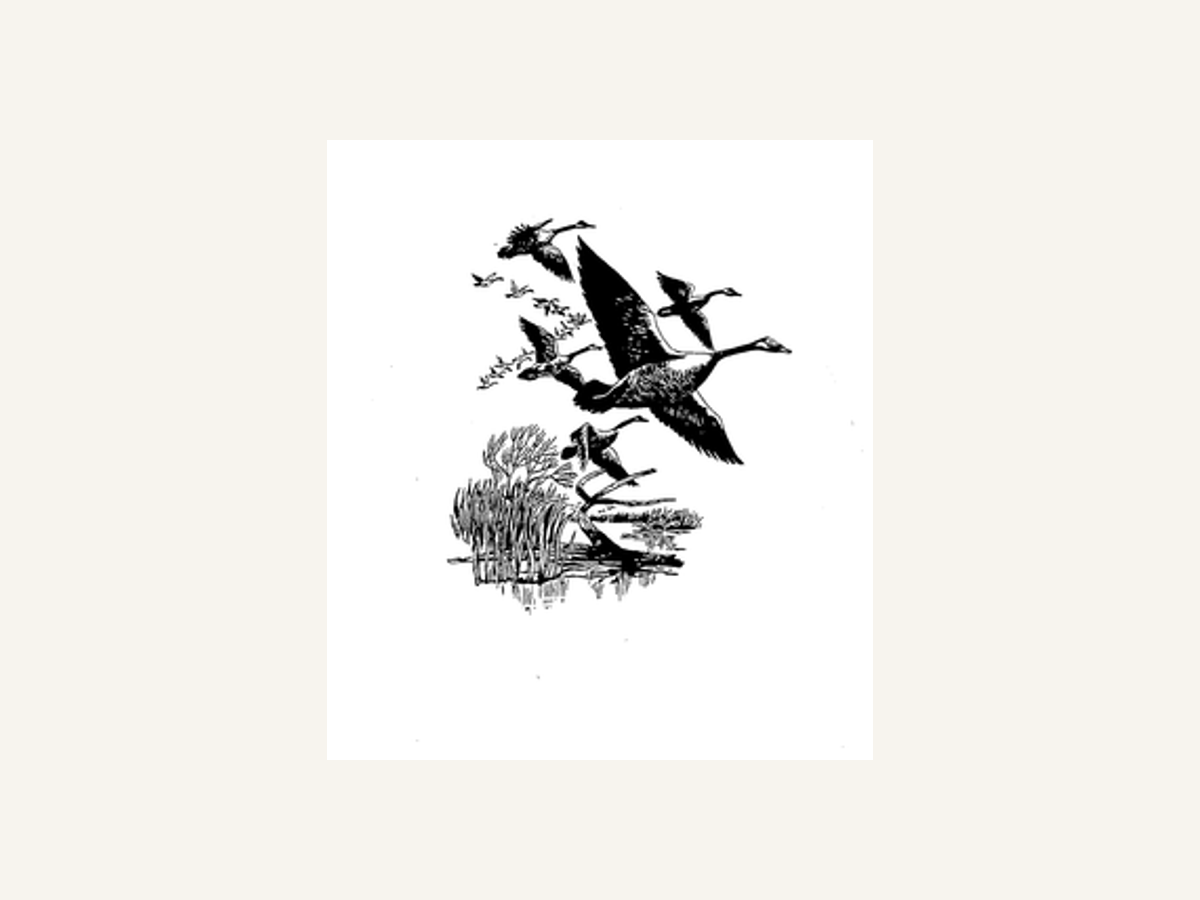
A flock in flight and field scene tie the identity directly to hunting and outfitting use. source
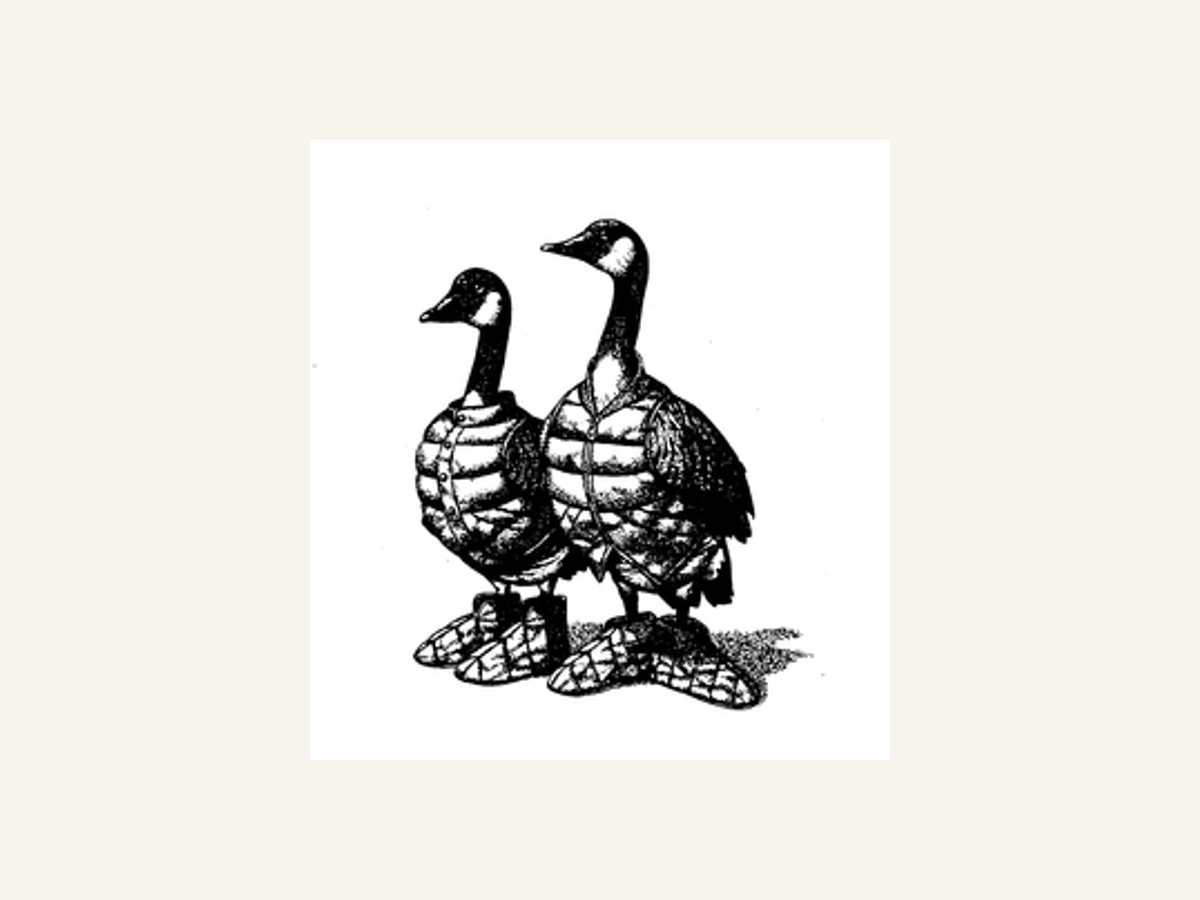
The paired geese compress the outdoor association into a more portable emblem. source
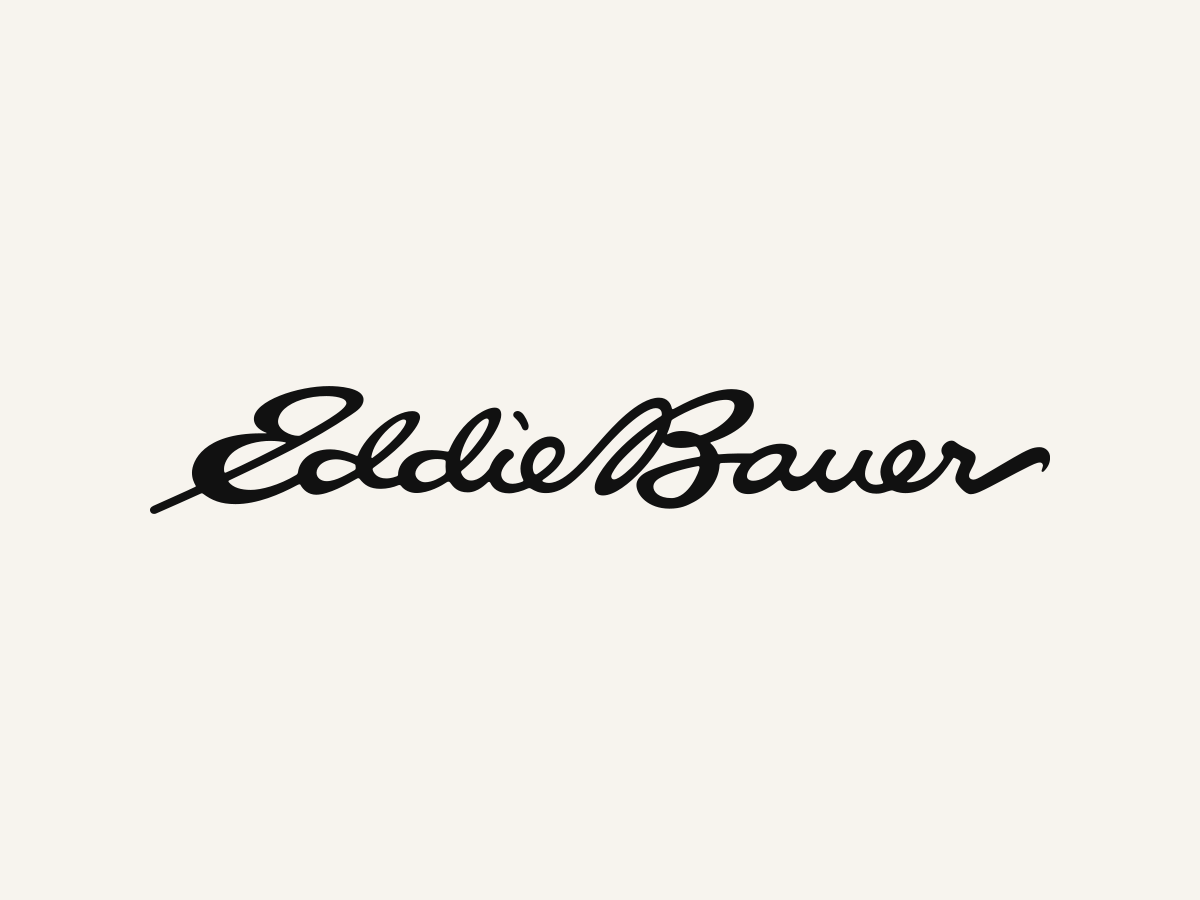
The live U.S. site centers the founder signature as the current masterbrand mark. source
Product and service lineage.
The system moved from founder-led outfitting to catalog and mall apparel, then to a licensed architecture in which IP, stores, ecommerce, and international operations sat in different hands.
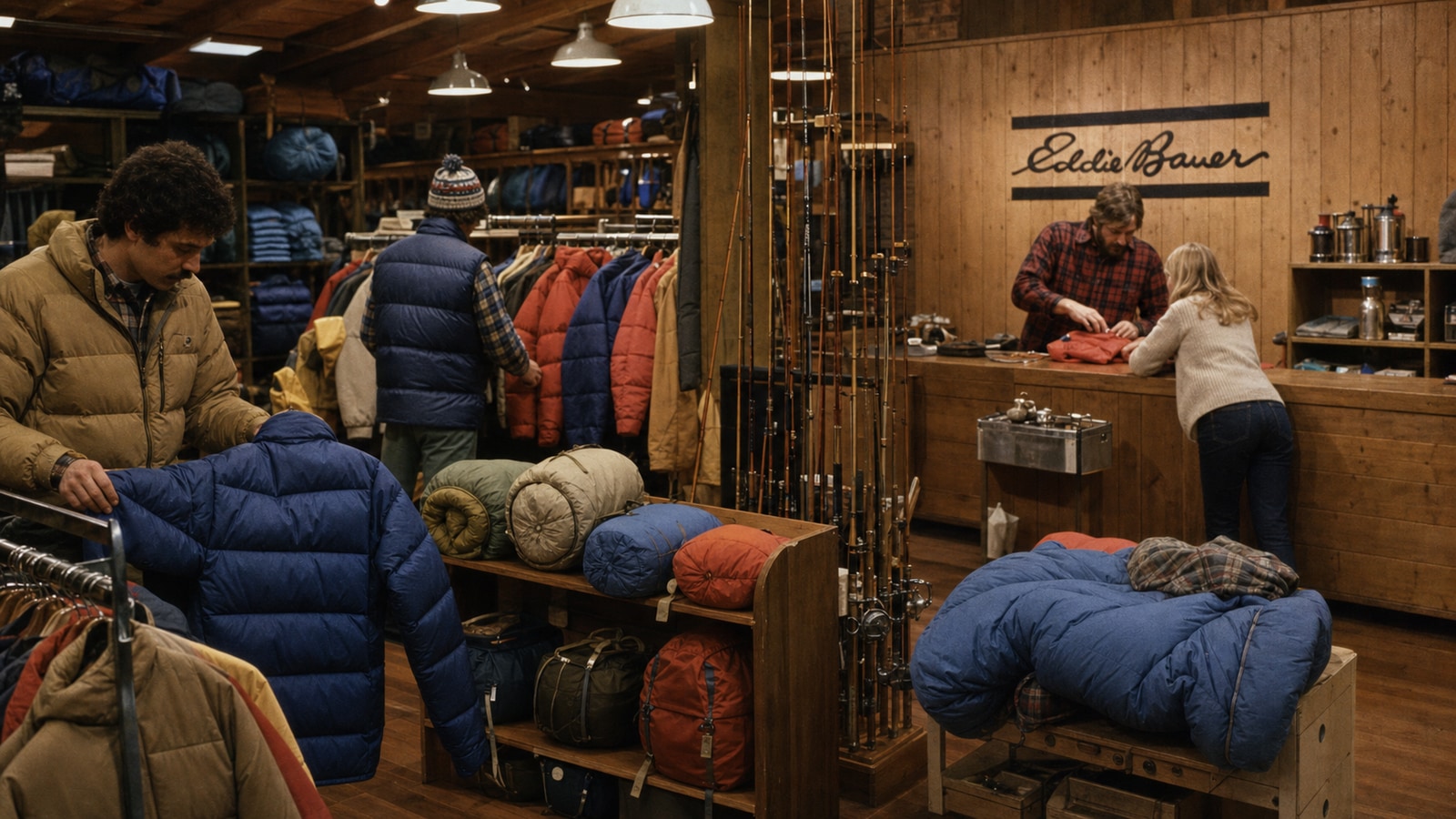
Product authority came before mall scale
Down, fishing gear, sleeping bags, and staff knowledge made the promise observable in the product system.
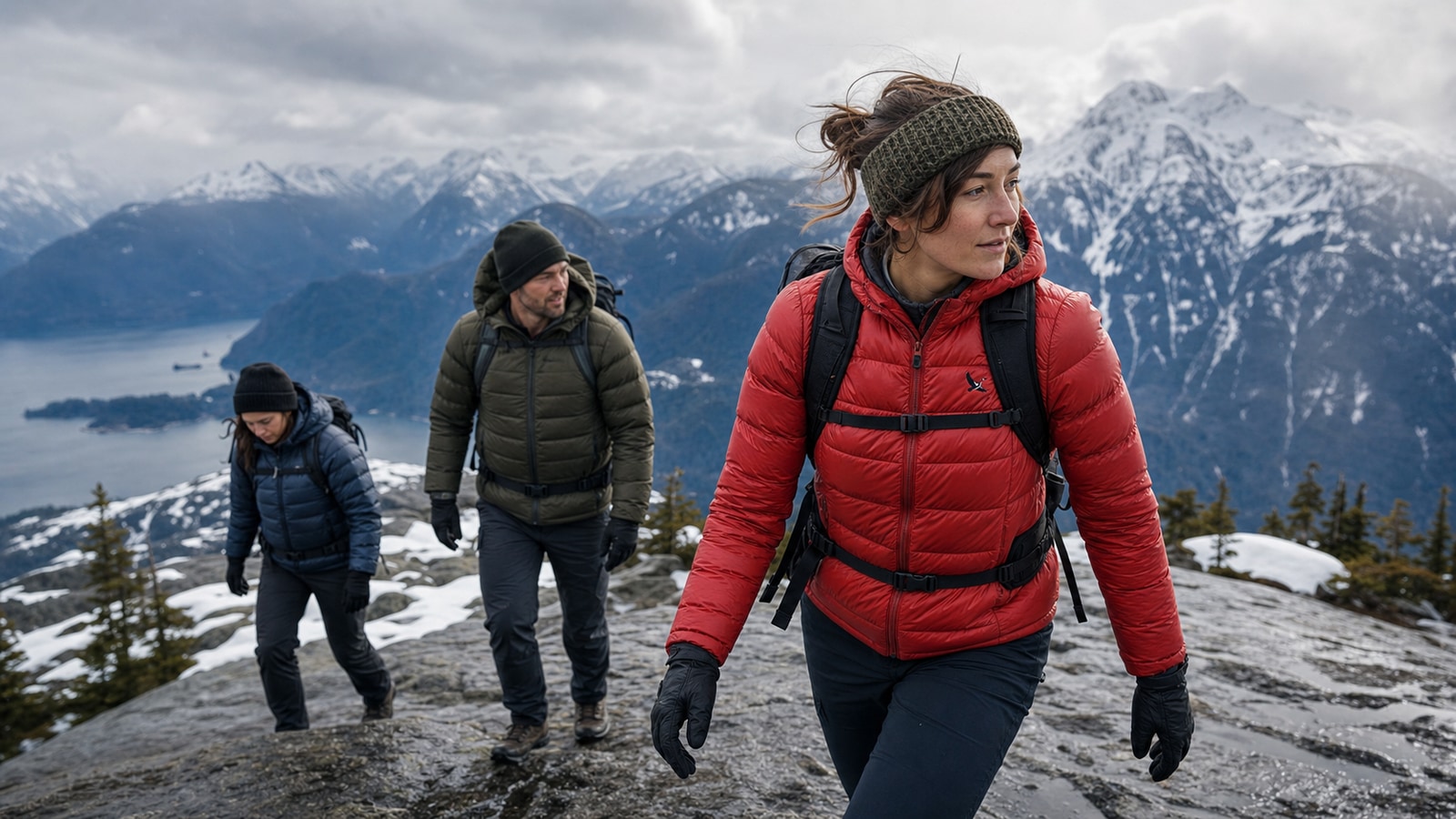
Field use is still the strongest proof
The brand is most credible when insulation, weather, fit, and movement do the selling.
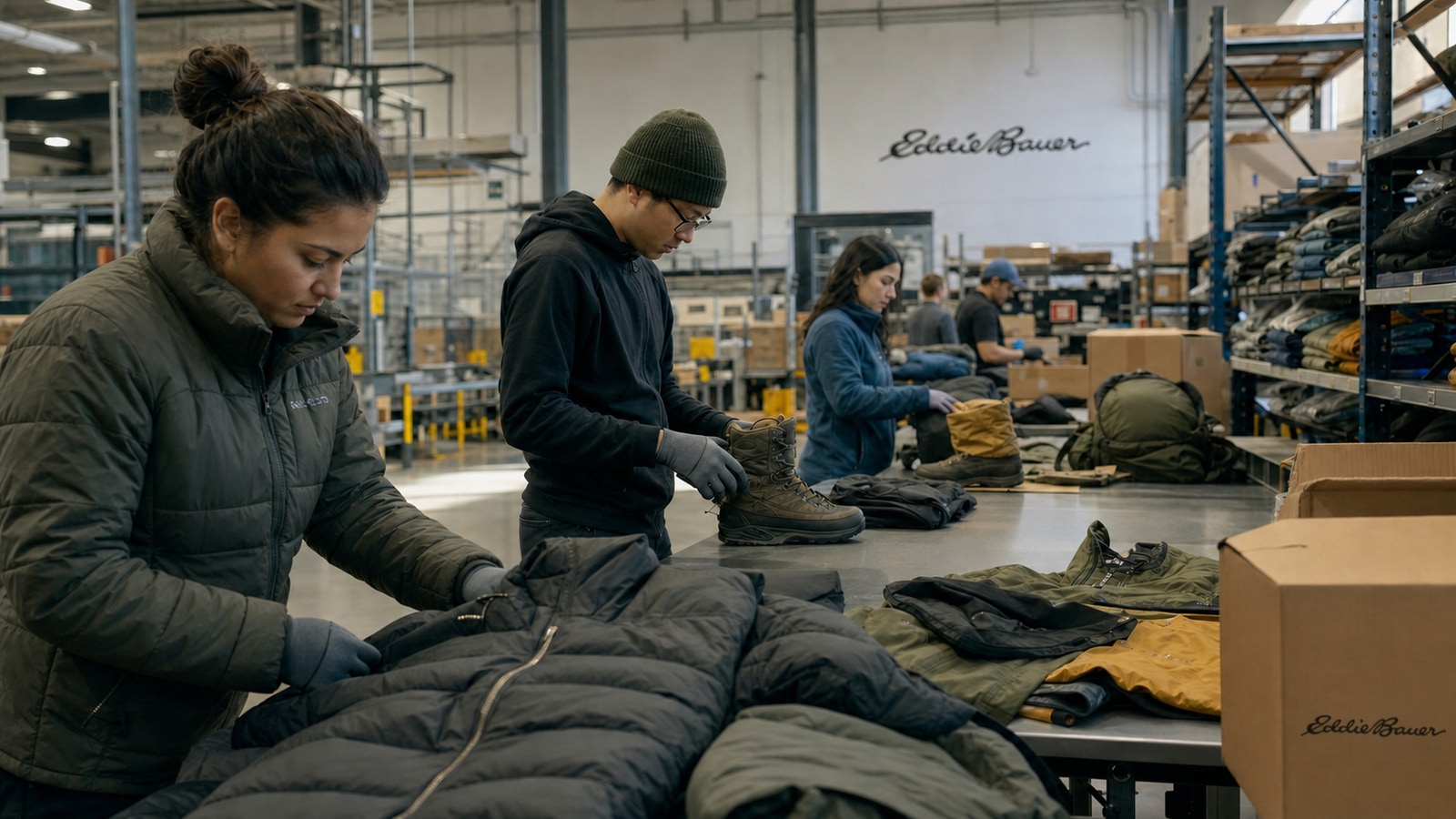
The surviving channel is not the failed store debtor
Outdoor 5 now carries ecommerce, wholesale, design, and product-development responsibilities outside the store wind-down.
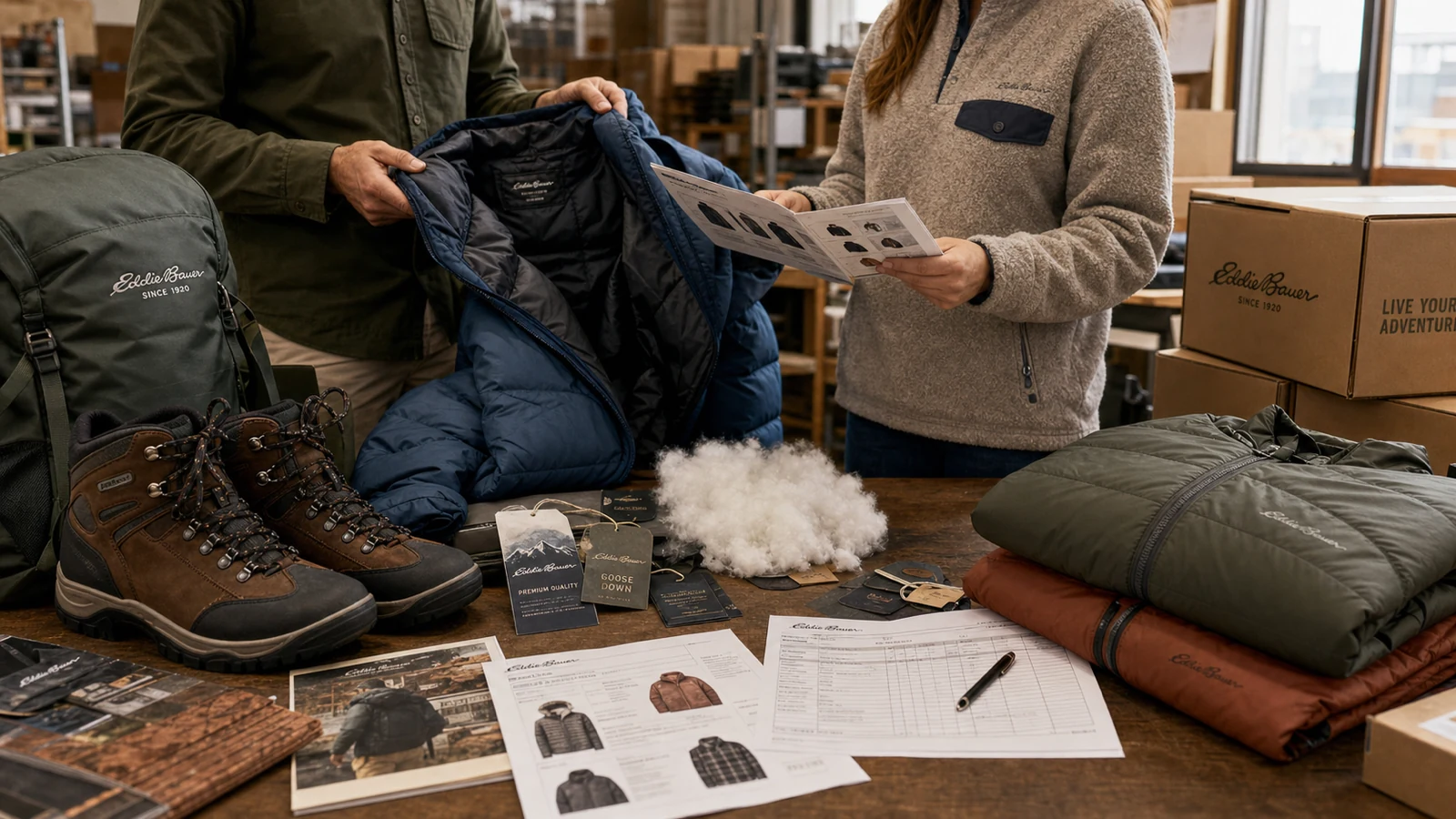
The channel handoff has to protect product proof
A licensed brand survives only if product development, fulfillment, and retail handoff still make the outdoor promise visible.
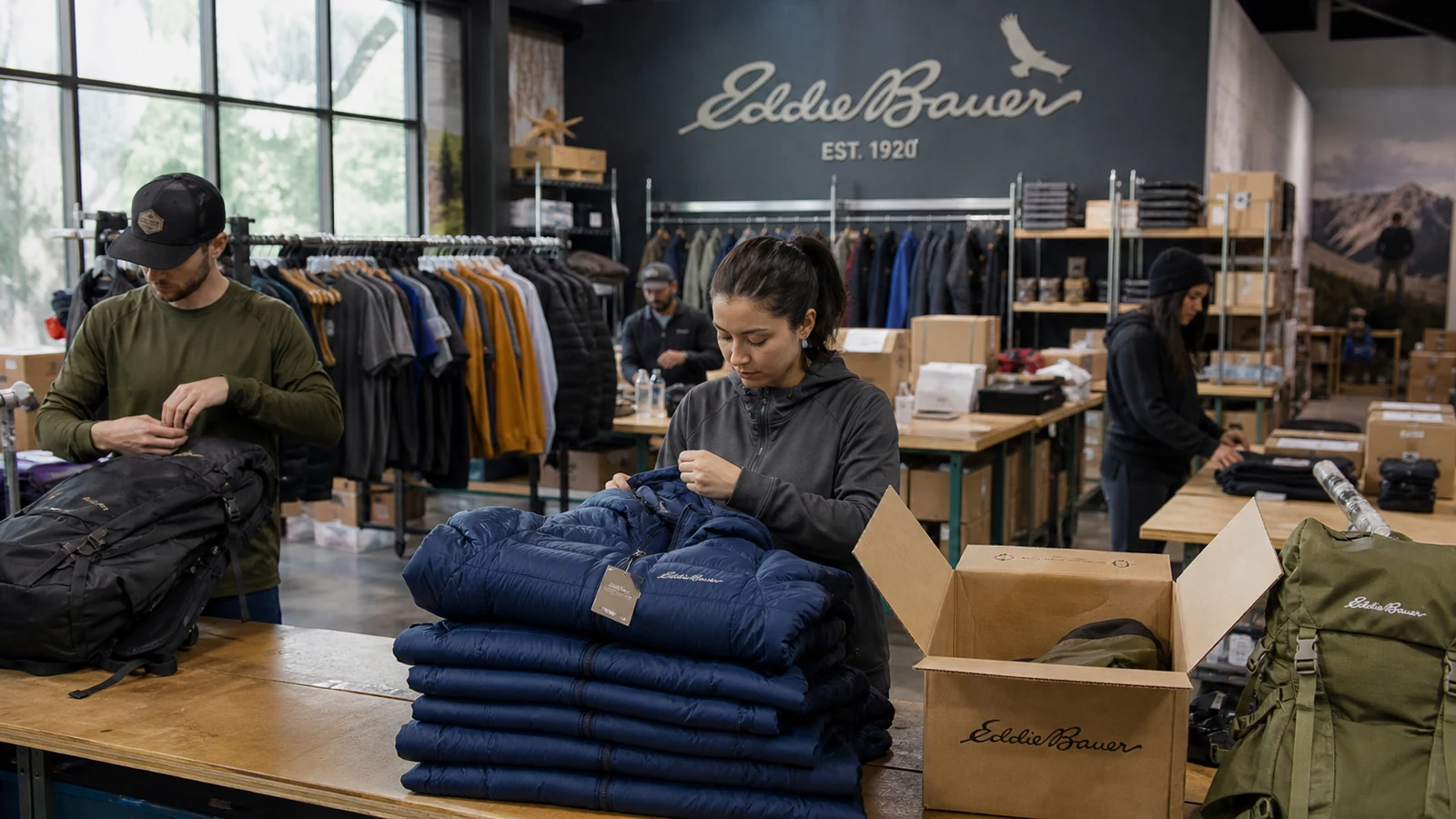
Channel clarity has to show up physically
The customer still judges the brand through product, packing, and handoff, even when ownership and licensing sit behind the scenes.
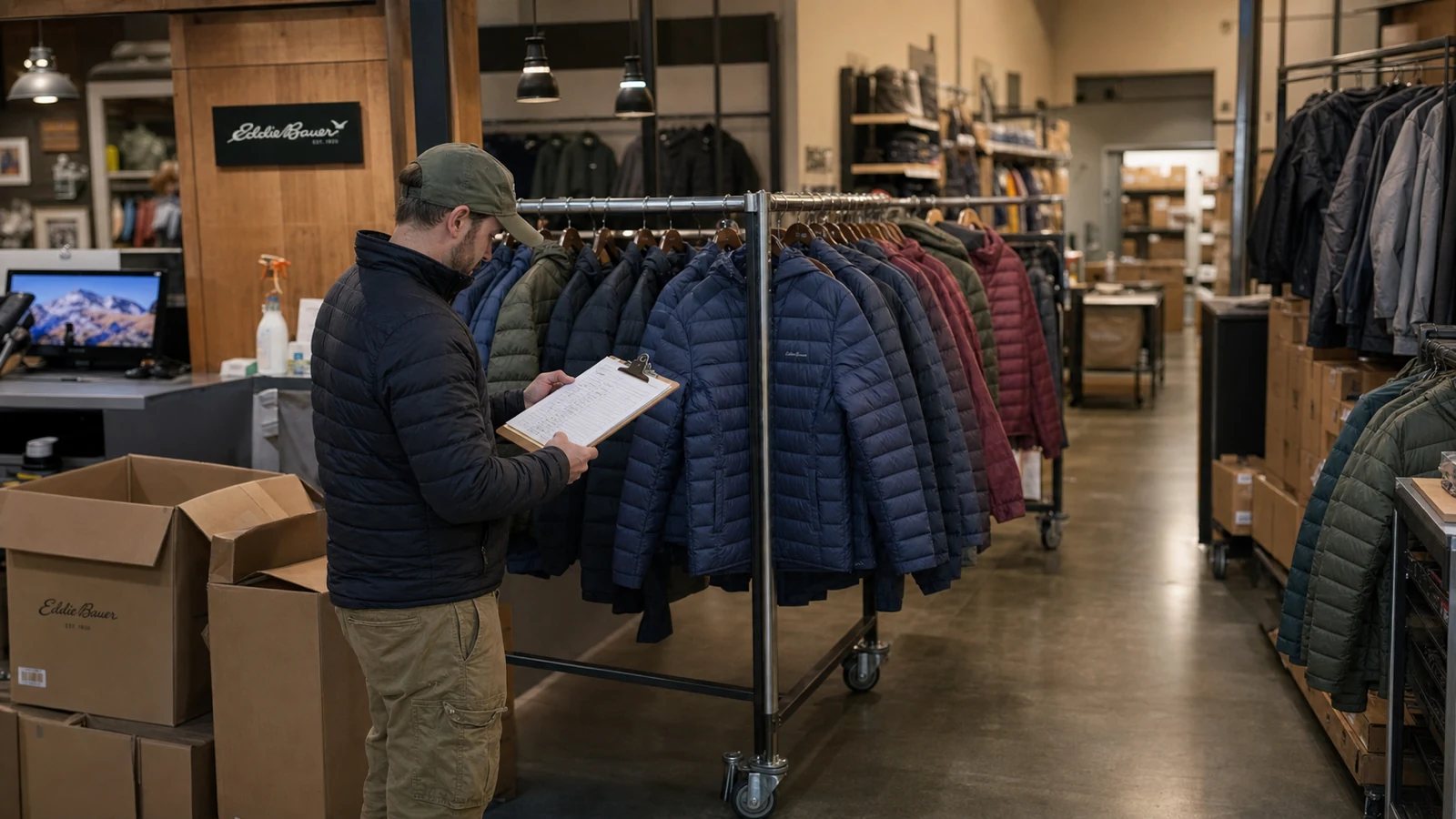
The store sale process exposed the weakness
A famous name could not keep the North American store operator solvent when demand, margin, fees, and buyers did not line up.
Product and service system
Down insulation and field equipment establish product authority.
Catalog and mall growth make the name more accessible but less specialist.
IP, stores, ecommerce, wholesale, and international operations separate.
The North American brick-and-mortar debtor fails while other channels continue.
Turning points.
The collapse was a sequence of demand, margin, license, funding, and sale-process failures rather than one bad product or one visual change.
Why it failed
Declining demand, a 19 percent revenue drop from fiscal 2022, about 9.5 percent of gross-margin compression, supply-chain and tariff pressure, fixed licensing fees, and recurring negative earnings weakened the North American operator.
Management cut stores and costs, changed merchandising and leadership, then terminated ecommerce and wholesale rights to stop fixed fees. That left the debtor concentrated in physical stores while SPARC prepared to stop funding continuing losses.
With about USD 215 million owed to SPARC, negative cash-flow projections, and no actionable buyer for the store operation by the March 2026 deadline, the debtor proceeded through Chapter 11 liquidation and a May 6 post-effective wind-down.
Failure timeline
Authentic buys the IP and SPARC buys the operating business.
Losses continue as sales and margin compress.
Ecommerce and wholesale rights transfer to Outdoor 5.
The confirmed plan becomes effective and store debtors wind down.
Public reaction.
Customers saw a familiar outdoor name and store-closing headlines. The legal and operating reality was more specific.
The North American brick-and-mortar debtors entered Chapter 11 and could not secure an actionable going-concern buyer.
Authentic kept the IP and Outdoor 5 continued ecommerce, wholesale, design, and product development.
Full timeline.
Eddie Bauer opens Bauer's Sports Shop in Seattle. Source
The Skyliner becomes a patented quilted down jacket. Source
James Whittaker reaches Everest in Eddie Bauer expedition gear. Source
Eddie Bauer outfits the American Karakoram expedition to K2. Source
Authentic acquires IP while SPARC acquires operations. Source
The North American store operator files Chapter 11 after channel rights split. Source
The liquidation plan becomes effective. Source
Steal / avoid.
- Keep product proof stronger than lifestyle mood.
- Map every licensee and channel before making a brand-survival claim.
- Use founder provenance only when current operations still deserve it.
- Do not say Eddie Bauer disappeared.
- Do not assign shared Catalyst facilities as Eddie Bauer-only debt.
- Do not blame the 2023 regional identity change for the bankruptcy.
Short answer.
Authentic Brands Group owns the Eddie Bauer brand. Outdoor 5 operates U.S. and Canadian ecommerce and wholesale under licence, separately from the North American store company that entered Chapter 11 in 2026. That separation explains how Eddie Bauer can continue online and through licensed products after store closures.
Frequently asked questions
Who owns Eddie Bauer now?
Authentic Brands Group owns the Eddie Bauer brand. Its January 2026 announcement assigned Outdoor 5, also known as Oved, responsibility for U.S. and Canadian ecommerce, wholesale, design and product development. The brand owner, licensed online operator and former store operator are separate roles.
How can Eddie Bauer still sell online after store closures?
The online and wholesale rights were assigned to Outdoor 5 under license from Authentic. That arrangement separates those channels from the North American store operator's bankruptcy. Store closures therefore do not establish that every licensed Eddie Bauer product or online operation ended.
Did Eddie Bauer go out of business everywhere?
No. The North American store operator wound down. Eddie Bauer IP, ecommerce, wholesale, international licenses, and other licensed extensions continued outside those debtors.
Was USD 440 million current Eddie Bauer revenue?
No. It was approximate 2025 gross sales across the failed operator's store and ecommerce channels before ecommerce transferred to Outdoor 5.
Need help with your own brand?
Use Private brand work when your name, identity, proof, or message needs a sharper branding decision.
Sources.
Use the education shelf for the concepts behind this brand page.
Private brand workUse this when the decision belongs to your own brand.
All brandsReturn to every brand page.
- Eddie Bauer official story and timeline
- Authentic and SPARC 2021 acquisition
- Authentic and Outdoor 5 channel transfer
- Eddie Bauer court-approved disclosure statement
- Eddie Bauer Chapter 11 announcement
- Eddie Bauer failed store auction
- Eddie Bauer effective-date certificate
- Eddie Bauer current homepage and source mark
- USPTO flying-goose trademark image
- USPTO two-goose trademark image