FedEx · Grow Your Brand · Iconic / Time Promise System · United States / Active / public company
FedEx
FedEx turned delivery time and shipment visibility into measurable trust. A brand page for FedEx: time-definite delivery, automated hubs, air and last-mile capacity, tracking and recovery, the 2026 Federal Express structure, FY2026 finances, and a logo built around directional movement.
Positioning, name, and architecture.
FedEx built recognition by making a logistics promise specific: a service level, a deadline, a tracking path, and a recovery process the customer can inspect.
A logistics brand whose promise is legible through deadline, route, status, and recovery rather than broad service language.
FedEx positions logistics trust as visible time control: know the promise, see the path, recover when the path breaks.
FedEx is a shortened public form of Federal Express, compressing the delivery system into a faster, easier-to-say name.
The World On Time
branded logistics network after FedEx Freight spin-off
FedEx Freight completed its spin-off on 1 Jun 2026 and is not presented as a current FedEx operating company. The parcel network now sits primarily inside Federal Express, supported by retail, logistics, data, and customer-control surfaces.
Integrated air, ground, and time-definite delivery network.
Parcel operating company: FedEx Express source
Print, pack, ship, pickup, and physical customer access.
Retail and business services: FedEx Office source
Trade, forwarding, logistics coordination, and network intelligence.
Supply-chain and data layer: FedEx Dataworks source
Status, alerts, delivery preferences, and exception visibility.
Customer-control layer: FedEx Delivery Manager source
Naming and tagline progression
Overnight delivery model
Tracking becomes customer-facing proof
The World On Time
Market and scale snapshot.
FY2026 scale shows how much operating infrastructure sits behind a promise that customers experience as one parcel, one deadline, and one tracking number.
FY2026 revenue; the fiscal year includes FedEx Freight before its 1 Jun 2026 spin-off.
FY2026 GAAP net income.
Dated share-price and shares-outstanding method captured 24 Jun 2026; source and method recorded above.
NYSE-listed parent company.
Color system.
Purple gives FedEx institutional delivery confidence, orange gives urgency and motion, and the warm route ground keeps labels, maps, and status artifacts readable.
How the palette behaves
Purple makes the logistics mark feel established rather than merely fast.
Orange carries urgency, motion, and field visibility.
Warm ground keeps the page in the Grow Your Brand editorial system while preserving package-label clarity.
Dark ink keeps the service proof legible when the color accents are strong.
Recognition assets.
The wordmark opens the door, but trucks, aircraft, scan events, tracking numbers, delivery windows, and exception updates make FedEx recognizable in use.
A narrow service claim is easier to remember and harder to fake than broad speed language.
The customer can inspect the promise before the package arrives.
Trust survives when delay risk has a visible route, not when customers are left waiting blindly.
Scores.
These scores test whether FedEx turns speed and network scale into customer-visible certainty before, during, and after a delivery exception.
The name, color system, vans, labels, and tracking path are easy to retrieve.
The brand promise is anchored in deadline, status, and service route.
Tracking makes internal operations visible to the customer.
Exceptions are part of logistics; the brand is judged by visibility and response.
FedEx is a default mental shortcut for urgent shipping.
The company, ticker, service category, and evidence trail is clear.
The signal weakens fast when delivery proof or tracking confidence fails.
Many service brands copy speed language without making proof inspectable.
How the logo changed.
Two official-history stages show the original Federal Express mark and the 1994 FedEx wordmark that introduced the negative-space arrow and remains the masterbrand base.
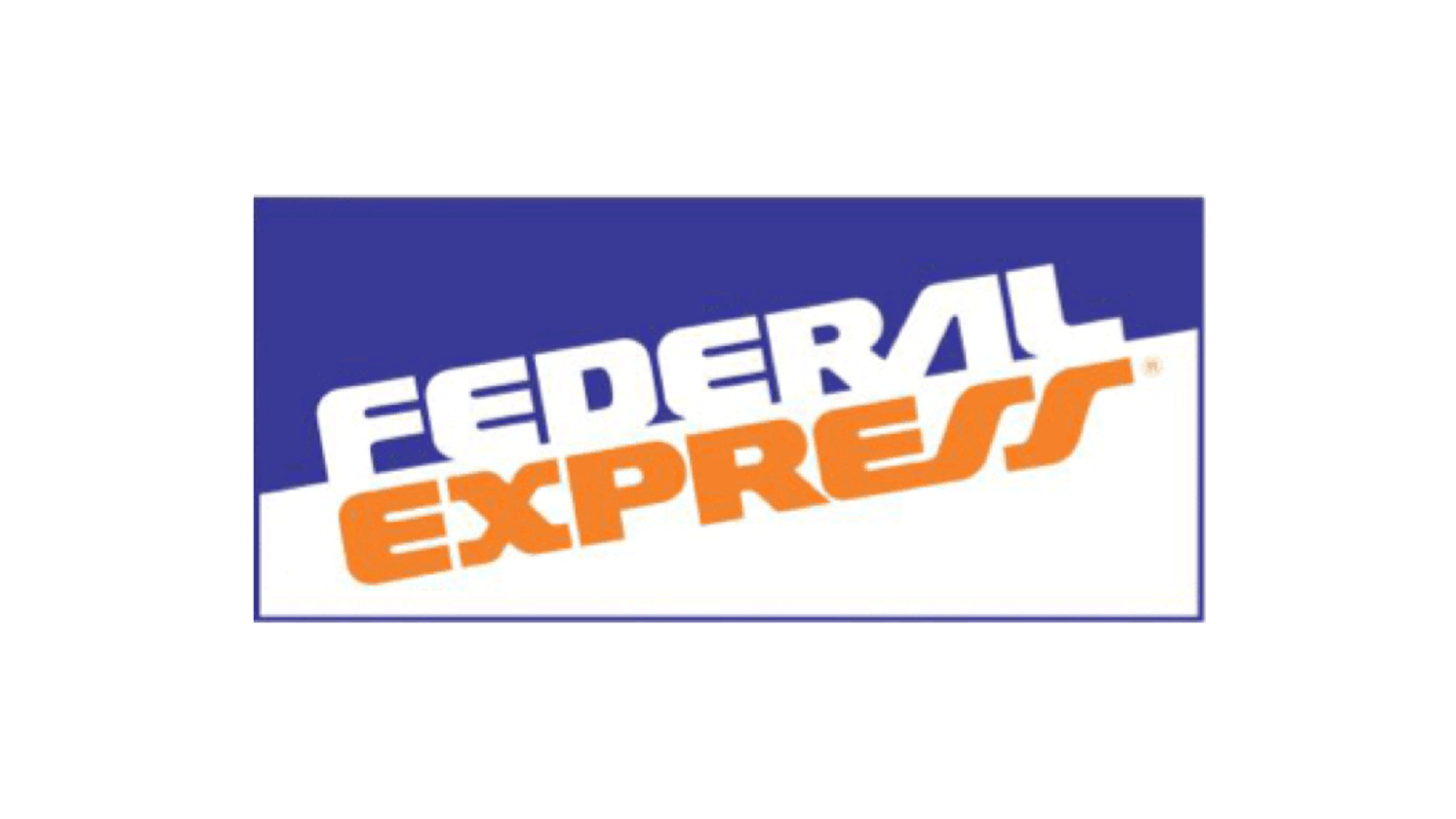
The original full name used a diagonal, high-motion lockup before the shorthand became the company’s public identity. source
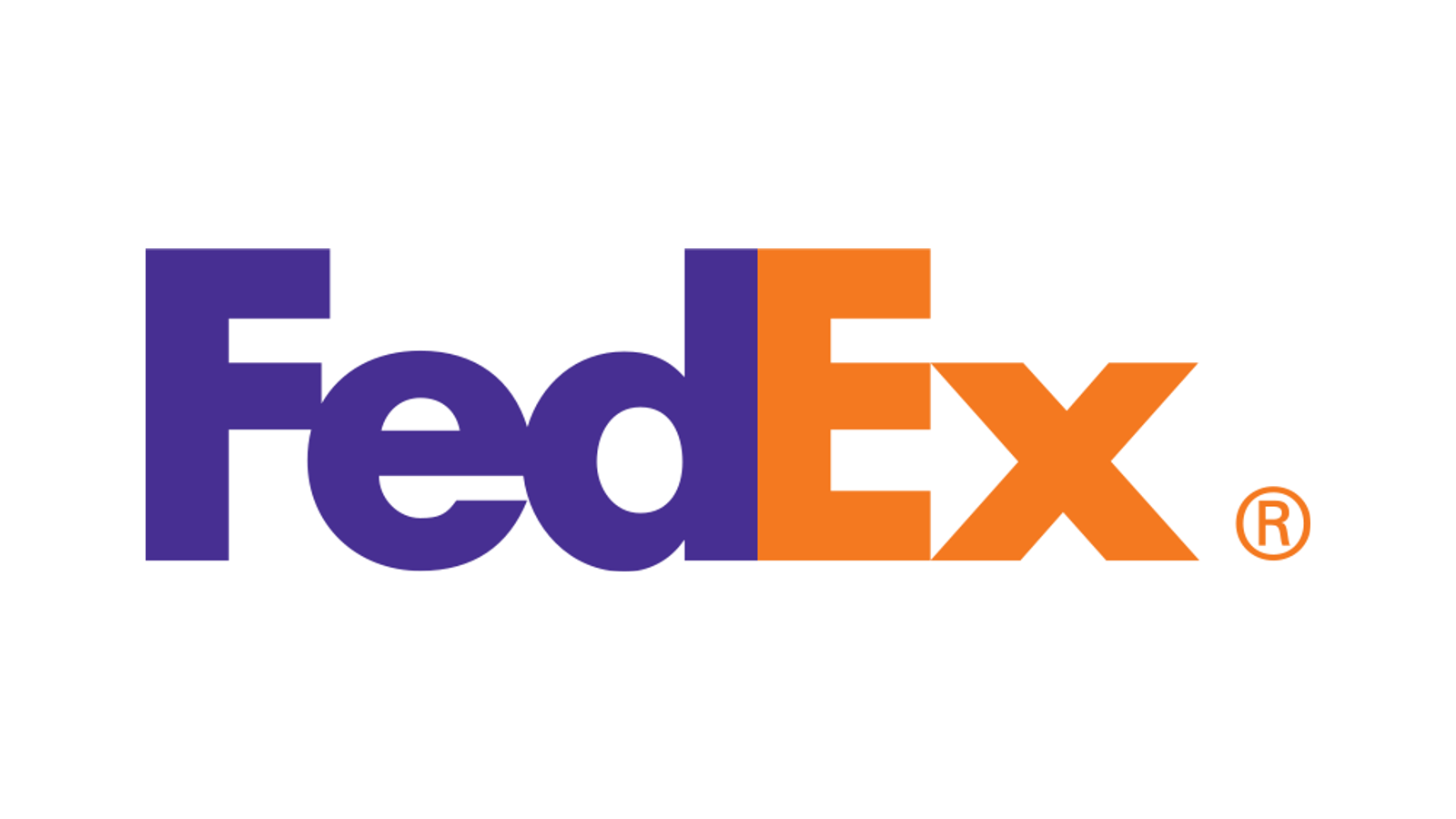
The shorter purple-and-orange wordmark made the name faster to read and embedded a forward arrow in the negative space. source
Product and service lineage.
FedEx carries the brand signal through the service promise, the tracking interface, and recovery behavior around deadline risk.
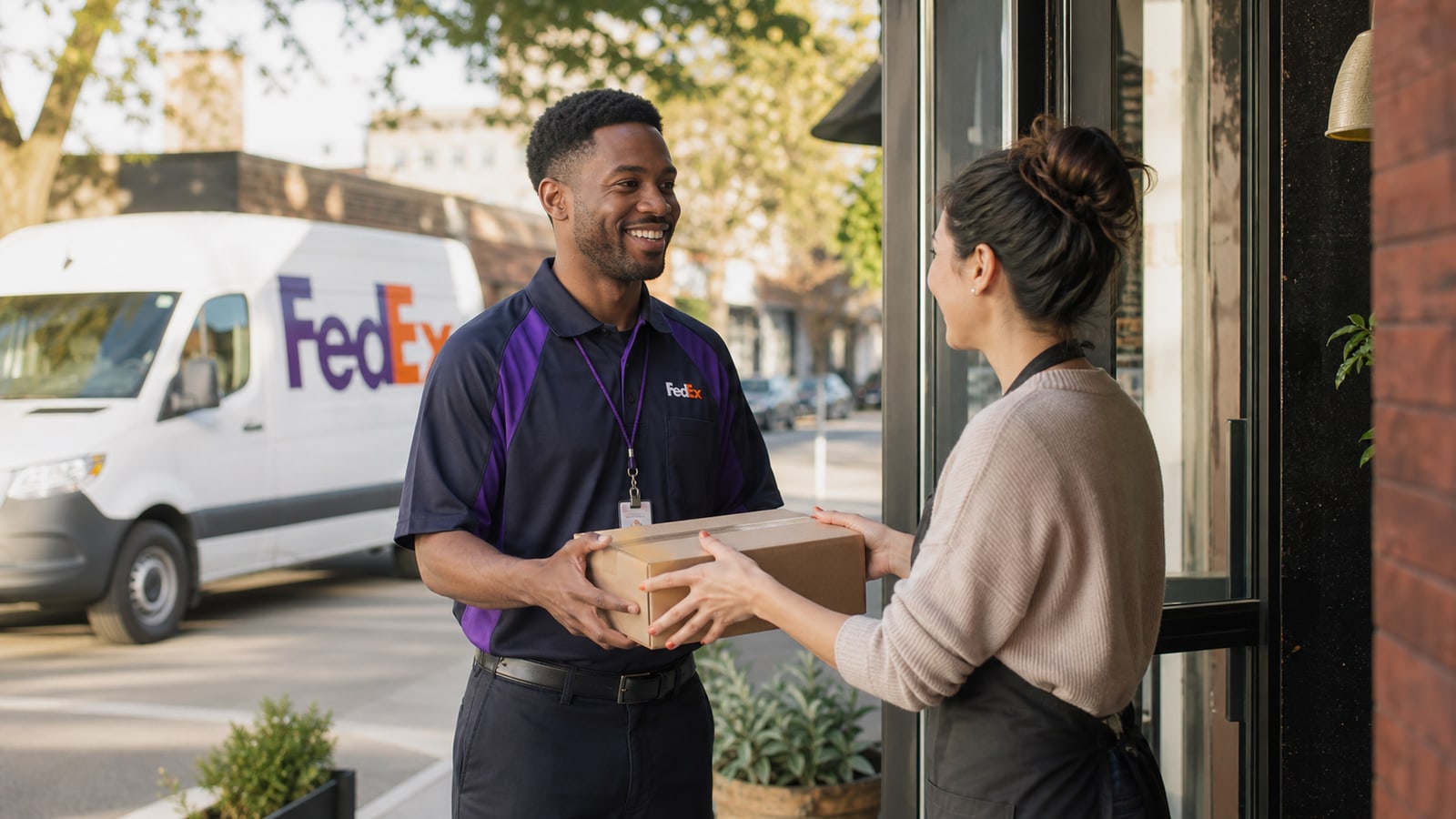
The customer judges the final handoff
The network becomes personal at the door: timing, package condition, identity, and proof of delivery all meet one human moment.
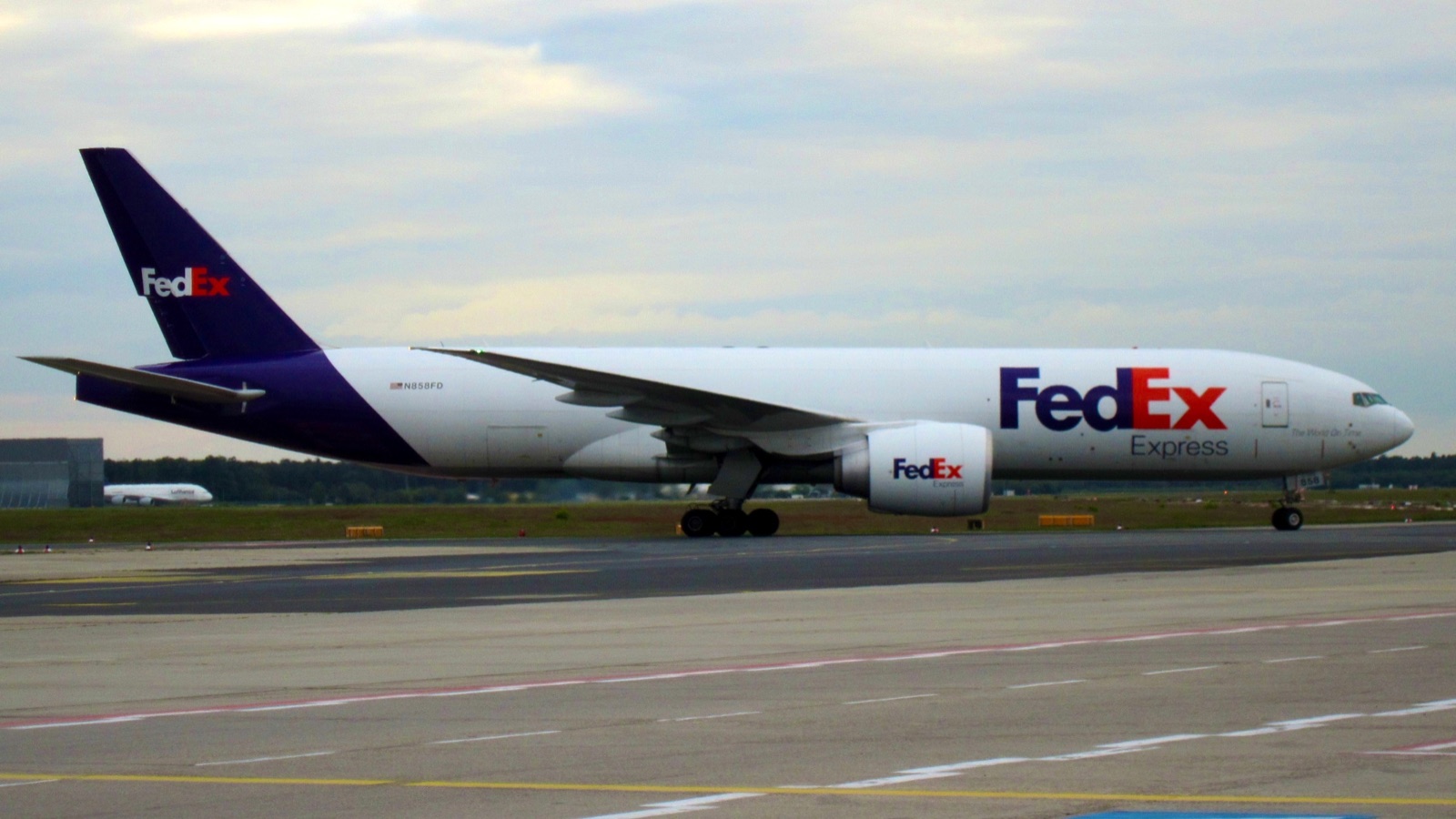
Air capacity carries time-definite promises
Aircraft, hubs, cutoff times, and overnight routing make speed an operating commitment rather than a slogan.
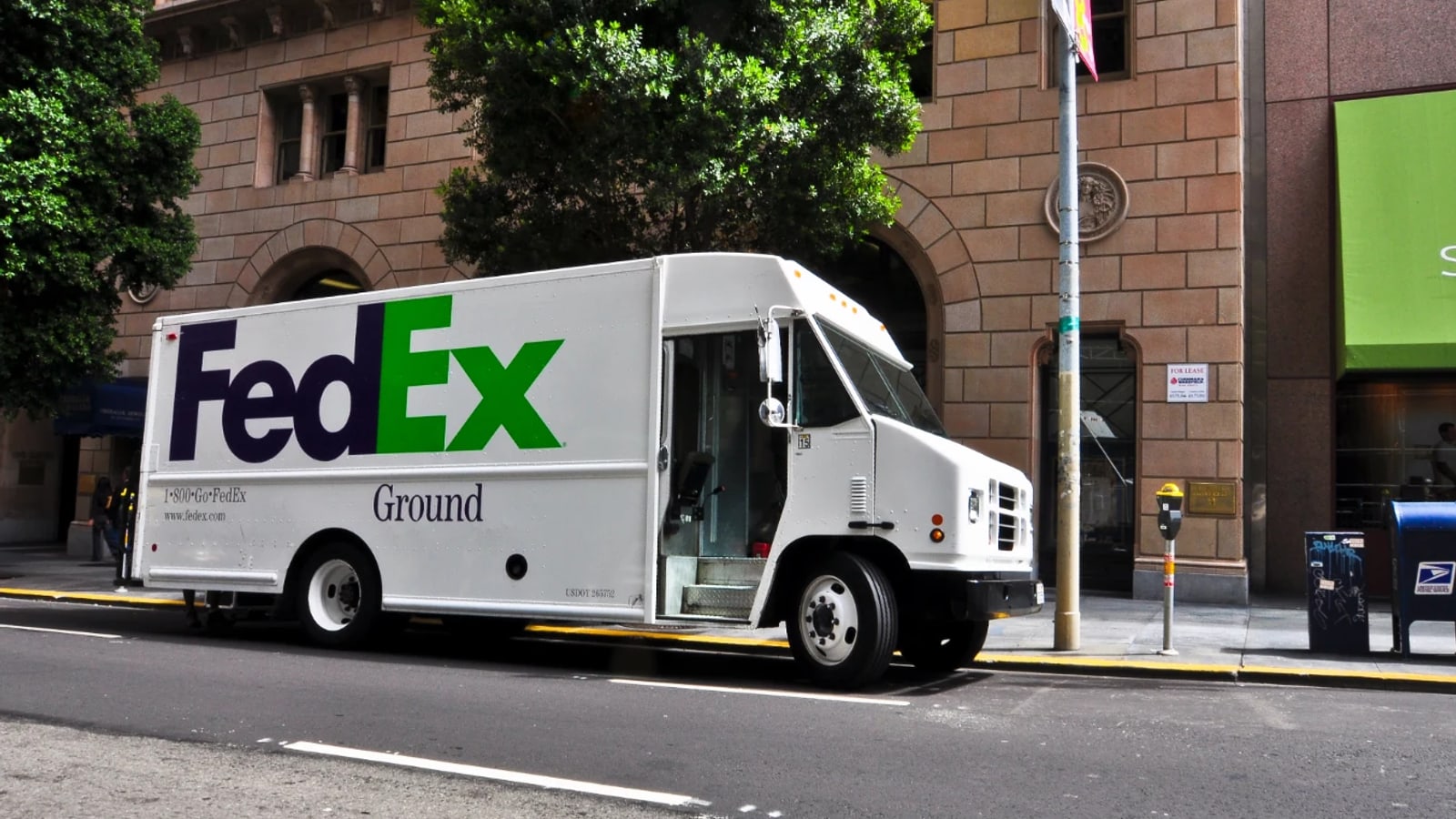
The last mile makes route quality visible
Vehicle, courier, delivery window, alert, and exception path determine whether network scale feels dependable locally.
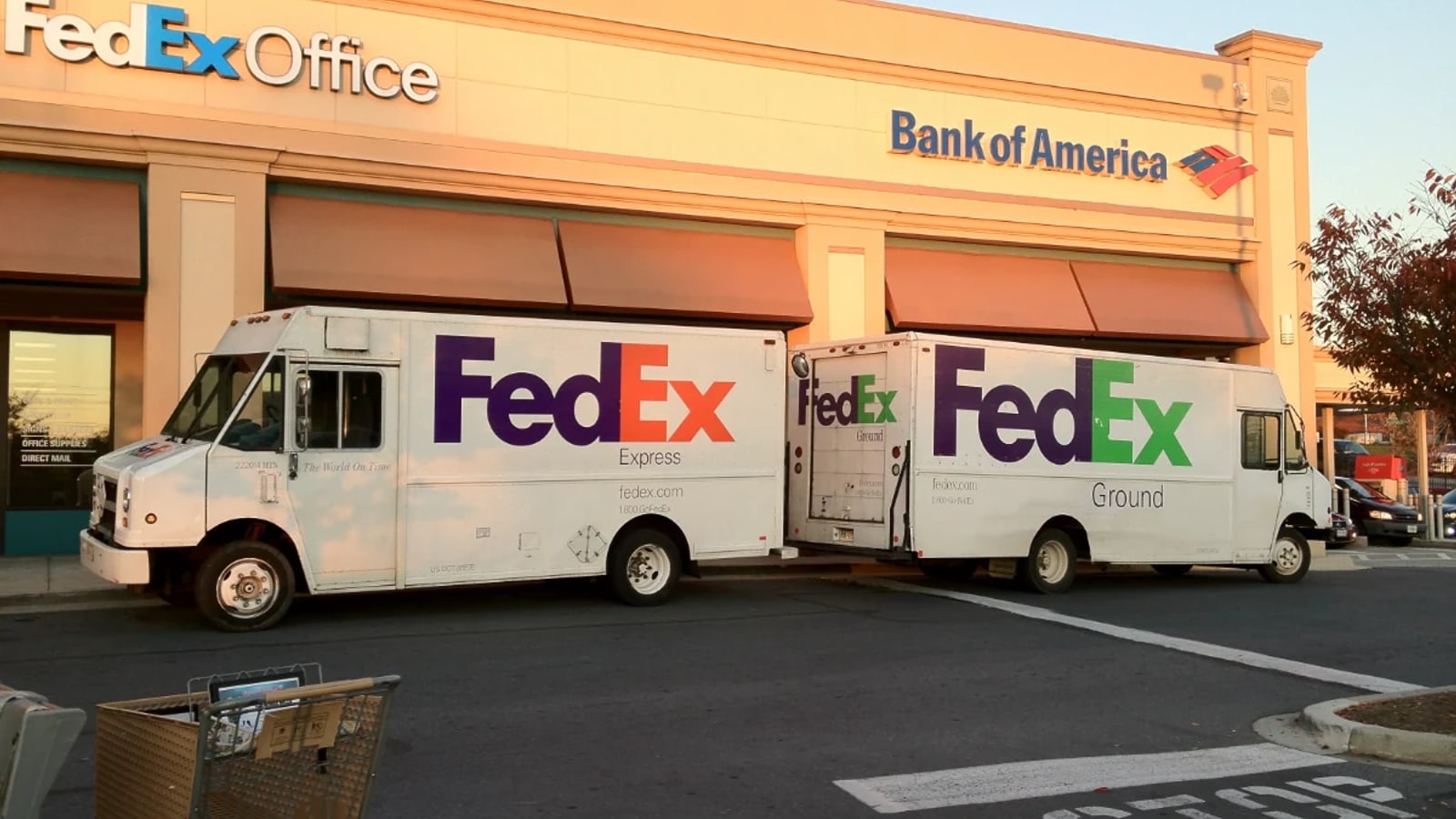
One name had to organize several service jobs
This historical scene records the former color-coded divisions; the current company now presents the parcel network through a more unified Federal Express operating structure.
Product and service system
Federal Express begins overnight operations and attaches the company name to time-definite delivery.
Package tracking moves from internal logistics into customer-facing visibility.
Tracking, service tiers, alerts, and delivery windows make the operating system easier to read.
FedEx still sells through time, route, status, locations, and service choices rather than abstract trust language alone.
Turning points.
Turning points only: overnight promise, tracking visibility, service architecture, and recovery pressure.
FedEx made the promise narrow enough to test: delivered by a time, not merely moved by a carrier.
A customer-facing status path changed waiting from blind faith into monitored progress.
Speed choices, locations, windows, alerts, and specialized services make the brand easier to compare.
When a deadline is at risk, the brand is judged by what customers can see and what happens next.
FedEx Freight separation has become an active structural event, with the logistics business framing 2026 growth expectations and the time-promise brand promise under a re-balanced structure.
After the Freight separation, reported talks around a FedEx Supply Chain sale add a second simplification signal to the card.
Public reaction.
No invented sentiment count. This card reads public trust through the visible service surfaces a customer uses under deadline pressure.
FedEx gives buyers a compact answer when the job is not shipping in general, but time risk.
The brand weakens when the customer cannot see the handoff, understand the delay, or find the recovery path.
Full timeline.
Federal Express begins overnight operations.
Package tracking becomes a customer-facing proof route.
Tracking, service tiers, alerts, delivery windows, and locations make logistics easier to inspect.
FedEx continues to sell through time, route, status, and service architecture.
The useful brand question is whether every deadline promise is paired with visible proof and recovery.
FedEx Freight separation is now in public reporting and affects the delivery brand structure.
FedEx Freight separation and reported supply-chain portfolio moves make structure part of the brand-trust story.
Steal / avoid.
- Make the promise precise enough that a buyer can test it.
- Turn internal operations into a customer-facing proof path.
- Show status before anxiety turns into support demand.
- Design recovery as part of the brand experience, not as an apology after the fact.
- Do not sell trust as tone when the proof path is hidden.
- Do not use speed language if the customer cannot inspect the commitment.
- Do not let exceptions disappear into vague support copy.
- Do not copy FedEx's confidence unless your operation can carry a deadline.
Short answer.
FedEx's brand signal is time made visible: overnight delivery, tracking, service tiers, delivery windows, alerts, locations, and recovery paths turn logistics trust into something the customer can inspect. The lesson is that a service brand gets stronger when proof is visible before the buyer has to ask for reassurance.
Frequently asked questions
What is FedEx's core brand signal?
FedEx's core brand signal is a delivery promise made visible through time-definite service, tracking, delivery windows, alerts, and recovery behavior.
What should another brand steal from FedEx?
Make the promise specific, then let customers inspect status and recovery before they need reassurance.
What should another brand avoid copying from FedEx?
Do not copy confident service language if the customer cannot see how the promise is kept.
Need help with your own brand?
Use Private brand work when your name, identity, proof, or message needs a sharper branding decision.