Hudson's Bay · Grow Your Brand · Hudson's Bay failure case study · Canada / Canadian department-store operator liquidated; heritage brand assets active under Canadian Tire
Hudson's Bay
Hudson's Bay had 355 years of recognition and still lost the store system. This case separates the 2025 liquidation and CCAA estate from Canadian Tire's trademark purchase, then follows the store underinvestment, ecommerce bet, secured debt, heritage assets, and operating proof the name could not replace.
Positioning, name, and architecture.
Hudson's Bay carried one of Canada's deepest stores of recognition. The department-store promise still depended on current assortment, maintained stores, service, and channels. Heritage could not perform those operating jobs by itself.
Canadian heritage joined to broad department-store curation and landmark locations
Hudson's Bay owned rare Canadian heritage, but the former operator stopped making the store and channel experience strong enough to earn it in the present.
The name connects the company to Hudson Bay and the 1670 royal charter behind the original trading enterprise.
No current department-store tagline applies because the chain is closed; Canadian Tire now uses the acquired heritage assets on merchandise.
heritage intellectual-property portfolio
Canadian Tire acquired names, stripes, coat of arms, logos, and trademarks. It did not acquire the stores, old legal company, real estate, liabilities, or the royal charter as a going concern.
Carries recognition onto textiles and merchandise without requiring the former stores.
heritage color asset: Green, red, yellow, and indigo Stripes source
Preserves the historic authority cue acquired with the trademark portfolio.
institutional heritage asset: Hudson's Bay Company coat of arms source
Separates the portable customer-facing identity from the failed retail estate.
masterbrand identity asset: Hudson's Bay serif wordmark source
Shows how the acquired recognition system can remain commercially active without reviving the department-store chain.
current merchandise expression: 2026 Hudson's Bay Stripes collection source
Naming and tagline progression
Hudson's Bay Company names the historic institution
The Bay / la baie becomes the retail shorthand
Hudson's Bay restores the historic name to the primary wordmark
Market and scale snapshot.
The private Canadian operation did not publish standalone revenue. The monitor reported a large trailing loss, negative EBITDA, and secured debt before liquidation; the revenue cell therefore states only the disclosed sales trend instead of inventing a total.
Standalone revenue was not publicly disclosed; the filing reported the year-over-year fall.
Monitor figure for the 12 months ended 31 Jan 2025.
Approximate credit-facility and mortgage debt at 7 Mar 2025.
Canadian Tire bought trademarks, not the old department-store company or its liabilities.
Color system.
Green, red, yellow, and indigo stripes compressed centuries of memory into one portable asset. The palette survived because it was distinctive beyond the failed stores.
How the palette behaves
The four stripes made the heritage system visible without requiring a store sign.
Cream wool connected the color system to a physical Canadian product.
Deep blue and serif typography added institutional weight to the retail identity.
Recognition assets.
The Hudson's Bay name, coat of arms, multistripe blanket, landmark downtown stores, and The Bay shorthand survived in public memory. The operating chain did not.
The multistripe system remained legible on blankets and merchandise after the stores closed.
The restored historic name carried more institutional memory than a modern store operator could create.
Large buildings made the brand civic and visible, then became evidence of fixed-cost exposure and underinvestment.
Scores.
Hudson's Bay earns maximum recognition for the name and stripes but low operating proof because 355 years of memory did not keep the store and channel system solvent.
The stripes and historic name are exceptionally durable Canadian assets.
The 2025 liquidation broke retail continuity.
Heritage and landmarks were strong, but store execution weakened.
The IP can remain valuable on products if stewardship does not imply a department-store revival.
The former operator relied on stored recognition while the store and channel experience stopped proving a current reason to choose it.
The private Canadian operation did not publish standalone revenue. The monitor reported a large trailing loss, negative EBITDA, and secured debt before liquidation; the revenue cell therefore states only the disclosed sales trend instead of inventing a total.
Department-store operator liquidated; trademarks and heritage assets acquired
Canadian Tire owns and uses the acquired heritage brand assets; no Hudson's Bay department-store chain is operating
How the logo changed.
The identity moved from an institutional company name to modern department-store shorthand, then restored the historic name. Canadian Tire now owns the acquired wordmark and related heritage assets even though the old retail chain closed.

The institutional blackletter name made company heritage primary before the modern retail shorthand. source
The Lippincott and Margulies identity shortened the name into a modern bilingual department-store symbol. source
The restored historic name served the chain through closure and remains among the brand assets acquired by Canadian Tire. source
Product and service lineage.
Hudson's Bay moved from trading-company heritage into a national department-store system, invested heavily in ecommerce, liquidated every Canadian store, and transferred its visual brand assets to Canadian Tire.
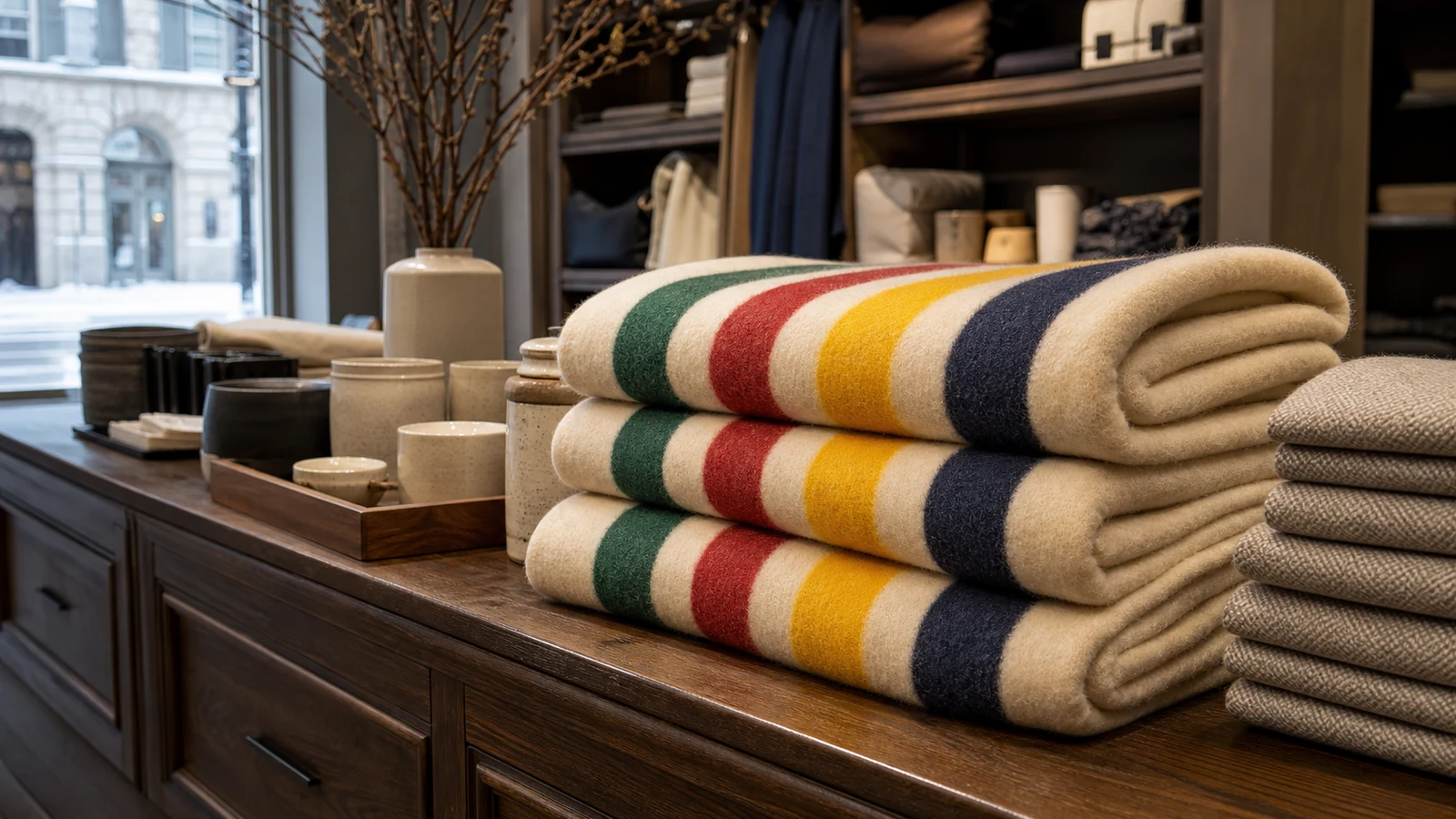
The stripes survived the stores
A portable, product-linked recognition asset retained value after the department-store operation ended.

Heritage required a modern machine
Large flagships needed traffic, assortment, maintenance, service, and capital every year, regardless of age or recognition.

Liquidation made the gap visible
The empty fixtures separate affection for the name from the solvency of the former operator.

The intellectual property moved
Canadian Tire acquired the heritage assets while the old legal entities continued their CCAA wind-down.
Product and service system
The 1670 origin created rare institutional and national memory.
Fashion, beauty, home, gifts, and landmark stores translated heritage into modern retail.
A CAD 130M program failed to offset store weakness and contributed to underinvestment.
Canadian Tire now uses the acquired stripes and related assets on merchandise.
Turning points.
The CAD 130M ecommerce program, CAD 329.7M trailing loss, 2025 liquidation, and CAD 30,001,670 trademark sale show exactly where the operating company ended and the heritage asset continued.
Why it failed
Store underinvestment, a sales decline of more than 30%, a trailing CAD 329.7 million loss, negative EBITDA, costly ecommerce expansion, and CAD 1.129 billion of secured debt left the heritage department-store system without a viable operating base.
Management spent about CAD 130 million on ecommerce expansion while the stores behind the heritage promise remained underinvested, weakening the physical experience and supplier confidence that the model needed.
The collapse trigger was a liquidity and inventory crisis. Hudson's Bay could not obtain enough new financing or supplier support to keep operating, and the court-approved process produced no viable going-concern rescue. Liquidation became the only funded path.
Failure timeline
A CAD 130M ecommerce expansion fails to offset store weakness.
The monitor reports about CAD 329.7M in net loss and negative CAD 67.9M EBITDA.
The operator enters CCAA, liquidates the stores, and sells heritage IP for CAD 30,001,670.
Canadian Tire uses Hudson's Bay stripes on a new collection while no department-store chain operates.
Public reaction.
The closure produced both national nostalgia and ownership confusion. Canadian Tire bought the heritage trademarks; it did not buy or reopen the former department-store company.
The former Canadian retail operation liquidated rather than continuing as a going concern.
Canadian Tire acquired a portable recognition system with value outside the failed chain.
Full timeline.
The Hudson's Bay Company receives its royal charter.
The Bay / la baie identity becomes the modern retail shorthand.
Hudson's Bay restores the historic name in a new serif wordmark.
Hudson's Bay Company completes its acquisition of Saks for about USD 2.9 billion including debt.
Hudson's Bay enters CCAA protection and the court approves liquidation.
Canadian Tire acquires the Hudson's Bay brand assets for CAD 30,001,670.
The former entities adopt new legal names during the CCAA wind-down.
Canadian Tire launches a Hudson's Bay Stripes summer collection.
Steal / avoid.
- Treat heritage as an asset that must be re-earned through current experience.
- Keep one portable product-linked recognition cue strong enough to survive channel change.
- Name the operating entity and intellectual-property owner separately when failure occurs.
- Do not let digital investment hide store underinvestment.
- Do not invent private-company revenue when the court record gives only trends.
- Do not imply a trademark buyer assumed the retailer, stores, charter, or liabilities.
Short answer.
Hudson's Bay is a failed-department-store and surviving-heritage-IP case. The Canadian operator entered CCAA protection in March 2025, liquidated all stores, and remained in a court-supervised wind-down under a new legal name. Canadian Tire acquired the Hudson's Bay names, stripes, coat of arms, logos, and related trademarks for CAD 30,001,670. It did not acquire or reopen the old retailer. The lesson is that heritage is stored recognition, not a substitute for current stores, assortment, service, and channel execution.
Frequently asked questions
Is Hudson's Bay still in business?
No Hudson's Bay department-store chain is operating. The former operator liquidated, while Canadian Tire owns and uses the acquired heritage brand assets.
Who owns the Hudson's Bay brand?
Canadian Tire Corporation acquired the Hudson's Bay names, stripes, coat of arms, logos, and related trademarks in 2025.
Did Canadian Tire buy the Hudson's Bay stores?
No. The transaction covered brand assets, not the stores, old company, real estate, liabilities, or royal charter as a going concern.
How much revenue did Hudson's Bay have before failure?
A defensible standalone revenue total was not publicly disclosed. The court record said sales declined more than 30% year over year and reported approximately CAD 329.7 million in trailing net loss.
What is the brand lesson?
Heritage can survive the company, but current experience must continually make that recognition useful.
Need help with your own brand?
Use Private brand work when your name, identity, proof, or message needs a sharper branding decision.
Sources.
Use the education shelf for the concepts behind this brand page.
Private brand workUse this when the decision belongs to your own brand.
All brandsReturn to every brand page.
- Government of Canada Hudson's Bay CCAA record
- Hudson's Bay monitor pre-filing report
- Hudson's Bay application record and affidavit
- March 2025 liquidation decision
- June 2025 intellectual-property sale decision
- Canadian Tire Hudson's Bay asset-acquisition announcement
- Current monitor case page and entity-name changes
- Canadian Tire 2026 Hudson's Bay Stripes collection
- Official 2013 Hudson's Bay identity release