Hugging Face · Grow Your Brand · Artificial intelligence · United States / Active
Hugging Face
Are Hugging Face models free to use? Hugging Face hosts models with different licences, so availability on the Hub does not by itself grant commercial-use rights. Model cards record the licence and intended uses. Spaces are hosted applications or demos, distinct from model repositories.
Positioning, name, and architecture.
Our brand-strategy analysis separates the company, its offer and the evidence a customer can inspect.
A shared place to discover, examine and use AI
Make models and their supporting materials easier to find, inspect and use.
Hugging Face uses a friendly name across a technical development platform.
Read the names by the role each plays in the buying decision.
Platform brand with named tools and services
A platform associated with one hardware supplier must keep demonstrating that contributors and users retain meaningful choice.
Model repositories help developers find, inspect and use models from many contributors; hosting a model does not make Hugging Face its author.
Model repositories: Model Hub source
Dataset repositories add documentation and discoverability to the material used for training and evaluation.
Data repositories: Datasets source
Spaces lets contributors share runnable applications and demonstrations alongside models and data.
Hosted applications: Spaces source
Organizational controls and private collaboration adapt the community platform to institutional work.
Team platform: Enterprise Hub source
Open robotics tools extend the platform into physical learning and control, with Pollen Robotics adding embodied product proof.
Robotics software: LeRobot source
What the names help buyers understand
Hugging Face uses a friendly name across a technical development platform. This is a naming explanation, not a claim about an official advertising tagline.
Market and scale snapshot.
Private-company context as disclosed in dated primary sources. The acquisition agreement is not treated as a completed transaction.
The cited acquisition announcement does not provide a verified annual revenue figure.
No audited annual net-profit figure is provided by the cited announcement.
NVIDIA announcement, 3 September 2026. Agreed consideration; not listed market capitalization.
NVIDIA announced an agreement. Closing is not established by this source; Hugging Face has no public ticker.
Color system.
Hugging Face publishes yellow, orange and gray in its official brand guide. The interpretation below is editorial, not measured consumer psychology.
How the palette behaves
A face and hands offer a social cue beside technical model names, code and repository metadata.
The yellow face is useful in avatars and product navigation; the wordmark establishes the full name when space allows.
An approachable symbol cannot resolve security, licensing or platform-neutrality questions. Those require visible operating evidence.
Recognition assets.
Our analysis of the names, symbols and product behavior that help people identify the brand.
The Hub combines repositories with model cards, dataset documentation and applications. Our analysis: discovery becomes more useful when a reader can inspect intended uses and limitations before putting a model into work.
Spaces hosts applications that let people try machine-learning work in a browser. For a platform brand, making someone else's contribution easier to understand can be more useful than repeating the platform slogan.
In announcing the acquisition agreement, NVIDIA said Hugging Face would support choices across models, clouds and computing platforms. Whether those choices remain practical is the future test; the announcement alone cannot settle it.
Scores.
Grow Your Brand editorial evaluations, reviewed 22 September 2026. Each score is out of 10; higher means a clearer, more consistent and better-supported signal. Scores of 1-3 indicate weak evidence, 4-6 partial support, 7-8 strong support and 9-10 unusually consistent proof across the cited surfaces. These are editorial judgments, not customer-survey results or financial forecasts.
The hugging-face mark is repeated across the Hub and its public developer surfaces without depending on a long corporate wordmark.
A public platform for models, datasets and applications makes the sharing-and-reuse proposition concrete.
Models, Datasets, Spaces and supporting tools have distinct jobs, although the breadth of available projects can make selection difficult.
Public repositories, model cards, demos and working libraries let developers inspect and use the offer directly.
The shared mark and interface conventions tie together a wide range of contributor-owned material.
Discovery, hosting and collaboration around many publishers distinguish the platform from a single model provider.
Model cards and license metadata support review, but the quality, restrictions and provenance of individual repositories vary.
Search, task filters and documentation help users find starting points. Production use still requires model-specific legal and technical checks.
How the logo changed.
Hugging Face’s official asset history shows a small refinement: the white rim and shadow in the 27 January 2023 file disappear in the 1 February version. The emoji and wordmark remain. These are dated file versions; they do not establish a wider corporate rebrand. The February file matches the current official download.

This official repository version gives the emoji a white rim and drop shadow beside the Hugging Face wordmark. The date records the asset upload, not a claimed redesign launch. source


The official repository published this version on 1 February 2023. It removes the white rim and shadow; the current official download is the same file. The date records the asset upload, not a claimed redesign launch. source
Product and service lineage.
Distinct offers give the company promise practical places to be tested. Images below show actual source material, with their roles identified.
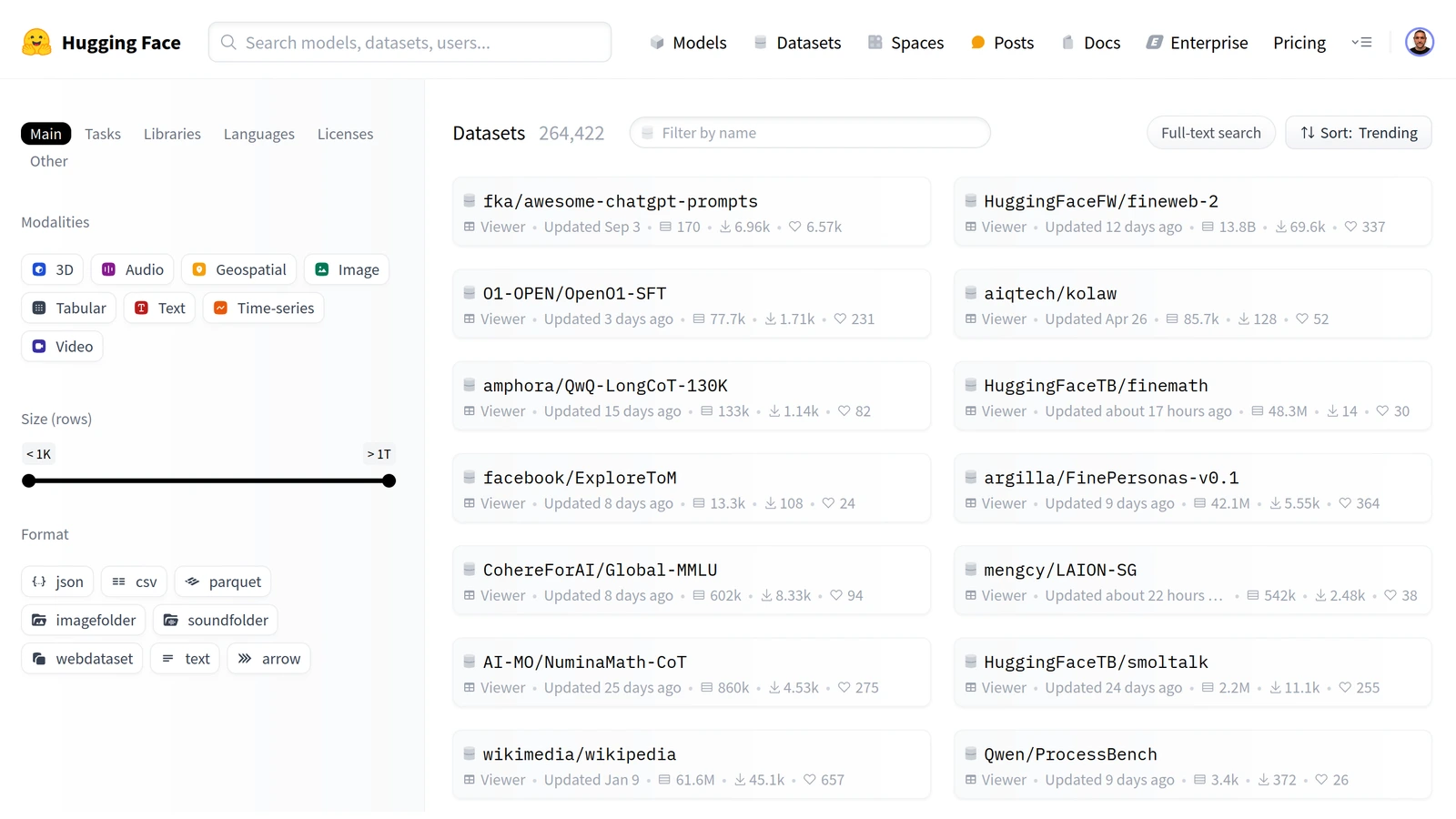
Datasets catalog
Hugging Face Datasets catalog interface from the official documentation image repository.
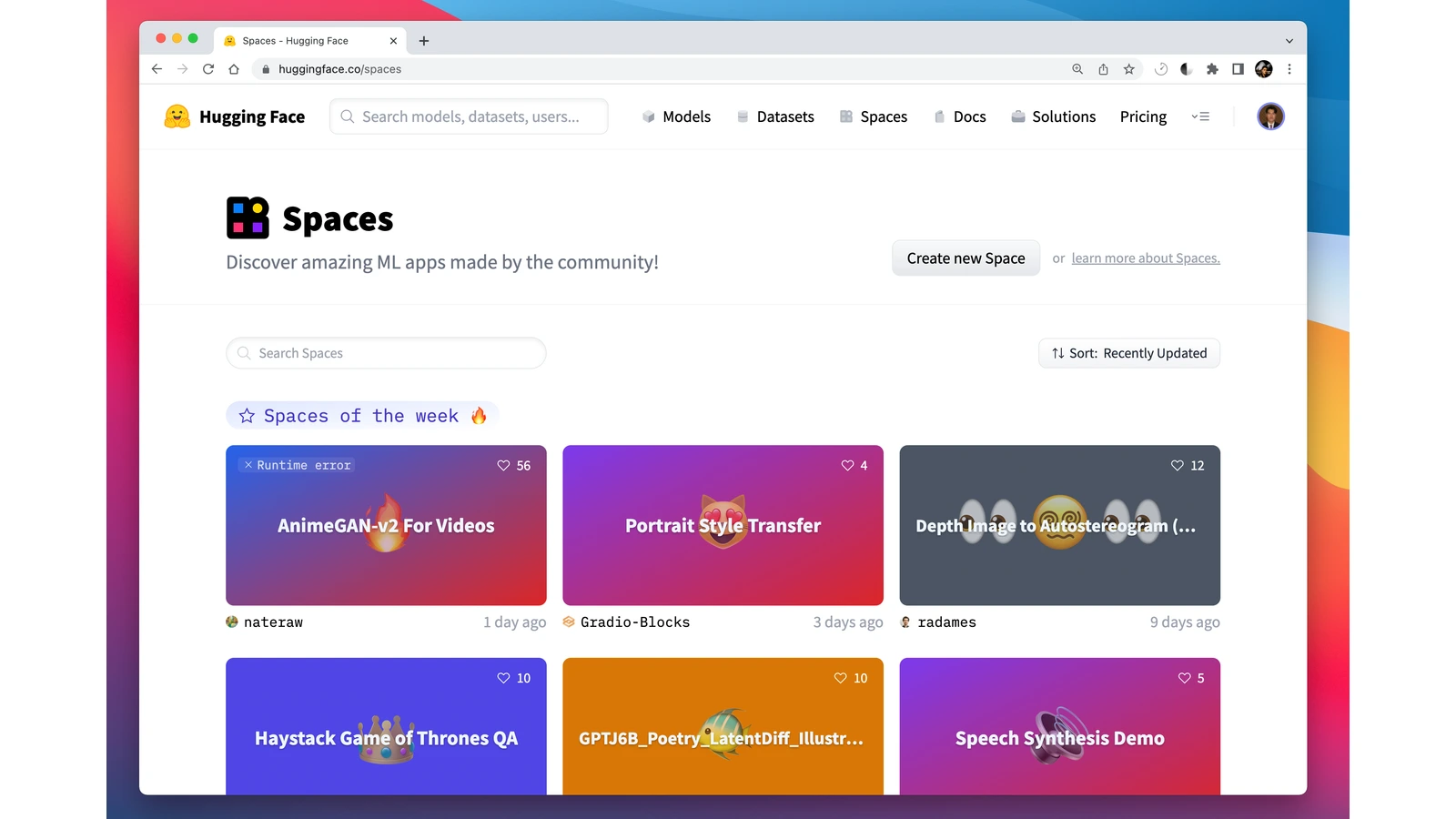
Spaces applications
Hugging Face Spaces landing interface from official documentation.
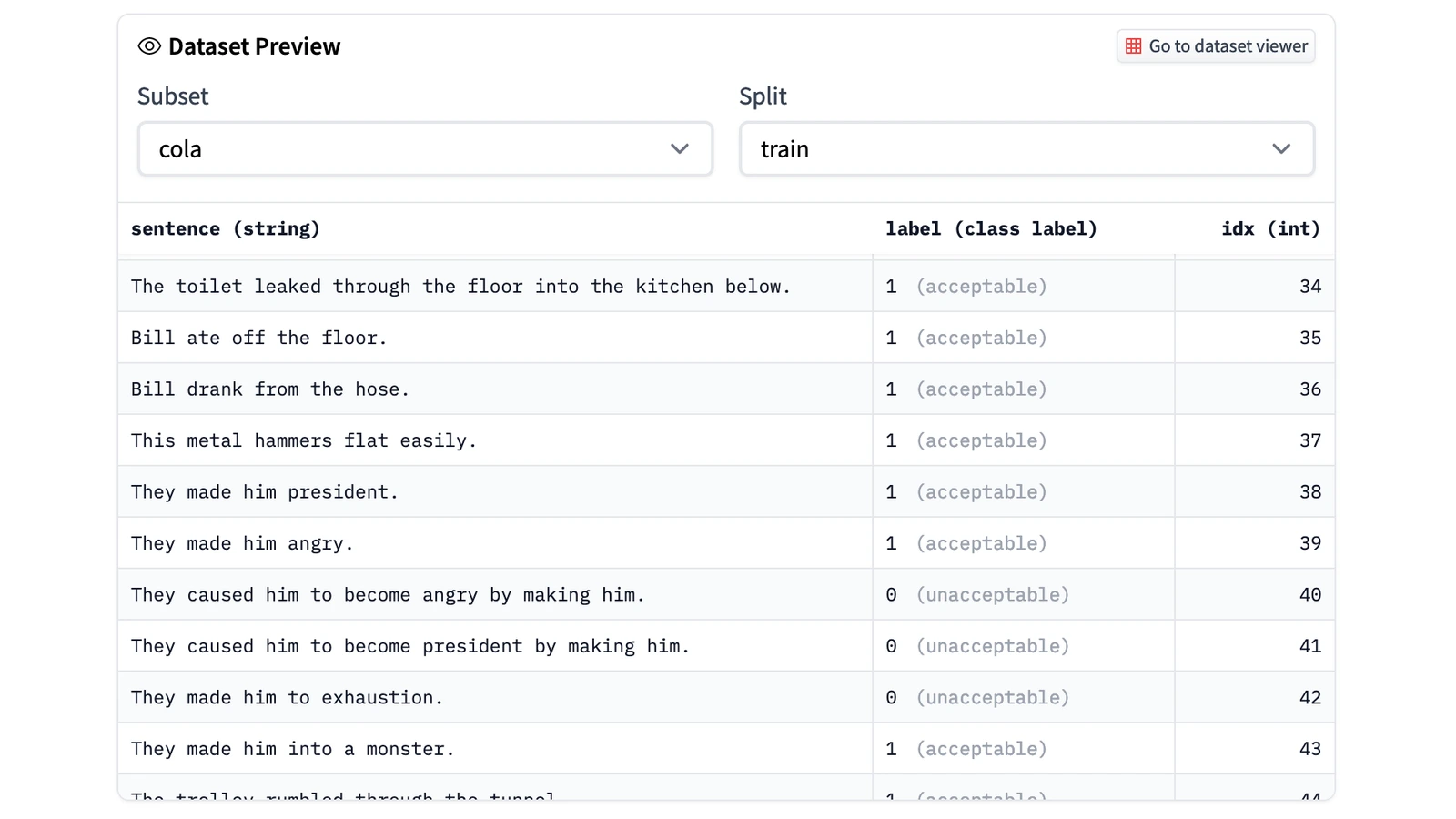
Dataset viewer
Hugging Face dataset viewer displaying dataset rows, from official documentation.
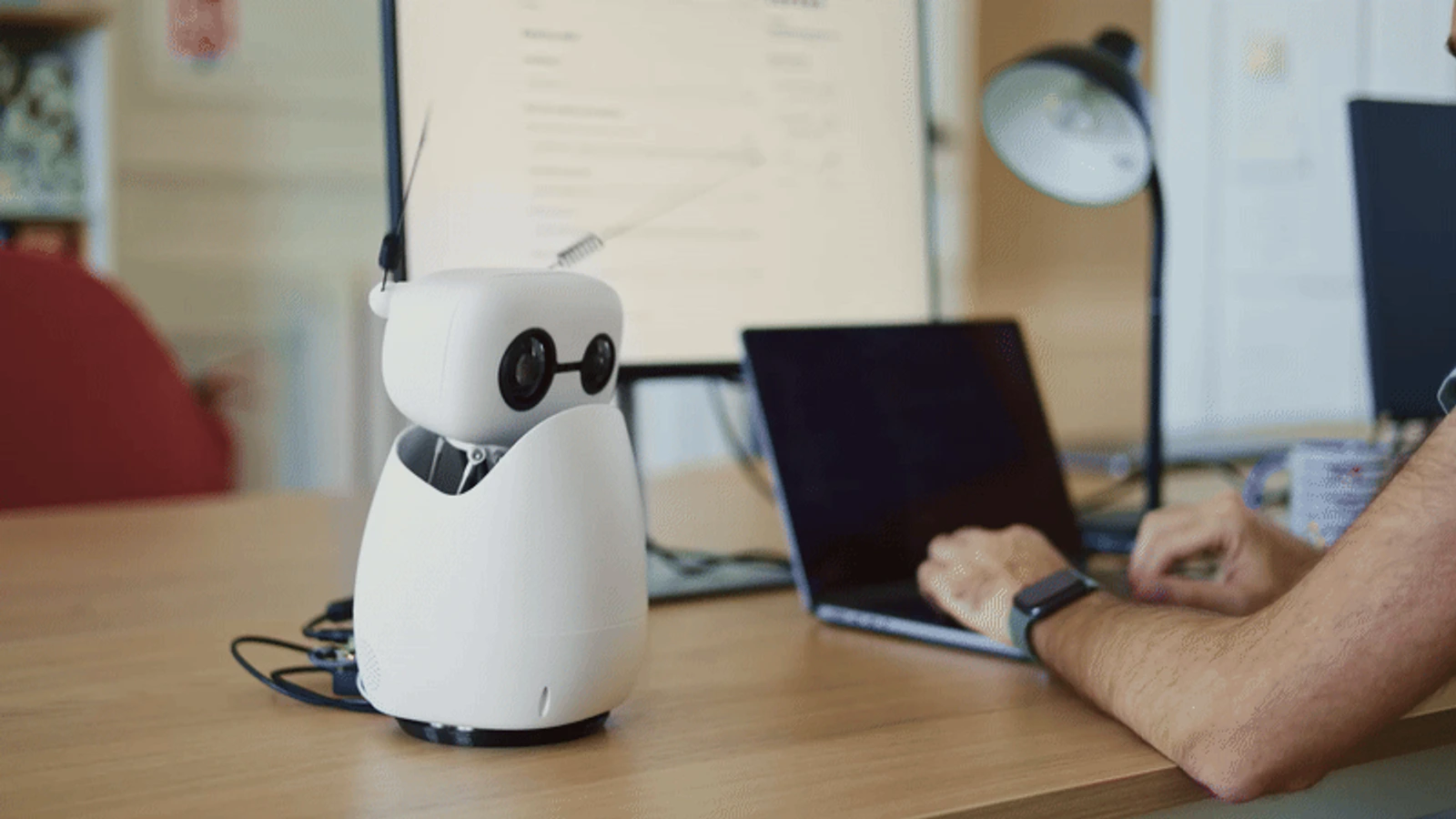
Reachy Mini robotics
Reachy Mini robot on a desk, from official Hugging Face documentation.
Product and service system
Model repositories help developers find, inspect and use models from many contributors; hosting a model does not make Hugging Face its author. Source
Dataset repositories add documentation and discoverability to the material used for training and evaluation. Source
Spaces lets contributors share runnable applications and demonstrations alongside models and data. Source
Organizational controls and private collaboration adapt the community platform to institutional work. Source
Open robotics tools extend the platform into physical learning and control, with Pollen Robotics adding embodied product proof. Source
Turning points.
Dated source facts are separated from our interpretation of their brand consequences.
Hugging Face brings models, datasets and applications into a shared development platform.
NVIDIA announced an agreement to acquire Hugging Face for about $12.93B.
Public reaction.
Participation counts, security disclosures and partner commitments are different types of evidence. None is presented as a satisfaction score.
NVIDIA reported more than 18 million developers, researchers and creators using the platform on 3 September 2026. This dated participation claim is not a count of paying customers.
Hugging Face published a July 2026 security-incident disclosure. For a shared development platform, the response and information available to affected users are part of the brand experience.
NVIDIA said its compute would not be required after the proposed acquisition. That commitment remains something contributors can judge through future platform behavior.
Full timeline.
The Transformers library paper is published. Source
Hugging Face documents the Spaces beta. Source
The BigScience collaboration introduces BLOOM. Source
LeRobot begins as an open robotics effort. Source
Pollen Robotics joins Hugging Face. Source
Hugging Face publishes a security-incident disclosure. Source
NVIDIA announces an agreement to acquire Hugging Face. Source
Steal / avoid.
- Make the community's work easier to inspect and reuse.
- State platform commitments in terms users can test, including their ability to choose other providers.
- Confusing the number of hosted models with their quality or fitness for a particular job.
- Calling every downloadable model unrestricted open source without checking its license.
Short answer.
Hugging Face hosts model repositories, datasets and applications called Spaces. Each model can have its own licence, including commercial-use restrictions; a public download is not blanket permission. Spaces run demos or applications and can have different computing requirements from a downloadable model. The Hub also supports private collaboration.
Frequently asked questions
Are all Hugging Face models free to use commercially?
No single license covers every model on the Hub. Hugging Face model cards can display the model's license, including custom terms. Check the actual repository license and any access conditions before commercial use; a public download or visible demo is not itself permission for every use.
What is the difference between a Hugging Face model and a Space?
A model repository stores a machine-learning model and its documentation. A Space hosts an application or demo, often using one or more models. A demo running in your browser is therefore different from a model you can download and run, and its compute or access requirements can differ.
What is Hugging Face used for?
The Hub is used to share and find models, datasets and applications. It also supports private collaboration for teams and organizations.
Did NVIDIA announce a Hugging Face acquisition?
Yes. NVIDIA announced an agreement on 3 September 2026 for about $12.93B. This page describes the announced agreement and does not treat it as proof of completed ownership transfer.
Will Hugging Face require NVIDIA hardware?
NVIDIA's acquisition announcement says NVIDIA compute will not be required. That is the company's public commitment; future product behavior is the evidence to monitor.
What is a Hugging Face model card?
A model card is the README file displayed with a model repository. Hugging Face's documentation says it can describe the model, its intended uses, limitations, training data and evaluation, with structured metadata such as its license. Read it alongside the model files before deciding whether a model fits a task.
What is the difference between a private and protected Hugging Face Space?
A private Space limits both source code and the running application to its owner and collaborators. A protected Space hides the source repository from others, but the running app remains publicly accessible through its embed URL or configured domain. Protected source code therefore does not make the application itself private.
Need help with your own brand?
Use Private brand work when your name, identity, proof, or message needs a sharper branding decision.
Sources.
Official brand mark; source linked in the evidence list.
Use the education shelf for the concepts behind this brand page.
Private brand workApply this question to the positioning and architecture of your own business.
All brandsReturn to every brand page.
- Hugging Face Hub documentation
- Spaces documentation
- NVIDIA acquisition agreement, 3 September 2026
- Official image and product evidence
- Official identity source
- Official Hugging Face identity assets
- 2019-10-09 history source
- 2021-09-24 history source
- 2022-07-12 history source
- 2024-05 history source
- 2026-07-16 history source
- Model Hub product source
- Datasets product source
- Enterprise Hub product source
- Official logo variants and brand colors
- dataset-full-viewer visual source
- reachy-mini visual source
- Hugging Face: Are all Hugging Face models free to use commercially?
