IKEA · Grow Your Brand · Global / Customer-Operated Retail System · Sweden / Netherlands-based franchisor / Active / privately held franchise system
IKEA
IKEA made low-price furniture credible by making the customer part of the operating model. A brand page for IKEA: blue-and-yellow store memory, showroom path, flat-pack logistics, self-service pickup, food, product names, assembly instructions, and the lesson that price works only when the whole system explains it.
Positioning, name, and architecture.
IKEA joins a protected franchise concept, range design, global supply, store choreography, flat-pack logistics, and customer assembly so lower price reads as a coherent operating choice.
IKEA makes the value promise visible in the whole buying path: home settings, flat packs, pickup, food, transport, assembly, returns, and repeat planning.
IKEA positions home furnishing as a shared job: the company designs, sources, packs, displays, and prices; the customer chooses, carries, assembles, and lives with the result.
IKEA combines Ingvar Kamprad's initials with Elmtaryd, the farm where he grew up, and Agunnaryd, his home village.
The business idea is the durable line: well-designed, functional home furnishing at prices many people can afford.
private franchise brand system
Thirteen franchisee groups operate IKEA retail businesses. Ingka Group is the largest franchisee, while Inter IKEA Systems B.V. owns the concept and grants the franchise rights.
Owns and develops the IKEA Concept and grants franchise rights.
Concept owner and worldwide franchisor: IKEA Concept source
Develops the range, manages supply, and reports the franchisor group's financial results.
Range, supply, and franchisor group: IKEA range and supply source
Operates most IKEA stores and customer meeting points while remaining a franchisee, not the brand owner.
Largest IKEA franchisee: IKEA retail source
Stores, Food, Family, and IKEA for Business extend one home-furnishing idea rather than acting as peer owners.
Retail and service family: IKEA stores source
Naming and tagline progression
IKEA starts as a trading company.
Affordable, functional home furnishing for the many people.
Market and scale snapshot.
IKEA's private franchise structure separates Inter IKEA Group results from total retail-system sales, so each figure is labeled by entity.
Inter IKEA Group FY25 revenue of EUR 26.306B, converted with the recorded USD rate.
Inter IKEA Group FY25 net income of EUR 1.5B, converted with the recorded USD rate.
FY25 retail sales across 13 IKEA franchisee groups; this is system sales, not Inter IKEA revenue.
Inter IKEA Holding B.V. is owned by Inter IKEA Foundation; IKEA has no public ticker.
Color system.
IKEA blue and yellow are not decoration. They make the building, sign, bag, website, and product tag feel like one retail system.
How the palette behaves
Blue gives the store box and mark a stable retail field: practical, direct, easy to spot from a road or shopping center.
Yellow adds visibility and price warmth. It makes the brand feel energetic without looking luxury or fragile.
White gives product, instruction, and home-setting surfaces enough space to carry detail without fighting the mark.
Recognition assets.
Blue and yellow, the oval wordmark, the guided showroom route, product names, flat packs, warehouse aisles, assembly drawings, and the food offer make IKEA recognizable before a price tag is read.
The palette works because it appears on buildings, signs, bags, tags, web surfaces, and the primary mark.
IKEA teaches shoppers to imagine a home setting first, then find the product, carry it, and assemble it at home.
The package is proof of the value model. It shows how lower price depends on design, logistics, and customer effort.
Scores.
Use these scores to compare recognition, trust, proof, pressure, and risk.
Blue, yellow, store shape, bags, food, and flat packs make the brand easy to spot.
Trust is strong when product quality, instructions, delivery, and returns match the price promise.
Customers can see why the price works because the model gives them a clear job.
A long visit, stock gap, confusing pickup, missing part, or late delivery can weaken the same value story.
The brand is clear, but the private franchise structure needs careful wording.
Blue and yellow are trained across store, sign, web, bag, and mark.
Product names, household settings, catalogs, instructions, and repeat purchases create memory beyond the logo.
Scale creates scrutiny around materials, transport, product lifespan, returns, and circular claims.
How the logo changed.
IKEA's identity moved from a hand-drawn cloud into the oval-and-rectangle system, then standardized blue and yellow before a careful digital-era refinement.
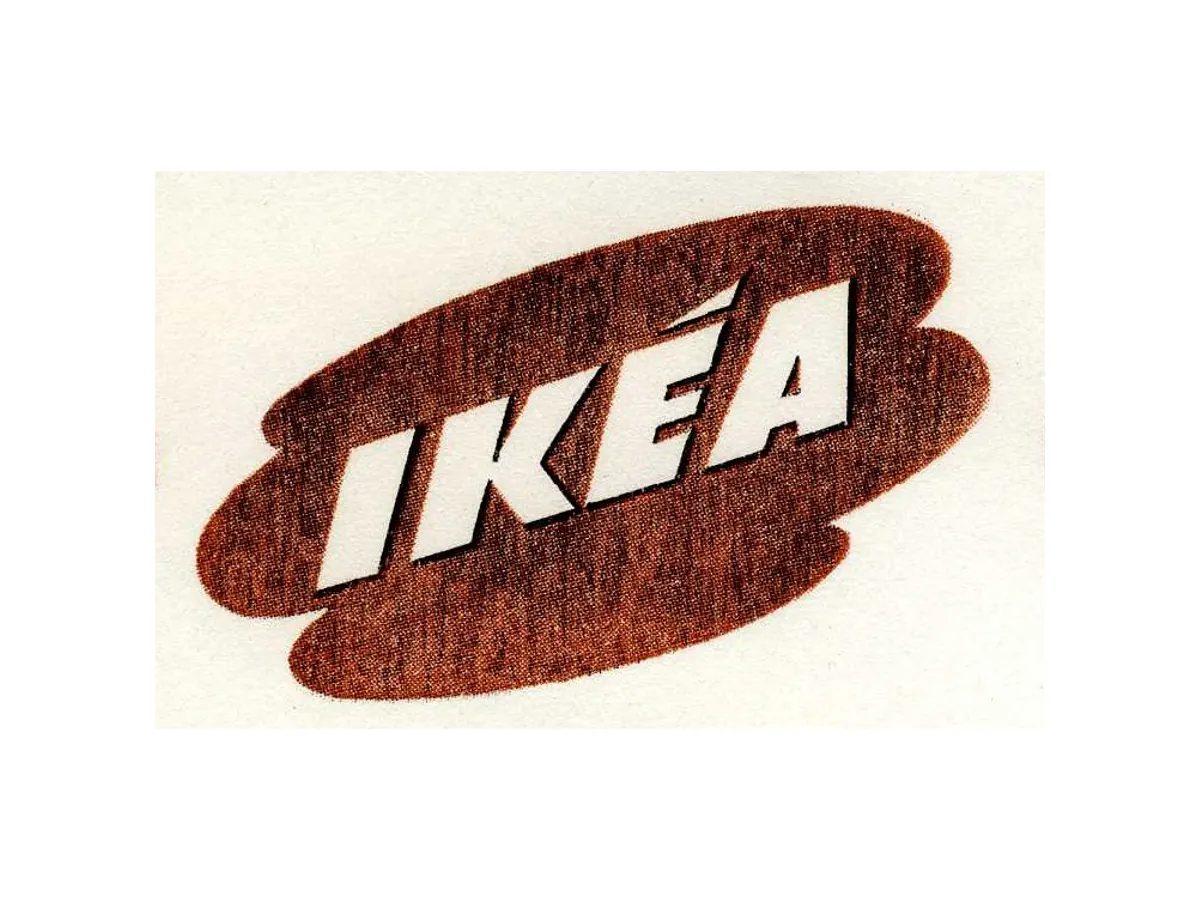
Gillis Lundgren's cloud-shaped mark gave the young furniture company a distinctive hand-drawn identity. source
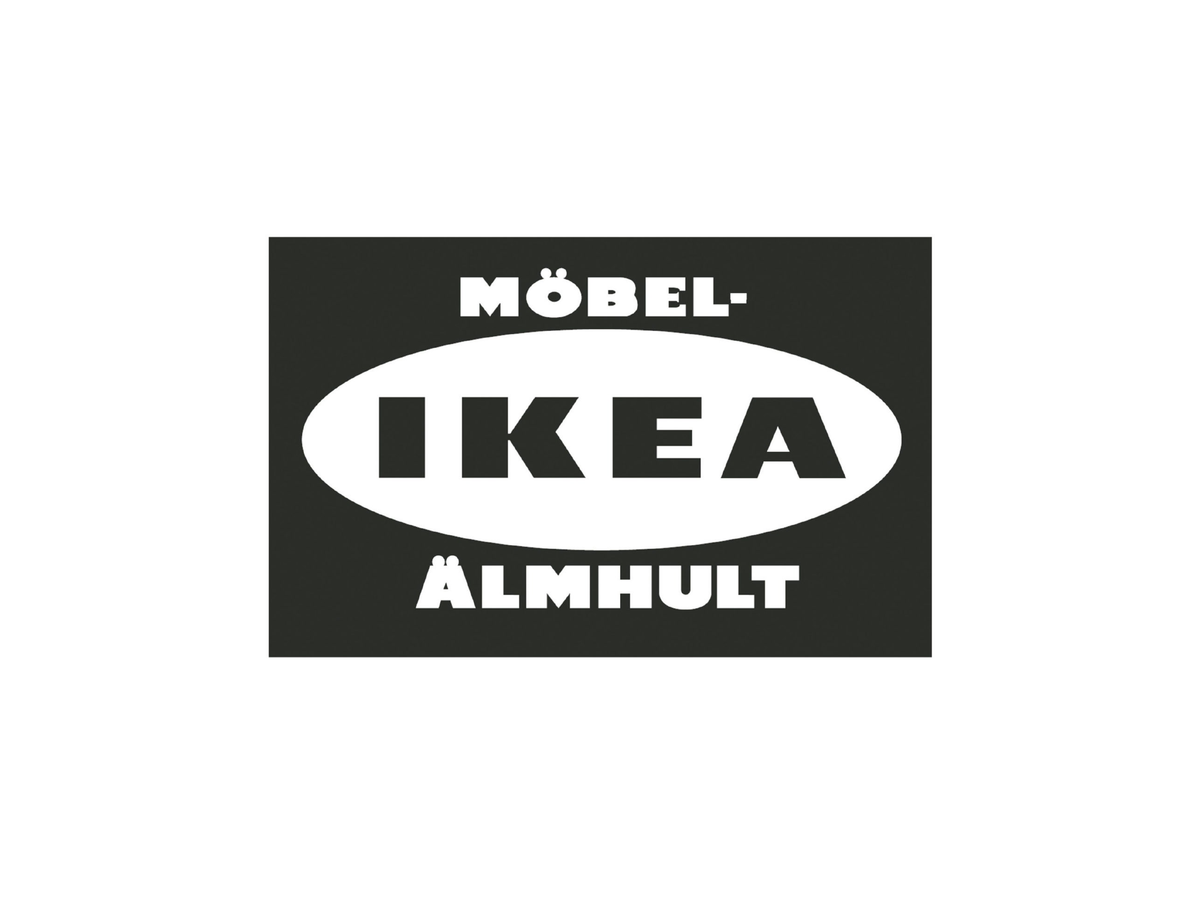
The accent disappears, the letters become horizontal, and the name sits inside the oval-and-rectangle structure still recognized today. source
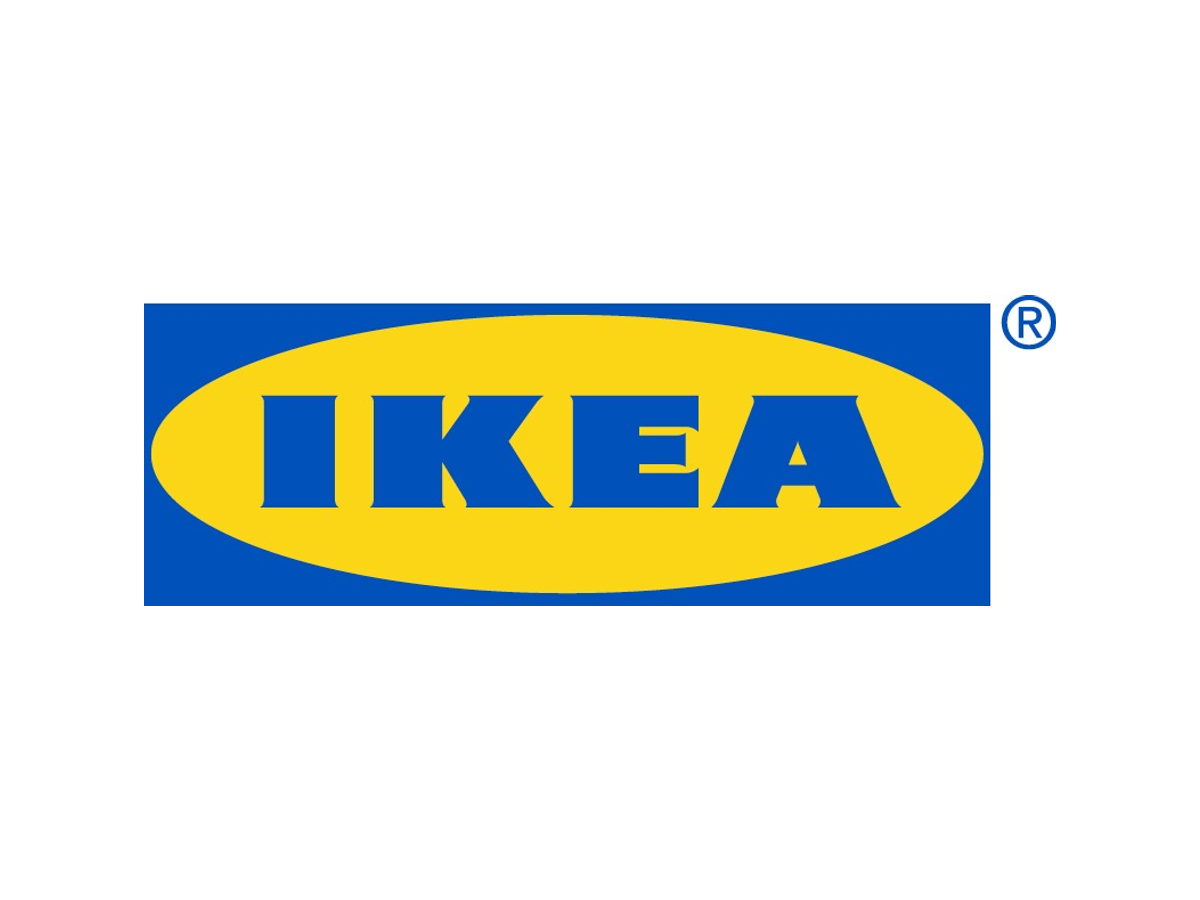
The first visual profile manual standardizes the blue-and-yellow trademark for international retail growth. source
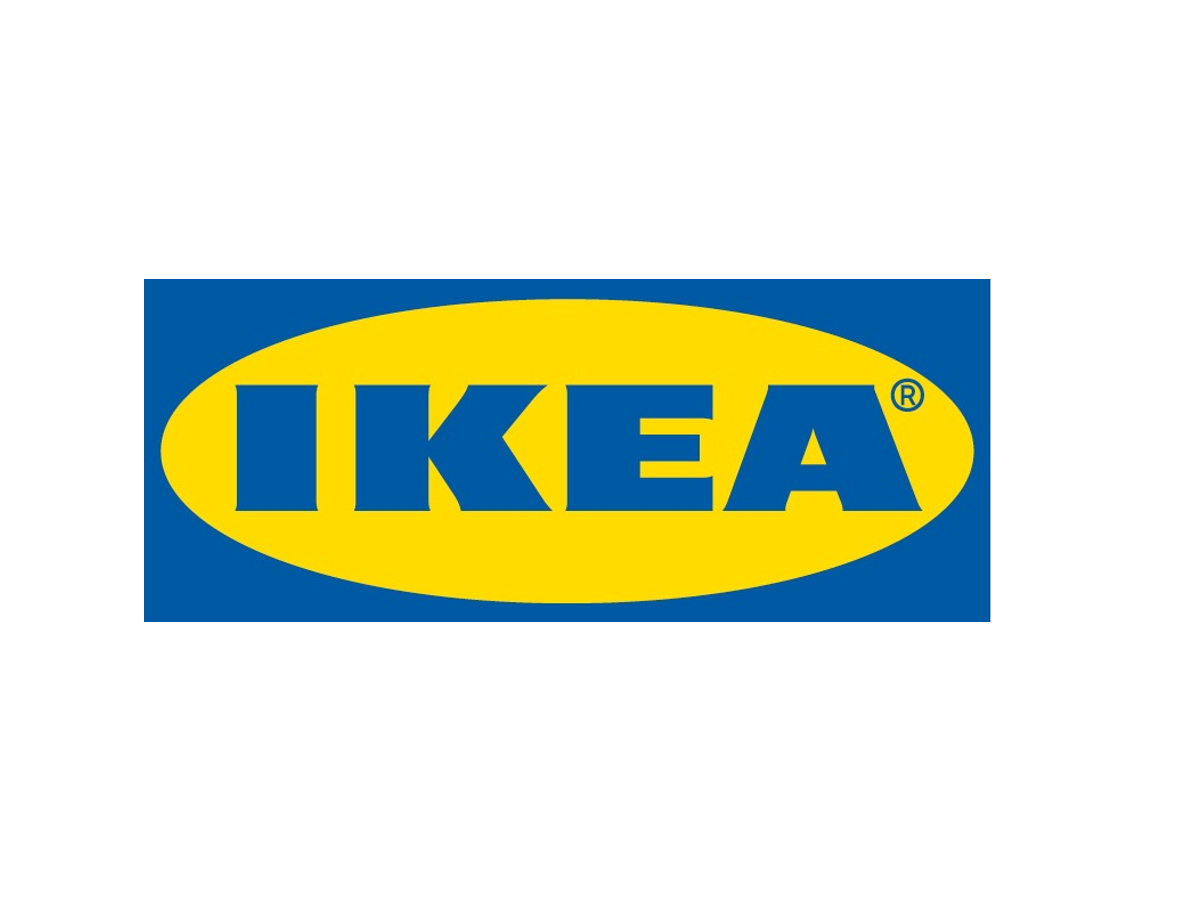
The 2018 refinement improves legibility and color reproduction while preserving the familiar oval, rectangle, and wordmark. source
Product and service lineage.
IKEA's signal is not one object. It is the repeatable system around home furnishing: idea, display, package, transport, assembly, and use.

Planning and reuse extend the visit
Kitchen planning, material choice, spare parts, repair, and reuse show how the system can support the home after the first purchase.
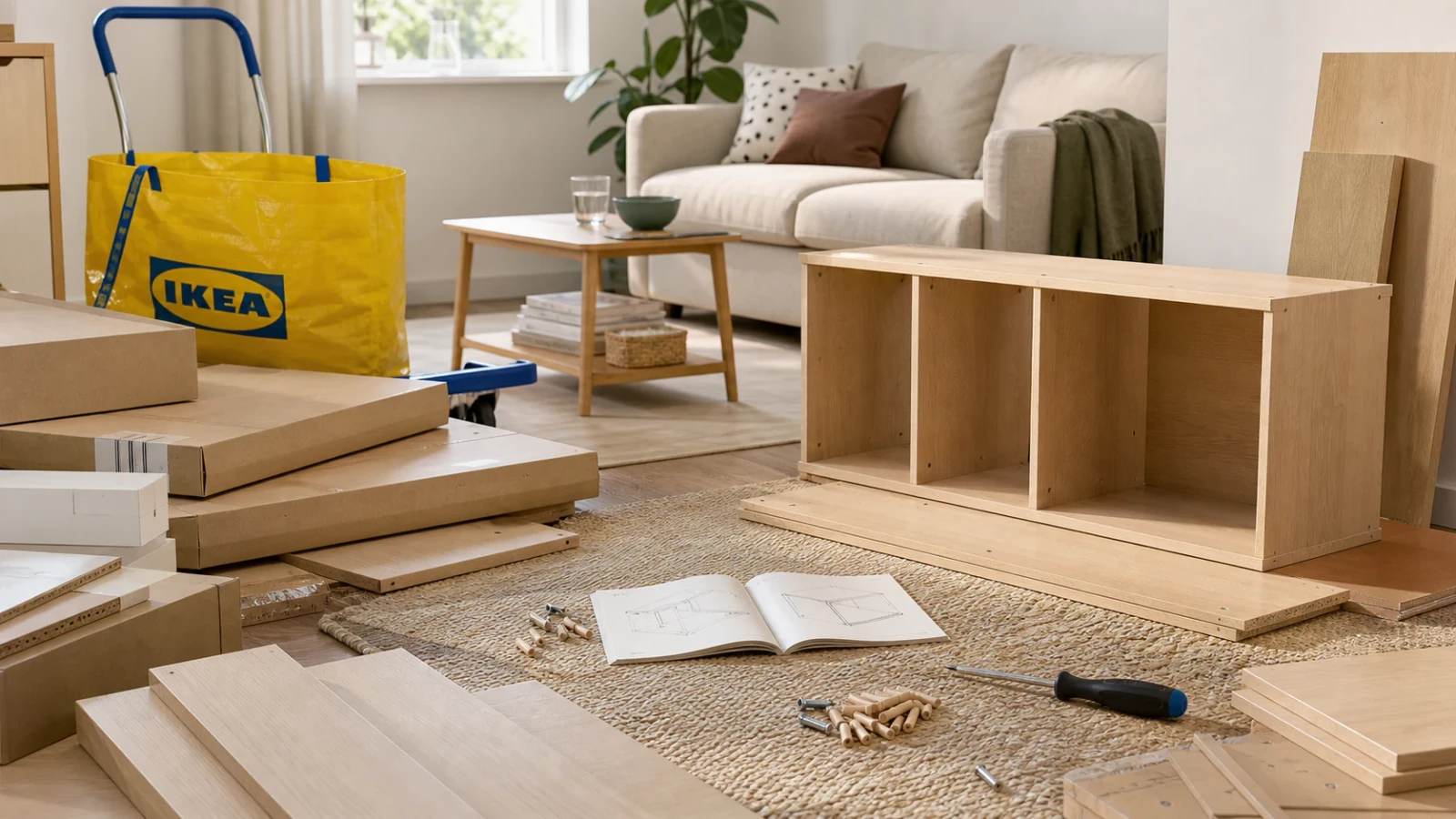
Flat-pack value
The package explains the price: smaller transport, shared assembly, and a product the buyer can carry into the home.
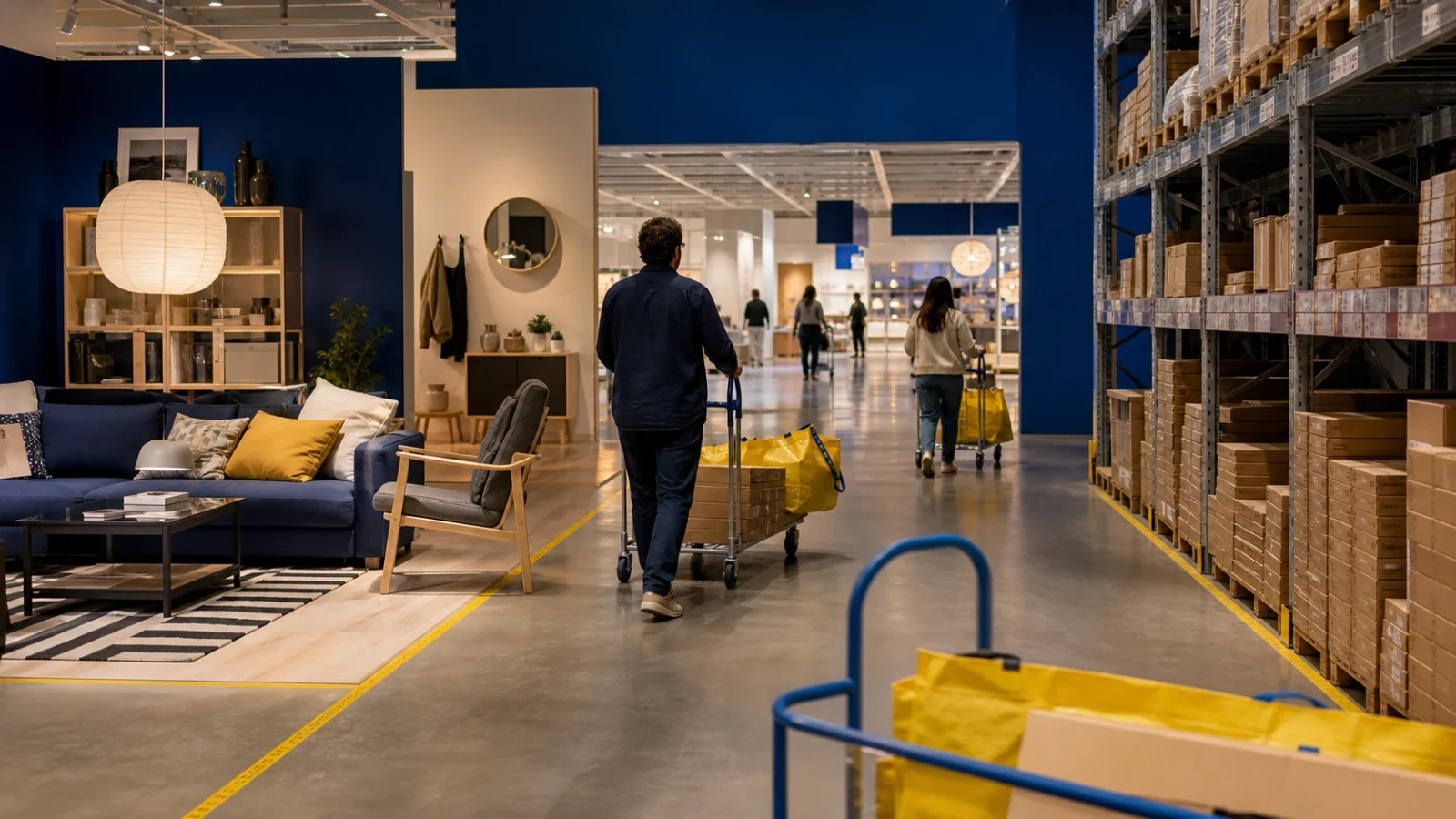
Self-service route
The customer accepts effort when the route is clear and the value exchange feels fair.
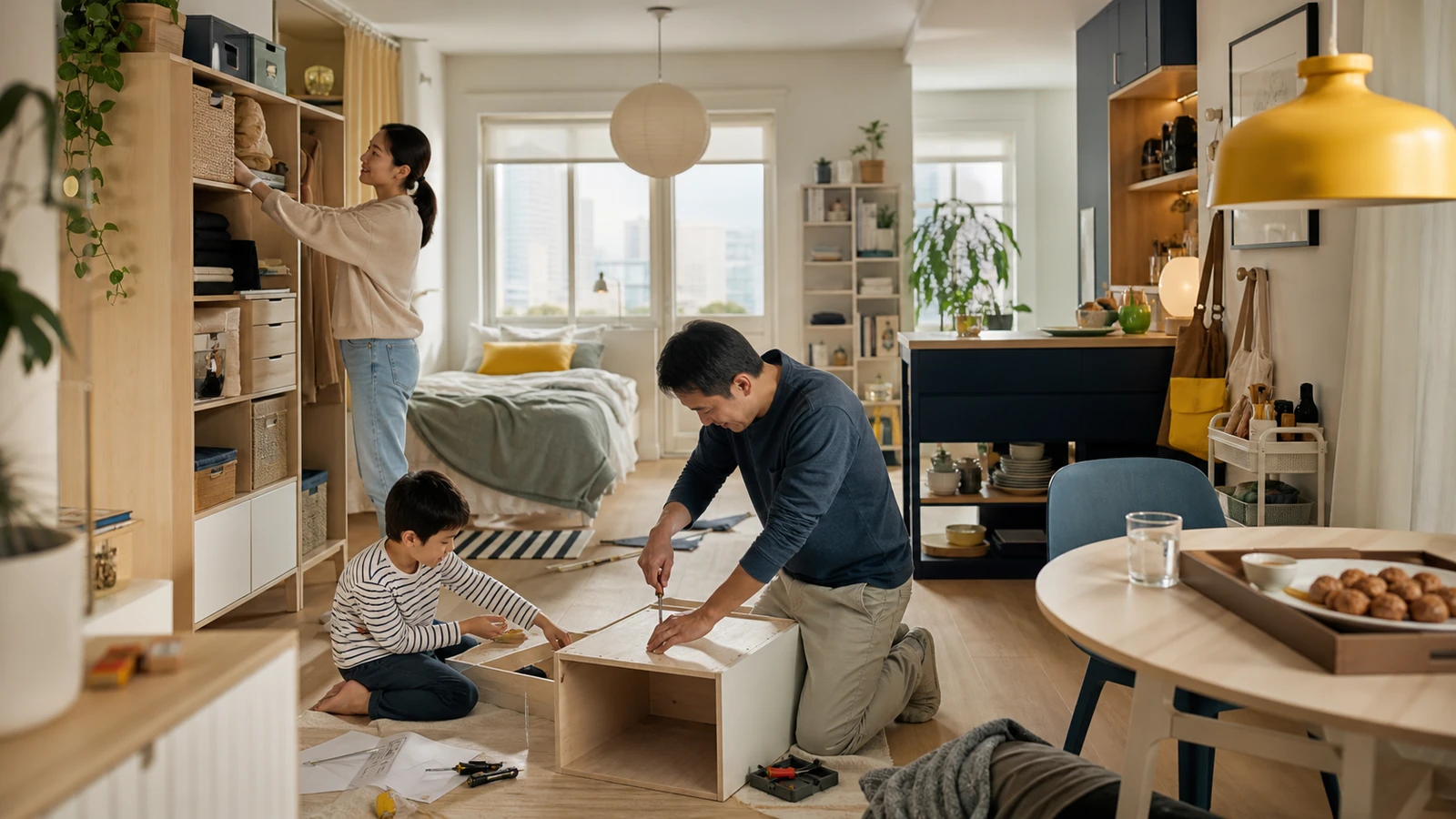
Life at home is the product system
Furniture, storage, lighting, textiles, kitchen tools, assembly, and food rituals work together when the brand is read at household scale.
Product and service system
IKEA is registered as a trading company by Ingvar Kamprad.
Furniture is added to the range.
IKEA history materials tie early catalog logic to the growth of the home-furnishing range.
The first IKEA store opens in Almhult, Sweden.
IKEA Museum product stories list BILLY as a 1978 product story.
IKEA Museum product stories list KLIPPAN as a 1979 product story.
IKEA reports 504 stores in 63 markets, USD 51.16 billion equivalent in retail sales, and 222,000 co-workers.
Turning points.
IKEA's turning points show whether low-price proof, customer effort, retail-system scale, product safety, and digital-store consistency still reinforce the same value promise.
IKEA's official business idea ties design, function, home furnishing, and low price into one public promise.
Home settings, tags, arrows, warehouse pickup, and food turn a shopping trip into a planned household behavior.
The flat pack is efficient only when instructions, missing parts, tools, and transport feel manageable.
FY25 reporting shows USD 51.16 billion equivalent in retail sales and 28% online sales.
IKEA has active product-safety recall focus alongside playful high-culture campaign movement, creating a split signal between reliability expectations and lifestyle momentum.
Active public recall surfaces keep IKEA's everyday-object trust under pressure, especially when the card is about home items people handle daily.
Public reaction.
IKEA is loved and complained about for the same reason: it asks the customer to join the operating model.
People accept assembly when the product, price, and home result make the trade feel honest.
The brand takes blame when the customer does their part and the system still wastes their time.
Full timeline.
IKEA is registered as a trading company by Ingvar Kamprad.
Furniture is added to the range.
The Almhult showroom and flat-pack approach connect catalog planning, transport efficiency, and customer assembly.
The first IKEA store opens in Almhult.
The accent disappears and the IKEA name moves into the oval identity structure still recognized today.
The international IKEA name stands alone as the company expands beyond Scandinavia.
IKEA introduces its first full visual profile manual and standardizes the registered blue-and-yellow trademark.
Democratic Design formalizes the balance of form, function, quality, sustainability, and low price.
The logo is carefully refined for consistent recognition and color reproduction across digital and physical surfaces.
IKEA reports USD 51.16 billion equivalent in retail sales, 222,000 co-workers, and 28% online sales.
Steal / avoid.
- Make the reason for low price visible in the operating model.
- Give the customer a clear job only when that job creates value they can feel.
- Repeat the same color system on store, sign, bag, tag, website, and mark.
- Use physical proof: package size, instructions, pickup, food, and home settings can carry more trust than slogans.
- Do not call something affordable if the buyer cannot see why the cost came down.
- Do not shift work to the customer without giving them enough guidance.
- Do not let scale weaken quality, delivery, returns, or sustainability proof.
- Do not copy the blue-yellow surface without copying the disciplined operating logic behind it.
Short answer.
IKEA's brand signal is the blue-and-yellow retail system around affordable home furnishing: showroom path, flat-pack design, warehouse pickup, customer assembly, food, product names, and repeat store memory. The lesson is that price becomes trusted when the whole system explains how the price is made.
Frequently asked questions
What is IKEA's core brand signal?
IKEA's core brand signal is the blue-and-yellow value system: store path, home settings, flat packs, warehouse pickup, customer assembly, and affordable home furnishing.
Why does IKEA blue and yellow work?
It works because the same colors repeat on buildings, signs, bags, tags, web surfaces, and the primary mark. The palette is tied to real retail behavior.
What should another brand steal from IKEA?
Make the operating model visible. If customers trade effort for price, show them exactly why the trade is fair.
Need help with your own brand?
Use Private brand work when your name, identity, proof, or message needs a sharper branding decision.