LEGO · Grow Your Brand · Play-system architecture case · Denmark / Active / privately held family-owned group
LEGO
LEGO turns one brick grammar into a world-building brand system. A brand page on LEGO: brick compatibility, primary color memory, product-theme architecture, adult and family demand, private-company scale, licensing pressure, sustainability pressure, and the danger of treating play as loose toy clutter.
Positioning, name, and architecture.
LEGO's position, name, and portfolio all reinforce one compatible play system that can stretch across ages and worlds.
LEGO owns compatibility and modular creativity: the same brick grammar can build a house, car, robot, flower, city, licensed scene, school lesson, or adult display object.
LEGO wins when every theme, store, set, and adult or family use case points back to the same buildable grammar.
LEGO compresses the Danish words leg godt, meaning play well, into a short name that matches the company's enduring purpose.
The product system carries the promise more consistently than any one campaign slogan.
private group masterbrand / product-theme architecture
Compatibility connects themes, family play, adult building, education, stores, and material responsibility under one masterbrand.
Compatibility and the interlocking brick system are the brand engine.
core grammar: Modern brick system source
Larger bricks extend the same grammar to younger builders.
age-range system: DUPLO source
Gears, mechanics, and adult builds prove the system can grow up.
complexity system: Technic source
City, Friends, Icons, Star Wars, Ideas, and education lanes work only when the brick grammar stays visible.
demand architecture: Themes, licensed sets, Ideas, Education source
Naming and tagline progression
The name sets a broad promise around play.
Compatibility made the promise operational.
Themes and licenses expand worlds while the brick grammar anchors the brand.
Market and scale snapshot.
LEGO is private. H1 2026 revenue, operating profit, and net profit are shown in Danish kroner, the company's reporting currency; no public market value is available.
Up 21% year over year.
Up 22% year over year.
Up 32% year over year.
LEGO said it gained global toy-market share.
Color system.
LEGO color works because it is tied to modular play, not because the palette is loud.
How the palette behaves
Red carries energy and instant shelf recognition.
Yellow feels playful and optimistic, especially in the mark system.
Blue gives structure and makes the primary palette less chaotic.
White space helps the toy system feel organized instead of noisy.
Recognition assets.
Memory pieces the brand can use before someone finishes a sentence.
Old and new pieces matter because the connection system stays stable.
City, Technic, Friends, Icons, education, and licensed sets organize desire around the same grammar.
Sustainability pressure is part of the brand story because the product is material-heavy.
Scores.
Use these scores to compare recognition, trust, proof, pressure, and risk.
Brick geometry and primary color memory are exceptionally strong.
Themes work when the base system remains obvious.
Children, parents, adult collectors, schools, and licensed fans can all use the system.
Plastic dependence and sustainability claims need careful proof.
Product, service, ownership, and operating evidence make the brand system easier to trust.
LEGO needs parent, product, service, market, and history lanes labeled cleanly so search systems do not flatten the brand into one vague entity.
A precise category role makes LEGO easier to compare with direct alternatives.
Customer experience has to support the recognition system promised by products and stores.
How the logo changed.
The masterbrand moves from the first documented LEGO name to an oval retail lockup and the compact red square used today.
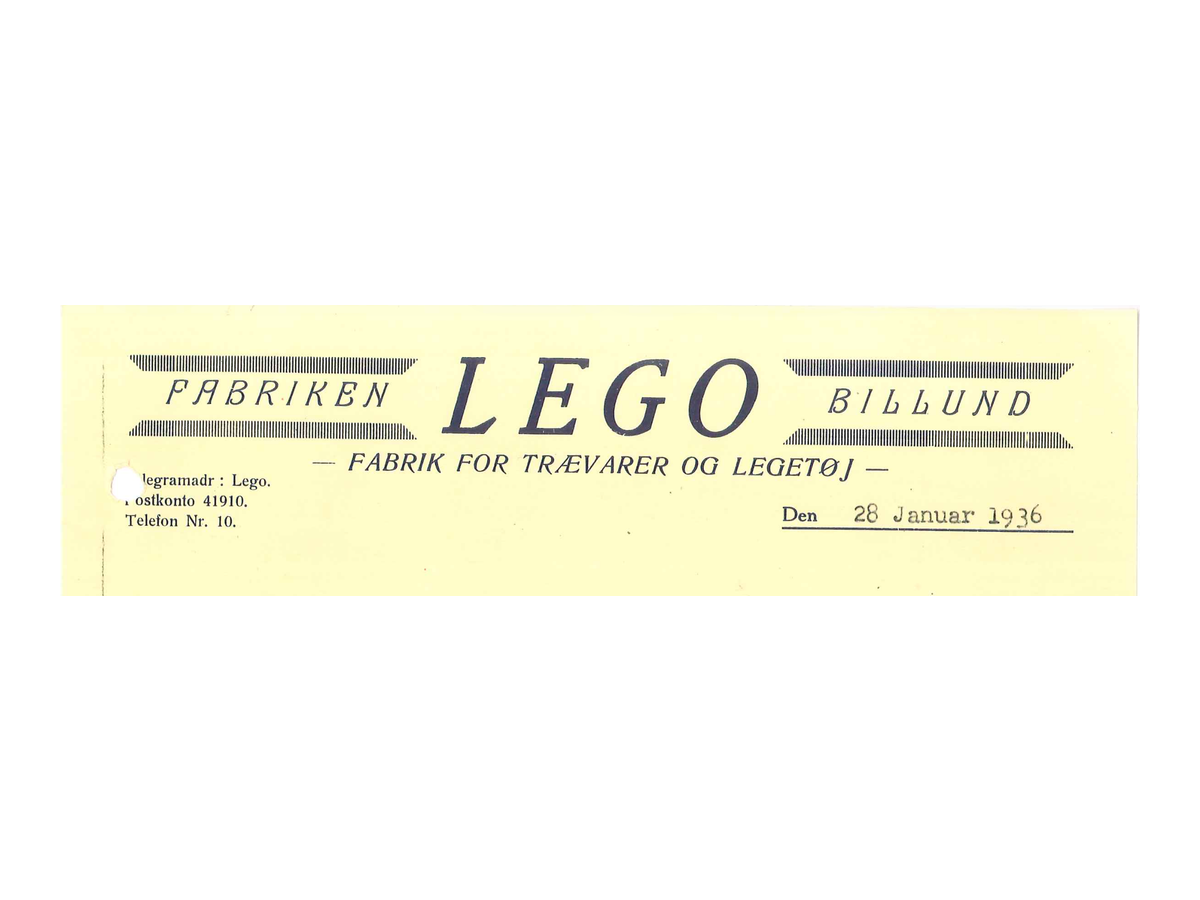
An official 1936 letterhead shows the early LEGO name before the later oval and red-square systems. source
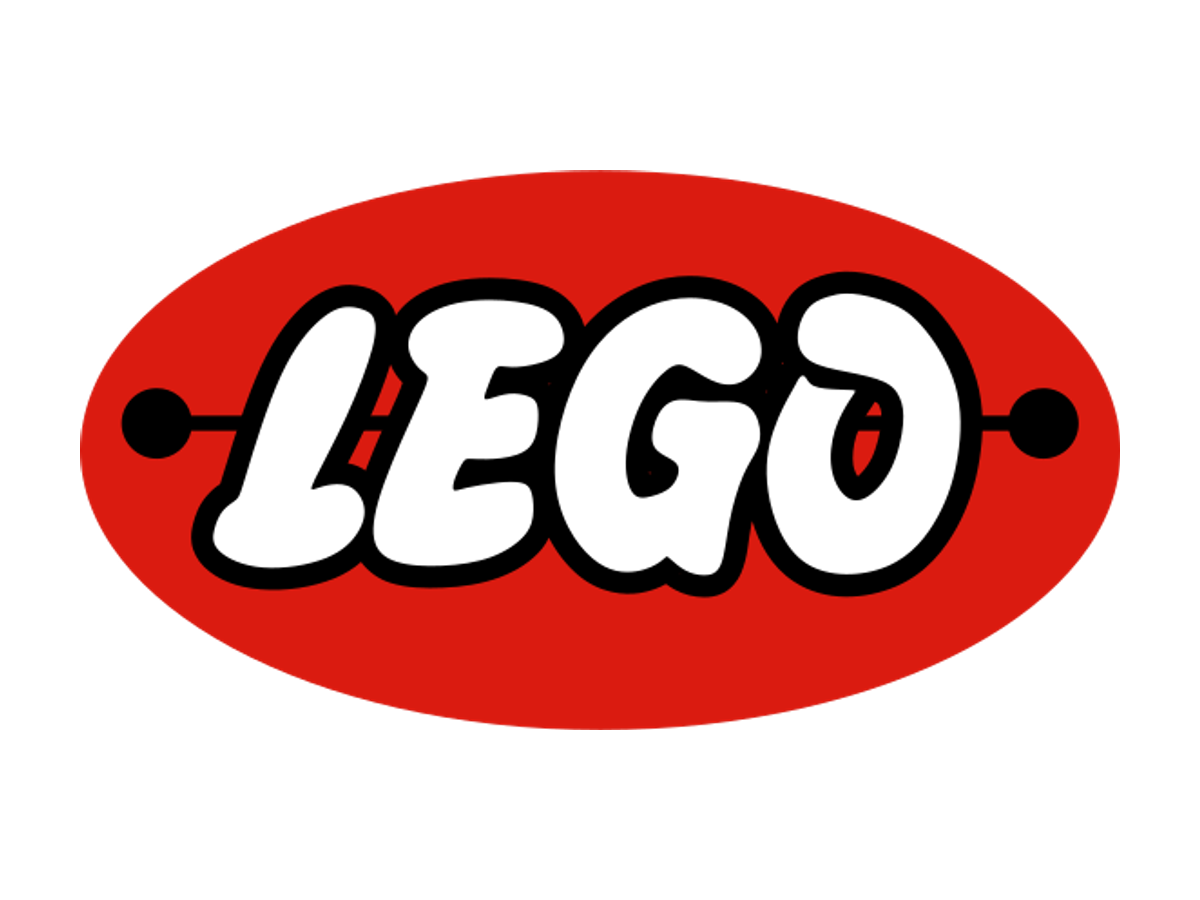
The oval lockup adds stronger retail recognition as LEGO's brick system expands.
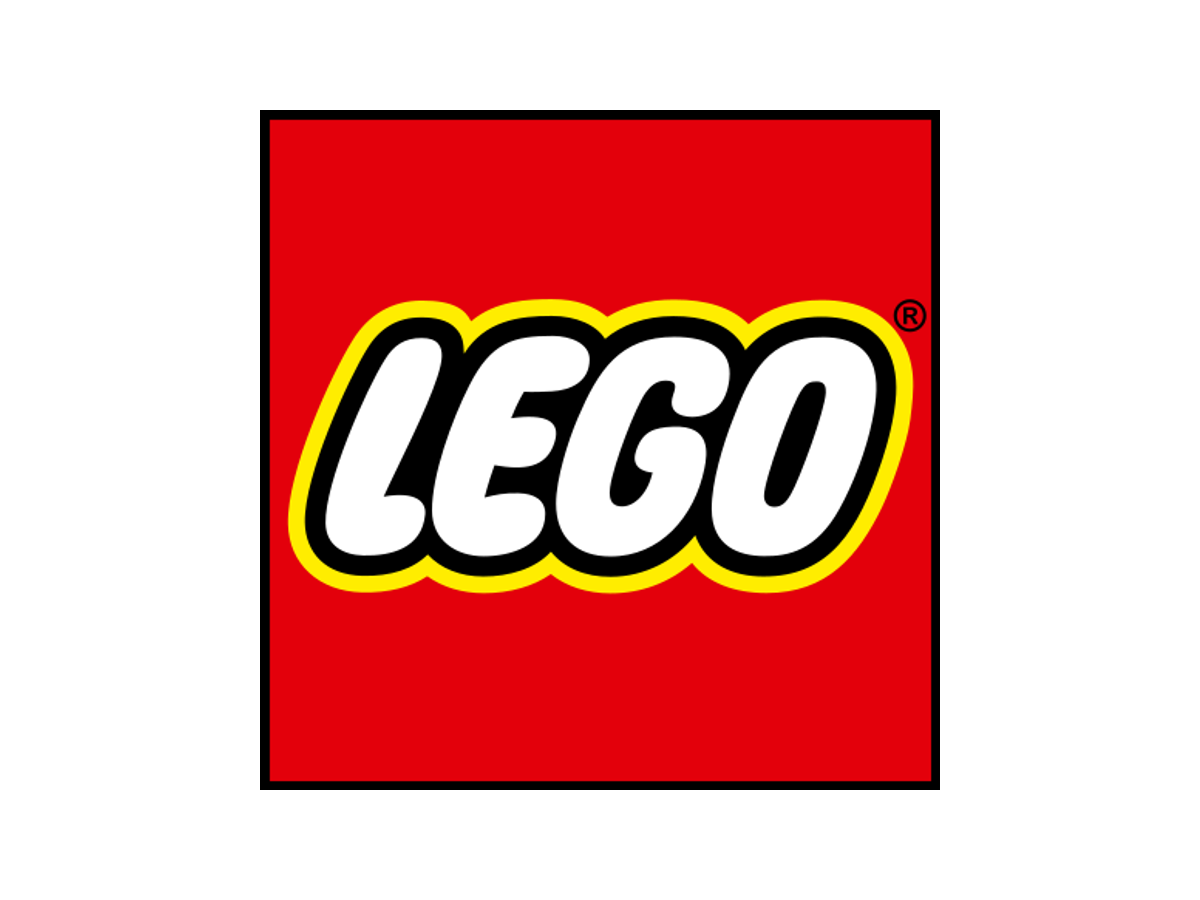
The current red square keeps the wordmark compact and legible across sets, stores, media, and digital products. source
Product and service lineage.
The brand has to prove itself on real products and service surfaces.
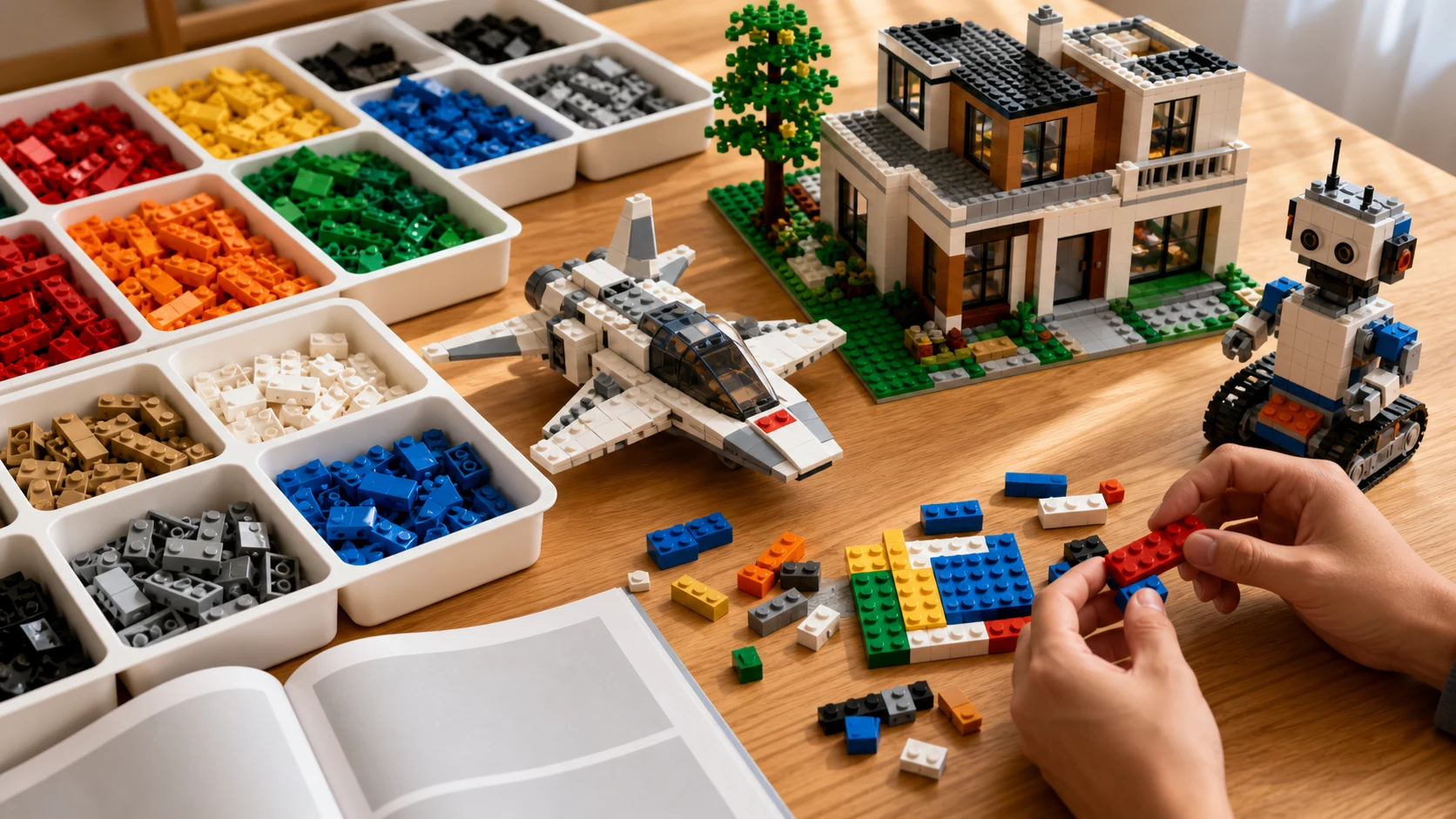
Themes organize the system
A house, vehicle, city, or education build can feel different while using the same physical logic.
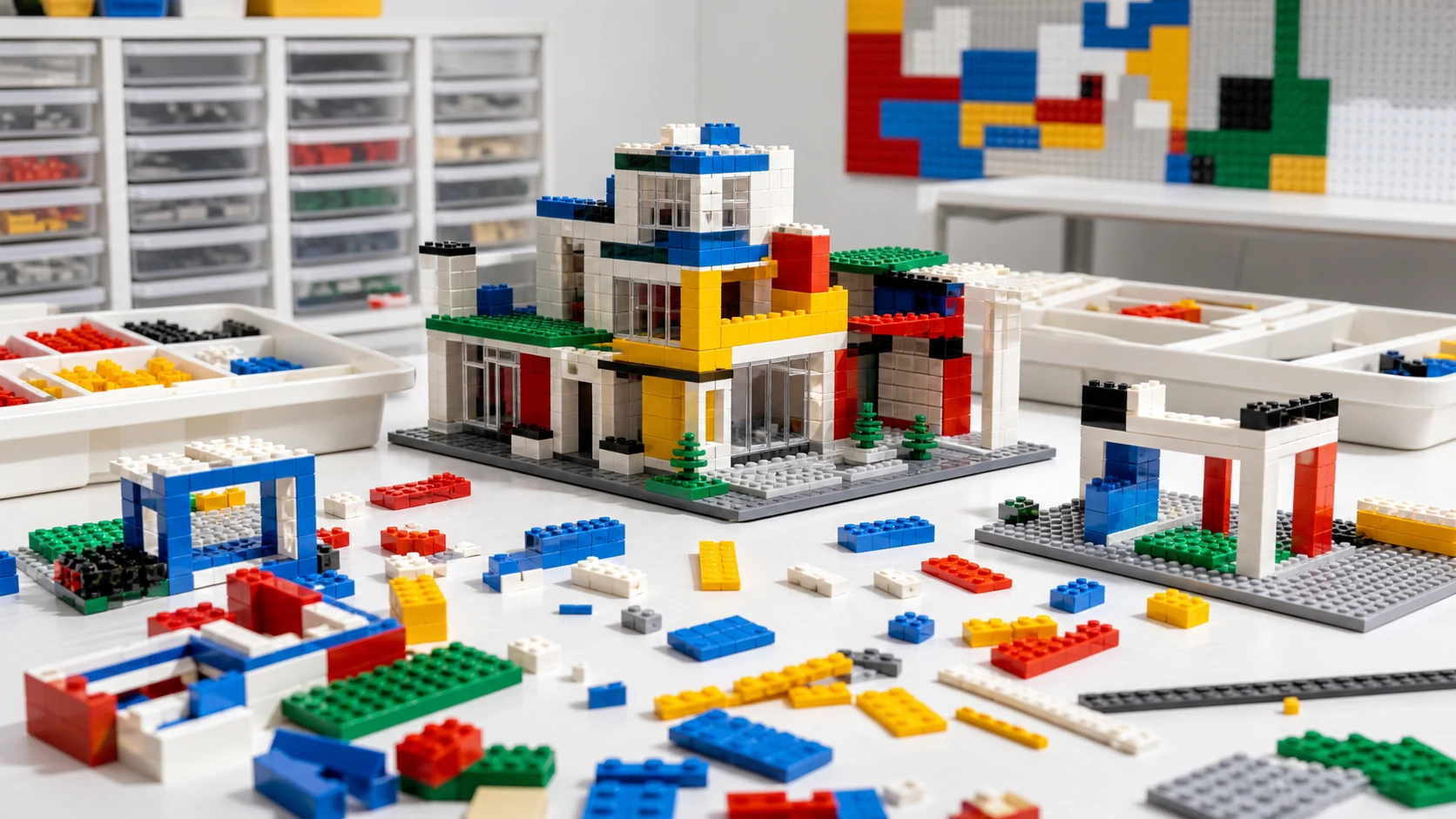
Build-system proof
The third evidence point shows compatibility, color, sorting, rebuilding, and modular play as one system.
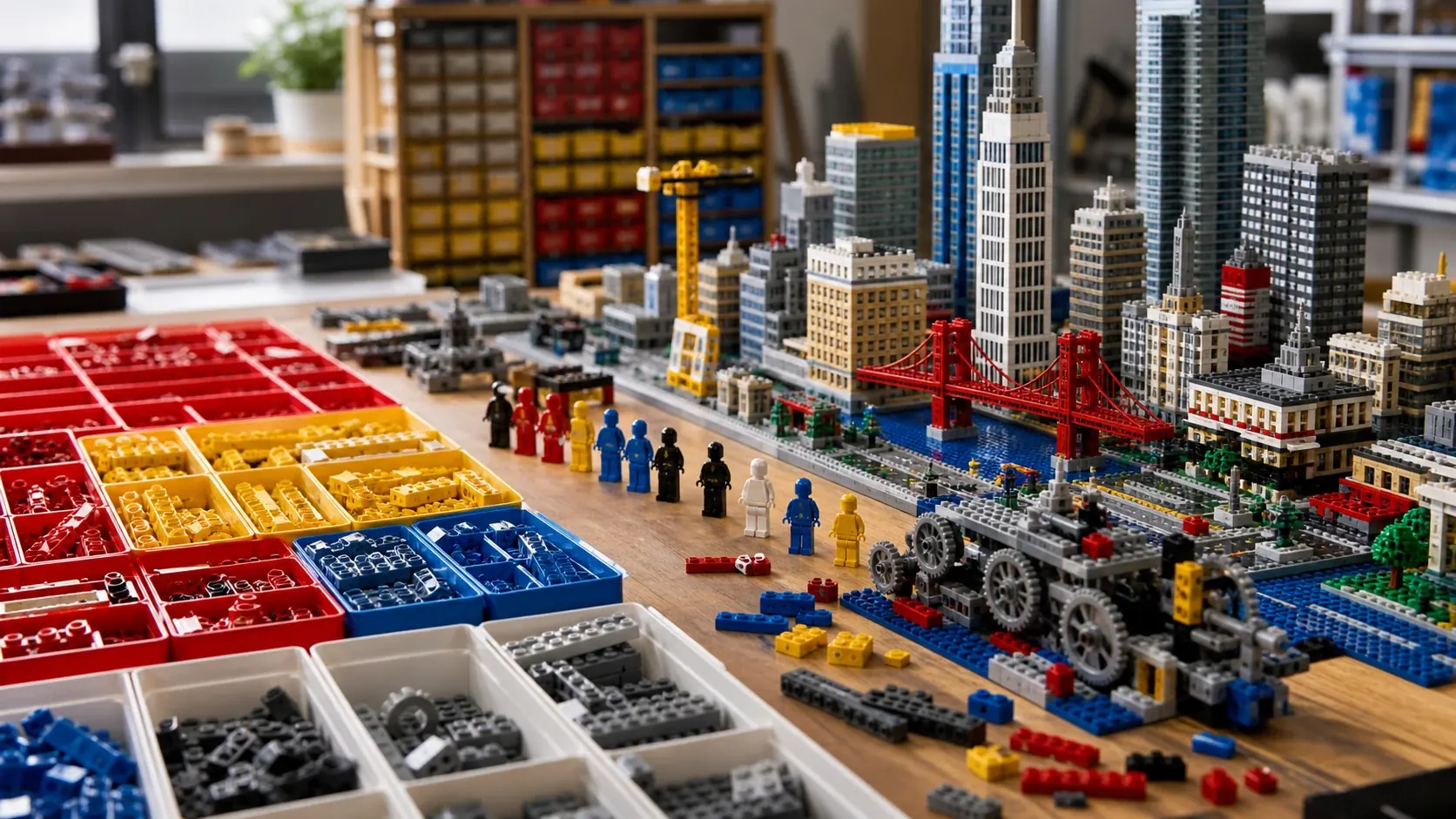
The brick grammar builds worlds
City, Technic, minifigure scale, and color-coded pieces prove a system rather than a toy pile.
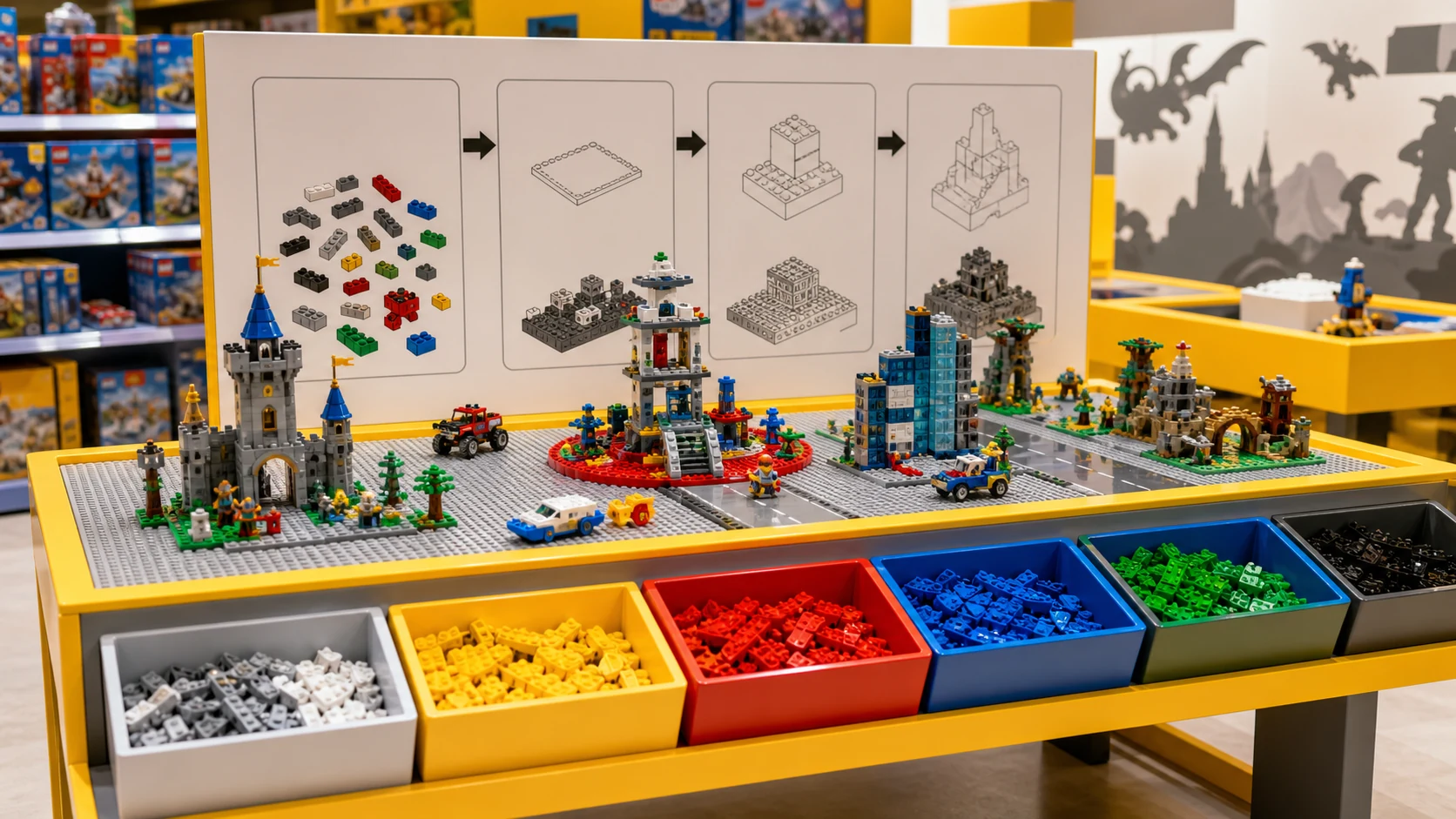
Play, retail, and adult display share the same rules
A store play table shows why theme demand works only when compatibility stays visible.
Product and service system
The stable connection system is the brand engine.
Early-childhood scale extends the grammar to younger builders.
Mechanical complexity proves the system can grow up.
Licensed worlds add demand only when the brick grammar remains visible.
The brand stretches from playroom to classroom to display shelf.
Turning points.
Events that changed what buyers could see, buy, repeat, or trust.
The business begins around play and making objects.
The modern interlocking brick makes compatibility durable.
Characters help worlds feel inhabited, but the brick remains the system.
Plastic and recycled-material debates force the brand to prove responsibility.
Formula 1, FIFA World Cup 2026, and KPop Demon Hunters partnerships brought current culture into the portfolio.
Public reaction.
The useful reaction is about trust and pressure, not sentiment counts.
LEGO earns unusual affection because childhood pieces, adult sets, and family building all feel connected.
A brand built on plastic has to explain material responsibility without pretending the problem is solved.
Full timeline.
Ole Kirk Kristiansen founds the company
Modern interlocking brick form gives the brand a lasting physical grammar
The minifigure adds a durable story and scale asset
Recycled-bottle brick project is dropped after carbon-footprint concerns
Vietnam factory expands LEGO's production footprint in Asia
H1 revenue and profit reach new reported highs as consumer sales rise 22 percent.
Steal / avoid.
- Build one simple grammar that can support many worlds.
- Let product compatibility become the trust promise.
- Use themes to organize demand without hiding the core system.
- Do not confuse a broad portfolio with a random pile of products.
- Do not use fake logos, fake packaging, or protected character knockoffs in visuals.
- Do not make sustainability claims without material proof.
Short answer.
LEGO is useful for studying system architecture. The brand signal is not only the logo or bright colors; it is a durable brick grammar that lets many themes, ages, stores, and use cases feel connected. The danger is letting licenses, plastic pressure, or noisy toy visuals hide the simple compatibility promise.
Frequently asked questions
What is LEGO’s strongest brand signal?
Compatibility: one brick grammar can create many worlds and still feel like LEGO.
Why should a business owner study LEGO?
Because it shows how a simple repeatable system can support many products without becoming random.
What is the biggest risk?
Material and licensing pressure: the brand must keep responsibility and the base system visible.
Need help with your own brand?
Use Private brand work when your name, identity, proof, or message needs a sharper branding decision.
Sources.
Use the education shelf for the concepts behind this brand page.
Private brand workUse Private Brand Work when a product family needs one repeatable system buyers can understand.
All brandsReturn to every brand page.
- LEGO official history
- LEGO official brand page
- LEGO ownership
- Official LEGO mark source page
- LEGO official FY2025 results
- LEGO FY2025 financial highlights
- LEGO 90-year name history
- LEGO 1955 logo source
- LEGO official modern logo history
- DKK to USD exchange-rate observation
- AP on LEGO Vietnam factory
- Wired on LEGO plastic challenge
- The LEGO Group H1 2026 results
- ECB 25 Aug 2026 reference rates
