Levi’s · Grow Your Brand · Everyday-uniform recognition case · United States / Active / public company
Levi’s
Levi’s turns denim workwear into an everyday uniform system. A brand page on Levi’s: rivets, 501 memory, red-tab recognition, Levi Strauss & Co. architecture, Dockers/Beyond Yoga portfolio context, public-market proof, and the risk of reducing the brand to one pair of jeans.
Positioning, name, and architecture.
Three evidence checks before the page talks about scale, color, or public reaction.
Levi’s owns a dense set of product-memory cues: rivets, 501 fit, red tab, patch, denim fade, and the promise that jeans become more personal with use.
Levi’s is an everyday-uniform card: the brand wins when construction, fit, wear, culture, and retail discipline let a mass product feel personally owned.
Founder-name brand from Levi Strauss; the useful cue is the product myth around riveted denim, not only the founder story.
The strongest recurring promise is product-based: original denim, recognizable fits, and garments made to improve through wear.
public-company portfolio / core brand
Levi’s should not be flattened into one jean. Show the company architecture and explain why the core brand still needs fit, fabric, store, and culture proof.
The denim center carries the company memory and the main buyer signal.
core brand: Levi’s denim and apparel source
Fit numbers, rivets, tab cues, and construction details make the brand physical.
product grammar: 501 and Red Tab core denim source
Activewear breadth must be visible without blurring Levi’s denim center.
portfolio lane: Beyond Yoga source
Business-casual separation sharpens why Levi’s must protect its own heritage and fit system.
separated portfolio meaning: Dockers divestiture context source
Naming and tagline progression
The name attaches to durability and utility.
Fit numbers turn product architecture into language.
Campaigns and collaborations have to renew the uniform without losing construction proof.
Market and scale snapshot.
Levi Strauss & Co. is publicly listed, so brand heritage can be read beside current revenue, earnings, market value, and ownership structure.
Levi Strauss & Co. FY2025 net revenues.
Levi Strauss & Co. FY2025 net income.
Levi Strauss & Co. market capitalization observed on 15 Jul 2026.
Publicly listed parent of the Levi’s brand.
Color system.
Levi’s color works when red and indigo stay tied to real denim surfaces.
How the palette behaves
Red creates quick tab and sale-floor recognition when used as an accent, not a flood.
Indigo carries durability, workwear, and personal wear memory.
Copper makes construction proof visible through rivets and stitching hardware.
Leather tan warms the heritage cue without turning the page into costume nostalgia.
Recognition assets.
Memory pieces the brand can use before someone finishes a sentence.
501 is more than an SKU when buyers use it as shorthand for shape and identity.
Construction details turn durability into something the buyer can inspect.
Levi’s works when denim feels worn into life, not staged as heritage theater.
Scores.
Use these scores to compare recognition, trust, proof, pressure, and risk.
Few apparel systems have stronger physical memory.
Needs company and product-family context to avoid one-jean flattening.
Strong when music, stores, and fit trends update the product.
Heritage can become costume if current use is weak.
Construction details, fit numbers, denim wear, cultural use, and retail discipline let Levi's mass product feel personally owned.
Levi’s needs parent, product, service, market, and history lanes labeled cleanly so search systems do not flatten the brand into one vague entity.
Workwear history, the 501 fit, construction details, stores, collaborations, and activewear extensions keep Levi's denim authority current.
Levi’s carries risk when the customer experience does not support the recognition system the page is describing.
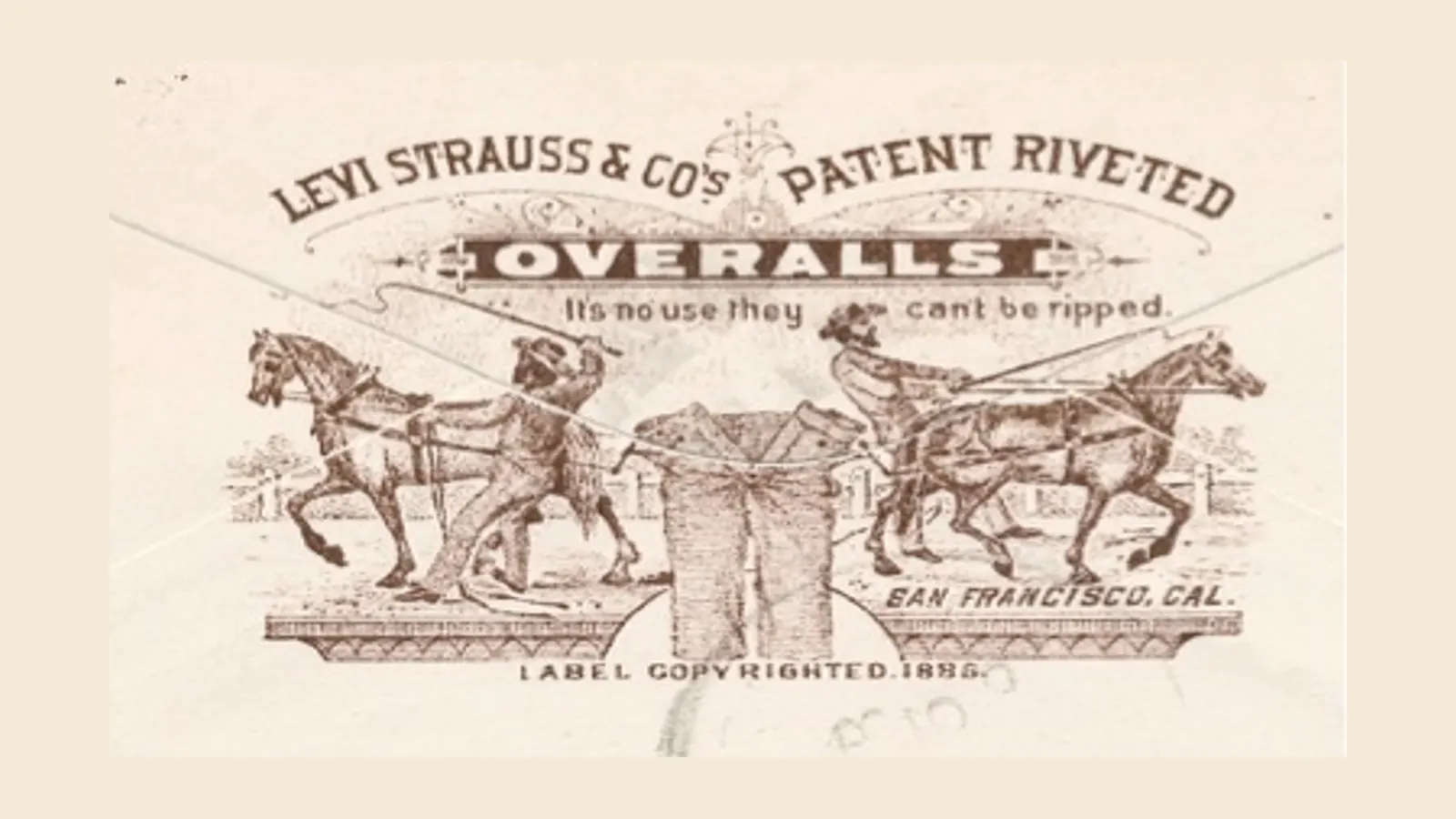
How the logo changed.
A picture of strength became a compact global housemark while product codes and the Red Tab kept recognition anchored in the garment.
Product and service lineage.
The brand has to prove itself on real products and service surfaces.

Details carry the myth
The page should make physical proof visible: rivet, tab, patch, stitch, wash, fit.
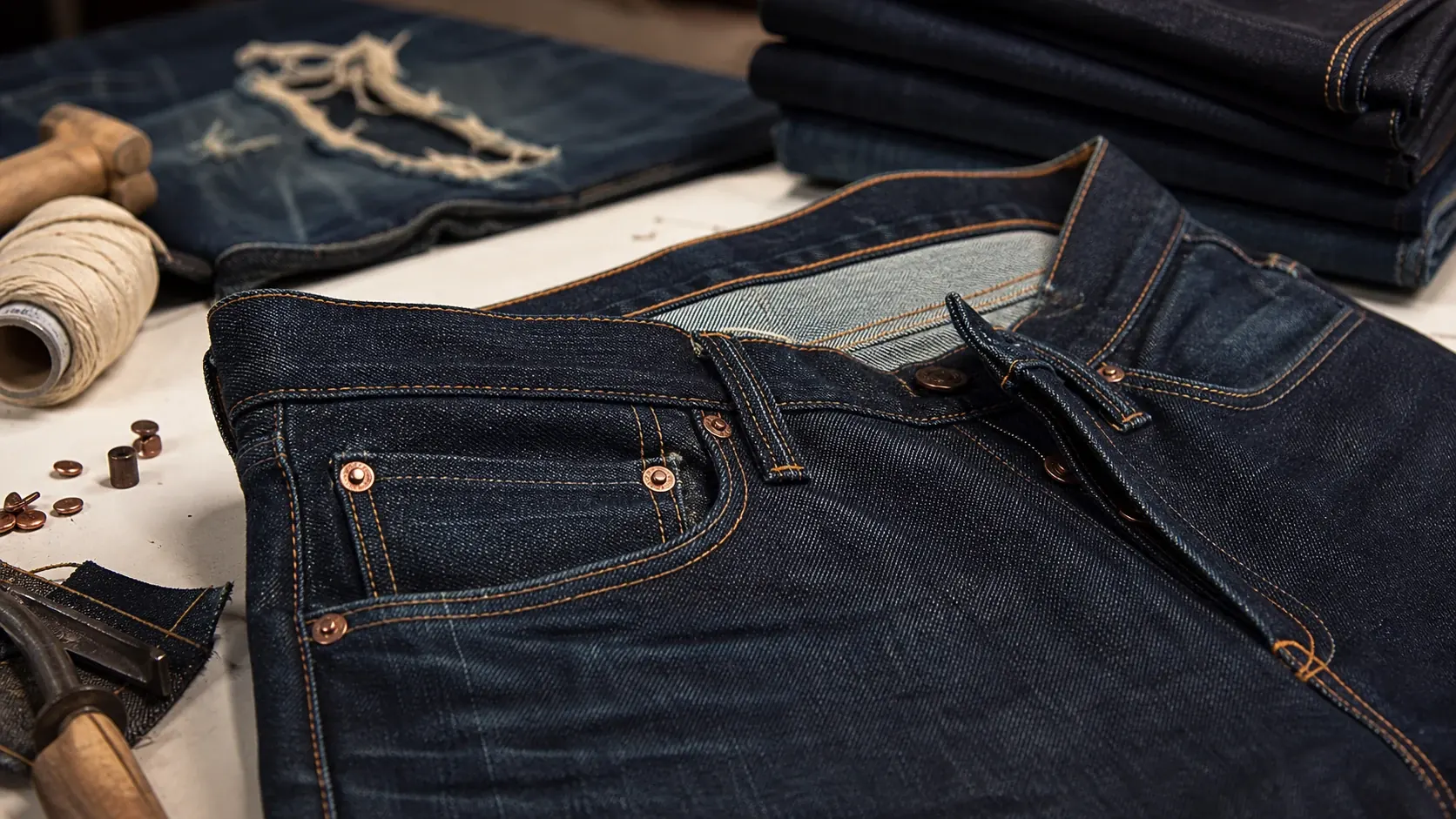
Denim construction proof
The third evidence point makes rivets, stitch, repair, fit, and wear visible as the brand memory.

Retail fit system keeps heritage current
The wall of fits, repairs, jackets, and fabric choices keeps the 501 story from becoming frozen nostalgia.
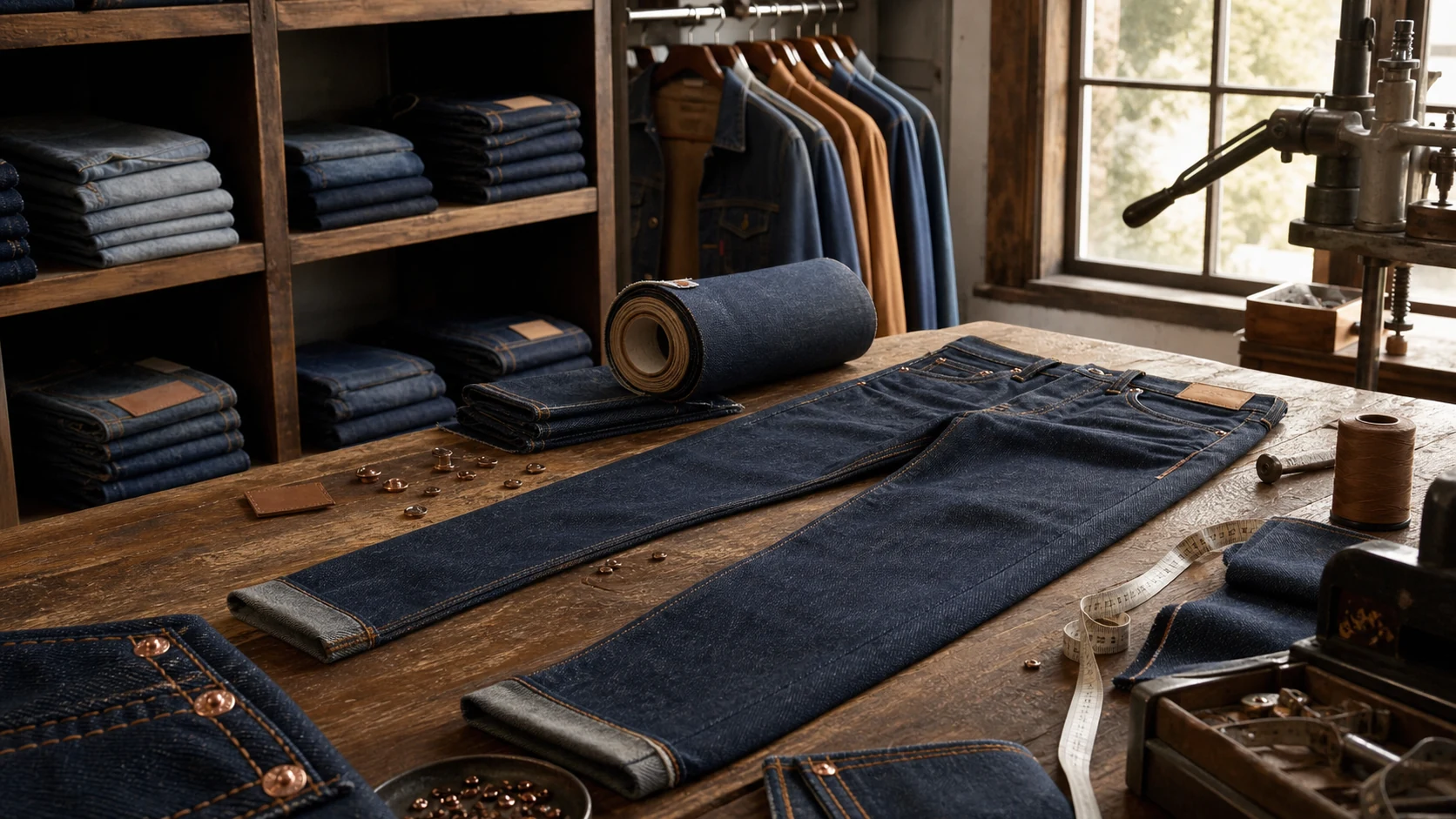
The product remembers the brand
Denim, rivets, stitch, fit numbers, and wear patterns make the identity tangible before a word is read.
Product and service system
The origin story matters because it begins with product construction, not a campaign.
A fit number became shorthand for a category and a personal silhouette.
Women’s product expansion showed the uniform could move beyond one original buyer.
Portfolio breadth needs clarity so activewear does not blur the Levi’s denim center.
The business-casual lane should be shown as portfolio separation, not hidden.
Turning points.
Events that changed what buyers could see, buy, repeat, or trust.
The brand begins in trade and utility before it becomes fashion.
Construction proof creates the original product myth.
LEVI reporting gives sourceable financial context.
Dockers separation and activewear moves show architecture pressure.
Public reaction.
The useful reaction is about trust and pressure, not sentiment counts.
Levi’s wins when denim becomes personal through fit, fading, repair, and repeated wear.
If the brand only talks about origin, younger buyers can treat it as old retail rather than current identity.
Full timeline.
Levi Strauss starts the San Francisco dry-goods business
Riveted blue jean patent with Jacob Davis creates the construction myth
Lady Levi’s expands the customer signal
Dockers launches as a business-casual portfolio lane
Levi Strauss returns to public markets as LEVI
Beyond Yoga acquisition adds activewear to the company architecture
Dockers sale context sharpens the need to protect the Levi’s denim center
Steal / avoid.
- Make physical details into memory assets: fit number, tab, rivet, patch, wash.
- Let heritage prove construction, not just decorate copy.
- Use portfolio moves to clarify what the core brand is and is not.
- Do not reduce the page to one pair of jeans.
- Do not fake red-tab or patch lettering in generated visuals.
- Do not let nostalgia replace current buyer use.
Short answer.
Levi’s is useful for studying how a product becomes an everyday uniform. The brand signal is not only denim; it is the repeatable system of fit numbers, rivets, tab memory, patches, washes, store cues, and cultural renewal. The risk is treating heritage as decoration instead of showing why the product still belongs in daily life.
Frequently asked questions
What is Levi’s strongest brand signal?
A physical product-memory system: fit number, rivets, red tab memory, patch, stitching, and denim wear.
Why include Levi Strauss & Co. architecture?
Because Levi’s is a core brand inside a public company, and portfolio moves like Beyond Yoga or Dockers affect brand meaning.
What should a founder steal from Levi’s?
Turn product details into language buyers can repeat.
Need help with your own brand?
Use Private brand work when your name, identity, proof, or message needs a sharper branding decision.