Lord & Taylor · Grow Your Brand · Lord & Taylor failure case study · United States / Filed Chapter 11 in August 2020, liquidated all stores, and sold the brand to Saadia Group for digital relaunch
Lord & Taylor
What happened to Lord & Taylor's stores and name? America's oldest department store still had a famous name and a legible script mark. What broke was the operating proof: traffic, leases, relevance, inventory, and ownership could not support a prestige department-store promise in 2020.
Positioning, name, and architecture.
Lord & Taylor had almost two centuries of retail memory: New York department-store prestige, holiday windows, dresses, coats, service, and a refined script identity.
A refined New York heritage name with one of the longest department-store histories in the U.S.
Lord & Taylor had heritage and taste, but a department-store brand must still prove why the trip matters now.
The name comes from founders Samuel Lord and George Washington Taylor.
America's first department store
Historic retail name separated from liquidated store chain
The store chain, Fifth Avenue flagship memory, Le Tote transaction, Saadia acquisition, and later online use are separate stages.
Physical department stores liquidated in 2020.
failed operator: 38 stores source
Historic New York department-store proof that made the script feel bigger than ecommerce.
flagship memory: New York flagship store source
Le Tote acquired Lord & Taylor shortly before the 2020 bankruptcy and liquidation.
failed-operator context: 2019 acquisition source
Bought assets and digital rights through the bankruptcy process.
asset buyer: online relaunch source
Naming and tagline progression
Founder-name dry-goods origin
New York department-store prestige
Digital heritage-brand use
Market and scale snapshot.
These figures describe the 2020 failed store-chain event and brand sale, not a current public-company financial model.
The surviving private brand/IP use does not report public revenue.
The surviving private brand/IP use does not report public profit.
The company moved from attempted restructuring to full store liquidation and Saadia Group bought assets through bankruptcy.
The historic store trip did not continue as a department-store chain; current operating financials are not publicly reported.
Color system.
Black script, burgundy retail warmth, and brass heritage cues say prestige; the collapse shows prestige needs a current trip reason.
How the palette behaves
Script black: heritage authority. logo source files.
Burgundy: retail warmth and fashion. store-closeout visual system.
Brass: department-store legacy. heritage presentation cues.
Recognition assets.
The script was not the problem. The problem was that the customer trip lost urgency while the financial model still carried expensive physical-store obligations.
The name held cultural and retail history, but history alone did not create traffic.
Shoppers had more direct fashion and marketplace options than the old department-store path.
The mark and name survived through a buyer even after stores shut.
Scores.
Heritage and recognition stayed visible while operating proof and customer urgency dropped.
The script and heritage claim remained recognizable.
The store trip was not distinct enough against specialists and ecommerce.
Post-sale uses require explanation.
The history is unusually deep for American retail.
The script remained elegant, but a retail identity has to prove traffic, margin, and trip purpose.
These figures describe the 2020 failed store-chain event and brand sale, not a current public-company financial model.
Historic department-store operator liquidated; brand IP survived through sale and digital relaunch
The physical department-store chain is gone; later digital and licensing uses are separate from the failed store operator.
How the logo changed.
The logo progression shows how a heritage script kept recognition while the operating department-store model disappeared.
The script carried the old department-store prestige system.

The pre-collapse identity kept the name visible while the operating model weakened.

The current source file represents the name after the store chain's liquidation.
Product and service lineage.
Lord & Taylor moved from heritage department-store service to a liquidated store base and later digital/IP use.
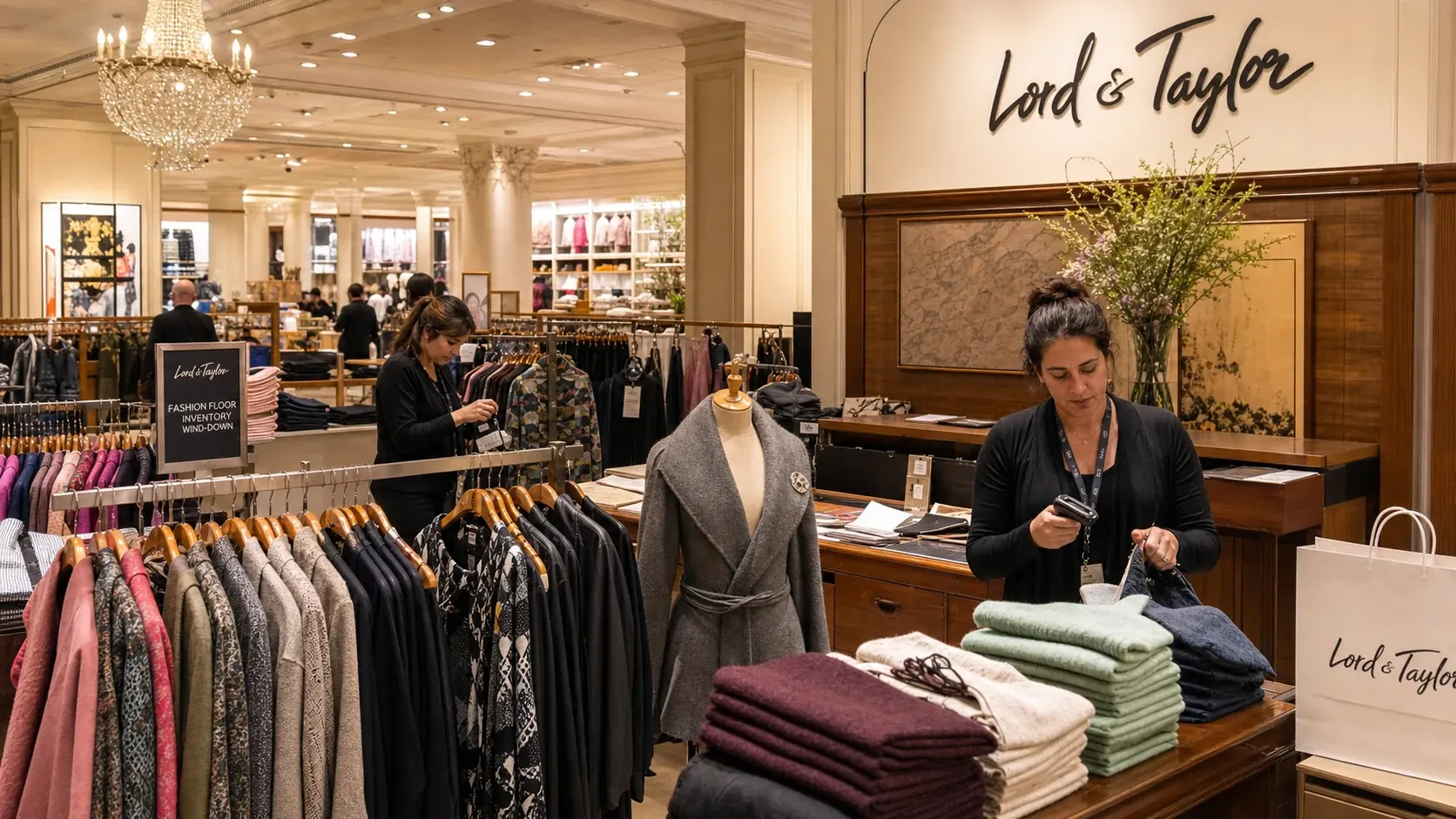
Prestige still needed sell-through
The name could imply taste, but unsold inventory and traffic decline still broke the economics.

The name moved to a smaller channel
Digital relaunches can keep a name visible without preserving the old store promise.
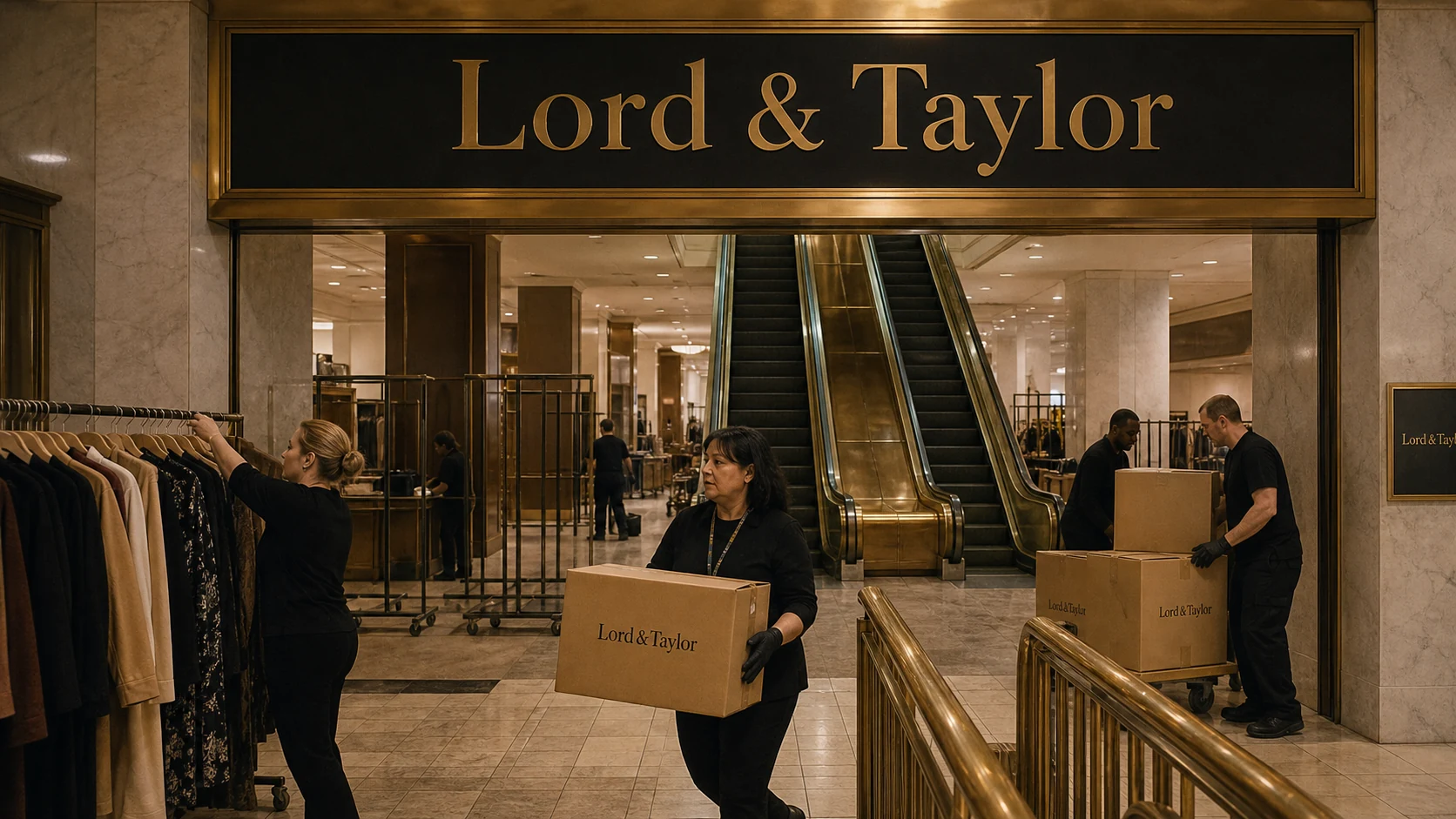
The flagship memory was not the business
Historic stores can create affection while the financial model still disappears.

Heritage became licensing material
After liquidation, the strongest surviving asset was the name, not the store trip.
Product and service system
The name begins as a credible retail institution.
Fashion and service reinforce the script.
Le Tote ownership arrives shortly before bankruptcy.
The name survives after physical liquidation.
Turning points.
The collapse shows a heritage name becoming smaller than the physical system built around it.
Why it failed
Mall traffic decline, lease burden, department-store relevance loss, ownership complexity, and pandemic disruption weakened the chain.
The operator entered Chapter 11, first seeking a path for stores, then moved to full liquidation and a brand-asset sale.
In 2020 the company announced all stores would liquidate and Saadia Group bought Lord & Taylor assets through the bankruptcy process.
Failure timeline
Lord & Taylor begins in New York.
Le Tote agrees to acquire Lord & Taylor.
Chapter 11 filing follows pandemic pressure.
Saadia Group buys the brand assets.
Public reaction.
The public story was emotional because the store had unusual age and cultural memory.
Physical locations liquidated after bankruptcy.
The name retained enough value for a buyer to relaunch digitally.
Full timeline.
Lord & Taylor begins as a New York retail name. Source
The Fifth Avenue flagship era makes the name a New York department-store institution. Source
The brand moves through modern department-store ownership changes. Source
Hudson's Bay Company ownership places Lord & Taylor inside a cross-border department-store group. Source
Le Tote agrees to acquire Lord & Taylor from Hudson's Bay Company. Source
Lord & Taylor enters Chapter 11 and liquidates stores. Source
Saadia Group buys Lord & Taylor assets. Source
Steal / avoid.
- Use heritage as proof, not decoration.
- Make the customer trip specific.
- Separate store failure from brand-asset survival.
- Do not confuse old prestige with current demand.
- Do not let a beautiful script hide weak traffic.
- Do not flatten buyer/operator/legal roles.
Short answer.
Lord & Taylor's name dates to 1826, but its retail history includes changes of ownership and the closure of its department-store chain. Le Tote completed an acquisition from Hudson's Bay in November 2019 before the 2020 bankruptcy. A surviving or reused name should not be confused with an uninterrupted continuation of those stores.
Frequently asked questions
Did Lord & Taylor close every store?
Yes. The 2020 bankruptcy led to liquidation of the physical store chain.
How old is the Lord & Taylor brand?
Lord & Taylor traces its founding to 1826. That dates the retail name's history, not the age of an uninterrupted current store network. The later closure of department stores and sales of brand assets must be described separately from the founding date.
Who bought Lord & Taylor from Hudson's Bay before its bankruptcy?
Fashion-rental company Le Tote announced completion of its Lord & Taylor acquisition in November 2019. That transaction brought the department-store business into a company with a different retail model shortly before the 2020 bankruptcy. It is historical ownership, not evidence of who owns any later use of the brand name.
Can the Lord & Taylor name continue after its stores closed?
Yes. Saadia Group acquired Lord & Taylor's intellectual property after the store liquidation. Ownership of a name and other brand assets is different from preserving or reopening the former department-store chain.
Need help with your own brand?
Use Private brand work when your name, identity, proof, or message needs a sharper branding decision.


