LVMH · Grow Your Brand · Luxury · France / Active
LVMH
How does LVMH grow a luxury portfolio without making every maison look alike? LVMH gives its maisons access to group resources while keeping their individual identities visible. Louis Vuitton and other houses carry the consumer promise; LVMH carries the ownership and portfolio story. Our analysis: the system works when shared scale supports each house without erasing its reason to be chosen.
Positioning, name, and architecture.
Our brand-strategy analysis separates the company, its offer and the evidence a customer can inspect.
Scale behind distinct luxury houses
Develop each house while preserving its identity and expertise.
LVMH brings together the names Louis Vuitton, Moët and Hennessy.
Read the names by the role each plays in the buying decision.
House of brands with a visible corporate parent
Different categories can still depend on the same luxury spending cycle. Portfolio breadth does not guarantee protection from weaker demand.
The house name helps customers recognize a particular design and craft tradition.
Maison-level demand: Fashion and leather goods source
Product origins and category expertise require a different buying story.
Distinct category: Wines and spirits source
A different purchase frequency and route to customers.
Beauty: Perfumes and cosmetics source
The parent supports development while maison identities remain distinct.
Parent role: Group resources source
What the names help buyers understand
LVMH brings together the names Louis Vuitton, Moët and Hennessy. This is a naming explanation, not a claim about an official advertising tagline.
Market and scale snapshot.
LVMH reports group results in euros. The US-dollar figures below use one stated presentation rate; they are not figures for an individual maison.
FY2025 group revenue: EUR 80.807 billion. Presentation conversion at the ECB reference rate for 21 September 2026: EUR 1 = USD 1.1490. This is not a transaction-date exchange rate.
FY2025 net profit attributable to the group: EUR 10.878 billion. Presentation conversion at the ECB reference rate for 21 September 2026: EUR 1 = USD 1.1490. This is not a transaction-date exchange rate.
Dated Reuters observation: EUR 201 billion on 15 September 2026. USD equivalent uses ECB 21 September EUR 1 = USD 1.1490 for presentation; it is not a current quote or transaction-day conversion.
LVMH Moët Hennessy Louis Vuitton SE; financial results cover the group rather than one maison.
Color system.
The supplied current LVMH corporate-logo SVG uses white. That observed asset does not establish a complete corporate palette, and maison colors should not be assigned to the parent.
How the palette behaves
The observed corporate asset is monochrome. Our reading is that a quiet parent signature can identify the owner without copying the visual cues customers associate with a particular house.
LVMH’s operating model preserves the identities of its houses. A Tiffany packaging color or Louis Vuitton product pattern is evidence about that maison, not an LVMH corporate-color specification.
The same group contains fashion, wines, jewelry and selective retail. Showing those businesses together requires labels that distinguish a corporate report from a consumer-facing house identity.
Recognition assets.
Memory pieces the brand can use before someone finishes a sentence.
LVMH describes respect for individual maison identities as part of its model. Our reading: a corporate ownership badge cannot substitute for the specific product, design or service that draws a customer to a house.
LVMH describes a decentralized organization. Brand architecture therefore includes who can make decisions close to the product and customer, alongside the names displayed in a portfolio.
A group result belongs to LVMH unless the source explicitly gives a maison figure. A successful house and a successful parent are related observations, but neither proves the other automatically.
Scores.
Grow Your Brand editorial evaluations, reviewed 22 September 2026. Each score is out of 10; higher means a clearer, more consistent and better-supported signal. Scores of 1-3 indicate weak evidence, 4-6 partial support, 7-8 strong support and 9-10 unusually consistent proof across the cited surfaces. These are editorial judgments, not customer-survey results or financial forecasts.
The parent name is visible in investor and corporate communication; consumer recognition is carried by individual maisons.
The group explains its role through the ownership and development of luxury maisons across defined business groups.
Published business groups and maison listings make the ownership structure inspectable without replacing each maison’s identity.
Craft, manufacturing, retail and products give the group’s promises physical evidence across its maisons.
The restrained parent identity supports investor and corporate use. A uniform consumer look would weaken the separate maisons.
The combination of maison ownership, distribution and craft capabilities is more specific than a general premium claim.
Audited group results and business-group reporting support scrutiny, while demand changes and market value remain separate risks.
Corporate pages explain the group; buyers must move to the relevant maison for product selection, service and purchase.
How the logo changed.
Two distinct corporate marks are supported by the linked sources. The labels date the documented evidence, not an assumed complete redesign chronology. No intermediate stage or exact launch year is invented.
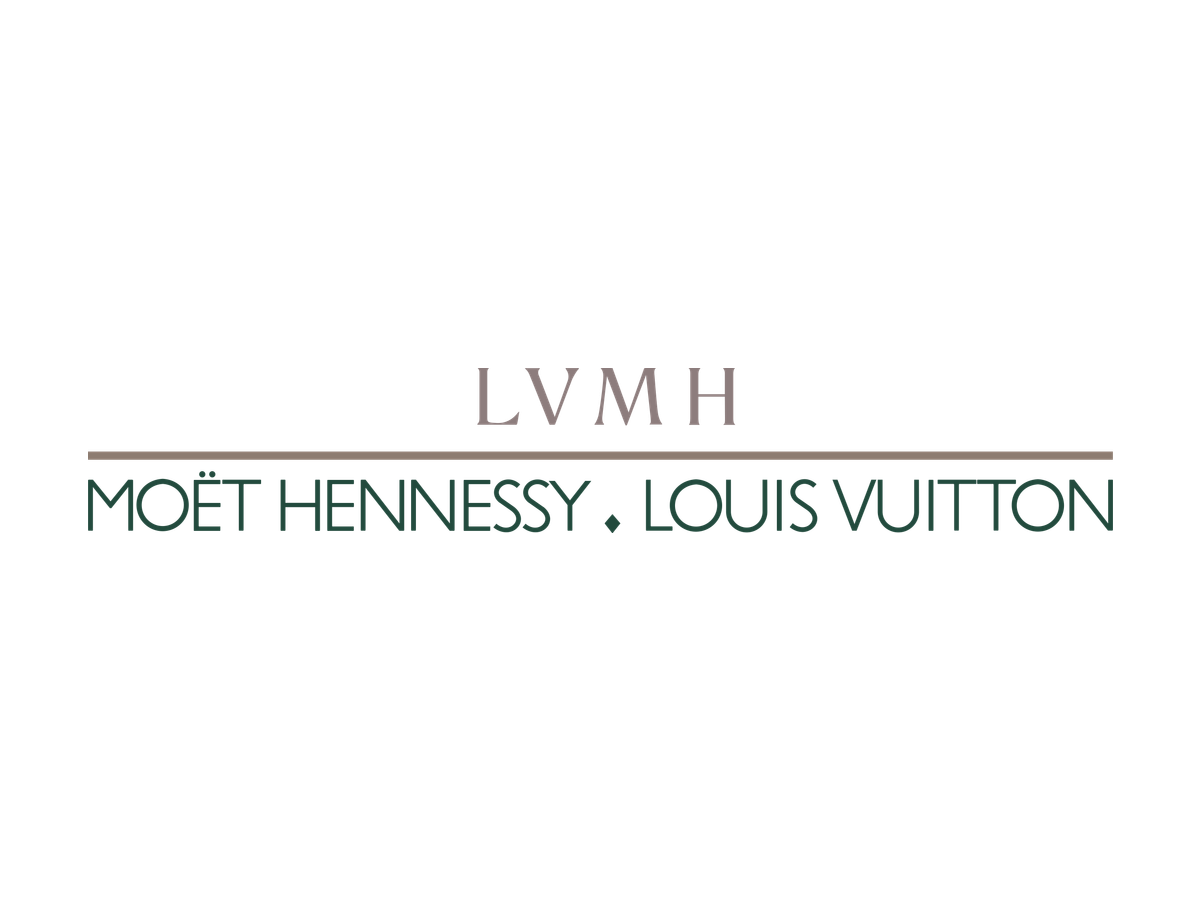
Archived full-name lockup, documented by the 2008 source record and attributed there to LVMH company reports. Its complete period of use is not established here. source

Current corporate wordmark from the official LVMH website. Individual Maison logos belong to the portfolio, not this parent-brand history. source
Product and service lineage.
LVMH’s product evidence comes from its maisons. The parent organizes ownership and shared resources while customers choose a particular house, category and offer.
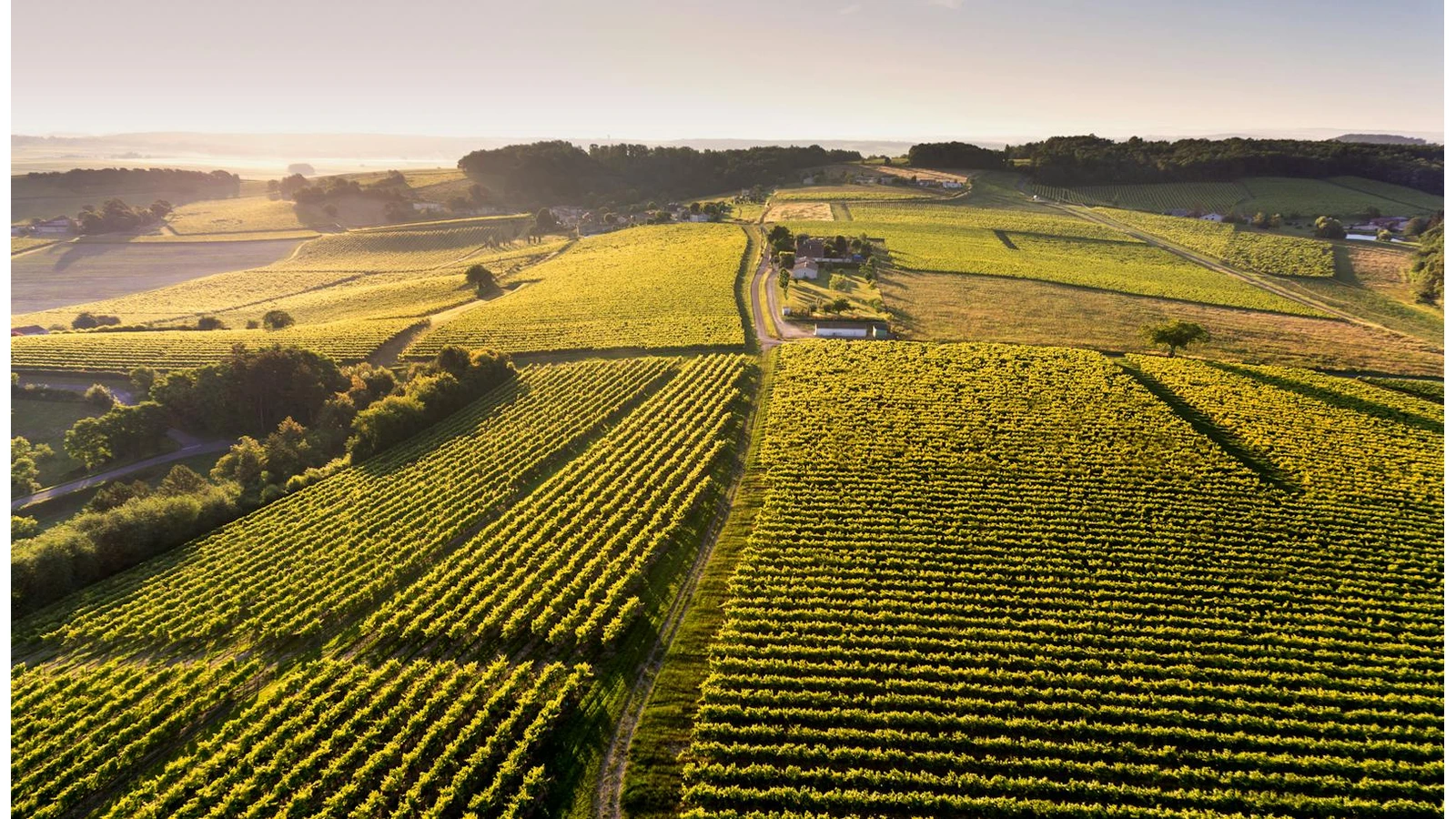
Hennessy vineyards
Vineyard landscape from the official LVMH Hennessy Maison page.
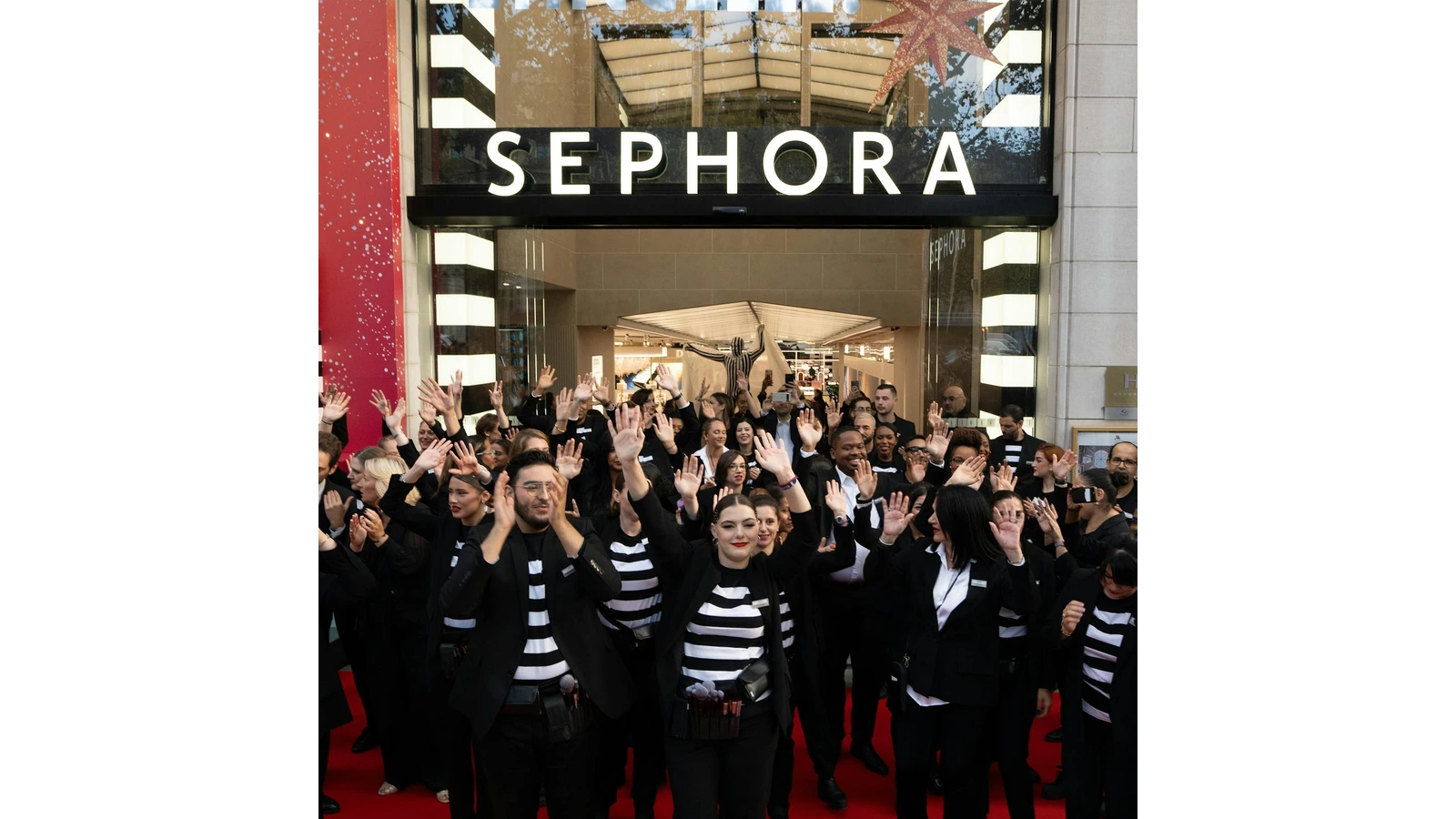
Sephora retail
Sephora storefront and retail team, from LVMH’s official Maison page.
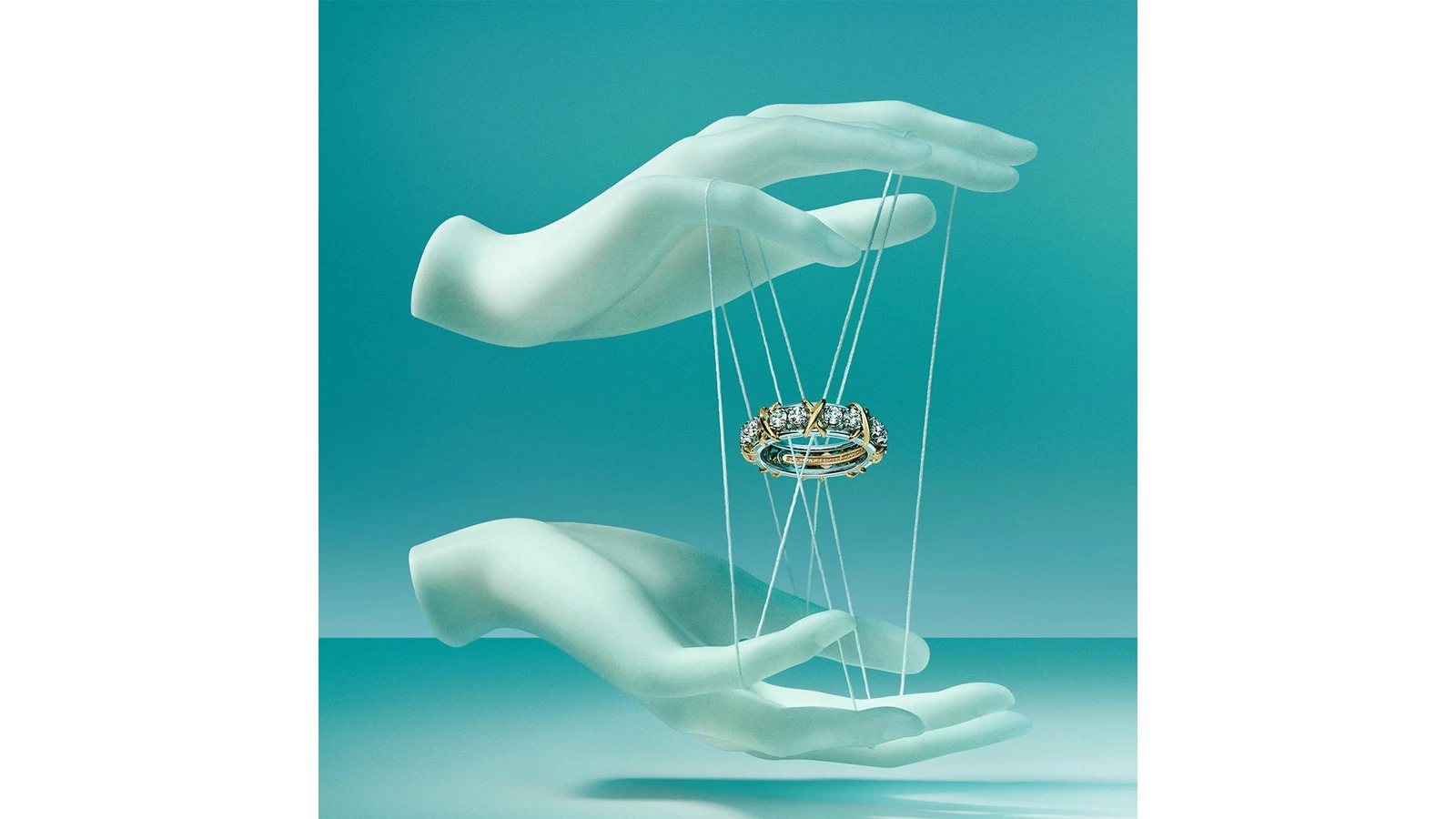
Tiffany jewelry
Tiffany jewelry product photograph from the official LVMH Maison page.
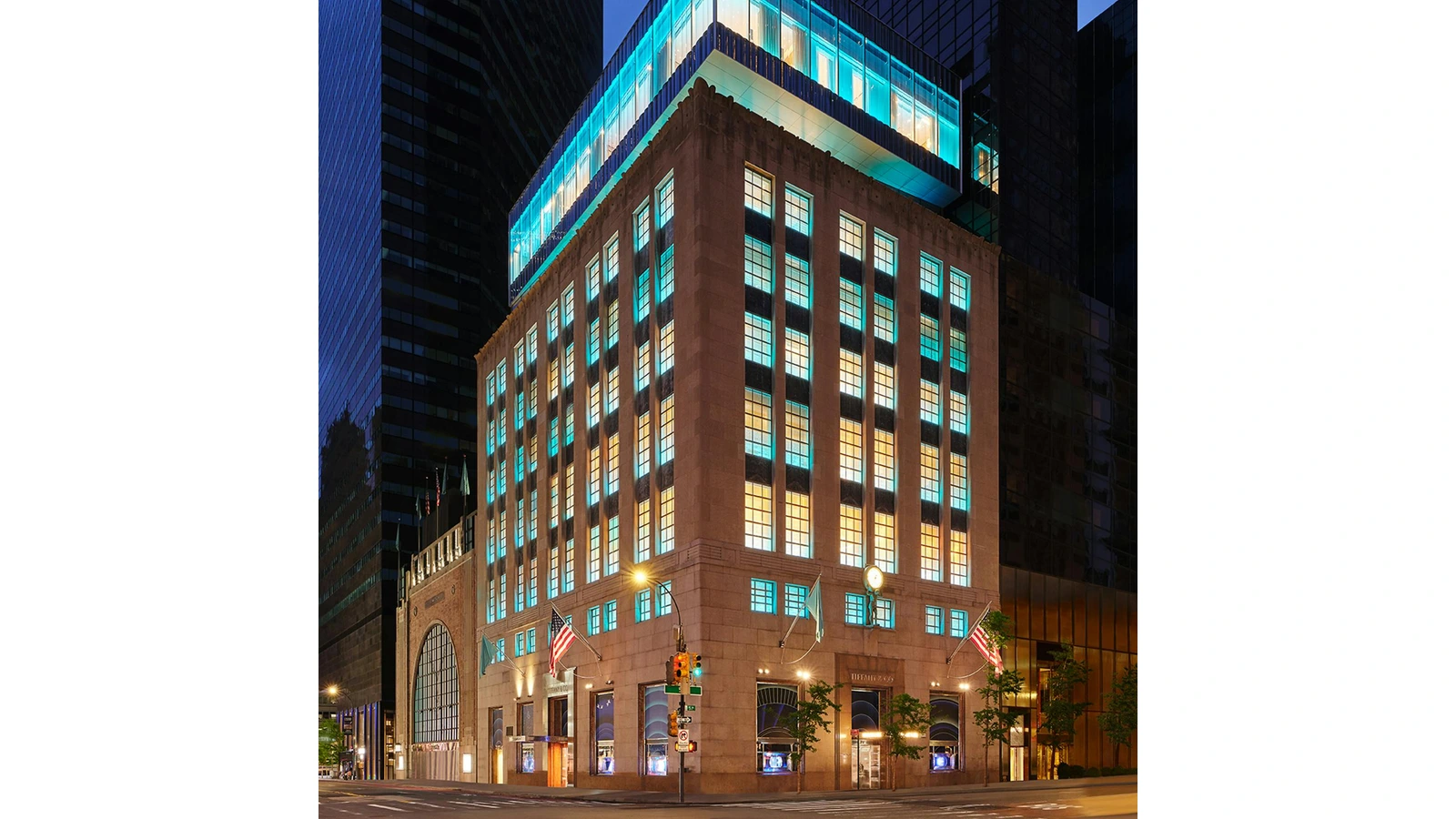
Tiffany Landmark
Tiffany & Co. Landmark flagship building, from LVMH’s official Maison page.
Product and service system
Fashion and leather goods place design, craft and retail presentation at maison level. Group reporting identifies the business category without replacing those identities.
Wines and spirits depend on product origins, category expertise and distribution. Their buying context differs from fashion and jewelry.
Jewelry maisons retain their own names, product traditions and customer relationships within LVMH’s Watches & Jewelry group.
Selective retailing gives the group a business built around beauty retail and product selection, separate from ownership of an individual luxury maison.
Hospitality extends the portfolio into places and service experiences following the 2019 acquisition.
Turning points.
Dated source facts are separated from our interpretation of their brand consequences.
Moët Hennessy and Louis Vuitton combined to create LVMH.
LVMH describes its role as supplying resources for maisons to create, manufacture and distribute.
Reuters reported that L'Oreal overtook LVMH as France's most valuable listed company.
Public reaction.
Investor pricing, reported sales and visitor attendance describe different responses to LVMH. They do not form a single public-approval score.
Reuters reported L’Oréal moving ahead of LVMH in market value on 15 September 2026. The observation is dated and concerns investor expectations for the parent companies.
LVMH’s FY2025 results reported declines in group sales while selective retailing recorded organic growth. Group performance should therefore be read alongside the business-group breakdown.
LVMH’s official history reports more than 200,000 visitors at 93 sites in 15 countries during the 2022 Journées Particulières. Attendance is evidence of participation; it does not measure satisfaction with every maison.
Full timeline.
Moët Hennessy and Louis Vuitton merge to create LVMH.
LVMH acquires Loewe and Celine.
LVMH creates its Watches & Jewelry division through acquisitions including TAG Heuer.
Fendi joins LVMH.
Bvlgari joins LVMH.
LVMH acquires Belmond.
LVMH acquires Tiffany & Co.
Reuters reports that L’Oréal overtakes LVMH as France’s most valuable listed company.
Steal / avoid.
- Decide which promises belong to the parent and which belong to each brand.
- Share capabilities where they help; keep product decisions close to the people responsible for the house.
- Putting a group revenue number beside one maison without identifying its scope.
- Assuming a larger collection of names always means a less concentrated business risk.
Short answer.
LVMH gives its maisons access to group resources while keeping their individual identities visible. Louis Vuitton and other houses carry the consumer promise; LVMH carries the ownership and portfolio story. Our analysis: the system works when shared scale supports each house without erasing its reason to be chosen.
Frequently asked questions
Is LVMH the same as Louis Vuitton?
No. LVMH is the parent group. Louis Vuitton is one maison within it, with its own consumer-facing identity and products.
What brand architecture does LVMH use?
LVMH is a house-of-brands example: individual maisons retain their names and identities while the parent supplies group resources and ownership oversight.
Why study LVMH separately from its maisons?
The parent page explains resource allocation, ownership and portfolio decisions. A maison page explains a particular customer promise and the products that support it.
Need help with your own brand?
Use Private brand work when your name, identity, proof, or message needs a sharper branding decision.
Sources.
Official brand mark; source linked in the evidence list.
Use the education shelf for the concepts behind this brand page.
Private brand workApply this question to the positioning and architecture of your own business.
All brandsReturn to every brand page.
- LVMH group history and purpose
- LVMH operating model
- Reuters: L'Oreal overtakes LVMH, 15 September 2026
- Official image and product evidence
- Official identity source
- LVMH FY2025 results, 27 January 2026
- LVMH official group history
- ECB reference rate for 21 September 2026, published 22 September
- hennessy-cognac visual source
- sephora-retail visual source
- tiffany-jewelry visual source
- Archived corporate logo source
- Current corporate logo source
- Reuters dated market value, 15 September 2026
