MUJI · Grow Your Brand · Subtraction system · Japan / Active
MUJI
MUJI makes restraint visible. Plain packaging, reduced processing and ordinary objects carry recognition across apparel, food, furniture and stores. The system is quiet, but never accidental.
Positioning, name, and architecture.
MUJI's position, name, and portfolio reinforce one recognizable operating system.
The same subtraction rule governs material, processing, packaging and store presentation.
MUJI wins when product, package and room all make the same quiet decision.
Mujirushi Ryohin means no-brand quality goods.
No-brand quality goods
listed parent / global retail masterbrand
MUJI is mapped as one masterbrand system; parent-company and category roles are labelled rather than mixed into logo progression.
The original product logic links categories through ordinary use.
product system: Household, apparel and food source
Rooms turn the product system into an overnight experience.
hospitality extension: MUJI Hotel Ginza source
Naming and tagline progression
Lower priced for a reason.
No-brand quality goods.
Market and scale snapshot.
MUJI is the operating brand; every figure below belongs to listed parent Ryohin Keikaku group, not to standalone MUJI brand revenue.
Ryohin Keikaku group first-half revenue, up 14.8% year on year.
Ryohin Keikaku group operating profit; 10.3% margin.
Net income attributable to owners of Ryohin Keikaku.
700 stores in Japan and 760 overseas at the first-half close.
Color system.
Dark red identifies the brand; kraft, natural fibers and neutral fields let material and use stay visible.
How the palette behaves
Dark red adds recognition without turning every object into an advertisement.
Kraft and uncoated surfaces signal reduced packaging and material honesty.
Neutral grounds keep many categories coherent without making them identical.
Recognition assets.
Memory pieces the brand can use before someone finishes a sentence.
Dark red MUJI wordmark anchors the identity.
Kraft paper and plain containers makes the brand visible beyond the logo.
Stores mixing food, apparel and home carries recognition into use.
Scores.
Use these scores to compare recognition, trust, proof, pressure, and risk.
The dark red wordmark, kraft packaging, plain containers, and neutral material families are recognizable across categories.
Material choice, fewer production processes, and reduced packaging give the restraint claim a visible product basis.
Apparel, household goods, food, and hospitality share the same reduction logic without relying on luxury decoration.
Stores, ecommerce, the MUJI App, hotels, and homes must make sparse design easy to buy and use rather than merely quiet to look at.
The page distinguishes the MUJI operating brand from listed parent Ryohin Keikaku and labels parent financial figures accordingly.
One product rule works across household goods, apparel, food, travel, housing, and hotels, giving MUJI authority in useful restraint.
Dark red, kraft, plain labels, neutral materials, and reduced packaging repeat from shelf to store environment.
The main burden is keeping the no-brand idea tied to material and process discipline as minimalist styling becomes easy to copy.
How the logo changed.
MUJI moved from a Japanese private-label launch to a global Latin wordmark while its product and packaging rules stayed recognizable.
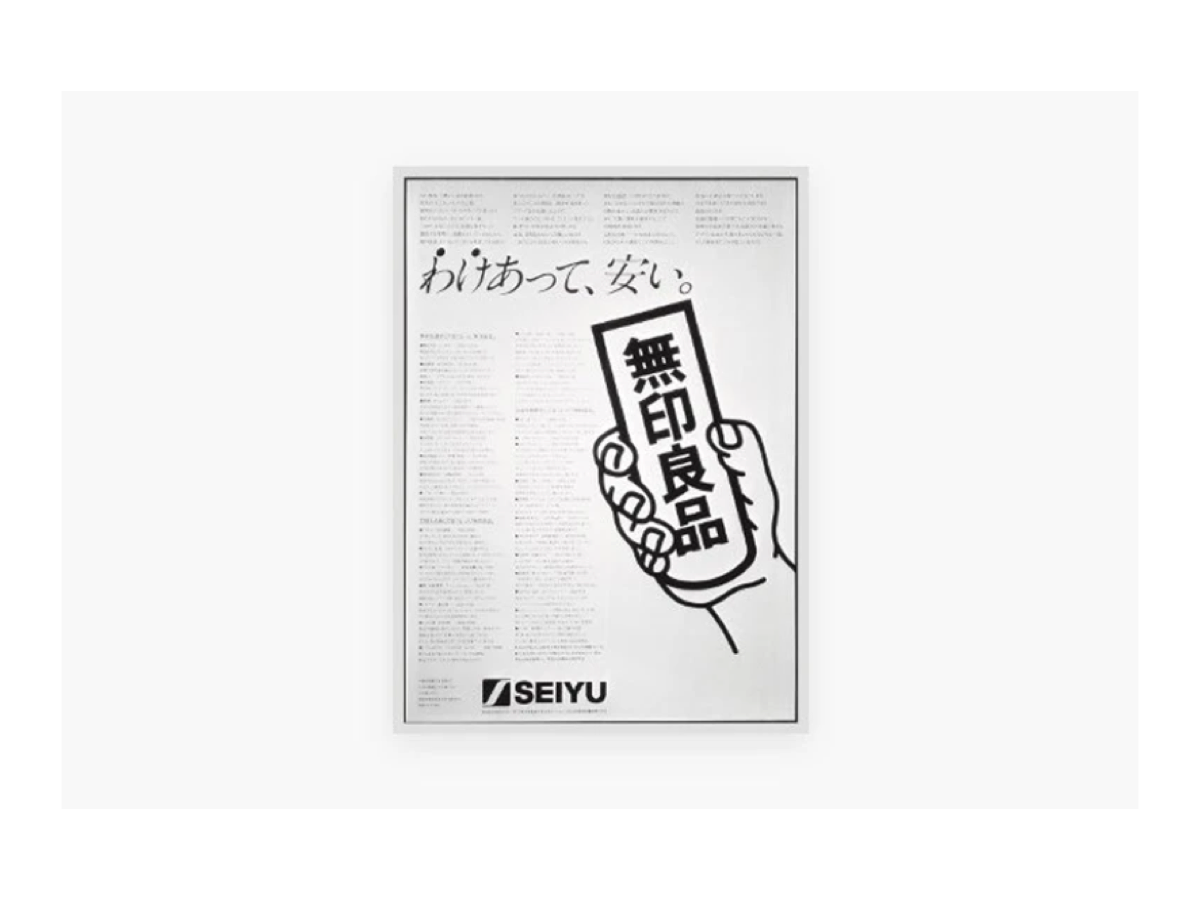
The launch advertisement made the Japanese name and kraft-paper logic public. source
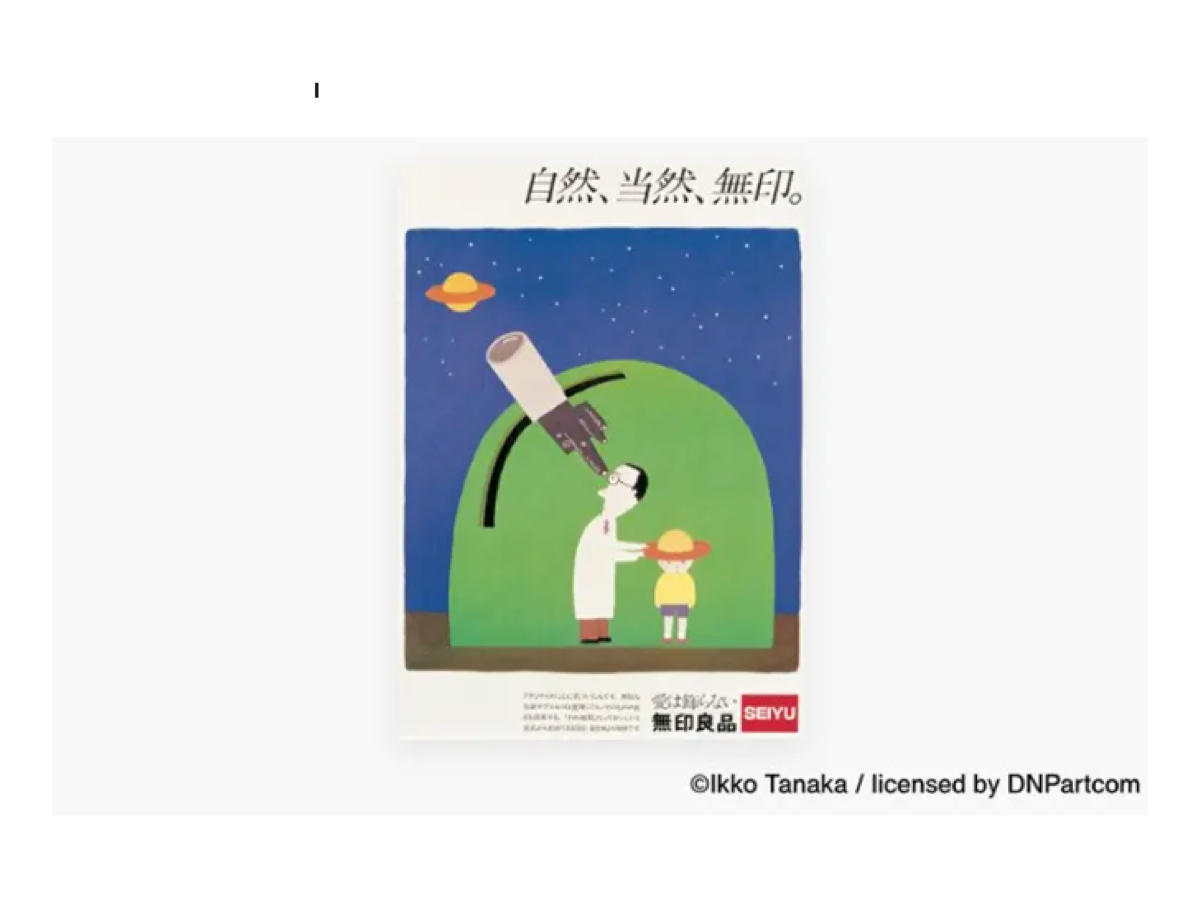
The Nature, Naturally, MUJI campaign paired a consistent Japanese name with a more expressive advertising voice. source
The Latin MUJI name carries global recognition while the product rules remain consistent. source
Product and service lineage.
The strongest changes expanded what the brand could do without abandoning its recognition system.
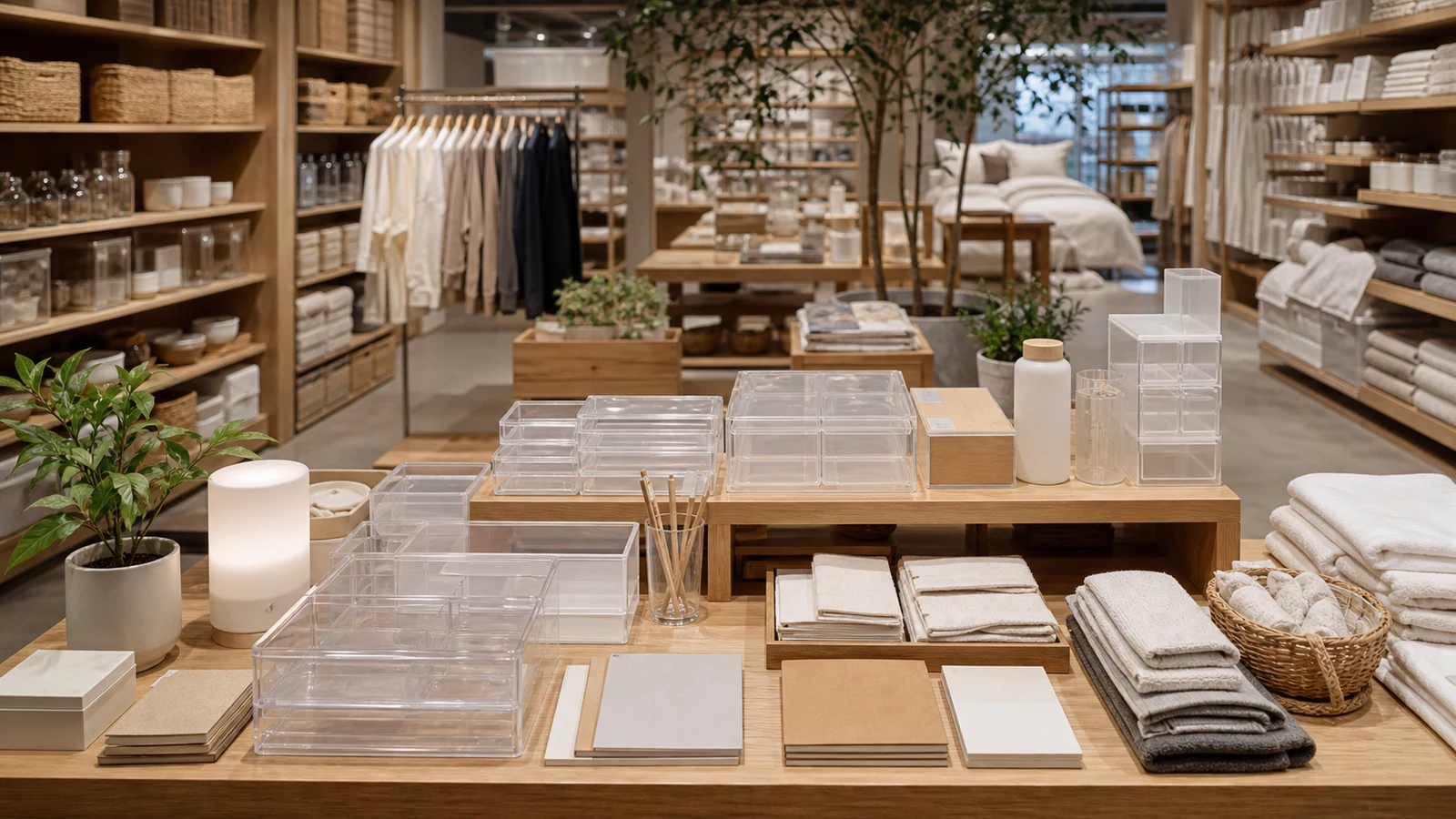
Everyday object system
Furniture, storage and small goods repeat neutral materials and simple forms.

Packaging discipline
Reduced packaging turns an operating choice into a visible cue.
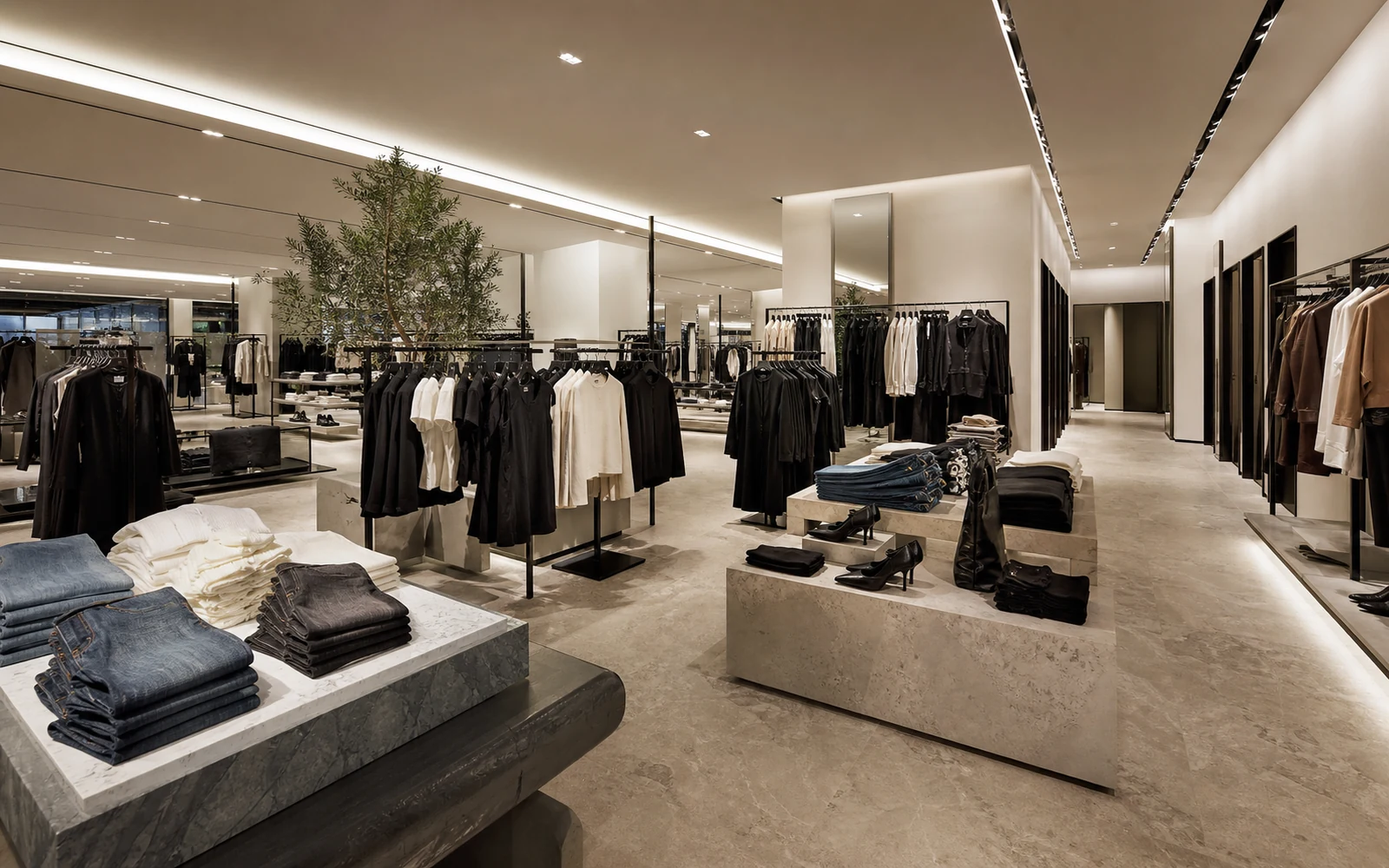
Retail rhythm
Apparel presentation extends the same edit-and-repeat logic into the store.

Hospitality extension
The same practical material system can organize a room, a journey and an overnight stay.
Product and service system
Forty products launch inside Seiyu.
MUJI Aoyama opens.
Ryohin Keikaku takes over the business.
MUJI Hotel Shenzhen opens.
MUJI App replaces MUJI passport.
Turning points.
Commercial turning points show where identity and operating performance reinforce or challenge one another.
Overseas growth lifts Ryohin Keikaku to record first-half revenue and profit.
Domestic online sales fall to about 60% of the prior-year level during a temporary suspension.
Public reaction.
Source-backed operating evidence is separated from unsupported sentiment claims.
East Asia and Southeast Asia/Oceania supplied strong first-half growth.
Store sales held up while the temporary e-commerce suspension exposed digital dependence.
Full timeline.
MUJI Aoyama opens.
Ryohin Keikaku takes over the business.
MUJI Hotel Shenzhen opens.
Steal / avoid.
- Make the brand idea a product rule.
- Let materials and packaging carry recognition.
- Use one operating logic across categories.
- Copying beige without the process discipline.
- Confusing quiet presentation with weak differentiation.
- Calling parent-company figures MUJI brand revenue.
Short answer.
MUJI is recognizable because the same subtraction rule appears in the product, package and store. The red wordmark identifies the brand; repeatable decisions make it believable.
Frequently asked questions
What is MUJI's core brand signal?
MUJI is recognizable because the same subtraction rule appears in the product, package and store. The red wordmark identifies the brand; repeatable decisions make it believable.
What should another brand steal from MUJI?
Make the brand idea a product rule.
What should another brand avoid copying from MUJI?
Copying beige without the process discipline.
Need help with your own brand?
Use Private brand work when your name, identity, proof, or message needs a sharper branding decision.