New Balance · Grow Your Brand · brand page · United States / Active
New Balance
New Balance let the product codes compound. Grey, the N, numbered models, widths, and visible construction kept the brand recognizable while performance shoes moved into lifestyle, skate, and fashion.
Positioning, name, and architecture.
Three evidence checks before the page talks about scale, color, or public reaction.
Fit, widths, numbered franchises, grey, the N and domestic manufacturing cues compound over time.
New Balance positions independence as product discipline: fit, craft and repeatable model codes before borrowed attention.
William J. Riley named the company for the new balance an arch support could bring to the foot.
Official purpose begins “Independent since 1906”
branded house
990, 574, 530 and technology names are product families or systems, not owned companies.
Premium numbered lineage that carries materials and construction forward.
product family: 990v6 source
A skate range that applies the masterbrand system to board performance.
product range: Numeric footwear source
A disclosed domestic-manufacturing tier with its own qualification boundary.
manufacturing range: Made in USA collection source
An annual program that turns the brand's functional neutral into shared memory.
brand ritual: Grey Days collection source
Multiple widths make fit a visible operating promise rather than a campaign claim.
fit system: Trackster lineage source
Naming and tagline progression
New Balance begins with arch supports.
Fearlessly Independent.
The official purpose page begins “Independent since 1906.”
Market and scale snapshot.
Stable company or owner reporting only. No live valuation is inferred.
Company-reported 2025 worldwide sales; New Balance is private.
New Balance is private and the selected FY2025 company update does not disclose earnings.
The company said apparel and owned retail each exceeded USD 1 billion.
Jim Davis acquired New Balance in 1972 and remains chairman/owner.
Color system.
Grey does the long memory work; red is the precise current-mark accent.
How the palette behaves
Grey moved from a 1980 product decision into a durable brand cue.
Red makes the current mark active without flooding the page.
White and charcoal keep material and shoe construction readable.
Recognition assets.
The useful cues are the ones that survive a channel change.
The side application makes the shoe identifiable in use, not only in advertising. The September 2026 Decathlon complaint puts that recognition into a legal dispute; infringement remains an allegation.
A 1980 product choice grew into an annual brand expression.
Model names let the brand update product without erasing the family.
Scores.
Eight operating signals, scored as editorial judgment rather than performance measurement.
The N, grey and numbered models create several fast reads.
Fit, widths, footwear construction and athlete use make the promise visible.
Numbered franchises carry product memory across updates.
Performance roots now travel through lifestyle, skate and fashion.
The private-company boundary needs explicit wording.
The NB mark and side N work from shoe to campaign.
MADE production and material construction support the story.
Partnerships help only while product codes remain the lead signal.
How the logo changed.
Only dated, source-backed masterbrand stages appear here.
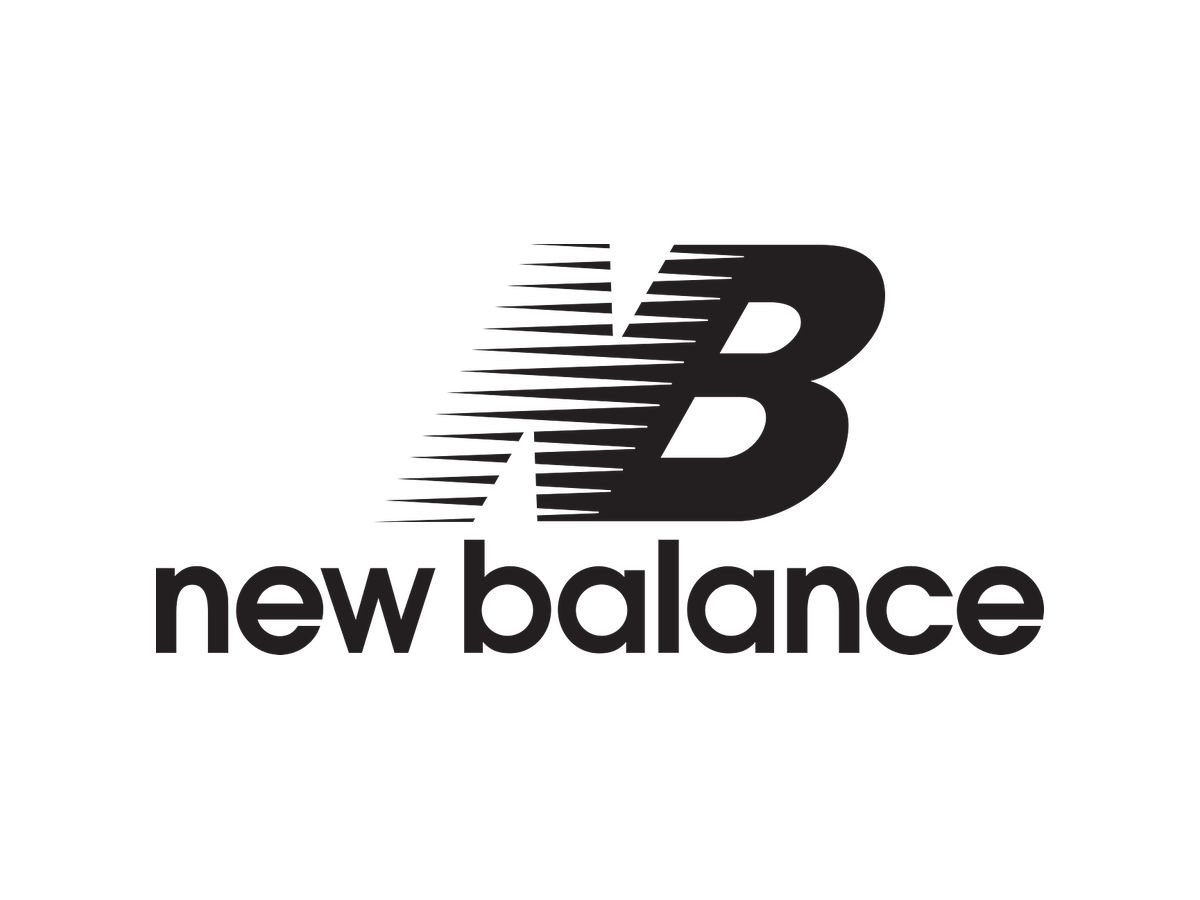
New Balance’s official history dates adoption of the N logo and model-number system to 1974; this first lockup joins the motion-lined NB to a lower-case name. source
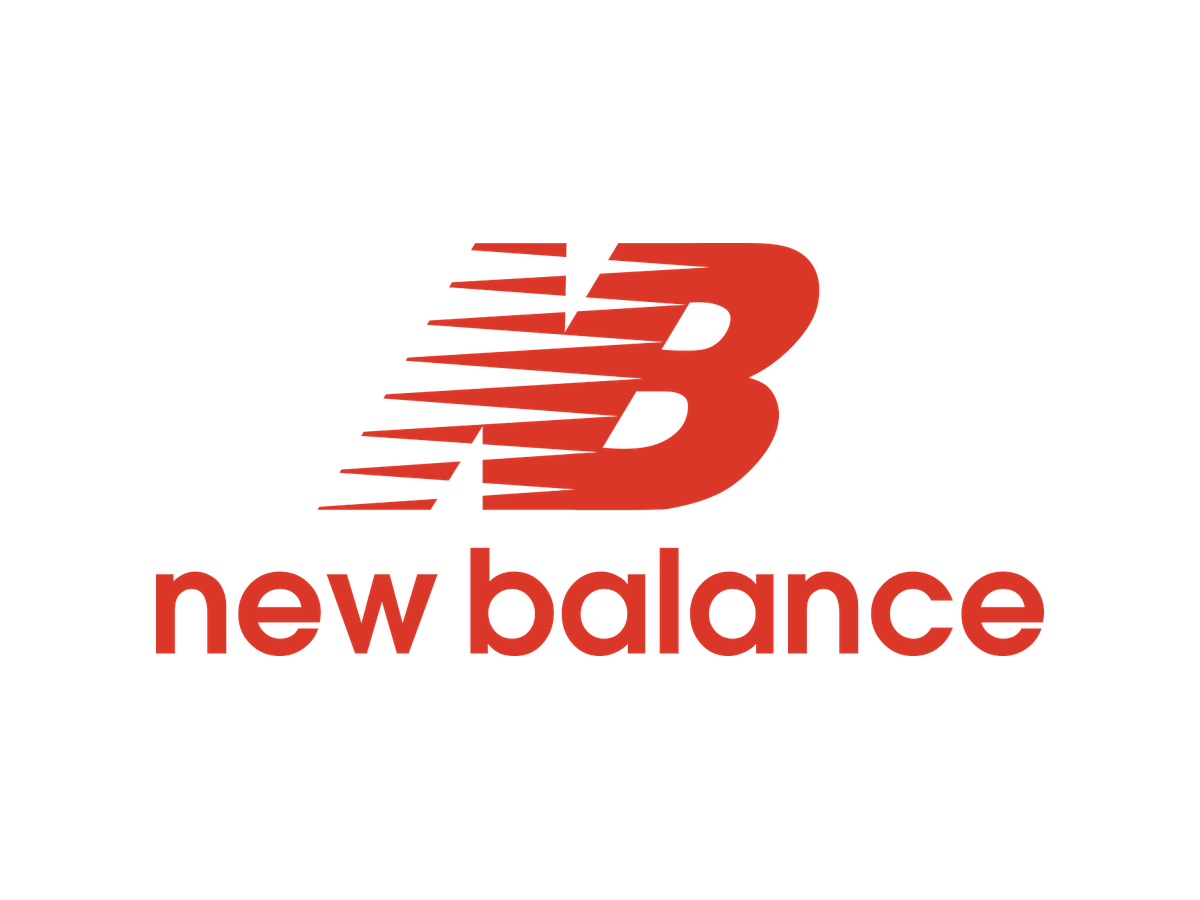
The transition tightened the wordmark and retained the lined NB symbol. source
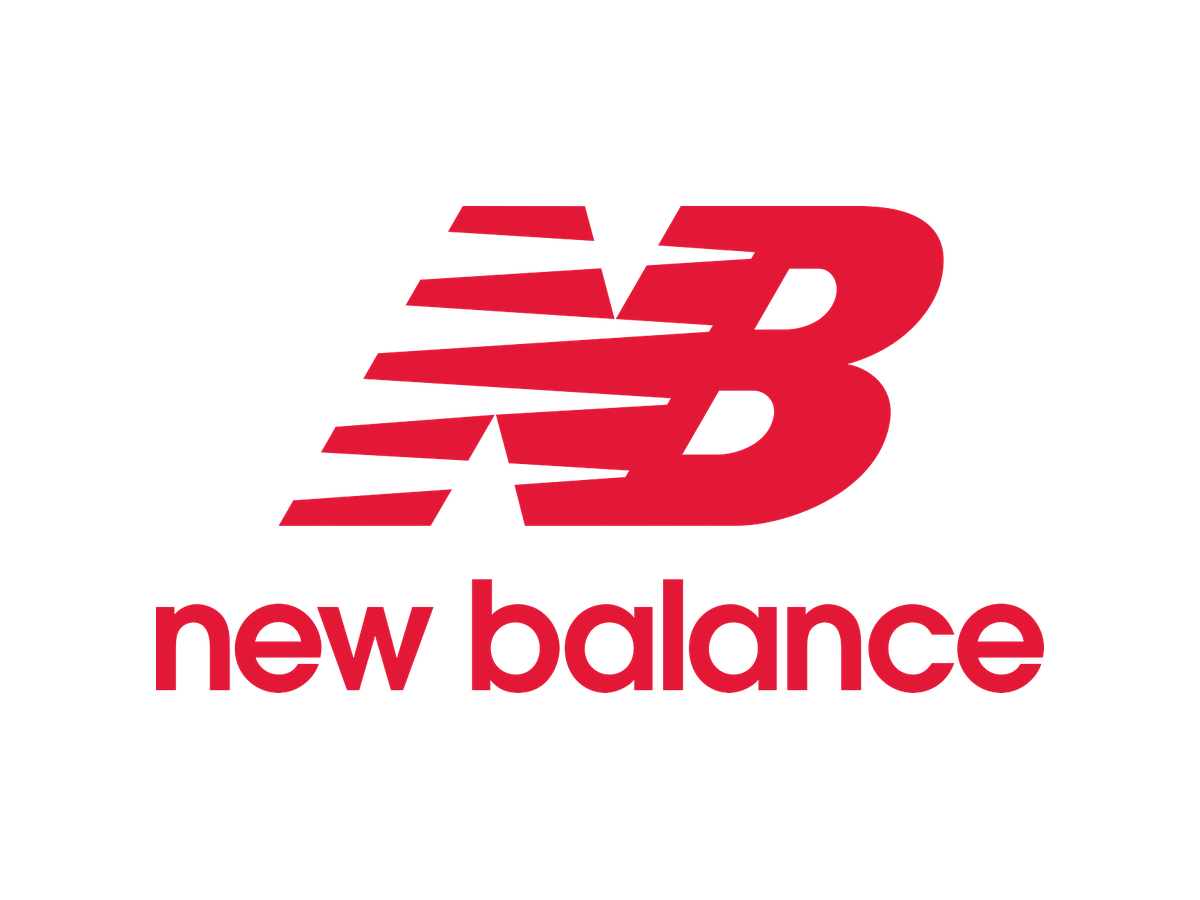
The current system gives the flying NB more room and uses the red wordmark as a clear corporate signature.
Product and service lineage.
The product code stays recognizable while the use case and construction change.
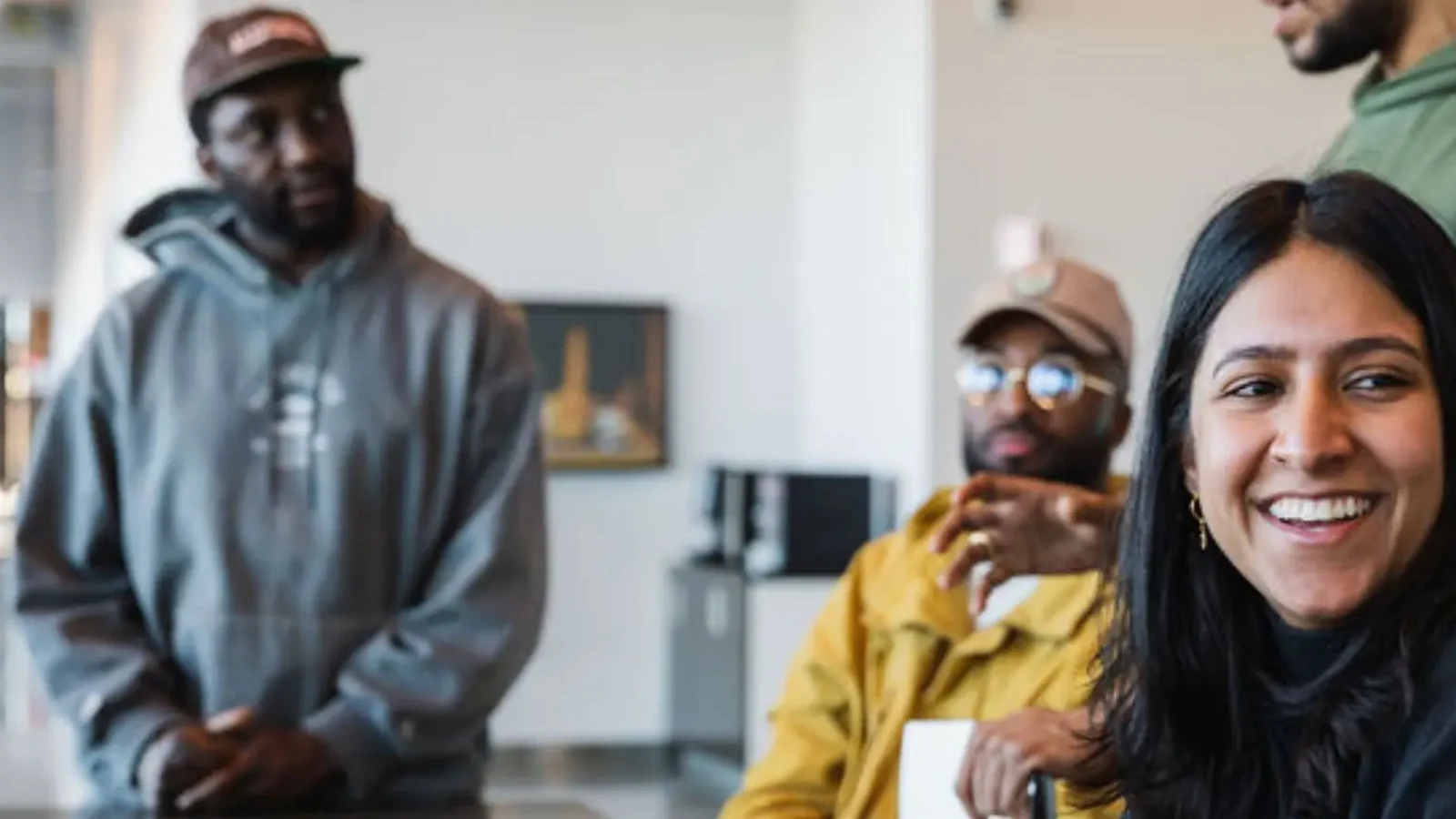
Independence needs people
The company story stays credible when the operating culture is visible.
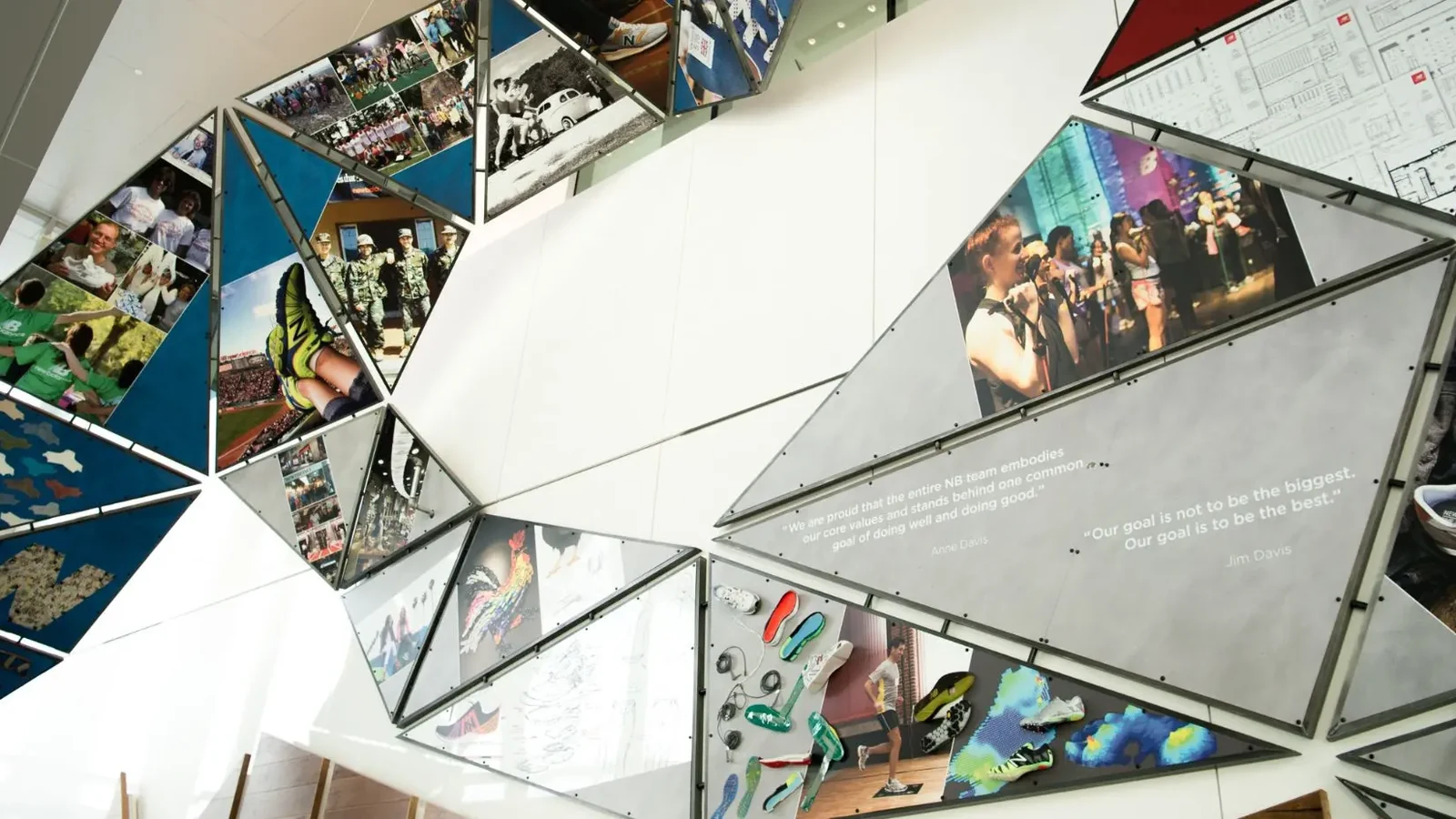
Many contexts, one system
The brand can move through sport, culture and community without changing its source code.
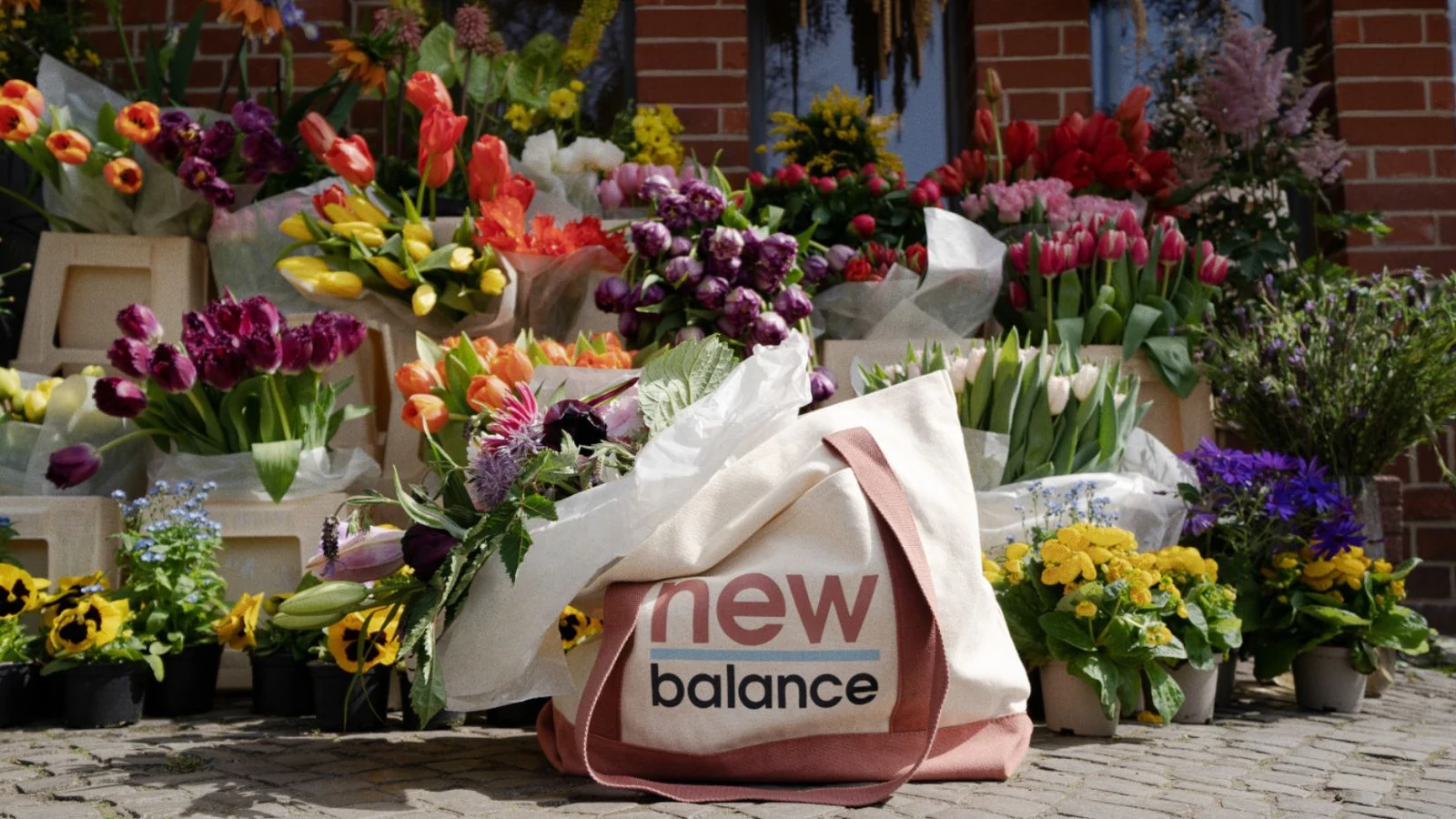
The mark survives culture
A simple wordmark and tote stay recognizable inside a visually busy context.
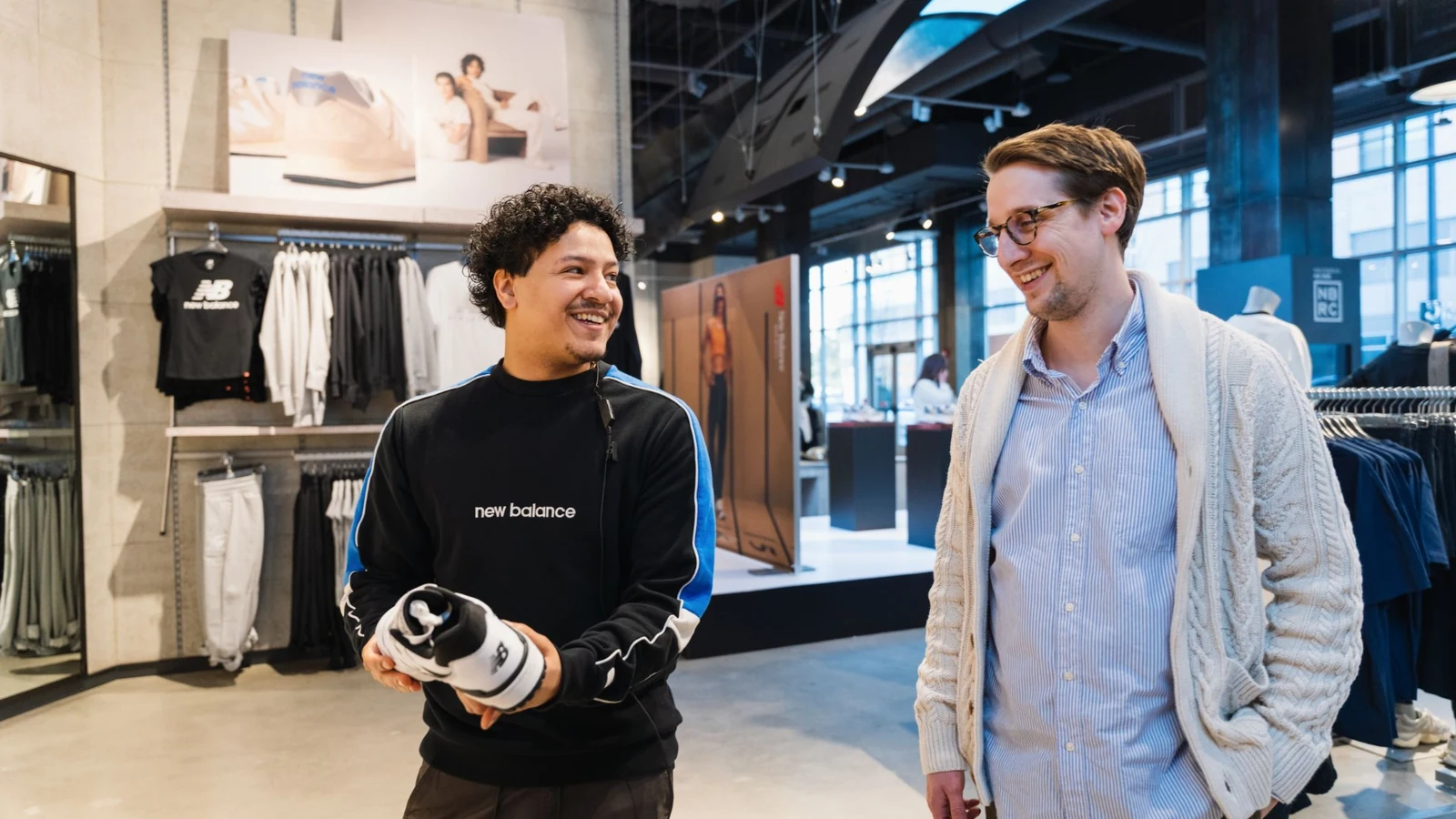
Product remains the proof
Conversation and culture return to the shoe in hand.
Product and service system
A running shoe offered in multiple widths.
A numbered premium runner launched at USD 100.
Grey suede-and-mesh forms moved from performance into everyday wear.
Fashion partnerships reinterpret familiar shoes and marks.
Turning points.
Turning points only: proof, recognition, pressure and operating consequence.
Jim Davis acquired the company on Boston Marathon day.
Terry Heckler introduced the N application and model-number system.
The M620 used grey when running shoes often used brighter colors.
New Balance sued Decathlon’s U.S. entities in Massachusetts, alleging that the mirrored K on KIPRUN shoes infringes its N trademark. The filing date was 15 September; reporting followed on 16 September.
Public reaction.
Current attention is separated from durable brand facts.
The N, grey and numbered models stay legible across performance, lifestyle and fashion.
Collaboration heat should not be restated as New Balance-wide demand growth.
Full timeline.
Arch-support company founded
Trackster width sizing
Jim Davis acquisition
N and model numbering
Grey M620
990 launch
USD 9.2 billion reported sales
Miu Miu and Coco Gauff campaign
New Balance files its N-logo trademark complaint against Decathlon’s U.S. entities.
Steal / avoid.
- Build product codes before borrowing another audience.
- Turn functional choices into repeatable recognition cues.
- Let product numbering preserve lineage through updates.
- Calling every product Made in USA; the official qualifier is narrow.
- Treating company-reported sales as audited public-company results.
- Assigning Miu Miu’s search lift to New Balance.
Short answer.
New Balance’s brand signal is functional truth encoded into the N, grey, numbered models, widths and visible construction. The lesson is to build the source code before borrowing someone else’s audience.
Frequently asked questions
What is New Balance’s core brand signal?
Functional truth encoded into durable product cues.
What should another brand steal from New Balance?
Turn fit, construction and naming into repeatable recognition assets.
What should another brand avoid copying?
A collaboration strategy without strong product codes underneath it.
Has New Balance won its logo case against Decathlon?
The September 2026 complaint alleges infringement of the N mark. The public docket material reviewed through 14 October shows procedural activity, not a decision on infringement. The claim should not be described as a court victory.
Need help with your own brand?
Use Private brand work when your name, identity, proof, or message needs a sharper branding decision.
Sources.
Use the education shelf for the concepts behind this brand page.
Private brand workUse this when the decision belongs to your own brand.
All brandsReturn to every brand page.
- Official New Balance history
- New Balance 2025 business update
- New Balance Grey Days
- New Balance x Miu Miu 2026
- New Balance corporate culture and imagery
- Lyst Index Q2 2026
- New Balance logo chronology secondary reference
- Current New Balance logo reference
- New Balance Made in USA and UK
- New Balance Numeric
- New Balance v. Decathlon: filing docket, 15 September 2026
- Bloomberg Law: N-mark allegations, 16 September 2026
- Public docket index: activity through 12 October 2026
