Nokia · Grow Your Brand · Nokia transition case study · Finland / active after phone-business exit
Nokia
Nokia won the device era and lost the platform transition. Durable hardware, distribution, and a famous wordmark could not compensate for a fragmented smartphone software system. The company survived by becoming a network business again.
Positioning, name, and architecture.
Nokia moved from industrial roots into cables, electronics, networks, and mobile phones. By the late 1990s, the name stood for reliable, human-scale mobile communication.
End-to-end network expertise, Bell Labs research, patents, and a trusted global technology name
Nokia now positions itself where networks meet cloud and AI. The 2023 identity makes that B2B boundary explicit.
The company name came from the town and river of Nokia, where Fredrik Idestam established a pulp mill.
The power of n
Corporate masterbrand across networks, technology, research, and licensing
Nokia-branded phones are not the core operating company. The corporation supplies network technology and licenses intellectual property and brand rights.
Supplies radio access and related systems.
network infrastructure: 5G radio networks source
Covers optical, IP, fixed, and data-center connectivity.
network systems: optical and IP networks source
Provides long-horizon scientific and technical proof.
research: communications research source
Monetizes patents and technology assets.
licensing: patent licensing source
Naming and tagline progression
Connecting People
Connecting People retained while the platform strategy changed
The power of n
Market and scale snapshot.
FY2025 results belong to the surviving network company. They should not be read as phone-device revenue or as proof that Nokia returned to handset manufacturing.
Reported net sales for 2025.
Reported operating profit for 2025.
Official reported profit for the period in Nokia's reporting currency.
Nokia Corporation is the listed owner; official net cash is retained in reporting currency.
Color system.
Nokia blue moved from friendly consumer reliability to a brighter, more technical B2B signal. The 2023 gaps suggest networks, motion, and collaboration.
How the palette behaves
Nokia blue: technology and trust. historic and current wordmarks.
Deep blue: infrastructure depth. network and corporate surfaces.
Cyan: optics and data flow. current network visual language.
Recognition assets.
The blue NOKIA wordmark, ringtone, startup handshake, and durable handset forms became global memory. That recognition belonged to a device habit the software platform no longer supported.
Battery life, durability, menus, and distribution made the phone-era promise tangible.
Apps, developers, touch interaction, cloud services, and updates became the buying system.
The 2023 identity tells enterprise buyers to judge networks, not handset nostalgia.
Scores.
The phone-era identity remains famous. The current 2023 identity deliberately signals that Nokia Corporation now sells networks and technology, not nostalgia.
The classic wordmark remains globally familiar.
Connecting people was clear; the current B2B promise needs more explanation.
Fragmented software and slow decisions weakened smartphone competitiveness.
The current company is coherent, but licensed phones keep the public boundary fuzzy.
The current brand is credible when buyers see network performance, research, security, and infrastructure delivery rather than recycled phone nostalgia.
FY2025 results belong to the surviving network company. They should not be read as phone-device revenue or as proof that Nokia returned to handset manufacturing.
smartphone platform collapse and phone-business exit
Nokia sold substantially all of Devices & Services to Microsoft in 2014. The current Nokia Corporation is a B2B network technology company; licensed Nokia phones are a separate product relationship.
How the logo changed.
Nokia's 2023 change is not a cosmetic phone refresh. It deliberately breaks with the classic handset-era wordmark to mark a different corporate strategy.
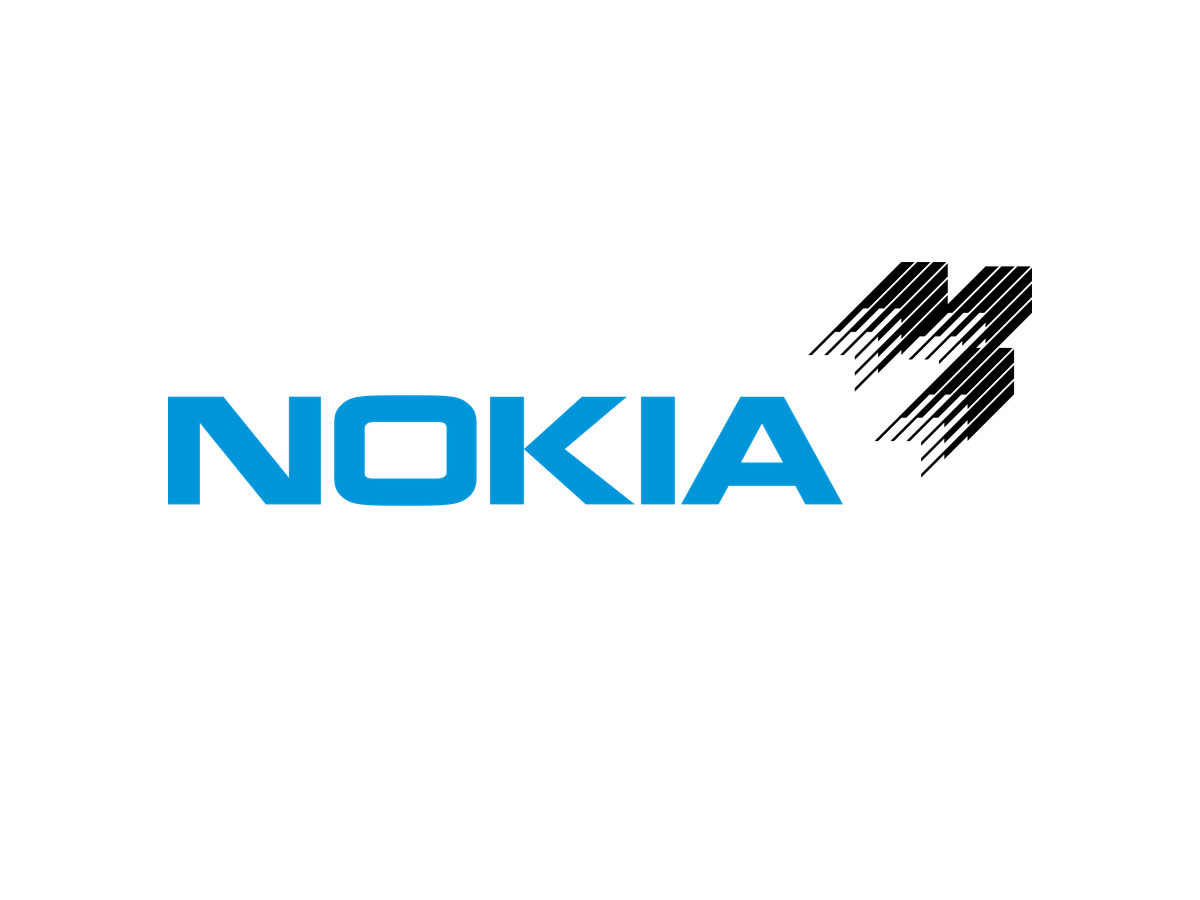
The merged industrial company used a circular arrows symbol before the familiar phone-era wordmark.
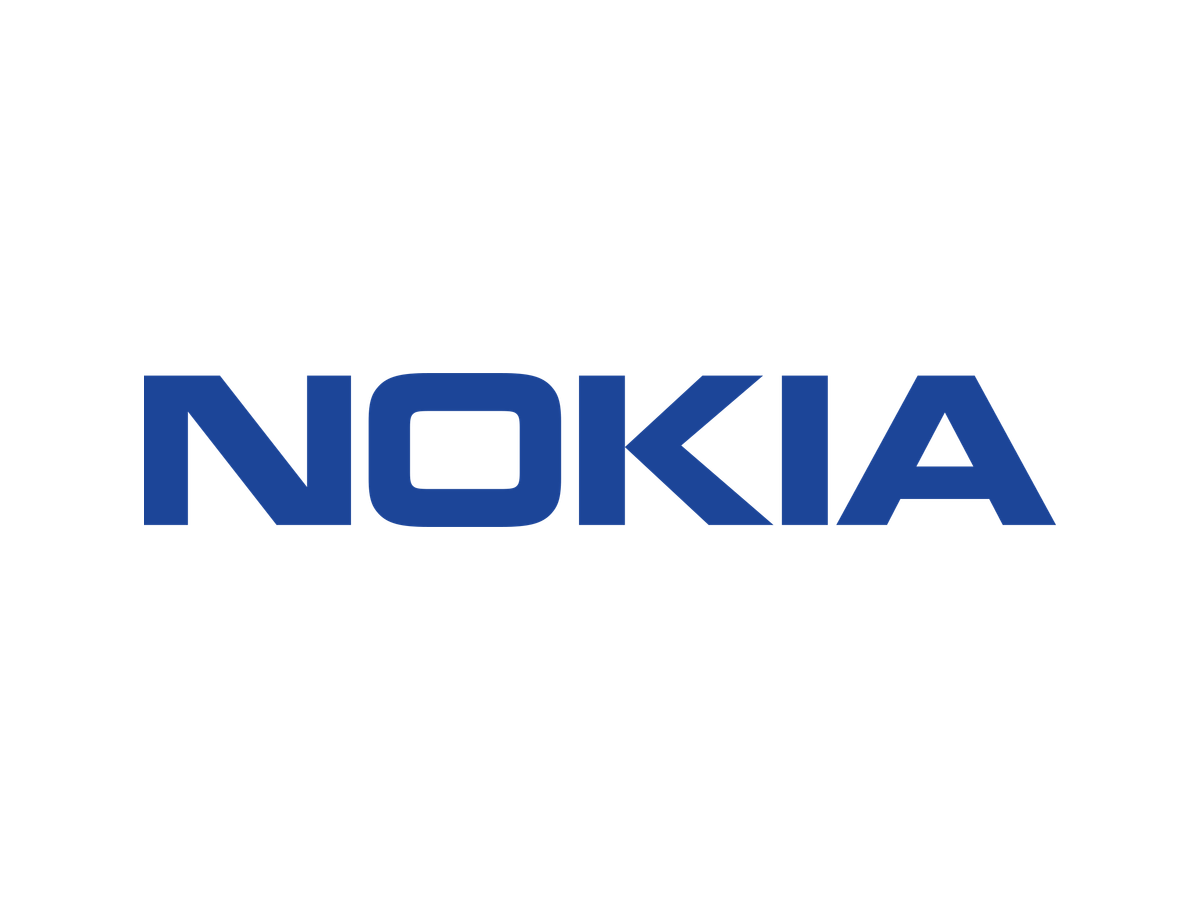
The solid blue wordmark carried Nokia through electronics, networks, and global phone leadership.
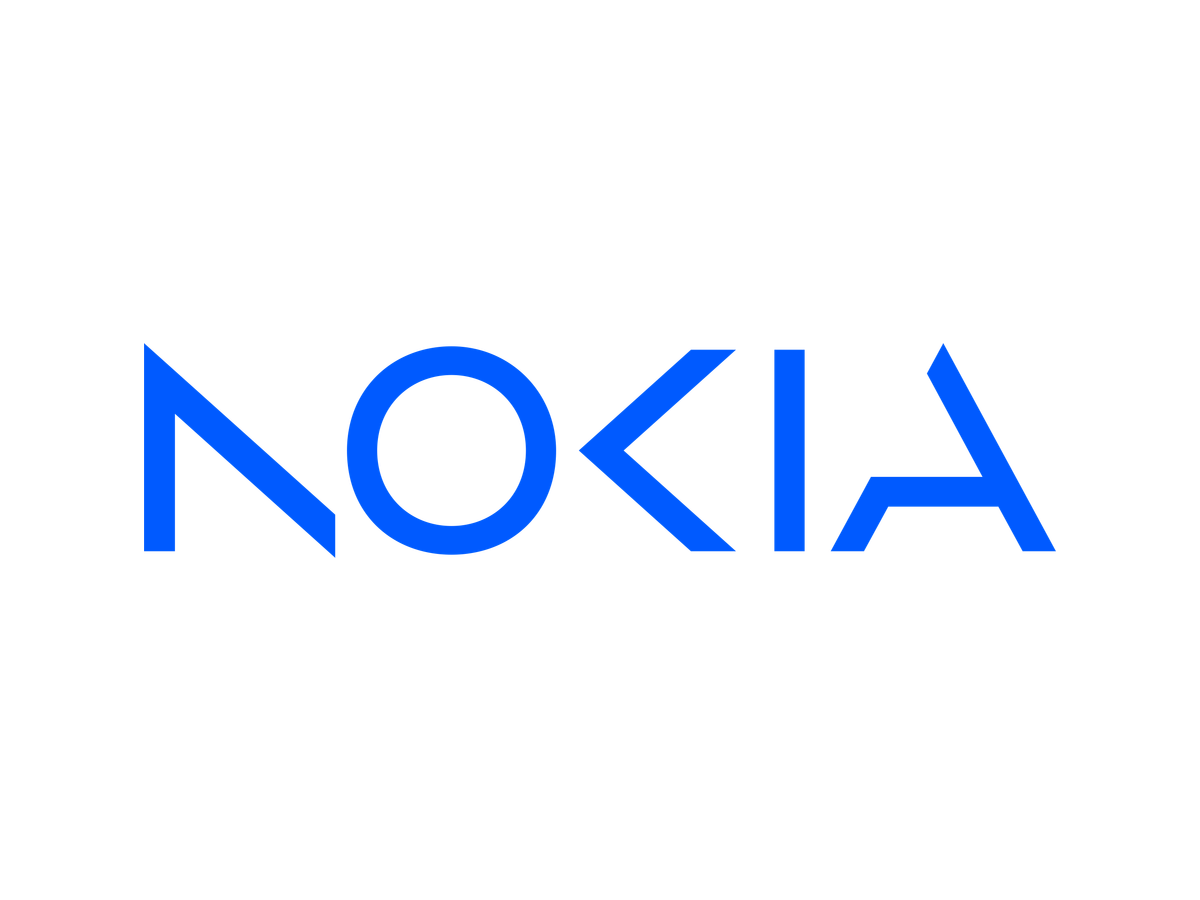
The segmented current mark separates the B2B network company from handset-era memory. source
Product and service lineage.
Nokia's operating system shifted from industrial communications to mass-market phones, then back toward network infrastructure and technology licensing.
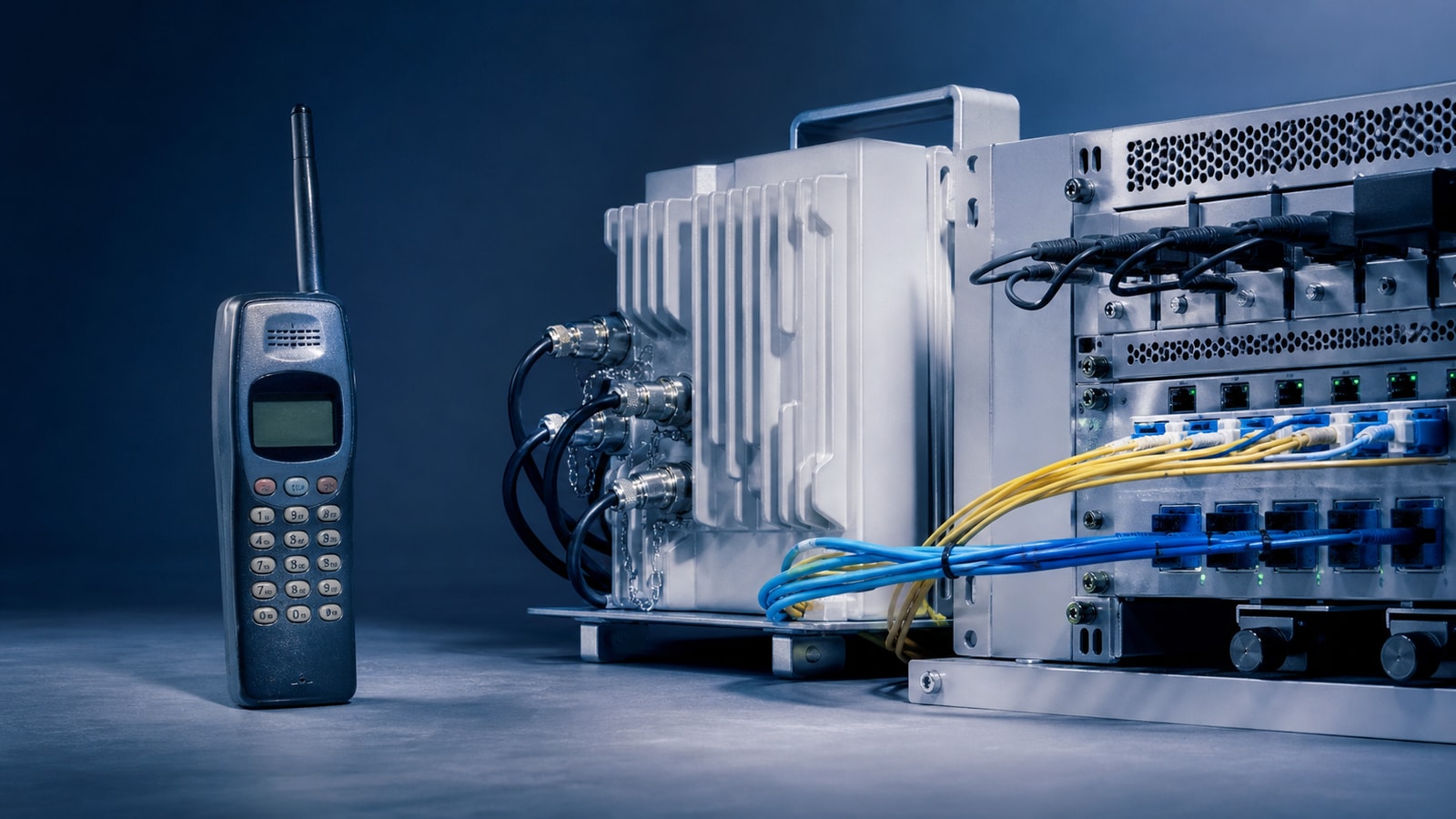
The device once carried the whole promise
Hardware reliability, battery life, distribution, and simple menus built trust at global scale.
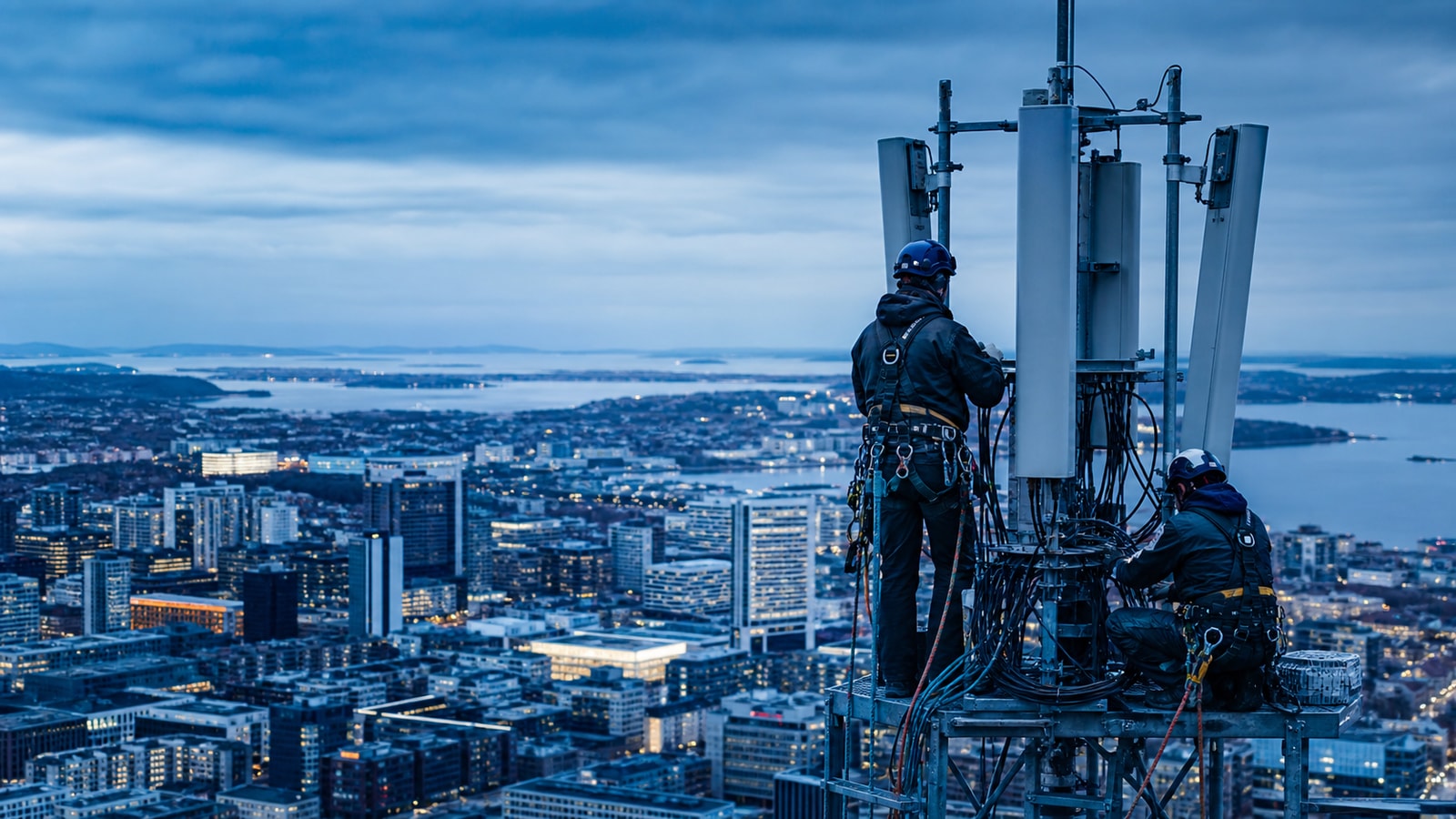
The surviving company works behind the signal
Current Nokia proof sits in radio, IP, optical, fixed, and enterprise networks.

Research gives the new identity substance
Bell Labs and network engineering replace handset design as the corporate center of gravity.

The network now carries the promise
The corporation survived because its infrastructure capability was broader than the failed phone platform.
Product and service system
Materials, cables, and electronics built a broad technical base.
Hardware, distribution, and reliability made Nokia the category default.
Software fragmentation and ecosystem weakness displaced device advantages.
The surviving corporation returned to infrastructure, research, and licensing.
Turning points.
The decisive events show a platform failure inside a broader corporation that still owned valuable network and research capability.
Why it failed
The smartphone category shifted value from hardware and distribution to operating systems, touch interaction, applications, developers, and rapid software release.
Nokia moved from multiple software paths to a concentrated Windows Phone partnership while iOS and Android ecosystems were already gaining scale.
iPhone and Android adoption accelerated while Nokia's ecosystem weakened; the phone business was sold to Microsoft after severe share loss.
Failure timeline
Nokia becomes the world's largest mobile-phone maker.
The iPhone resets interaction and platform expectations.
Nokia selects Windows Phone as its primary smartphone platform.
Microsoft completes the Devices & Services acquisition.
Public reaction.
Nokia remains a symbol of both durable hardware and strategic platform failure. The current company has to use that memory without being trapped by it.
Hardware recognition could not compensate for a weak smartphone ecosystem.
The current network company reported substantial 2025 net sales.
Full timeline.
Fredrik Idestam establishes the first pulp mill.
Nokia Corporation forms through the merger of Nokia, Finnish Cable Works, and Finnish Rubber Works.
The first GSM call is made using Nokia equipment.
Nokia becomes the world's largest mobile-phone manufacturer.
Touch-first smartphones begin resetting customer and developer expectations.
Nokia enters a strategic partnership with Microsoft and adopts Windows Phone.
Microsoft completes the acquisition of substantially all Nokia Devices & Services.
Nokia acquires Alcatel-Lucent.
Nokia introduces a new B2B brand identity.
Nokia reports EUR 19.889 billion in net sales.
Steal / avoid.
- Build physical reliability into brand memory.
- Separate corporate survival from a failed product layer.
- Use a rebrand when the company boundary truly changes.
- Do not let hardware success hide platform weakness.
- Do not run competing software paths without a decisive ecosystem strategy.
- Do not describe licensed Nokia phones as the current corporation's core business.
Short answer.
Nokia Corporation is an active Finnish B2B network technology company. Its famous failure was the collapse and sale of its phone business during the shift from hardware-led mobile devices to software platforms and app ecosystems. Nokia survived through network infrastructure, Bell Labs, patents, and technology licensing, then introduced a new corporate identity in 2023 to mark that boundary.
Frequently asked questions
Why did Nokia lose the smartphone market?
The market shifted from device hardware to operating systems, apps, developers, touch interaction, and rapid software delivery. Nokia's fragmented software strategy and later Windows Phone bet could not recover share.
Is Nokia still in business?
Yes. Nokia Corporation is an active network technology company headquartered in Espoo, Finland.
Does Nokia still make phones?
The current Nokia Corporation is not the old phone manufacturer. Nokia-branded phones have been produced through separate licensing arrangements.
Need help with your own brand?
Use Private brand work when your name, identity, proof, or message needs a sharper branding decision.