Party City · Grow Your Brand · Party City failure case study · United States / Former company-owned U.S. chain liquidated; name continues through new ownership and lower-overhead channels
Party City
Party City kept category recognition after the standalone store system failed. This case separates Party City Holdco's second bankruptcy and liquidation from the name's new owner, then follows the debt, store footprint, merchandise system, and last-minute celebration job that survived.
Positioning, name, and architecture.
Party City promised one reliable place to complete a celebration. The promise weakened when a large owned-store and wholesale system became too expensive for shopping behavior that had moved toward mass merchants, ecommerce, pop-ups, and delivery.
A complete themed basket plus balloon service in one trip
Party City owned the complete-celebration job, but its standalone store system stopped being the cheapest and easiest way to deliver it.
The name states the category and the promise directly: a city-sized destination for a party.
No single current tagline is used here because the useful proof is channel availability and basket completion.
acquired masterbrand with franchise and partner channels
The former debtor liquidated. The buyer acquired the name and related assets, not the old public company or its canceled equity.
Keeps the celebration basket available nationally without rebuilding the former company-owned fleet.
owned channel: PartyCity.com source
Preserves physical balloon service and local pickup under separate ownership.
licensed retail channel: Current U.S. franchise store network source
Moves last-minute party goods through existing logistics instead of another store trip.
service channel: DoorDash delivery source
Places celebration goods inside established third-party traffic.
wholesale distribution channel: Party City at Staples source
Naming and tagline progression
Party City establishes a specialist destination
The name carries balloon, costume, and themed-party authority
The name continues without the former company-owned fleet
Market and scale snapshot.
The last public-company year and second-bankruptcy declaration show a recognizable category name attached to an impairment-heavy loss, secured debt, falling comparable sales, and a second restructuring that moved to liquidation.
Last full public-company year before the first Chapter 11 case.
Included USD 862.5M of goodwill and intangible-asset impairments.
Petition-date principal across ABL, FILO, and second-lien debt in the second case.
Old equity was canceled; New Amscan PC acquired the brand and related assets.
Color system.
Purple and multicolor letters made celebration visible before a shopper entered the store. The palette remained recognizable even when the operating structure failed.
How the palette behaves
Purple distinguished the specialist from ordinary mass retail.
Multiple bright letter colors communicated variety and occasions.
Balloon color made service visible, but color alone could not prove convenience or economics.
Recognition assets.
The multicolor wordmark, balloon wall, costume aisles, complete themed sets, and suburban stores made Party City easy to recall. Recognition survived because the celebration job remained even after the former operator did not.
The final straight wordmark converted variety into a readable retail sign.
Helium, inflation, ribbon, and pickup made the trip more useful than a generic shelf.
Coordinated plates, cups, decor, favors, and costumes made category authority tangible.
Scores.
Party City retains strong name recognition and recovery potential, but its low operating-proof score reflects a celebration job that survived after the company-owned fleet did not.
The name and multicolor mark remain easy to recall.
Two bankruptcies and company-owned store closures damaged continuity.
The promise was breadth and urgency rather than premium control.
The brand can serve the same job through lower-overhead channels if availability remains reliable.
The brand stayed recognizable, but its large operating footprint stopped being the most efficient way to complete a celebration basket.
The last public-company year and second-bankruptcy declaration show a recognizable category name attached to an impairment-heavy loss, secured debt, falling comparable sales, and a second restructuring that moved to liquidation.
Standalone operator liquidated; brand and selected operating assets survived
Ad Populum operates the acquired brand through ecommerce, franchises, delivery, and Party City-at-Staples locations
How the logo changed.
Party City moved from an illustrative destination badge to an irregular celebration wordmark, then to a straighter multicolor identity that could travel across stores, products, franchises, ecommerce, and partner channels.
The first deployed identity framed the name with a city skyline and celebration marks, making the destination promise literal. source
The irregular outlined letters removed the panel and let typographic motion carry the celebration cue. source
The straighter multicolor mark served the corporate chain through liquidation and continues with franchises and the acquired brand platform. source
Product and service lineage.
Party City grew from a specialist store into a vertically integrated retail and wholesale system, restructured once, liquidated the company-owned fleet, and continued as an acquired name across lighter channels.
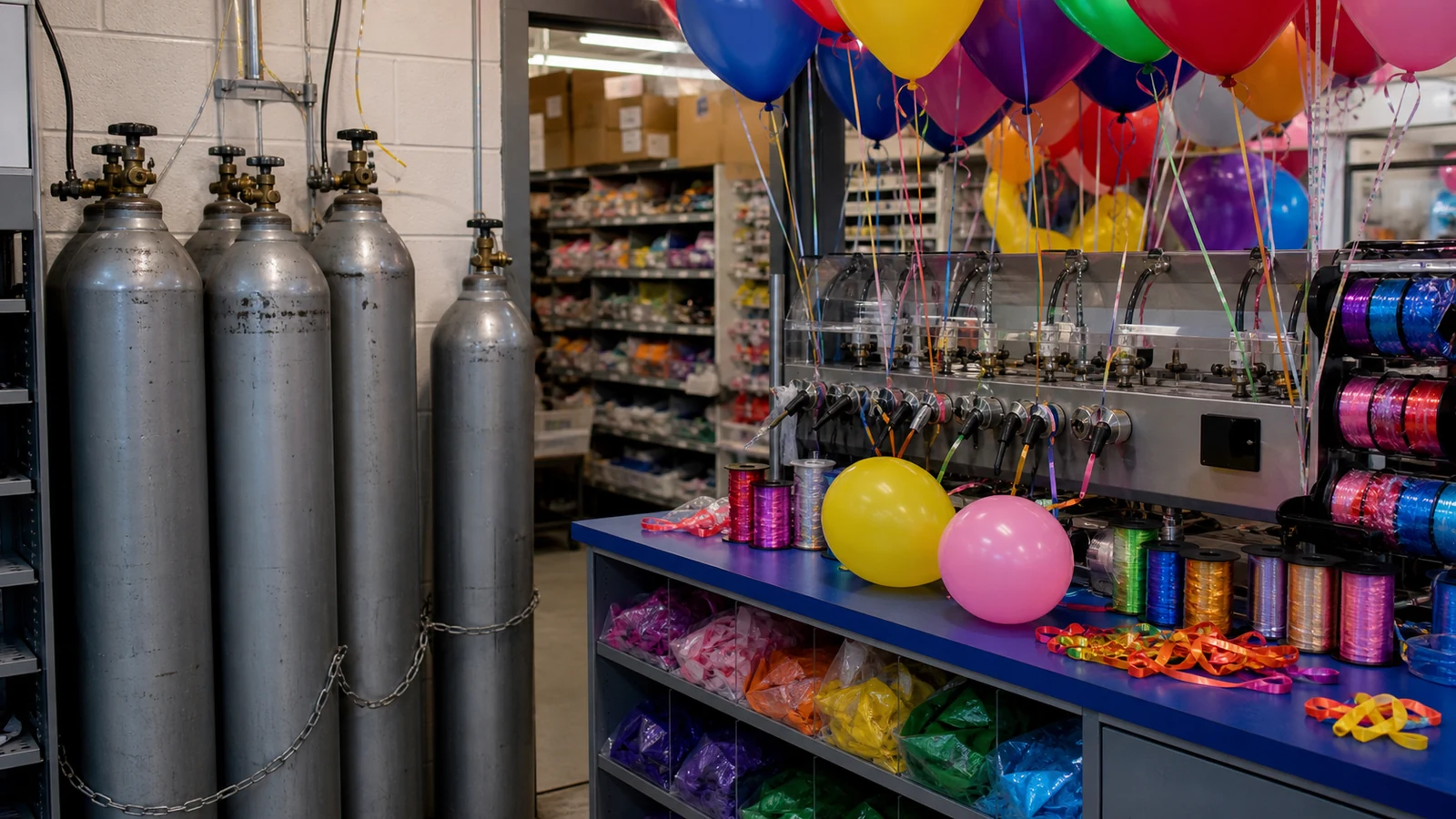
Balloon service was the specialist edge
Inflation, timing, pickup, and delivery made Party City more useful than a shelf of packaged goods.
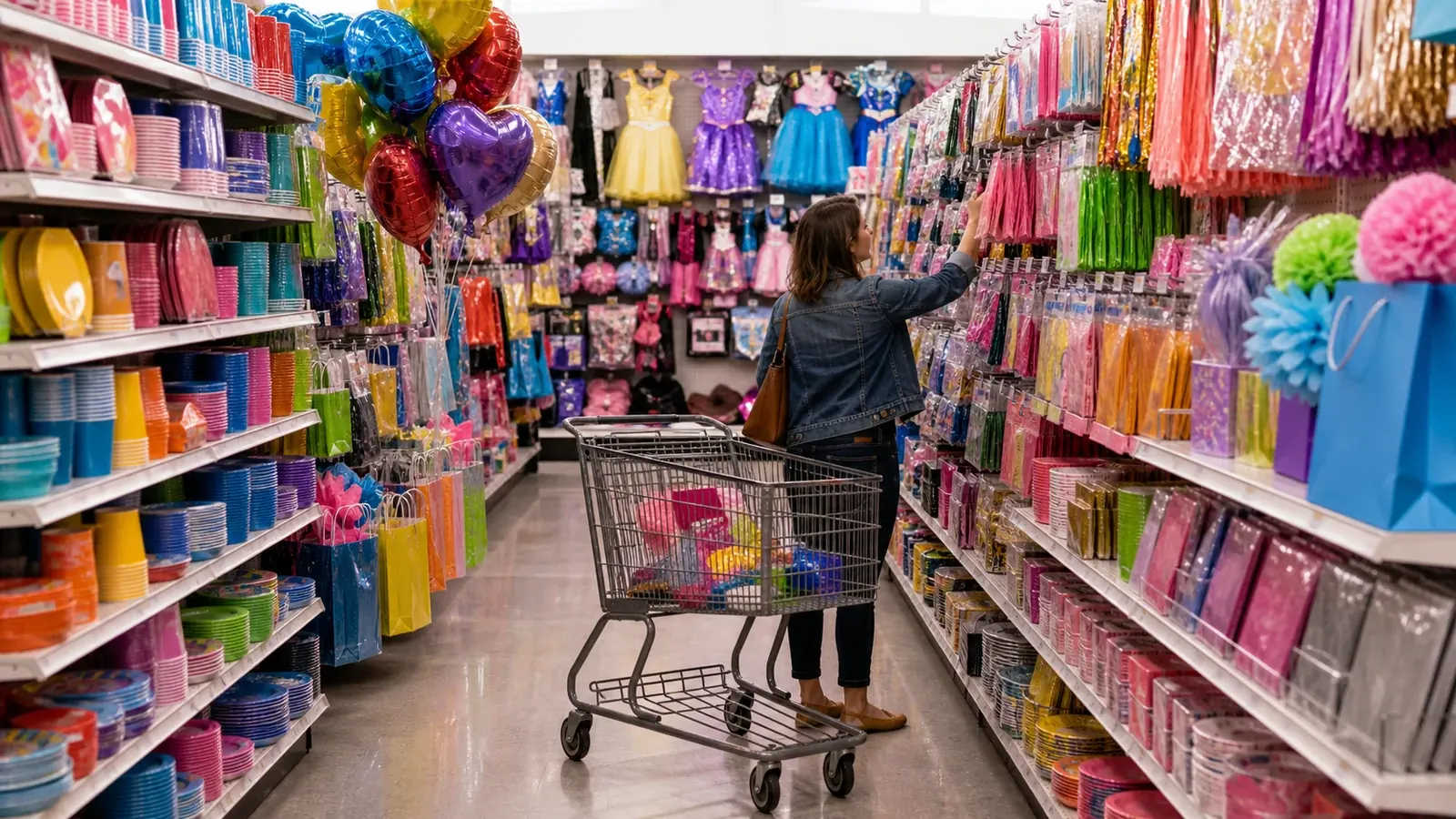
The category moved into ordinary trips
Mass merchants could solve much of the celebration basket without asking customers to visit a separate superstore.
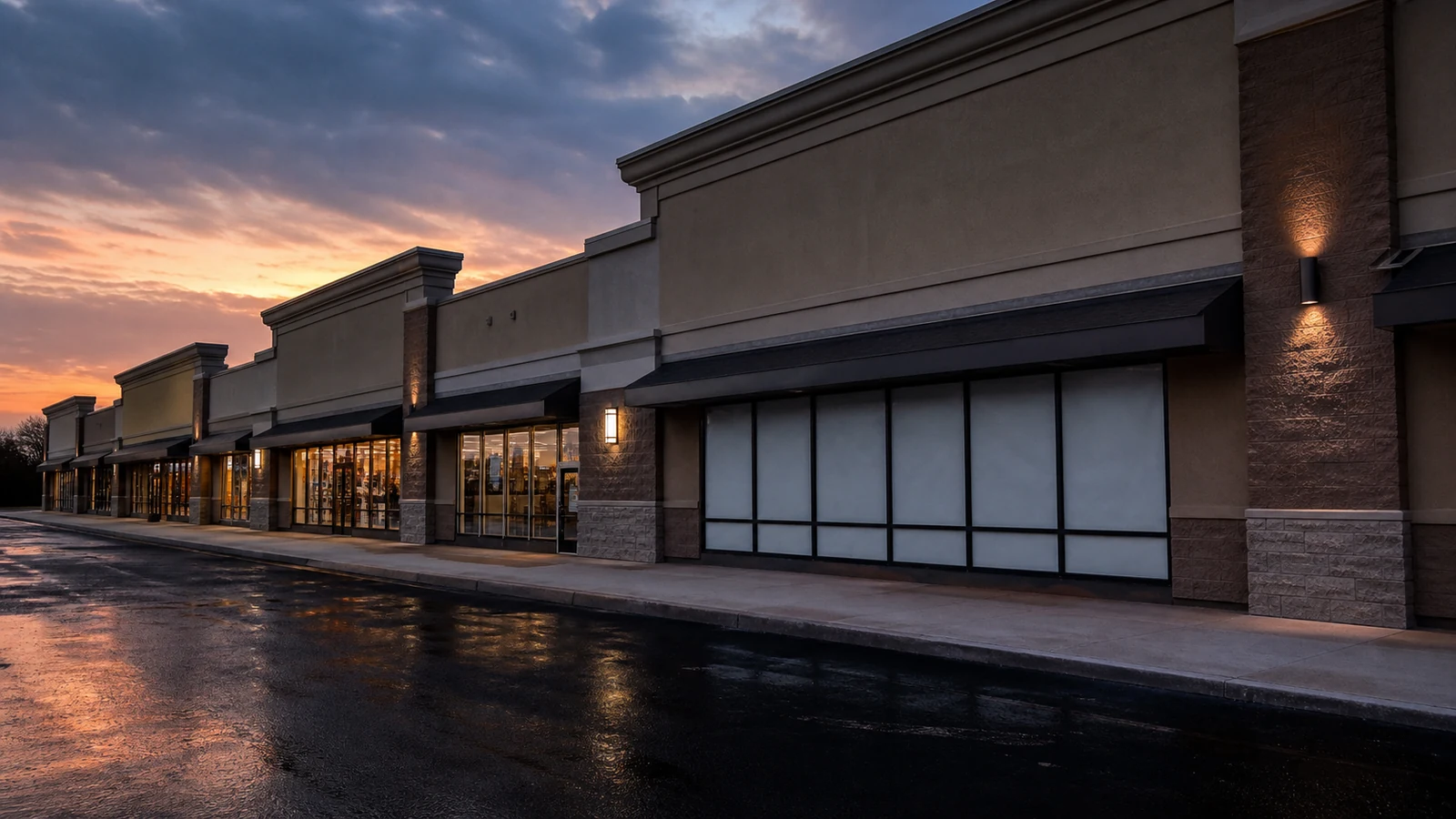
The owned fleet became the burden
A clear category name could not make every large lease productive when demand fragmented across channels.
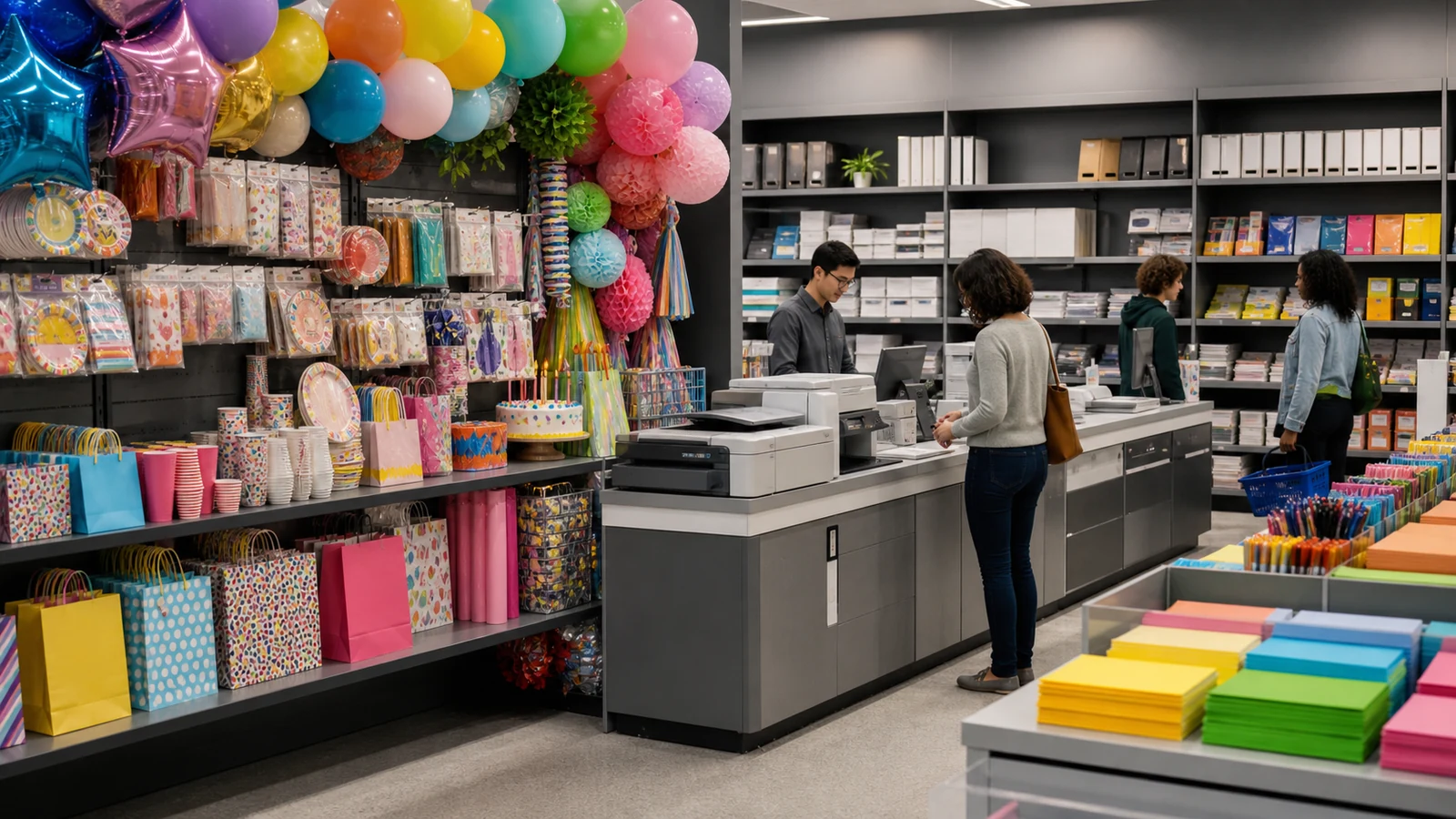
The job survived in a smaller footprint
The current partner model puts celebration goods inside existing traffic instead of rebuilding the former chain.
Product and service system
Broad themed inventory and balloon service concentrated the category in one destination.
Amscan manufacturing and wholesale gave Party City category control but added capital and operating complexity.
The 2023 case erased debt without producing a durable operating reset.
Ecommerce, franchises, delivery, and partner locations now carry the name without the former owned fleet.
Turning points.
Read the USD 942.6M FY2022 loss, the 2023 debt wipe, the 2024 refiling, and the 2025 asset sale as one sequence: financial restructuring did not repair the channel model.
Why it failed
Party City's post-bankruptcy sales never reached the plan. Comparable-store sales fell 9.5% from July 2023 to July 2024, consumer-products sales fell 24.8%, and a large owned-store and wholesale system had to carry about USD 399 million of secured debt.
Management discounted older inventory and tried to reduce inventory from about USD 450 million toward USD 300 million. The court declaration says the choice reduced margins and, because inventory supported the ABL borrowing base, reduced available liquidity at the same time.
A November inventory reappraisal cut the borrowing-base collateral value and the ABL agent imposed a USD 50 million reserve. Liquidity fell below the required minimum on December 10, 2024, creating a default and a forbearance timetable that required liquidation planning and a Chapter 11 filing.
Failure timeline
Net sales were USD 2.170B and net loss was USD 942.6M, including large impairments.
The company emerged after eliminating nearly USD 1B of debt.
Party City filed Chapter 11 again and started winding down the owned stores and wholesale operation.
New Amscan acquired the brand, while ecommerce, franchises, delivery, and partner locations carried it forward.
Public reaction.
A current website or Party City product can look like business continuity. The accurate reading is that the old company-owned U.S. chain liquidated while a new owner, existing franchises, and partner channels continued using the brand.
The company-owned retail and remaining old operating structure moved to liquidation.
A new owner can distribute the name through smaller, existing, and digital channels without recreating the old estate.
Full timeline.
Party City opens and deploys its first cityscape identity.
Party City deploys its irregular outlined dancing-letter wordmark.
The straight multicolor wordmark becomes the corporate identity.
Party City files Chapter 11 and later emerges after eliminating nearly USD 1 billion of debt.
Comparable store sales and consumer-products sales continue to fall before a second filing.
New Amscan PC wins the Party City brand and related Amscan operating assets in bankruptcy auctions.
The old debtor's liquidation plan becomes effective.
Party City products continue through ecommerce, franchises, delivery, and retail partnerships.
Steal / avoid.
- Own an urgent customer job, not only a store format.
- Keep specialist service visible when mass merchants can copy the merchandise.
- Design a failure-state plan that separates the name, customer obligations, and operating company.
- Do not treat debt cancellation as proof of operating recovery.
- Do not confuse a live website with survival of the former debtor.
- Do not preserve a standalone footprint when existing channels can complete the job more efficiently.
Short answer.
Party City is a failed-operator and surviving-brand case. Party City Holdco emerged from Chapter 11 in October 2023 after eliminating nearly USD 1 billion of debt, filed again in December 2024, and liquidated its company-owned U.S. fleet. New Amscan PC, an Ad Populum affiliate, acquired the Party City name and related Amscan assets. The brand now continues through ecommerce, locally owned franchises, delivery, and partner locations. The lesson is that category recognition can survive when the customer job is preserved without rebuilding the failed footprint.
Frequently asked questions
Is Party City still in business?
The former company-owned U.S. chain liquidated. The acquired brand remains active through ecommerce, locally owned franchises, delivery, and partner retail locations.
Who owns Party City now?
Ad Populum operates the acquired Party City platform through New Amscan PC.
Why did Party City fail?
The record points to debt, falling sales, cost and consumer pressure, and a heavy owned-store and wholesale structure competing with mass retail, ecommerce, pop-ups, and delivery.
Did Party City erase debt before failing again?
Yes. The 2023 restructuring eliminated nearly USD 1 billion of debt, but the company filed Chapter 11 again in December 2024.
What is the brand lesson?
Protect the urgent celebration job and specialist service, then deliver them through the channels customers already use.
Need help with your own brand?
Use Private brand work when your name, identity, proof, or message needs a sharper branding decision.
Sources.
Use the education shelf for the concepts behind this brand page.
Private brand workUse this when the decision belongs to your own brand.
All brandsReturn to every brand page.
- Party City FY2022 Form 10-K
- Party City 2023 emergence disclosure
- Party City December 2024 first-day declaration
- Party City brand and Amscan auction result
- Party City 2025 liquidation-plan confirmation
- Current Party City terms identifying Ad Populum
- Current Party City store and channel model
- Party City early USPTO drawing
- Party City middle USPTO drawing
- Party City final USPTO drawing