Red Lobster · Grow Your Brand · Red Lobster failure case study · United States / Red Lobster exited Chapter 11 in September 2024 and continues as a private restaurant company
Red Lobster
Did Endless Shrimp sink Red Lobster? The bankruptcy explained. The sworn first-day declaration described about USD 2 billion of prepetition revenue, a USD 76 million FY2023 net loss, USD 294 million of funded debt, and guest counts down about 30% from 2019. The brand exited Chapter 11 under new private ownership in September 2024.
Positioning, name, and architecture.
Red Lobster made restaurant seafood widely accessible through a memorable name, full-service ritual, Cheddar Bay Biscuits, and a large national footprint. The same scale became fragile when traffic, leases, menu economics, and financing moved against it.
National seafood familiarity built from a memorable name, signature biscuits, broad menu, and celebration ritual
Red Lobster makes seafood approachable, but the restaurant system must earn the promise through traffic, food quality, service, lease discipline, and menu economics.
Bill Darden opened the first Red Lobster in Lakeland, Florida in 1968, using a direct category name to make seafood accessible.
Sea Food Differently®
Private restaurant masterbrand with company-operated and franchised locations
The prepetition debtor, current owner group, operating company, restaurants, franchisees, retail products, and loyalty program are separate evidence lanes.
The dining room, kitchen, hospitality, and menu carry the core promise.
operating channel: Full-service seafood restaurant source
Repeat visits and offers create a direct customer relationship.
loyalty: My Red Lobster Rewards source
Supplier and seafood standards support the quality claim.
sourcing platform: Seafood sourcing source
Naming and tagline progression
Red Lobster names the seafood occasion directly
Fresh fish and live lobster reinforce product proof
Sea Food Differently® reframes the experience
Market and scale snapshot.
The available financial figures describe the prepetition private company, not the current post-emergence business. They show the scale and loss profile that entered court; current revenue and earnings are not publicly disclosed.
Approximate company revenue described in the May 2024 sworn first-day declaration; not current post-emergence revenue.
Historical prepetition net loss in the court declaration; not a current result.
Aggregate funded debt at the May 2024 petition, before the sale and restructuring.
Fortress-managed funds participated with TCW Private Credit and Blue Torch; no public ticker.
Color system.
Red carries the lobster and appetite cue; deep navy and warm wood keep the seafood occasion grounded rather than cartoonish.
How the palette behaves
Lobster red: appetite and unmistakable category memory. Current crustacean symbol and signage.
Deep navy: ocean depth and restaurant authority. Current plaque and interiors.
Warm wood: family hospitality. Dining-room ritual.
Recognition assets.
The red crustacean, black restaurant plaque, seafood platters, biscuits, lobster tank, and nautical dining cues remain strong. Recognition survived; the economics behind each visit did not.
The symbol can carry the restaurant before a menu item appears.
A repeatable arrival cue makes a broad seafood menu feel familiar.
The room should suggest seafood and hospitality without becoming a theme-park set.
Scores.
The name and dining rituals stayed recognizable while traffic, lease flexibility, and financial resilience weakened.
The name, lobster mark, and biscuits remain widely legible.
The brand exited with new capital and a smaller operating base.
Seafood access and a full-service family meal remain clear reasons to choose the brand.
Cheddar Bay Biscuits and the lobster tank carry memory beyond any promotion.
The customer-facing name and signature rituals continued; the prepetition lease, debt, traffic, and operating system did not.
The available financial figures describe the prepetition private company, not the current post-emergence business. They show the scale and loss profile that entered court; current revenue and earnings are not publicly disclosed.
Restaurant operator completed Chapter 11; the Red Lobster brand and 545 restaurants continued
RL Investor Holdings LLC acquired the business through Fortress-managed funds with TCW Private Credit and Blue Torch; Red Lobster continues as an independent private company
How the logo changed.
The mark moved from an ornate framed restaurant badge to an architectural crest and then to the simplified current plaque.
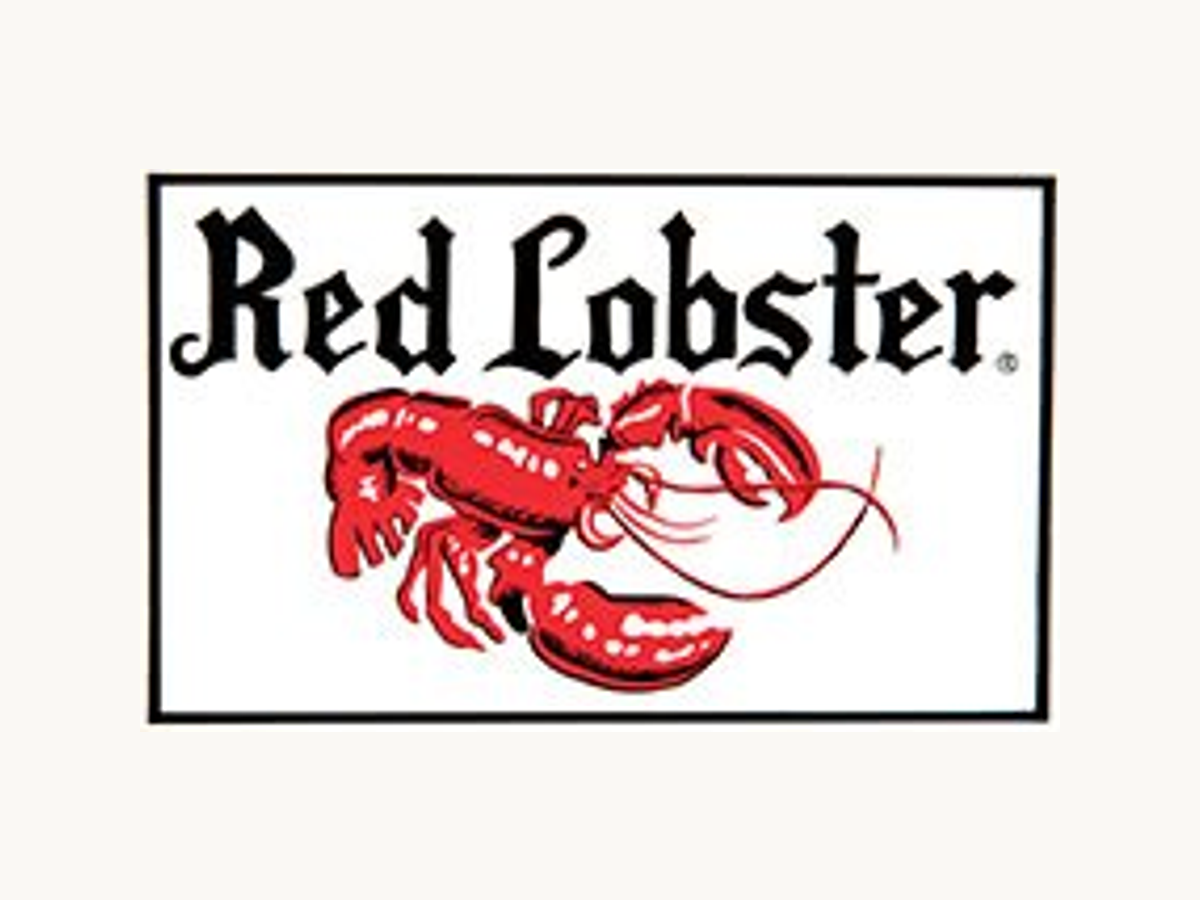
The ornate wordmark and illustrated lobster announce a destination restaurant directly. source
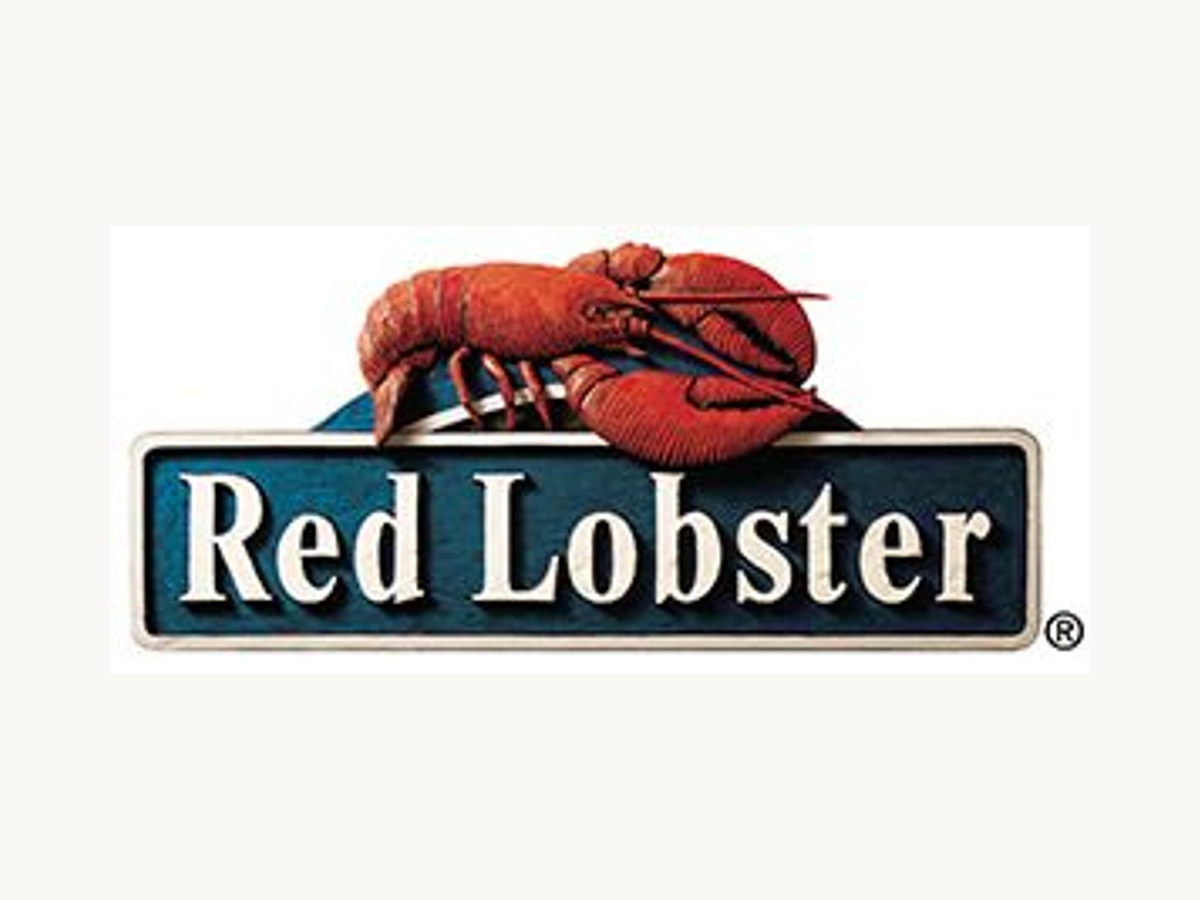
A more architectural badge turns the lobster into a restaurant sign system. source
The current black plaque keeps the red lobster and makes the name easier to apply across restaurant and digital surfaces. source
Product and service lineage.
Red Lobster scaled an accessible seafood ritual across a large national footprint. The operating model had to coordinate supply, kitchen complexity, full-service labor, leased real estate, loyalty, and promotions.
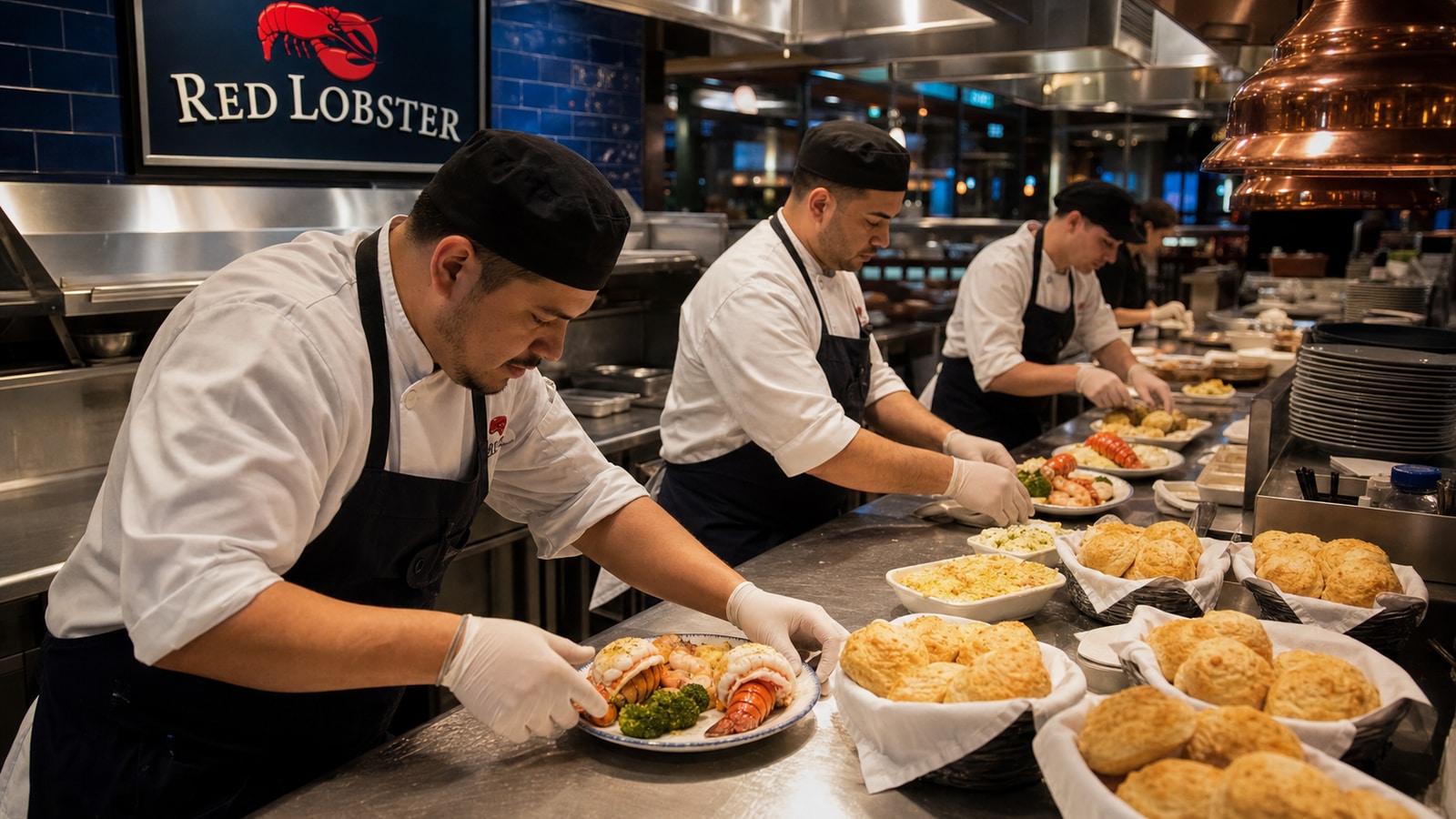
The menu creates operational load
Lobster, shrimp, fish, sides, and biscuits require a service system strong enough to protect margin and quality at volume.
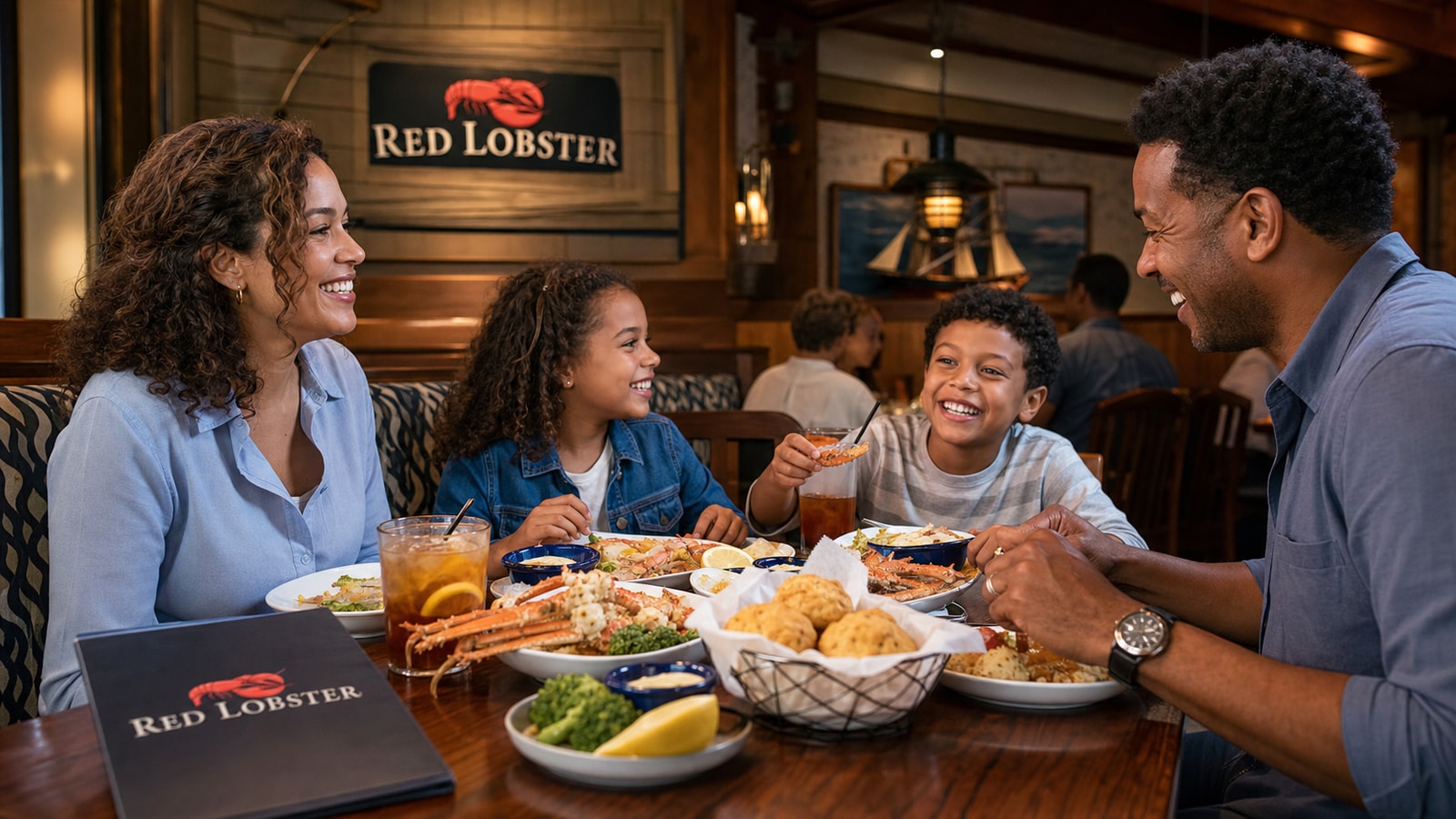
The brand owns a family occasion
Familiar food and a repeatable dining ritual explain why the name survived the capital reset.
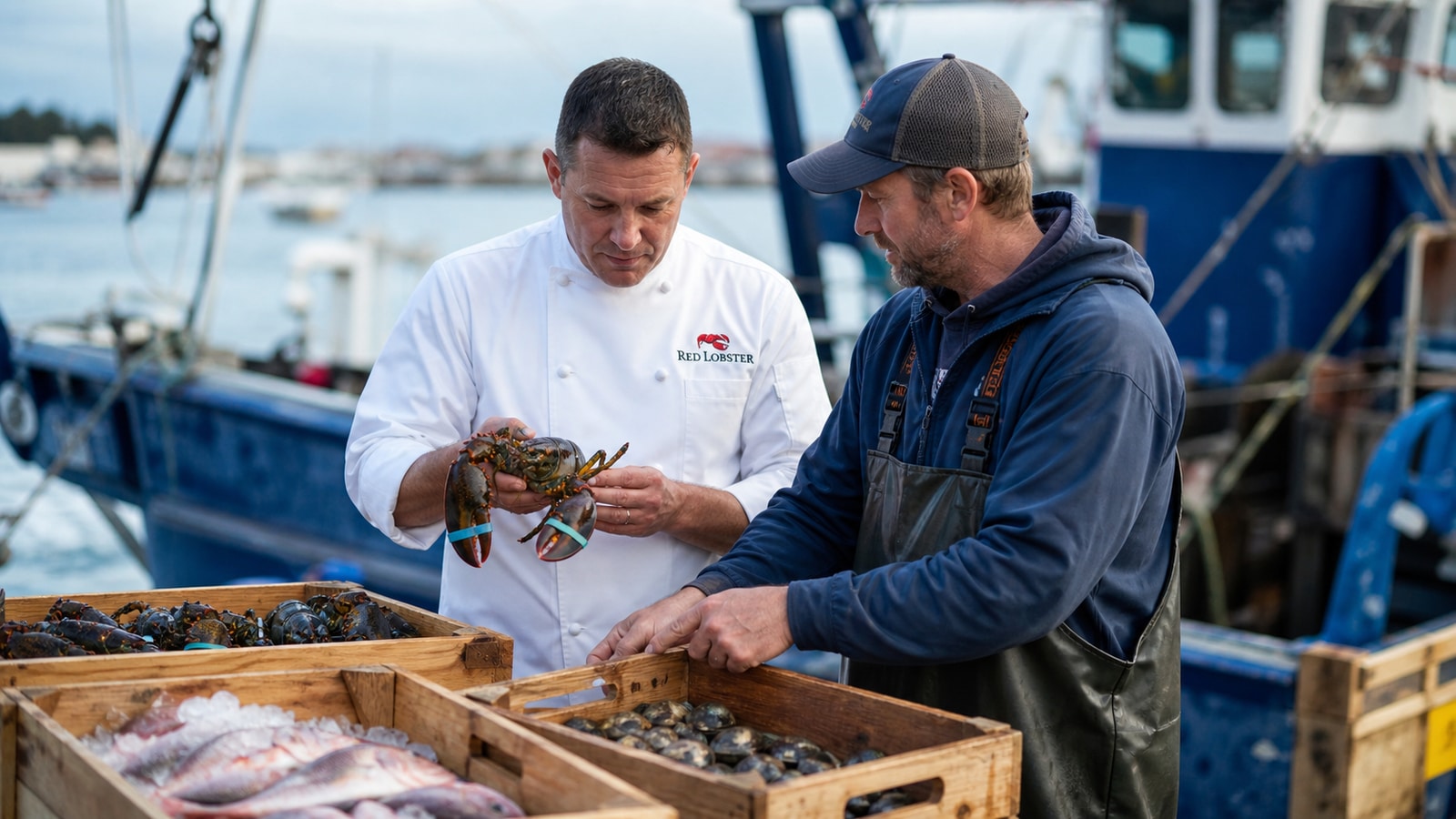
Sourcing has to support the promise
Accessible seafood still depends on supplier quality, availability, and cost discipline.
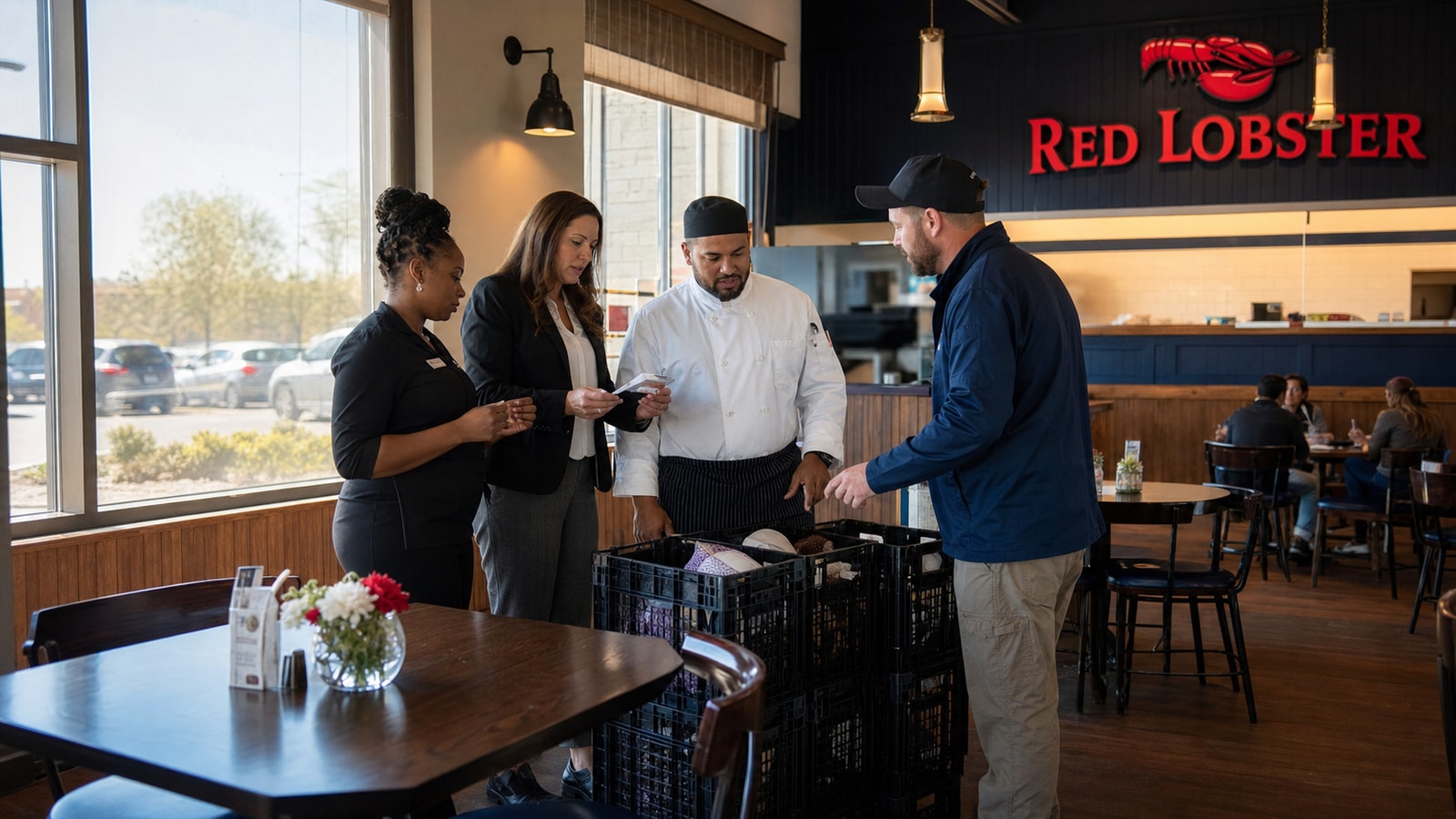
The reset must reach the restaurant
A court plan matters only when the remaining rooms, menu, labor, and inventory work better together.
Product and service system
A direct name and broad menu reduce category intimidation.
Biscuits and shared platters make the experience repeatable.
Scale expands reach but multiplies lease and labor exposure.
Traffic-driving value must still protect food and service economics.
Turning points.
The collapse was a chain: traffic and earnings eroded, management kept a complex national promise and an uneconomic permanent promotion, and the company ran out of an out-of-court path to reset leases and debt.
Why it failed
Guest counts fell about 30% from 2019, adjusted EBITDA fell more than 60%, and the company spent about USD 190.5 million on leases in 2023, including more than USD 64 million tied to underperforming stores.
The first-day declaration says former CEO Paul Kenny made the USD 20 Ultimate Endless Shrimp offer permanent despite significant internal pushback. It attributes about USD 11 million of loss and burdensome supply obligations to that decision; the promotion worsened, but did not create, the broader failure.
Cash fell from about USD 100 million to less than USD 30 million in six months, forcing vendor-payment holds. Thai Union would not provide more capital and lenders would not extend more out-of-court funding, leaving Chapter 11 as the available restructuring path.
Failure timeline
Darden sells Red Lobster to Golden Gate Capital for USD 2.1 billion.
FY2023 ends with a USD 76 million net loss and permanent Endless Shrimp adds loss pressure.
Red Lobster files Chapter 11 to pursue a sale and operating reset.
RL Investor Holdings completes the acquisition and Red Lobster exits Chapter 11.
Public reaction.
The public story collapsed into a joke about unlimited shrimp. The court record describes a broader traffic, lease, labor, debt, menu, and capital problem.
The prepetition company could no longer carry the system on its existing terms.
The name, restaurant ritual, teams, and customer demand moved into the new private company.
Full timeline.
Bill Darden opens the first Red Lobster in Lakeland, Florida. Source
General Mills acquires the five-unit chain. Source
Darden Restaurants becomes an independent company. Source
Darden sells Red Lobster to Golden Gate Capital for USD 2.1 billion. Source
Red Lobster files Chapter 11 in May and exits under RL Investor Holdings in September. Source
Steal / avoid.
- Keep the category promise unmistakable.
- Build a signature arrival ritual.
- Use court records to separate a funny headline from the actual failure mechanics.
- Do not claim Endless Shrimp alone caused bankruptcy.
- Do not call prepetition revenue a current result.
- Do not say Fortress alone owns Red Lobster.
Short answer.
Red Lobster began in inland Lakeland, Florida, in 1968, with Bill Darden's aim of making seafood accessible beyond coastal communities. Its official timeline dates Cheddar Bay Biscuits to 1992. The restaurant brand continued after its 2024 Chapter 11 sale; that restructuring concerned the operating company, not the disappearance of the name.
Frequently asked questions
Did Red Lobster go out of business?
No. The prepetition company completed Chapter 11 and the brand continued under RL Investor Holdings with 545 restaurants at exit.
Did Endless Shrimp cause the bankruptcy?
No. The court record attributes an USD 11 million loss to the permanent offer, inside a wider traffic, lease, debt, labor, and operating problem.
Where did Red Lobster start?
Bill Darden opened the first Red Lobster in Lakeland, Florida, in 1968. Lakeland is inland. The company's history describes a goal of making seafood accessible to people living away from the coast, which helps explain how a seafood restaurant became a national chain rather than a coastal specialty.
When did Red Lobster introduce Cheddar Bay Biscuits?
Red Lobster's official history dates the introduction of Cheddar Bay Biscuits to 1992. The biscuits became a recognizable part of the restaurant experience even though seafood supplied the company name. This date follows the company's own timeline, which is the source used here.
What are Red Lobster's latest public finances?
Current private results are not public. The 2024 court record described about USD 2 billion of prepetition revenue and a USD 76 million FY2023 net loss.
Need help with your own brand?
Use Private brand work when your name, identity, proof, or message needs a sharper branding decision.