Redbox · Grow Your Brand · Redbox failure case study · United States / Redbox kiosk, app, and streaming operations ended in the 2024 Chapter 7 liquidation; no verified operating successor is active
Redbox
Redbox had streaming services as well as red kiosks. Chicken Soup for the Soul Entertainment acquired Redbox in August 2022. The business combined physical rentals with digital rentals, purchases and ad-supported viewing before the 2024 liquidation ended the operating service.
Positioning, name, and architecture.
Redbox made a rental promise visible in one object: a red kiosk placed where people already bought groceries and medicine. Low price, no membership counter, and any-kiosk returns compressed an entire service into a familiar stop.
A bright red self-service kiosk network inside existing retail traffic with low prices and any-kiosk returns
Redbox made physical movie rental convenient by placing a recognizable self-service machine inside routine shopping, but the promise depended on content access, kiosk utilization, vendors, and working liquidity.
The descriptive compound joined the kiosk color and physical form into one easy-to-remember service name.
Operations ended in 2024
Defunct operating masterbrand formerly spanning kiosks, streaming, app, and content channels inside CSSE
Redbox Automated Retail, CSSE, kiosk host retailers, content suppliers, and residual IP or hardware claimants are separate roles.
Made availability visible but required maintenance, inventory, content, and retail-host relationships.
physical service: DVD rental kiosk source
Tried to extend the name beyond discs into transactional and ad-supported viewing.
streaming extension: Redbox app source
Supplied foot traffic and physical placement without owning the Redbox promise.
distribution partner: Grocery and pharmacy entrances source
Supplied discs, billing, support, and fulfillment obligations that had to keep working behind the visible kiosk.
operating dependency: Studio and vendor relationships source
Naming and tagline progression
A red box becomes the service
The smarter way to watch and play
The operating promise ends while the physical signal remains
Market and scale snapshot.
The 2023 figures isolate Redbox-attributable results inside Chicken Soup for the Soul Entertainment where the filing permits. The balance-sheet figures are consolidated parent figures and are labeled that way.
Redbox-attributable revenue reported by CSSE, not current revenue.
Redbox-attributable net loss reported in the 2023 Form 10-K.
Consolidated CSSE liabilities against USD 414.1 million of assets, not a Redbox-only balance sheet.
CSSE entered Chapter 7; Redbox operations ended and former public equity has no current operating-company role.
Color system.
Red turned a machine into a destination, cream kept the interface legible, and the final purple period added a small digital-era cue without changing the core physical signal.
How the palette behaves
Kiosk red: fast recognition in a busy retail entrance. Physical cabinet and case system.
Purple period: two dots punctuating the final Redbox wordmark. 2017-2024 identity.
Warm white: interface and wordmark contrast. Kiosk fascia and logo canvas.
Recognition assets.
Kiosk red, the lowercase name, disc cases, the return slot, retail placement, and a fast transaction created strong recognition. The physical network became a liability when content, demand, vendor trust, and cash stopped supporting it.
The product, channel, interface, and sign lived in one red cabinet.
A cross-location return rule made the network more useful than one store counter.
An idle kiosk can remain recognizable after the content, cash, and support system behind it has stopped.
Scores.
Recognition and physical availability stayed high until operations ceased. Financial resilience and service continuity collapsed first.
The red kiosk is unmistakable in a retail entrance.
Name, object, placement, and behavior explained the offer quickly.
Physical-disc demand and release supply weakened faster than the network could adapt.
Streaming extensions did not create enough financial resilience.
The red kiosk made the promise memorable but also made declining utilization, maintenance, inventory, and content access impossible to hide.
The 2023 figures isolate Redbox-attributable results inside Chicken Soup for the Soul Entertainment where the filing permits. The balance-sheet figures are consolidated parent figures and are labeled that way.
Operating service shut down in parent Chapter 7 liquidation; kiosks became stranded physical assets
No verified operating Redbox successor or current public ticker was found; the familiar kiosks do not prove an active service
How the logo changed.
Redbox kept the lowercase name while simplifying the arc and then replacing it with a purple period. The object stayed red and recognizable even as the identity shifted toward a more digital tone.
The compact lowercase mark sits under a return-like arc and matches the early kiosk system. source
A thinner, taller wordmark and cleaner red arc modernize the kiosk-era identity. source

The final identity removes the arc and adds a purple period. It is historical because operations ended in 2024.
Product and service lineage.
Redbox began as one machine for a simple rental, scaled through retail hosts, extended into digital viewing, and ended with physical hardware that the failed parent could no longer operate.
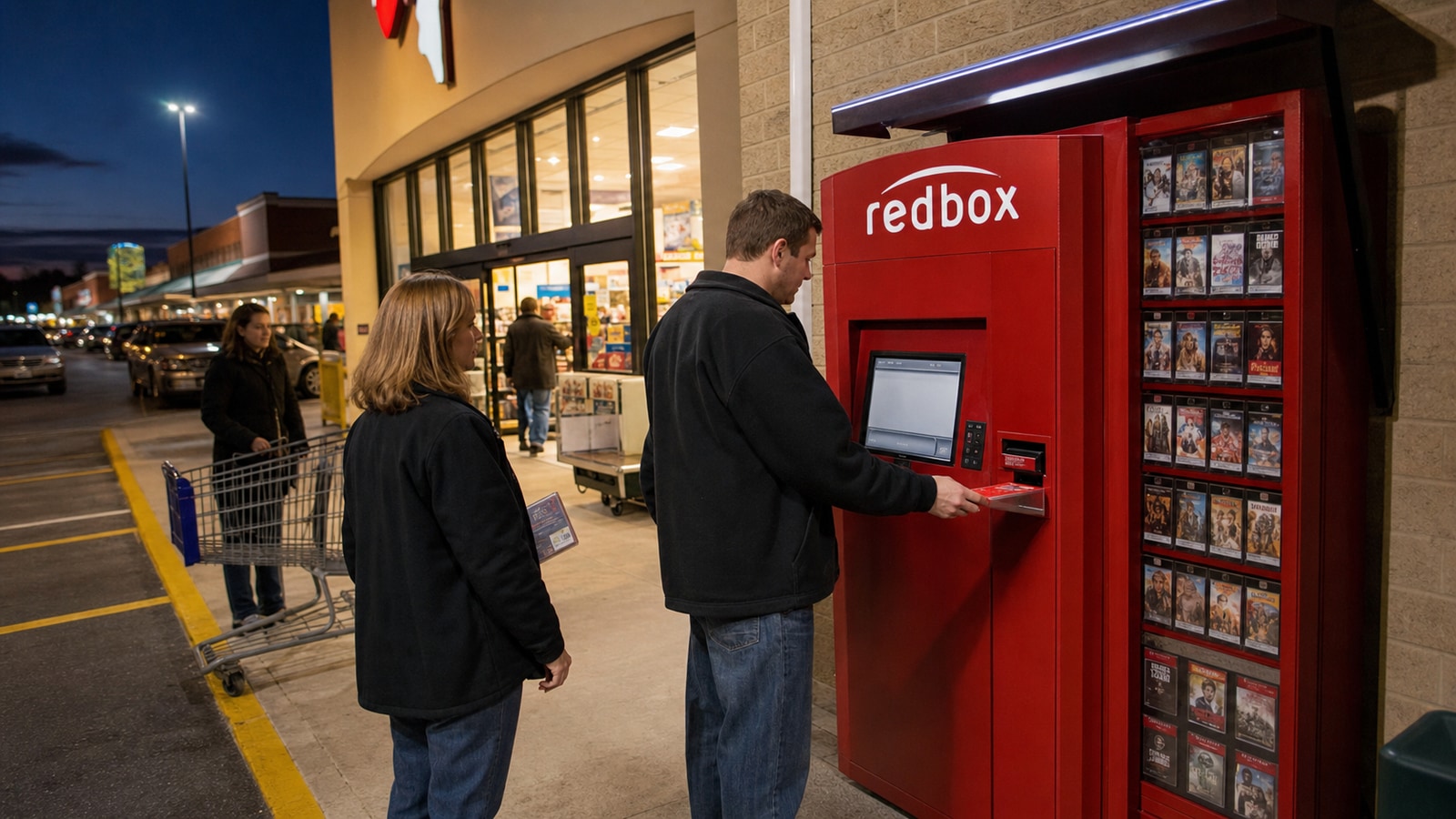
The network made the promise better
Retail placement and return-anywhere behavior created convenience that one rental counter could not match.
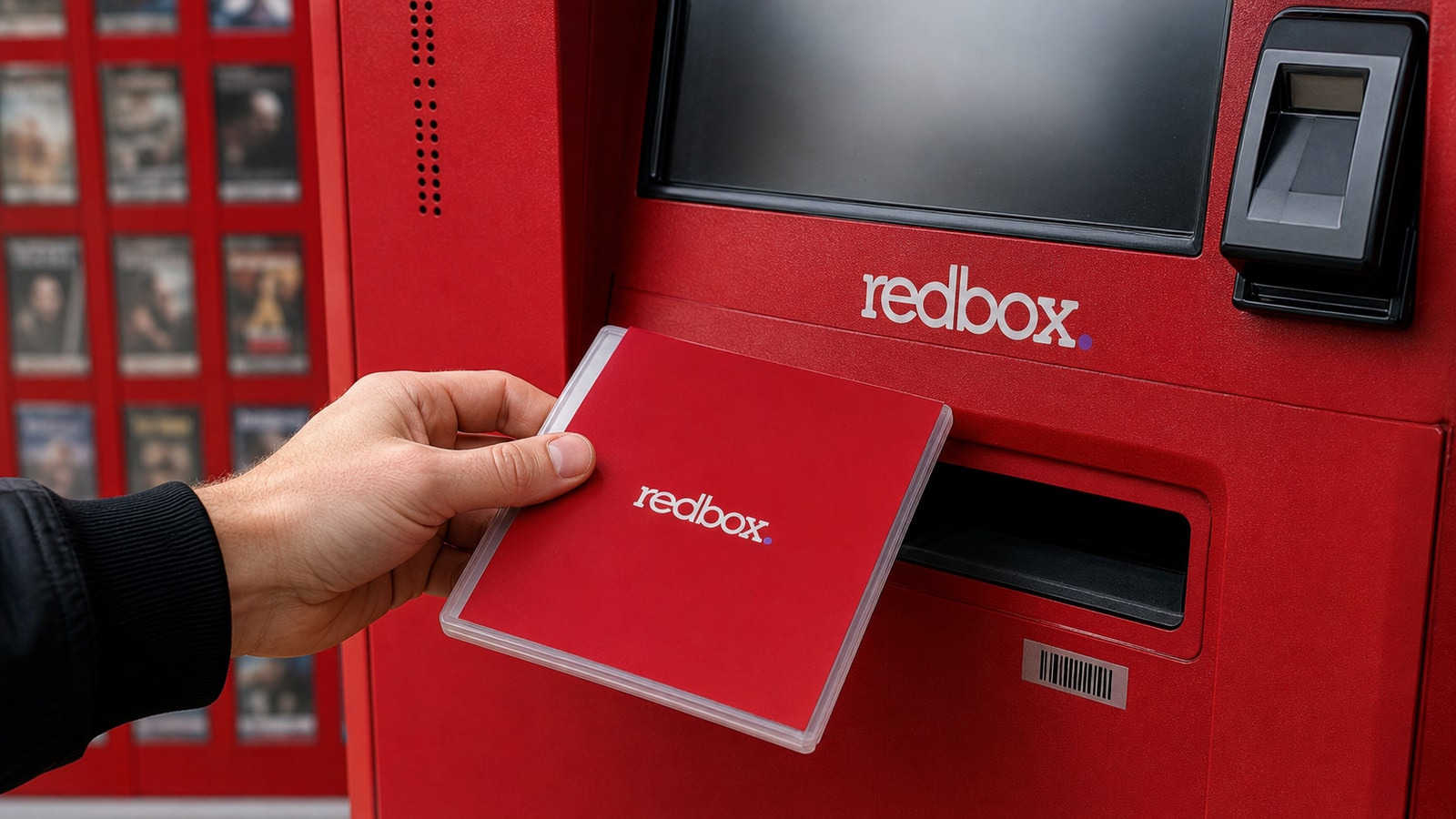
One case completed the ritual
The red case, scanner, and return slot made the service easy to recognize and repeat.
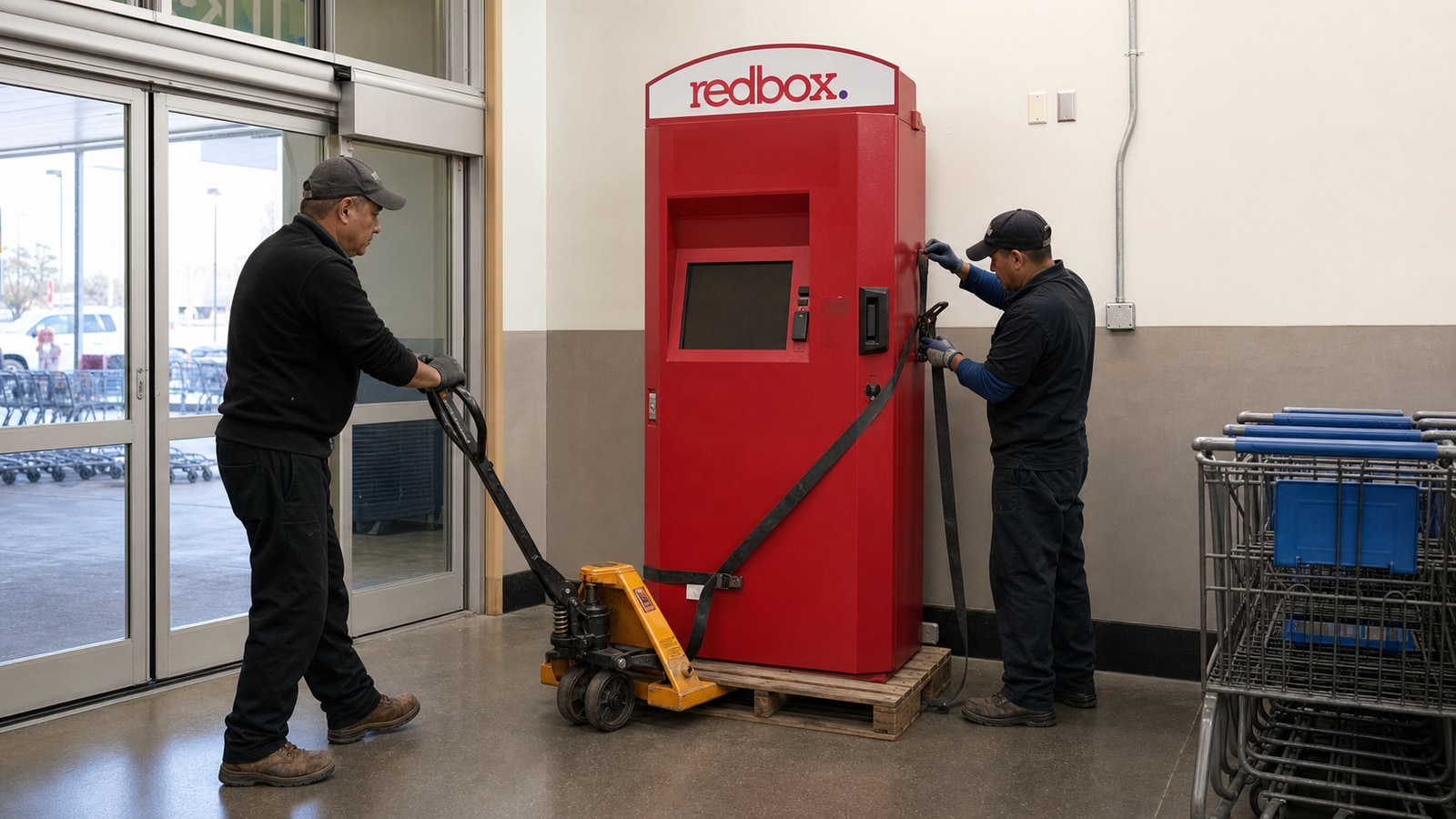
The final touchpoint became removal
Once operations stopped, the most recognizable asset changed from distribution point to stranded equipment.
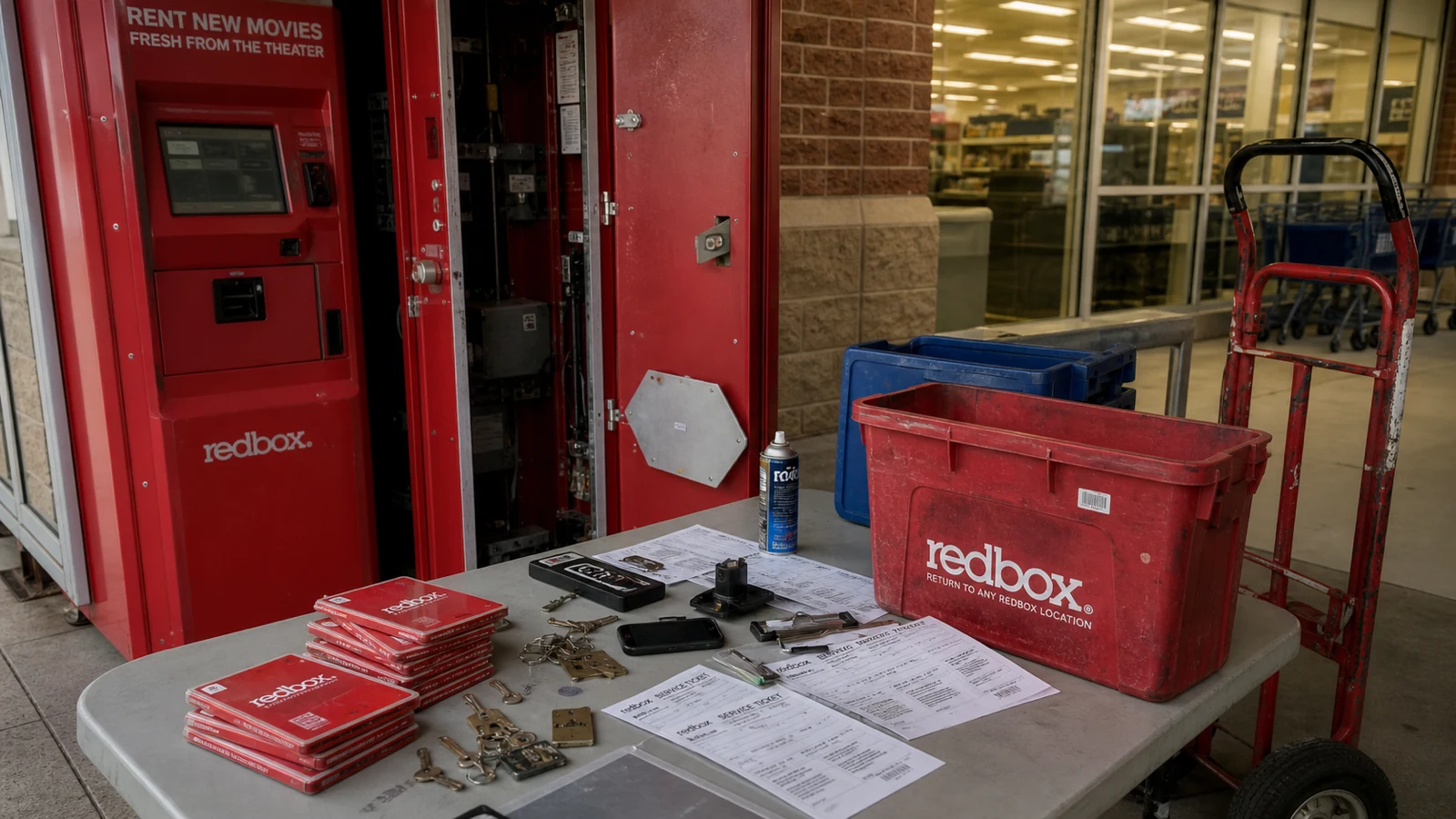
Service failure was visible in the machine
The brand promise depended on maintenance, content supply, payment, and host-store trust long after the red cabinet became famous.
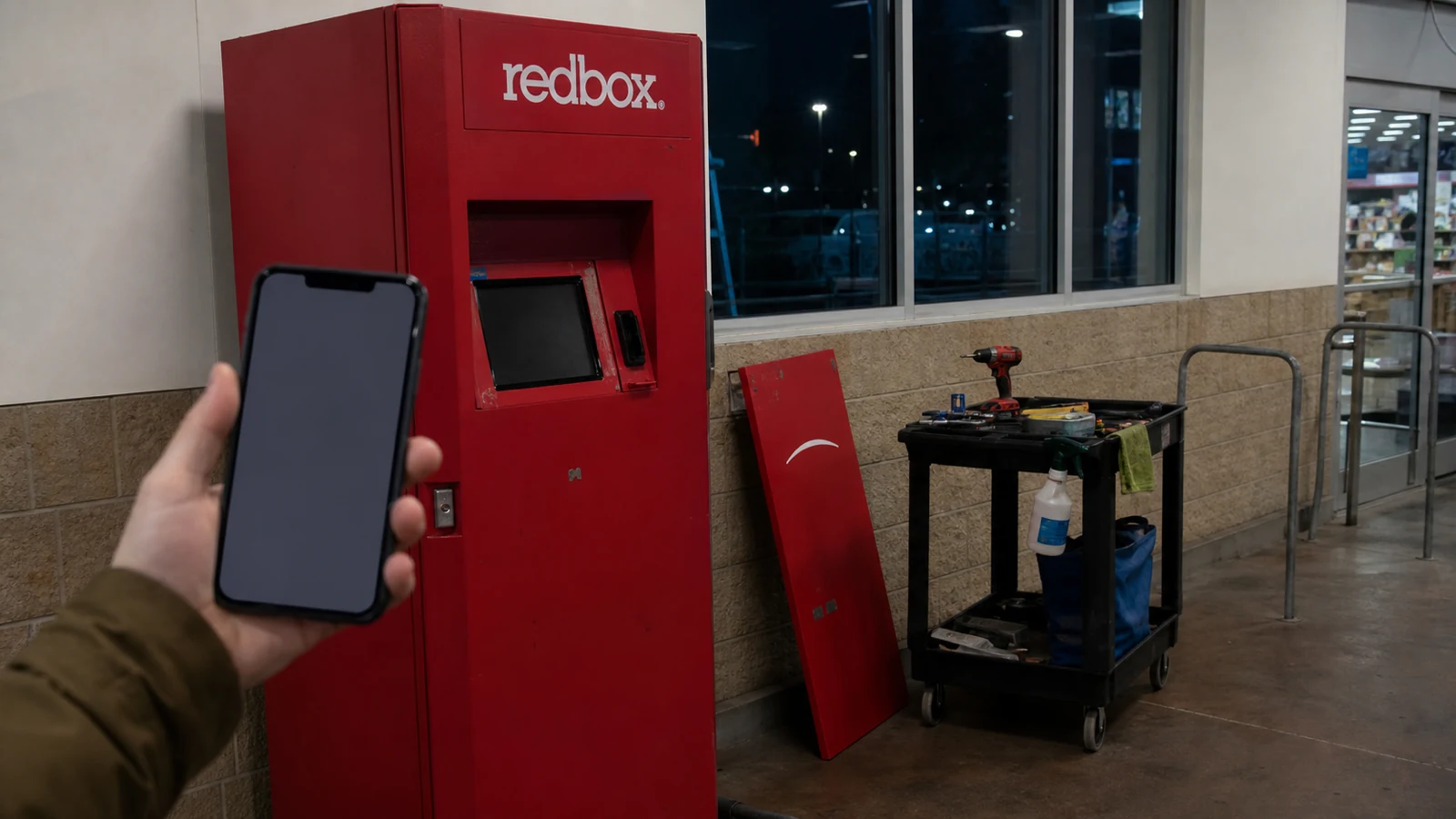
The app could not rescue the kiosk
Streaming language did not solve a network that still needed content supply, payments, maintenance, and host-store economics.
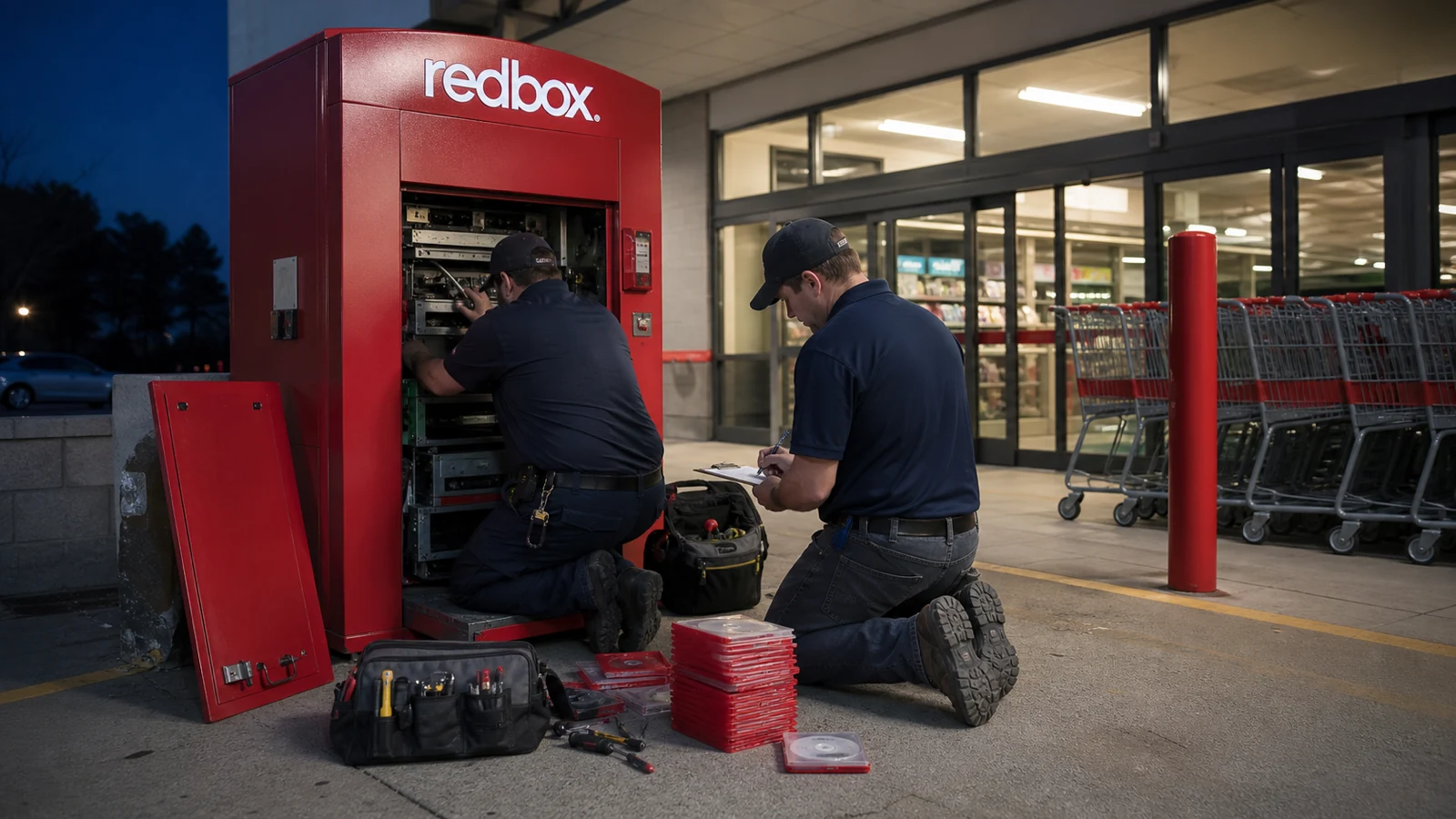
Shutdown became the brand impression
When the service stopped, customers saw the brand as stranded hardware rather than a convenient rental ritual.
Product and service system
A McDonald's Ventures project tests self-service convenience.
Return-anywhere behavior and retail placement scale the service.
Streaming and app products try to carry recognition beyond discs.
Liquidity failure ends operations and leaves kiosks without service.
Turning points.
Recognition survived longer than the economics. The breakdown moved from acquisition leverage to content and vendor pressure, then to payroll failure and liquidation.
Why it failed
A debt-heavy acquisition met declining physical-disc demand, weak film-release volume, streaming substitution, content-access problems, and damaged vendor and retailer relationships.
CSSE assumed about USD 359.9 million of Redbox debt while projecting demand recovery, synergies, and financing that did not arrive. A Chapter 7 trustee later alleged reckless borrowing, excessive shareholder payments, unpaid obligations, and insider misconduct; those allegations are not presented as adjudicated facts.
Liquidity exhaustion, missed payroll and benefit obligations, and vendor pressure led to Chapter 11 on June 28, 2024. The case converted to Chapter 7 on July 10, ending Redbox kiosk and digital operations.
Failure timeline
CSSE acquires Redbox and assumes about USD 359.9 million of debt.
Redbox posts USD 151 million revenue and USD 454 million net loss.
Missed obligations and exhausted liquidity lead to Chapter 11.
The case converts to Chapter 7.
Public reaction.
The kiosks were so visible that their continued physical presence created confusion about whether Redbox still operated.
Kiosk, app, and streaming operations ended after the parent liquidation.
Hardware and trademarks could remain visible without a verified operating successor.
Full timeline.
Redbox begins inside McDonald's Ventures. Source
Online reservation and wider retail placement strengthen the network. Source
Coinstar becomes the majority owner of Redbox. Source
CSSE completes the Redbox acquisition. Source
Redbox-attributable net loss reaches USD 454 million. Source
Chapter 11 converts to Chapter 7 in twelve days. Source
Steal / avoid.
- Make the channel itself recognizable.
- Place the offer inside an existing customer routine.
- Treat utilization, content supply, maintenance, and vendor trust as brand proof.
- Do not call an idle kiosk an active service.
- Do not present trustee allegations as decided facts.
- Do not confuse consolidated CSSE liabilities with a Redbox-only balance sheet.
Short answer.
Redbox operated digital rentals, ad-supported streaming and free television channels as well as DVD kiosks. Chicken Soup for the Soul Entertainment acquired it in August 2022. The 2024 Chapter 7 liquidation ended the service; a remaining kiosk does not establish an active operation.
Frequently asked questions
Is Redbox still operating?
No verified Redbox kiosk, app, or streaming operation is active. The 2024 Chapter 7 liquidation ended the service even where kiosks or marks remained visible.
Who bought Redbox before it shut down?
Chicken Soup for the Soul Entertainment completed its acquisition of Redbox Entertainment on August 11, 2022. The acquisition combined Redbox’s kiosk and digital distribution with the buyer’s streaming and content businesses. That was the owner before the 2024 liquidation described in this card.
Was Redbox only a DVD kiosk business?
Redbox also operated digital movie rentals and purchases, ad-supported on-demand streaming and free streaming television channels. Its 2022 acquisition announcement described those services alongside the physical kiosk network. The familiar red machine therefore represented only part of the business that later failed.
Why did Redbox fail?
Acquisition leverage, declining disc demand, weak film supply, vendor and retailer pressure, and exhausted liquidity combined. Recognition alone could not support the operating network.
Did Redbox lose USD 454 million in 2023?
CSSE's 2023 filing reports a USD 454 million Redbox-attributable net loss against USD 151 million of Redbox-attributable revenue.
Need help with your own brand?
Use Private brand work when your name, identity, proof, or message needs a sharper branding decision.
Sources.
Use the education shelf for the concepts behind this brand page.
Private brand workUse this when the decision belongs to your own brand.
All brandsReturn to every brand page.
- CSSE 2023 Form 10-K and Redbox-attributable results
- Redbox and CSSE bankruptcy petition
- CSSE first-day declaration
- Federal bankruptcy opinion and liquidation history
- 2022 Redbox acquisition announcement
- Trustee allegations reported by Bloomberg Law
- USPTO early Redbox mark
- 2016 Redbox mark record
- Final Redbox mark record
