Regal Cinemas · Grow Your Brand · Regal Cinemas failure case study · United States / Regal theaters continue under private Regal Global Entertainment after Cineworld's 2022-2023 Chapter 11 restructuring and 2026 corporate rename
Regal Cinemas
Is Regal still open, and how is it different from IMAX? Regal theaters kept operating while Cineworld restructured in Chapter 11. The private parent later became Regal Global Entertainment. IMAX, ScreenX, 4DX and RPX describe presentation formats at selected locations, not interchangeable theater chains.
Positioning, name, and architecture.
Regal turns a night out into a visible sequence: illuminated entrance, ticket scan, concession smell, auditorium threshold, recliner, screen, and loyalty return. The consumer system stayed usable even when the parent balance sheet failed.
A nationally recognized U.S. multiplex system combining scale, orange crown cues, loyalty, recliners, concessions, and premium screens
Regal makes cinema feel like an event through scale, arrival ritual, and shared viewing, but the parent must keep leverage, leases, film supply, and attendance aligned with that promise.
Regal uses a status word that promises a larger, more ceremonial movie experience.
The best place to watch a movie
Private global theater parent with Regal as the principal U.S. consumer operating brand
Regal consumer theaters, pre-emergence Cineworld plc, Chapter 11 debtors, former public shareholders, lenders, landlords, and film studios have different roles.
Carries the active customer promise after Chapter 11 emergence.
operating network: U.S. multiplex network source
Turns repeat attendance and concession behavior into a customer relationship.
loyalty: Regal Crown Club source
Compete with home viewing through scale, motion, sound, and screen formats.
experience extensions: RPX, 4DX, ScreenX source
Entered Chapter 11 and transferred control to lenders after debt reduction.
failed parent layer: 2022-2023 restructuring source
Naming and tagline progression
Regal Cinemas and film-reel crown cues
Crown architecture and multiplex scale
The best place to watch a movie
Market and scale snapshot.
The figures below describe Cineworld Group's prepetition operating and capital structure. They are not current standalone Regal results, and the former listed equity no longer exists.
U.S. Regal revenue was USD 1.079 billion in the same period; neither is current standalone Regal revenue.
The group reported USD 57.3 million operating profit before financing and other below-line pressure.
Borrowings less cash at June 30, 2022; cash was USD 130.6 million.
Legacy lenders took control after emergence; former LSE CINE equity was canceled and delisted.
Color system.
Orange makes the current crown-aperture glow at night, black creates theatrical contrast, and deep auditorium red connects the mark to seats, curtains, and the shared screen ritual.
How the palette behaves
Regal orange: arrival energy and illuminated recognition. Current exterior and wayfinding system.
Theater black: focus and cinematic immersion. Auditorium and current wordmark contrast.
Auditorium red: ritual and theatrical memory. Seats, curtains, and heritage interiors.
Recognition assets.
The orange aperture-crown, luminous architecture, Crown Club, auditorium numbering, popcorn, red seats, and theatrical scale make Regal legible. The financial crisis happened behind those customer signals.
The current symbol joins cinema mechanics and Regal's status promise in one orange shape.
Light, height, doors, poster boxes, and crowd flow make the experience feel larger before the film starts.
Ticket scan, concession, corridor, seat, screen, and loyalty return carry the promise together.
Scores.
Customer continuity and recognition stayed intact while parent-level leverage and cash resilience failed.
Orange crown cues and large multiplex architecture are distinct.
The arrival-to-auditorium ritual makes the offer visible.
Premium formats and social viewing remain strong when film supply supports them.
The prepetition parent could not carry acquisition debt, leases, and attendance volatility.
The cinema experience remained desirable, but weak attendance and film supply could not service the parent leverage and fixed theater obligations.
The figures below describe Cineworld Group's prepetition operating and capital structure. They are not current standalone Regal results, and the former listed equity no longer exists.
Highly leveraged parent and named subsidiaries reorganized in Chapter 11; Regal theaters and consumer brand continued
The reorganized private parent adopted the Regal Global Entertainment name in May 2026; former Cineworld shares were canceled and delisted
How the logo changed.
Regal moved from a literal film reel to a formal crown ring and then to an orange aperture-crown. The latest mark works across buildings, tickets, apps, staff uniforms, and auditorium wayfinding.
Italic type and a film reel make the cinema category explicit. source
The angular crown inside a ring makes the status cue more portable and formal. source
The current orange symbol joins a crown, aperture, and building-scale light system. source
Product and service lineage.
Regal scaled a U.S. multiplex ritual, joined Cineworld through a heavily financed acquisition, survived pandemic closure pressure, and continued after the parent balance sheet moved through Chapter 11.
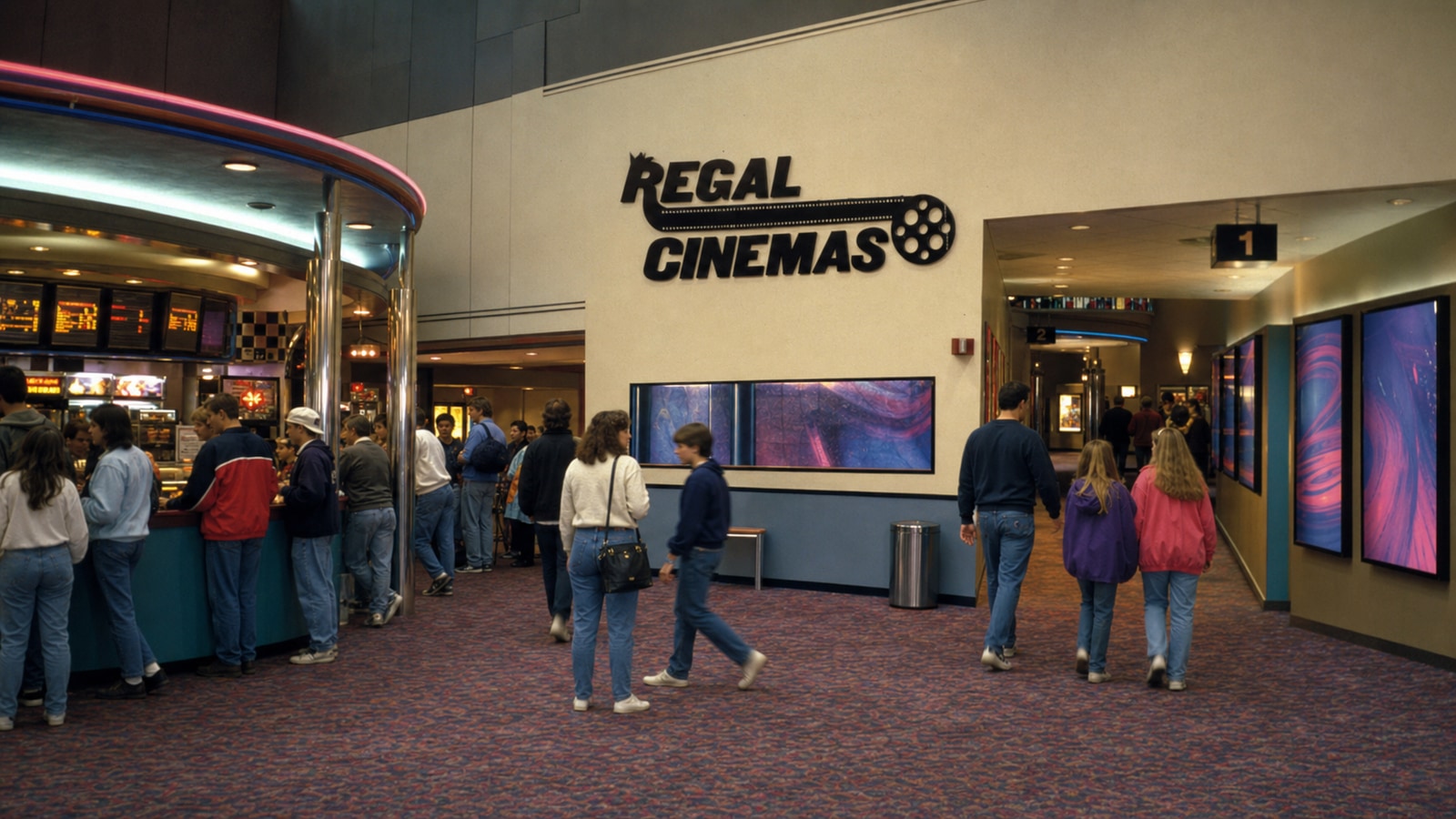
The multiplex made scale visible
A large lobby, film-reel cues, concession energy, and many auditorium doors made cinema feel like an occasion.
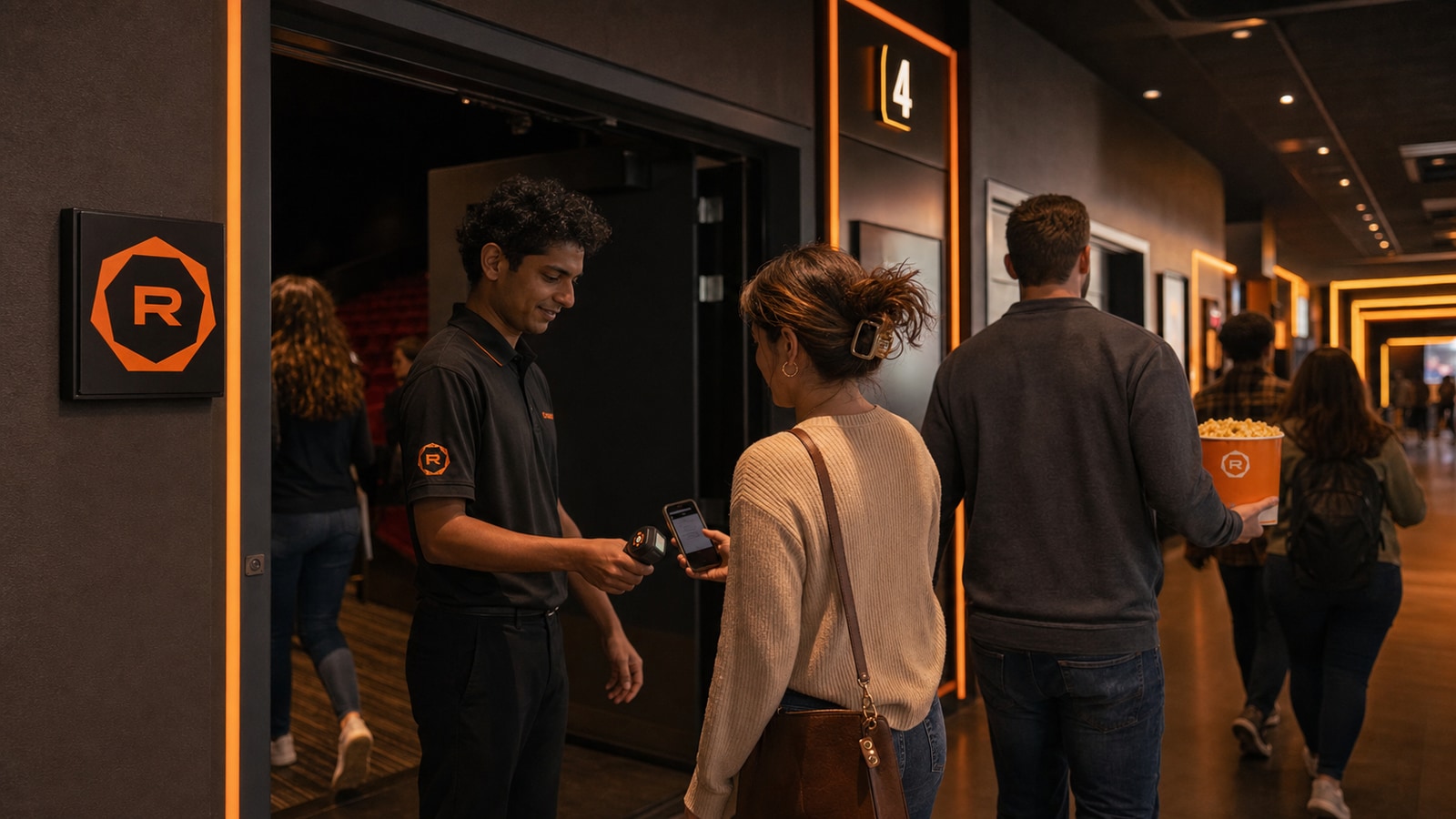
The promise starts before the screen
Ticket scan, staff, popcorn, corridor, and wayfinding turn a booking into a physical experience.
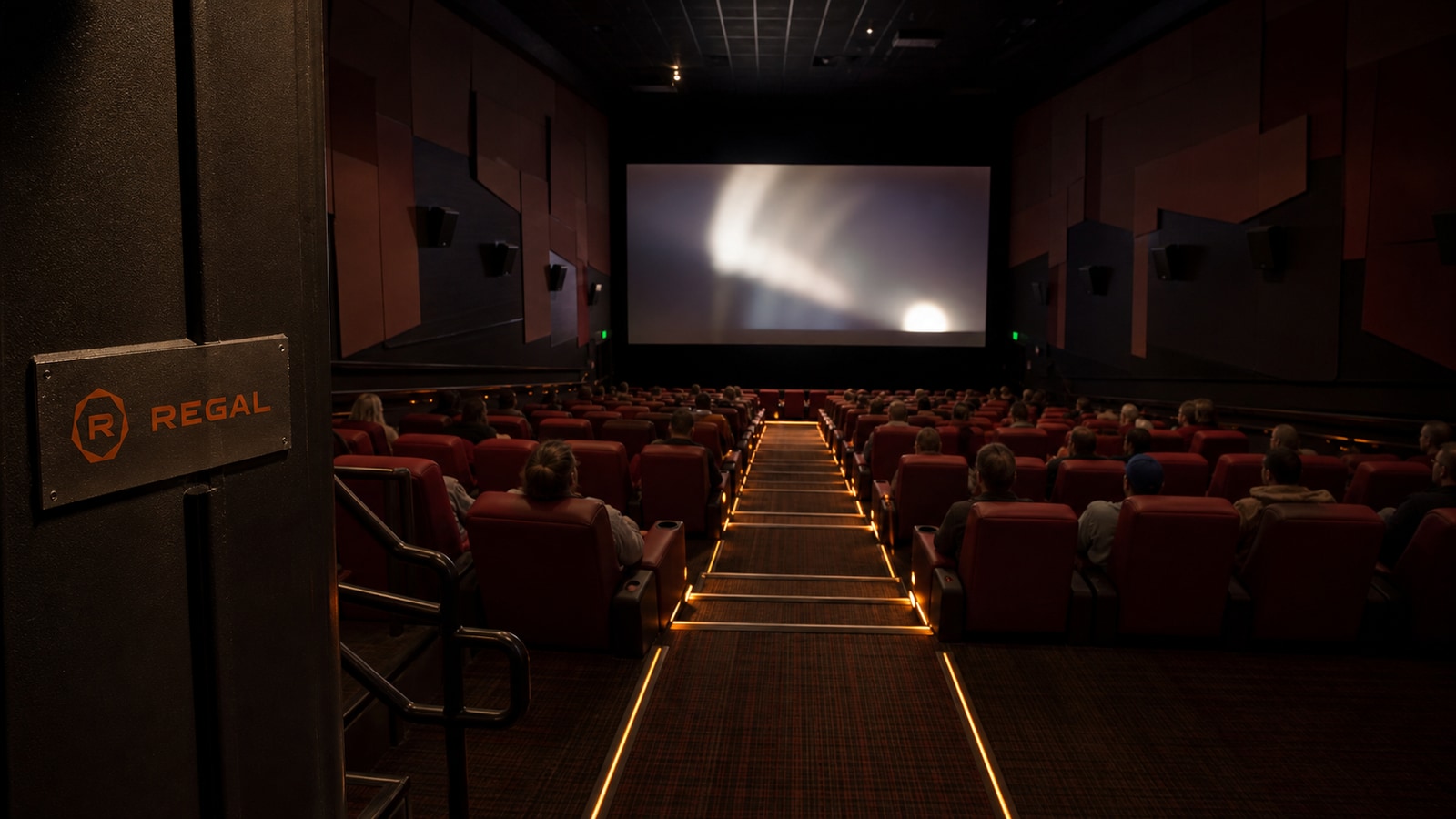
The room needs attendance
Every showing carries real estate, labor, energy, lease, and film costs whether the seats are full or not.
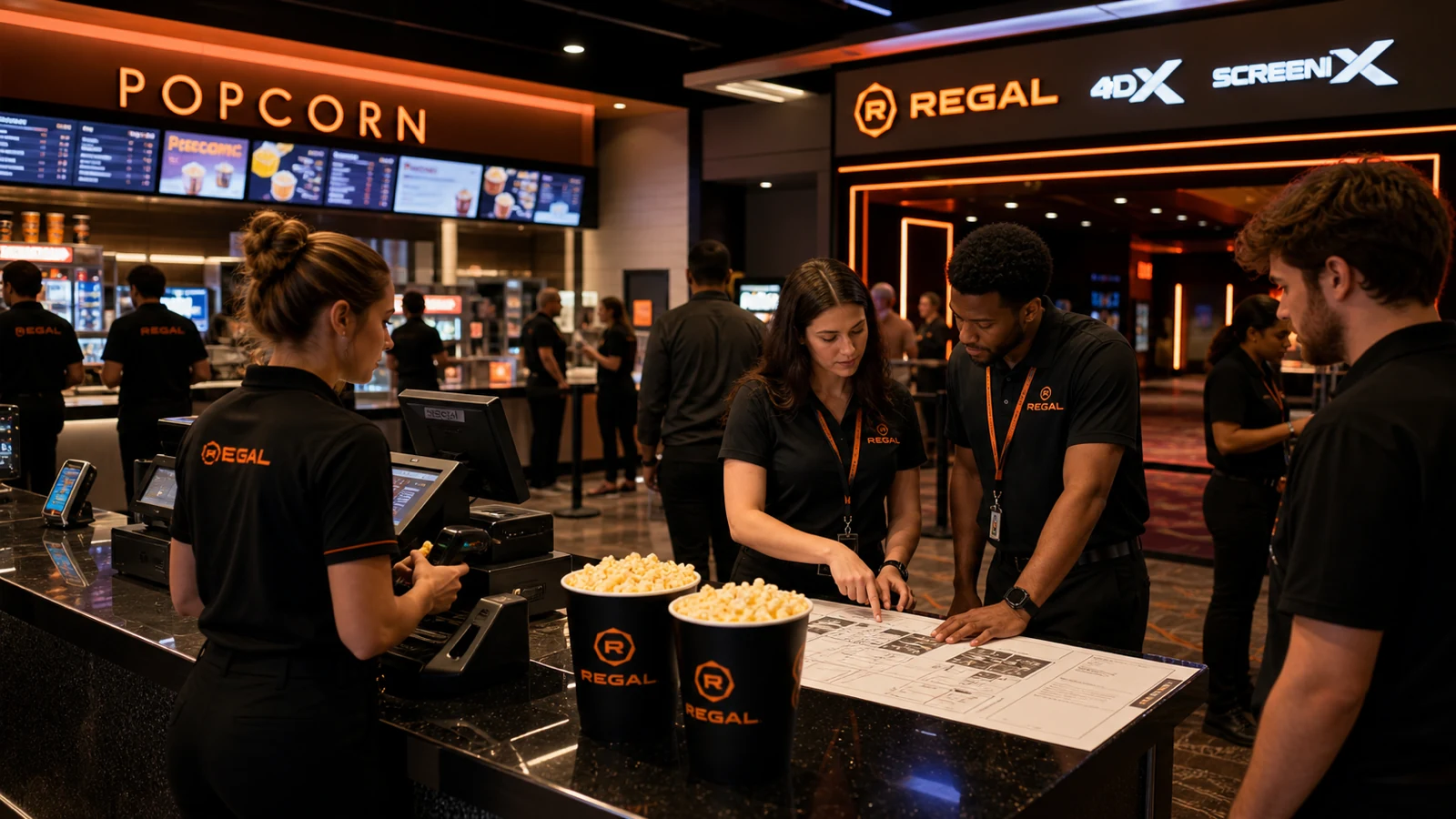
Premium formats need operating proof
Large screens, loyalty, concession, staffing, and ticket flow have to create enough attendance to support the theater network.
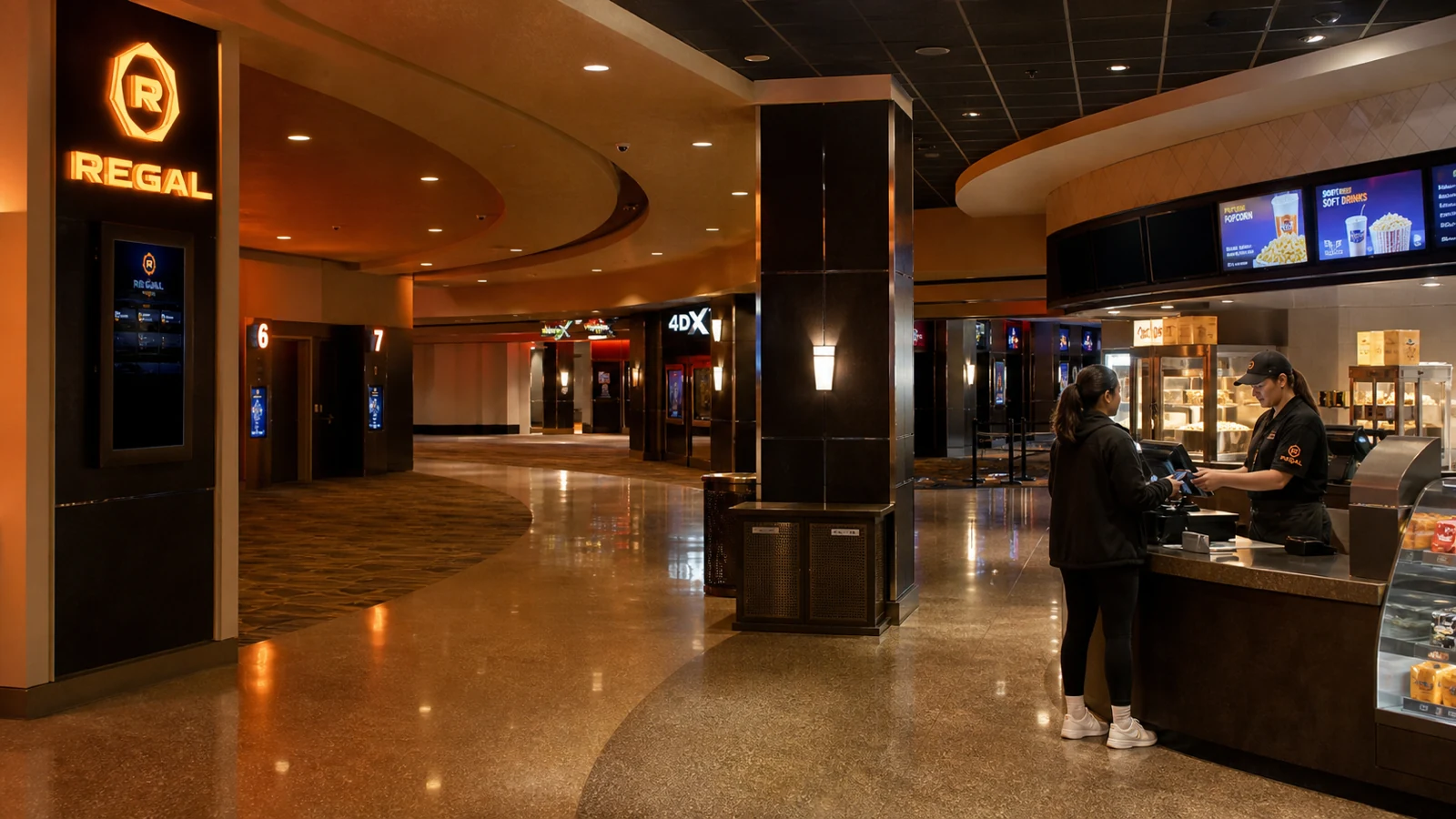
The lobby carries fixed cost
A theater brand has to make real estate, staffing, concessions, and showtime flow feel worth leaving home for.
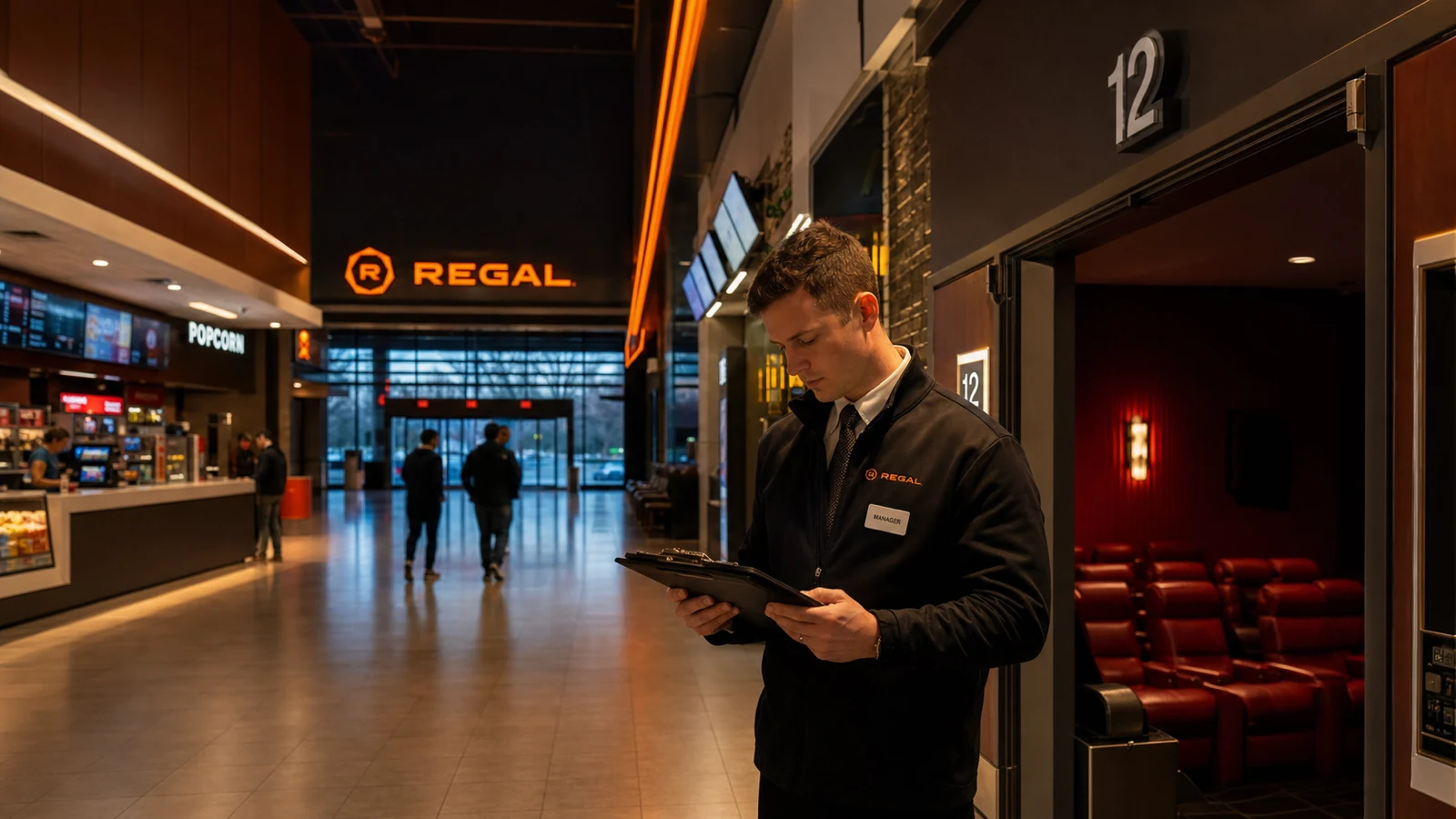
Operations decide whether the promise pays
Premium screens and loyalty cues only work when attendance, labor, leases, and film supply support the network.
Product and service system
Many screens, concessions, and visible theatrical architecture create a national ritual.
More than USD 4 billion of committed financing adds parent-level leverage.
Closures, attendance, and film supply weaken cash generation.
Chapter 11 transfers control to lenders while Regal theaters continue.
Turning points.
The customer experience continued. The failure chain ran through acquisition leverage, fixed theater obligations, pandemic closure, weak attendance, cash burn, and debt service.
Why it failed
Acquisition debt and lease commitments collided with pandemic closures, slow attendance recovery, a weak theatrical-release slate, and a capital-intensive theater network.
Cineworld financed the 2018 Regal acquisition with more than USD 4 billion of committed financing while predicting rapid deleveraging, then pursued the Cineplex acquisition before that deleveraging was complete. Cineworld terminated the Cineplex deal, and an Ontario court awarded Cineplex C$1.24 billion. The 2023 Chapter 11 plan later put an end to that judgment, leaving Cineplex with an unsecured recovery-pool interest expected to be immaterial.
In the first half of 2022, cash burn reached USD 144.9 million, cash fell to USD 130.6 million, attendance remained below 2019 levels, and net external borrowings less cash stood at USD 5.209 billion. Chapter 11 began on September 7, 2022.
Failure timeline
Cineworld completes the heavily financed Regal acquisition.
Pandemic closures remove theater revenue while fixed obligations remain.
Attendance recovery and film supply remain too weak for the debt load.
The group emerges, becomes private, and adopts Regal Global Entertainment.
Public reaction.
Bankruptcy headlines made it easy to confuse the parent capital structure with the customer-facing theater brand.
The restructuring reduced funded indebtedness by approximately USD 4.53 billion and canceled old equity.
The U.S. consumer brand, theater network, loyalty, and customer experience continued through emergence.
Full timeline.
Regal Cinemas begins building a U.S. multiplex circuit. Source
Regal combines with United Artists and Edwards under a reorganized theater platform. Source
Regal agrees to be acquired by Cineworld. Source
Cineworld completes its acquisition of Regal. Source
Cineworld and debtor subsidiaries file Chapter 11. Source
The group emerges from Chapter 11 under lender ownership. Source
The private parent adopts the Regal Global Entertainment name. Source
Steal / avoid.
- Separate the customer experience from the capital structure behind it.
- Make arrival, staff, place, and product behavior carry the brand together.
- Use premium formats only when they increase attendance and cash proof.
- Do not say Regal disappeared in bankruptcy.
- Do not present former Cineworld figures as current standalone Regal results.
- Do not let acquisition scale outrun deleveraging proof.
Short answer.
Regal Cinemas continued operating while its former parent Cineworld and named subsidiaries reorganized in Chapter 11. The failure came from acquisition debt, leases, pandemic closures, slow attendance recovery, and weak film supply. At June 2022, net external borrowings less cash were USD 5.209 billion and cash was USD 130.6 million. The 2023 restructuring reduced funded indebtedness by approximately USD 4.53 billion, canceled old equity, and transferred control to lenders. The private parent adopted the Regal Global Entertainment name in 2026.
Frequently asked questions
Did Regal Cinemas go out of business?
No. Regal theaters and the consumer brand continued while Cineworld's parent-level capital structure and debtor subsidiaries reorganized.
Is Regal the same as IMAX?
No. Regal is the cinema operator; IMAX is one of the premium presentation formats available at selected Regal locations. Regal also lists 4DX, ScreenX and RPX. Check the format on the specific showtime rather than assuming every auditorium at a Regal theater has the same equipment.
What is ScreenX at Regal?
ScreenX extends selected movie imagery onto the side walls to create a 270-degree viewing experience. Regal describes it as a multi-projection format. It is a presentation format within participating Regal theaters, not a separate cinema-chain owner or a feature of every screening.
Is Regal still publicly traded?
No. Former Cineworld shares were canceled and delisted. The reorganized parent is private and has used the Regal Global Entertainment name since 2026.
Why did Cineworld file Chapter 11?
Acquisition debt, lease commitments, pandemic closures, slow attendance recovery, weak film supply, cash burn, and limited liquidity combined.
Need help with your own brand?
Use Private brand work when your name, identity, proof, or message needs a sharper branding decision.
Sources.
Use the education shelf for the concepts behind this brand page.
Private brand workUse this when the decision belongs to your own brand.
All brandsReturn to every brand page.
- Cineworld first-half 2022 results
- Cineworld Chapter 11 announcement
- Cineworld restructuring terms
- Cineworld emergence announcement
- Cineworld Regal acquisition statement
- Cineplex judgment announcement
- Cineplex Q3 2023 restructuring update
- Current Regal company profile
- 2026 Regal Global Entertainment rename
- USPTO early Regal Cinemas mark
- USPTO 2009 Regal Cinemas mark
- Current Regal brand assets
- Regal Cinemas: What is ScreenX at Regal?