Rite Aid · Grow Your Brand · Rite Aid failure case study · United States / Online health business; legacy retail pharmacy chain closed
Rite Aid
Rite Aid kept the name after empty shelves and debt ended the pharmacy chain. This failure case separates the closed retail chain from the new online testing business, then follows debt, losses, vendor confidence, inventory collapse, and the USD 7.8 million name-and-domain sale.
Positioning, name, and architecture.
Rite Aid's brand promise depended on prescription continuity, stocked shelves, and neighborhood convenience. When inventory and vendor confidence collapsed, the customer experience contradicted that promise.
A familiar neighborhood pharmacy with broad local access
Rite Aid's neighborhood-health position failed when inventory, prescription relationships, and service continuity stopped supporting it.
The chain began under the Thrift D Discount Center name and adopted Rite Aid in 1968.
No legacy retail tagline is presented as current because the old stores closed and the new operator is a different business.
reused masterbrand
The legacy retail company closed its stores. A different company acquired the name, domains, trademarks, and selected data for a new online health-testing business.
Separates the failed operating entity from the surviving name or intellectual property.
failure-case boundary: New direct-to-consumer testing business with no Rite Aid retail pharmacies source
Naming and tagline progression
Rite Aid name adopted
RxEvolution and whole-health positioning
The new operator explains that the former stores are closed
Market and scale snapshot.
The scale figure is the warning: a retailer can produce tens of billions in sales while debt, losses, working capital, and availability destroy the customer promise.
Rite Aid FY2023 Form 10-K.
Large sales volume did not produce a healthy company.
Debt reduction during the first restructuring did not prevent a second filing.
Court-approved sale to the new Rite Aid LLC / PMDLabs entity.
Color system.
The 2020 blue-and-green identity tried to move the brand from drugstore utility toward whole health. Stock availability remained the more powerful customer signal.
How the palette behaves
Blue preserved healthcare trust and continuity.
Green added a wellness and renewal cue.
Sparse white shelves turned the neutral retail ground into visible evidence of failure.
Recognition assets.
The shield, blue-and-green palette, pharmacy counter, and neighborhood footprint remained familiar. Empty shelves became a stronger signal than the 2020 identity refresh.
The shield carried protection and pharmacy trust across the brand's major identity eras.
Availability was the proof customers needed before any rebrand could matter.
The most valuable relationship moved with prescription files when the stores closed.
Scores.
These scores judge what the operating evidence did to recognition, trust, consistency, and recovery potential.
The Rite Aid name and shield retained substantial memory.
Empty shelves and two bankruptcies contradicted dependable care.
Store conditions and availability varied while the new identity promised whole health.
The name has memory, but the new business must explain that it has no retail pharmacies.
Availability and prescription continuity mattered more than the visual refresh.
The scale figure is the warning: a retailer can produce tens of billions in sales while debt, losses, working capital, and availability destroy the customer promise.
Retail chain closed; name and digital assets sold to a new operator
New direct-to-consumer testing business with no Rite Aid retail pharmacies
How the logo changed.
The progression moves from a literal block shield to the long-running red-and-blue shield, then to the 2020 mortar-and-leaf identity.
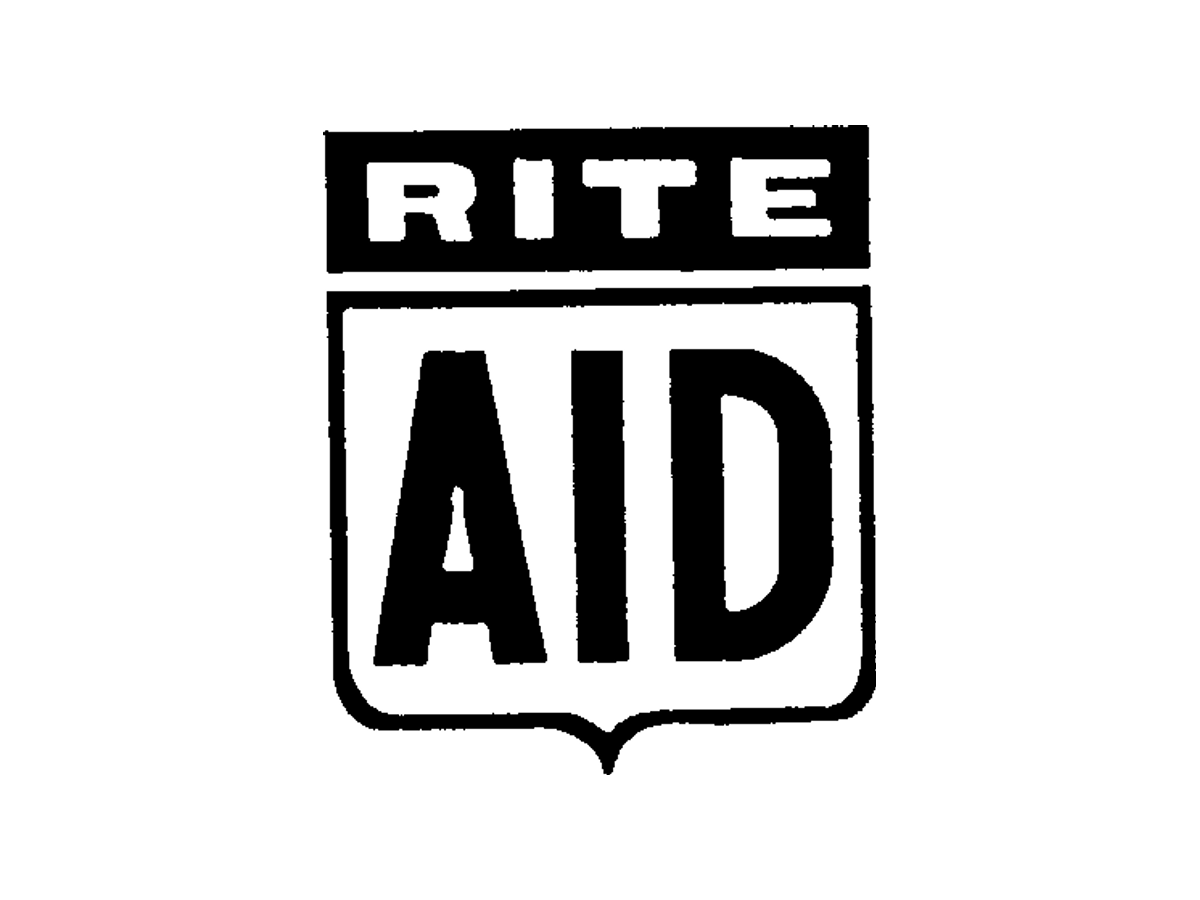
The early block shield put RITE above AID and made the category name the entire symbol. source
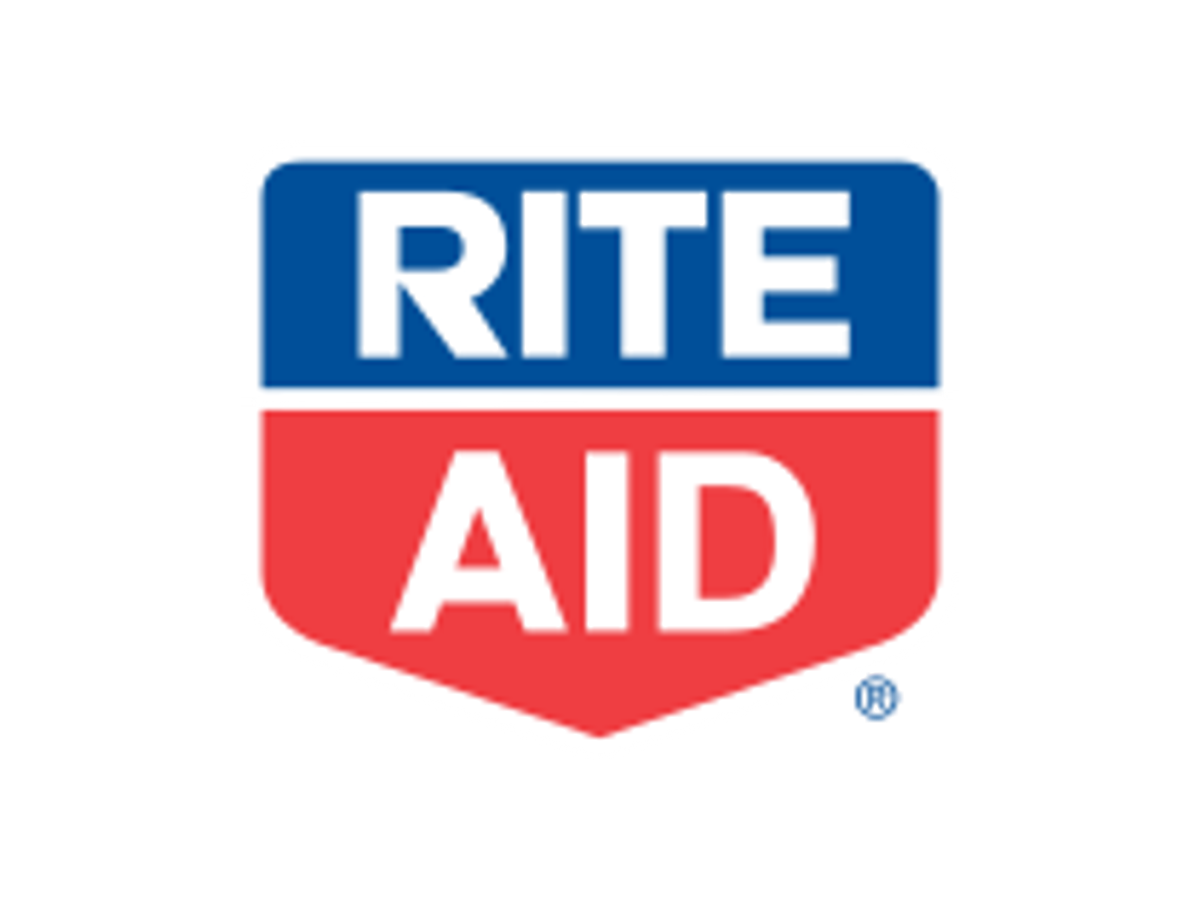
The red-and-blue shield became the chain's longest-running national recognition asset.
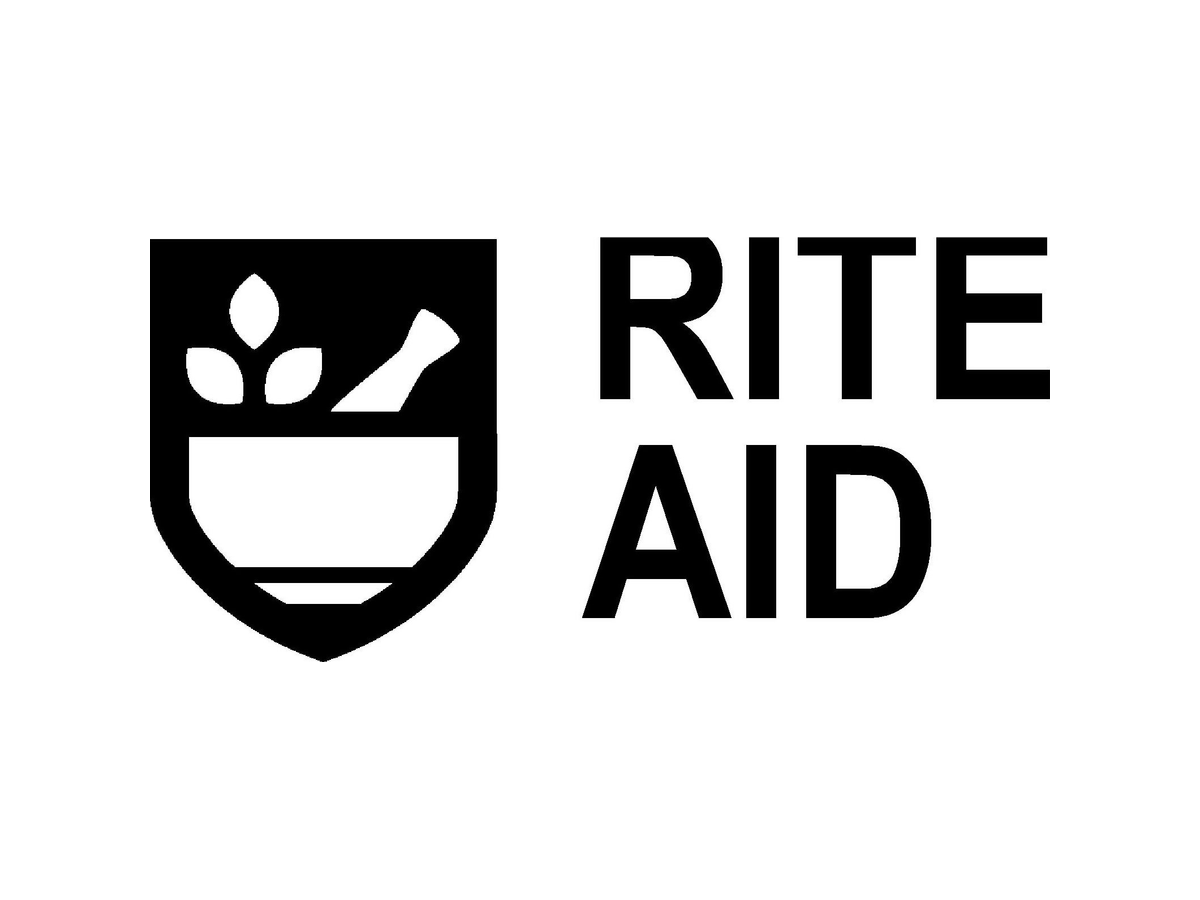
The final retail identity combined a mortar, pestle, and leaves to support the whole-health positioning. source
Product and service lineage.
Rite Aid moved from discount drugstore growth to national pharmacy scale, attempted a whole-health repositioning, restructured, and then sold the customer relationship and the name in separate transactions.

The promise was local access
The counter connected prescriptions, advice, and everyday health in one neighborhood visit.

Empty shelves became the brand
In-stock rates fell from 89% before the first bankruptcy to about 55% by February 2025.

Front-end margin needed product
Private-label and convenience sales cannot support a store when vendors restrict shipments and shelves go bare.
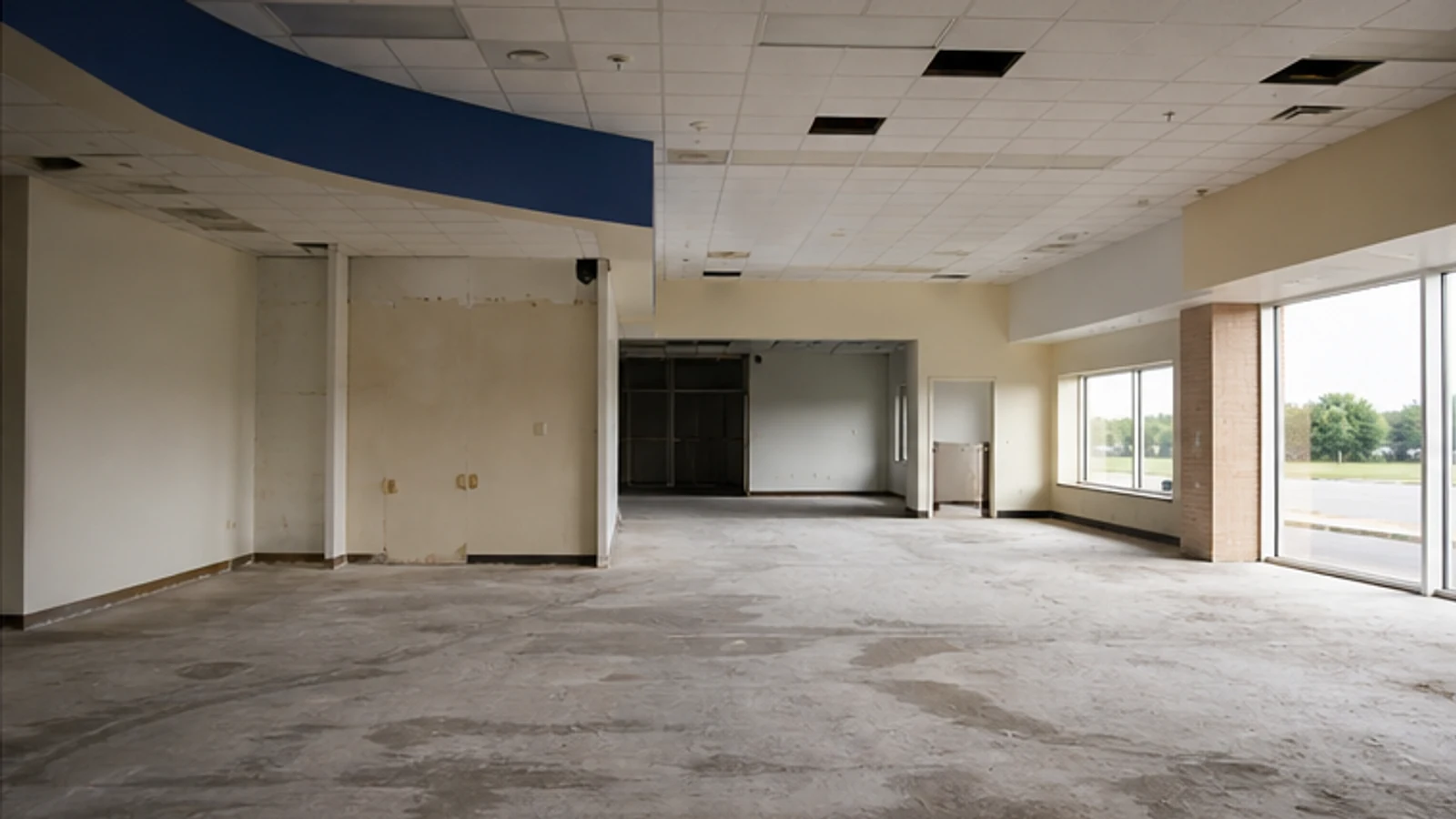
The customer relationship moved
Prescription files and store assets were sold while the physical chain closed.
Product and service system
The chain began with practical health and household value.
Prescription access and neighborhood convenience became the main trust system.
The 2020 identity broadened the promise toward wellness.
A new company acquired selected digital and identity assets after the stores closed.
Turning points.
The failure becomes legible when the finances, operating decisions, and customer evidence are read together.
Why it failed
The first bankruptcy reduced debt but did not restore the retail engine. Front-end in-stock rates fell from 89% before the 2023 case to 57% at emergence and 55% by February 2025. Less inventory meant less revenue and a smaller borrowing base, leaving less money to restock.
The 2024 exit plan assumed USD 126 million of working-capital expansion from normalized vendor terms and USD 280 million from replacement letter-of-credit facilities. Only about USD 46 million of working-capital expansion materialized, and the sole USD 66.75 million replacement facility closed after the seasonal restocking window.
Rite Aid breached its modified minimum ABL availability covenant on February 24, 2025. Temporary waivers extended the deadline through May 4. Rite Aid's disclosure says McKesson tightened payment terms days before the petition; the company filed Chapter 11 on May 5.
Failure timeline
Revenue reached USD 24.0919B while net loss reached USD 749.936M.
About USD 2B of debt was removed in the first restructuring.
In-stock rates were about 55%.
Stores closed and the name was sold for USD 7.8M to a new company.
Public reaction.
The current site explains that the old stores closed and will not return. That disclosure is essential because the surviving name can otherwise imply operating continuity that does not exist.
The former operator sold prescription files and assets, then wound down the physical chain.
RiteAid.com says the old stores are closed and identifies the new direct-to-consumer health business.
Full timeline.
The business begins as a discount drug store in Scranton, Pennsylvania.
The chain adopts the Rite Aid name.
The red-and-blue shield identity enters use.
The proposed full Walgreens acquisition collapses and a smaller store-asset transaction follows.
Rite Aid launches the RxEvolution whole-health identity.
Rite Aid agrees to acquire Bartell Drugs for USD 95 million.
FY2023 revenue reaches USD 24.0919 billion and net loss reaches USD 749.936 million.
Rite Aid files its first Chapter 11 case.
Rite Aid emerges private after reducing debt by about USD 2 billion.
Rite Aid files Chapter 11 again with 1,245 stores operating at filing.
All legacy Rite Aid retail stores close.
A new Rite Aid LLC uses the acquired name for direct-to-consumer health testing.
Steal / avoid.
- Treat in-stock rate as a brand-trust metric.
- Explain successor ownership and service boundaries in plain language.
- Keep prescription continuity ahead of identity theater.
- Do not use a rebrand to disguise an availability problem.
- Do not assume debt reduction restores vendor confidence.
- Do not merge the old corporation's financial history with the new operator.
Short answer.
Rite Aid is a closed-retail-chain and reused-name case. The legacy operator reported USD 24.0919 billion in FY2023 revenue and a USD 749.936 million net loss, restructured in 2024, filed Chapter 11 again in May 2025, sold prescription files and assets, and closed all remaining stores. A new company later acquired the name, domains, trademarks, and selected loyalty data for USD 7.8 million. The current business does not operate Rite Aid retail pharmacies.
Frequently asked questions
Is Rite Aid still in business?
The legacy retail chain closed all stores in 2025. A different company now uses the Rite Aid name for online health testing and says it has no Rite Aid retail pharmacies.
How could Rite Aid fail with USD 24 billion in revenue?
Revenue did not cover the damage from losses, debt, reimbursement pressure, litigation, weak vendor terms, and falling product availability.
Did the 2020 rebrand cause the bankruptcy?
No. The identity change could not compensate for debt, losses, and an inventory collapse.
What happened to prescriptions?
Prescription files and other pharmacy assets were sold to other operators during the 2025 wind-down.
What should another brand learn?
In retail pharmacy, stocked shelves and prescription continuity are the brand before color, logo, or campaign.
Need help with your own brand?
Use Private brand work when your name, identity, proof, or message needs a sharper branding decision.
