Rolex · Grow Your Brand · Iconic / Precision Trust System · Switzerland / Active / iconic
Rolex
Rolex turns precision into proof people can recognize. A brand page for Rolex: the Oyster case, chronometer language, crown mark, green-and-gold restraint, service discipline, controlled availability, and the way technical proof makes luxury feel durable.
Positioning, name, and architecture.
Three evidence checks before the page talks about scale, color, or public reaction.
The universally recognized achievement symbol built on Oyster protection, chronometer language, service, and controlled availability.
Rolex positions the watch as achievement with proof: precision, permanence, and control made visible.
Rolex is an invented name associated with Hans Wilsdorf's early watch company and made short enough to live on a dial.
A Crown for Every Achievement
standalone halo brand
Rolex protects the main halo while Tudor and Bucherer sit as related ownership and access cues around the crown.
Oyster and Perpetual watch families carry the main technical-proof and prestige system.
Masterbrand: Oyster Perpetual source
A distinct watch identity held by the same foundation broadens access without becoming Rolex logo history.
Related watch brand: Tudor source
Luxury watch retail adds a controlled distribution and service surface around the ownership system.
Retail company: Bucherer source
Authorized service keeps precision, waterproofing, verification, and long ownership inside the brand promise.
Ownership system: Rolex Service source
Naming and tagline progression
Oyster proof language
A Crown for Every Achievement
Superlative Chronometer
Market and scale snapshot.
Rolex is private, so the useful snapshot states what is undisclosed and names the ownership structure without inventing valuation.
No disclosed revenue figure is used in this card.
No disclosed profit figure is used in this card.
Rolex is privately held and has no public market capitalization.
Rolex is privately held through the Hans Wilsdorf Foundation and has no public ticker.
Color system.
Rolex should feel controlled before it feels expensive. Green carries institutional confidence, gold carries value, cream keeps the page warm, and black keeps the luxury signal disciplined.
How the palette behaves
Green gives Rolex an institutional memory cue: calm, old-world, controlled, and instantly separate from ordinary steel-watch noise.
Gold carries the luxury signal, but the page uses it as an accent so the brand does not become loud or decorative.
Cream softens the system and keeps the watch proof from feeling like a cold technical catalog.
Black adds restraint and lets the metal, gasket, crown, and green surface carry the premium read.
Recognition assets.
Memory pieces the brand can use before someone finishes a sentence.
The crown works because it reads as authority before the viewer studies the watch.
A technical protection system becomes memorable when the public can name it.
The brand continues after sale through maintenance, verification, availability, and resale confidence.
Scores.
Use these scores to compare recognition, trust, proof, pressure, and risk.
Crown, green, gold, and watch silhouette are immediate.
Oyster and chronometer language make technical trust public.
The brand can carry value with fewer words because the cues are disciplined.
Service and long-term care make the purchase feel governed.
Controlled access helps desire, but it can also create frustration.
The brand is clear; the private ownership model requires careful fact handling.
Rolex is one of the fastest mental shortcuts for luxury watches.
Many brands copy scarcity, but few can support it with proof.
How the logo changed.
Three sourced Rolex identity stages show how the crown and wordmark were refined without losing their recognition system.
After the five-point crown was introduced in 1931, the outlined green wordmark and crown established the architecture Rolex kept refining. source
The crown and wordmark become cleaner and lighter while preserving the same ownership and prestige cues. source
The current lockup strengthens the green wordmark and gold crown without changing the identity's basic architecture. source

Product and service lineage.
Proof objects, ownership rituals, and controlled cues make a premium watch feel durable before the mechanism can be judged directly.
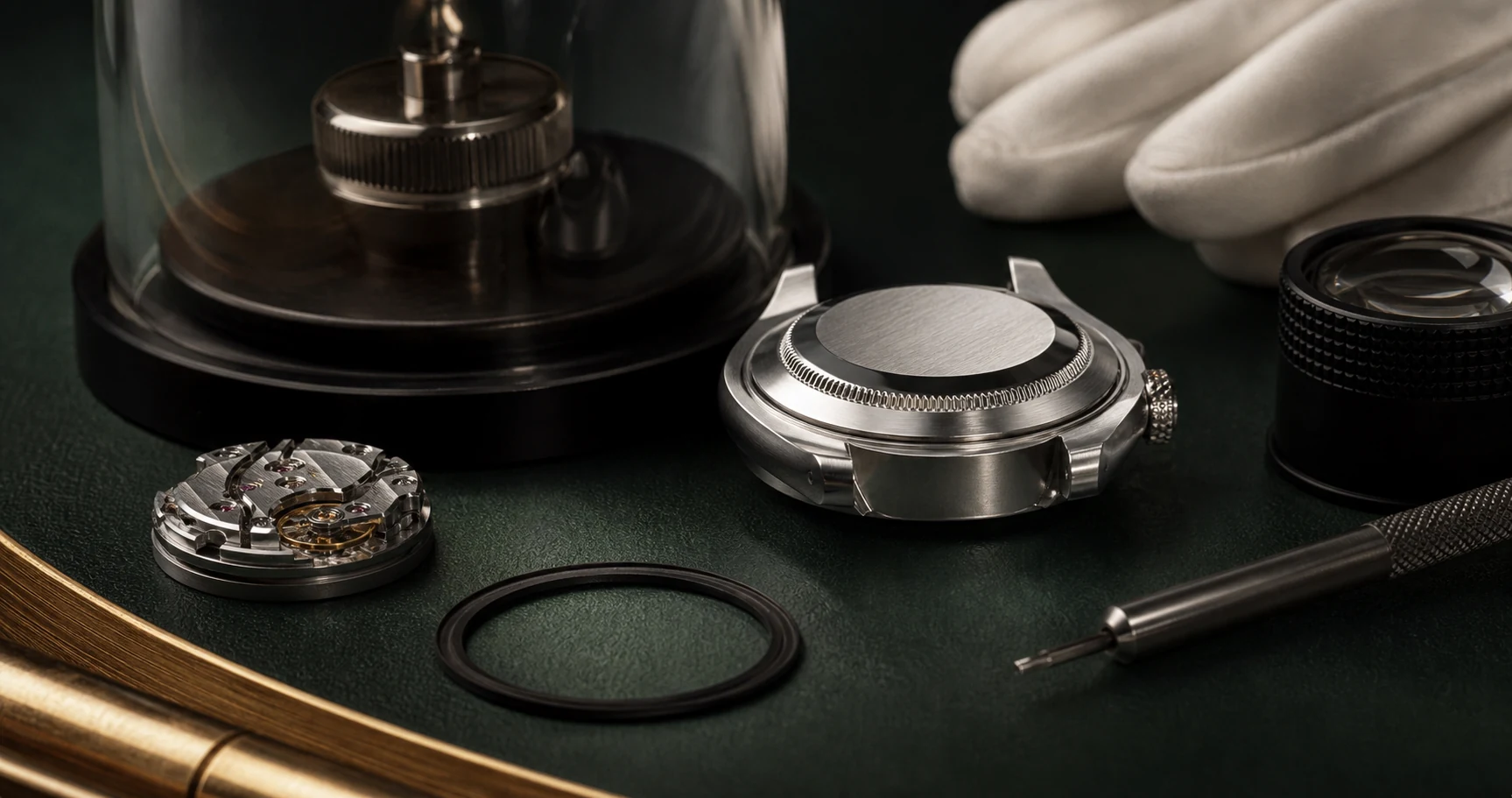
Proof layer
Water resistance, movement precision, gasket integrity, and service care make luxury feel protected.
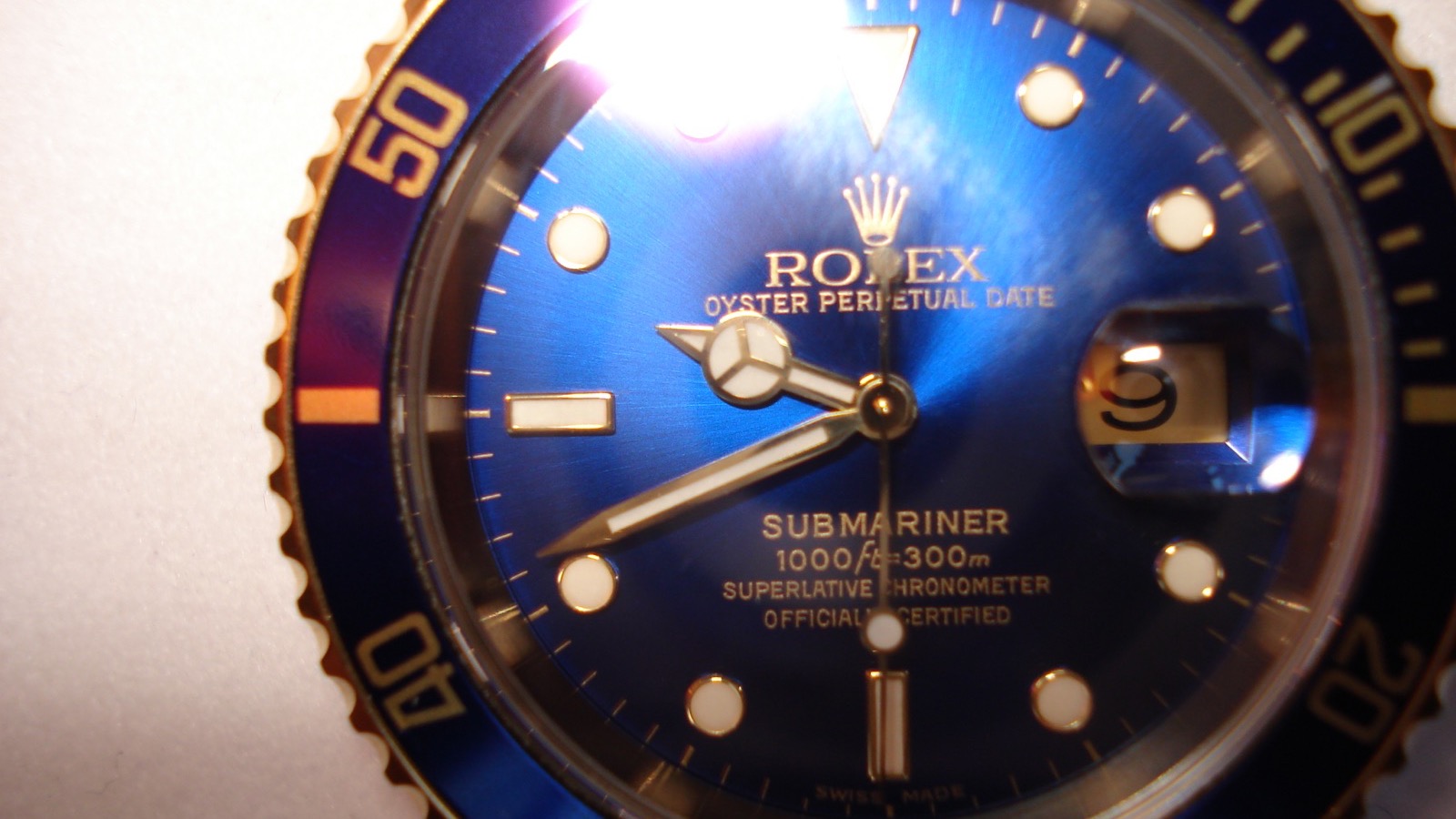
The Submariner makes waterproofing visible
The case, bezel, crown, and dial turn technical protection into a recognizable product system.
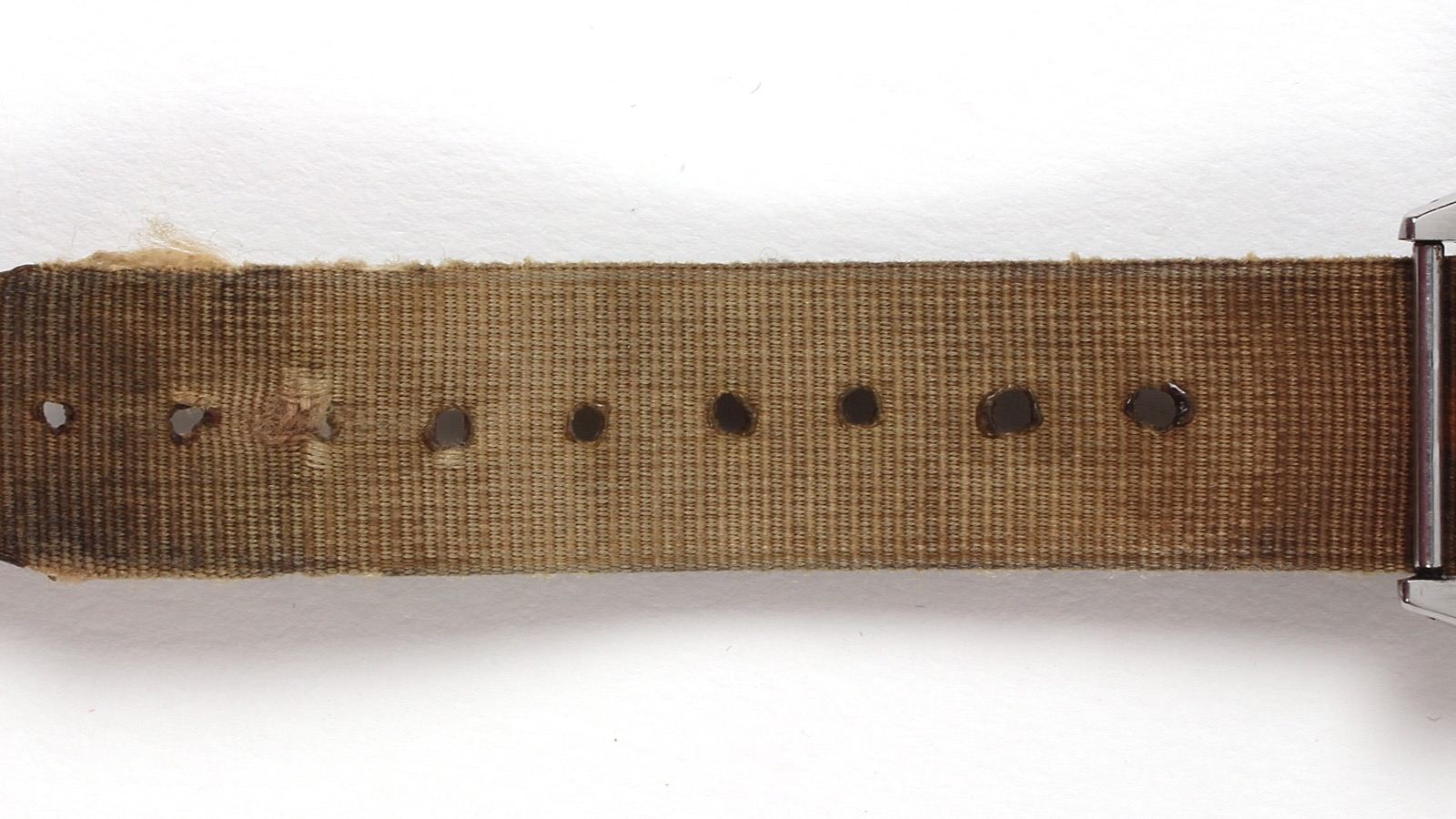
Expedition proof travels beyond the workshop
The 1953 Everest-associated watch shows how field performance helped convert engineering claims into trust.
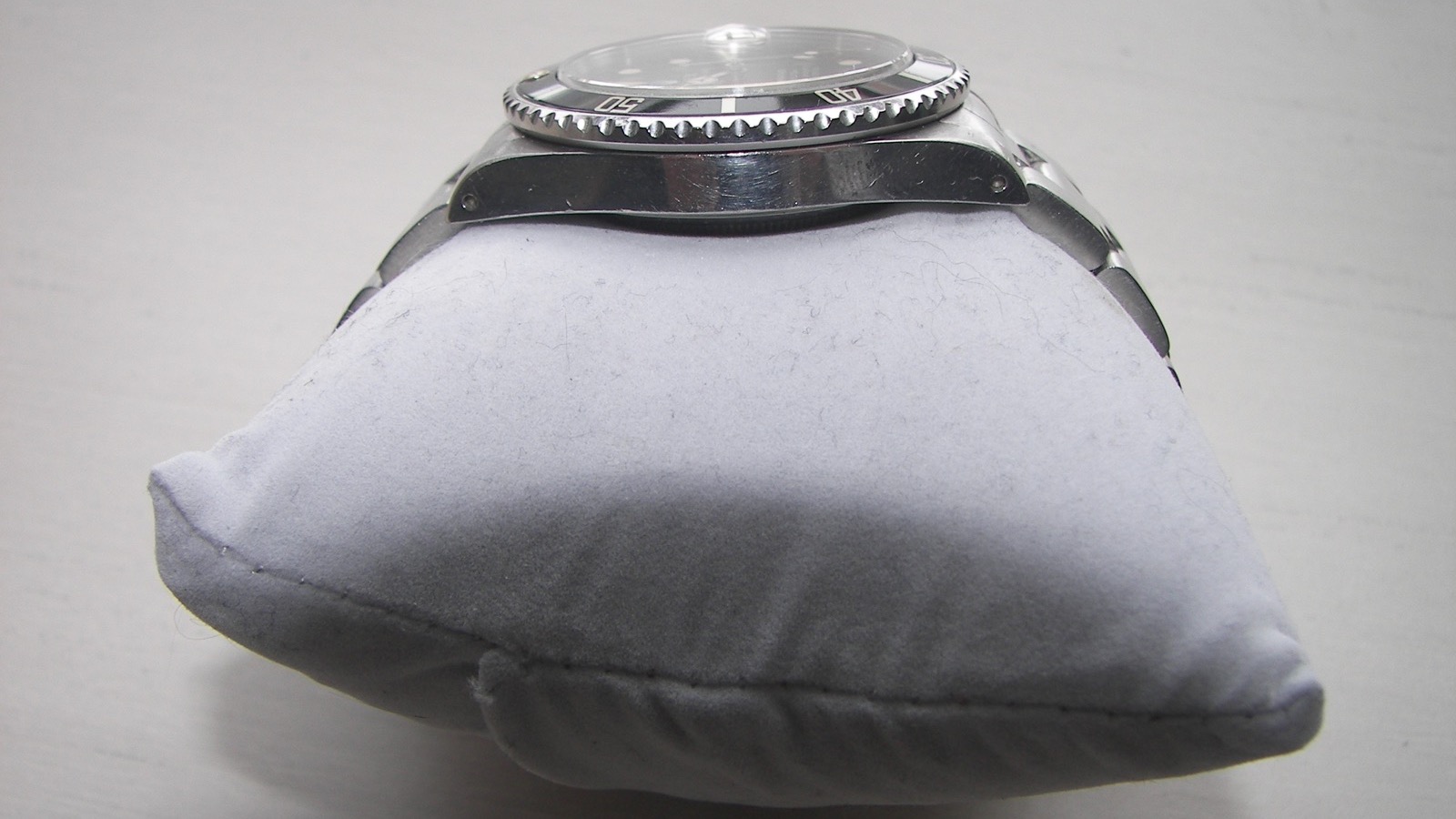
Case and bracelet carry the engineering cue
The side profile exposes the controlled junctions between case, crown, bezel, and bracelet.
Product and service system
The company story begins before the Oyster proof system, but the modern signal depends on turning technical watchmaking into public trust.
The Oyster case gives Rolex a named proof object for waterproofing and protection.
The Oyster Perpetual keeps the protection idea tied to a simple daily-watch memory.
Testing and Superlative Chronometer language translate accuracy into something the buyer can trust without seeing the mechanism work.
Maintenance, verification, and care keep the brand present after purchase.
Availability discipline can protect desirability, but only if buyers believe the object deserves the distance.
Turning points.
Turning points only: proof, ownership, scarcity, and public memory.
Oyster works because it makes a technical system sound like a protected object.
Chronometer language solves a luxury problem: accuracy matters, but most buyers do not watch accuracy happen.
A Rolex is judged long after sale through care, condition, authentication, repair, and resale confidence.
Controlled availability raises desire and status, but it can turn admiration into fatigue if proof fades behind access theater.
Watches of Switzerland reported strong U.S. demand for Rolex and other premium watches; this is demand-channel evidence, not a direct Rolex company result.
Public reaction.
There is no need to invent a backlash counter. The pressure is clear enough: people admire the proof, but scarcity can make the relationship feel closed.
The Oyster case, crown mark, chronometer language, and ownership system let buyers talk about trust, not only status.
When access becomes the main story, the brand has to remind people why the object deserved the wait in the first place.
Full timeline.
Company roots begin before the public Oyster proof system.
The Oyster case gives Rolex a named waterproof proof object.
The daily-watch system keeps protection, automatic movement memory, and simplicity connected.
Testing language turns invisible precision into a buyer-facing trust cue.
Ownership keeps producing brand judgments through care, verification, and long-term condition.
Rolex remains a shorthand for luxury watch trust, scarcity, and status.
Watches of Switzerland points to strong U.S. demand for Rolex and other premium watches, giving external demand evidence rather than Rolex disclosure.
Steal / avoid.
- Give a technical proof a name people can remember.
- Use color as a disciplined recognition system, not page decoration.
- Make service and ownership part of the brand signal.
- Let scarcity rest on product credibility, not empty distance.
- Do not copy scarcity if the product proof is weak.
- Do not rely on status language when the object needs technical trust.
- Do not let the logo carry the whole page; the proof objects have to do the work.
Short answer.
Rolex's brand signal is the crown, the green-and-gold restraint, and the proof system around Oyster, chronometer precision, service, controlled access, and long ownership. The useful lesson is that luxury gets stronger when desire has proof behind it.
Frequently asked questions
What is Rolex's core brand signal?
Rolex's core brand signal is technical proof turned into luxury memory: Oyster, chronometer precision, crown recognition, green-and-gold restraint, service, and controlled ownership.
What should another brand steal from Rolex?
Give a technical proof a name people can remember, then make that proof visible across the product, service, and ownership system.
What should another brand avoid copying from Rolex?
Do not copy scarcity without proof. Distance works only when the object, service, and ownership experience deserve it.
Need help with your own brand?
Use Private brand work when your name, identity, proof, or message needs a sharper branding decision.