Rolls-Royce · Grow Your Brand · British power and propulsion group · United Kingdom / Active / public company
Rolls-Royce
Rolls-Royce makes installed power pay for decades. Civil engines, defence propulsion, and mtu power systems start as engineered products. The deeper commercial system is the service relationship that follows them through flying hours, shop visits, maintenance, monitoring, and uptime.
Positioning, name, and architecture.
Rolls-Royce is the industrial power and propulsion company, not the BMW-owned motor-car marque. Its three core divisions serve airlines and lessors, armed forces and navies, and power-generation, marine, and governmental customers. The common thread is mission-critical equipment that has to keep working.
A shared engineering and service system spanning widebody and business-aviation engines, defence propulsion, and mtu distributed power.
Rolls-Royce positions engineering authority as an operating outcome: power delivered, missions protected, people connected, and equipment supported long after delivery.
The name joins founders Charles Rolls and Henry Royce. Their partnership led to the official formation of Rolls-Royce in 1906.
A force for progress; powering, protecting and connecting people everywhere.
branded operating group with an endorsed product brand
Rolls-Royce is the masterbrand across Civil Aerospace and Defence. Power Systems also uses mtu. Rolls-Royce SMR is an equity-accounted investment in All Other Businesses, not one of the three core H1 2026 divisions. BMW-owned Rolls-Royce Motor Cars is a separate company.
Large commercial, regional, business-aviation, and helicopter engines plus long-term service.
operating division: Trent family / Pearl / TotalCare source
Combat, transport, rotary, naval, submarine, and mission-availability propulsion.
operating division: EJ200 / F130 / LiftSystem / MT30 / MissionCare source
Power generation, governmental, marine, industrial, and battery-storage systems.
operating division: mtu engines / generators / microgrids / BESS source
BMW-owned luxury-car marque with a separate legal entity, finances, products, and current identity.
separate company: See the separate Motor Cars brand page source
Naming and tagline progression
Trusted to deliver excellence
A force for progress
Market and scale snapshot.
The 30 July 2026 half-year release provides one reporting period across the group and all three core divisions.
GBP 11.279bn, up 26% organically; translated at the 30 July 2026 reference rate.
GBP 2.534bn at a 22.5% underlying margin; translated at the 30 July 2026 reference rate.
Calculated at the 27 July 2026 close. H1 free cash flow was GBP 1.964bn and net cash was GBP 2.136bn.
LSE: RR. / US ADR: RYCEY.
Color system.
The compact blue badge carries the company name. Most recognition comes from engines, test environments, service work, and the scale of the installed equipment.
How the palette behaves
Rolls-Royce blue carries engineering continuity and institutional authority.
White gives dense machinery and operating evidence room to read.
Graphite and titanium connect the identity to materials, durability, and test work.
The company is easier to recognize through product geometry and operating environments than through decorative color.
Recognition assets.
The double-R badge is only the first signal. Trent-scale fan geometry, exposed turbine modules, the mtu name, test cells, naval and defence applications, and disciplined blue-white engineering environments carry the company into the real world.
The current mark strips away the old external wordmark so the double-R badge can carry digital and physical applications.
A widebody turbofan makes the company's engineering role visible before the engine family name is read.
Maintenance, overhaul, monitoring, and availability contracts prove the promise after delivery.
Three operating systems broaden the company beyond aircraft engines without pulling in the separate car company.
Scores.
Heritage and technical authority are strong. The less visible strength is the service system: more than half of 2025 underlying revenue came from aftermarket work.
The double-R badge is famous, but the public still confuses the industrial group with Motor Cars.
Safety-critical products and long service relationships create a high proof burden.
Engines and power systems create decades of parts, overhaul, monitoring, and support.
TotalCare, MissionCare, shop visits, and mtu service make uptime commercially visible.
The shared name demands explicit separation from BMW-owned Rolls-Royce Motor Cars.
The company spans civil aerospace, defence propulsion, and industrial power.
The badge is controlled, while product and service settings carry most of the recognition.
Long-duration service economics depend on cost, durability, supply, and shop-visit estimates.
How the logo changed.
The first stage belongs to the shared company before the 1971 split. The later stages belong to the industrial group only. No Motor Cars 2020 identity appears here.
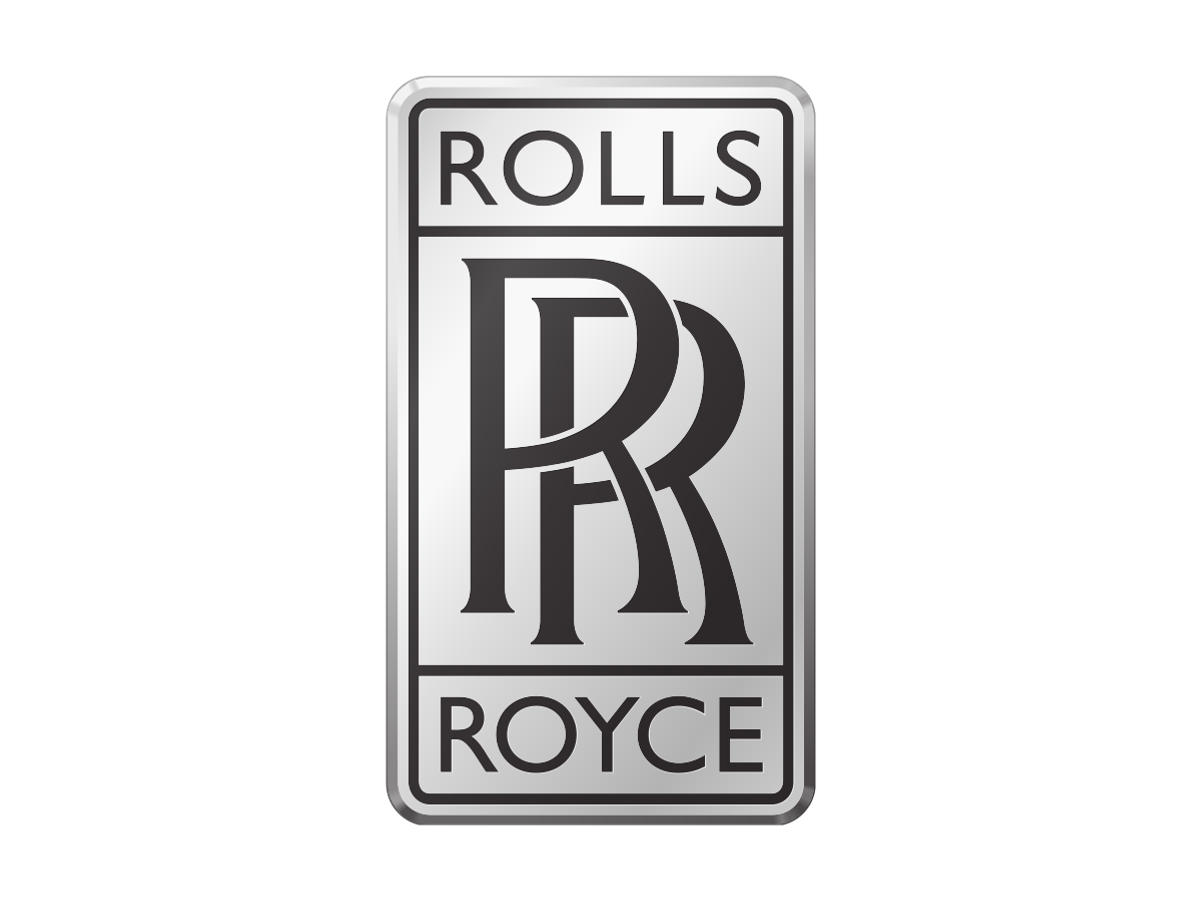
Black lettering became the established treatment while the original company still contained motor and aero-engine activity. The stage ends at the 1971 legal split; the legacy filename is not an exact adoption-date claim. source
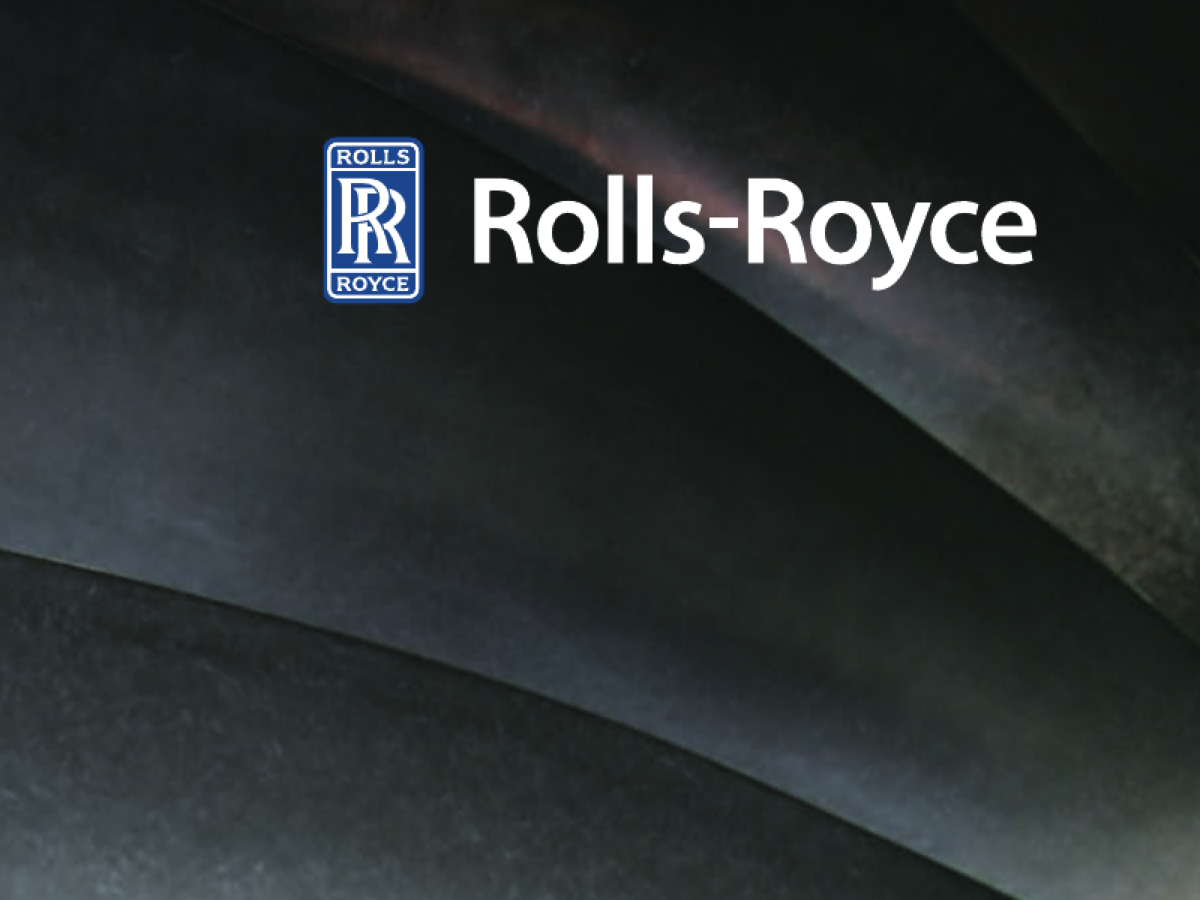
The official 2008 annual-report cover pairs the blue badge with a separate Rolls-Royce wordmark. source
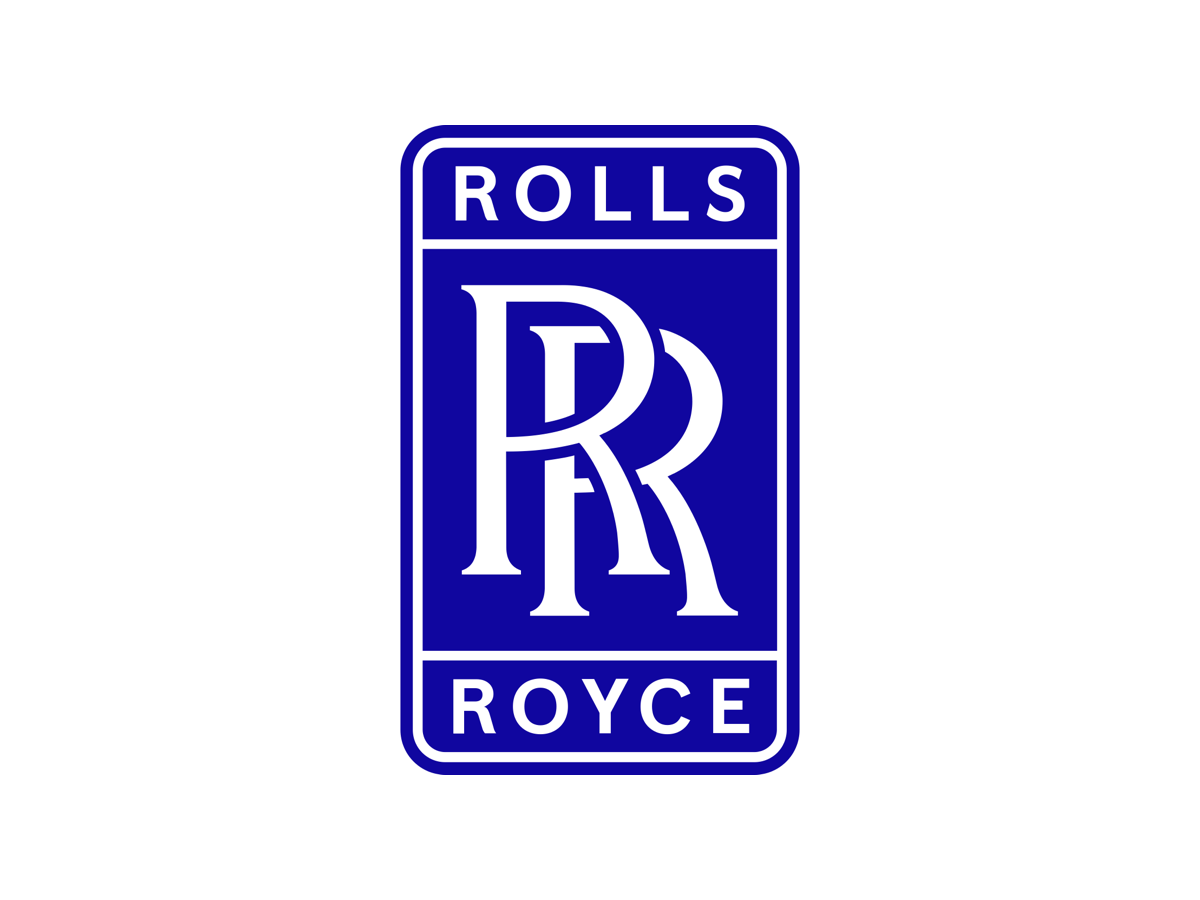
The 2018 refresh removed the external wordmark and simplified the badge for digital use. The current asset comes from Rolls-Royce plc's official site. source
Product and service lineage.
Rolls-Royce sells equipment that can remain in service for decades. The stronger brand proof appears when engineering, overhaul, parts, monitoring, and risk-sharing keep that equipment available.
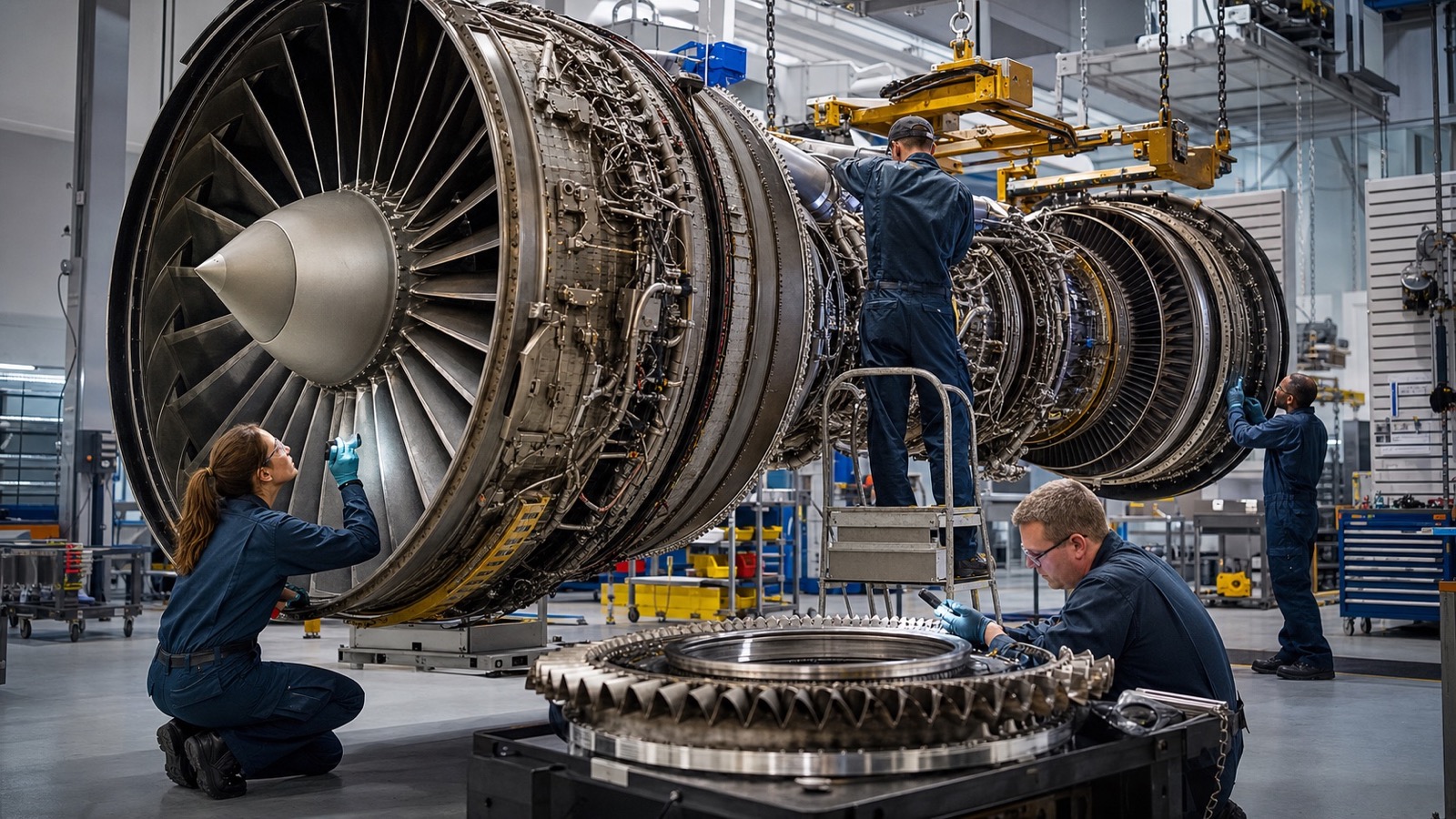
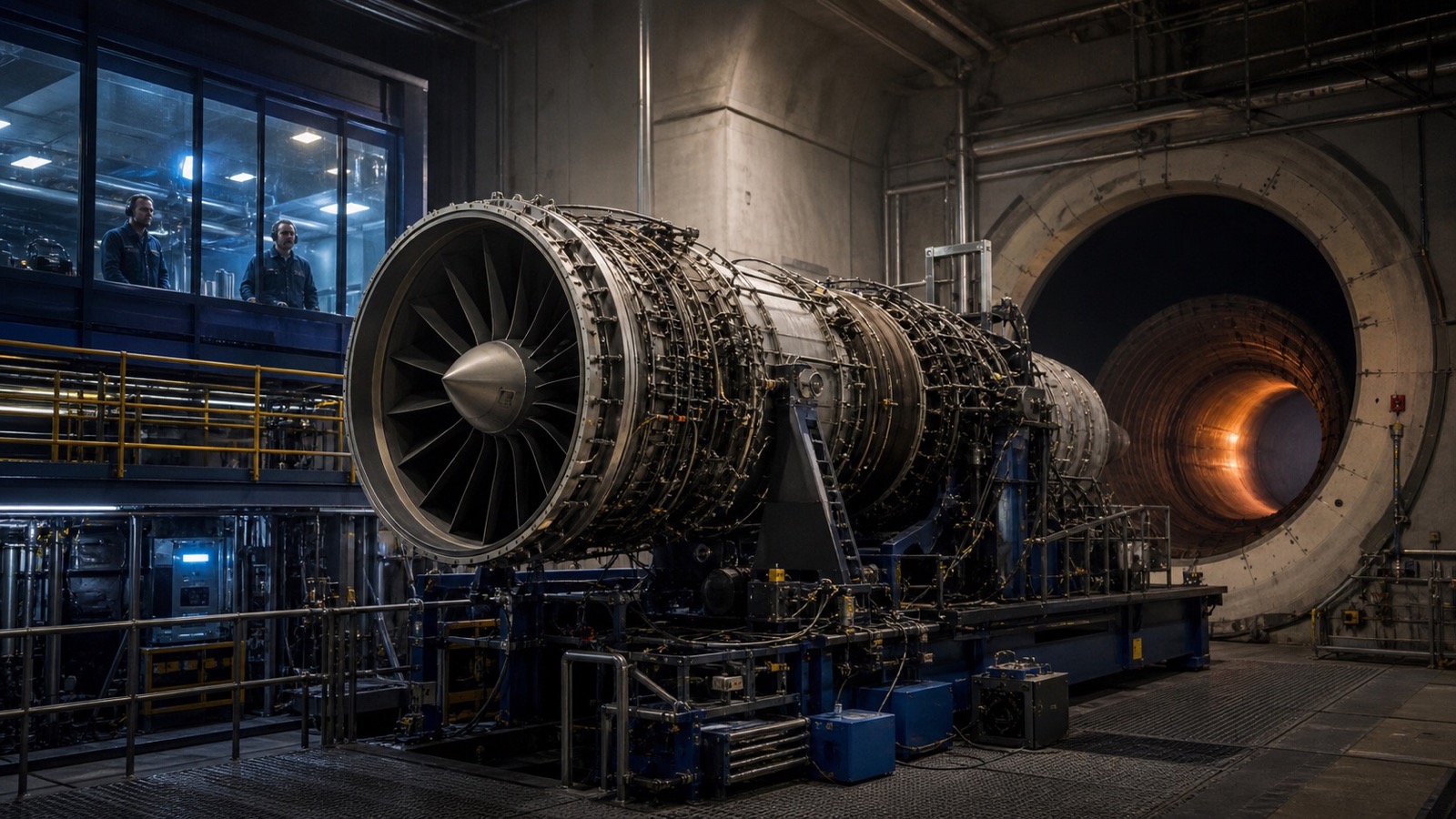
Civil Aerospace service
In H1 2026, Civil Aerospace completed 712 LTSA shop visits and generated GBP 4.167bn of underlying services revenue.
Defence propulsion and availability
Defence combines combat, transport, rotary, naval, and submarine propulsion with MissionCare availability support.
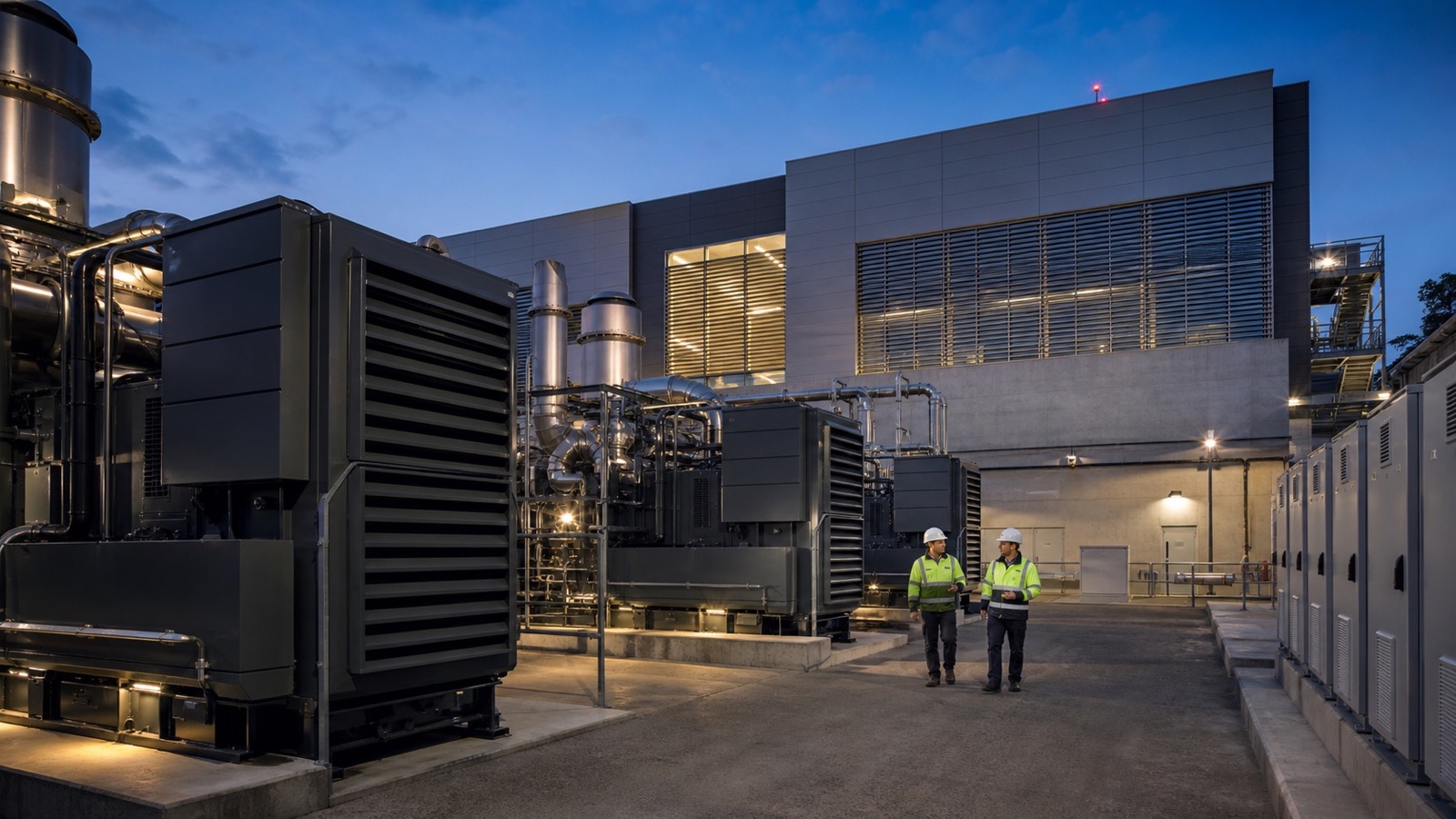
Power Systems and data centres
Power Systems uses mtu equipment and service across power generation, governmental, industrial, marine, and battery-storage applications.
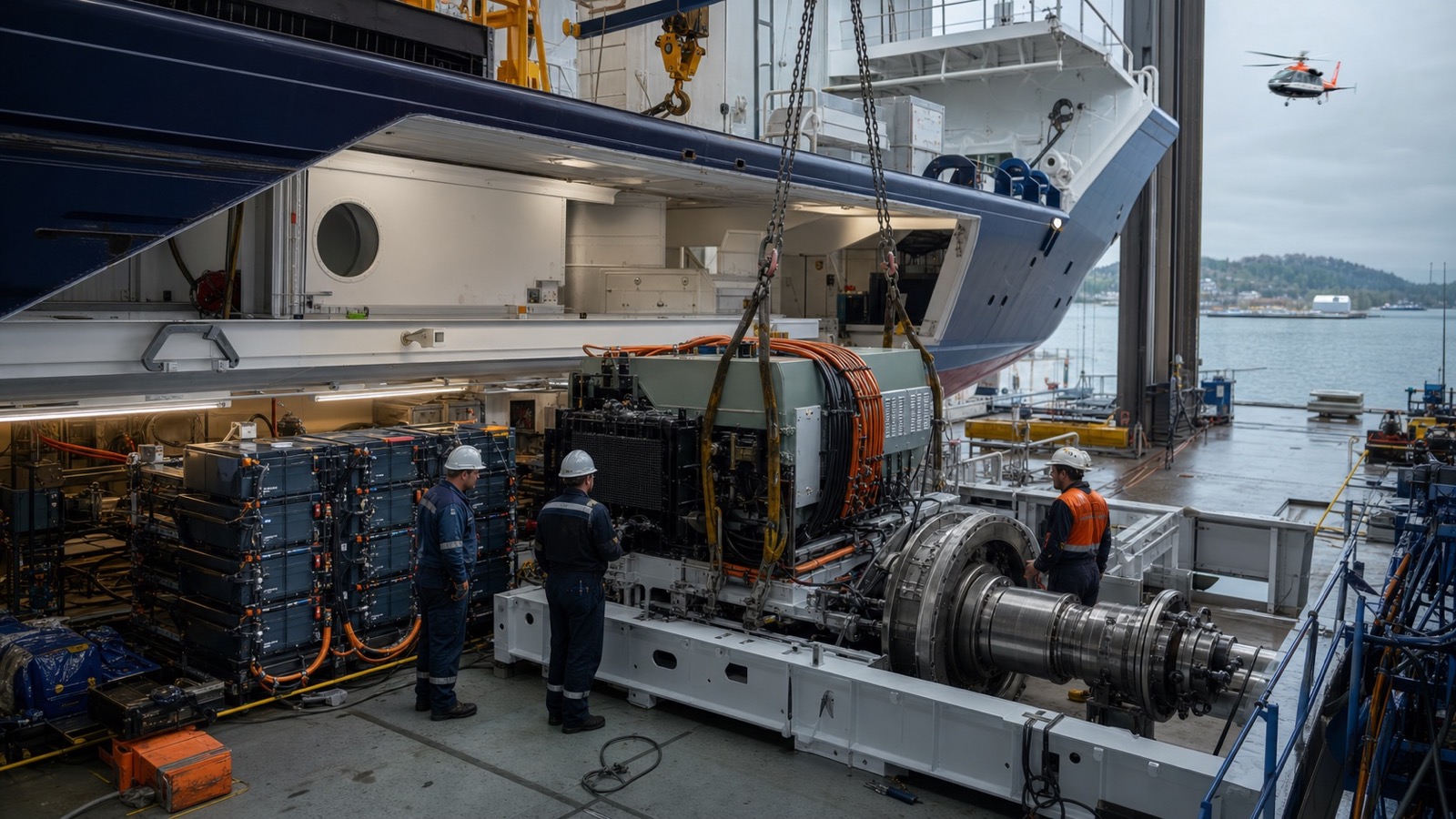
Power at sea
Marine propulsion and hybrid systems extend the operating promise beyond aircraft and land-based power.
Product and service system
The Eagle becomes the first aero engine produced by the original Rolls-Royce company.
The Merlin powers aircraft including the Hurricane and Spitfire.
The RB211 crisis leads to state ownership and the motor-car activity becomes a separate entity.
Rolls-Royce returns to the private sector.
The Trent 900 enters service on the Airbus A380.
Aftermarket services produce more underlying revenue than original equipment.
Turning points.
The important turning points change the product, ownership boundary, service economics, or public trust burden.
Development problems lead to state ownership while the aero-engine program is completed.
The industrial company returns to private ownership.
The badge is simplified and the external wordmark removed.
A multi-year program focuses the portfolio, commercial terms, cost, and execution.
Public reaction.
Rolls-Royce is judged through airline reliability, defence availability, long-term service economics, supply performance, and the visible difference between the industrial and car companies.
H1 2026 underlying revenue rose 26% organically and profitability improved across all three core divisions.
The large-engine order book reached 2,266 engines and Defence backlog reached GBP 17.5bn at the end of June 2026.
Parts availability, overhaul volume, and long-term cost estimates can weaken the same contracts that create recurring revenue.
Public and search systems can still mix Rolls-Royce plc with BMW-owned Rolls-Royce Motor Cars unless the distinction is explicit.
Full timeline.
The Eagle becomes Rolls-Royce's first aero engine.
The Bristol Siddeley merger broadens the industrial engine portfolio.
RB211 crisis, state ownership, and legal separation from the motor-car activity.
Rolls-Royce returns to the private sector.
Rolls-Royce launches its simplified industrial identity at Farnborough.
H1 results show growth across Civil Aerospace, Defence, and Power Systems.
Steal / avoid.
- Design the product and the service model as one promise.
- Turn reliability, maintenance, and availability into visible customer outcomes.
- Keep a compact masterbrand while product families and operating environments carry recognition.
- Do not confuse shared heritage with shared modern ownership.
- Do not let a long installed base hide contract, supply, and shop-visit risk.
- Do not use famous engineering language without current operating proof.
Short answer.
Rolls-Royce is the listed British power and propulsion group behind civil aerospace engines, defence propulsion, and mtu Power Systems. Its strongest brand signal is the installed-base service system: engines and power equipment create years of maintenance, overhaul, monitoring, parts, and availability work. It is a separate company from BMW-owned Rolls-Royce Motor Cars.
Frequently asked questions
Does Rolls-Royce make jet engines?
Yes. Rolls-Royce Civil Aerospace makes and supports large commercial, business-aviation, regional, and helicopter engines. Its Defence business also supplies military aero, naval, and submarine propulsion.
Does Rolls-Royce also make power systems?
Yes. Rolls-Royce Power Systems uses the mtu product and solution brand across power generation, governmental, marine, industrial, and battery-storage applications.
Is Rolls-Royce Motor Cars the same company?
No. Rolls-Royce Motor Cars Limited is a separate BMW-owned luxury-car company based at Goodwood. This card covers Rolls-Royce Holdings plc and Rolls-Royce plc.
How does Rolls-Royce make money after an engine is delivered?
The installed base creates maintenance, overhaul, parts, monitoring, and availability work. TotalCare in Civil Aerospace and MissionCare in Defence make those long operating relationships explicit.
What should another brand steal from Rolls-Royce?
Build the product and service promise together, then measure the operating outcome customers actually buy.
Need help with your own brand?
Use Private brand work when your name, identity, proof, or message needs a sharper branding decision.
Sources.
Use the education shelf for the concepts behind this brand page.
Private brand workUse this when the decision belongs to your own brand.
All brandsReturn to every brand page.
- Rolls-Royce Holdings plc H1 2026 results
- Rolls-Royce Holdings plc FY2025 results
- Rolls-Royce 27 July 2026 closing share price
- Rolls-Royce official June 2026 total voting rights
- Bank of England GBP/USD reference-rate history
- Rolls-Royce official history
- Rolls-Royce businesses
- Civil Aerospace services and TotalCare
- Defence services and MissionCare
- Rolls-Royce Power Systems
- Rolls-Royce 2008 annual report
- Pentagram Rolls-Royce 2018 identity
- BMW Group entity clarification
- Separate Rolls-Royce Motor Cars brand page