Saks Fifth Avenue · Grow Your Brand · Saks Fifth Avenue failure case study · United States / Saks Fifth Avenue continues under Exemplar Luxury Group after its former parent emerged from Chapter 11 in June 2026
Saks Fifth Avenue
Is Saks Fifth Avenue still open, and who owns it now? Saks Global entered Chapter 11 in January 2026 with about USD 3.4 billion of funded debt and a USD 1.75 billion financing package. It emerged on June 26 as Exemplar Luxury Group after reducing debt by nearly 75% and securing USD 500 million of exit financing.
Positioning, name, and architecture.
Saks sells edit, access, service, and a Fifth Avenue address. The parent weakened that promise when acquisition debt and supplier pressure interrupted inventory flow, proving that luxury positioning depends on ordinary operating credibility.
A Fifth Avenue authority signal joined to personal selling and a multi-brand edit
Saks Fifth Avenue makes luxury feel edited and personally accessible, but the promise fails quickly when inventory and vendor confidence break.
Saks Fifth Avenue joined the Saks family name to the 1924 flagship address at Fifth Avenue and 50th Street.
The Fifth Avenue name remains the primary status signal; the current operator does not need the parent name in the consumer promise.
Luxury retail banner inside a private three-brand parent
Saks Fifth Avenue, Saks OFF 5TH, Neiman Marcus, Bergdorf Goodman, and Exemplar Luxury Group are distinct brands or entities.
Full-price designer retail through go-forward stores and ecommerce.
luxury banner: 611 Fifth Avenue source
Separate luxury retail identity inside the same successor parent.
sister banner: Neiman Marcus stores and ecommerce source
New York luxury institution kept distinct from Saks.
sister banner: Fifth Avenue stores source
Separate discount banner whose footprint was sharply reduced in Chapter 11.
off-price sibling: Go-forward outlet stores source
Naming and tagline progression
Saks Fifth Avenue names the flagship and the brand
The script signature becomes the lasting authority cue
The script is fragmented and recomposed into a modern identity system
Market and scale snapshot.
Saks Fifth Avenue is a private operating banner, so standalone revenue and earnings are not published. The court and emergence record instead show the parent's debt, financing, and store-portfolio reset.
Court reporting said 2025 parent revenue declined 13.6% year over year; no audited Saks-only figure was published.
The private parent did not publish banner-level audited earnings.
The company entered with about USD 3.4B of funded debt and emerged with USD 500M of exit financing.
The private successor owns Saks Fifth Avenue, Neiman Marcus, and Bergdorf Goodman.
Color system.
Black and white protect fashion authority while warm metal and stone tones carry the physical luxury environment. The restraint only works when merchandise and service provide the color.
How the palette behaves
Black: authority and fashion edit. Current script wordmark and store communication.
White: gallery space and product focus. Packaging, digital field, and visual merchandising.
Warm gold: material luxury without shouting. Fixtures, lighting, and evening storefront detail.
Recognition assets.
The script wordmark, Fifth Avenue name, black and white field, flagship facade, windows, designer edit, and personal selling system make Saks recognizable before a product is named.
The script carries personal authority without needing a separate symbol.
The address is part of the name, so location and status reinforce each other.
Sales associates and designer access turn inventory into a personal luxury signal.
Scores.
The banner still owns luxury recognition. Financial resilience and supplier trust absorbed the damage created above the brand level.
The script, place name, and flagship remain powerful luxury cues.
Supplier disruption and restructuring weakened the reliability behind the name.
Full-price focus and a reduced footprint can restore a clearer prestige signal.
The banner survived with less parent debt and a more focused store base.
The brand survived the parent's reorganization, while store closures and off-price contraction narrowed the surfaces where the promise appears.
Saks Fifth Avenue is a private operating banner, so standalone revenue and earnings are not published. The court and emergence record instead show the parent's debt, financing, and store-portfolio reset.
Parent luxury retailer completed Chapter 11; Saks Fifth Avenue brand and go-forward stores continued
Saks Global emerged on June 26, 2026 as Exemplar Luxury Group after reducing debt by nearly 75%; Saks Fifth Avenue remains an operating banner
How the logo changed.
Saks moved from a signature-led authority cue to a stark stacked retail wordmark, then recovered the signature as a flexible modular identity.
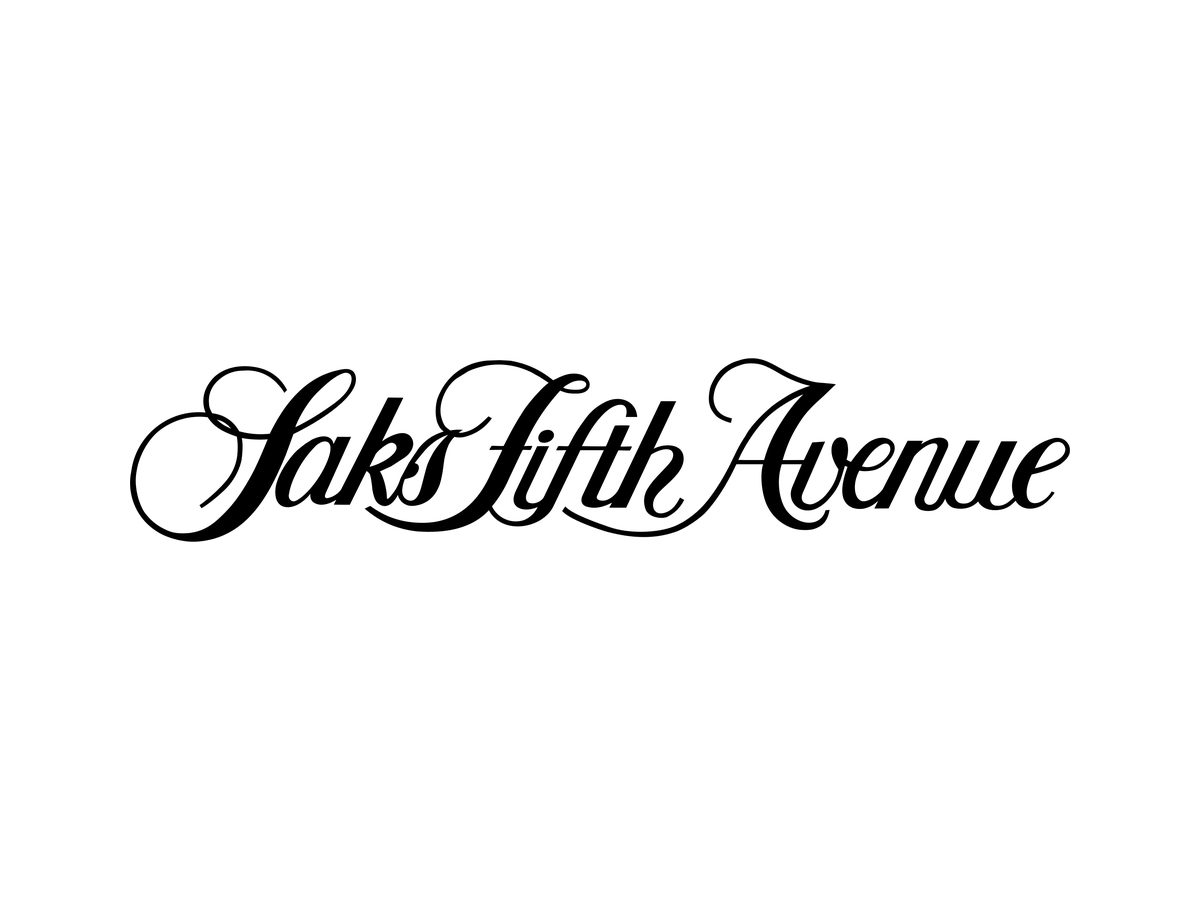
Tom Carnese's single-line script gives the store the authority of a personal signature. source
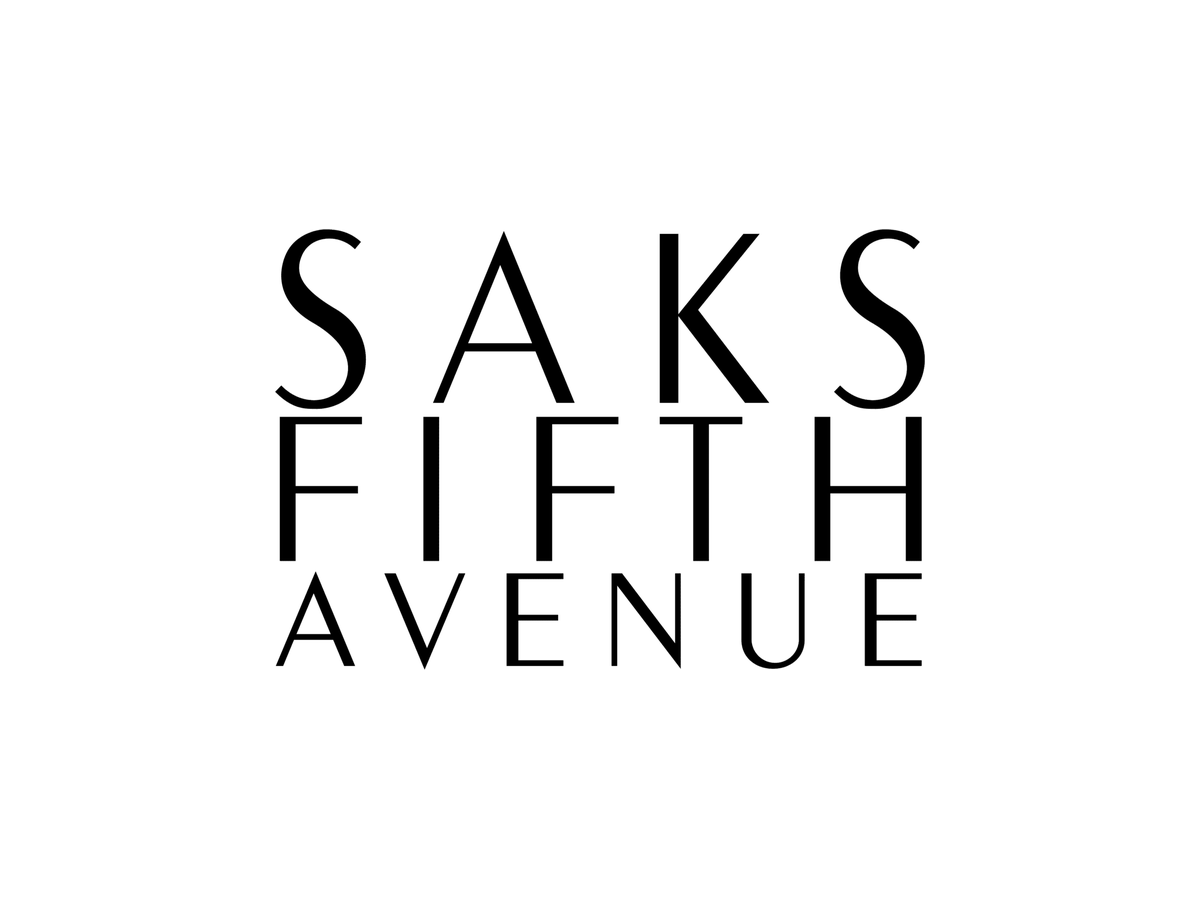
The stacked geometric treatment replaces handwriting with a harder, more architectural retail signal. source
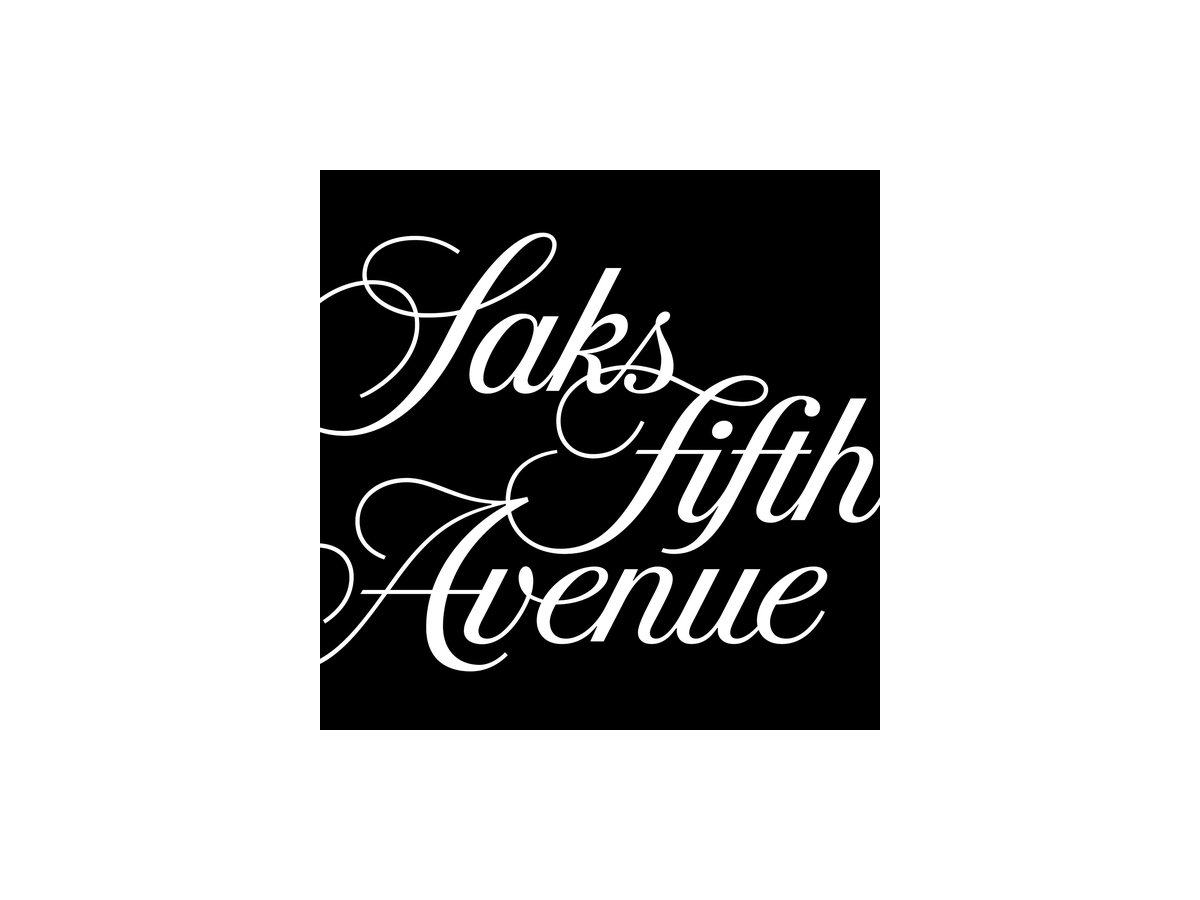
The current system reconstructs the script as a flexible identity while keeping the same masterbrand signature. source
Product and service lineage.
Saks Fifth Avenue grew from one status address into stores, ecommerce, personal selling, and a broader luxury group. The parent added scale faster than the operating system could preserve inventory trust.
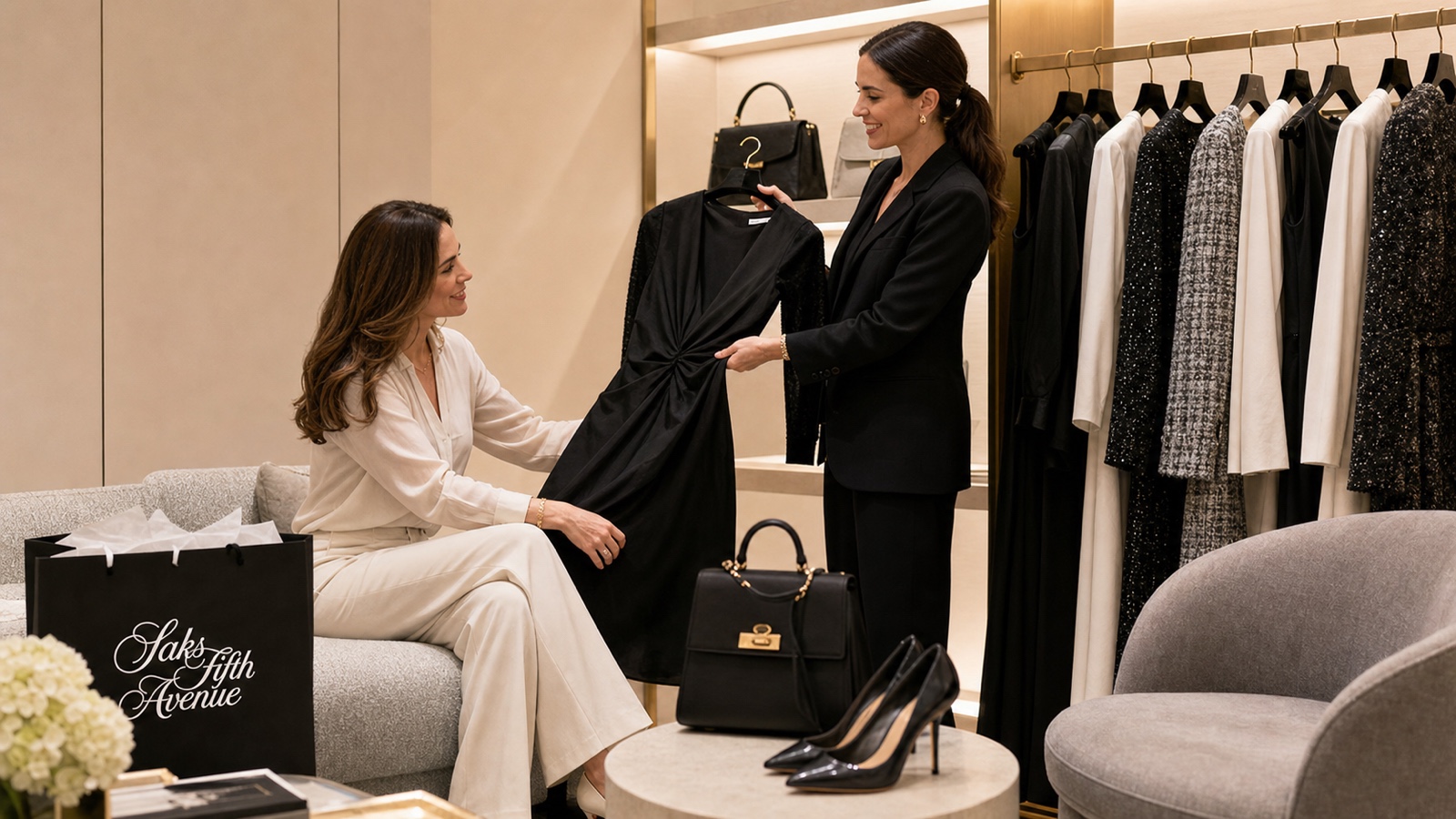
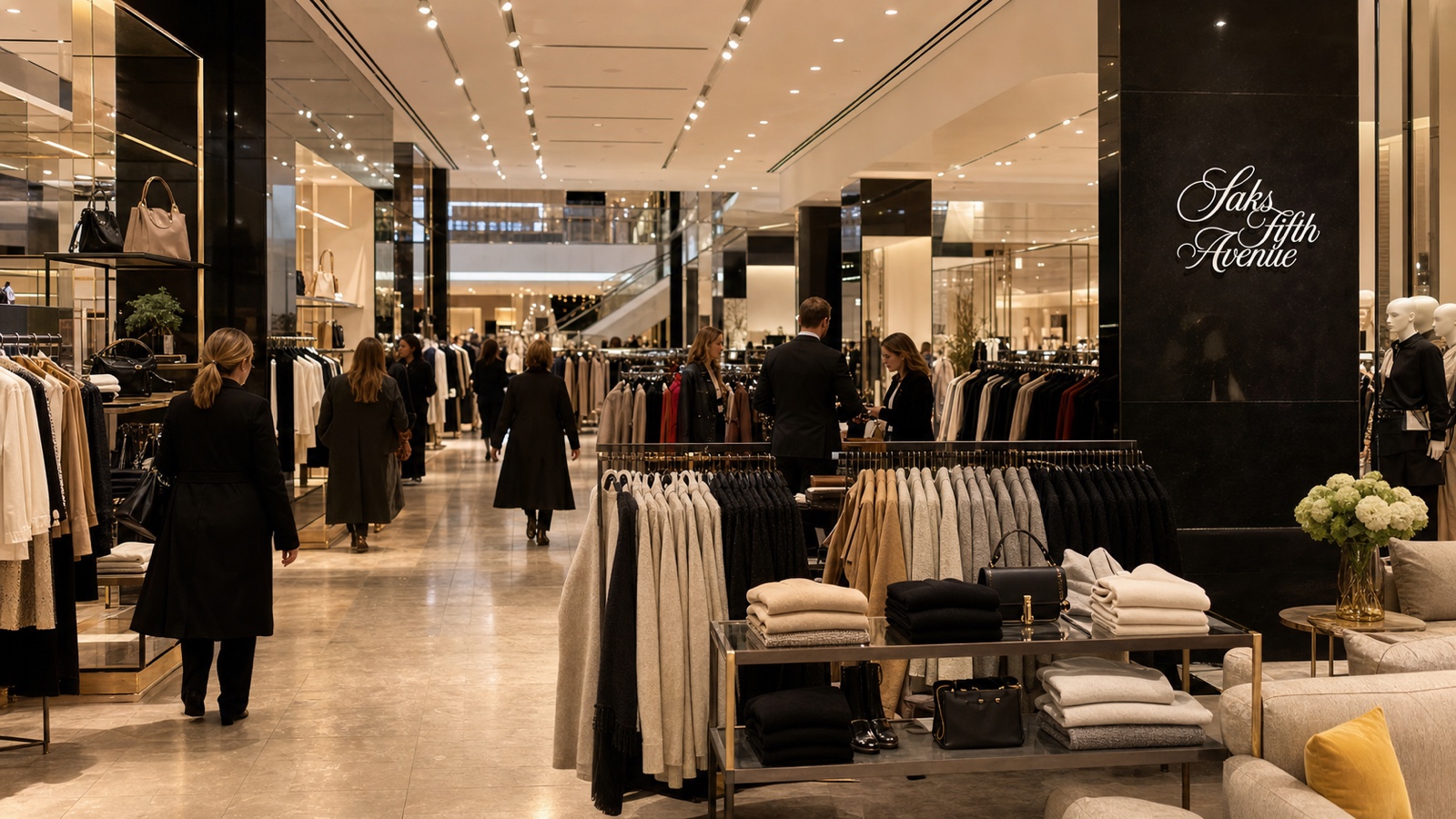
Service turns selection into status
A trusted associate reduces abundance into an edit a client can act on.
Inventory is the proof
Luxury authority collapses when the brands and sizes a client expects are not available.
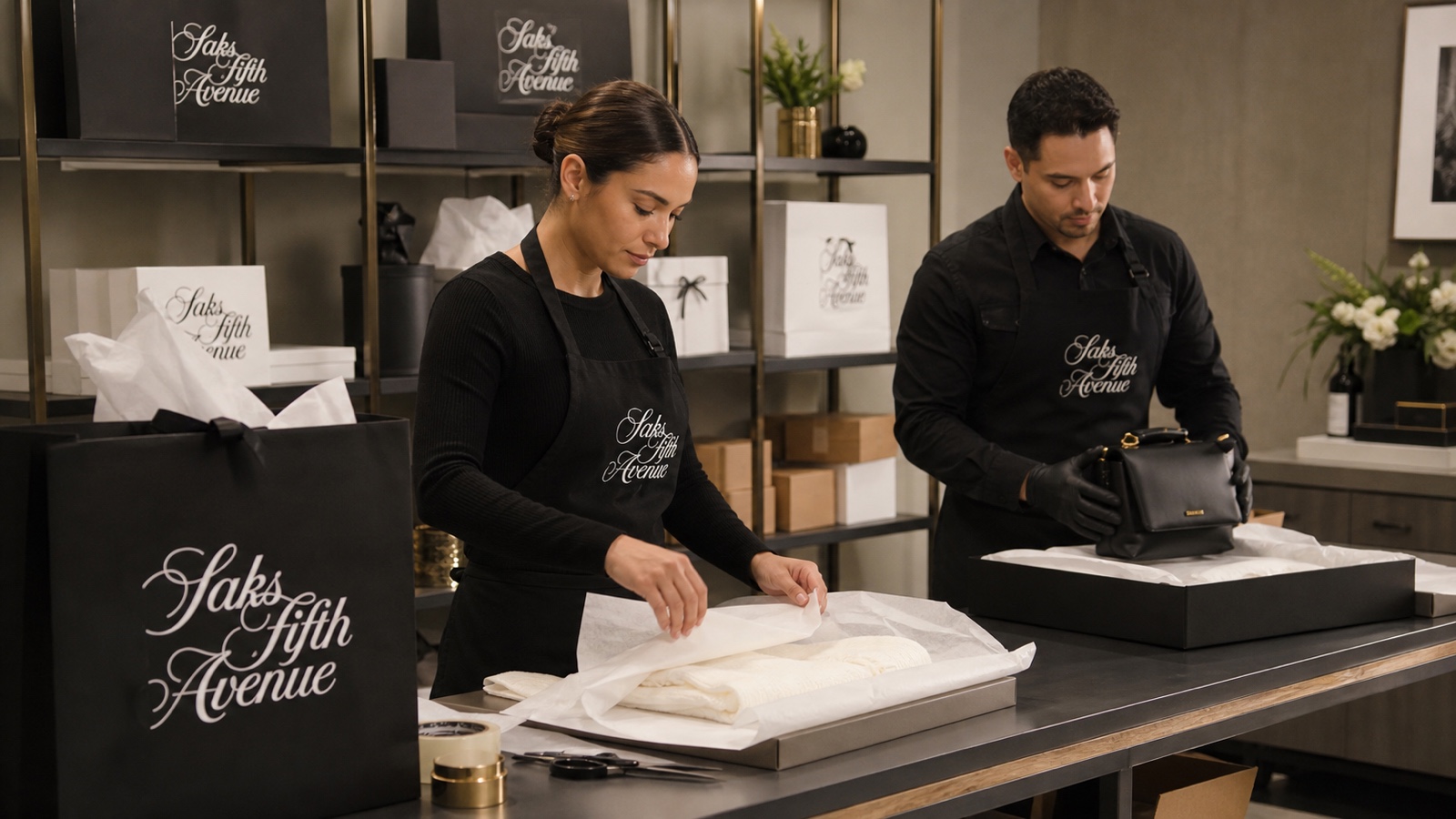
The digital promise ends in delivery
Packaging, availability, delivery, and returns must match the store's service signal.
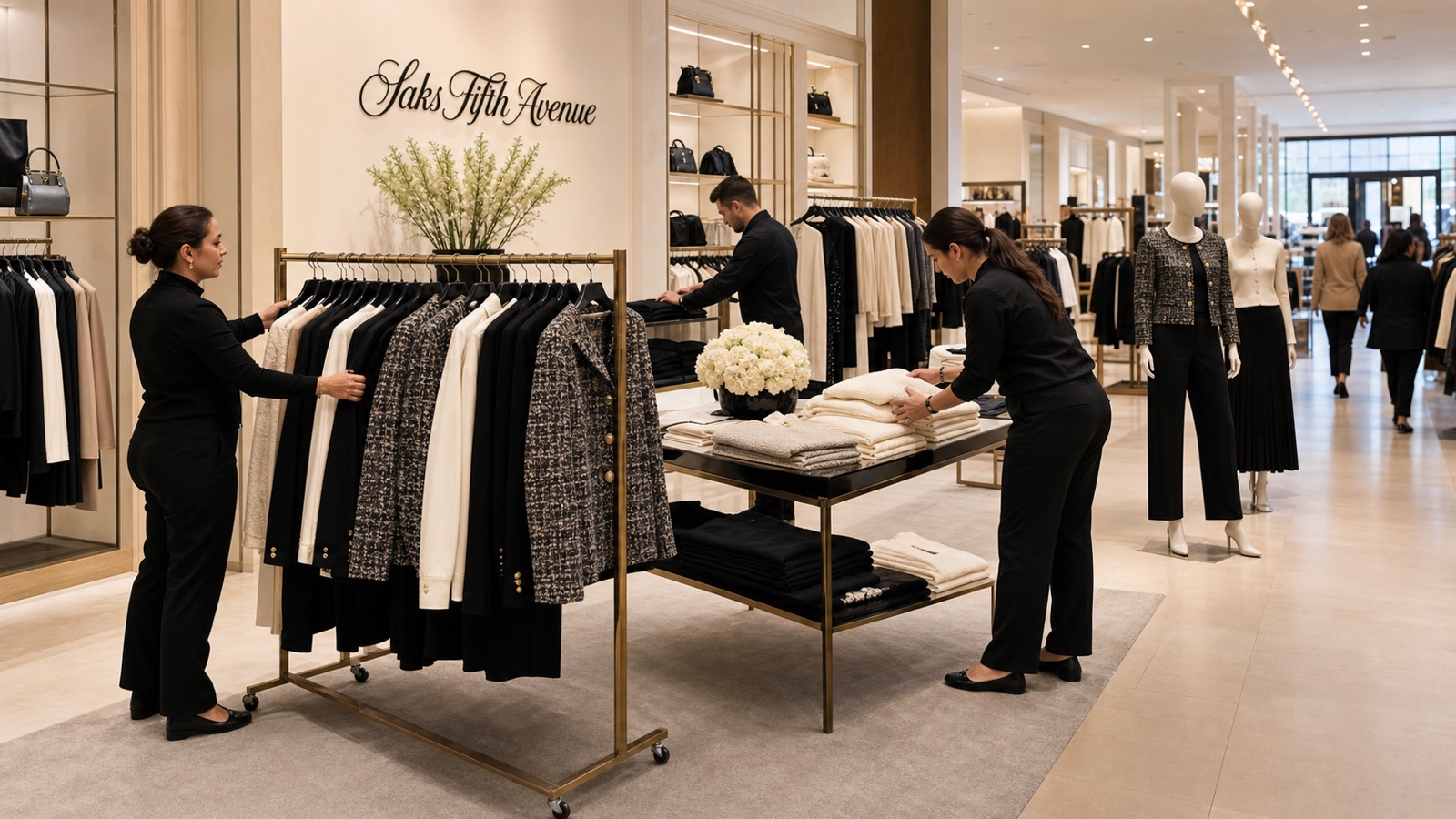
The reset chose fewer stronger doors
A smaller footprint can protect the brand when each remaining store earns inventory and service investment.
Product and service system
The Fifth Avenue building makes place a permanent part of the identity.
Brand partnerships and merchandising turn a department store into an authority filter.
Associates convert purchase history and service into repeat relationships.
Stores and ecommerce depend on shared inventory, fulfillment, returns, and data.
Turning points.
The Neiman Marcus combination created a larger luxury group and a larger debt burden. Supplier pressure then reduced the inventory needed to prove the very scale the deal promised.
Why it failed
Saks Global financed the Neiman Marcus acquisition with USD 2.2 billion of notes, ABL drawings, seller financing, and equity, then lacked the liquidity and vendor credit required to keep owned inventory flowing. Court records say demand remained resilient when merchandise was available.
Financing delays stretched vendor payments, and management later delayed or halted payments while integration problems disrupted receipts at Neiman Marcus and Bergdorf Goodman. The payment pattern damaged supplier trust and made vendors less willing to ship.
A USD 130 million June interest payment, soft second-quarter results, and August merchandising-system disruption left combined inventory 9% below the prior year. More than USD 550 million of forecast receipts failed to arrive, the borrowing base tightened, and about USD 126 million of December interest could not be paid.
Failure timeline
The Neiman Marcus acquisition creates Saks Global.
Saks Global and 112 affiliates enter Chapter 11.
Go-forward stores and off-price closures narrow the footprint.
The company emerges as Exemplar Luxury Group.
Public reaction.
Headlines often called Saks bankrupt as if the Fifth Avenue banner disappeared. The live site and open stores created the opposite confusion. The parent failed, emerged, and changed names while Saks remained the customer-facing brand.
Saks Global entered court after acquisition debt and supplier pressure weakened the group.
The flagship, go-forward stores, ecommerce, and client relationships moved into Exemplar Luxury Group.
Full timeline.
Saks Fifth Avenue opens at Fifth Avenue and 50th Street. Source
The script identity enters the era that still anchors the current mark. Source
A modular identity system reconstructs the Saks script. Source
The Neiman Marcus acquisition creates Saks Global. Source
Saks Global enters Chapter 11 on January 14. Source
The parent emerges June 26 as Exemplar Luxury Group. Source
Steal / avoid.
- Make place and service part of the recognition system, not just the advertising.
- Treat vendor confidence and inventory availability as brand proof.
- Keep sister banners separate even when the parent integrates data and operations.
- Use footprint reduction to concentrate service rather than merely cut cost.
- Calling Saks Fifth Avenue liquidated or closed.
- Using Saks Global, Exemplar, Saks OFF 5TH, and Saks Fifth Avenue as interchangeable names.
- Loading an operating promise with acquisition debt it cannot support.
- Assuming a luxury logo can compensate for missing product.
Short answer.
Saks Fifth Avenue did not disappear in 2026. Its former parent, Saks Global Enterprises LLC and 112 affiliated debtors, filed Chapter 11 in January with about USD 3.4 billion of funded debt. The company emerged on June 26 as Exemplar Luxury Group after reducing debt by nearly 75% and adding USD 500 million of exit financing. Saks Fifth Avenue remains an operating banner inside that private successor.
Frequently asked questions
Did Saks Fifth Avenue go out of business?
No. Saks Fifth Avenue remains an operating banner under Exemplar Luxury Group.
Are Saks Fifth Avenue and Saks OFF 5TH the same store?
They are different retail banners. Saks Fifth Avenue is the full-price luxury department-store business. Exemplar describes its remaining Saks OFF 5TH stores as an off-price channel for residual inventory from Saks Fifth Avenue, Neiman Marcus and Bergdorf Goodman. Their names do not imply identical selection or operating policies.
Are Saks Fifth Avenue and Neiman Marcus owned by the same group?
Yes. Exemplar Luxury Group, the post-restructuring name of Saks Global, identifies Saks Fifth Avenue, Neiman Marcus and Bergdorf Goodman as its luxury retail businesses. They retain separate consumer-facing names. A shared parent does not turn the stores into one interchangeable brand.
What is Saks Global called now?
The post-emergence parent is Exemplar Luxury Group.
Which Saks company filed for bankruptcy?
Saks Global Enterprises LLC and affiliated debtors filed Chapter 11 in January 2026.
How much debt did Saks Global have?
Court reporting put prepetition funded debt at about USD 3.4 billion. The emergence announcement said debt was reduced by nearly 75%.
Need help with your own brand?
Use Private brand work when your name, identity, proof, or message needs a sharper branding decision.
Sources.
Use the education shelf for the concepts behind this brand page.
Private brand workUse this when the decision belongs to your own brand.
All brandsReturn to every brand page.
- Saks Global official case page
- Saks Global first-day declaration
- Saks Global January 2026 filing announcement
- Exemplar Luxury Group current boundary
- Exemplar Luxury Group emergence release
- Saks and portfolio history
- Pentagram Saks identity and logo history
- Saks 1973 and 1996 mark archive
- Saks Fifth Avenue: Are Saks Fifth Avenue and Saks OFF 5TH the same store?