Sleep Number · Grow Your Brand · Sleep Number failure case study · United States / Filed Chapter 11 in June 2026 with Sleep Country Canada as stalking-horse bidder and up to USD 260M DIP financing
Sleep Number
Your Sleep Number setting and your SleepIQ score measure different things. One adjusts mattress firmness; the other summarizes recorded sleep patterns in the app. The distinction explains the product behind the brand while the company’s 2026 court-supervised sale raises separate questions about ownership and service continuity.
Positioning, name, and architecture.
Sleep Number made a mattress feel adjustable, measurable, and personal. The brand signal was not just comfort. It was the number: a setting each sleeper could claim as their own.
An adjustable personal setting and smart-bed system rather than one fixed mattress feel.
For premium sleep buyers, Sleep Number turns mattress comfort into a personal setting, but the brand has to prove the store, service, and balance-sheet system behind that setting.
The name turns comfort into a number each sleeper can remember.
Your Sleep Number setting
Vertically integrated smart-bed retailer
The sale process kept customer service and connected infrastructure in scope.
The Sleep Number setting controls the firmness of the bed.
Comfort control: Adjustable firmness source
Stores let customers try the bed before choosing their sleep setup.
Retail channel: Sleep Number stores source
The app presents a SleepIQ score and recorded sleep information.
Connected service: SleepIQ source
Delivery and setup connect the purchased bed to its use at home.
Fulfillment service: Home delivery options source
Warranty coverage depends on the product and the applicable written terms.
After-sale support: Product warranty source
Naming and tagline progression
Select Comfort The company began as a comfort-selection retail proposition.
Sleep Number The brand made one adjustable setting the memory device.
SleepIQ Tracking language moved the promise toward data and habits.
360 smart bed The smart-bed era tried to turn mattress ownership into a connected system.
Market and scale snapshot.
The case is a debt-and-sale process more than a liquidation story.
Sleep Number reported USD 1.4B of net sales for the fiscal year ended January 3, 2026.
Sleep Number reported a USD 132M net loss for the fiscal year ended January 3, 2026.
The financing package included up to USD 65M of new-money DIP loans and USD 195M roll-up loans.
Sleep Number expected new financing as part of DIP support for operations during the sale process.
The 2026 proxy letter said the company reduced costs by USD 136M compared with 2024, excluding restructuring and other non-recurring costs.
The Chapter 11 filing led to a Nasdaq delisting notice while Sleep Country Canada served as stalking-horse bidder subject to higher and better offers and court approval.
Color system.
Blue turns the brand toward calm, sleep, and technology. White space makes the bed system feel clinical-clean rather than furniture-store clutter.
How the palette behaves
Deep blue: night, calm, and trust. dominant wordmark and investor identity color.
Bright blue: sleep technology. digital and retail accents.
White: clean mattress surface. bed, store, and app context.
Recognition assets.
The number setting, split adjustability, smart-bed app, retail demo, and white-blue sleep-tech world remain recognizable. The collapse asks whether a premium smart-bed promise can support a store-heavy public retail model in a weak demand cycle.
The setting makes preference easy to remember and sell.
The brand works when people can feel adjustment before buying.
Connected features, delivery, warranty, and service all carry the promise.
Scores.
The product idea stayed clear, but financial resilience and distribution flexibility weakened.
The number setting is a strong memory device.
Bankruptcy added uncertainty around warranties and service continuity.
Adjustability remains a clear category position.
Stores, technology, delivery, and debt made the model heavy.
The setting remains a strong memory device. The failure shows how a product idea can be clear while the public-company economics become too heavy.
The case is a debt-and-sale process more than a liquidation story.
Public smart-bed retailer entered Chapter 11 sale process after turnaround, debt, and demand pressure
Sleep Number expects to keep serving customers while pursuing a Section 363 sale to Sleep Country Canada or a higher bidder
How the logo changed.
Sleep Number logo progression uses USPTO trademark drawings and the brand-owned current logo file normalized to the page canvas.
USPTO trademark drawing normalized to canvas; not redrawn. source

USPTO trademark drawing normalized to canvas; not redrawn. source
Brand-owned Sleep Number schema logo JPEG normalized to canvas; not redrawn. source
Product and service lineage.
Sleep Number moved from adjustable-air mattress retailer to smart-bed technology company. That increased differentiation, but also raised the operating load.
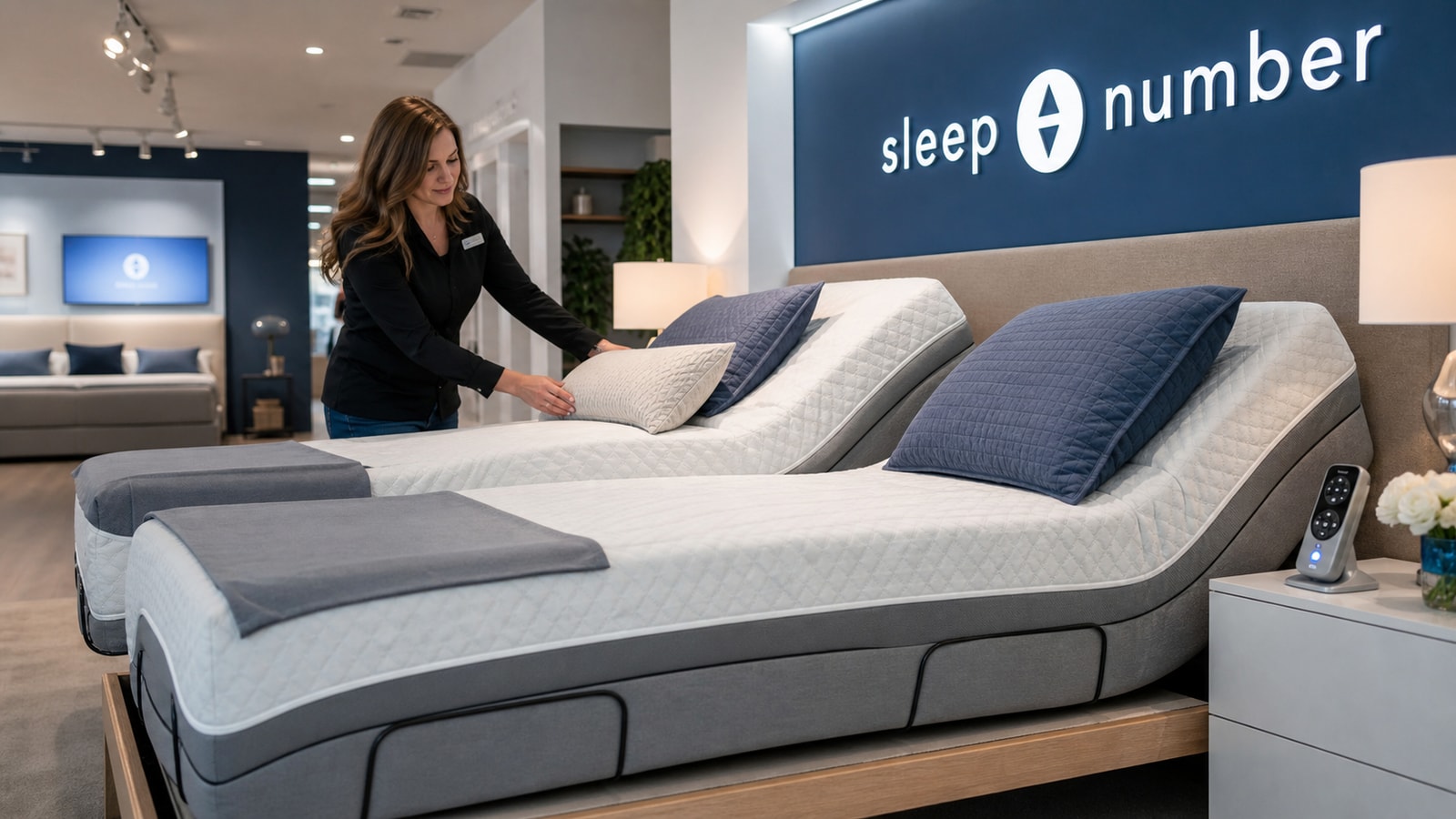
The store demo made the promise feel real
The number setting needed a physical experience before buyers believed it.
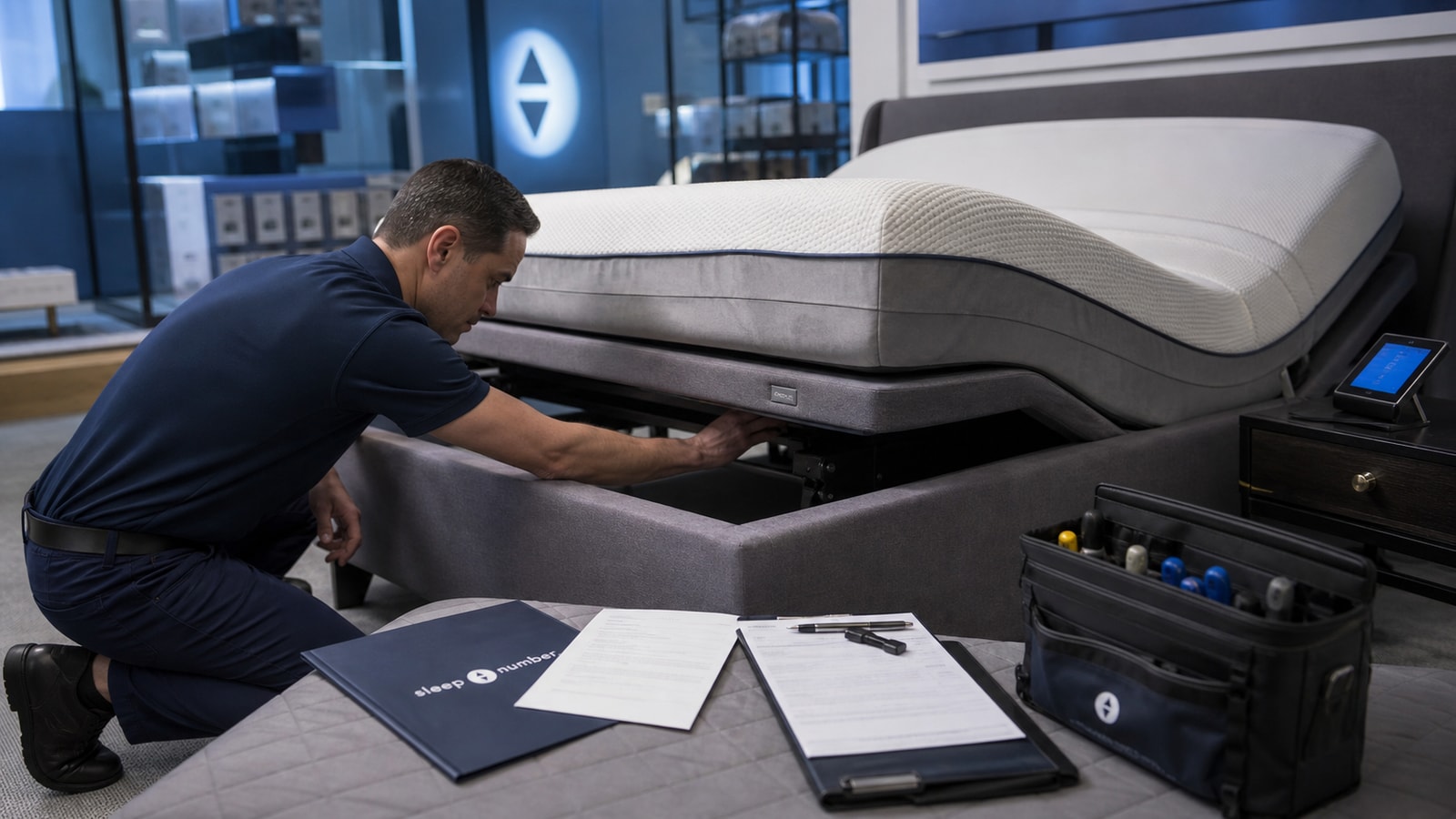
The bed became a service system
The app, warranty, delivery, and connected infrastructure all had to keep working during court protection.
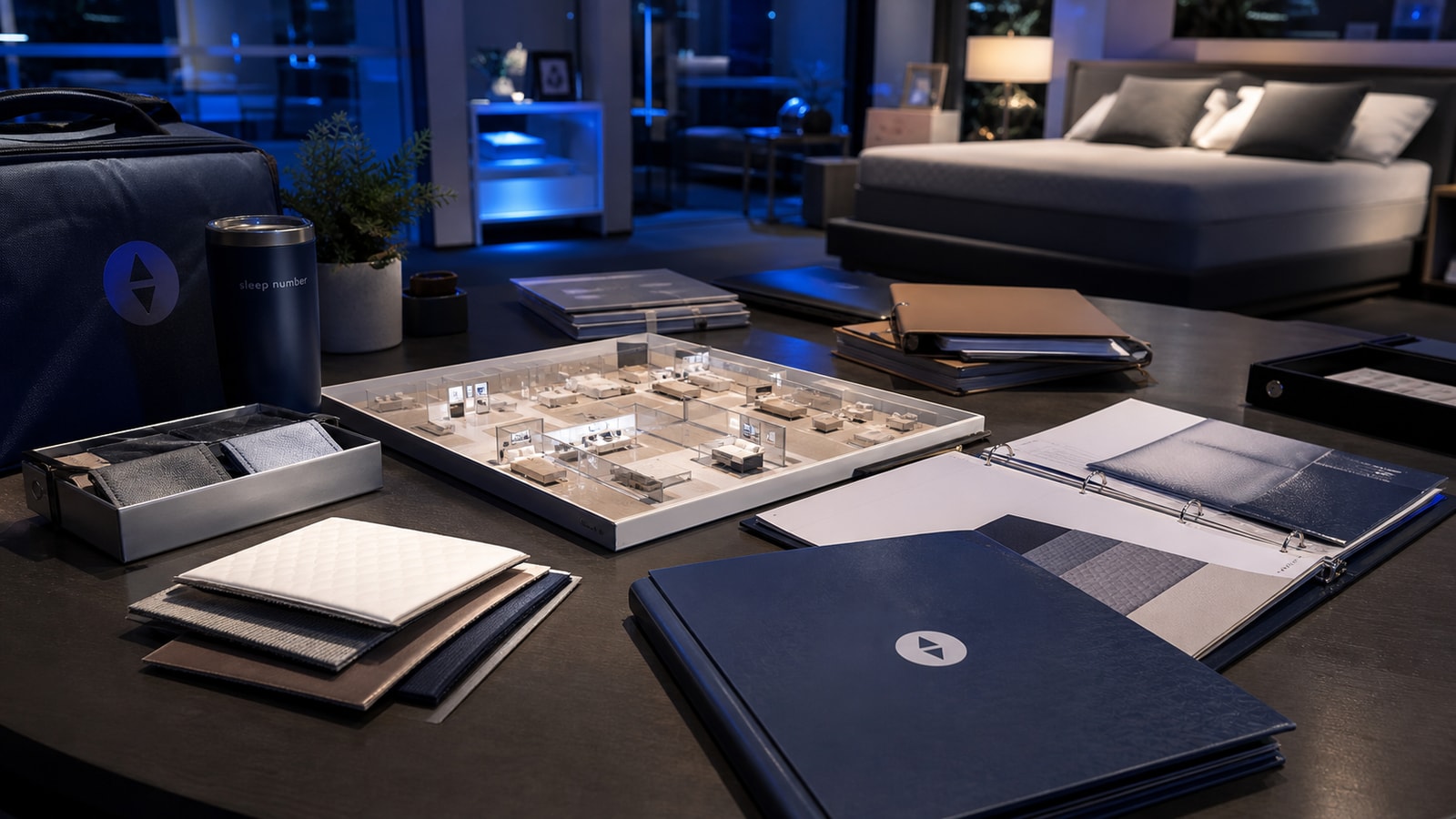
The buyer wanted the system, not only the name
A stalking-horse sale means the product, stores, service, and customer base still had value.
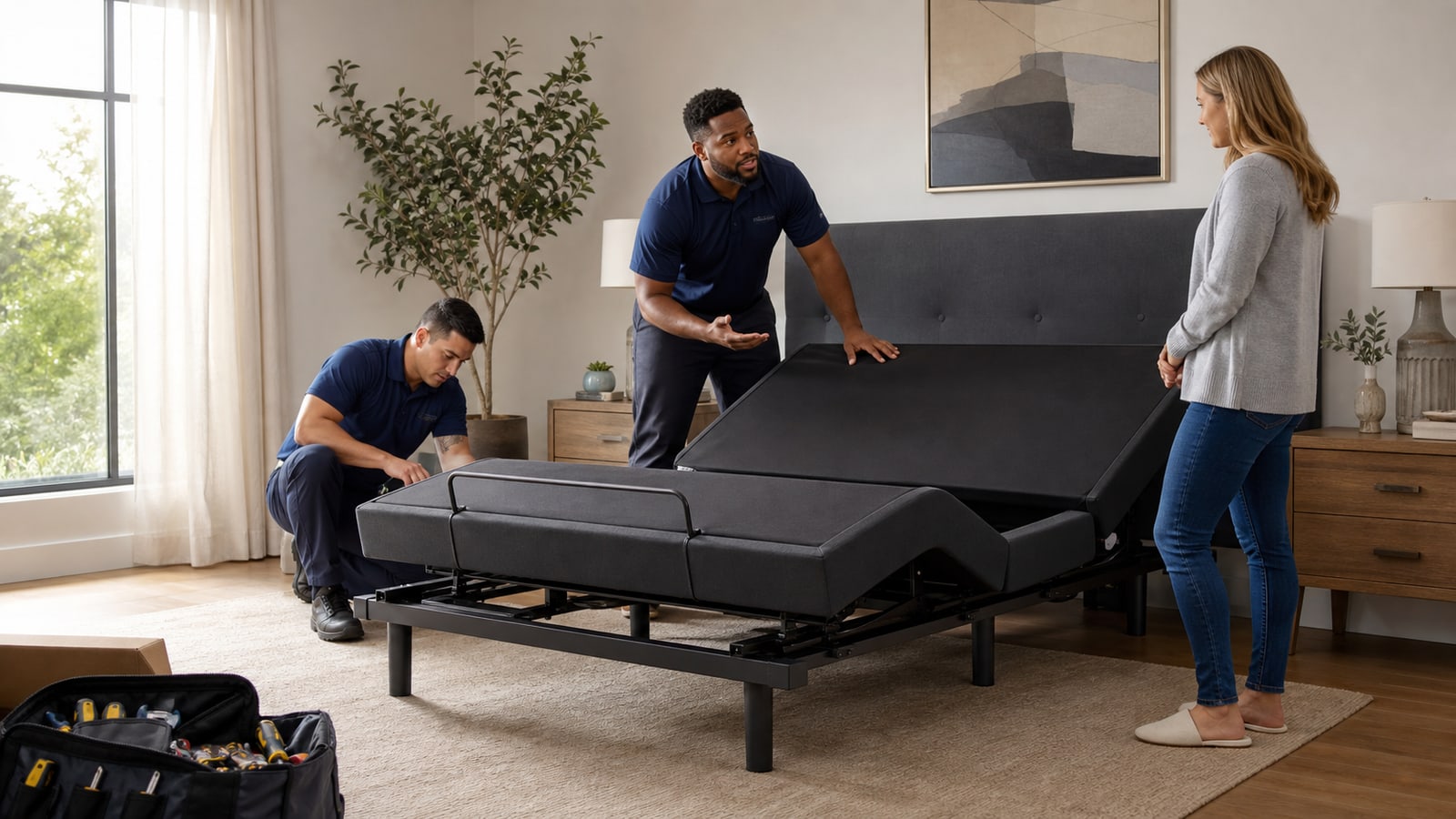
Delivery is part of the product
A premium connected bed depends on careful installation, customer education, and service continuity after the store demo.
Product and service system
Adjustable air comfort starts as the core product advantage.
The brand turns comfort into a named personal setting.
Connected beds, apps, sensors, and services make the system heavier.
The company preserves customer operations while pursuing a buyer.
Turning points.
The collapse was not a product disappearance. It was a financing and distribution reset around a still-recognizable sleep-technology promise.
Why it failed
Demand pressure, a store-heavy direct model, debt, turnaround timing, and the cost of supporting smart-bed service infrastructure strained the standalone public company.
Management cut costs, launched a turnaround, redesigned product, refreshed marketing, extended bank terms, and then pursued a Chapter 11 sale with Sleep Country Canada as stalking-horse bidder.
The June 12, 2026 Chapter 11 filing accelerated credit obligations and led to a DIP-financed Section 363 sale process plus Nasdaq delisting notice.
Failure timeline
Select Comfort begins the adjustable-air mattress business.
The company becomes Sleep Number Corporation.
Management cuts costs and starts the Sleep Number Shifts turnaround.
Sleep Number files Chapter 11 with a Sleep Country sale agreement.
Public reaction.
Customers mostly cared whether beds, deliveries, warranties, gift cards, and the app would keep working.
The standalone public company needed court protection and DIP financing.
The company said stores, online orders, warranties, reward points, delivery, and the app would continue.
Full timeline.
Select Comfort is incorporated. Source
The company changes its name to Sleep Number Corporation. Source
The proxy letter describes Sleep Number Shifts and USD 136 million in cost reductions. Source
Sleep Number files Chapter 11 and enters a sale agreement with Sleep Country Canada. Source
Nasdaq notifies Sleep Number of delisting after the Chapter 11 filing. Source
Steal / avoid.
- Turn a product benefit into a memorable personal unit.
- Keep customer-service continuity visible during restructuring.
- Make the buyer boundary clear before customers worry about warranties.
- Do not let a differentiated product hide a heavy distribution model.
- Do not make stores, app, delivery, and warranty promises without financial resilience.
- Do not confuse sale-process continuity with a finished turnaround.
Short answer.
A Sleep Number setting controls mattress firmness on a scale from 0 to 100. SleepIQ instead summarizes recorded sleep signals, such as movement and time in bed. A higher firmness setting does not mean better sleep, and SleepIQ is not a medical diagnosis.
Frequently asked questions
What does your Sleep Number setting mean?
A Sleep Number setting controls the firmness of the mattress. Settings run from 0 to 100, with higher numbers producing a firmer feel. It is a comfort control selected by the sleeper, so a higher number does not mean a better mattress or a higher quality of sleep.
Is a SleepIQ score the same as a Sleep Number setting?
No. SleepIQ is the app’s summary of a night’s recorded sleep, using factors such as time in bed, movement, bed exits and other signals. The Sleep Number setting is the bed’s firmness control. Sleep Number describes SleepIQ as a tool for observing personal trends and says it is not a medical diagnosis.
Did Sleep Number close all stores?
No. In the June 2026 announcement, Sleep Number said stores and online ordering were continuing during the court-supervised sale process.
Who was the buyer in the Sleep Number bankruptcy?
Sleep Country Canada was the stalking-horse bidder, subject to higher and better offers and court approval.
How much bankruptcy financing did Sleep Number announce?
Sleep Number said in June 2026 that it expected up to USD 260 million of debtor-in-possession financing, including up to USD 65 million in new financing.
Need help with your own brand?
Use Private brand work when your name, identity, proof, or message needs a sharper branding decision.
Sources.
Use the education shelf for the concepts behind this brand page.
Private brand workUse this when the decision belongs to your own brand.
All brandsReturn to every brand page.
- Sleep Number Chapter 11 sale announcement
- Sleep Number June 2026 bankruptcy 8-K
- Sleep Number 2026 proxy turnaround letter
- Sleep Number June 2026 delisting 8-K
- Sleep Number annual reports and proxy statements
- Sleep Number official source
- Sleep Number official source
- Sleep Number: Store experience
- Sleep Number: Home delivery
- Sleep Number: Warranty service