Spirit Airlines · Grow Your Brand · Spirit Airlines failure case study · United States / All flights canceled and operations in orderly wind-down after a second Chapter 11
Spirit Airlines
Spirit’s low base fares came with a separate price for many extras. Baggage and seat selection helped fund the former airline’s low-fare model. JetBlue’s proposed acquisition was blocked in 2024, and Spirit later canceled all flights in May 2026. The fare promise, merger decision and closure belong to distinct chapters.
Positioning, name, and architecture.
Spirit's Bare Fare proposition made the base ticket easy to compare and pushed optional services into visible add-ons. That sharp category position created demand and industry pressure, but it required aircraft availability, high utilization, disciplined fees, acceptable service recovery, and reliable access to capital.
A conspicuously low base fare with separately priced optional services
Spirit made low fares visible by unbundling the trip, but the promise depended on an operating and financing system with little room for prolonged disruption.
Spirit became the airline name in the early 1990s after the Charter One period; this page begins with the Spirit Airlines identity, not the unrelated predecessor mark.
No current airline tagline is assigned because scheduled operations ended; the final 2014 mark is historical.
Final airline masterbrand inside a six-debtor aviation structure
Spirit Airlines is the brand and operating subsidiary; the holding, finance, IP, and loyalty debtors are legal parts of the case, not logo eras.
Separates the seat from optional services and makes the entry fare the headline.
pricing architecture: Unbundled base fare source
Adds retention and loyalty economics to the low-fare trip.
loyalty program: Free Spirit program source
Naming and tagline progression
A heavier airline identity accompanies network growth
The brand explicitly embraces ultra-low-cost positioning
Yellow-and-black turns price disruption into the total visual system
Market and scale snapshot.
Combined 2025 reporting shows revenue falling 22.7% and a large operating loss before the second bankruptcy. The later proposal to cut debt and lease obligations was never completed because the company instead began winding down.
USD 3.041B successor period plus USD 755.4M current predecessor period; down 22.7% from 2024.
USD 481.5M successor-period loss plus USD 287.2M predecessor-period loss.
Monthly operating report showed USD 5.892B assets and USD 8.108B liabilities; debtor books, not audited GAAP annual statements.
The reorganized company traded after the first bankruptcy, then entered a second case and stopped flying on May 2, 2026.
Color system.
Yellow made aircraft, gates, and digital offers impossible to confuse with a quiet legacy carrier. Black kept the price language blunt. The combination survived as memory, but color recognition could not solve the operating and capital constraints.
How the palette behaves
Yellow: visibility, provocation, and low-fare energy. Final fleet and airport system.
Black: blunt price language and contrast. Final lowercase wordmark.
Blue and red: the more conventional pre-2014 airline identity. 2002 and 2007 masterbrand eras.
Recognition assets.
The yellow aircraft, lowercase black wordmark, playful category language, bag-fee moments, and dense single-cabin experience turned low price into a complete operating identity. Those cues remained recognizable even as fleet, lease, engine, demand, and liquidity pressures accumulated.
The aircraft became a moving billboard for price disruption.
The base ticket made optionality visible and total trip cost more contested.
A fee and size check turned abstract unbundling into a physical customer moment.
Scores.
Spirit earned strong recognition and category clarity. Its final score collapses on operating continuity and financial resilience because the airline stopped flying.
The yellow fleet and black mark were unmistakable.
Price clarity attracted demand, while disruption and shutdown destroyed continuity.
The low-price position was clear but the total-trip experience could feel inconsistent.
The IP may retain memory, but no operating successor airline was established as of the check date.
The final brand was easy to identify, but all flights were canceled on May 2, 2026; recognition no longer had operating proof.
Combined 2025 reporting shows revenue falling 22.7% and a large operating loss before the second bankruptcy. The later proposal to cut debt and lease obligations was never completed because the company instead began winding down.
Two Chapter 11 cases followed by operational wind-down
Spirit began an immediate orderly wind-down on May 2, 2026; all flights were canceled and the 2014 logo is a final operating mark, not a current-airline claim
How the logo changed.
Spirit moved from a conventional airline badge to a faster italic identity, then made the yellow aircraft and distressed black wordmark the complete low-fare signal. The last stage is final, not current.
The blue architectural block gave the growing airline a more conventional corporate frame.
Italic blue lettering and a red accent make the ultra-low-cost transition feel faster and more direct.
The distressed black lowercase wordmark paired with the yellow fleet until all flights were canceled in 2026.
Product and service lineage.
Spirit's low fare was never only a message. It was an aircraft, seat, route, schedule, fee, booking, airport, and financing system. When several of those dependencies broke at once, the yellow signal could not keep the airline operating.
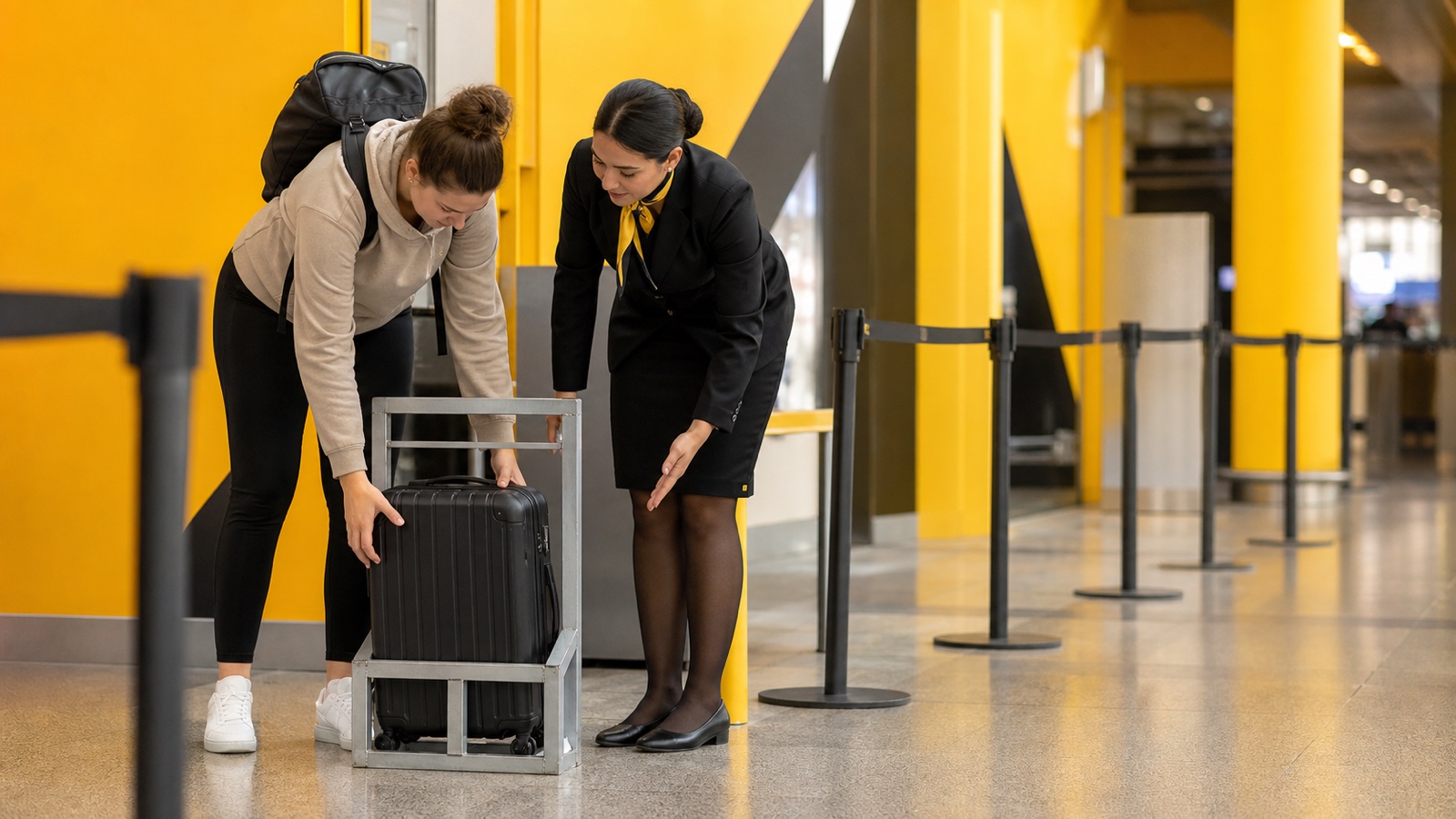
Unbundling becomes physical at the airport
The bag decision shows where a low base fare meets the total experience.
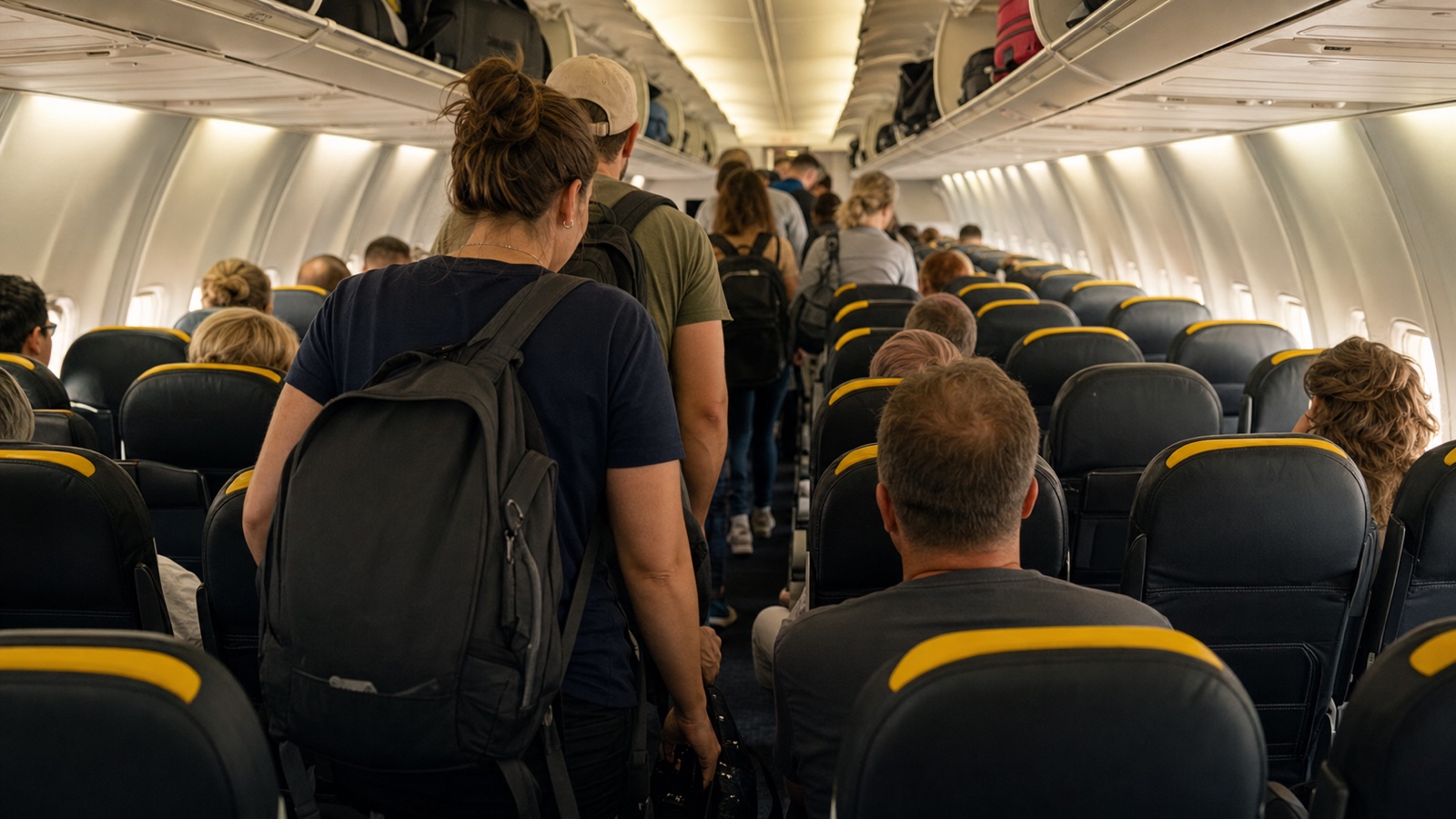
The cabin expresses the cost model
Seat density, service scope, and paid options turn positioning into operating design.
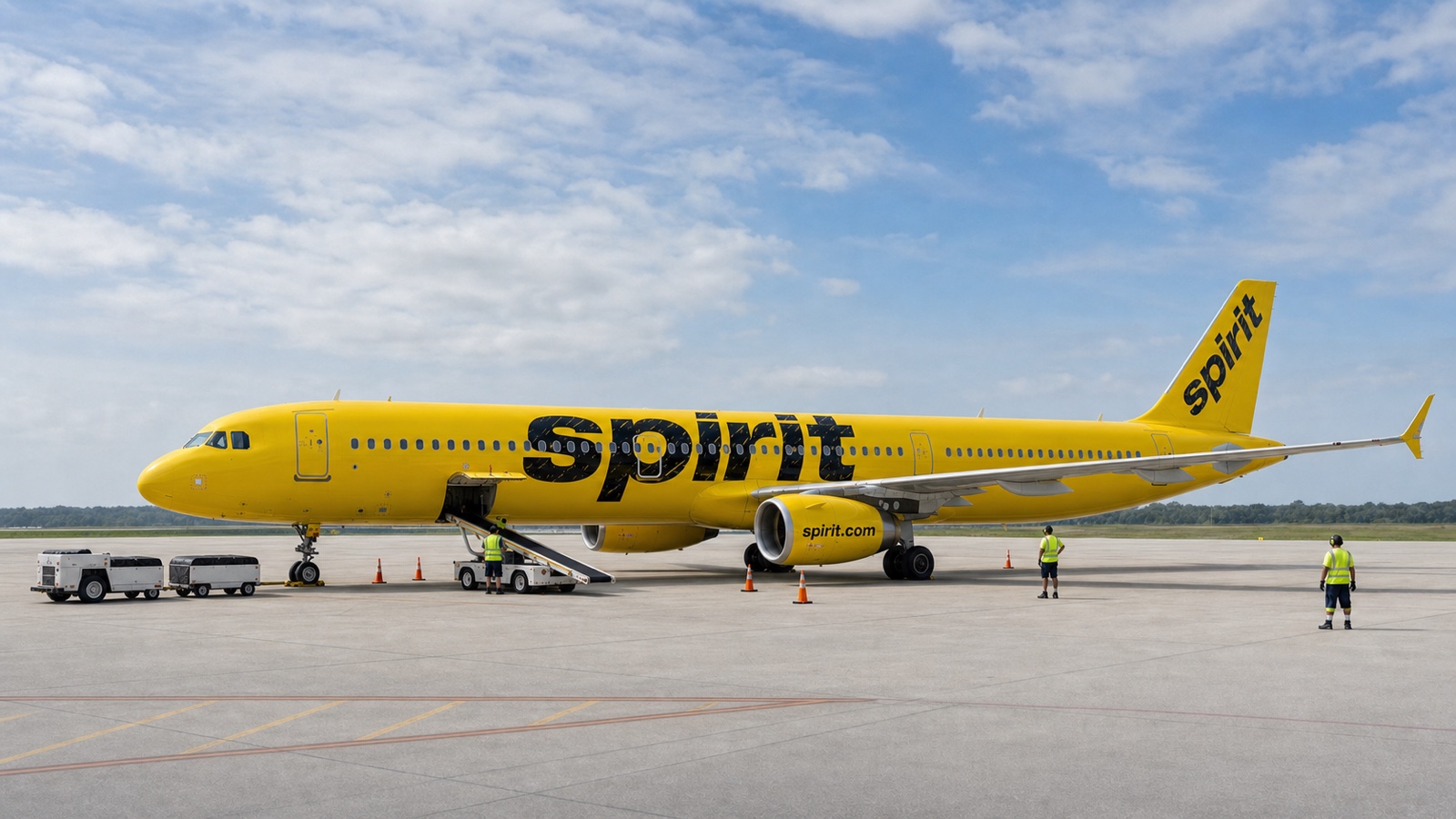
The model needs utilization
Aircraft availability and efficient turns are economic proof behind the fare claim.
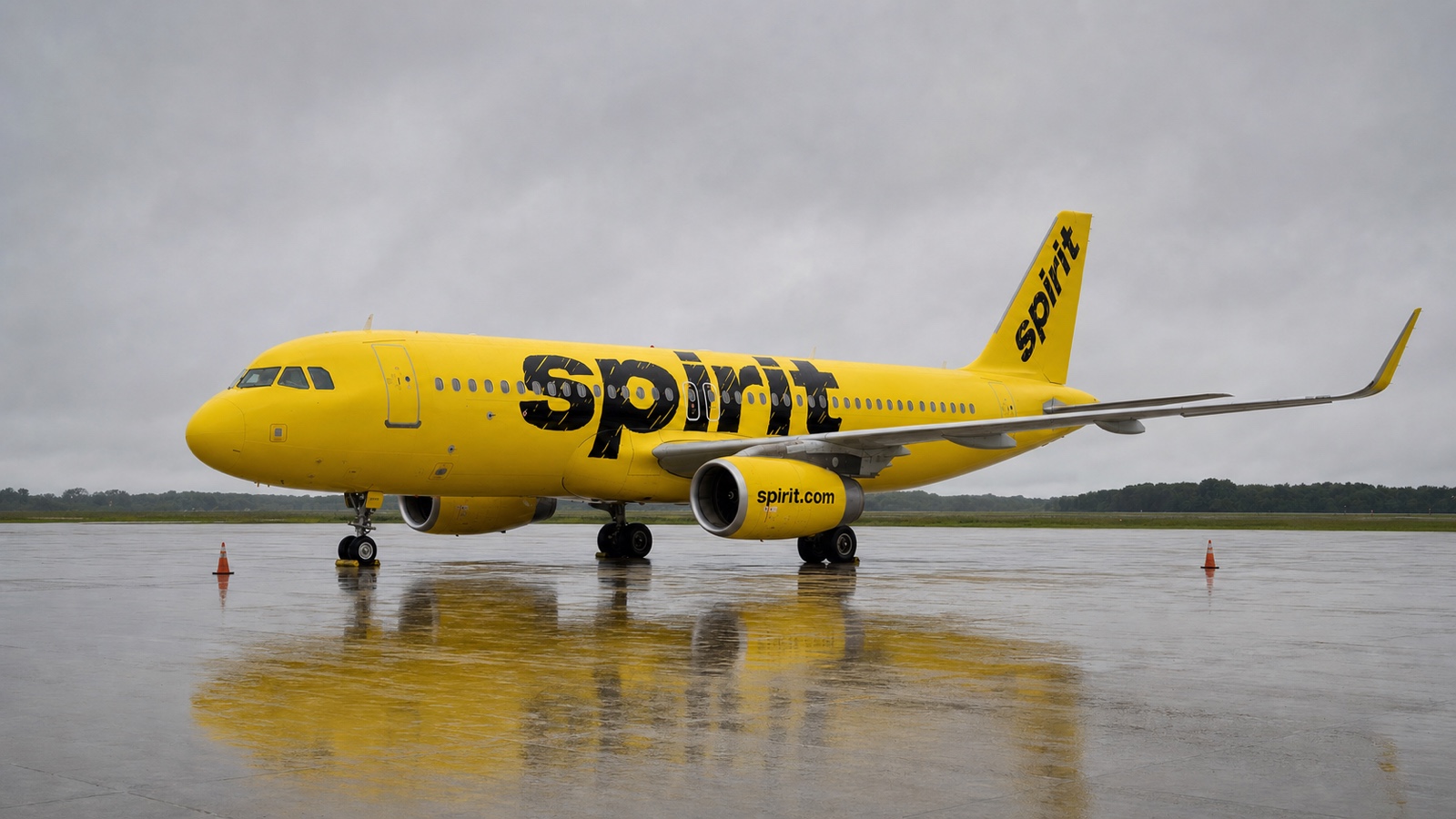
The final touchpoint was no flight
All flights were canceled when funding ended and the company began its orderly wind-down.
Product and service system
Earlier Spirit identities looked closer to ordinary airline authority.
Base fares and optional fees became the explicit economic and brand architecture.
Aircraft and blunt language made the positioning impossible to miss.
The first emergence did not create enough runway for a durable second reset.
Turning points.
The core sequence is USD 3.797 billion of 2025 revenue, a USD 768.7 million operating loss, a second bankruptcy, a proposed capital reset, and then a wind-down when more funding was unavailable.
Why it failed
Spirit's ultra-low-cost model had little room for prolonged disruption. Aircraft availability, high utilization, ancillary revenue, fuel, leases, and financing all had to cooperate while the airline was already losing money.
Spirit chose the savings of a single Airbus-family fleet powered heavily by Pratt & Whitney engines. Its own filing says a more diversified fleet would have been better positioned when GTF inspections grounded aircraft. The move beyond solely budget travelers came only after severe pressure.
After a second Chapter 11, a sudden sustained rise in fuel prices increased required liquidity by hundreds of millions of dollars. With no additional funding available, every flight was canceled and the airline began winding down on May 2, 2026.
Failure timeline
Spirit emerges from its first Chapter 11 under a new parent.
Six Spirit debtors file a second Chapter 11.
Combined revenue falls to USD 3.797B and operating loss reaches USD 768.7M.
All flights are canceled and wind-down begins.
Public reaction.
The bright fleet invites nostalgic or simplistic summaries. The accurate case separates the first emergence, second filing, proposed-but-uncompleted restructuring, and final operational shutdown.
Spirit canceled all flights and began an orderly wind-down on May 2, 2026.
The name, livery, and unbundled-fare idea still carry category memory inside the estate.
Full timeline.
The Spirit Airlines passenger identity begins operating under the Spirit name. Source
Spirit formalizes its ultra-low-cost carrier positioning. Source
Spirit launches the final black wordmark and yellow-aircraft system. Source

Spirit files its first Chapter 11 on November 18. Source
Spirit emerges on March 12 and files a second Chapter 11 on August 29. Source
Spirit signs a restructuring support agreement in March. Source
Spirit cancels all flights and begins an orderly wind-down on May 2. Source
Steal / avoid.
- Make a category position visible across the entire operating experience.
- Show the complete customer cost beside the attention-grabbing entry price.
- Stress-test the promise against fuel, fleet, lease, and liquidity shocks.
- Label a final mark as final when the operating company stops.
- Calling a proposed debt reduction completed after the company chose wind-down.
- Saying fuel alone caused the failure; the official release also cites other pressures and no funding.
- Claiming Frontier or JetBlue acquired Spirit; neither proposed transaction closed.
- Presenting the 2014 logo as a current operating mark.
Short answer.
Spirit canceled all flights and began winding down on May 2, 2026. Its former low-fare model priced many extras separately and used dense seating and an Airbus A320-series fleet. JetBlue's proposed acquisition had been blocked on antitrust grounds in January 2024.
Frequently asked questions
Is Spirit Airlines still flying?
No. Spirit canceled all flights and began an orderly wind-down on May 2, 2026.
Why were Spirit Airlines fares so cheap?
Spirit historically separated a low base fare from optional purchases such as baggage and advance seat selection. Its 2025 filing also identifies dense seating and a single Airbus A320-series fleet as cost controls. Later fare bundles added more included services. This describes the airline’s former operating model, before its 2026 wind-down.
Why was JetBlue’s purchase of Spirit blocked?
A U.S. district court blocked the proposed acquisition on January 16, 2024 on antitrust grounds. The Justice Department described the decision as protecting travelers from higher fares and fewer choices. The ruling stopped a proposed combination; it was separate from Spirit’s later bankruptcy proceedings.
How many times did Spirit file bankruptcy?
The airline entered Chapter 11 in November 2024, emerged in March 2025, and six Spirit entities filed again in August 2025.
Did Spirit complete its 2026 debt reduction?
No. The March restructuring agreement described a proposed outcome. Spirit later began winding down instead.
Did Frontier or JetBlue buy Spirit?
No. Neither proposed combination closed.
Is the black Spirit logo current?
It is the final operating mark used through 2026, not a current-airline claim after flights ended.
Need help with your own brand?
Use Private brand work when your name, identity, proof, or message needs a sharper branding decision.
Sources.
Use the education shelf for the concepts behind this brand page.
Private brand workUse this when the decision belongs to your own brand.
All brandsReturn to every brand page.
- Spirit FY2025 Form 10-K
- Spirit January 2026 monthly operating report
- Spirit March 2026 restructuring Form 8-K
- Spirit restructuring support agreement and debtor list
- Spirit wind-down announcement
- Spirit May 2026 Form 8-K
- Spirit 2002 logo archive
- Spirit 2007 logo archive
- Spirit 2014 final logo archive
- Spirit Airlines official source

