TGI Fridays · Grow Your Brand · TGI Fridays failure case study · United States / The old 39-restaurant U.S. operator is pursuing a plan of liquidation; the franchise brand remains active under Sugarloaf management
TGI Fridays
Is TGI Fridays still open, and what does its name mean? TGI Fridays began as a Manhattan bar in 1965. Its 2024 bankruptcy covered a group operating 39 U.S. restaurants, while independent franchises and the brand rights sat outside that case. That distinction explains why Fridays still operates.
Positioning, name, and architecture.
TGI Fridays turned Friday-night release into a restaurant name, striped sign, bar theater, casual menu, and social ritual. The brand system survived because most franchised restaurants and the IP structure were outside the debtor group.
A day-of-week name joined to striped recognition, bar theater, and an always-Friday celebration promise
TGI Fridays sells permission to celebrate, but the franchise, royalty, operator, and restaurant economics must make the promise durable.
The 1965 name compresses the familiar expression 'Thank God It's Friday' into a permanent invitation to celebrate.
Where the world goes to celebrate.
Private franchise masterbrand with separated IP, royalty, management, franchisee, and former operator entities
The old TGI Friday's Inc. debtor, non-debtor TGI Fridays Franchisor LLC, Sugarloaf manager, domestic franchisees, international franchisees, and restaurant locations are not interchangeable.
Independent owners deliver most of the global restaurant experience.
operating architecture: Nearly 400 restaurants source
Food, drinks, staff energy, and celebration must work as one ritual.
experience: Full-service restaurant source
The current app and rewards system create a direct customer lane.
loyalty: Fridays Rewards source
Naming and tagline progression
T.G.I. Friday's names end-of-week release
In Here, It's Always Friday
Where the world goes to celebrate
Market and scale snapshot.
The financial data belong to the old private debtor and the wider franchise system, not the current Sugarloaf-managed brand as one consolidated public company. System sales are customer spending across restaurants, not company revenue.
Revenue for the old disclosed U.S./international asset-light business; not current consolidated brand revenue.
The active manager and franchise system are private; no current audited earnings figure was found.
Customer spending across the system, not company revenue; disclosed in the 2026 court plan.
Sugarloaf manages the brand; TGI Fridays Franchisor LLC is the non-debtor franchise/IP structure.
Color system.
The diagonal red-and-white stripe system creates immediate movement and a celebratory signal; black keeps the mark legible across restaurants and digital surfaces.
How the palette behaves
Fridays red: energy and appetite. Diagonal stripe system.
White: contrast and sign clarity. Current rectangular mark.
Black: bar-and-grill authority. Current wordmark and interiors.
Recognition assets.
Red-and-white diagonal stripes, the Friday name, bar energy, memorabilia, ribs, burgers, shareable appetizers, and the promise that it is always Friday make the brand easy to recognize.
The brand converts a weekly feeling into a permanent social permission.
The diagonal frame reads from parking lot, dining room, app, and packaging.
Bartender energy and social service make the promise visible rather than verbal.
Scores.
Recognition and global franchise continuity remain stronger than the old company-operated restaurant economics and capital structure.
The Friday name and stripes remain globally legible.
Operator, franchisor, manager, franchisees, IP, and royalties easily blur.
A large active franchise base gives the brand a real reset surface.
Bar theater and the Friday celebration ritual still give the brand a recognizable occasion.
The old U.S. operator is pursuing a plan of liquidation, while the franchise agreements, IP, restaurants, and Friday ritual continue outside it.
The financial data belong to the old private debtor and the wider franchise system, not the current Sugarloaf-managed brand as one consolidated public company. System sales are customer spending across restaurants, not company revenue.
Former U.S. company-operated restaurant group is pursuing a plan of liquidation; non-debtor franchise brand continues
Sugarloaf TGIF Management LLC manages the active private brand; TGI Fridays Franchisor LLC is the non-debtor franchise and IP structure
How the logo changed.
The identity moved from an elaborate tavern-style badge to a simplified striped sign and then to the current modern diagonal frame.
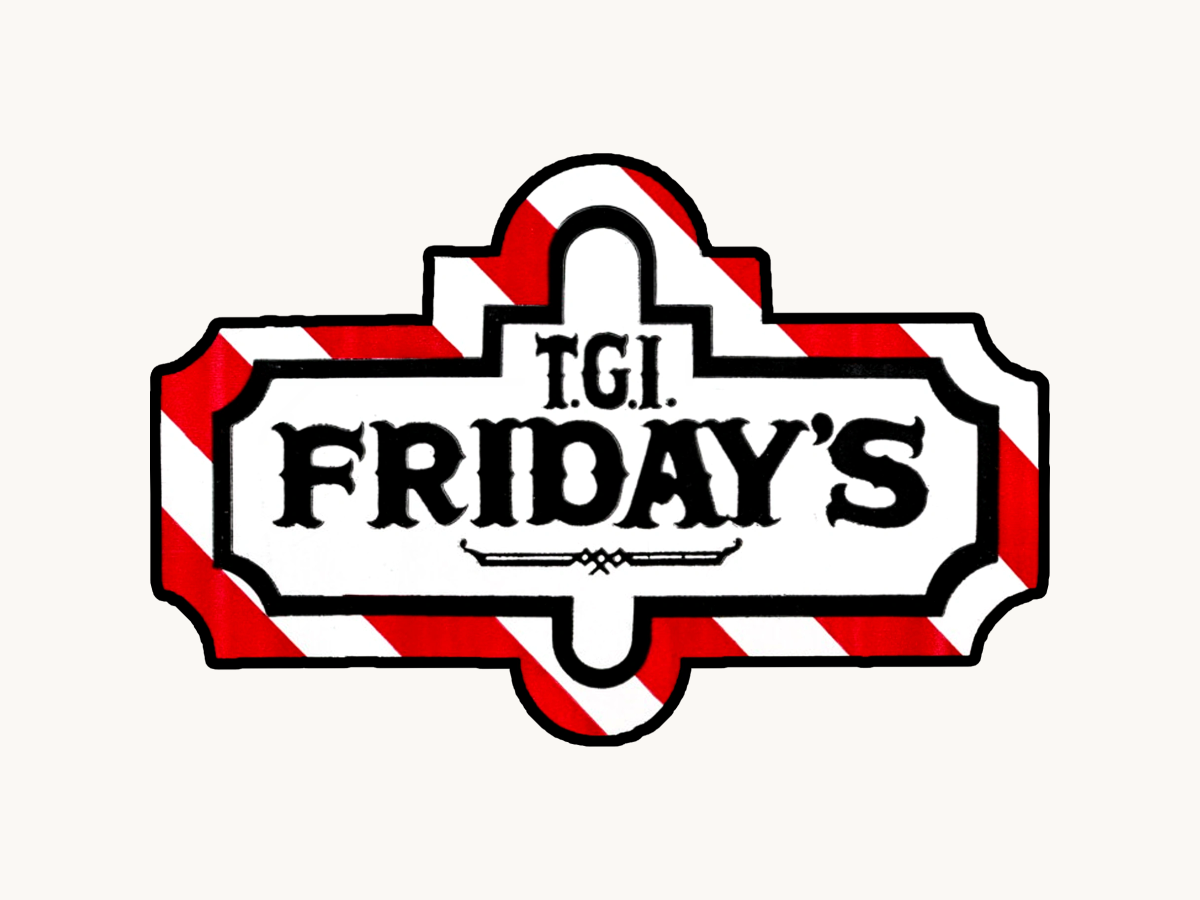
The original sign combines stripes, punctuation, and ornamental lettering into a social tavern badge. source
The wordmark becomes cleaner while the striped restaurant-sign frame remains explicit. source
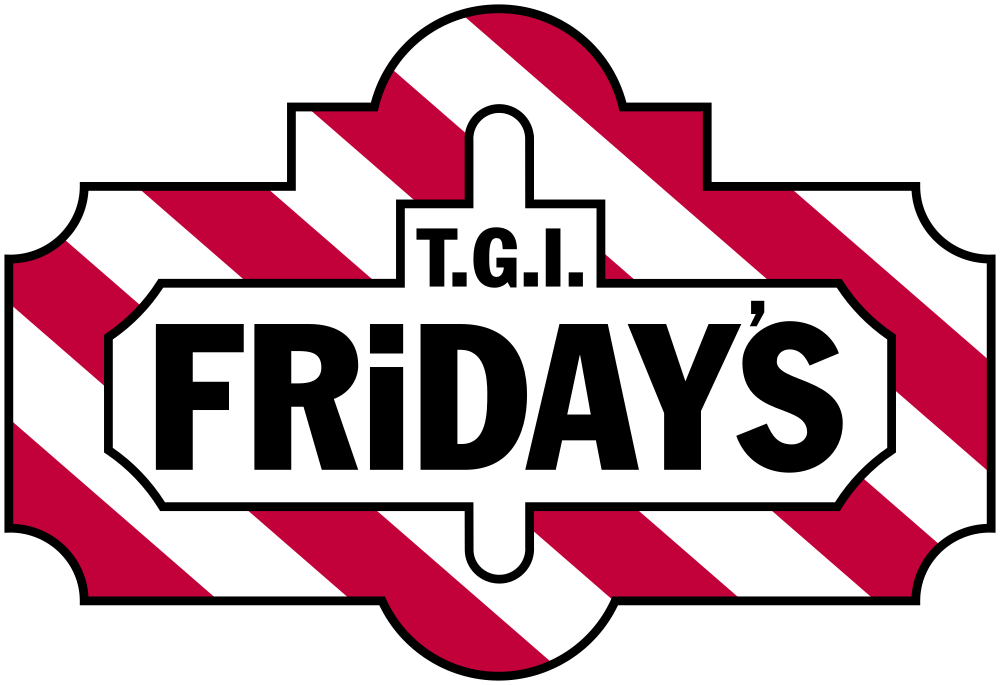
The current U.S. mark removes punctuation, enlarges FRIDAYS, and turns stripes into a flexible directional frame.
Product and service lineage.
The brand scaled a New York social-bar idea through company restaurants, franchises, international territories, securitized royalties, digital loyalty, and a broad food-and-beverage menu.
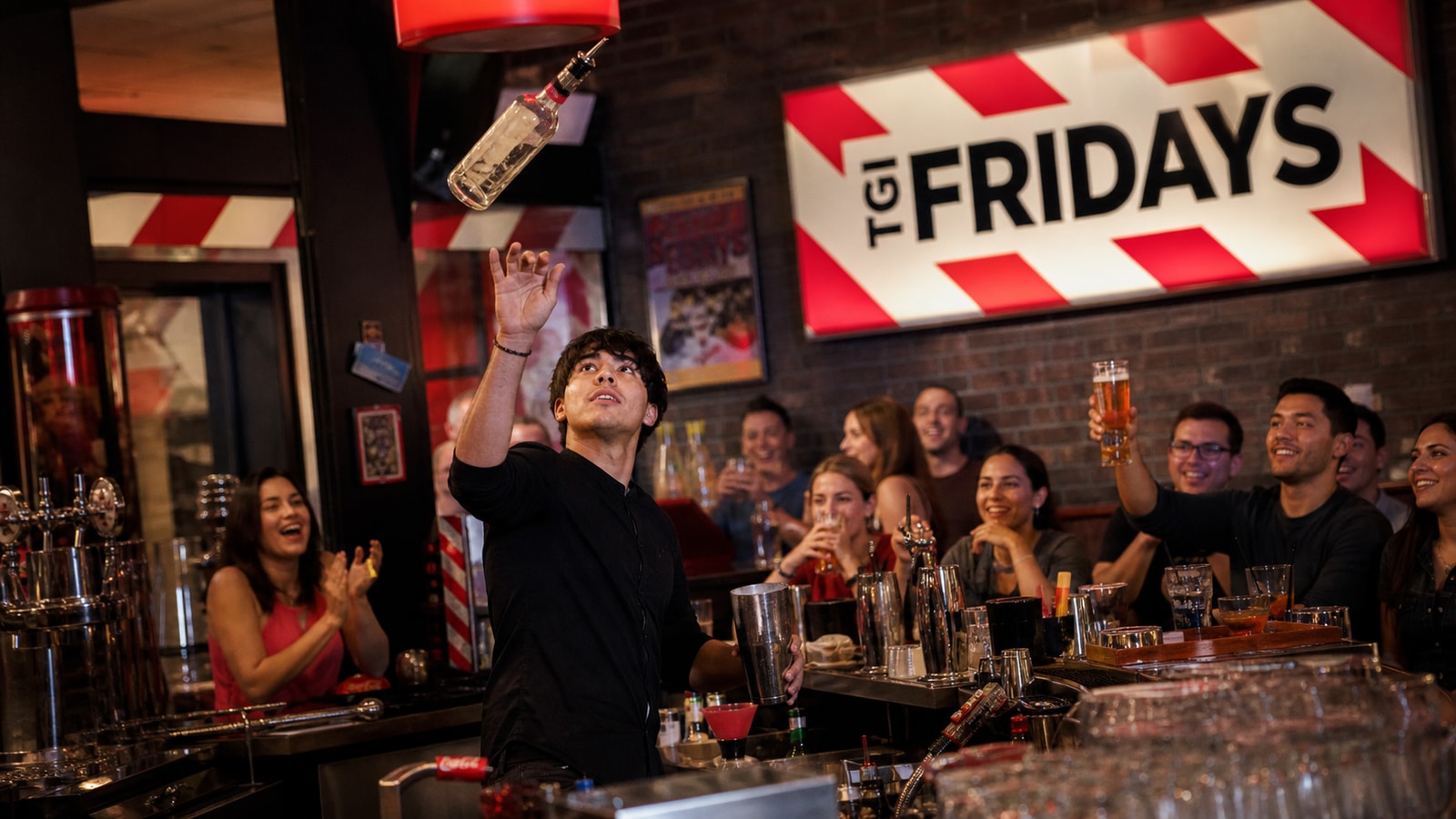
The bar turns service into theater
The brand is strongest when staff energy creates a real social moment rather than decoration alone.
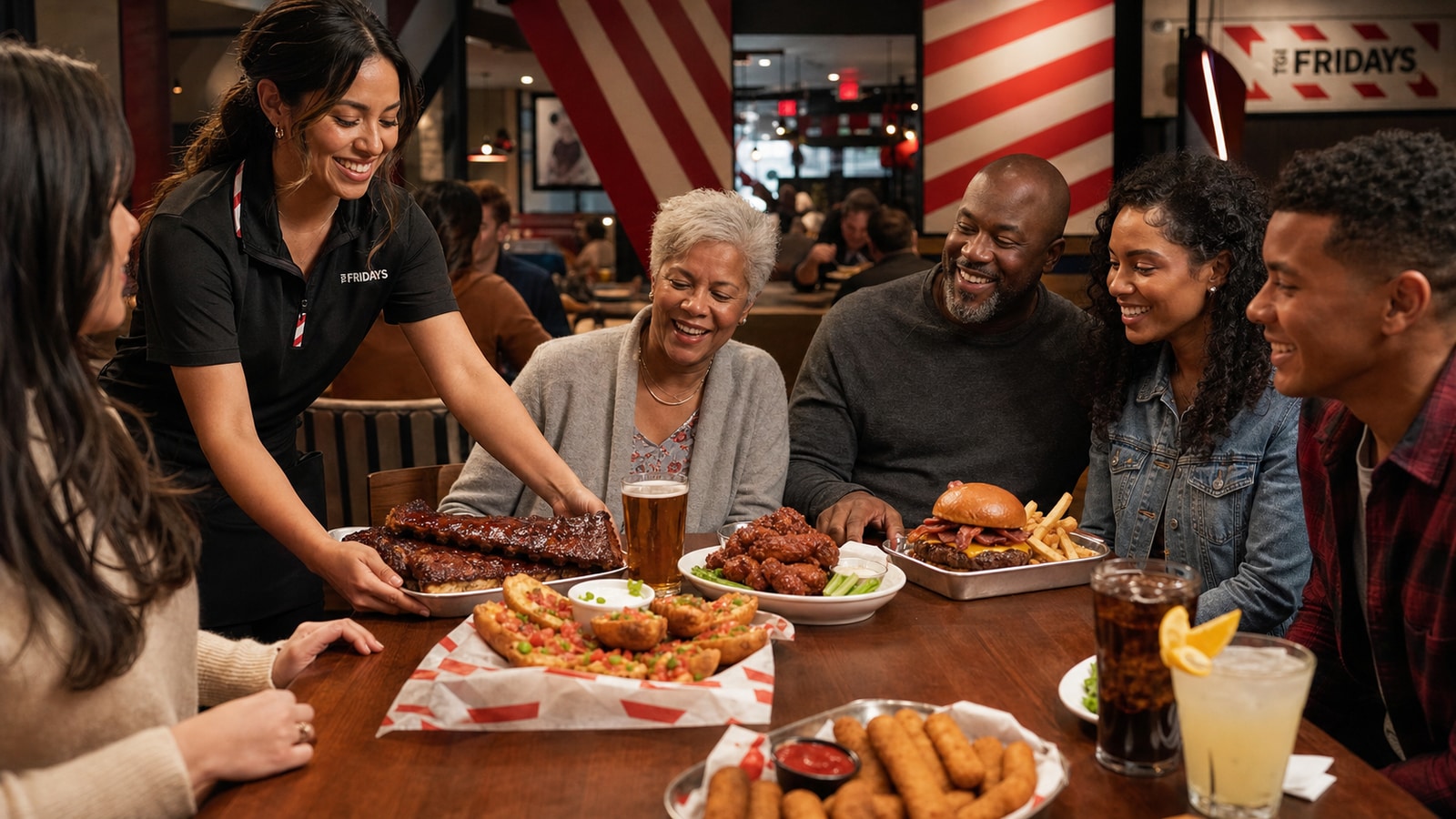
The menu has to support the occasion
A broad shareable menu can drive groups, but complexity and value still have to work at restaurant level.
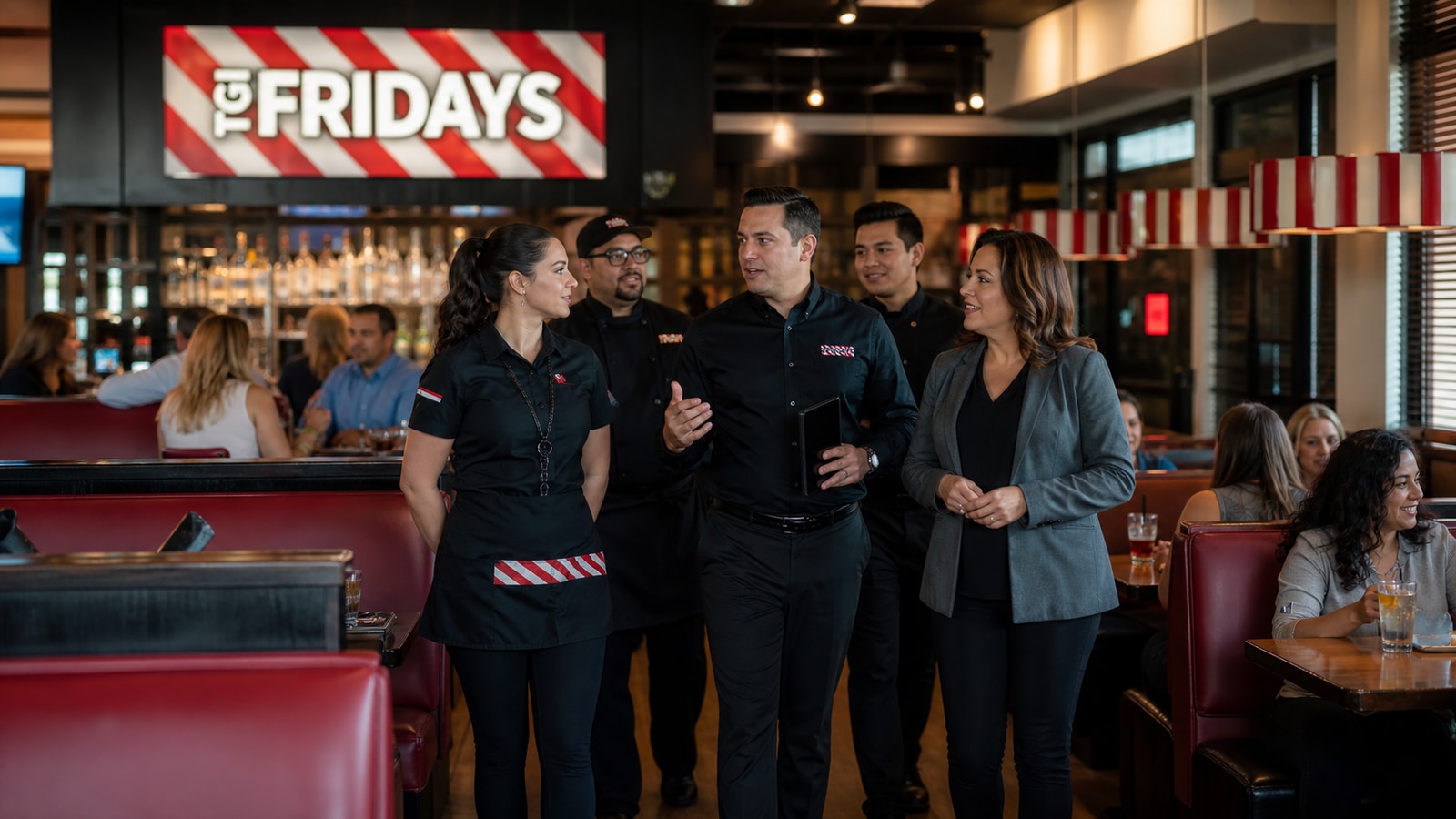
Franchise proof lives in each room
The global name depends on independent operators delivering a consistent Friday ritual.
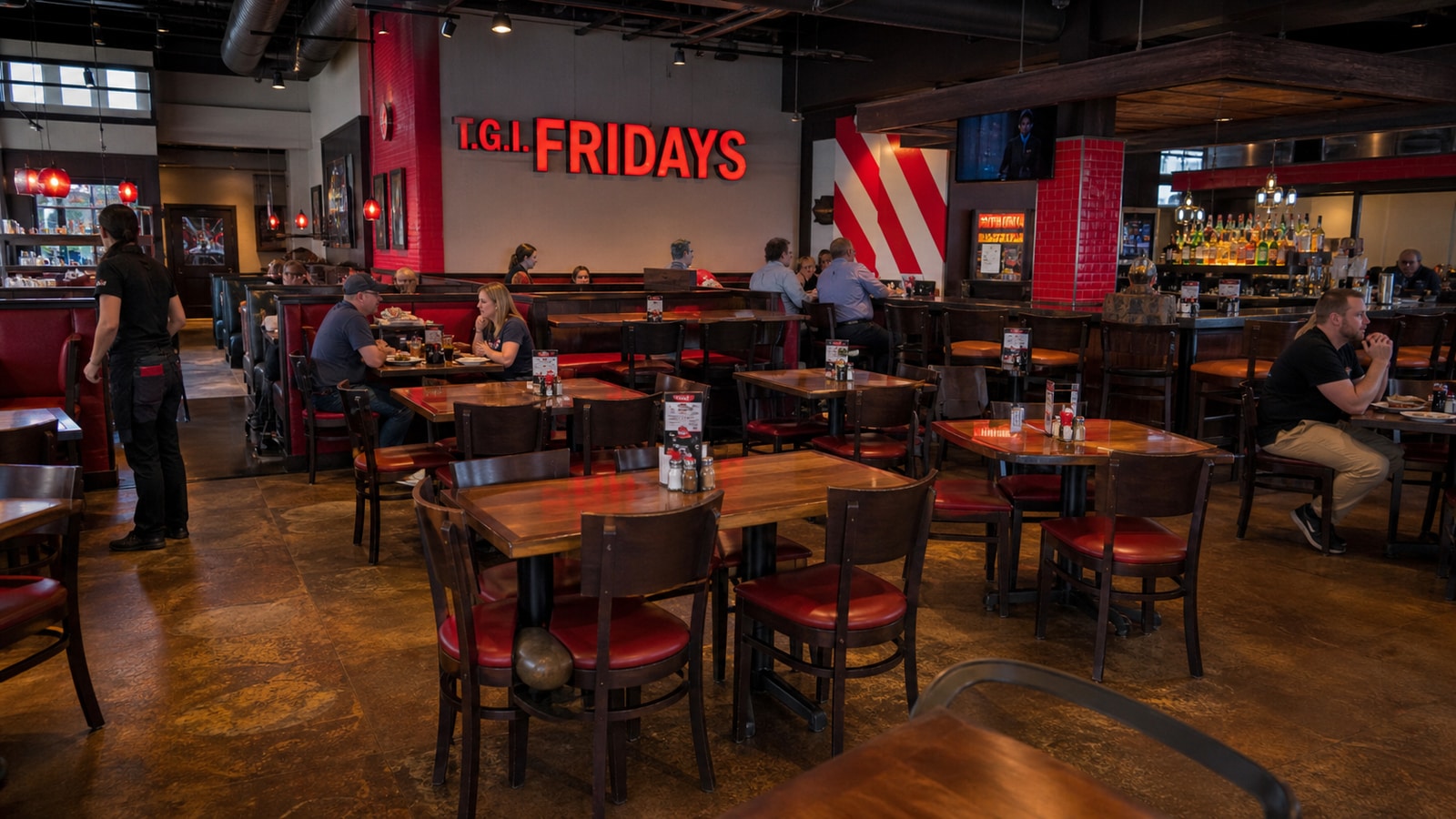
Recognition cannot fill unused capacity
A famous stripe and name do not solve traffic, fixed costs, or an overbuilt room.
Product and service system
The original concept turns meeting and release into the product.
Food expands the visit beyond drinks.
Independent operators scale the name internationally.
IP and franchise cash flows sit in entities separate from the old operator.
Turning points.
The failure was architectural: the public saw one restaurant brand, but the operator, franchise royalties, IP, debt, and independent restaurants lived in separate entities with different outcomes.
Why it failed
In the year before filing, U.S. sales fell 15% because of unit closures and lower average unit volumes. Rising costs, weaker dining-out demand, and limited national marketing also tightened liquidity. Restaurant obligations remained in the debtor while franchise royalties and IP sat in non-debtor securitization entities.
The company acquired restaurants from underperforming or retiring franchisees while trying to move toward an asset-light model. The disclosure says the securitization trustee later terminated TGI Friday's Inc. as manager, purportedly in part because it failed to furnish a required Manager Report.
The September 3, 2024 manager termination cut off a significant royalty stream. TGI Friday's Inc. and 22 affiliates filed Chapter 11 on November 2; they are now pursuing a plan of liquidation.
Failure timeline
A whole-business securitization places franchise agreements, royalties, licensing, and IP in special-purpose entities.
The trustee terminates TGI Friday's Inc. as manager of the securitized system.
The 39-restaurant U.S. operator and affiliates file Chapter 11.
The old debtors propose a joint Chapter 11 plan of liquidation while the franchise brand remains active.
Public reaction.
Bankruptcy headlines made a global brand look dead. Franchise architecture made the truth harder: most restaurants, the brand IP, and the active management system sat outside the debtor group.
TGI Friday's Inc. and 22 affiliates entered Chapter 11 and are pursuing a plan of liquidation.
The private franchise system remains active in almost 40 countries under Sugarloaf management.
Full timeline.
Alan Stillman opens the first TGI Fridays in New York. Source
The chain expands the bar ritual through casual dining and franchising. Source
The current simplified diagonal-stripe identity launches. Source
The old U.S. operator files Chapter 11 with 39 company-operated restaurants. Source
The old debtors pursue liquidation while the active franchise brand reports nearly 400 restaurants. Source
Steal / avoid.
- Name a feeling people already want.
- Turn the promise into a staff and space ritual.
- Map legal, franchise, royalty, and operating layers before calling a brand bankrupt.
- Do not say TGI Fridays went bankrupt globally.
- Do not label system sales as revenue.
- Do not call Sugarloaf the IP owner without an ownership instrument.
Short answer.
TGI Fridays stands for Thank God it's Friday. Its first bar opened in Manhattan in 1965. The 2024 bankruptcy covered a group operating 39 U.S. restaurants, while independent franchises and the brand's intellectual property sat outside that case. The restaurant name therefore continued after the former operator failed.
Frequently asked questions
What does TGI Fridays stand for?
TGI Fridays stands for "Thank God it's Friday." The company also uses the shorter name Fridays. The name expresses the restaurant's Friday-night social occasion rather than a restriction on which day it opens.
Where did TGI Fridays start?
TGI Fridays traces its first bar to Manhattan, New York, in 1965. The original concept centred on a place for singles to meet over drinks. That origin explains the continuing emphasis on the bar, social occasions and the Friday name alongside the food menu.
Is TGI Fridays still operating?
Yes. The current private brand says it has nearly 400 restaurants in almost 40 countries under Sugarloaf management.
Did TGI Fridays go bankrupt everywhere?
No. The 2024 debtor group owned 39 U.S. restaurants. Independent franchises and the non-debtor brand/IP structure were outside the case.
Is USD 1.4 billion TGI Fridays revenue?
No. It is 2023 global system sales, meaning customer spending across the restaurant system. The court disclosure lists USD 62 million of separate asset-light revenue.
Need help with your own brand?
Use Private brand work when your name, identity, proof, or message needs a sharper branding decision.