Tuesday Morning · Grow Your Brand · Tuesday Morning failure case study · United States / Filed Chapter 11 in February 2023; physical stores liquidated; brand later continued under new ownership/channel use
Tuesday Morning
What happened to Tuesday Morning's stores and brand name? The retailer entered Chapter 11 in 2020 and again in 2023. A later sale process offered its brand assets separately from store operations, which explains why continued use of the name is different from reopening the former chain.
Positioning, name, and architecture.
Tuesday Morning trained shoppers to expect off-price home finds: bedding, rugs, lamps, seasonal decor, gifts, and a casual treasure-hunt store visit.
A named shopping ritual around unexpected home finds at closeout prices
Tuesday Morning made bargain home shopping feel like a recurring treasure hunt, but that position only works when the operating system keeps the shelves surprising.
The name turns the shopping trip into an appointment-like bargain ritual rather than a generic closeout label.
Unique. Name-brand. Closeout.
Failed off-price store operator with later acquired brand/IP
The failed physical stores, 2020 restructuring, 2023 liquidation process, and later brand use should be treated as separate operating states.
Ran the off-price home-goods stores that liquidated in 2023.
failed operator: 487 stores at filing source
Earlier Chapter 11 attempted to realign stores and distribution after pandemic closures.
distress milestone: 687-store base before closures source
Trademarks, domains, customer data, social accounts, and digital content were marketed after liquidation pressure.
surviving brand asset: brand/IP package source
The brand memory depended on home furnishings, gifts, decor, and off-price discovery rather than a generic discount sign.
category proof: home furnishings and decor source
Naming and tagline progression
Treasure-hunt closeout shopping
Home goods and gift discovery
Post-liquidation brand/IP survival
Market and scale snapshot.
These signals describe the failed 2023 store-chain event. Public company-scale profit or current brand-wide revenue is not disclosed for the surviving use of the name.
The surviving private brand/IP use does not report public revenue.
The surviving private brand/IP use does not report public profit.
Chapter 11 announcement described the remaining store base and debtor-in-possession financing commitment.
Later brand use should be separated from the failed chain; current operating financials are not publicly reported.
Color system.
Deep red made the name feel like a warm retail invitation. In failure, it became a reminder that the trip promise depends on inventory surprise.
How the palette behaves
Morning red: warm discovery. source logo files and storefront cues.
Home brown: decor and furniture materiality. home-goods visuals.
Sale gold: off-price value. clearance and markdown cues.
Recognition assets.
The red serif name was easy to remember. What weakened was the operational proof behind it: assortment freshness, store quality, lease discipline, and cash to keep the hunt alive.
Tuesday Morning was more memorable than a generic home closeout label.
The brand worked when shoppers found lamps, rugs, bedding, and gifts worth the trip.
Without inventory freshness and store discipline, the promise lost credibility.
Scores.
The retail idea was clear; the store system ran out of the conditions needed to make it feel alive.
The red name was memorable in off-price home goods.
The reason to visit weakened as stores became distressed.
The treasure hunt requires consistent newness.
The name survived, but the physical chain did not.
The name stayed memorable, but shoppers judge an off-price brand by the quality of the find.
These signals describe the failed 2023 store-chain event. Public company-scale profit or current brand-wide revenue is not disclosed for the surviving use of the name.
Off-price home-goods chain liquidated after Chapter 11; brand name survived outside the failed store base
The failed store chain is not the same operating system as later online or acquired uses of the name.
How the logo changed.
The two-stage source-backed progression keeps the real red serif identity visible without faking missing historical marks.

The legacy mark captures the warm off-price home-shopping identity. source
.gif)

The later source file keeps the name readable without constructing a fake third stage.
Product and service lineage.
The system moved from weekly off-price discovery to repeated distress, liquidation, and smaller surviving brand use.
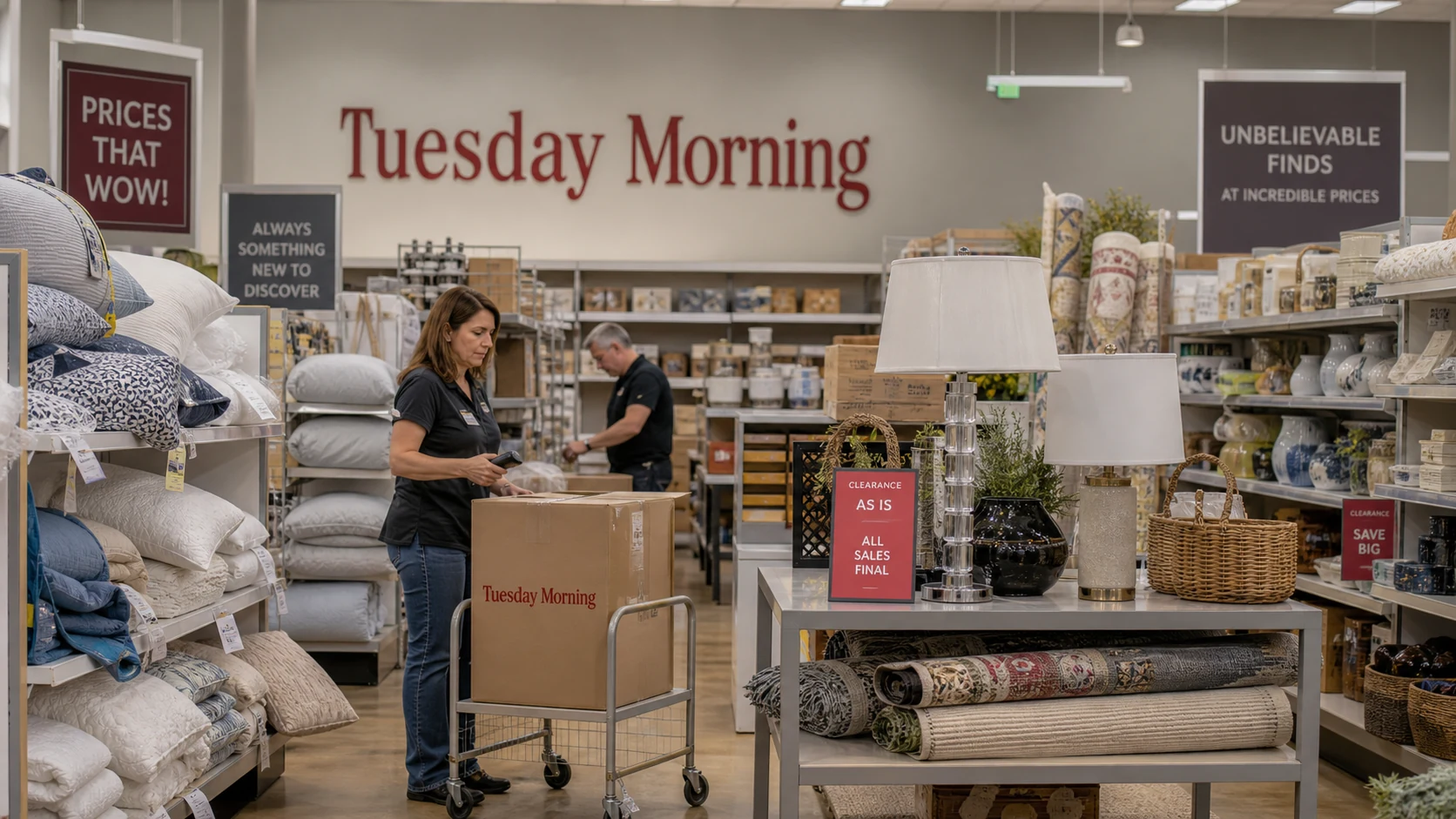
The treasure hunt needs fresh proof
Off-price home retail only works when the store still feels worth discovering.
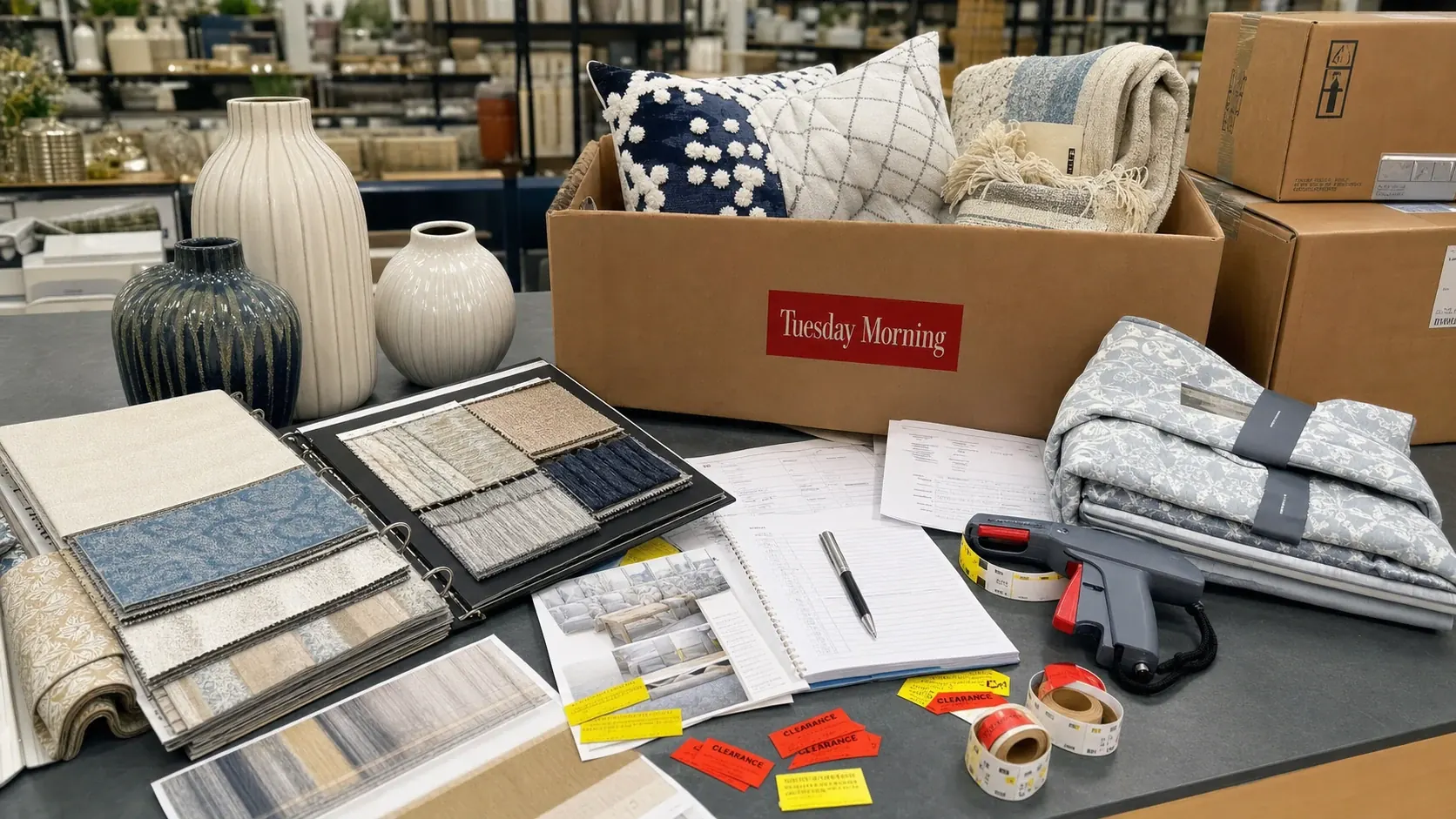
Buying discipline carried the brand
The customer promise lived in closeout sourcing and curation, not in the sign alone.
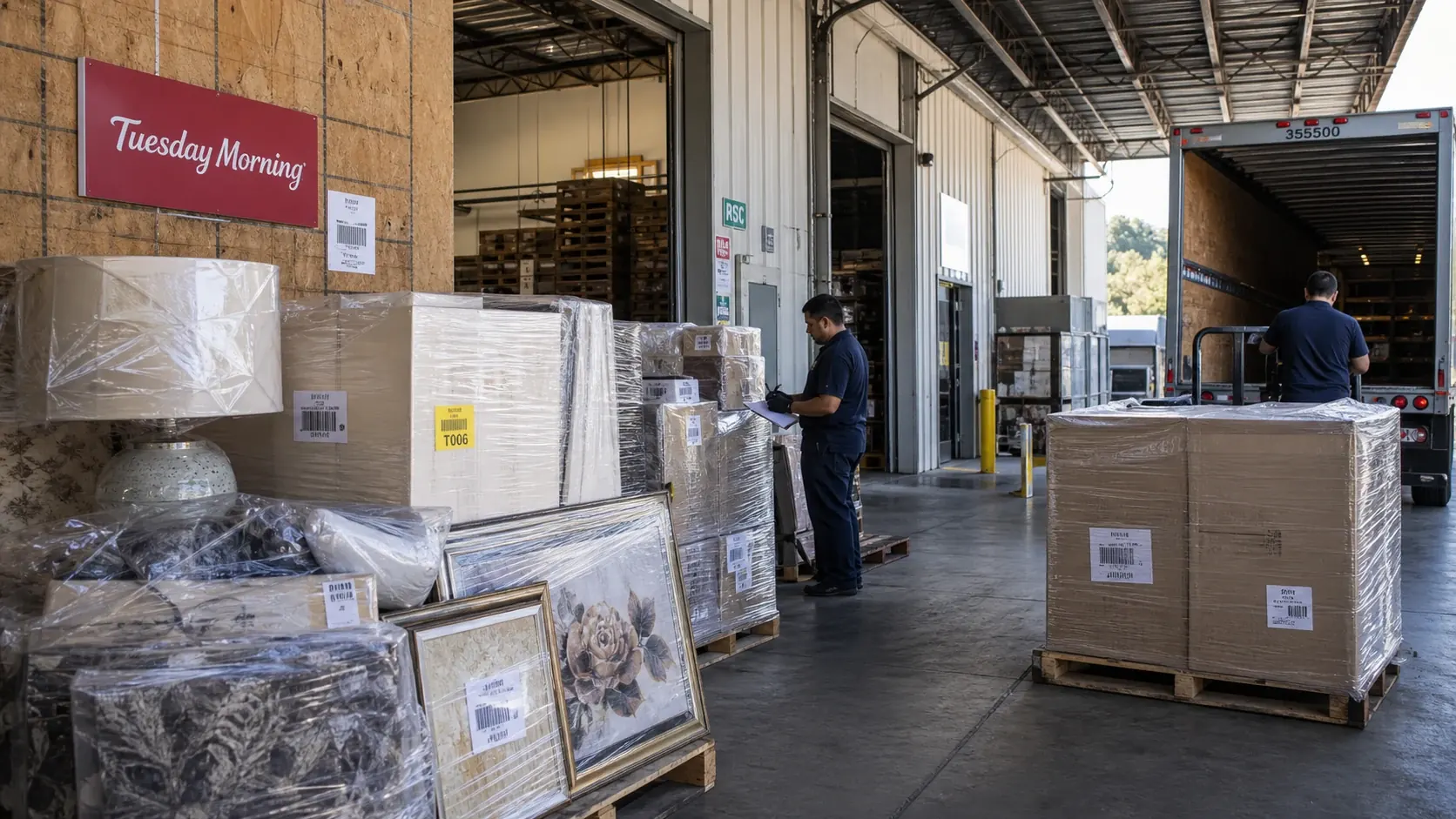
Distribution pressure hit the promise
If vendors, inventory, and logistics weaken, the hunt turns into leftover clearance.

The name could shrink into another channel
Post-liquidation use can carry memory without recreating the original store experience.
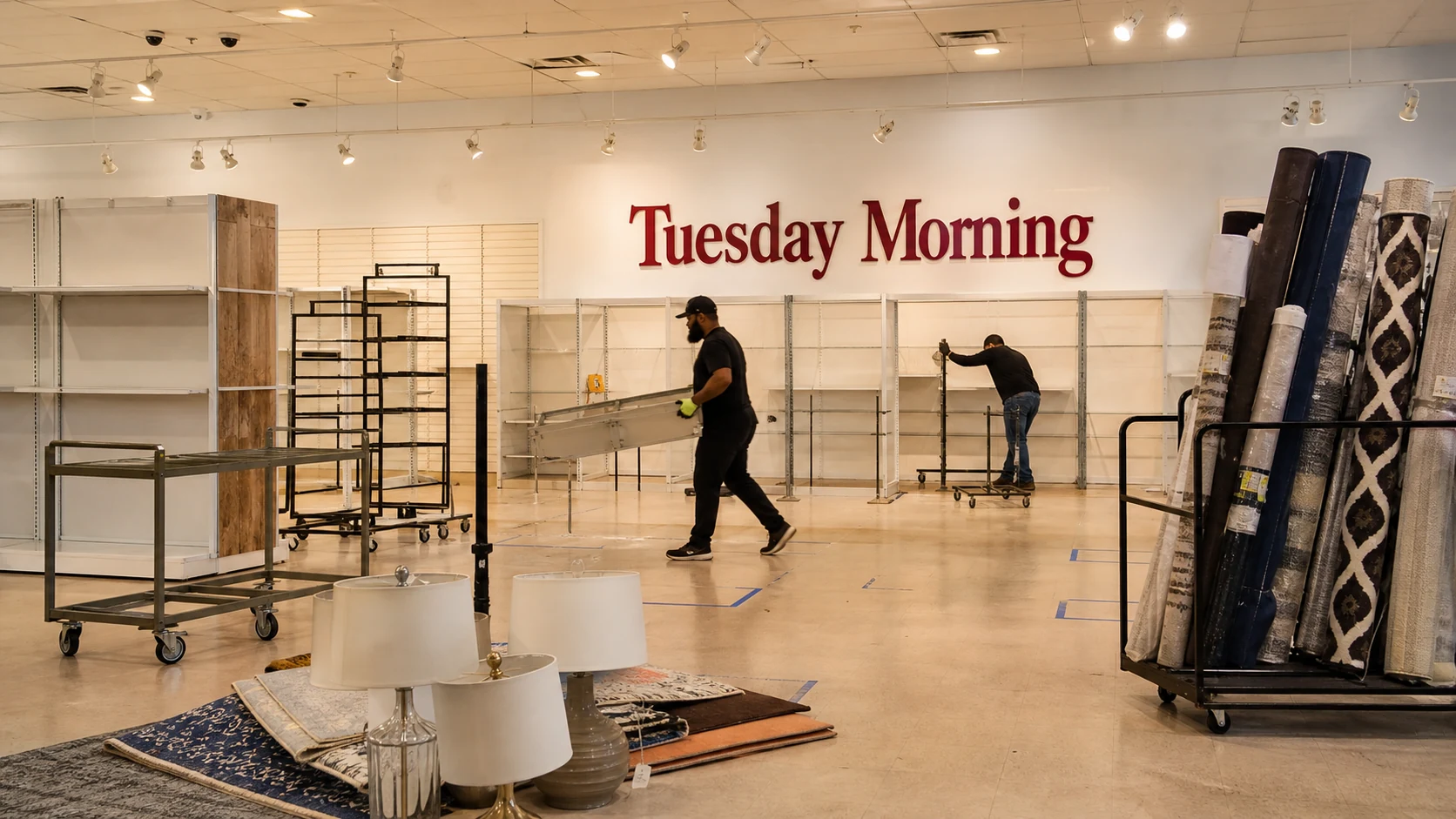
The final touchpoint was an empty store
The brand failed when the physical place could no longer prove the discovery promise.
Product and service system
The name makes bargain shopping feel like a recurring occasion.
Decor, bedding, lamps, and gifts define the store memory.
Liquidity and inventory pressure weaken the trip.
The chain exits while the name remains an asset.
Turning points.
The collapse was not a brand-name failure. It was a store-system failure under the weight of inventory and liquidity.
Why it failed
Repeated restructurings, liquidity pressure, weak store economics, and inventory-sourcing strain undermined the off-price home-goods model.
The operator tried to reorganize around a smaller, healthier store base, but vendor, inventory, and cash needs kept outrunning the reset.
The February 2023 Chapter 11 process moved toward liquidation when the company could not finance a sustainable going-concern path.
Failure timeline
Tuesday Morning begins as an off-price retail concept.
Earlier restructuring pressure hits the chain.
Company files Chapter 11 again.
Stores liquidate.
Public reaction.
Customers saw a familiar bargain-home store vanish from local shopping centers.
The Chapter 11 filing began with a large store base that could not be saved intact.
The name retained enough memory for later use after liquidation.
Full timeline.
Tuesday Morning starts as an off-price home-goods retail concept. Source
The chain scales the off-price home treasure-hunt model across shopping centers. Source
Home decor, bedding, lamps, rugs, gifts, and closeout categories define the store memory. Source
Off-price competition and store-experience pressure make inventory freshness harder to prove. Source
Tuesday Morning enters an earlier Chapter 11 restructuring. Source
Tuesday Morning announces voluntary Chapter 11 reorganization. Source
Physical stores move into wind-down and liquidation. Source
Steal / avoid.
- Give a retail trip a memorable occasion name.
- Make product surprise visible, not abstract.
- Say clearly what survived after liquidation.
- Do not let stale inventory destroy a treasure-hunt promise.
- Do not hide a second bankruptcy behind cheerful closeout language.
- Do not invent missing logo stages.
Short answer.
Tuesday Morning's former retail business entered Chapter 11 in 2020 and again in 2023. The later process included a separate sale process for the brand's intellectual property. A surviving Tuesday Morning name should therefore be distinguished from the old chain's stores, operating company and financial history.
Frequently asked questions
Did Tuesday Morning file bankruptcy more than once?
Yes. Tuesday Morning announced a Chapter 11 filing in May 2020 and another in February 2023. These were separate restructuring attempts, so a story about the 2020 filing does not describe the final outcome of the later store business. Dates matter when tracing what happened to the retailer.
How can the Tuesday Morning name survive after stores close?
A retailer's name and other intellectual property can be sold separately from its store operations. In May 2023, Hilco Streambank sought offers for Tuesday Morning's brand assets during the company's bankruptcy process. Continued use of the name therefore does not by itself show that the former chain's stores reopened or that the same operating company survived.
Why did Tuesday Morning fail?
The chain could not stabilize liquidity, inventory freshness, store economics, and vendor support enough to make the off-price home-goods trip work.
Need help with your own brand?
Use Private brand work when your name, identity, proof, or message needs a sharper branding decision.
