TWG Tea · Grow Your Brand · Luxury Ritual System · Singapore / Active
TWG Tea
TWG Tea turns tea selection, gold packaging, and salon ritual into a luxury institution. A TWG Tea brand page on Singapore origin, more than 1,000 teas, gold tins, tea salons, gifting, gastronomy, private ownership, and the difference between a date cue and a founding date.
Positioning, name, and architecture.
Three evidence checks before the page talks about scale, color, or public reaction.
TWG Tea combines a vast tea library with gold packaging, salon service, accessories, and tea-infused gastronomy.
TWG Tea positions tea as a curated luxury world: collection, object, room, service, and meal reinforce one another.
TWG stands for The Wellbeing Group. V3 says Taha Bouqdib co-founded the brand in 2007, while TWG Tea and V3 date the company and first Singapore salon launch to 2008. The 1837 device is a trade-history cue, not the founding year.
The finest teas of the world
masterbrand with retail, hospitality, and product extensions
Bacha Coffee is a sibling V3 brand, not part of the TWG Tea architecture.
Makes depth and sourcing tangible.
product family: More than 1,000 teas source
Turns the product into hospitality.
service line: Tea service and gastronomy source
Makes the collection and gifting system physically browsable.
retail format: Salon and boutique network source
Carries assortment, ritual, and presentation beyond the salon.
product format: Tea Taster Collection source
Naming and tagline progression
TWG Tea establishes a Singapore luxury-tea identity.
The finest teas of the world frames breadth as curation.
Market and scale snapshot.
TWG Tea is private, so revenue, earnings, and valuation are not presented as if they were public-company disclosures.
TWG Tea is privately held; no reliable current standalone revenue figure was found in official sources.
No current standalone profit or adjusted-earnings figure is published by the company.
TWG Tea says its products are available in more than 40 countries; this is operating scale, not valuation.
V3 Gourmet is the direct parent; V3 Group is the wider Singapore-based group.
Color system.
Gold works because it appears on tins, shelves, menus, tableware, and the mark, rather than as an isolated luxury claim.
How the palette behaves
Gold signals gifting and ceremony.
Black gives the gold system contrast and seriousness.
Cream keeps dense product displays warm rather than clinical.
Recognition assets.
Memory pieces the brand can use before someone finishes a sentence.
The date anchors Singapore tea-trade memory but must not be described as the founding year.
Repetition turns a large assortment into a recognizable environment.
Menus, pots, cups, and table service prove the luxury promise.
The box and tin make tea suitable for display and ceremony.
Scores.
Use these scores to compare recognition, trust, proof, pressure, and risk.
Gold tins and the 1837 lockup are immediate.
Collection depth and salon service support the claim.
Retail, packaging, and hospitality share one code.
Luxury depends on staff and ritual quality.
The 1837 cue and private ownership need careful explanation.
Range and presentation create specialist authority.
Gold, black, and display density repeat clearly.
Date confusion is fixable through precise copy.
How the logo changed.
Dated marks show which recognition cues changed, which survived, and what buyers had to relearn.
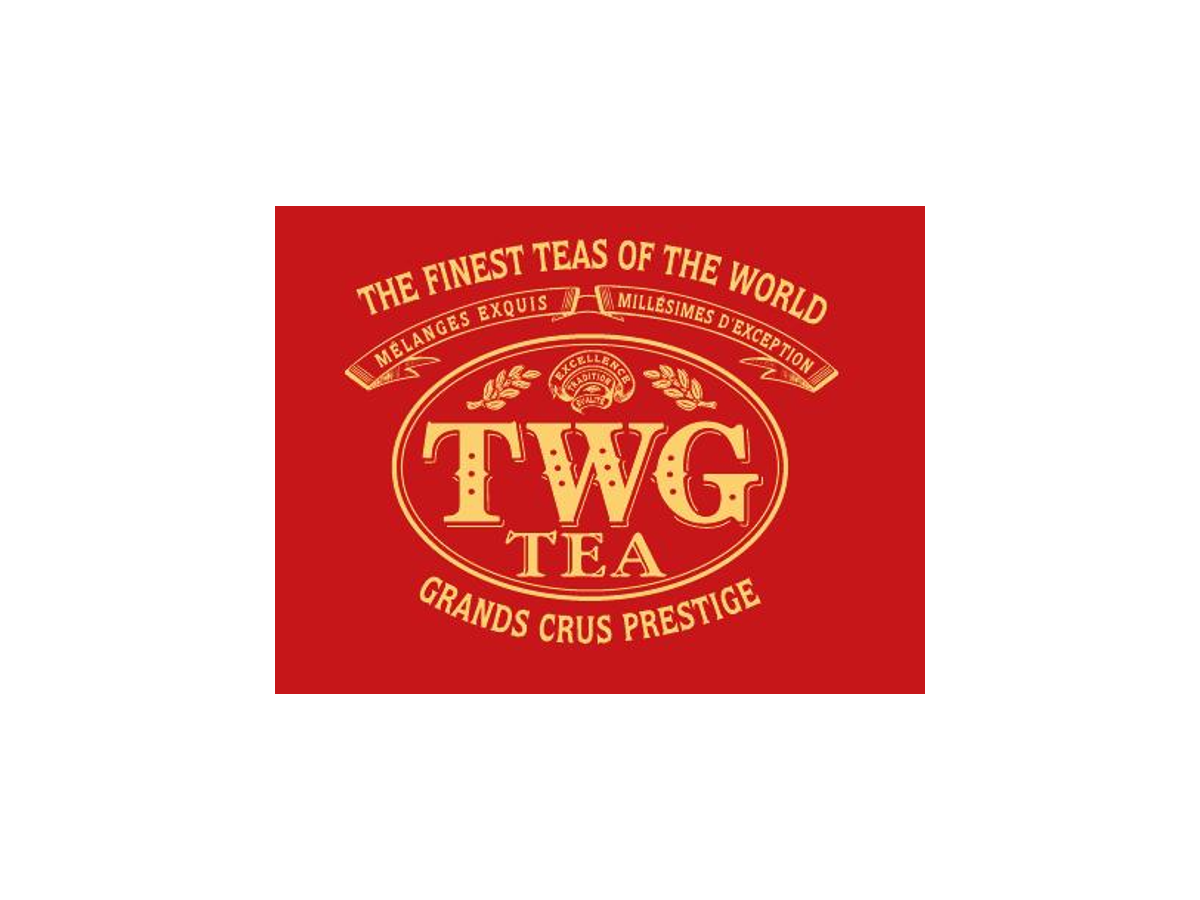
The government record dates the full prestige lockup; this canvas uses a clean official brochure reproduction of the same lockup so the recorded design remains legible. source
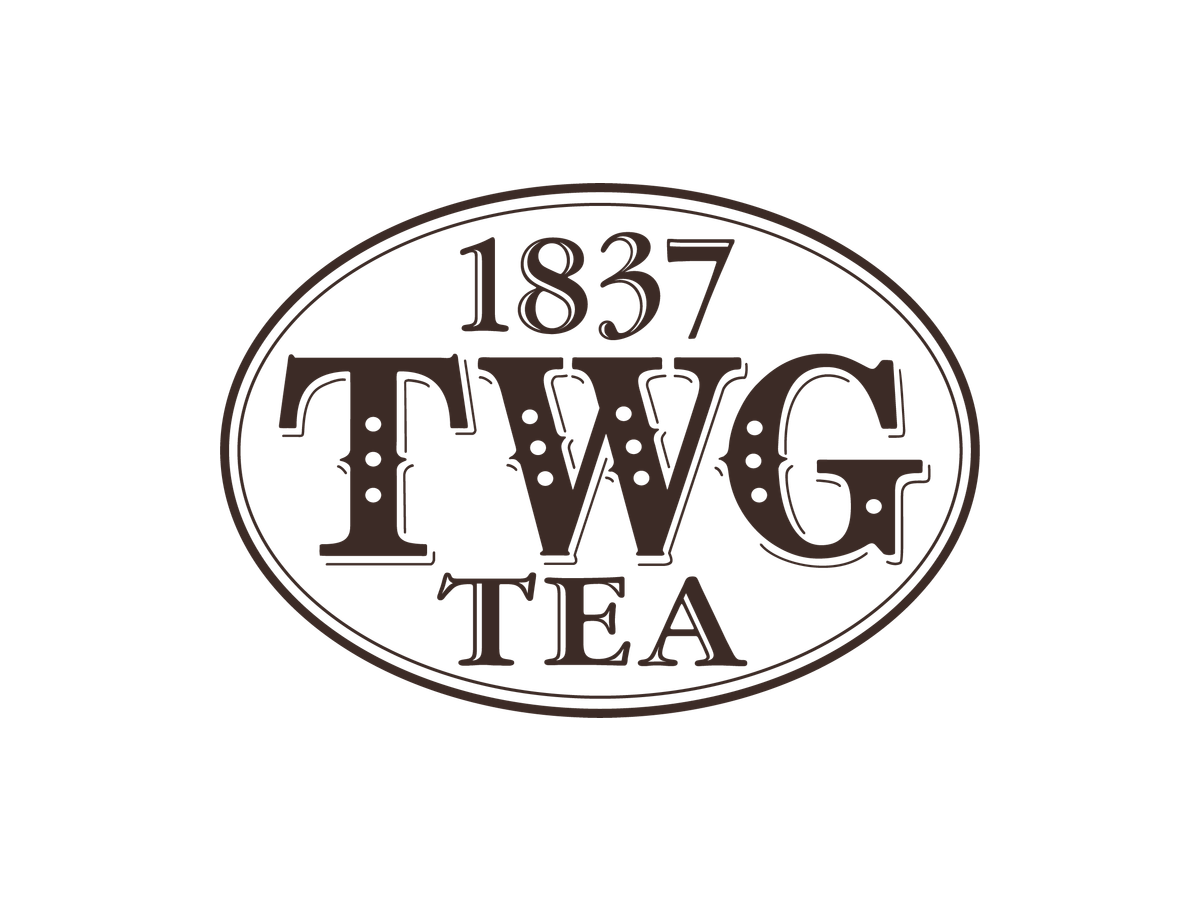
The current official digital application retains the 1837 oval and TWG Tea lettering. It demonstrates continuity, not a verified redesign. source
Product and service lineage.
Each extension solves a different growth problem: create a destination, export the service, widen the occasion, or simplify trial.
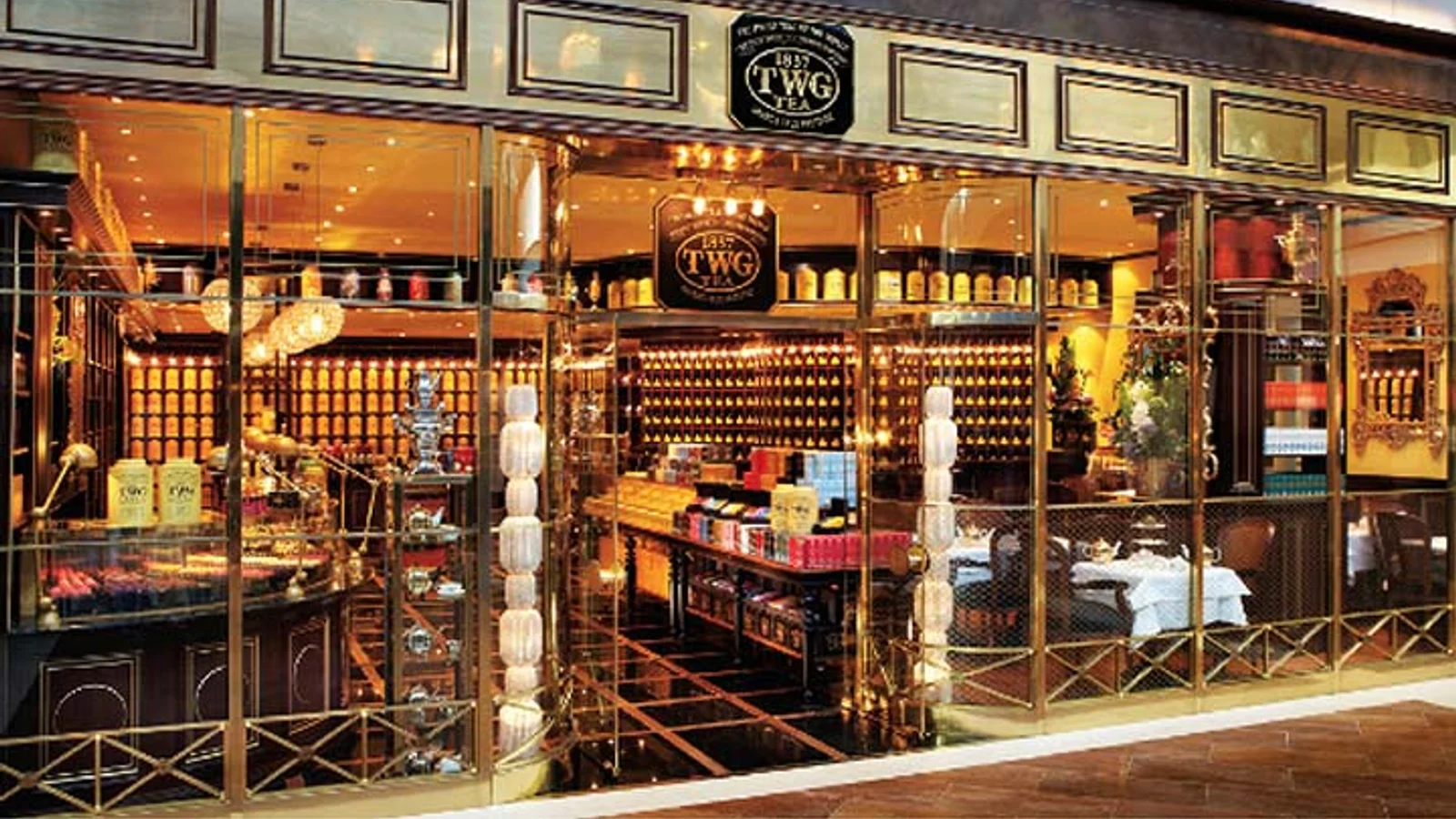
2008 / salon launch
The first Singapore salon joined product retail with a seated hospitality occasion.
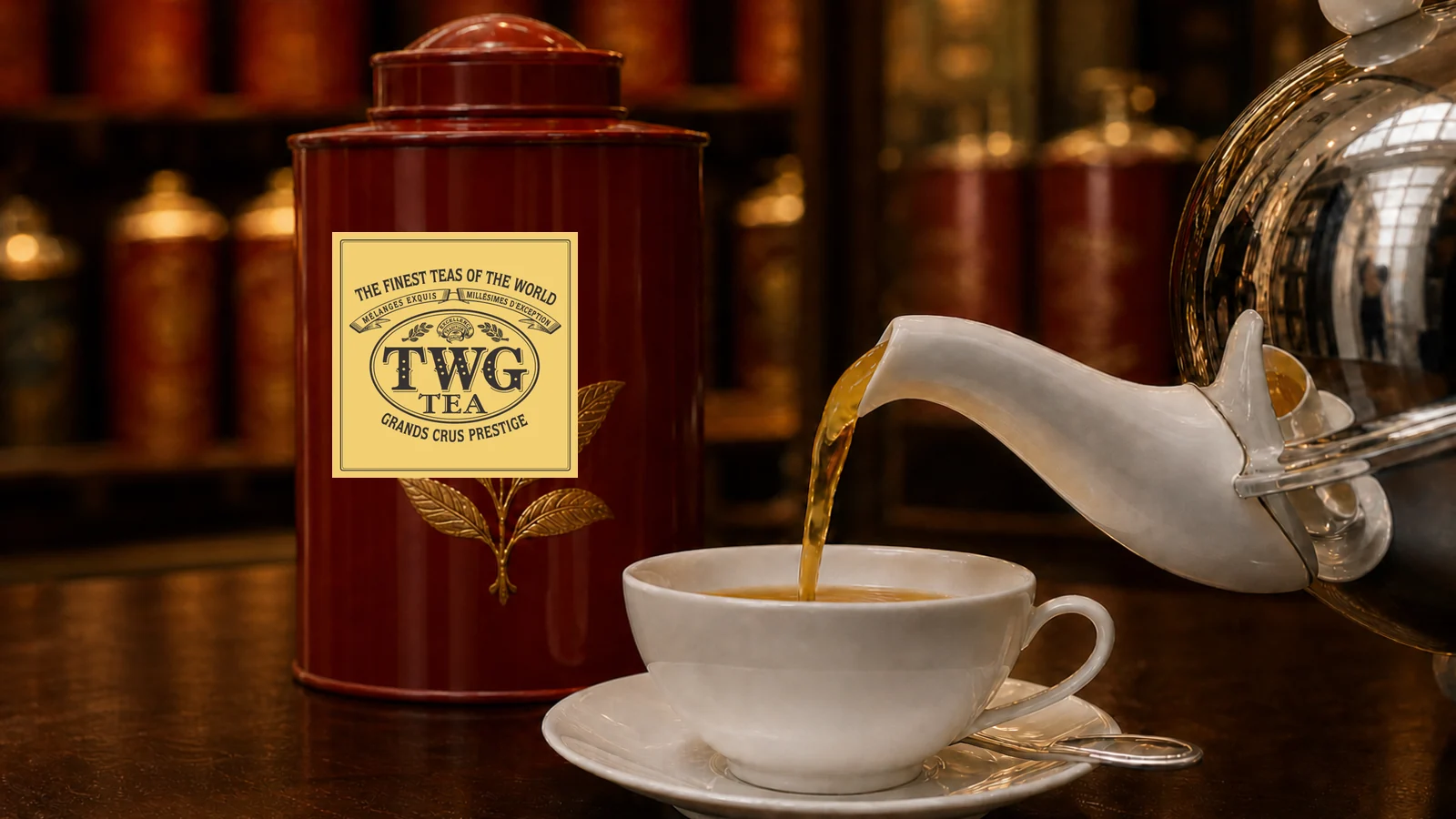
2010 / international service
Tokyo tested whether the Singapore service sequence could travel to a new market.
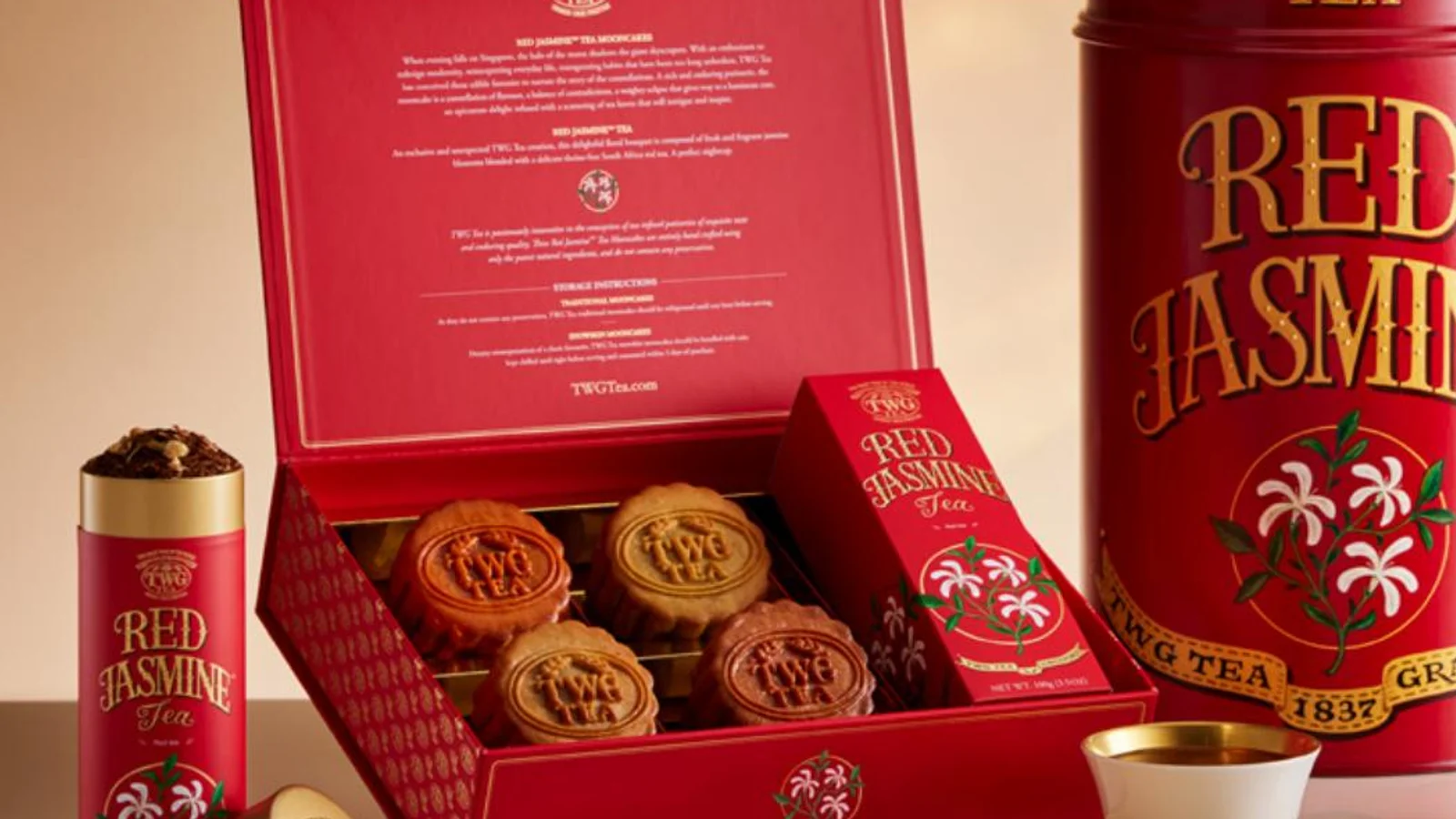
Gastronomy extension
Tea-infused patisserie turns the collection into a meal and seasonal gifting occasion.
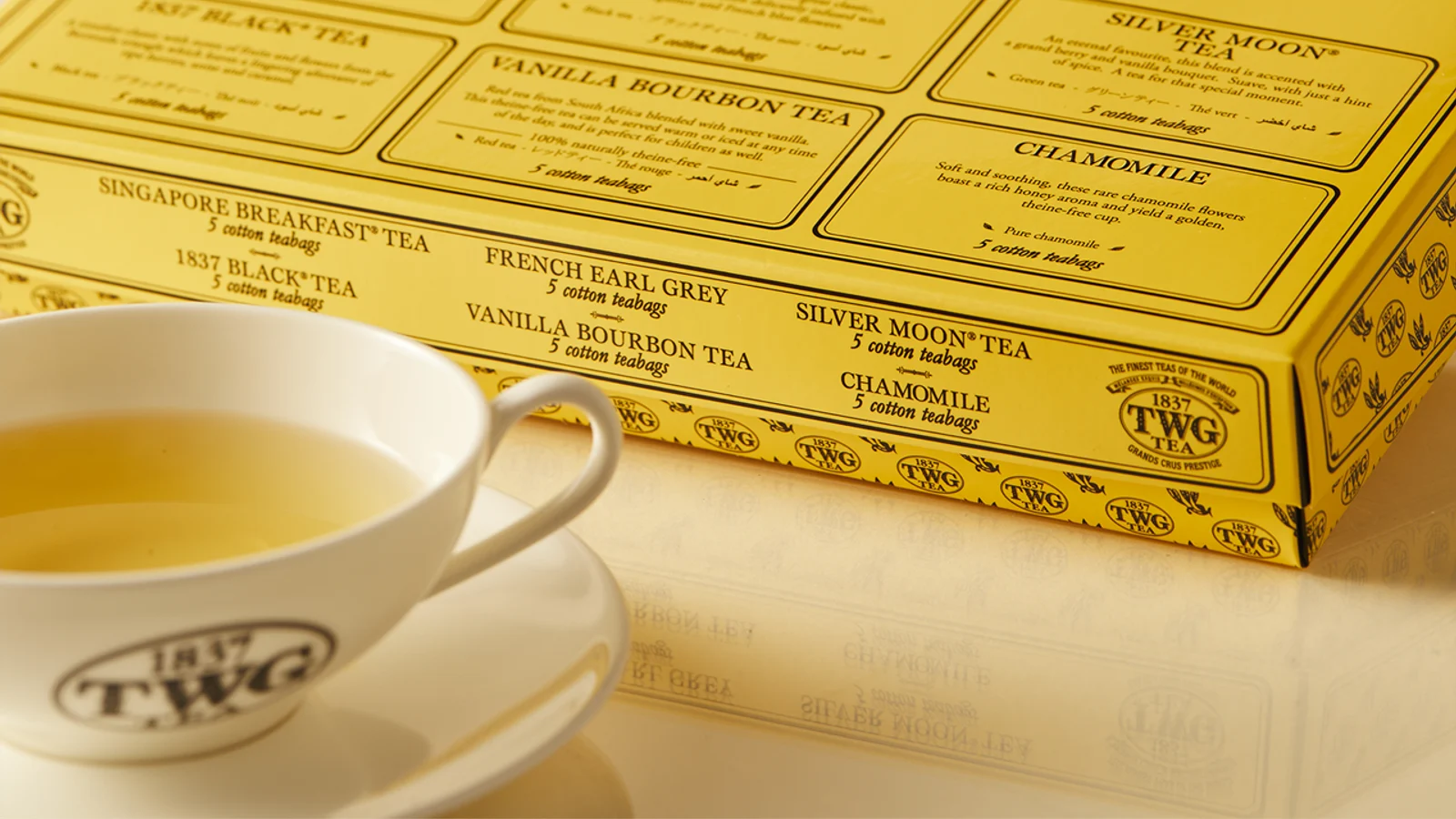
Packaged collection
Taster boxes reduce a large assortment into a portable trial and gift format.
Product and service system
Retail and seated service create a destination around the collection.
The service format becomes an exportable operating model.
Patisserie and meals widen tea from beverage to dining occasion.
Taster boxes make assortment easier to sample, carry, and give.
Turning points.
Turning points that changed reach without changing the central luxury-tea system.
The first TWG Tea Salon & Boutique opens at Republic Plaza.
The first international location takes the Singapore system abroad.
The brand reports availability in more than 40 countries.
Public reaction.
T Singapore praised the brand's local rise while calling the 1837 date cue deceptive because TWG Tea was founded much later. The tension is a useful lesson in historical signaling.
Store, tin, menu, pot, and plate make the brand feel immersive.
The 1837 cue loses trust if readers mistake it for the 2008 company founding.
Full timeline.
TWG Tea launches its first salon and boutique.
International expansion begins in Tokyo.
A TWG Tea trademark specimen appears in the Macao government gazette.
TWG Tea enters mainland China.
Seasonal tea gastronomy remains visible in the Mooncake Collection.
TWG Tea reports availability in more than 40 countries.
Steal / avoid.
- Turn assortment depth into an environment, not a list.
- Let packaging and service repeat the same recognition code.
- Explain historical cues precisely before they create distrust.
- Do not present 1837 as the founding year.
- Do not treat a sibling brand as a sub-brand.
- Do not invent private-company revenue or valuation.
Short answer.
TWG Tea is a Singapore luxury tea brand developed from 2007 and launched with its first salon in 2008. Its system combines a vast tea collection, gold packaging, boutiques, salons, gifting, and gastronomy. The 1837 mark refers to Singapore tea-trade history, not the company founding year.
Frequently asked questions
When was TWG Tea founded?
V3 says Taha Bouqdib co-founded the brand in 2007. TWG Tea and V3 date the company and first Singapore salon launch to 2008. The 1837 device is a trade-history reference, not the founding year.
Who owns TWG Tea?
TWG Tea is part of V3 Gourmet within V3 Group.
What should another brand steal?
Make the full buying environment prove the positioning, from shelf and packaging to service ritual.
Need help with your own brand?
Use Private brand work when your name, identity, proof, or message needs a sharper branding decision.