Uber · Grow Your Brand · On-Demand Movement Standard · United States / Active / public company
Uber
UberX, UberXL and Uber One: what the names mean. Uber's U.S. ride categories distinguish four-rider UberX from six-rider UberXL. Uber One is a membership across eligible rides and Uber Eats orders. The names identify different services within the same platform.
Positioning, name, and architecture.
Three evidence checks before the page talks about scale, color, or public reaction.
Turn a fragmented service into one predictable sequence: request, locate, verify, move, pay, and review.
Uber's brand signal is local movement made visible and accountable. Request, live location, ETA, identity checks, cashless payment, and ratings turned a fragmented curbside service into a repeatable platform routine.
Uber is the controlled public masterbrand used on this card.
Local movement made visible and accountable
Platform masterbrand with Mobility, Delivery, and Freight reportable segments; Uber Eats and Uber Freight service brands; Uber One as a cross-platform membership layer.
Platform masterbrand with Mobility, Delivery, and Freight reportable segments; Uber Eats and Uber Freight service brands; Uber One as a cross-platform membership layer.
Local movement made visible and accountable
Masterbrand: On-Demand Movement Standard source
Delivery extends the platform from curbside movement into merchant, courier, and customer coordination.
Operating proof: Uber source
Luggage, pickup zones, eye contact, and vehicle checks show where platform certainty meets a complicated physical place.
Portfolio proof: Uber source
Autonomous partners can change the car while Uber tries to remain the demand, routing and customer layer; a robotaxi plan that could cost as much as USD 10B over the next few years if partners hit milestones puts capital behind that thesis.
Service proof: Uber source
Naming and tagline progression
The UberCab prototype begins testing a phone-based black-car request.
The service launches in San Francisco.
Uber introduces the bits-and-atoms identity system.
Market and scale snapshot.
Uber's Q2 2026 results show the network at record scale while a robotaxi plan that could cost as much as USD 10B over the next few years, if partners hit milestones, moves the company toward a more capital-intensive operating model.
Q2 2026 revenue increased 12% year over year.
Q2 2026 net income included about USD 1.6B of gains on equity investments.
Approximate equity market capitalization observed 10 Aug 2026.
Independent public platform company.
Color system.
Uber's palette works when color remains tied to recognition and use, not decoration.
How the palette behaves
#000000 carries the dominant recognition signal.
#FFFFFF creates contrast and hierarchy.
#06C167 expands the system without weakening the primary cue.
#276EF1 grounds the operating proof.
Recognition assets.
Memory pieces the brand can use before someone finishes a sentence.
Local movement made visible and accountable
Turn a fragmented service into one predictable sequence: request, locate, verify, move, pay, and review.
Convenience loses trust when worker status, pricing, safety, cancellation, or membership practices feel less visible than the ride itself.
Scores.
Use these scores to compare recognition, trust, proof, pressure, and risk.
The Uber wordmark plus map pin, ETA, vehicle identity, and pickup sequence form a recognizable movement routine without a fixed fleet.
Live location, driver details, cashless payment, and ratings make the service legible, while surge pricing and safety exceptions complicate the proof.
Request, match, arrival, ride, payment, review, and support expose most of the marketplace sequence directly to riders and drivers.
Mobility, Delivery, Freight, Uber Eats, and Uber One are understandable, but partner autonomy and cross-platform membership add overlap.
Worker classification, pay, safety, pricing, cancellations, and membership practices remain active jurisdiction-specific trust tests.
Convenience language becomes risky when fees, price changes, cancellation rules, or subscription renewal are less visible than the initial request.
Uber Technologies is the public platform company; services, local operators, and autonomous-vehicle partners still require explicit responsibility lines.
Refunds, safety tools, support, rerouting, and ratings make incident recovery visible, while labor and regulatory repair moves more slowly.
How the logo changed.
Three source-backed identity stages show how the Uber masterbrand changed over time.

The condensed uppercase wordmark carried a premium black-car posture as the service expanded.

The geometric identity tried to connect local city patterns with a global technology platform. source
The simplified wordmark made the name do the recognition work across Mobility, Delivery, Freight, and partnerships. source
Product and service lineage.
The useful progression is not cosmetic. It shows how Uber's recognition system changed as the operating system grew.
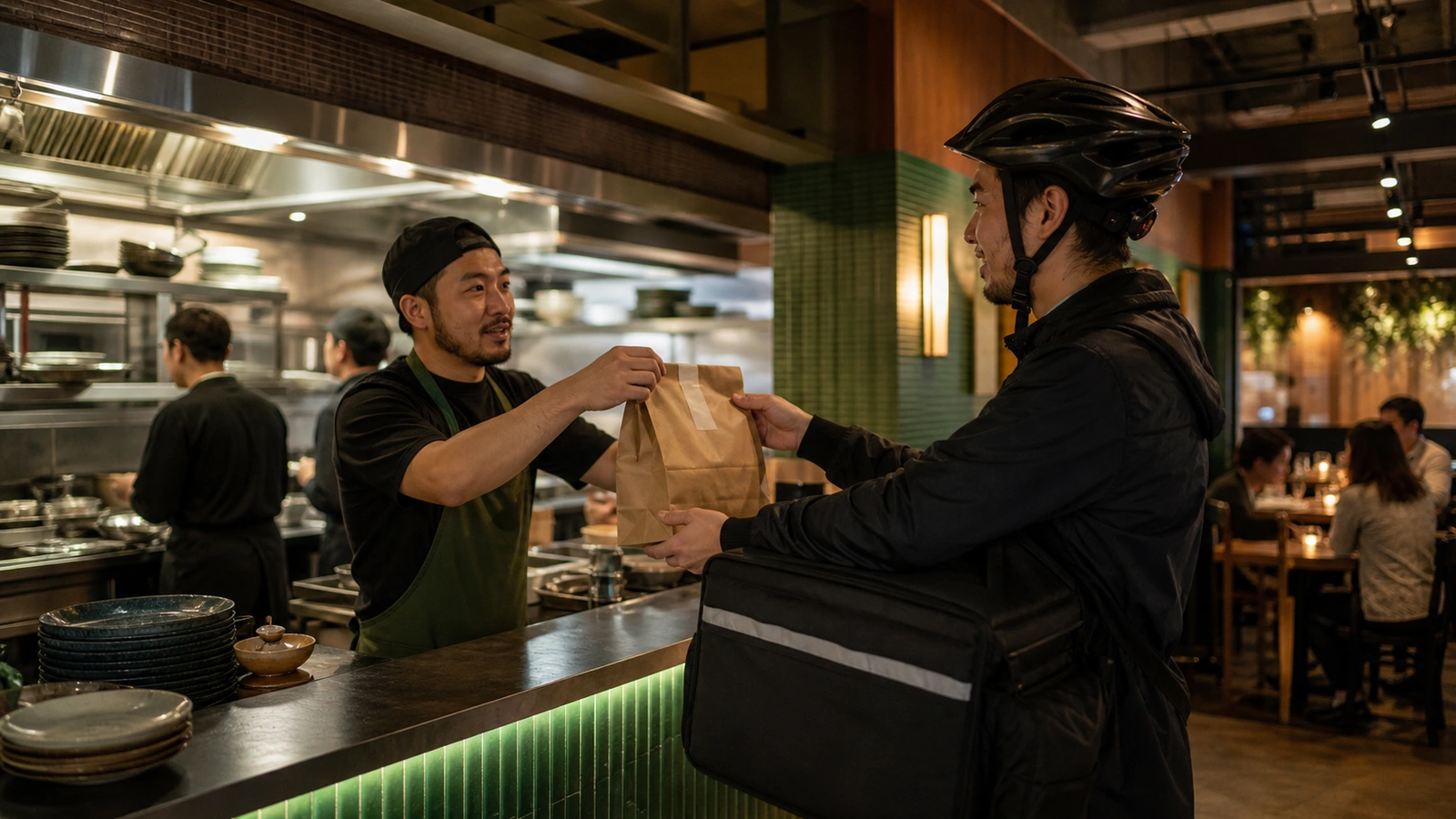
Restaurant handoff
Delivery extends the platform from curbside movement into merchant, courier, and customer coordination.
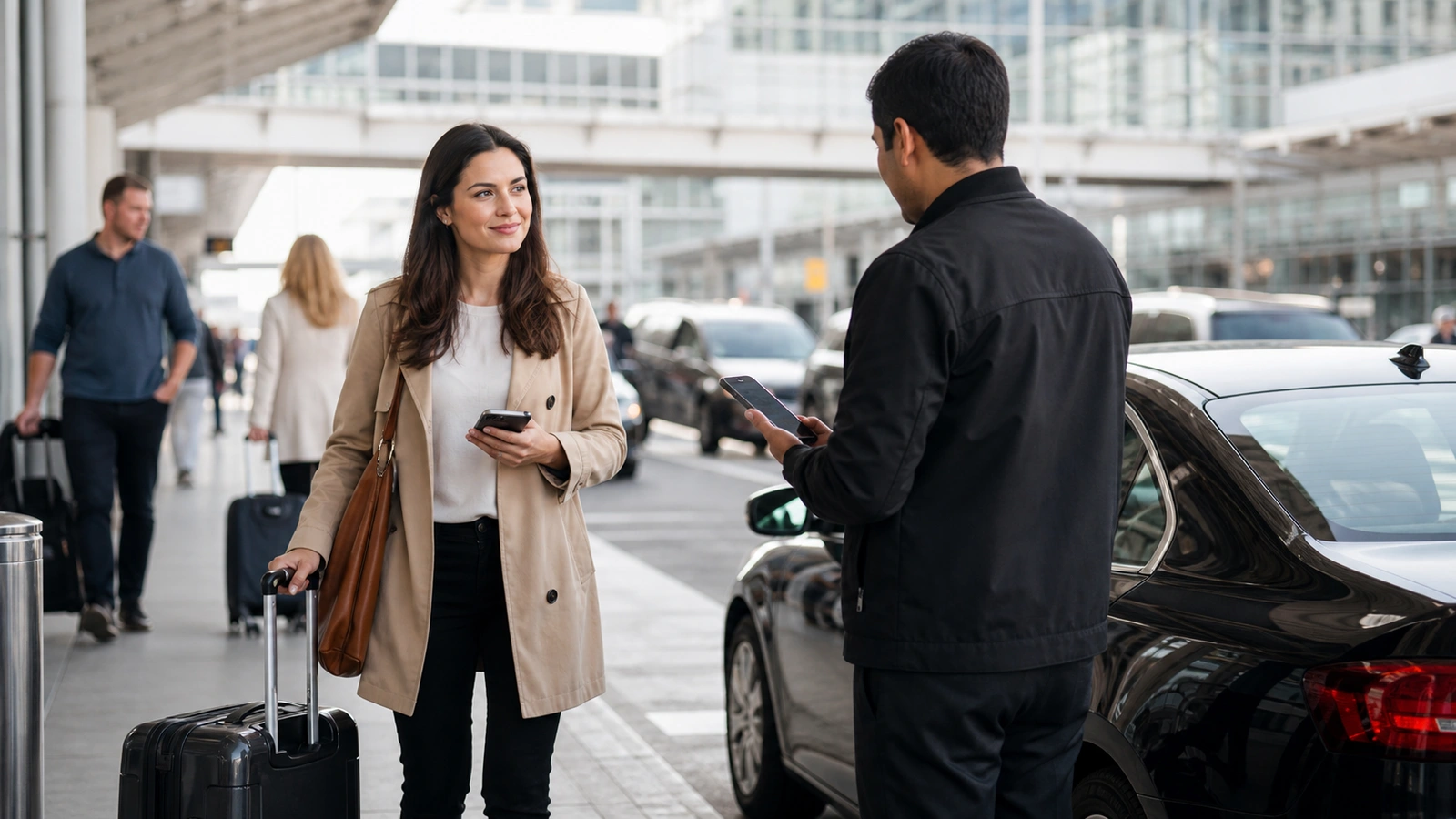
Airport verification
Luggage, pickup zones, eye contact, and vehicle checks show where platform certainty meets a complicated physical place.
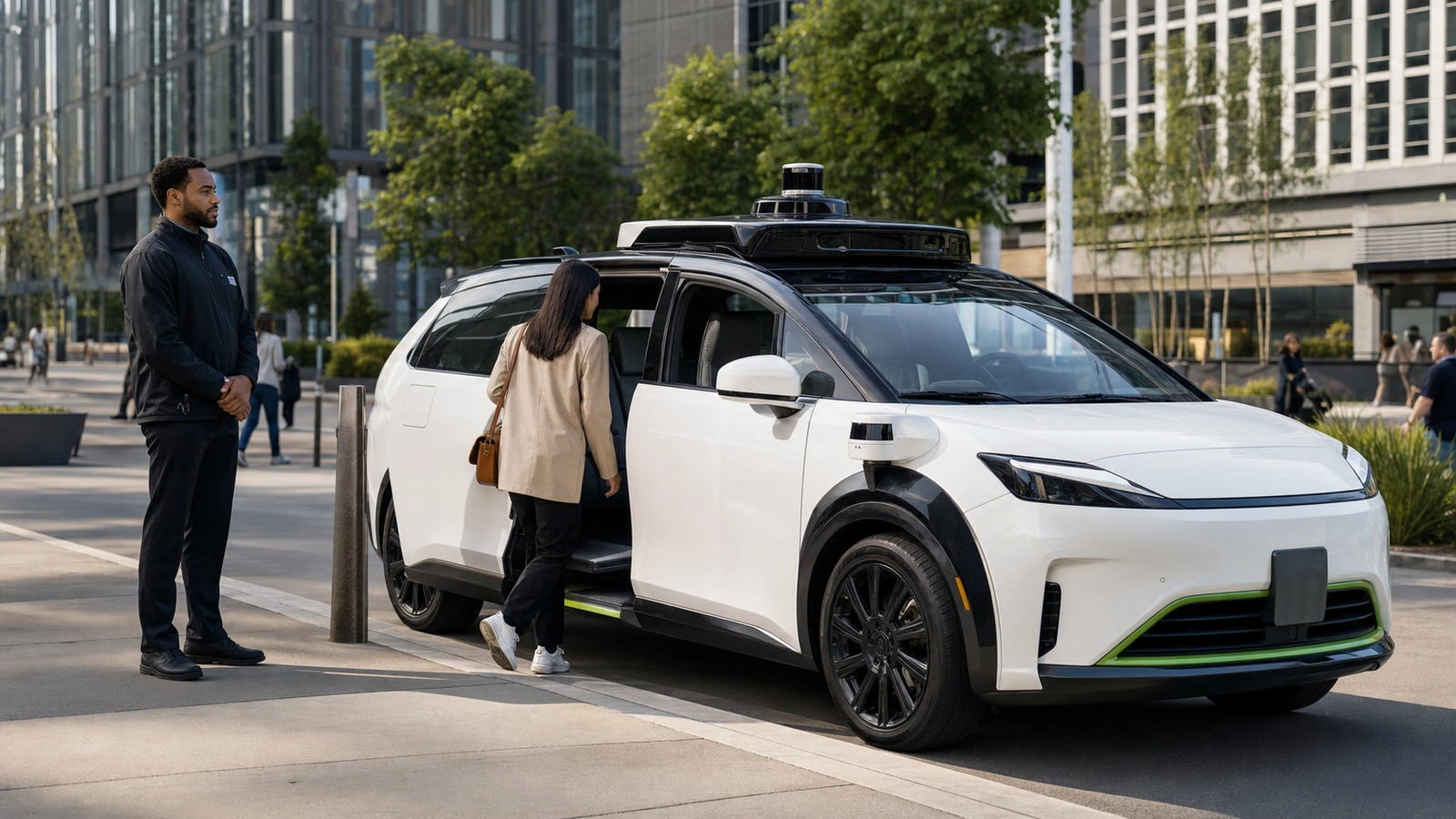
Network before vehicle
Autonomous partners can change the car while Uber tries to remain the demand, routing, and customer layer.
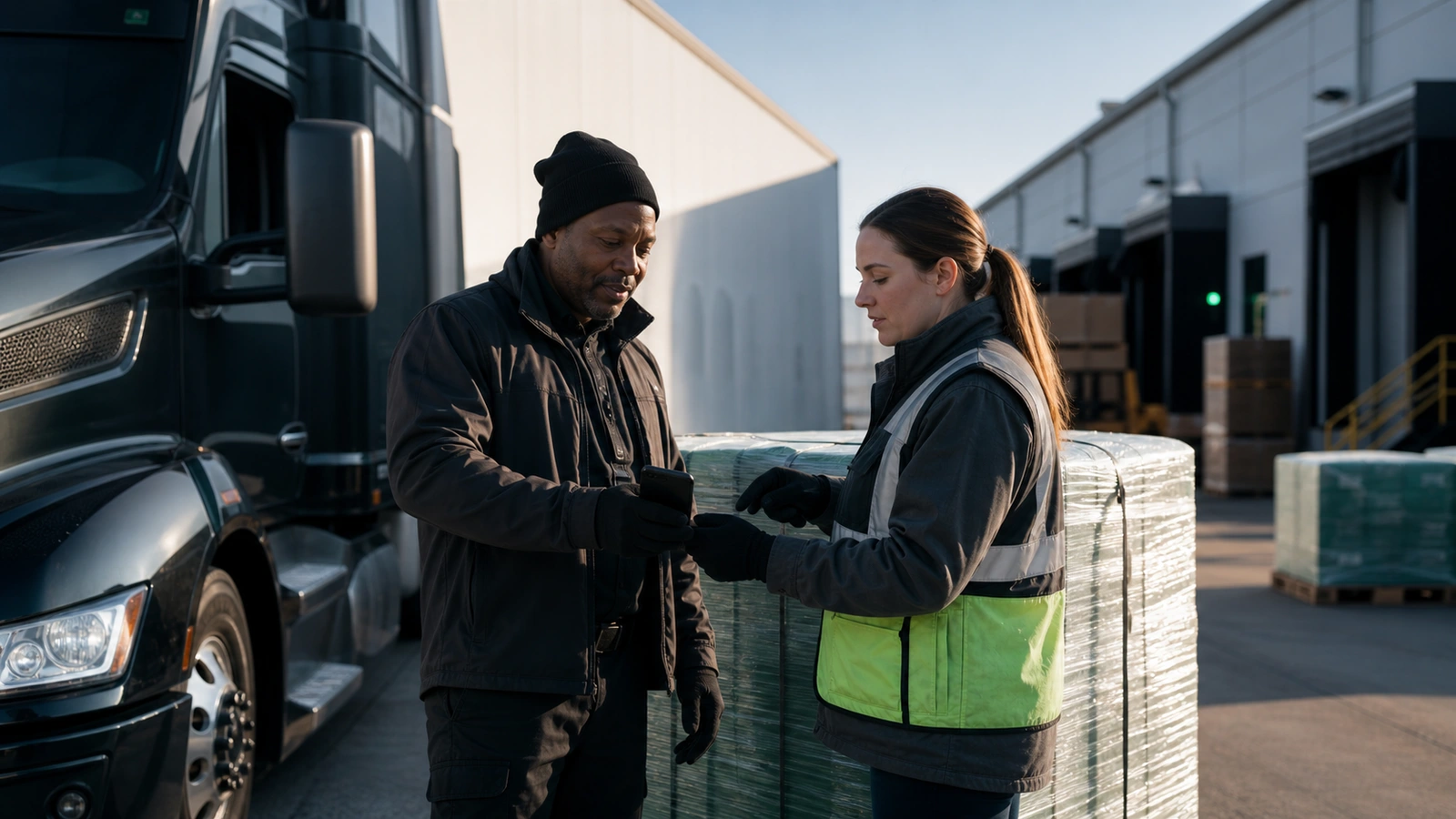
Freight handoff
Uber Freight extends marketplace coordination into docks, drivers, pallets, and shipper accountability.
Product and service system
The UberCab prototype begins testing a phone-based black-car request.
The service launches in San Francisco.
Uber introduces the bits-and-atoms identity system.
Leadership and culture changes reset the public-company path and operating narrative.
A simplified Uber Move wordmark replaces the 2016 system.
Uber reports USD 193.454 billion in Gross Bookings across 13.567 billion trips.
Gross Bookings reach USD 58.02B as robotaxi partners, fleet procurement and depot infrastructure become part of the operating system.
Turning points.
Turning points that changed how Uber is recognized, used, or judged.
Uber introduces the bits-and-atoms identity system.
Leadership and culture changes reset the public-company path and operating narrative.
A simplified Uber Move wordmark replaces the 2016 system.
Uber reports USD 193.454 billion in Gross Bookings across 13.567 billion trips.
Gross Bookings reach USD 58.02B as Uber advances a robotaxi plan that could cost as much as USD 10B over the next few years if partners hit milestones.
Public reaction.
Recognition creates memory; delivery quality decides whether the memory becomes trust.
Live location, ETA, cashless payment, and ratings reset what riders expect from local transport.
Driver classification, pay, safety, pricing, and Uber One practices remain jurisdiction-specific pressure points.
Full timeline.
The UberCab prototype begins testing a phone-based black-car request. Source
The service launches in San Francisco. Source
Uber introduces the bits-and-atoms identity system. Source
Leadership and culture changes reset the public-company path and operating narrative. Source
A simplified Uber Move wordmark replaces the 2016 system. Source
Uber reports USD 193.454 billion in Gross Bookings across 13.567 billion trips. Source
Steal / avoid.
- Turn a fragmented service into one predictable sequence: request, locate, verify, move, pay, and review.
- Make the operating proof visible at the moment of customer risk.
- Keep architecture and naming clear as the portfolio expands.
- Use recognition to reduce decision friction, not to hide service pressure.
- Convenience loses trust when worker status, pricing, safety, cancellation, or membership practices feel less visible than the ride itself.
- Do not copy the palette without the behavior that makes it meaningful.
- Do not confuse a product or subsidiary mark with the masterbrand progression.
- Do not let a scale claim replace proof at the customer handoff.
Short answer.
Uber uses related names for different services: UberX is a ride option for up to four riders in the U.S., UberXL serves up to six, and Uber Eats handles delivery. Uber One is a membership across eligible rides and orders. Those product names describe different uses within the same broader platform.
Frequently asked questions
What is the difference between UberX and UberXL?
On Uber's U.S. product pages, UberX accommodates up to four riders and UberXL up to six. XL identifies a larger vehicle category rather than a different company. The options shown for a particular trip depend on the local service, and passenger capacity should not be treated as a guarantee of space for every group's luggage.
Is Uber One the same as Uber Eats?
Uber Eats is the delivery service; Uber One is a paid membership with benefits across eligible Uber rides and Uber Eats orders. A membership is therefore an additional program across the services, not another name for delivery. The qualifying orders, rides and benefits depend on the membership terms in the user's market.
Why did Uber change its logo in 2018?
Uber replaced the 2016 bits-and-atoms identity with a simpler wordmark in 2018. The new look made the Uber name a more consistent identifier across its growing services.
Why can an Uber Reserve ride cost more than an ordinary request?
Uber says a Reserve estimate includes a reservation fee for the driver's additional waiting time and travel to the pickup. The fee varies with the pickup location, day and time. Compare the estimate and terms shown for your trip; reserving ahead does not mean the fare must match an on-demand request made later.
Does Uber Reserve track flight delays for airport pickups?
For the reserved airport-pickup service described in Uber's help page, the driver receives updates if the flight is early or delayed and when it lands. Included waiting time starts after landing, and you use the app to signal when you are ready for pickup. Availability, waiting allowances and cancellation charges depend on the trip and ride type.
Need help with your own brand?
Use Private brand work when your name, identity, proof, or message needs a sharper branding decision.