Vice Media · Grow Your Brand · Vice Media failure case study · United States / Former parent and affiliates liquidated after a Chapter 11 asset sale; successor Vice operations continue
Vice Media
Who owns Vice, and what happened after its bankruptcy? The former Vice parent and 32 affiliates entered Chapter 11 after years of losses, an expensive global video structure, and USD 834 million of funded debt. A roughly USD 350 million credit-bid transaction moved operating assets to a lender-backed successor that still publishes and produces under the Vice name.
Positioning, name, and architecture.
Vice grew by turning outsider access, irreverent voice, and documentary proximity into a media system. The same ambition expanded into expensive global production, acquisitions, and platforms that could not consistently turn cultural attention into resilient economics.
An irreverent insider voice paired with close-range visual reporting
Vice made outsider access commercially visible, but attention and cultural authority did not make its former parent financially durable.
The Montreal publication began as Voice of Montreal before becoming Vice, a shorter word that matched its confrontational editorial posture.
No single current tagline is used as financial proof; active successor publishing and production are the useful evidence.
Successor-owned media portfolio and joint-venture publishing system
The failed operator and any current successor or estate are separate legal and operating boundaries.
Runs current Vice.com editorial and legal surfaces through a successor entity.
successor publishing operation: Vice.com source
Carries documentary and commercial production into the successor structure.
production operation: Vice Studios source
Restores a tangible publishing format linked to the brand's origins.
print and subscription product: Relaunched print magazine source
Operates Vice.com and selected verticals through a lower-overhead partnership.
digital joint venture: Vice.com, Munchies, Motherboard, and Noisey source
Naming and tagline progression
Voice of Montreal begins as an alternative publication
Vice becomes the concise masterbrand
The same name continues under successor ownership
Market and scale snapshot.
Vice was private, so the safest scale view mixes reported FY2022 revenue with primary bankruptcy evidence: approximately USD 600 million of reported revenue, years of operating losses, and USD 834 million of petition-date funded debt.
Axios figure based on people familiar with the private company's finances; not an audited public filing.
The bankruptcy declaration says Vice operated at a loss for several years; no safe consolidated loss amount is published here.
Primary first-day declaration figure.
Current official Vice materials identify the lender-backed ownership group.
Color system.
Black, white, and red turned inexpensive print and video surfaces into a consistent editorial attitude. That identity traveled well; the expensive production and financing system behind it did not.
How the palette behaves
Black: underground authority. Masthead and studio surfaces.
Red: urgency and confrontation. Editorial accents and production lighting.
White: high-contrast portability. The current mark across digital and video.
Recognition assets.
The graffiti masthead, black-red-white palette, first-person documentary camera, provocative headlines, and underground-print texture made Vice instantly legible. Those cues were portable enough to survive a change in owner and operating structure.
The inflated wordmark made the publisher feel authored before a headline was read.
Vice framed reporting as access from inside a scene rather than commentary from outside it.
Documentary proximity converted editorial attitude into a visible production method.
Scores.
Vice still owns a recognizable editorial posture and mark. Its weaker scores reflect trust, financial resilience, and the gap between attention and durable monetization.
The graffiti mark and editorial posture remain distinctive.
Editorial access retained value, while layoffs, bankruptcy, and ownership change weakened continuity.
High production ambition was visible but financially inconsistent.
The voice and mark can operate through a smaller publishing and studio structure.
The mark and voice stayed powerful, but cultural attention did not provide enough recurring economic proof for the former parent's global structure.
Vice was private, so the safest scale view mixes reported FY2022 revenue with primary bankruptcy evidence: approximately USD 600 million of reported revenue, years of operating losses, and USD 834 million of petition-date funded debt.
Chapter 11 going-concern asset and equity sale followed by liquidation of the old debtor estates
Vice Acquisition Holdco acquired substantially all operating assets; current Vice publishing and studio activity runs through successor entities and a digital joint venture
How the logo changed.
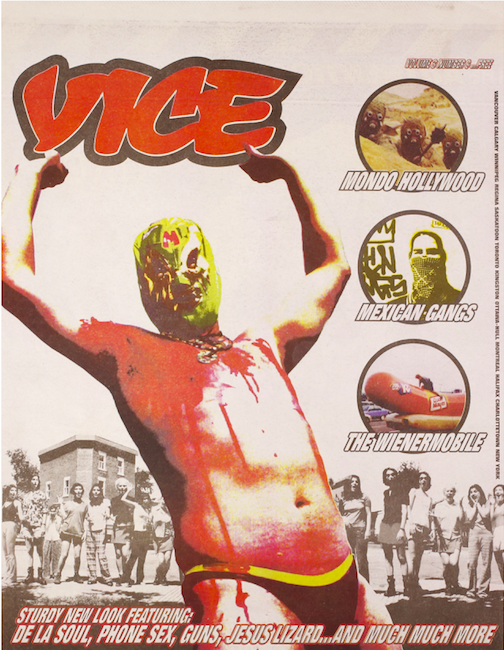
The masthead moved from a heavy red shadowed block, to a thin outline, to the inflated graffiti drawing that became portable across magazine, web, video, and studio surfaces.
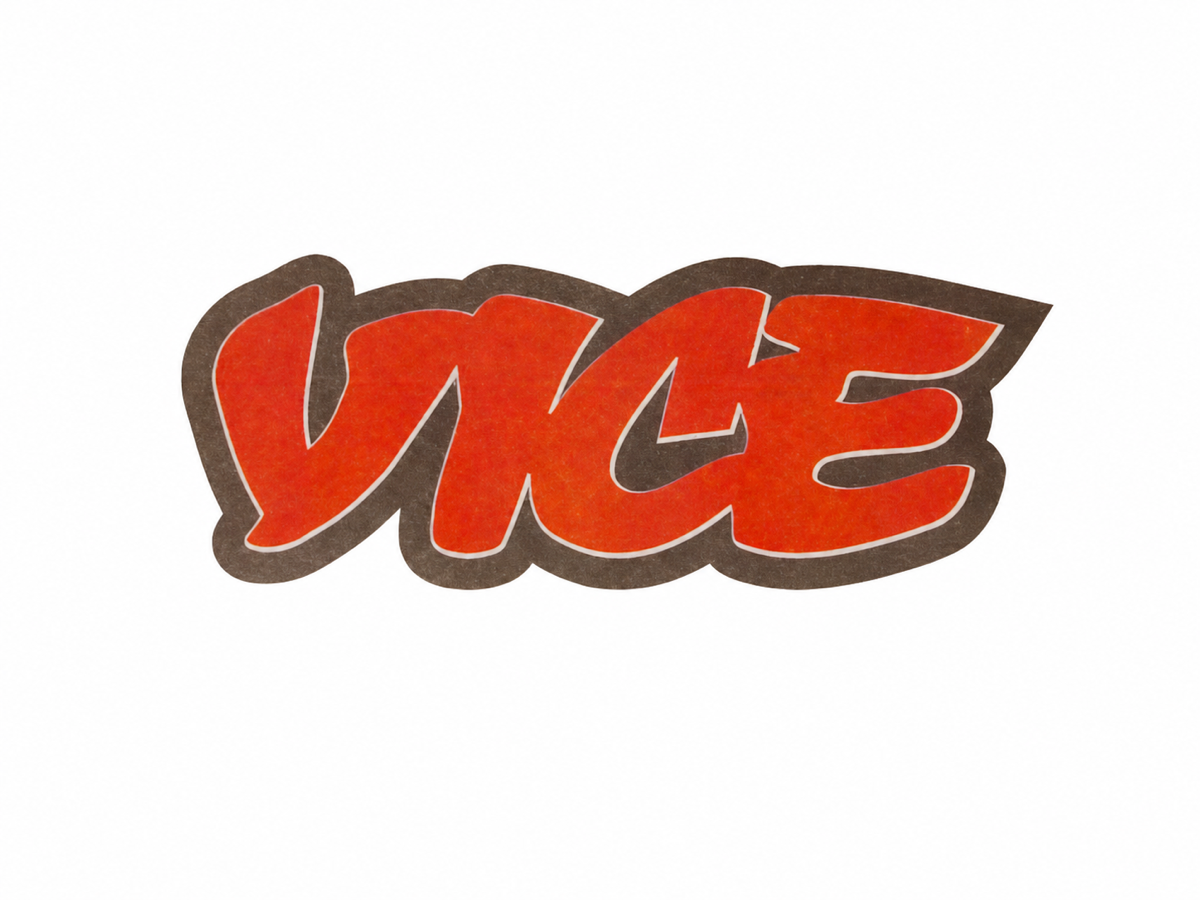
The first Vice issue used a heavy red wordmark with a dark shadow and an abrasive photocopy feel. source
The outlined masthead became lighter and cleaner while retaining the slanted Vice letterforms. source

The inflated graffiti wordmark became the enduring identity and remains deployed by the successor publisher. source

Product and service lineage.
Vice's core product was a way of seeing. The bankruptcy came from the system financing and distributing that point of view, not from the disappearance of the voice itself.

The print system made attitude tangible
Low-cost materials, photography, and a hard editorial point of view created recognition before global scale.
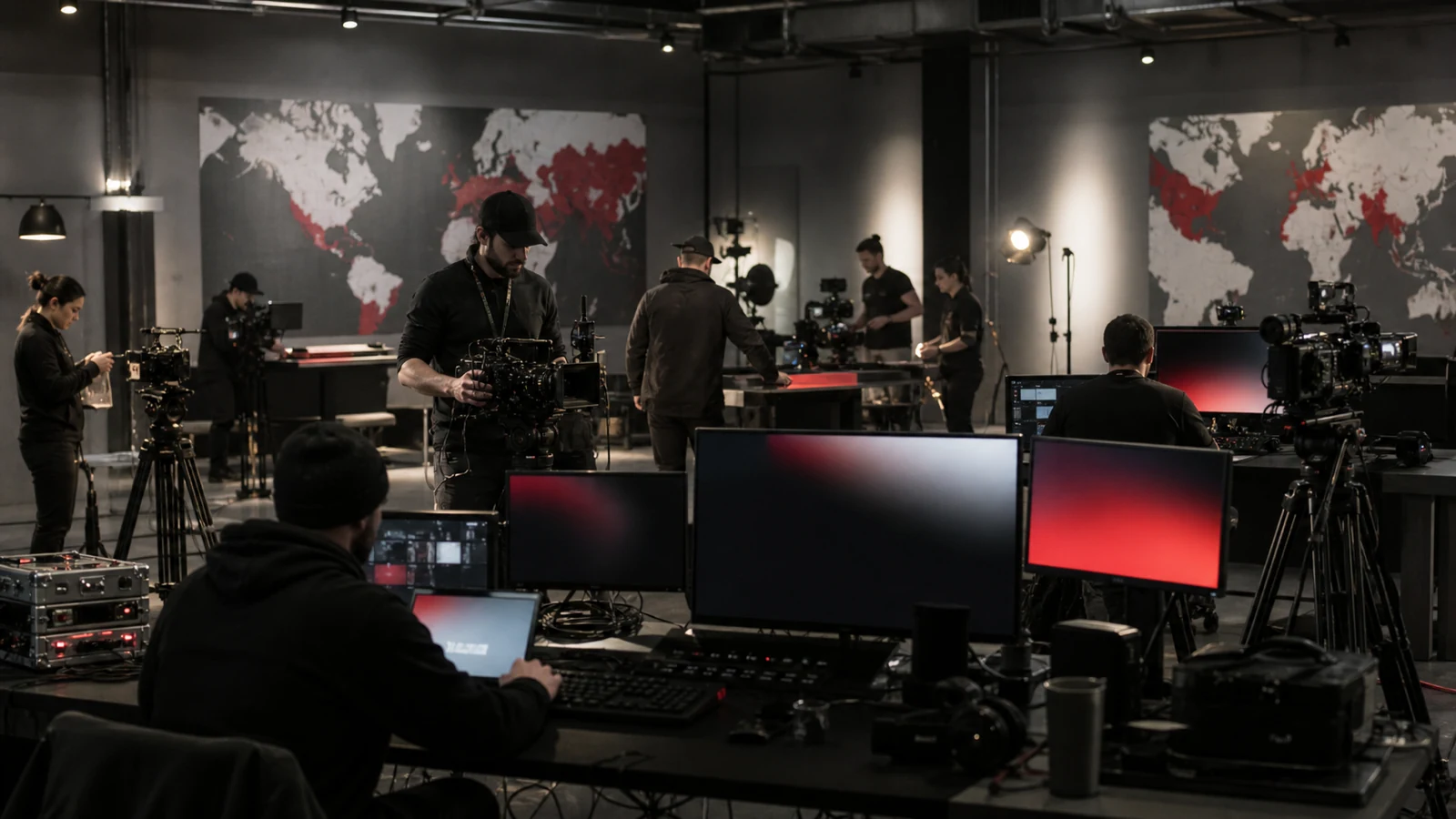
Video ambition multiplied cost
Global documentary access expanded the promise while adding studios, crews, financing, and distribution dependence.
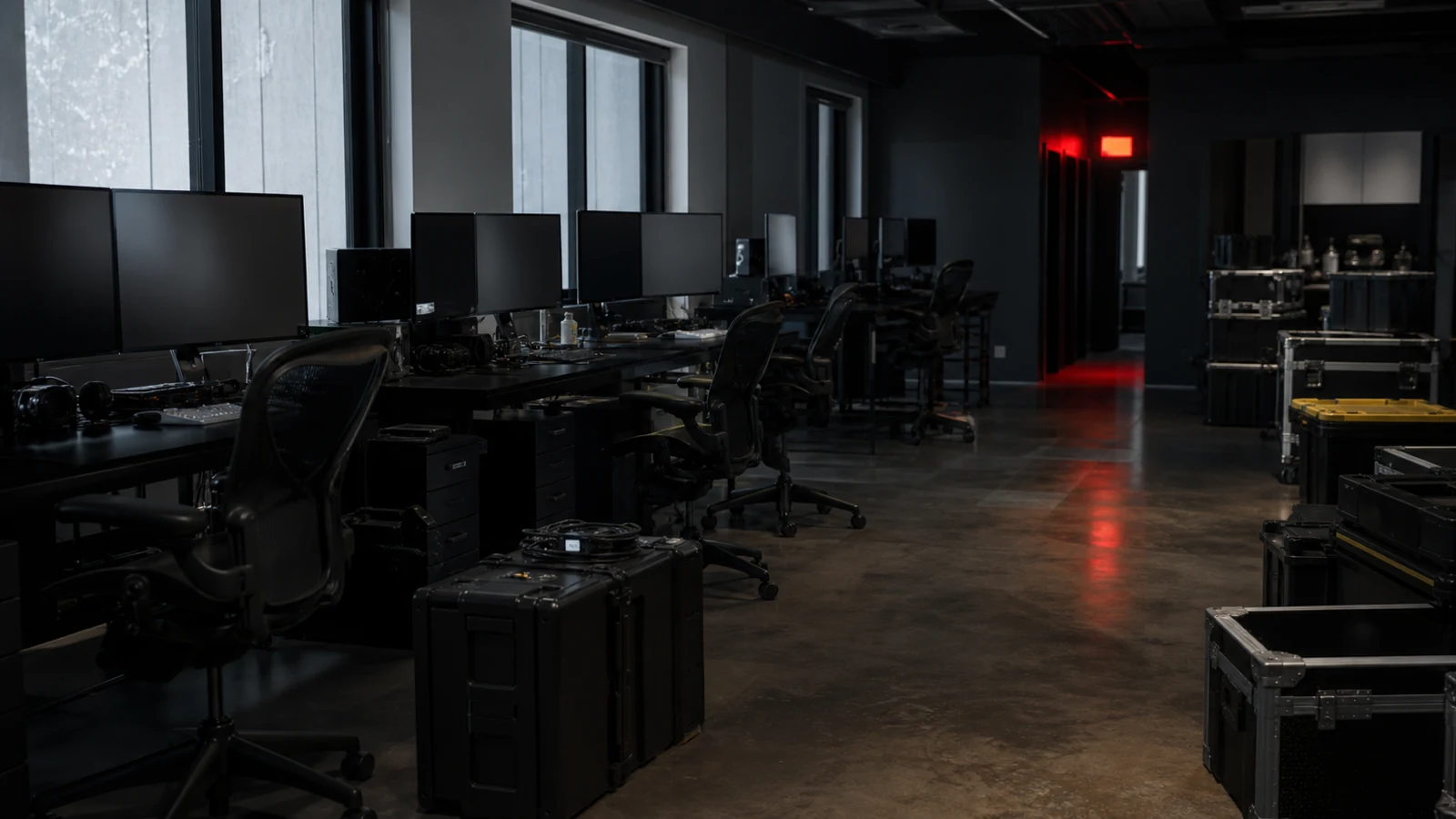
Attention did not fund the footprint
Audience recognition could not protect every newsroom, edit suite, acquired brand, and distribution commitment.
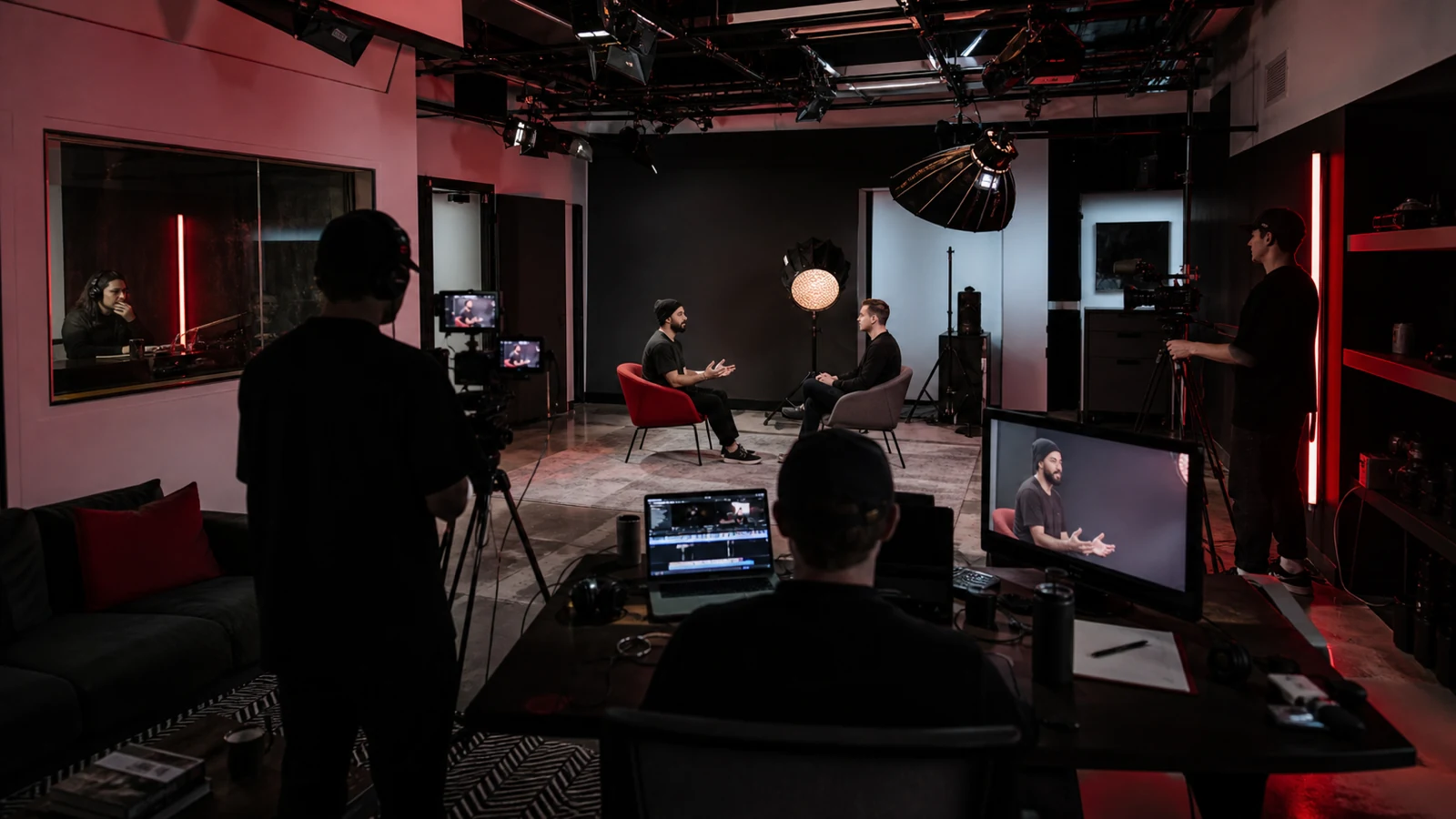
The successor can keep the posture
A smaller publishing and studio system can carry the mark and voice without recreating the former parent's cost base.
Product and service system
A local publication built a recognizable voice from low-cost production.
Documentary production expanded reach and commercial ambition.
Acquisitions and many verticals widened the company beyond one editorial system.
Current operations retain the name through a lender-owned group and digital joint venture.
Turning points.
The useful comparison is USD 834 million of funded debt against a private company that had operated at a loss for years, then an asset transaction that preserved the name but liquidated the old debtors.
Why it failed
Years of losses and approximately USD 834 million of funded debt left an expensive global video, studio, acquisition, and production structure without enough durable advertising and distribution revenue.
Management scaled studios, acquisitions, production cost, and global ambition faster than repeatable revenue. The growth model also depended too heavily on distribution platforms and advertising conditions the company did not control.
After years of losses, Vice could not complete an out-of-court sale or financing that solved its liquidity and debt burden. The immediate trigger was the need for court-protected financing and a going-concern asset sale.
Failure timeline
Reported revenue was approximately USD 600M; the company remained unprofitable.
Vice and 32 affiliates filed Chapter 11 with USD 834M of funded debt.
A roughly USD 350M credit-bid transaction closed.
Publishing, print, and studio activity continue under successor ownership.
Public reaction.
Vice's newsroom contraction made some coverage sound like the entire brand disappeared. Current publishing can create the opposite mistake: treating the successor as the same company that failed.
Vice Group Holding and affiliated debtors moved into liquidation after the sale.
The masthead, voice, and selected operating assets moved to a different ownership structure.
Full timeline.
The publication begins in Montreal. Source
The first Vice issue appears with the block-shadow masthead. Source
Vice publishes its first Photo Issue with a smoother outlined masthead. Source
The graffiti masthead appears in Vice's documented issue history. Source
A TPG investment values Vice at a widely reported USD 5.7 billion. Source
Vice Group Holding and 32 affiliates file Chapter 11 with USD 834 million of funded debt. Source
The lender consortium completes its purchase of Vice operating assets. Source
Vice relaunches digital verticals, print magazine activity, and studio financing under successor ownership. Source
Steal / avoid.
- Build a voice that changes how evidence feels.
- Keep the masterbrand portable across print, video, and digital.
- Price production ambition against recurring revenue.
- Separate cultural attention from financial resilience.
- Treating transaction valuation as operating proof.
- Scaling studios and acquisitions faster than repeatable revenue.
- Calling the successor the same legal company that failed.
- Letting one distribution partner support too much of the newsroom.
Short answer.
Vice Group Holding Inc., Vice Media LLC, and 31 additional affiliates filed Chapter 11 in May 2023 with USD 834 million of funded debt after years of losses. Reported FY2022 revenue was approximately USD 600 million, but no safe audited consolidated loss figure is public. A lender consortium completed a roughly USD 350 million credit-bid transaction for operating assets. Successor Vice publishing and studio activity continues, while the old debtor estates moved into liquidation.
Frequently asked questions
Did Vice Media shut down completely?
No. The former parent and affiliated debtors entered Chapter 11, but substantially all operating assets transferred to a lender-backed successor.
Who owns Vice now?
Current official Vice material names Fortress, Soros Capital Management, and Monroe Capital.
Who runs Vice.com after Vice's bankruptcy?
Vice Media and Savage Ventures announced a digital joint venture on May 9, 2024 to manage Vice.com, Munchies, Motherboard, Noisey and their associated digital channels. That arrangement concerns digital publishing; it is separate from the old debtor estates and from treating every Vice television or studio activity as one website business.
Simpson Thacher, transaction counsel: Vice digital joint venture and Refinery29 sale, June 10, 2024
Are Refinery29 and i-D still part of Vice?
Vice's May 2024 announcement records the sale of Refinery29 to Sundial Media Group and i-D to Karlie Kloss. It identifies those sales separately from the Vice/Savage digital joint venture. Older lists of Vice's brands can therefore overstate the portfolio that remained after the restructuring.
How much was Vice sold for?
The court-approved amended transaction was approximately USD 350 million in credit-bid consideration plus assumed liabilities, not an all-cash price.
Which Vice company filed bankruptcy?
Vice Group Holding Inc. was the lead debtor. Vice Media LLC and 31 additional affiliates also filed.
Is today's Vice the same legal company that failed?
No. The old debtor estates moved into liquidation. Current publishing and studio operations use successor entities and a digital joint venture.
Need help with your own brand?
Use Private brand work when your name, identity, proof, or message needs a sharper branding decision.
Sources.
Use the education shelf for the concepts behind this brand page.
Private brand workUse this when the decision belongs to your own brand.
All brandsReturn to every brand page.
- Official Vice bankruptcy case page
- Vice first-day declaration
- Vice bankruptcy debtor notice
- Court opinion confirming purchaser
- Court-approved amended transaction
- Vice sale completion
- Current Vice privacy policy
- Vice and Savage Ventures joint venture
- Current Vice press archive
- Vice founding account
- Official Vice issue and logo history
- Reported FY2022 Vice revenue
- Current Vice ownership disclosure
- Simpson Thacher, transaction counsel: Vice digital joint venture and Refinery29 sale, June 10, 2024